What Is a Golf Staff Bag and Who Is It For?
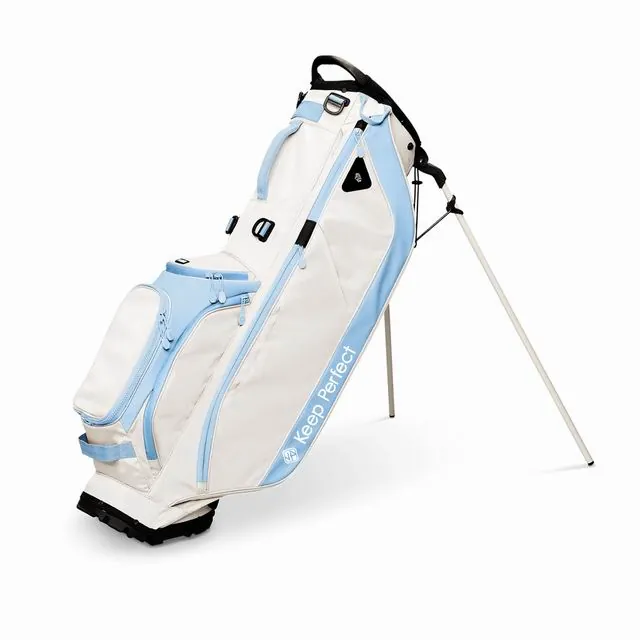
A golf staff bag is the largest bag in the sport – a tall, typically 34 to 36 inch, full-length bag with a wide top opening that holds a complete 14-club set plus extras, weighs roughly 4 to 7 kg empty, and is built to ride on a golf cart or be carried by a caddie rather than be shouldered by the golfer – and it is for professional tour players, caddies, club professionals, coaches, teams, academies and sponsors who want maximum club capacity and a big, prominent branding surface. If you have ever seen a line of identical, logo-covered bags behind players at a professional tournament, you were looking at staff bags. This guide explains what they are, how they differ from other bag types, and exactly who should use one – with the practical detail to help you decide, whether you are an individual golfer, a coach or a club.
Defining the Golf Staff Bag
At the most basic level, a golf staff bag is the travel-class and tour-class bag that professional tournament staff and their caddies use. It is built around two defining traits: maximum space and maximum visibility. The bag is taller than a cart or stand bag, has a wider top opening engineered to swallow a full set of clubs plus extra woods and oversized grips, and its large body provides a broad, unbroken canvas for team livery, sponsor logos and player names. That combination of capacity and branding surface is the whole reason the category exists, and it is what separates a staff bag from every other golf bag on the market.
Its design trades portability for presence. Because a staff bag is heavy and bulky when loaded, it is not meant to be carried on the shoulder around a course; it is meant to be mounted on a cart or slung over a caddie's shoulder for the short walk from clubhouse to cart. In return for that weight penalty it delivers internal organisation, durability and an image that a lighter bag simply cannot match. For a structured comparison of how the staff bag sits against its closest rival, our staff bag vs cart bag key differences article walks through the two side by side.
Core Features and Construction
A well-built staff bag is engineered for a hard, public life. The top opening is wide and typically features full-length dividers – commonly from 5-way up to 14-way – that keep each club shaft separated all the way to the base, protecting grips from tangling as the bag is mounted, lifted and travel. The base is wide, flat and recessed so the bag sits stably on a cart platform without rocking. The shell is generally heavy nylon or polyester chosen for abrasion resistance, with reinforced stitching at the handle, strap anchors and top collar – the points that take the most stress over many rounds.
The pocket layout is generous by design: multiple full- and half-length pockets, often including insulated valuables pockets, range-finder pockets and a large apparel pocket, all arranged so a caddie or player can find things quickly during a round. That organisational capacity is one of the quiet reasons teams and professionals choose staff bags – everything is within reach. The precise ways a staff bag uses that space are covered in our staff bag compartments for valuables and accessories guide.
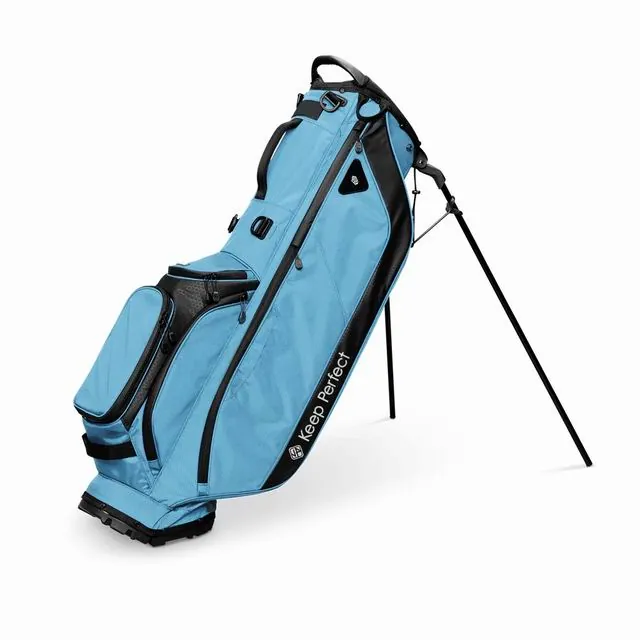
Full Club Capacity
A 14-club set fits with room to spare, plus extra woods and oversized grips, protected by full-length dividers.
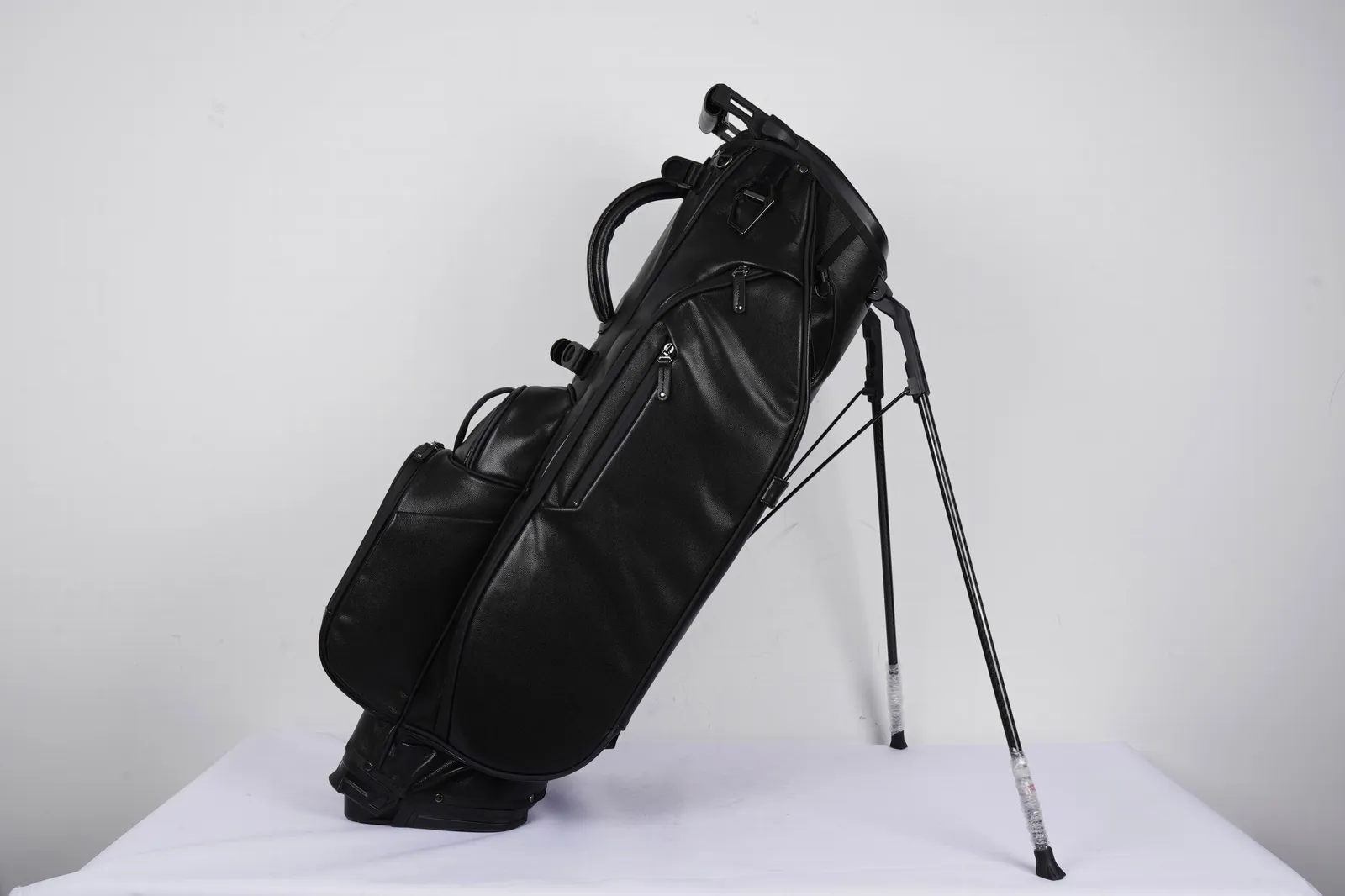
Big Branding Surface
The large body gives logos and sponsor panels a prominent, readable canvas that stands out across a fairway.
Who Is a Golf Staff Bag For?
The people who use a staff bag all share one thing: they ride with their clubs and they want maximum capacity plus a prominent branding surface. In practice that means:
- Professional tour players, who need full capacity and are sponsored to carry their brand on the course.
- Caddies, for whom the staff bag is the delivery vehicle carrying a player's full set and gear around the course.
- Club professionals and coaches, who want a workstation for clubs, teaching aids and valuables while on the range or first tee.
- Teams and academies, which buy matching staff bags as a mobile brand statement and identity asset.
- Sponsors and brands, for whom the staff bag is the largest mobile billboard golf has.
Conversely, a staff bag is usually the wrong choice for a player who wants to walk and carry their own bag. For carrying, a lighter stand bag exists precisely for that job, and using a staff bag on foot is exhausting. If you are trying to decide between types for your own game, our golf bag sizing and fit guide helps you match the bag type to how you actually play.
Staff Bag vs Cart Bag vs Stand Bag
It is easy to confuse a staff bag with a cart bag because both ride on carts, but they are different animals. A staff bag is bigger, taller and heavier, with a wider opening and significantly more branding surface, and it is intended for tour and team settings. A cart bag is more compact and lighter, still mounts cleanly on a trolley, and suits a wider range of club golfers who prefer cart riding without the bulk and cost of a full staff bag. A stand bag, by contrast, adds retractable legs so a golfer can set it down and carry it.
| Metric | Staff Bag | Cart Bag | Stand Bag |
|---|---|---|---|
| Typical height | 34-36 in | ~34 in | ~35 in |
| Empty weight | 4-7 kg | 3-5 kg | 2-4 kg |
| Club capacity | 14+ (max) | 14 | 14 |
| Branding surface | Largest | Medium | Smaller |
| Intended use | Cart / caddie | Cart | Cart or carry |
The table makes the trade clear: you give up portability to gain capacity and image. For the full detail on the staff-versus-cart decision, our staff bag vs cart bag comparison is the direct reference, and the size and weight guide for staff bags gives the concrete numbers.
Why Teams and Academies Choose Staff Bags
Among the most frequent buyers of staff bags are golf teams, academies and clubs, because the bag doubles as branding infrastructure. A matched set of custom staff bags gives a team a uniform, professional look and carries the club or academy name and colours everywhere it travels – to tournaments, in photos, at open days. Parents, juniors and prospective members read that consistency as competence, and it directly supports enrolment and sponsorship conversations. This is why academies treat staff bags as a recurring marketing asset rather than a one-time purchase, and our why academies invest in custom staff bags guide explores the business case in depth.
For a team or academy, the branding potential of the large staff bag body is the central reason to specify it over a cart or stand bag. The same logo that is a small patch on a stand bag becomes a prominent, readable brand statement on a staff bag. That visibility is exactly why sponsors value staff bags so highly, and how cleverly the surface is used determines how much brand value it returns. For how clubs and retailers turn that surface into a mobile brand statement, our branded staff bag visibility guide and staff bag professional brand image article cover placement and design.
Custom Staff Bags for Tour Players and Sponsors
At the professional end, staff bags are almost always custom-built to a player's or sponsor's spec. A tour bag carries names, flags, tour logos and sponsor panels, all positioned so the branding reads clearly on television and in photographs. Because the branding is the point, the placement, sizing and colour contrast are planned as carefully as the bag's structure. The large canvas of a staff bag rewards careful design, and every sponsor panel is an opportunity to be legible from a distance. For tour-style custom production, our custom staff bags for tour players and sponsors article covers the specifics, and the logo and embroidery customization guide explains the printing and stitching options available.
Who Should Not Use a Staff Bag
Being clear about who a staff bag is not for is as useful as knowing who it is for. If you are a walker who carries your own bag for exercise and pace-of-play reasons, a staff bag is the wrong tool – its weight (4-7 kg empty, over 10 kg loaded) makes shoulder carry impractical and unpleasant. If you rarely use a cart, you will not capture the staff bag's main advantages and will pay a bulk penalty for it. And if you need to squeeze a bag into limited storage or a narrow travel case frequently, the staff bag's size is a genuine drawback. In all these cases a stand or cart bag suits the reality better. Choosing the right bag type to your actual transport habit is the fastest path to a better round, and the golf bag sizing guide helps you draw that line.
Caring for a Staff Bag So It Serves Well
A staff bag is a large, weighty investment, so it repays straightforward care to keep it in good shape. Keeping zips clean and running, drying the bag after damp rounds, storing it upright out of sunlight and inspecting the stress points seasonally all extend its life materially. The care principles are the same as for any premium bag but matter more on a bag this size and this public. Our maintenance advice is collected in the golf bag maintenance and care guide, and the storage-specific version is in our how to store a staff bag for long-term preservation guide.
Sourcing a Golf Staff Bag: What to Specify
If you are buying staff bags – one for yourself as a club professional, or a fleet for a team – put these on the spec sheet: height and top-opening diameter, divider count and whether the dividers are full-length, base construction and cart fit, empty weight, pocket layout, and material and hardware grade. For a branded fleet, add the brand-zone panel size and the exact colourway so the whole set is identical. Knowing what good looks like before you source prevents costly mistakes. Our affiliated factory builds staff bags to teams, academies and brands across more than 100 countries and over 200 brands, operating 7 production lines with 126 sewing machines and roughly 137 staff, with monthly output capacity of about 200,000 pieces, and it was audited by SGS in March 2026. Typical custom terms are a standard MOQ of 200 pieces with 100-piece test orders, sampling in 10-20 days and bulk production in 45-60 days. The complete route from spec to shipped order is in our custom OEM/ODM services guide and the staff bag bulk order lead-time guide.
Professional Staff Bag Features Worth Knowing
For anyone choosing at the pro level, a few features separate a capable staff bag from a great one and are worth knowing before you buy. Look for a wide, stable base with a recessed fit for clean cart mounting; full-length dividers that keep every shaft separate to the bottom; heavy-duty zips that run smoothly under load; a large apparel pocket for outerwear; an insulated valuables pocket for phone and wallet; reinforced bar-tacking at the handle and strap anchors; and a durable shell that resists the abrasion of carts and baggage. These are the features a tour bag needs to survive daily use and still present well. Our premium staff bag features guide walks through the pro-level spec in detail.
How a Staff Bag Is Built for the Job
Understanding how a staff bag is constructed explains why it can be simultaneously the most capable and the heaviest bag in golf. The first production decision is the shell: staff bags use heavy nylon or polyester, chosen for abrasion resistance and shape-holding, because a staff bag is handled constantly and photographed at every tournament. The body is cut from multiple panels and stitched around dense foam padding, which gives the bag its structure and its protection but adds the weight that makes it a cart product. The top is reinforced with a stiffened collar and the dividers with padded walls, while the base is a wide, recessed, rigid moulded unit that keeps the whole bag upright on a cart.
Every stress point – the handle, the strap anchors, the top collar and the base corners – is reinforced with bar-tacking and multiple stitching passes, because these are the places a staff bag fails after years of lifting and mounting. Zippers and buckles are heavy-duty, chosen to survive daily use under load. It is this build, not the fabric alone, that lets a good staff bag last many seasons and still present a crisp brand surface. For a closer look at the manufacturing quality controls that define a durable bag, our OEM staff bag production process and tournament-grade durability standards articles explain the checks behind the build.
The Weight Story: Why Staff Bags Are Heavy
The weight of a staff bag is not an oversight; it is the direct product of its purpose. Because a staff bag never needs to be carried on a walker's back, the design can spend material freely on capacity, padding, structure and branding. That buys internal organisation, club protection and a base stable enough for a loaded bag to sit safely on a moving cart. The trade is real: an empty staff bag weighs roughly 4 to 7 kg, and a fully loaded one can pass 10 kg, so it is simply not a shoulder-carry product. Anyone who expects to walk eighteen holes with their clubs should choose a stand bag, and for those who ride, the extra weight buys a level of space and image no lighter bag provides.
If weight is a concern for a team that lifts bags all day, the answer is not to abandon the staff bag but to choose the most efficient build in the size class you need and to set a handling weight you are comfortable with. For teams and academies this matters across a whole fleet, because daily lifting fatigue is a real operating cost. The practical numbers that put staff, cart and stand bag weights on one scale are gathered in our staff bag size and weight guide.
Making a Staff Bag Work as a Brand Asset
One of the strongest reasons teams, clubs and sponsors choose staff bags is what the large surface can do for a brand. Unlike a website impression that can be scrolled past, a staff bag is a tall, photographed, physical object that carries a logo everywhere the team travels. During a single tournament, a branded staff bag can be captured in official photographs, broadcast frames and fan photos, delivering impressions to thousands of viewers inside the exact professional context where the academy or sponsor wants to be seen. Across a full season, that repeated exposure gives branding a cost per impression that promotional materials struggle to match – and it keeps working in every practice session, not just on match days.
To make that value real, the branding must be placed with care: a large, clean brand zone in high-contrast colours, sized to stay legible across a fairway, with secondary pockets kept visually quiet so the logo is not crowded. A well-designed staff bag reads as a deliberate professional programme, which reinforces team identity and supports enrolment and sponsorship conversations. For how to maximise that mobile visibility, our branded staff bag visibility guide and professional brand image article lay out the design principles.
Budget and Ordering Realities for Staff Bags
Because a staff bag is a larger, higher-quality and often custom product, it costs more than a standard bag, and that is worth planning for. For a single pro or club professional, buying one well-built staff bag is a straightforward decision. For a team or academy buying a whole fleet, the economics favour buying quality and maintaining it. A durable staff bag that lasts several seasons delivers a better cost-per-year than a cheap bag that fails within one season and has to be replaced, and a matching fleet also keeps the brand impression strong. Budgeting a modest annual refresh of a small share of the fleet, rather than replacing everything at once, keeps both cash flow and the team image stable.
For custom orders the practical terms matter. Standard MOQ for custom staff bags is typically 200 pieces, with test orders accepted from 100 pieces, which lets a team sample and prove the build before committing to a full fleet. Sampling generally takes 10-20 days and bulk production 45-60 days, so ordering well ahead of the first tournament of the season is the reliable way to have the fleet ready in time. For the full picture on cost and lead times when sourcing staff bags in volume, our wholesale staff bags for teams and academies and bulk order lead-time guide give the numbers and sequence.
Materials: What a Quality Staff Bag Is Made Of
At the top end especially, the choice of materials is what separates a staff bag that ages gracefully from one that looks tired after a season. The shell should be a durable, UV-resistant nylon or polyester that holds colour and resists abrasion. Full-length padded dividers separate and protect club shafts. Zips, buckles and metal fittings should be corrosion-resistant and heavy-duty. If leather or synthetic-leather trim is used, it should be specified and conditioned for longevity, and the base should be rigid and recessed for a clean cart fit. These materials decisions directly determine both the bag's lifespan and how well its branding presents over time. For a deeper look at the material options available at the professional level, our materials used in pro-level staff bags guide is the reference.
Planning a Custom Staff Bag Order?
Whether you need a single tour-quality bag or a branded fleet for a team or academy, our affiliated factory can help you specify the right capacity, dividers, materials and branding. Sample first, then scale – standard 200-piece MOQ with 100-piece test orders.
Request a Bulk Quote →Conclusion: The Right Bag for the Right Golf
A golf staff bag is the largest, most visible and most capable bag in the sport – built for cart and caddie use, with full 14-club capacity, a huge branding surface and professional durability. It is for tour players, caddies, club professionals, coaches, teams, academies and sponsors who ride with their clubs and want maximum space and a prominent, professional image. It is not for golfers who want to carry their own bag. Understanding that distinction – and matching the bag type to how you actually play, store and travel – is the difference between a bag that serves you for years and one that is the wrong tool. Choose the staff bag when you want capacity and presence, choose a lighter bag when you want portability, and if you are sourcing a fleet, specify build and branding together so the bag earns its place season after season.
Sources
Frequently Asked Questions
- What is a golf staff bag?
- A golf staff bag is the largest conventional golf bag, typically 34-36 inches tall with a wide top opening, designed to hold a full 14-club set plus extras on a cart or caddie, with a large surface for branding.
- Who uses a golf staff bag?
- Tour players, caddies, club professionals, coaches, teams, academies and sponsors who ride with their clubs and want maximum capacity plus a prominent branding surface.
- What is the difference between a staff bag and a cart bag?
- Staff bags are larger, taller and heavier with a wider opening and bigger branding surface; cart bags are similar on a cart but more compact and lighter. Both ride on carts, but staff bags prioritise capacity and image.
- Should I carry a golf staff bag?
- Usually not. A staff bag weighs roughly 4-7 kg empty and more than 10 kg loaded, so it is designed for cart or caddie use. For carrying, a lighter stand bag is the right tool.
- Why do teams and academies buy custom staff bags?
- Because the large body gives the team logo a prominent mobile brand surface that is visible at tournaments and in photos, and a matched set builds professional team identity.