How to Customize a Golf Staff Bag with Logos and Embroidery
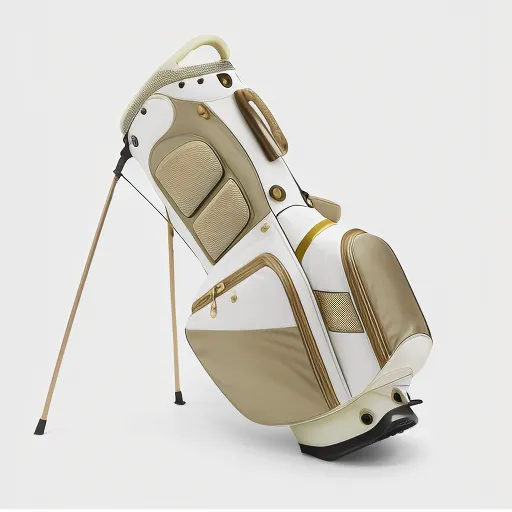
To customize a golf staff bag with logos and embroidery, prepare vector artwork, place the logo on a clean front panel with high contrast, then choose the method by the mark and weather — screen print for large flat full-colour logos, embroidery for names and crests, woven labels for small marks, heat-press for special trims — each matched to the shell and tested so the logo stays colourfast through a season. Decoration is the whole point of a custom staff bag, so the method, placement and durability matter. This guide, written from the production floor of QUANZHOU JUNYUAN BAGS (founded 2014, 200+ brands, 100+ countries), walks you through the full workflow.
The Customization Workflow in Five Steps
Customizing a staff bag is a controlled sequence: prepare the artwork, finalize the logo placement on the panel plan, choose the decoration method, produce and test a sample, then run the bulk order. Skipping a step — usually the sample — is the cause of most disappointing custom orders, because a logo that sails in a PDF can sink on real fabric.
The numbering matters less than the logic: art decides placement, placement decides method, method decides the sample, and the sample decides the run. Work it in that order and the reachable risks fall out early. The full OEM process is documented in our staff bag production process guide.
Preparing Logo Artwork: Vectors Win
Logos are applied from digital files, and the quality of the result starts with the format. Vector artwork (AI, EPS, SVG) scales cleanly to any panel size without pixelation, keeps colours accurate, and is what a factory needs to make a crisp screen print, embroidery or woven label. Low-resolution raster files stretch and blur and should be redrawn or re-exported before deco.
Provide the logo in the colours you want and, if you have one, a simplified one-colour or limited-colour version for embroidery and small marks, because multi-colour embroidery is slower and costlier. Clean vector art plus a colour-matched reference avoids the single most common custom-order fix: recolouring a logo that photomocked well but arrives wrong. The logo deco guide details the artwork specs.
Artwork quality is the lowest-cost way to raise finished quality, and it is where most custom-order risk hides. A logo with thin strokes that look fine on screen will fill in or blur at embroidered size, while a vector with unused colours adds embroidery cost without benefit. Taking a few minutes to simplify and export the artwork properly is cheaper than redoing a run, and it is the step that separates a crisp custom bag from a disappointing one.
Placement: Build the Panel Plan
Where the logo sits is as important as how it is applied. On a staff bag the primary logo occupies the large front panel; secondary marks go to the side panels; a player name or monogram often sits on a chest panel. The plan must keep the main mark clear of seams, zippers, handles and the base junction, and scale it to read from the course while leaving the panel looking deliberate.
We draw a marked-up panel plan for sign-off before cutting, so placement is intentional. The panel plan also fixes which method each mark uses — the big front logo screen printed, the chest name embroidered — which is the natural way to combine methods on one bag. Our tour/sponsor guide and brand image guide cover the legibility rules.
There is also a stitch-quality note for embroidery. The density of the stitch, the thread tension and the backing all decide whether a name reads crisp or blurs, and a factory that controls these produces embroidery that looks premium rather than cheap. Asking to see a stitched sample before committing is the surest way a brand confirms the embroidery will carry its reputation.
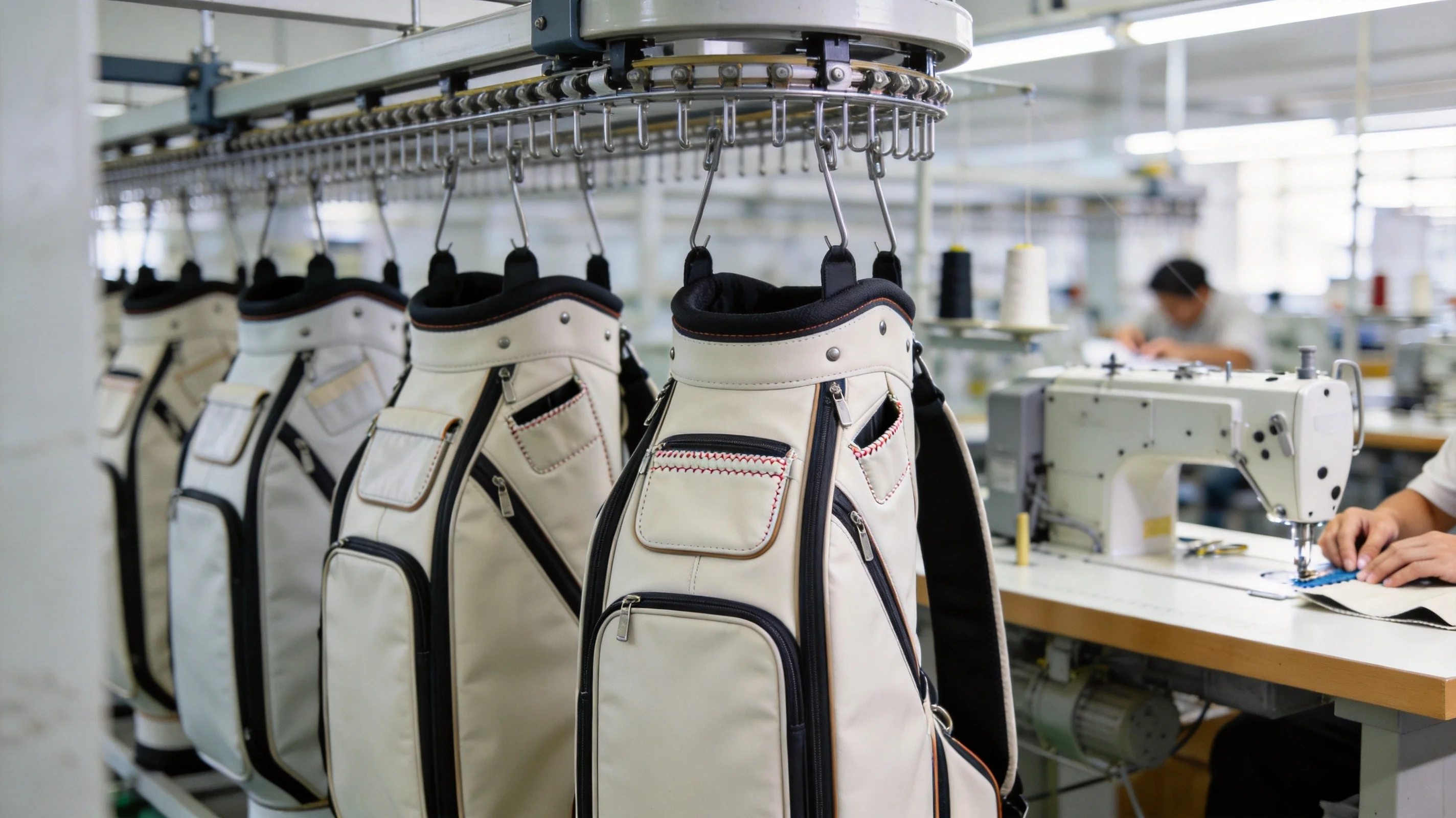
Screen Printing for Large, Bold Logos
Screen printing is the workhorse for a big full-colour sponsor or club logo on a staff bag front panel. It delivers flat, crisp, bold coverage, lays down well on the large flat panel, and is cost-effective at volume. Each colour is a separate screen, so a rich logo costs more, while a bold limited-colour mark prints fast and cheap.
Screen printing suits large flat marks; it is less suited to fine detail or steep curves. On panels that see sun and rain, a clear overcoat protects the print so it stays colourfast through a season. It is the default first choice for the hero logo, and it is what most tournament and club bags use. The materials guide also covers inks suited to sustainable shells.
There is also a physical sample benefit beyond the logo: confirming the shell colour against the paint-chip and the finished size of the bag. A decorated staff bag that surprises on size, texture or hue can disappoint as much as a mis-scaling logo, and the sample catches all of them at once. Because the sample represents the run, it also anchors the QC the whole fleet is later compared against.
Embroidery for Names, Crests and Premium Feel
Embroidery adds texture, depth and a premium feel that reads as craftsmanship, and it is the classic method for a player name, a club crest or a monogram on a chest or side panel. It is durable against weather and abrasion, which suits the daily bumps of a staff bag, and it ages well when the design is kept simple and high-density where it must be crisp.
Embroidery has limits: it cannot reproduce photographic gradients, and highly detailed tiny text can blur, so the artwork is simplified into stitchable shapes and colours. For a name or crest, a well-stitched embroidery is often more professional-looking and longer-lived than a print. Choosing embroidery for the name next to a screen-printed hero logo is the classic combination. Our customization process guide walks through stitch design.
There is also a placement-symmetry discipline across the fleet. If several bags each carry the logo in slightly different positions, the visual inconsistency reads as sloppy; a standardised panel position, repeated exactly across the fleet, reads as intentional and professional. For clubs and sponsors running many bags, enforcing that consistency is part of the customization brief, not an afterthought.
Woven Labels and Heat-Press for the Details
For small, crisp marks — a tagline, a small repeat logo, a size or brand tab — woven labels give a sharp, durable finish and sit neatly on side or chest areas. Heat-press (also used for appliqué and special trims) applies film, patch or leather accents and is ideal for single-colour marks and distinctive textures. Both are best for small, non-primary placements.
Choosing the right mix contains cost and looks intentional: a big screen-printed front logo, an embroidered name, and woven or heat-pressed small marks together make a custom staff bag feel fully branded without the cost of embroidering the whole shell. The tour/staff bag section builds panels for exactly this mix.
The hierarchy of methods also guides cost control. Because embroidery charges by stitch count and screen printing by colour, a clean hierarchy — one rich hero print, one simple embroidered name — delivers a fully branded bag without paying for unnecessary decoration. The discipline is to make every deco position earn its cost by the value of the mark it carries.
Matching Deco to Fabric and Weather
The same logo behaves differently on a coated 1000D shell than on a knitted trim, so the deco method must be matched to the actual fabric and tested. In wet, high-UV climates add a clear overcoat over prints and choose weather-tolerant threads; on breathable or textured panels choose methods with enough adhesion. A deco that passes a sample on one material can fail on another, so the sample must be on your fabric.
We test deco adhesion and colourfastness on the real shell and match finishes to the build, so the logo the club or sponsor approved is the logo still on the bag in week twenty. The quality standards guide documents the deco test points.
The mix of methods should also match the brand's colour discipline. A screen print, an embroidery and a woven label sharing one colour reference keeps the fleet visually coherent, because colours read differently across ink, thread and fabric. Confirming a single colour reference across all methods is a small detail that keeps a custom bag looking intentional.
A Deco Method Comparison on Staff Bags
The table compares the four main decoration methods on the factors that matter for a custom staff bag, so a club or sponsor can pick the right one for each mark.
The interaction of deco and shell also affects waterproofing. A fully waterproof shell that is then decorated can lose its seal at the deco points unless the method and finish are matched, so we choose deco that respects the water barrier and verify the bag still performs on a waterproof build. For wet-climate clubs this matters: a beautiful bag that leaks at the logo is not a success, and a matched method keeps both the look and the protection.
Combining Methods on One Bag
Most professional staff bags are not made by a single method; they combine. A typical tour spec uses a screen-printed hero logo, an embroidered name and woven side tabs, each applied to the panel it suits. This layered approach keeps the logo rich and the whole bag fully branded, and it is standard for tournament and club programs.
Combining methods is an art of restraint: too many methods and panels get busy and cost climbs; done cleanly, the hierarchy reads professional — big bold print, refined embroidery, crisp small tabs. We advise on the mix for a brand's budget and image. The club branding guide advises on the panel hierarchy.
There is a care reality for deco in daily professional use. A bag that rides a cart, stands on damp grass and sits in the car boot all season will test even the best deco, so users should adopt the light habits that protect it — keeping the logo panels clean, drying the bag after rain and never dragging it by the front panel. Those habits cost nothing and measurably extend how long the mark stays crisp.
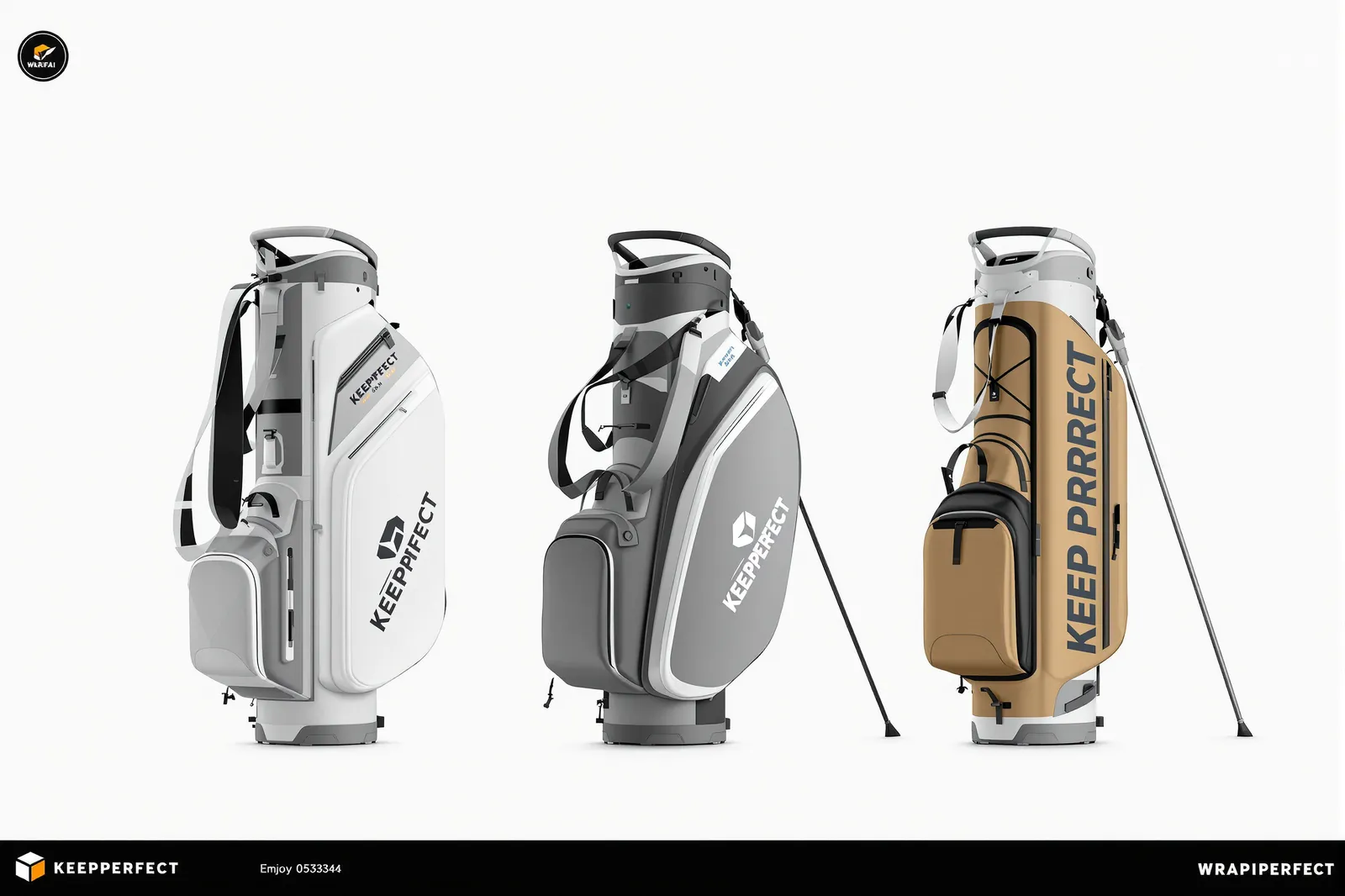
Artwork Proofing and the Sample Step
Before production you should approve two things: a digital proof (the layout and colours on the panel drawing) and, ideally, a physical sample or a limited test order showing the deco on real fabric. The digital proof sorts placement; the physical sample confirms colour, texture and weather survival. A 100-piece test order can serve as the sample for a small fleet.
This is the step that protects both parties. We provide a proof on the panel plan, then a sample on the actual shell, before committing a fleet. Skipping it is how logos arrive looking different from the mock-up, which is both expensive and avoidable. The sampling guide covers the approval workflow.
There is also a colour-consistency discipline across methods. A screen-printed logo and an embroidered name should share the same colour reference, because the same hue can read differently across ink and thread. Approving one colour reference used by all methods keeps the fleet visually coherent, and it is a detail sponsors and clubs notice even when they cannot name it.
There is also a cost-communication point. Because deco is line-itemed separately, a buyer who understands what each method costs can make deliberate trade-offs — a richer hero logo over a fancier name, or a simpler tab instead of a fourth deco position. Transparency about deco cost lets the brand spend where it is seen most and save where it is not seen at all.
Finally, the customization process should leave a clear record. A brand that keeps its final panel art, its deco spec and its approval emails has everything needed to refresh, extend or defend the product later. That record-keeping is cheap, and it turns one custom bag into a reusable asset that a brand can reproduce exactly whenever it needs more.
Cost and MOQ of Deco
Decoration is line-itemed separately from the bag, and its cost scales with the number of colours, positions and methods. A bold single-colour screen print is cheapest; a rich multi-colour print plus embroidery plus woven labels costs more. Contain cost by keeping the hero logo rich and the secondary marks simple, and by consolidating into one colourway fleet.
Custom staff bags follow a standard MOQ of 200 pieces per design and colourway, with 100-piece test orders to validate build and deco, sampling in 10-20 days and bulk in 45-60 days. QUANZHOU JUNYUAN BAGS operates through OEM/ODM services and custom solutions, with 7 production lines, 126 sewing machines and 137 staff across a main 4,950 m2 affiliated factory with a 200,000-piece monthly capacity.
Finally, think about the bag as a portable portfolio for the brand. Every time it is photographed, shared or spotted on a course, it advertises not just the logo but the care the brand puts into presentation. A clean, well-executed custom staff bag therefore works harder than its price suggests, which is why the extra hour of artwork and samples is the most valuable investment in the whole order.
Caring for Custom-Deco Staff Bags
Your logo is on the outside facing the weather, so treat it as a component. Rinse lower panels free of sand, dry after rain, avoid dragging the bag, and refresh DWR on a coated shell once a season; embroidered marks benefit from gentle brushing free of dirt. Storing loosely and protecting deco panels keeps the logo crisp for a second season.
The care routine is light and covered in our maintenance guide, cleaning techniques guide and storage guide.
Finally, plan for refresh. Because the panel plan and deco spec are documented with the artwork on file, a seasonal rebrand or a new player name is a limited re-run rather than a fresh discovery process. This makes a first custom staff bag the seed of a long, low-cost branding programme, which is exactly how teams and clubs keep their equipment looking current season after season.
Factory Verdict on Customizing a Staff Bag
Customizing a golf staff bag with logos and embroidery is a deliberate recipe: clean vector art, a confirmed panel plan, the right method per mark and panel, and a sample on the real fabric before the run. Get that recipe right and the bag carries your logo crisply and durably for a season; improvise it and the cost lands on the fix.
Since founding in 2014, QUANZHOU JUNYUAN BAGS has customized staff bags for clubs, tour programs and brands. To customize a staff bag for your logo, reach us at contact, service@junyuanbags.com, or WhatsApp +86 17750020688.
The decisive point for any brand or club is that a logo is only as good as the care taken around it — from clean vector art to a confirmed panel plan, the right method per mark and a sample on real fabric. When those steps are honoured, customization stops being a risk and becomes a reproducible recipe, and every bag in a fleet carries the brand crisply and durably for the full season.
Since 2014 QUANZHOU JUNYUAN BAGS has built staff and tour bags across 100+ countries for 200+ brands, running 7 production lines with 126 sewing machines and 137 staff in a main 4,950 m2 affiliated factory at a monthly capacity near 200,000 pieces; our founder has worked in the golf bag industry since 2004. Wholesale custom orders follow a standard MOQ of 200 per design and colourway (100-piece test orders), with sampling of 10-20 days and bulk of 45-60 days, and the facility passed independent SGS verification in March 2026. Reach us at service@junyuanbags.com or WhatsApp +86 17750020688 to source a staff bag programme.
| Method | Best For | Look & Feel | Weather / Limits |
|---|---|---|---|
| Screen print | Large front logos | Flat, bold | Colourfast with overcoat |
| Embroidery | Names, crests, monograms | Textured, premium | Durable; no photo gradients |
| Woven label | Small marks, tags | Sharp, crisp | Very durable |
| Heat-press | Solo marks, trims | Film/patch | Wear on high-abrasion panels |
Choose by mark size, panel and weather; combine methods for a fully branded staff bag.
Looking for a Reliable Manufacturing Partner?
Send clean vector art and we will lay out the panel, choose the method per mark and produce a deco sample on your fabric before the run.
Request a Bulk Quote →Frequently Asked Questions
- What file format should I send for a staff bag logo?
- Vector artwork — AI, EPS or SVG — scales cleanly to any panel size and keeps colours accurate. Low-resolution raster files pixelate and should be redrawn or re-exported before decoration.
- Should I screen print or embroider a staff bag logo?
- Screen print for a large, flat, bold front logo, and embroidery for names, crests or monograms that need a premium textured feel. Most professional staff bags combine both, plus woven labels for small marks.
- Does embroidery survive on a golf staff bag?
- Yes. Embroidery is durable against weather and abrasion, which suits a staff bag's daily bumps, and ages well when kept simple. It cannot reproduce photographic gradients, so artwork is simplified into stitchable shapes.
- What is the most common customization mistake?
- Skipping the physical sample. A digital mock-up flatters the logo; a sample or a 100-piece test order on real fabric confirms colour, texture and weather survival before a full fleet is committed.
- Do I need a MOQ for a custom staff bag with a logo?
- Yes. The standard MOQ is 200 pieces per design and colourway, with 100-piece test orders available to validate the build and deco first, sampling in 10-20 days and bulk in 45-60 days.
- Does decoration fade on staff bags in the sun or rain?
- It depends on the method and the finish. Poorly chosen deco can fade or peel; colourfast, weather-matched deco with a clear overcoat on prints stays crisp through a season. We test adhesion and colourfastness on the real shell.
Looking for a Reliable Manufacturing Partner?
Full custom staff bag deco — screen print, embroidery, woven and heat-press — built factory-direct. Test orders from 100 pieces.
Request a Bulk Quote →