How to Choose a Staff Bag for Golf Club Branding
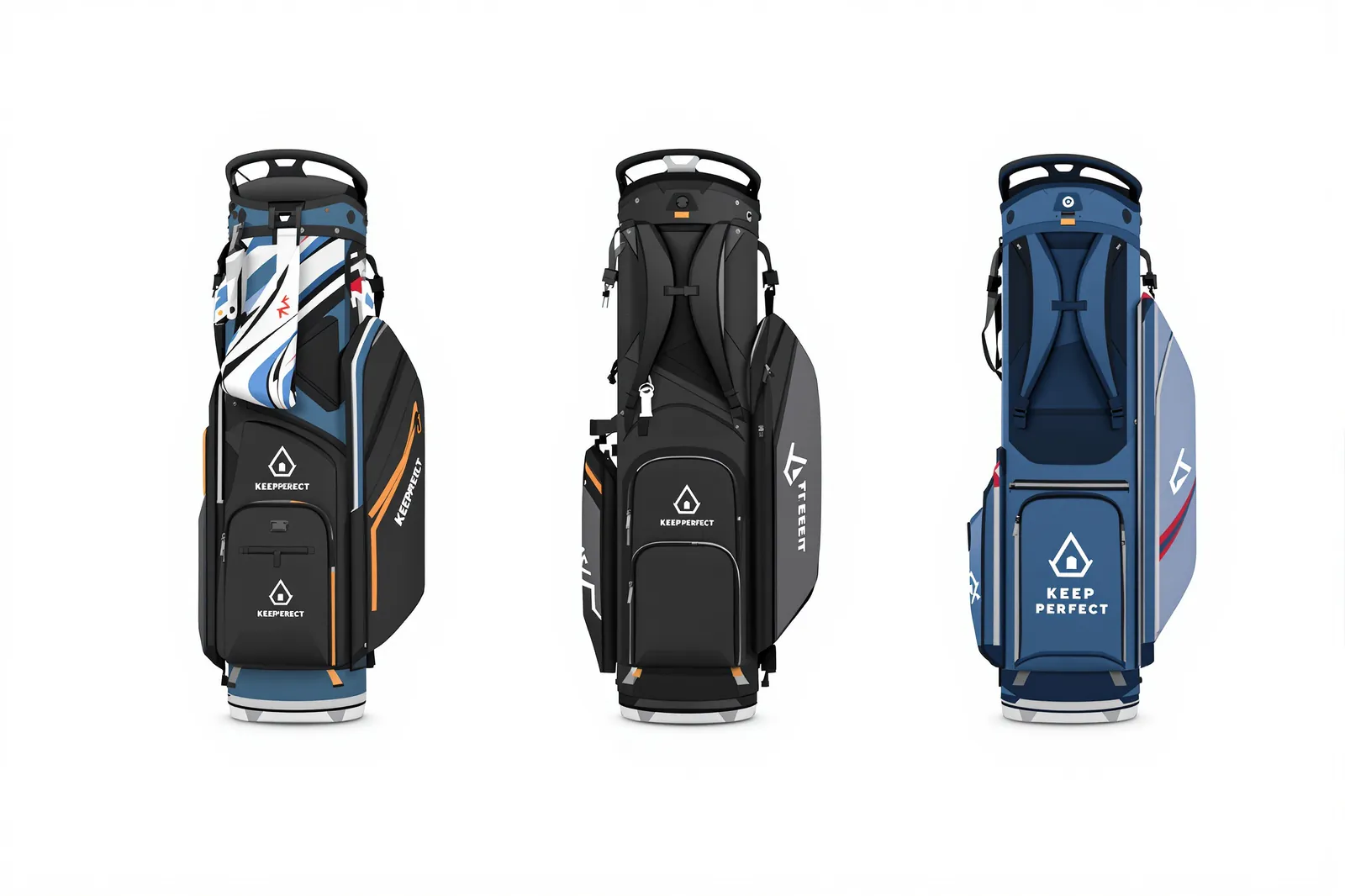
To choose a staff bag for golf club branding, start with the branding surface — a large, flat front panel sized to your logo with the right colour contrast — then fix the build to the role (full-length dividers and a rigid base for daily pro use, a lighter crossover for multi-role), the deco method to the weather, and finally the sourcing (MOQ, sampling and lead time). The staff bag must carry your club's mark for a season in sun, rain and cart friction, so panel design and deco durability come first. This guide, written from the factory floor of QUANZHOU JUNYUAN BAGS (founded 2014, 200+ brands, 100+ countries), is a step-by-step buying brief.
Step 1: Start With the Branding Surface
Decide the surface before the bag. The staff bag's reason to be in a club is to carry the club's mark, so the first design decision is where the logo sits and how large it reads. You want a large, flat front panel free of seams and pockets, with a shell colour that gives the logo high contrast, and the mark scaled so it reads from across the range/first tee.
Measure the logo against the panel in the drawing, not in the imagination. A logo that looks strong in a brochure can be tiny on a bag or wash into the shell colour. We lay out a marked-up panel plan for approval before production, exactly as we do for sponsors, so the club signs off the placement before any fabric is cut. The brand image guide explains why panel legibility drives the effect.
Step 2: Fix the Build to the Role
Choose the build by who carries the bag and how. A head pro's bag that is seen and used daily should be a full staff build: dense fabric, full-length dividers, a rigid moulded base, 12-15 pockets. A range or display bag that moves little can be a lighter build that still presents well. If the bag's user travels and carries it, a lighter crossover staff bag keeps capacity and branding at a manageable weight.
Do not buy one build for every branded bag. Split the fleet by role — a full build for the pro, a crossover for travelling staff, a display build for the first tee — while keeping the same logo and shell colours so the club image stays consistent. The staff vs cart guide and size and weight guide help match the build to the role.
The brief should also fix the logo's legal and file status before anyone quotes. A club logo that is not yet vectorised, or whose ownership or file access is unclear, will stall the order at the artwork step, which sits early in the timeline. Sorting the logo files, colours and permissions up front is the cheapest way to keep the whole project on schedule and on brand.
Step 3: Choose the Shell and Durability Level
The shell fabric sizes the look and the life. For a branded club bag that must survive a season outdoors, choose at least 600D-840D, moving to 840D-1000D for a daily professional bag, with a coated or weather-resistant finish for wet climates. The lower panels and base are built heavier because they take the abuse and are the first place a club bag starts to look unprofessional.
A rigid moulded base and a reinforced top ring keep the bag standing firm, which is a visible part of the professional read and protects the club's presentation. The materials guide and quality standards guide list the fabric and build specs a club should specify.
Step 4: Pick the Deco Method for Your Logo
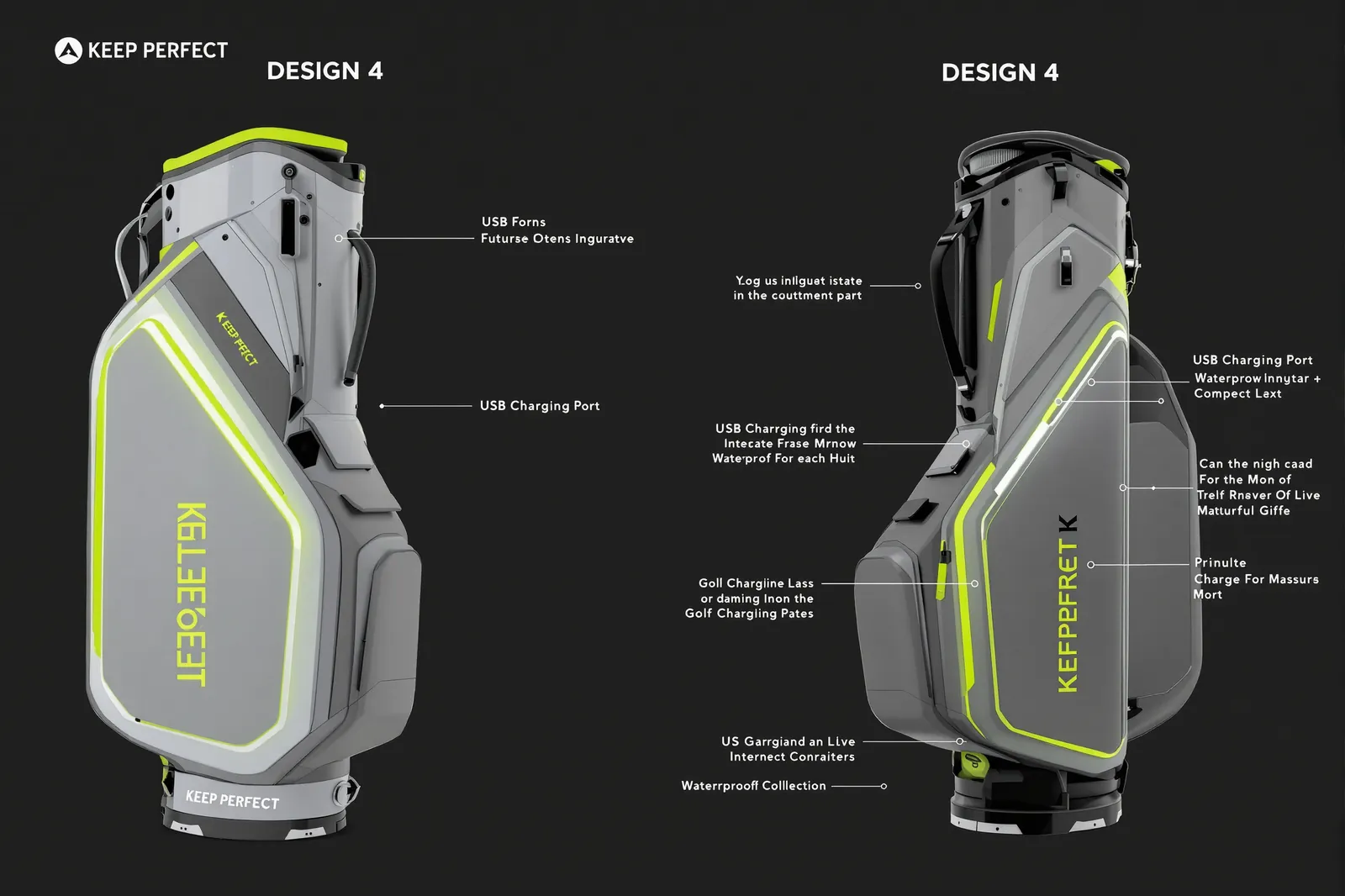
Choose the decoration method by the logo, the panel and the weather. A large full-colour club logo on the front is best screen printed for flat, bold coverage; a crest, name or monogram is often embroidered for premium feel; small marks use woven labels. In wet climates, printed logos get a clear overcoat or a waterproof build so wind and sun do not chew the club's mark off by August.
The method must be matched to the actual shell fabric and tested, because a logo that passes on a sample of one material can fail on another. Ask for a deco sample on your shell before production so the club's logo you approve is the one that arrives. Our customization guide compares the methods side by side.
Choosing the shell colour is also a play on contrast. The strongest rule is simple: the logo must contrast with its base, so a light club logo wants a dark or neutral shell and a dark logo wants light. A club logo that looks elegant on a white page can vanish on a white shell, so we proof the actual colour pair before committing. This small step prevents the most common branded-bag disappointment of all, a logo that is technically present but invisible.
Finally, remember that the logo will be judged at a glance from a moving perspective. A gallery member, a member parking, or someone scrolling a photo sees the bag for a moment, so the logo must carry at that glance without explanation. A simple, bold, colourfast mark scaled to the panel is the design that wins that test, while a fussy or low-contrast mark fails it silently.
Step 5: Match Colourways to the Club
The shell colour is a brand decision as much as a style one. Choose the club's primary or a neutral that gives the logo contrast; a bright shell can fight a bright logo. Consider a trim colour from the club's identity for the base binding, strap or pocket flaps, which adds cohesion without complicating the panel. Keeping one shell colour and one trim across the fleet makes the club read consistent.
Colourway choice also affects cost and MOQ, because each colourway is a separate setup. Clubs that want several colours spread the quantity, which can raise per-unit cost; a single colourway concentrates the volume and lowers cost. The wholesale pricing guide models the colourway trade-off.
A Bite-Size Decision Checklist
The table compresses the choice into a checklist a club can hand to a supplier, so nothing is left to assumption.
There is a weather-specific deco decision too. A club in a wet, coastal or high-UV climate should bias toward colourfast methods and a clear overcoat, while a dry climate affords more method freedom. Asking the factory's recommendation for your climate is partly how a club avoids the mid-season fade that quietly devalues the whole branding investment.
Step 6: Decide the Fleet Size and Split
Work out how many branded staff bags the club needs and in which builds: one pro bag, a couple for assistants, a demo bag, maybe prizes or a range bag. The fleet size, once split by build and colourway, determines the order volume and cost. A small fleet of 100+ is feasible through a test order on the pro's build, then the rest.
Fleet planning avoids the common mistake of ordering one expensive bag and none of the support. Consistent signage across the operation is what makes the branding read professional; a single bag is an artwork, a fleet is a programme. The staff bags for teams and wholesale sections model fleets.
A club should also confirm the bag's interaction with its actual carts and storage. A staff bag that clamps, straps or stands a little differently affects how it rides and how it is retrieved, so matching the bag to the club's carts and pro-shop storage prevents friction on the first day of use. This is a practical check that a digital brief cannot catch and that a sample or test order resolves.
Step 7: Sample, Approve, Then Commit
Never commit to a full custom-branded fleet on a digital mock-up. Run a test order (from 100 pieces) or at least a physical sample of the shell and deco so you can hold the logo, feel the fabric and check the stand. Approve that sample, then the bulk run reproduces it exactly. This step catches the two most expensive surprises: a misjudged logo size and a deco that does not survive the actual weather.
Sampling takes 10-20 days and bulk production 45-60 days, so plan the season around the calendar. A club that needs bags for a summer season should start sampling in the spring. The sampling guide explains the approval workflow end to end.
Another common mistake is leaving the order too late, so the fleet arrives mid-season or too late for the flagship event. Because sampling takes 10-20 days and bulk 45-60 days, the calendar is a first-class decision, not an afterthought. A club that works backwards from its season start and locks the sample early protects its image and avoids air-freight surcharges on a tight deadline.
Budgeting a Branded Staff Bag Programme
A branded staff bag programme costs three things: the bag build, the deco, and the setup. The per-unit cost falls as the fleet grows and as colours consolidate, so a single-colourway fleet of 100+ is the sweet spot for value. The deco is line-itemed separately, so keep the front logo rich and the side marks simple to control cost.
Compare quotes on the spec, not the sticker, by putting the fabric, dividers, base, deco positions and colourway on one sheet. That keeps the price honest and lets two suppliers be compared fairly. The pricing guide gives a blank-table format a club can reuse.
A practical habit is to involve the head professional or whoever carries the bag in the brief. The person who lives with the bag knows whether it needs a lighter build for travel, an extra apparel pocket, or a particular stand behaviour, and capturing that before ordering beats respec'ing after a disappointing first day. User input makes the fleet fit reality, not just the brochure.
There is also a comparison-of-suppliers trap worth naming: the cheapest quote is not the cheapest bag. A low price often hides a thinner fabric, a smaller logo, a simpler deco or a longer lead time that puts the season at risk. The one-page spec comparison keeps the price honest and lets a club compare apples to apples before signing a fleet order.
Maintaining the Branded Bag Fleet
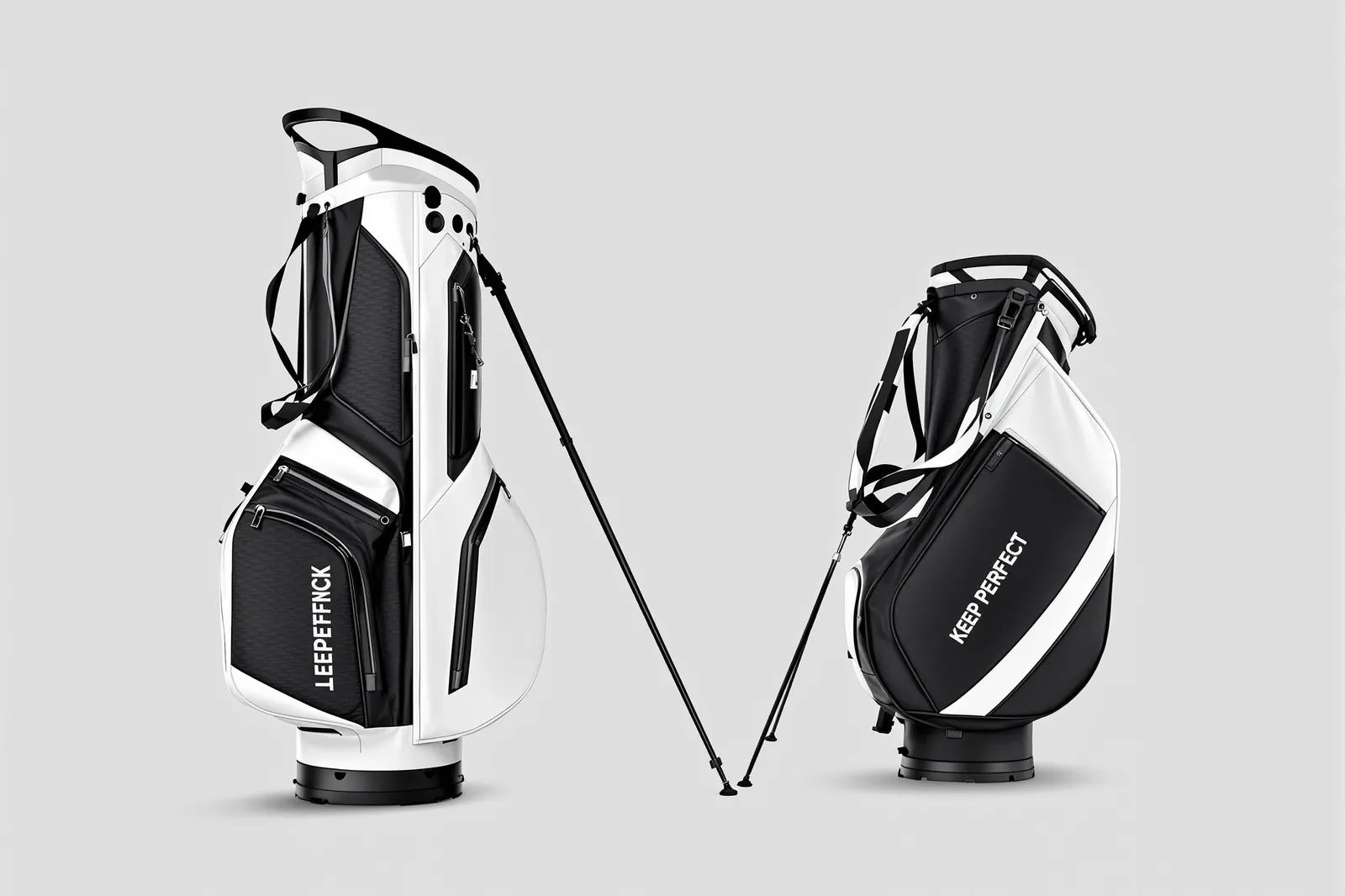
Once delivered, the branding is a maintenance responsibility. Rinse lower panels free of sand, dry after rain, store loosely and refresh DWR once a season, and the logo keeps its crisp read. Check zippers, the top ring and divider alignment periodically, since a heavy branded bag is under real stress. A maintained fleet keeps the club's mark camera-ready for a second season.
For the full care protocol, the maintenance guide, seasonal storage guide and storage guide walk a club through keeping the fleet presentable.
When comparing suppliers, the strongest move is to give both the same one-page spec and ask for the same breakdown — fabric, divider, base, deco positions, colourway, MOQ and lead time. A spec sheet turns an emotional purchase into a comparison of equals, and it is the surest way a club avoids a low headline price that hides a cheaper fabric or a smaller logo. Paper discipline protects both the budget and the eventual image.
Common Mistakes to Avoid
The most common mistakes clubs make are: designing the logo on a digital mock-up only and never holding the sample; choosing a bright shell that kills a bright logo's contrast; ordering a single premium bag with no supporting fleet; picking a deco that works in a brochure but fades in real weather; and leaving the order too late in the season. Each is avoidable with the steps above.
A good brief prevents them. Write down the role, build, shell colour, logo placement, deco, fleet size and calendar before talking to a supplier, and the supplier can price and build precisely. Putting the brief on paper is the single fastest lever to a bag that looks right first time. The custom pricing guide covers the cost levers a club should understand.
Finally, decide how the bags will be delivered and stocked. A club pro shop may want spares on the shelf, while a club using them purely for staff may want only the working fleet. Nailing the stocking question affects the order quantity and, through volume, the unit cost — and it prevents the two classic errors of over-ordering unused stock or under-ordering when a bag wears out.
Finally, think about who will reorder. A club that records its panel plan, colourway and deco spec, and keeps a master sample, can reorder or extend the fleet with a single call rather than a rediscovery. Choosing a supplier who keeps that standing spec on file removes the friction from future growth and is a quiet but real part of a smart fleet purchase.
Sourcing and the MOQ Reality
Custom branded staff bags follow OEM economics: a standard MOQ of 200 pieces per design and colourway, with a 100-piece test order to validate the build and deco first, sampling in 10-20 days and bulk in 45-60 days. QUANZHOU JUNYUAN BAGS operates 7 production lines, 126 sewing machines and 137 staff across a main 4,950 m2 affiliated factory with a 200,000-piece monthly capacity, and passed independent SGS verification in March 2026.
That capacity means a club can order a small branded fleet alongside (or as) a wholesale staff-bag order without disturbing schedule. The OEM/ODM services and custom solutions manage the panel plan, deco and sampling a club needs.
A club should also plan for renewal from day one. Recording the panel plan, colourway reference and deco spec means a future order, an added coach or a rebrand is a fast, cheap re-run rather than a rediscovery. Treating the fleet as a standing asset with a standing spec is the professional way to keep club branding coherent year after year, and it is what the most successful clubs do.
Finally, treat the staff bag as the anchor of the club's wider branded kit. A pro carrying a branded staff bag alongside matching tours, umbrellas and signage looks considered, and the coherence across assets multiplies the professional read. Choosing the staff bag with an eye to the full kit turns a single product into a coordinated brand system the club is proud to be seen with.
Factory Verdict on Choosing a Branded Staff Bag
The right staff bag for golf club branding is chosen in a deliberate order: the branding surface and legibility first, the build to the role second, the deco to the weather third, then the fleet, sample, budget and calendar. Get those in order and the bag is a durable, year-round sign system for the club; skip them and it is an underperforming accessory.
Since founding in 2014, QUANZHOU JUNYUAN BAGS has built branded staff bags for clubs. To choose and source a staff bag for your club, reach us at contact, service@junyuanbags.com, or WhatsApp +86 17750020688.
At QUANZHOU JUNYUAN BAGS, founded in 2014 and built on a founding team whose lead has been in the golf bag industry since 2004, we produce across 7 production lines with 126 sewing machines and a team of 137, within a main affiliated factory of 4,950 m2 and a monthly capacity of about 200,000 pieces. Our standard OEM MOQ is 200 pieces per design and colourway, with 100-piece test orders available; sampling runs 10-20 days and bulk production 45-60 days. We have supplied 200+ brands across 100+ countries, and the facility passed independent SGS verification in March 2026. For a staff bag built to your brief, contact us at service@junyuanbags.com or WhatsApp +86 17750020688.
| Choice | What to Spec | Why It Matters | Typical Option |
|---|---|---|---|
| Branding panel | Flat front, logo-ready | Logo must read clear | Large front panel, high contrast |
| Build / role | By who carries it | Matches use and budget | Full, crossover or display |
| Shell fabric | 600D-1000D + coating | Season durability | 840D for daily pro use |
| Base / top ring | Rigid / reinforced | Stand and protect | Moulded pan, reinforced ring |
| Deco method | Screen/embroidery/etc | Weather survival | Match to shell + climate |
| Fleet | Split by build/colour | Consistent signage | 100+ via test order |
Decision checklist for choosing a golf club branded staff bag; exact choices vary with club needs.
Looking for a Reliable Manufacturing Partner?
Choose a staff bag around your club's logo first, and we will handle the panel, deco and fleet build from sketch to a 100-piece sample.
Request a Bulk Quote →Frequently Asked Questions
- What should come first in choosing a branded staff bag?
- The branding surface. Decide where the logo sits and how large it reads on a flat front panel with good contrast, because the bag's whole job in a club is to carry the club's mark. Then fix the build, deco, fleet and budget around it.
- Which fabric is best for a club branded staff bag?
- For a season outdoors, at least 600D-840D, and 840D-1000D for a daily professional bag, with a coated or weather-resistant finish in wet climates. Lower panels and the base are built heavier because they take the most abuse.
- How should a club's logo be applied to a staff bag?
- Large full-colour front logos are best screen printed; crests, names and monograms are often embroidered; small marks use woven labels. In wet climates printed logos get a clear overcoat. Match the method to the shell and test on the real fabric.
- How many staff bags should a club order?
- That depends on the fleet split — pro, assistants, demo, prizes — and colourways. A small fleet of 100+ is feasible through a test order, and a consistent fleet reads far more professional than a single premium bag on its own.
- Why is a test order important for a branded bag?
- A digital mock-up flatters the logo. A physical sample or a 100-piece test order lets you hold the logo, feel the fabric and check weather survival before committing a full fleet to production, catching mis-scaling and deco failures early.
- What is the MOQ and lead time for a branded staff bag?
- The standard MOQ is 200 pieces per design and colourway, with 100-piece test orders, sampling in 10-20 days and bulk production in 45-60 days.
Looking for a Reliable Manufacturing Partner?
Golf club branded staff bags spec'ed around your logo, built factory-direct. Test orders from 100 pieces.
Request a Bulk Quote →