How to Store a Golf Staff Bag for Long-Term Preservation
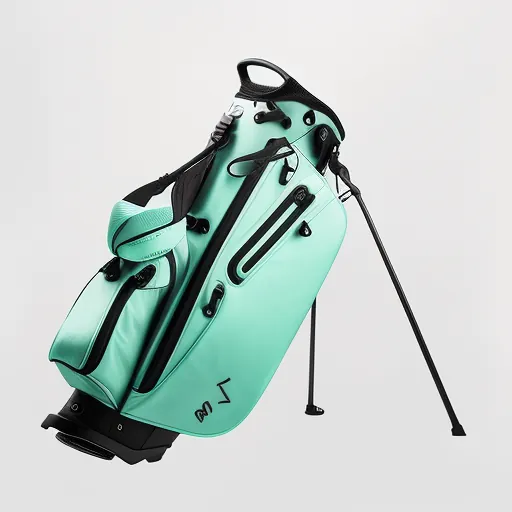
To store a golf staff bag for long-term preservation you must first make it fully clean and dry, protect every zipper, buckle and leather trim, then keep it standing upright in a cool, dry, dark and ventilated space at roughly 40–60% relative humidity – because the three things that actually destroy a stored staff bag are moisture, prolonged sunlight and physical distortion. A staff bag is the largest and most expensive bag most golfers own, and it is very often a heavy, branded item that a club, academy or team keeps for many seasons. Getting the storage routine right is a small effort that protects a large investment, and understanding what degrades a bag in storage is the first step. This guide walks through every stage of off-season and long-term staff bag storage, drawing on the routines we apply across a manufacturing facility that runs 7 production lines, 126 sewing machines and around 137 staff, shipping golf bags to more than 100 countries for over 200 brands since our team entered the industry in 2004 and our company was established in 2014.
Why Long-Term Storage Deserves Real Attention
A staff bag is not like a set of clubs that can simply be leaned in a corner for the winter. It combines layered fabric panels, dense foam padding, stiffened top collars, metal zips, buckles and frequently leather or synthetic-leather trim – every one of which reacts differently to time, moisture, heat and gravity. The most common reasons a stored staff bag returns damaged are not dramatic accidents but slow, invisible processes: trapped sweat and grass residue feeding mildew in a cupboard, sunlight bleaching colours and embrittling stitching, zips corroding in a damp garage, and a bag left folded or crushed developing permanent creases and a deformed top collar.
For teams and academies that store a whole fleet of branded staff bags between seasons, the economics are obvious: a bag that survives storage in good condition does not need to be replaced. Our affiliated factory cuts and sews these bags to withstand a hard, public life on carts, caddies and tournament trestles, but even the toughest construction relies on the owner storing it well. Treating storage as part of the purchase protects the branding surface, the structure and the long-term cost of the asset. For the maintenance routines that extend a staff bag's life day to day, our golf bag maintenance and care guide is the companion read.
Step One: Empty and Clean Your Staff Bag Completely
Before anything goes into long-term storage, the staff bag must be emptied of everything and cleaned. Remove all clubs, rangefinders, balls, tees, gloves, towels and valuables, and check every pocket because a forgotten damp glove or half-eaten snack is a magnet for mould and pests. Turn the pockets out where the zips allow, and tap or carefully vacuum the bag to remove grass clippings, sand and grit from the seams – abrasives left in the base and around dividers can grind against fabric during any movement, and they hold the moisture that stains.
Then clean the exterior. Use a mild, ph-balanced cleaner diluted in lukewarm water on a soft cloth or brush, working panel by panel and being gentle around printed logos so the branding is not rubbed off. Metal zips, buckles and D-rings can be wiped carefully with a slightly damp cloth; do not soak them. For leather or synthetic-leather trim, use a product intended for that material and follow the instructions, because harsh all-purpose cleaners can strip the finish. The interior is often forgotten, but giving the inner walls around the dividers a light clean and airing them prevents the musty smell that forms when old organic residue sits for months. For a full breakdown of cleaning materials and methods, including which cleaners are safe on different shell fabrics, our cleaning and maintenance techniques guide goes into more depth.
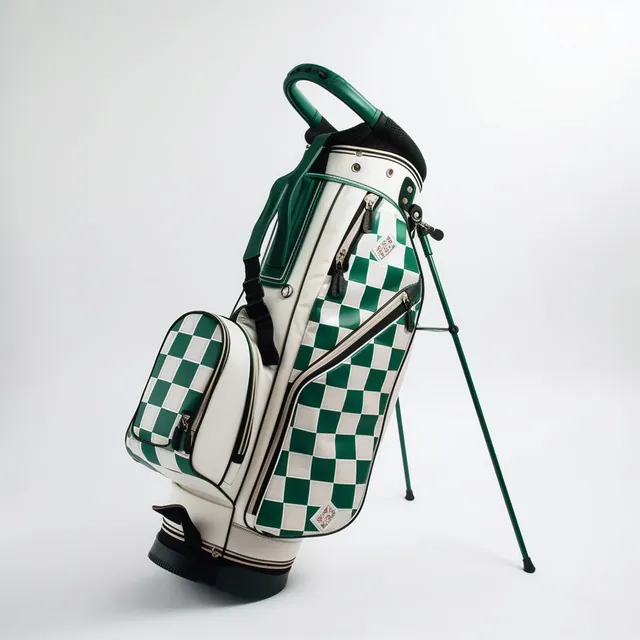
Clean Before You Store
Removing residue and grit before storage is the single most reliable way to avoid stains and mould during months of idle time.
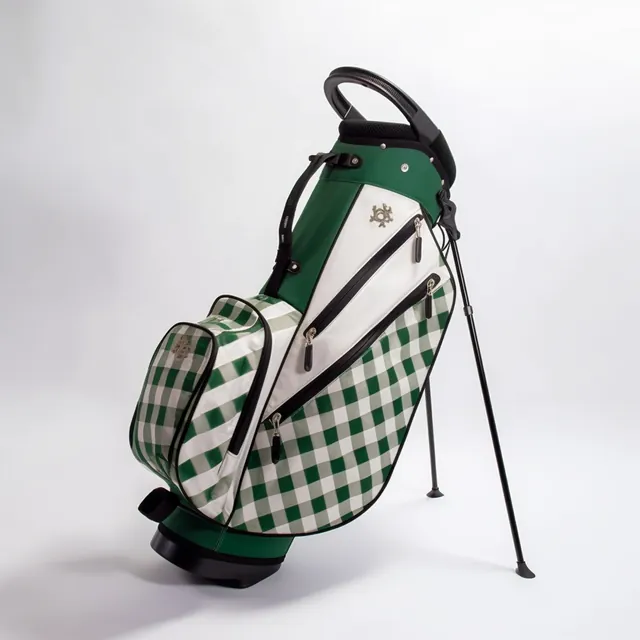
Protect Hardware and Trim
Guard zips, buckles and leather trim after cleaning so metal does not corrode and stitching stays intact through the off-season.
Step Two: Dry Thoroughly Before Anyone Stores It
The drying step is the one most people skip, and it is the difference between a bag that stores cleanly and one that develops mildew. After washing, a staff bag is full of layered padding that holds water long after the surface looks dry. Dry it slowly and completely in a well-ventilated, shaded space – never in direct sunlight and never with artificial heat, both of which can shrink, warp or discolour panels. Leave pockets open and the top open so air circulates through the interior, and allow a full day or two before sealing it away. If the bag was last used on the course on a damp day, drying it before storage is non-negotiable, because sweat and rain trapped inside the padding is precisely what feeds mould over a long winter.
How long drying takes depends on how wet the bag was and how thick the padding is. A staff bag that is merely damp can dry overnight in good airflow; one that was heavily soaked may need two or three days. The test is not the surface but the feel of the padding and the smell: a bag that smells of damp laundry is not ready. For the waterproofing angle and how sealed fabrics behave with moisture, our waterproof staff bag options guide explains the coating differences that affect moisture behaviour.
Step Three: Protect Zippers, Buckles and Leather Trim
Small hardware is where a staff bag most often fails after long storage. Zips corrode when metal sits damp or in a humid space, and a stiff or seized zip is one of the most common storage-related repairs. Before storage, check every zip runs smoothly, and where the manufacturer allows it apply a light, dry, proprietary zip lubricant sparingly to the teeth and slide – too much leaves an oily residue that attracts dust. On metal buckles and D-rings, a very light wipe with a clean, dry cloth is usually enough; avoid heavy oils that can transfer to fabric or leather.
Leather and synthetic-leather trim needs its own protection. Apply a conditioner suitable for the material so it does not dry out and crack over months of idleness, and keep any polished metal fittings off the leather so they cannot mark it in contact. Protect the valuables and accessory pockets too – the compartment layout of a staff bag is a whole subject, and our staff bag compartments for valuables and accessories guide shows how those pockets are best used and protected.
Step Four: Choose the Right Storage Position
How the bag sits in storage matters more than most people expect. The ideal is to store a staff bag standing upright on its reinforced base, because that holds the top collar and full-length dividers in their proper shape and keeps weight off the side seams. Find a spot with enough headroom – a staff bag is typically 34 to 36 inches tall – and stand it clear of walls so it cannot be nudged over. If headroom is limited and the bag must lie flat, lay it on its back with the top collar supported and nothing heavy stacked on the body, and avoid letting it rest on a zipper or pocket that could be crushed.
Whatever position you choose, never store a staff bag fully loaded, because the combined weight of a full club set presses on the base and internal structure month after month and can distort the shape. Store it empty or nearly empty, with maybe a little soft packing to help the collar hold its form if you prefer. Gravity is relentless over an off-season, so give the bag the shape-preserving setup it needs from day one. Handling and positioning intersect with general bag care, and for the broader set of practices our maintenance and care guide is a useful checklist.
Step Five: Control Temperature, Humidity and Light
The environment does the real work of preservation, and three variables rule it. Moisture: keep the storage space dry, ideally 40–60% relative humidity. In damp basements or coastal climates, run a small dehumidifier or place bagged desiccant near the bags and check them seasonally. Temperature: a cool, stable temperature is best – avoid attics and garages that swing hot in summer and cold in winter, because repeated expansion and contraction stresses seams and loosens adhesives. Light: store away from direct sunlight and strong artificial UV, which fades colours, embrittles fabric and degrades printed logos over time.
Ventilation is part of the same story. A bag stored in a sealed, airless cupboard with no circulation is more prone to trapped moisture and musty odours than one in a space with gentle airflow. This is why a breathable dust cover beats plastic wrap: it keeps dust off while letting humidity escape. If you are storing a branded fleet for a club or academy, the same environmental rules apply to every bag, and keeping them together in one conditioned room makes inspection easy. For how weather and moisture considerations shape staff bag design in the first place, our weather protection and waterproof guide rounds out the picture.
| Storage Task | How To Do It | Why It Matters |
|---|---|---|
| Empty fully | Remove every club and item, check all pockets | Prevents moisture, stains and pests |
| Clean | Mild ph-balanced cleaner, gentle panel-by-panel | Removes residue that feeds mildew |
| Dry completely | Shaded, ventilated, open pockets, 1-2 days | Stops mould forming inside padding |
| Protect hardware | Lubricate zips lightly, condition leather trim | Prevents corrosion and cracking |
| Stand upright | On reinforced base, off walls and floor contact wear | Keeps collar and dividers in shape |
| Control climate | 40-60% RH, cool, dark, ventilated | Slows degradation of all materials |
| Use cover | Breathable cotton dust cover | Blocks dust without trapping moisture |
Using Storage Covers: Breathable Beats Sealed
If you use a cover, choose materials with care. A breathable cotton or lightweight synthetic dust cover keeps dust, pet hair and scuffs off the bag while allowing moisture to escape, which is exactly what long-term storage needs. A non-breathable plastic cover or vacuum-style wrap, by contrast, traps whatever moisture remains and can turn a slightly damp bag into a mildewed one over a season. If the only cover available is non-breathable, make certain the bag is bone dry before covering it, and leave the top of the cover loosely open for airflow. When the fleet is stored in a shared locker room or club storage area, a labelled breathable cover also protects the branded surface from accidental scuffs and keeps the whole set uniform and ready to deploy.
Seasonal Checks: Inspect Staff Bags in Storage
Long-term storage is not a set-and-forget task. Once every season, or at least every few months for a fleet, inspect the stored bags: unzip pockets and check for moisture, mould or odour; run each zip and confirm it moves freely; check the stitching at the handle, strap anchors and top collar for any loosening; and look at the base for distortion. Catch a small problem – a damp patch, a seized zip, a fading panel – now, and it is a five-minute fix; leave it until the next season and it can become a replacement. Rotating or fluffing the bags occasionally also prevents any permanent settling creases. For teams, scheduling this inspection alongside the seasonal maintenance routine is the professional habit. Our broader seasonal storage guide and seasonal storage care guide give the repeatable seasonal plan.
Storing a Whole Fleet for Clubs, Teams and Academies
When a club or academy stores dozens of branded staff bags between seasons, the scale changes the routine. Assign each bag a fixed bin or shelf position so handling is uniform and nothing is stacked on another. Store the fleet together in one environment you can condition and inspect, and keep branded bags out of direct light so logos stay crisp. Because a fleet is a brand asset, consistency matters as much as cleanliness – a set of identical, well-stored bags deploys looking like a deliberate programme rather than a collection of leftovers. If any bag is heading for the workshop or refurbishment, pull it before storage and address the repair rather than storing a damaged unit that will degrade further. For how teams and academies actually spec and manage branded fleets, our why academies invest in custom staff bags article explains the investment logic behind keeping that fleet durable.
When to Store Versus When to Retire a Staff Bag
Not every staff bag is worth preserving, and knowing the line between storage and retirement protects your budget. A bag worth storing is structurally sound: zips run, base is firm, stitching at the handle and strap anchors is intact, and the shell has no tears or seam separations that threaten its function. A bag that is comfortable to use at the end of a season is almost always worth a proper store. A bag that is already broken – a collapsed top collar that will not recover, a fractured base, corroded zips beyond repair – is better retired and replaced than stored and rediscovered as a disappointment. The honest rule is to store the asset while it is still an asset, and to plan replacement for the ones that are done. That judgement keeps a fleet honest and your storage space productive.
Needing Durable Staff Bags That Store Well?
If you are sourcing replacement staff bags or a new branded fleet, our affiliated factory builds bags engineered to survive both the course and the off-season – with reinforced bases and stress points that hold their shape year after year. Tell us your fleet size and deadline and we will help you plan a sustainable rotation.
Request a Bulk Quote →Preservation as Part of the Purchase: Build Quality First
It is worth saying plainly: no storage routine can rescue a bag that was badly made. Good storage multiplies the life of a well-built staff bag, but it cannot save a cheap one with weak seams, soft base panels and corrosive hardware. This is why the construction standards you choose at purchase determine how much your storage care is worth. A bag with a rigid moulded base keeps its shape in storage; a bag with proper bar-tacking at stress points survives years of mounting and standing; a bag with good hardware does not corrode. If an academy or team will store its bags for months each year, specifying the right build grade is part of the storage strategy, not an afterthought. A deeper look at the construction and quality checks that decide long-term durability is in our tournament-grade durability standards guide.
A Simple Routine That Protects Your Investment
Pulled together, long-term staff bag storage is a short, repeatable routine: empty it, clean it, dry it completely, protect the zips and trim, stand it upright, control the climate, use a breathable cover, and inspect it seasonally. Each step is quick, but together they protect the largest, most visible piece of equipment a golfer or team owns. Whether you store a single prized staff bag over a mild-climate winter or a fleet of branded bags for a club, the same principles apply. Operated with discipline, the storage routine keeps a staff bag looking and performing like new for many seasons, saving the cost and disruption of replacement and letting the bag keep doing its job – on the cart and as a brand statement – whenever it is next called into service. For those planning to buy new, the custom OEM/ODM services guide and staff bag branding guide cover how to source a bag worth preserving in the first place.
Most storage problems come from a small set of repeatable mistakes, and naming them helps avoid them. Storing the bag damp is the single biggest error – it guarantees a mould or mildew problem. Storing it fully loaded lets the weight of clubs distort the base and structure over months. Storing it in a space that swings between hot and cold, or in direct sunlight, accelerates ageing of fabric, colour and adhesives. Wrapping it in non-breathable plastic traps moisture. And forgetting it entirely means nobody checks on it until the problem is too advanced to fix. Each of these is easy to prevent with the routine already described, which is exactly why the routine is worth following rather than improvising.
The other class of mistake is treating storage as an afterthought to the purchase itself. A bag that was never meant to be durable cannot be rescued by careful storage, so the construction grade you choose at purchase sets the ceiling on what preservation can achieve. Buy a staff bag that is structurally sound, and your storage routine multiplies its life; buy a cheap one and even flawless storage will only delay an inevitable replacement. That link between build quality and preservation success is a useful way to think about any large, expensive piece of golf equipment. For teams deciding what grade of bag to buy for a fleet they will store every off-season, our tournament-grade durability standards guide is the reference.
Storing during travel and transit layovers: not all storage happens in a cupboard for a full season. Staff bags also face shorter storage spells – between tournaments, during travel, or while a fleet waits in a locker room before a weekend event. The same principles apply at a smaller scale: empty out anything perishable or forgotten, keep the bag reasonably clean, keep it upright where possible and out of direct sun, and never leave it sealed damp in a car boot or van hold overnight where heat and humidity build up. A breathable cover helps on the road just as it does in a cupboard. Getting the short-term routine right between events reduces wear and keeps every bag deployable the moment it is needed, which is the quieter half of good staff bag husbandry.
For handling and packing a staff bag for actual travel, the transport-focused advice is collected in our how to pack a golf bag for maximum protection guide, which covers the protective cover and padding habits that pair with good storage. Handle these short layovers as carefully as the full off-season and a staff bag arrives ready, never tired.
Sources
Frequently Asked Questions
- How should I store a golf staff bag for the off-season?
- Clean it, dry it completely, protect zippers and hardware, and store it standing upright in a cool, dry, dark place at 40-60% relative humidity. Keep it off concrete floors and out of direct sunlight.
- Should a golf staff bag be stored standing up or lying down?
- Standing upright on its reinforced base is generally best, so the top collar and dividers keep their shape. If headroom is a problem, lay it flat with the top collar supported and nothing heavy stacked on the body.
- Can a golf staff bag develop mould in storage?
- Yes, if stored damp or in high humidity. Mould needs moisture, warmth and darkness, so full drying before storage plus keeping relative humidity under about 60% is the reliable prevention.
- What is the correct way to clean a staff bag before storage?
- Empty it, remove loose debris, spot-clean fabric, zips and leather trim with a mild ph-balanced cleaner, rinse gently and dry slowly away from direct heat and sun before any long-term storage.
- How long can a well-maintained staff bag last in storage?
- A durable staff bag stored correctly can last many seasons. The deciding factors are build quality, moisture control and avoiding sunlight; with those handled, the bag resumes use like new.
- Should I use a storage cover on a staff bag?
- A breathable cotton or dust cover is ideal because it blocks dust while letting moisture escape. Avoid non-breathable plastic wraps, which trap moisture and can encourage mildew.