Golf Staff Bag vs Cart Bag: Key Differences Explained
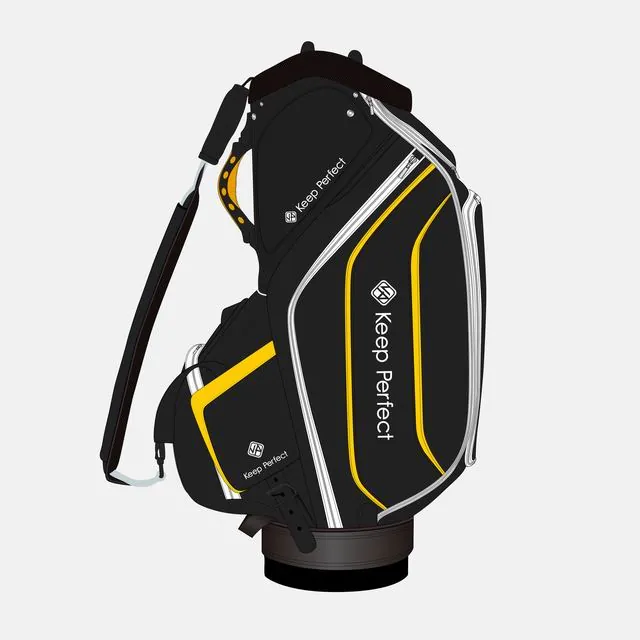
A golf staff bag is larger, holds more (14+ clubs and 12-15 pockets), carries a bigger branding surface and weighs more (typically 2.8-5.5 kg), and is built to ride a cart and stand beside a player as a professional statement; a cart bag is more compact, lighter and pocket-efficient, sized to sit on a cart or trolley for everyday play. The choice is about the role: staff bags signal professionalism and maximum capacity, cart bags suit most players who ride, and a crossover bridges the gap. This guide, written from the production floor of QUANZHOU JUNYUAN BAGS (founded 2014, 200+ brands, 100+ countries), compares them to help you choose and to support OEM programs selling both.
Defining Both Bag Types
A golf staff bag is the largest bag in the lineup, built for tour players, coaches and professionals. It carries 14 clubs (with room for more), 12-15 pockets, a rigid base and a large branded front panel, and is designed to ride a cart or buggy — it is heavy and effectively cart-only. A cart bag is a mid-size bag optimised for riding a cart or trolley with a well-organised club top, good pocket layout and moderate weight, for everyday play.
Both are cart-orientated, which is the main source of confusion. The real differences are scale, capacity, weight and the professional/branding role, and they decide which belongs in a retail lineup or a player's garage. Our golf bag types guide places both among stand bags, travel bags and sunday bags so the category is clear.
Size and Club Capacity
The top ring and depth are the first visible difference. A staff bag has a wider, deeper top (with a larger opening) built to accept 14 clubs with full-length dividers and room for teaching clubs, which is why coaches and pros favour it. A cart bag has a compact top that still holds 14 clubs but with a smaller opening and more efficient use of space, so it fits neatly on carts and trolleys.
For the vast majority of players 14 clubs fit comfortably in either. The staff bag's extra size pays off only when the user genuinely needs to carry teaching clubs, demo aids or a heavier full-season kit, or when the large top and dividers and brand panel matter more than compactness. Our staff bag buying guide covers when the extra size earns its place.
There is a practical distinction in how the two bags use a cart. A staff bag rides in or strapped to a cart and offers easy access to its large pockets; a cart bag is literally designed around sitting on a cart with a pass-through and cart straps. That difference is what a buyer feels the first day: one is built to be parked, the other built to travel. Neither is wrong, but the match to the player's daily use is decisive.
Dividers and Organization
Both bags offer multi-way tops, but staff bags more often carry full-length dividers and a putter well because they are built for professionals who protect clubs daily. A cart bag offers a 4-way to 14-way top at a lighter weight, which is enough for most players who want their clubs organised without the bulk.
Full-length dividers are available on high-end cart bags too, so the difference is how the rest of the bag trades weight for order. A player who wants maximum club organisation and a pro-grade top chooses a staff bag; one who wants a good top without the weight chooses a cart bag. The divider guide compares top layouts independent of bag type.
The divider difference also changes how a bag protects value. A player carrying graphite shafts and a set of wedges appreciates full-length dividers on either bag type, but on a staff bag the bigger opening and deeper wells let teaching clubs and demo aids ride alongside a full set without stress. For coaches who protect a valuable teaching kit, the staff bag's generosity in the top is a genuine protective benefit, not just extra space.
Storage and Pocket Layout
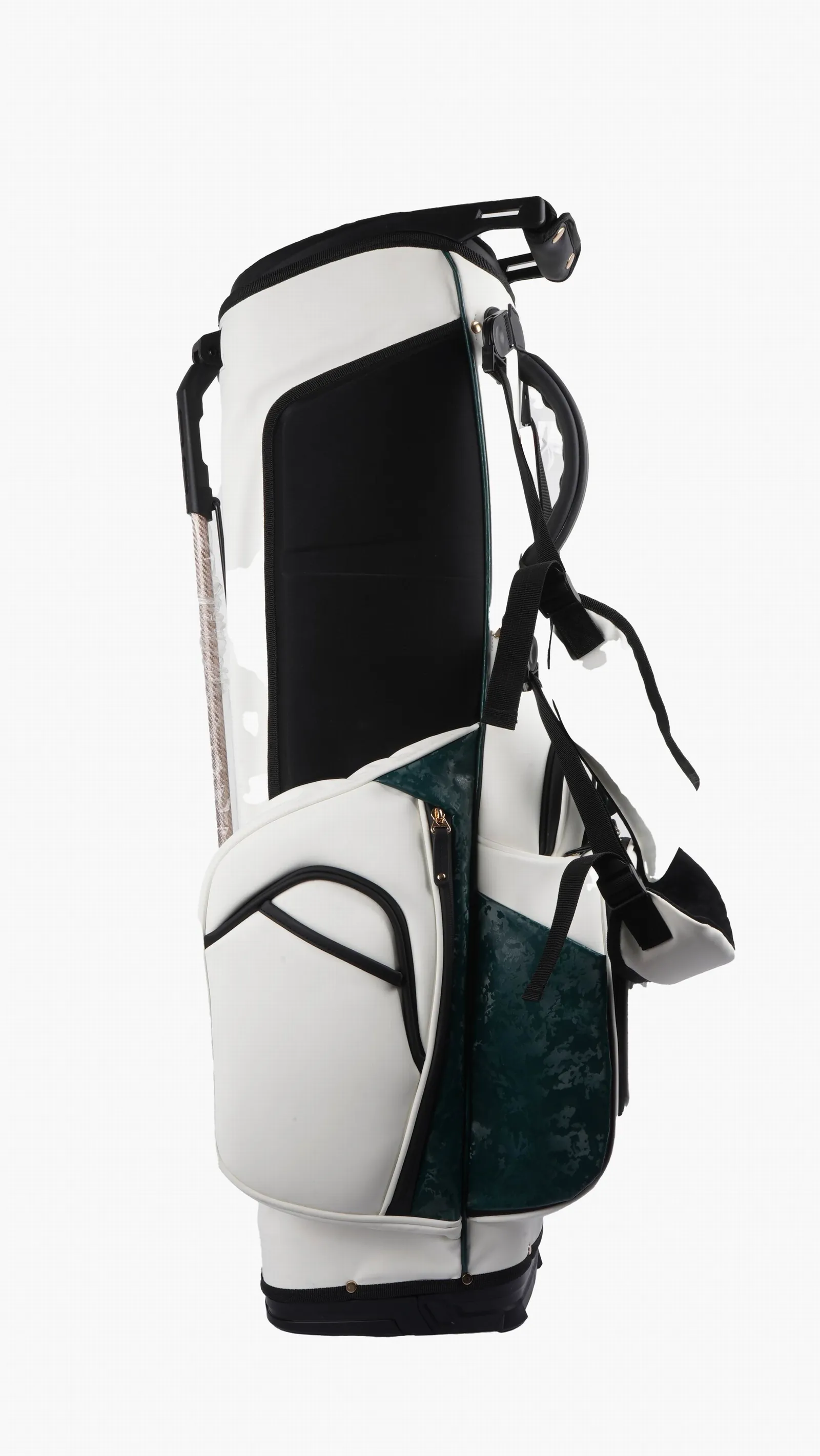
A staff bag carries more and larger storage — 12-15 pockets including valuables, rangefinder, apparel, cooler and crate pockets — sized for a full tour or coaching kit. A cart bag is pocket-efficient, offering the essentials in a lighter, more compact shell, which for most players is all they need and cheaper to carry on and off a cart.
Both place high-use pockets (balls and tees, valuables, rangefinder) within reach from the cart. The practical question is how much gear the user travels with. A club player who rides most weekends is well served by a cart bag; a coach, tournament staff or a player who travels with a full kit benefits from the staff bag's storage. The compartments guide shows the staff-bag layout.
There is also a difference in how the two bags sit in a car and on a trolley. A full staff bag is tall and wide and suits a cart or a sturdy trolley and a dedicated boot; a cart bag is more compact and slides into a car boot more readily. A buyer who travels by car every weekend will feel this difference before they feel any other, and it is often the quiet deciding factor between the two.
Weight and Portability
Weight is the clearest trade-off. A full staff bag is deliberately heavy — often 4-5.5 kg — for capacity, structure and presence, and it is effectively cart-only. A cart bag is lighter (typically 1.5-3 kg) and easy to lift on and off a cart, and some are carryable for short stretches. For a player who travels, lifts the bag constantly and values an easy carry between car and cart, weight is decisive.
A crossover staff bag (roughly 3 kg) bridges the two: staff-style capacity and branding in a lighter, carryable build. When weight is the deciding factor, the answer is often to pick a cart bag, or a crossover staff bag if the branding role is essential. The staff bag size and weight guide quantifies the ranges.
There is also a difference in what the two bags communicate at a glance. A staff bag instantly reads professional and is the natural carrier of a club or sponsor brand, while a cart bag reads as a smart retail purchase. For a buyer who wants both the branding power and everyday practicality, the modern crossover blurs the line — which is exactly why brands have broadened from a firm two-way split into a spectrum.
Cart Behaviour and Stability
Both ride carts, but they attach and stand differently. A staff bag is designed to seat flat on a cart in front of a player or on a buggy, with a wide rigid base and a strap passage that does not crush pockets; it is meant to stay put and look the part. A cart bag is sized to slide onto a cart or trolley with a strap system and to fit tidy, often with a 14-way top that keeps clubs in place on a pull-cart.
A staff bag's rigidity and base shine on a buggy or travel cart; a cart bag's compact form suits a wide range of trolleys and push carts. For players who use myclubs on a trolley, the cart bag's fit is usually simpler. The cart mounting guide and the bag types guide detail how each attaches.
Branding and the Professional Presentation
The clearest functional difference for a brand or club is the branding surface. A staff bag carries a large, mostly flat front and side panels — a billboard for a logo, academy name or sponsor marks — and is built to present a professional image on camera and at the club. A cart bag has a smaller branding area, enough for a name or logo but not a showcase.
This is why academies, tour programs and clubs that want presence order staff bags, while brands that need a practical retail bag with good value order cart bags. Both can be custom-branded; the difference is how much surface and how professional the statement. Our brand visibility guide and brand image guide explain the marketing angle.
Cost and Wholesale Positioning
Generally a staff bag costs more than a comparable cart bag because of the larger shell, full-length dividers, rigid base, more pockets and bigger branding surface. In a retail lineup the two slots sit side by side: the cart bag as the practical value and the staff bag as the professional statement. Both are available wholesale and priced on the same component levers: fabric, dividers, base, hardware and deco.
For brands deciding a lineup, the mix of staff and cart bags depends on the target buyer and the margin each supports. The wholesale pricing guide models staff and cart bag costs so a brand can set sensible margins and a retailer can pick sell-through. Contact wholesale for program levels.
From a retail merchandising view, the two bags also play different roles on a shop floor. The staff bag anchors the premium, professional end of the display and gives a buyer a sense of the brand's top quality; the cart bag is the volume SKU that most shoppers actually buy. Brands that present both together — a hero staff bag with the cart bag range beneath it — tend to lift both awareness and sell-through, because the cart bag borrows credibility from the staff bag beside it.
A Side-by-Side Comparison
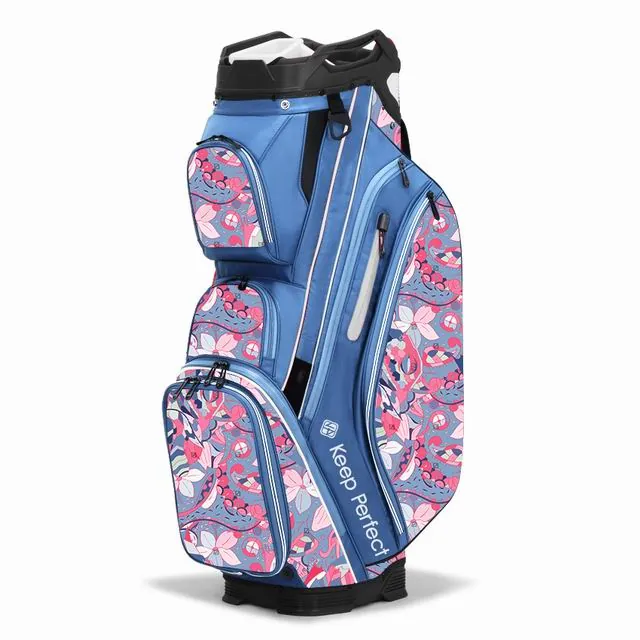
The table compares staff bags and cart bags across the attributes that matter, so you can weigh the two at a glance.
The accessories question also tends to decide a real-world buyer. A cart bag often carries a cooler, umbrella and a few travel extras because it is built for a full round with everything reachable; a staff bag can hold more, but its value is in organisation and branding rather than convenience. Knowing whether the buyer lives in the cart or in the trunk is the fastest way to steer them to the right type.
Who Should Choose a Staff Bag
Choose a staff bag if your role is professional or if the branding is the point: tour players, caddie squads, head professionals, coaches and academy managers, and clubs or brands that want a large on-camera logo. The trade is weight and cost for capacity, structure and presence, which is worth it when you are seen all day or travel with a full kit.
If you are a brand, a staff bag in the lineup signals the top of the range and anchors the professional image a club member or tournament organiser recognises. Our staff bag selection guide helps choose the right staff-bag tier.
The choice also has a fleet dimension for clubs and academies. A club that wants a consistent professional image for its pro and assistants may choose staff or crossover builds while keeping a lighter cart bag as a demo or rental unit. Because the two categories serve different roles, a smart operation often runs both, using each where it does its best work rather than forcing one type to do everything.
Who Should Choose a Cart Bag
Choose a cart bag if you are a club or recreational player who rides most rounds and wants a light, pocket-efficient, value bag that fits a wide range of carts and trolleys. A cart bag covers 14 clubs, the essentials and easy lifting, without the weight or cost of a staff bag. It is also the easier sell-through in most retail settings.
For brands, a strong cart bag range is the volume engine that funds the premium staff bag at the top. Positioning the two together — practical cart bags plus a professional staff bag — is a durable retail strategy. The bag types guide and the cart bag lineup support that mix.
For a brand deciding which to put more effort into, the answer is usually both, weighted to the audience. If the buyer is a club or academy, the staff bag is the hero because it is the branding and the professional statement; if the buyer is a recreational retailer, the cart bag is the volume engine. Knowing which end of the market you serve decides where the design and marketing effort, and the factory's spec work, should concentrate.
The Crossover: Choosing Both
For buyers torn by weight but pulled by branding, a crossover staff bag resolves the dilemma: staff-style storage and a professional brand panel in a build nearer 3 kg that can be carried for short stretches and rides a cart or trolley. It is popular with academy managers and traveling pros who want presence without a heavy full staff bag daily.
When we build staff bags we offer the full tour-spec build and a crossover variant, and we help buyers choose by weighing how the bag moves each day. The tour/staff bag section and custom solutions set up either build to a documented spec.
Price also recounts the story of the two categories. Because a cart bag is built to a tighter spec for a broad market, its price is competitive at retail; a staff bag's price carries the branding and professional construction and is usually requested through a pro shop or direct. A buyer who compares only price will choose the cart bag, while a buyer who values the brand statement will choose the staff bag — so the choice is really about the buyer's goal, not the number.
Factory Verdict on Staff vs Cart
The honest answer is that staff bags and cart bags are both cart bags in daily use; the difference is scale, weight, storage and the professional/branding role. Match the bag to how it will move and who will see it, and you will make the right call. For most recreational riders a cart bag is the value; for pros, clubs and brands a staff bag earns its weight with capacity and presence.
Since founding in 2014, QUANZHOU JUNYUAN BAGS has produced both staff and cart bags for clubs, academies and brands, OEM or wholesale. To compare builds for a project, reach us at contact, service@junyuanbags.com, or WhatsApp +86 17750020688.
When in doubt, the crossover is the compromise that most often resolves the choice. It keeps the professional-branding benefit of a staff bag while cutting weight enough for practical day-to-day use, and it fits both the pro's trolley and a car boot more easily than a full staff bag. Many clubs now standardise on a crossover for staff and reserve a full tour build for the head pro, which splits the fleet cleanly by role and budget.
Finally, weigh the buyer's real priorities rather than the marketing around them. A buyer who values brand, capacity and a professional presence is best served by a staff bag; a buyer who values cart ergonomics, weight and everyday practicality is best served by a cart bag. When those priorities are made explicit before purchase, the choice becomes obvious and the buyer is far less likely to regret the decision a season in.
Since 2014 QUANZHOU JUNYUAN BAGS has built staff and tour bags across 100+ countries for 200+ brands, running 7 production lines with 126 sewing machines and 137 staff in a main 4,950 m2 affiliated factory at a monthly capacity near 200,000 pieces; our founder has worked in the golf bag industry since 2004. Wholesale custom orders follow a standard MOQ of 200 per design and colourway (100-piece test orders), with sampling of 10-20 days and bulk of 45-60 days, and the facility passed independent SGS verification in March 2026. Reach us at service@junyuanbags.com or WhatsApp +86 17750020688 to source a staff bag programme.
| Attribute | Golf Staff Bag | Golf Cart Bag | Crossover Staff |
|---|---|---|---|
| Typical weight | 2.8-5.5 kg | 1.5-3 kg | ~3 kg |
| Club capacity | 14+ (teaching ok) | 14 | 14 |
| Divider top | 5-14 way full-length | 4-14 way | 4-8 way |
| Pocket count | 12-15 | 8-12 | 9-12 |
| Branding surface | Very large | Small-medium | Large |
| Cart / trolley | Buggy, travel cart | Wide range | Cart + short carry |
| Best for | Pros, coaches, brands | Most recreational riders | Managers, travelling pros |
Representative factory specifications; weights and features vary by build and brand.
Looking for a Reliable Manufacturing Partner?
Whether you need a practical cart bag or a professional staff bag, we build both to a documented spec with a crossover option in between.
Request a Bulk Quote →Frequently Asked Questions
- What is the main difference between a golf staff bag and a cart bag?
- The main difference is scale and role: a staff bag is larger, heavier, holds more clubs and storage, carries a much bigger branding surface and is built to present a professional statement on a buggy, while a cart bag is more compact, lighter and pocket-efficient for everyday riding.
- Which is better, a staff bag or a cart bag?
- It depends on the job. A cart bag better suits most recreational riders who value light and easy carry; a staff bag better suits tour players, coaches, clubs and brands who value capacity, structure and a large, professional branding surface and are willing to carry the weight.
- Can a staff bag be used on a regular buggy or cart?
- Yes. Staff bags are designed to ride a cart or buggy with a rigid base and a strap passage; they are heavy and effectively cart-only, not for walking with 14 clubs in your hand.
- Is a cart bag enough for 14 clubs?
- Yes, a cart bag holds 14 clubs efficiently, often with a 4-way to 14-way top. It is the lighter, more compact way to carry a full set on a cart.
- Why are staff bags more expensive than cart bags?
- Staff bags cost more because of the larger shell, more pockets, full-length dividers, a rigid moulded base and a bigger branded surface — plus the extra fabric and build, which push unit cost above a cart bag.
- What is the MOQ for custom staff or cart bags?
- For custom staff bags the standard MOQ is 200 pieces per design and colourway with 100-piece test orders, sampling in 10-20 days and bulk in 45-60 days. Cart bag programs follow a similar OEM structure.
Looking for a Reliable Manufacturing Partner?
Staff bags, cart bags and crossover builds, OEM or wholesale, built factory-direct. Test orders from 100 pieces.
Request a Bulk Quote →