How Branded Golf Staff Bags Increase Brand Visibility
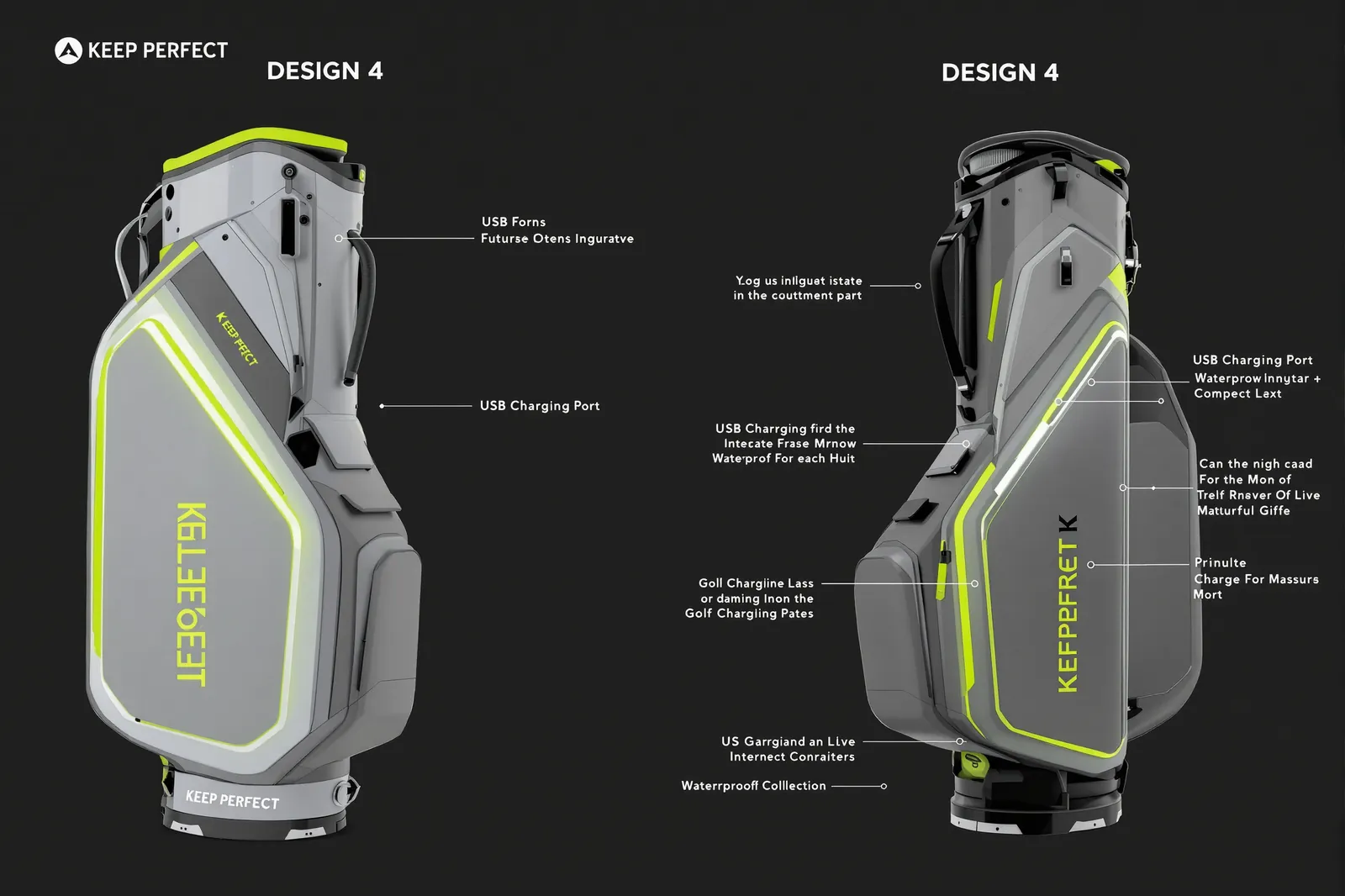
A branded golf staff bag delivers a large, durable, always-in-view advertising surface for months — a big front panel visible on every broadcast frame and on every club visit, holding thousands of impressions per event, with a logo built to stay colourfast through a season rather than a single day. For clubs, academies, tour programs and sponsors, it is one of the highest-return, lowest-effort branding assets in the sport because it travels with the player or professional and never needs to be held up. This guide, written from the factory floor of QUANZHOU JUNYUAN BAGS (founded 2014, 200+ brands, 100+ countries), explains the visibility mechanics and how to buy them.
Why the Staff Bag Is Marketing Real Estate
A staff bag is one of the only pieces of golf equipment with enough flat, static surface to carry a genuine brand message. Clubheads and caps are small and angled; a bag is large, upright, and parked beside a player for the whole round and broadcast. That makes its front and side panels the closest thing in golf to a standing billboard that follows a specific face around the course.
The asset is also self-renewing: unlike a one-event banner or a giveaway that ends up in a drawer, a staff bag stays in service for months or a season, generating impressions at every practice, tournament and club appearance. That combination of scale, duration and placement is why brands, academies and clubs treat the staff bag as real marketing, not just a product.
Quantifying the Visibility
Visibility can be approximated by impressions. A branded staff bag sits between the pin and the gallery camera for every shot, is photographed at every media moment, and is seen by spectators and on broadcast. Over a season of events and club visits, a logo on a staff bag is seen thousands of times per player, making it a high-frequency impression at a cost far below equivalent TV or digital media for the duration.
For a club or academy the numbers are smaller but the audience is right: members, students and visiting guests see the logo at every range session and round, building top-of-mind recall exactly where bookings and memberships happen. The qualitative effect — the sense that the bag is professional and established — reinforces the quantitative exposure. Our brand image guide covers the perception side.
There is also a durability angle to the visibility story. A logo that is still crisp at the end of the season keeps generating impressions, while a faded one quietly stops working and even starts working against the brand. Because the two are the same asset, keeping the deco colourfast and the shell presentable is not cosmetic upkeep — it is how the impressions keep counting.
Legibility: The Difference Between Seen and Noticed
An impression only counts if the logo is legible, and legibility is engineered, not hoped for. A logo that is too small, low-contrast, or cut by a seam or pocket does not register. The winning design puts the primary mark high on the front panel, uses high contrast against the shell colour, scales it to the panel, and keeps it clear of the base junction and pocket lines.
Secondary marks go on the side panels; a player name or monogram often sits on a smaller chest panel. The design deck should show the panel plan so a sponsor team signs off on placement before fabric is cut. Our tour staff bag guide and customization guide cover the legibility logic in depth.
There is a measurable difference between a logo that is merely present and one that is legible at distance. The winning size is roughly the visual weight of the brand printed on the bag; anything smaller registers as background, anything crowded reads as noise. Because the audience includes broadcast viewers and a full gallery, we test the panel text legibility at typical viewing distance in a printed proof, so the asset works in the way the brand actually gets seen.
The impressions also compound across appearances. A single bag used at a practice, a tournament, a club appearance and a social post earns repeat exposure to the same audience, which is how top-of-mind recall is actually built. Marketers call this frequency, and a staff bag delivers it naturally and at no incremental media cost the more the player or club appears in public.
Deco Durability Is the Hidden Half of Visibility
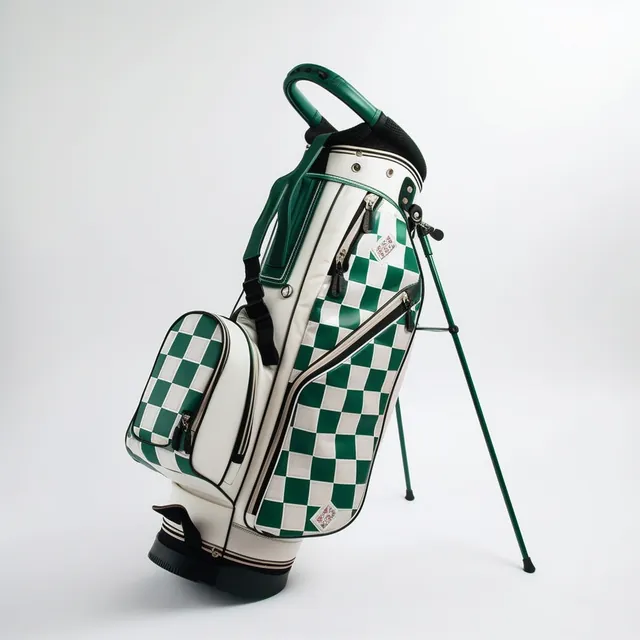
A logo that fades or peels stops being visibility and starts being damage. Because a staff bag lives in sun, rain and cart friction all season, the branding must be colourfast and abrasion-resistant, applied by the right method for the panel, and undertested on the actual shell fabric. Screen printing for large bold marks, embroidery for premium names, woven labels for small spots, heat-press for special trims — each has a place.
Price-wise, time on camera with a fading logo is wasted; a durable deco that survives a season keeps the impression working the whole time. We test deco adhesion and colourfastness and match finishes to the shell, so the logo the sponsor approved is the logo still on the bag in week twenty. The quality standards guide lists the deco test points.
Impressions at Every Touchpoint
A branded staff bag works across every touchpoint a professional or club touches: the practice range, the first tee, the tournament, the clubhouse and social media. Each is a miniature ad placement that repeats. On social, a player tagging the bag in photos multiplies the reach, and a distinctive bag is more likely to be photographed and shared than a plain one, which is free earned media.
For academies the same bag appears at coaching sessions, demo days and junior programs, reinforcing the brand to students and parents week after week. The key is a bag distinctive enough to be worth looking at and durable enough to keep looking good. Our club exposure guide extends this to broader club branding.
The Match: Logo Size and Panel Design
The front panel is the whole game, so its design is the first step of the build. We lay out a marked-up panel plan that shows where the logo sits, at what effective size, in which colourway, and how pockets and seams avoid it. The plan is approved like any artwork, because changing placement after fabric is cut is expensive.
For clubs, the classic ask is a single clean logo and a team or academy name; for sponsors, a richer composition of primary and secondary marks. A tidy, legible front beats a cluttered one that registers as noise. The tour/staff bag section and custom solutions manage this panel design end to end.
The panel is also a canvas for a story, not just a logo. Clubs and sponsors increasingly use the front to carry a program name, a season tagline or a motivational word alongside the mark, which turns a passive surface into a message that connects with members and fans. Legibility still rules — a clean hero mark with one supporting word reads better than a panel covered in clutter.
A Visibility Comparison of Bag Type Branding
The table compares how different bag types deliver brand visibility, showing why the staff bag is the marketing specialist even among cart-friendly bags.
The panel is also a place to be disciplined about message density. A brand that crowds a tagline, a contact and a website onto one panel dilutes the hero logo and weakens recall; a brand that lets the mark lead and moves supporting text to side panels is more legible and more memorable. The discipline of one strong message per panel is what turns a surface into advertising.
Cost-Effectiveness vs Other Branding
Measured in impressions per dollar over the life of the asset, a sturdy staff bag is difficult to beat. A single-order cost, plus deco, buys months of on-course and on-camera impressions per player or per academy station, with no ongoing media buy. Compared with a billboard rental, a golf tournament sponsorship patch, or per-post social promotion, the staff bag amortises a large impression count across a long window.
The economics improve further at wholesale: a club ordering a set for multiple pros or an academy buys one asset that generates impressions all season at every station. For that reason the brand-led staff bag is often funded from the marketing budget rather than the pro shop, and is run as a kind of warehousing of visibility. Our wholesale pricing guide models the per-unit cost at club and academy volumes.
The cost-effectiveness also holds up against more transient branding. A tournament patch, a banner or a paid social post delivers impressions for the duration of the spend; a staff bag delivers for the life of the asset, which can be a full season or longer with light care. When the asset outlives the campaign, the effective cost per impression falls further, which is why seasoned sponsors treat the bag as a fixed asset in the media plan.
Designing the Brand Panel for Maximum Impressions
The most visible logo is the one designed for longevity. Use your full-colour mark on the front, keep the base it sits on neutral so contrast does the work, and resist over-crowding with text. A name or tagline can move to a side or chest panel. The panel should read at distance from the gallery and at broadcast resolution, which is why scale and colour balance beat ornament.
We advise on colourway adjustments against the shell fabric so the mark stays legible after weathering, and offer a clear overlay on printed panels for extra abrasion life. A panel designed this way keeps its effect from the first round to the season's end, so the impressions never stop. The materials guide explains how shell fabric supports or fights panel colours.
The economics also improve with consolidation across the fleet. Because setup is a real cost, a sponsor or club that runs one consistent panel across many bags spreads that setup over more units and lowers cost per impression. The same legal panel, deco and colourway repeated across a pro's bag, a demo bag and a prize bag both strengthens the image and improves the arithmetic.
Club and Academy Deploys
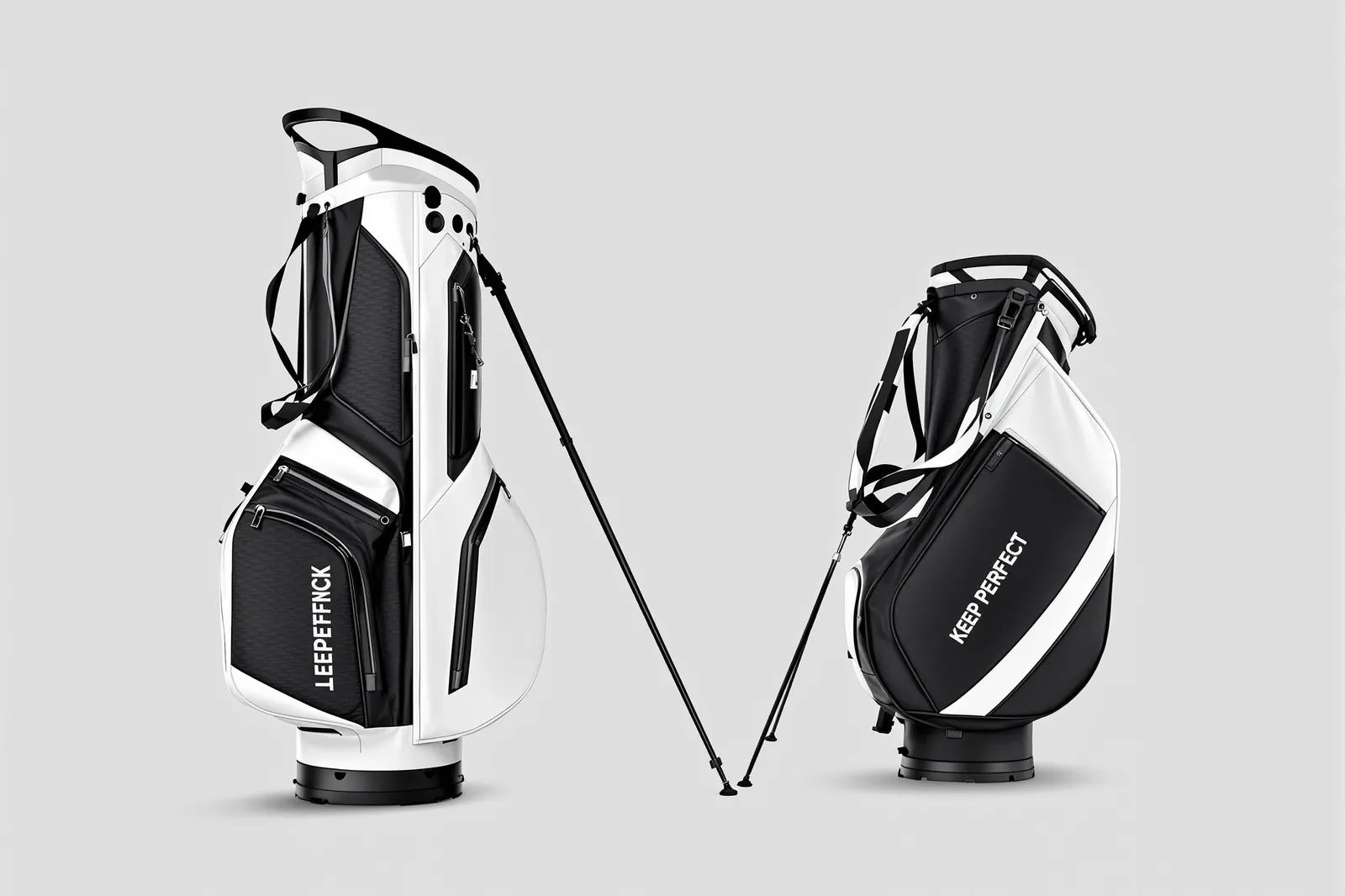
For a club, branded staff bags turn a practical item into a sign system: the head pro's bag, the assistants' bags, a demo bag and a prize bag all carry the brand consistently. That consistency is itself a signal of professionalism, and it reinforces the club to members every day. Academies achieve the same with matching staff bags across coaches and a range bag.
Purchasing a small fleet keeps the branding identical, and OEM economics make it affordable: a standard MOQ of 200 pieces per design and colourway with 100-piece test orders for a first run, sampling in 10-20 days and bulk in 45-60 days. The wholesale section and staff bags for teams guide cover fleet programs.
For clubs the deploy is not just the pro's bag; it is every touchpoint the club owns. A pro bag, an assistant's bag, a demo bag and a prize bag all carrying the club mark multiply the impression the club makes, and a matching set reads as an organisation with standards rather than a few mismatched bags. The fleet becomes a sign system the club members and visitors absorb all day, reinforcing exactly the kind of established, professional image clubs want.
It is also worth making the visibility goal explicit before the order, because the panel, deco and build can then be aimed at it. A brand that says its priority is maximum on-camera recall will get a different recommendation than one that wants longevity and discretion, and stating the goal up front lets the factory tune the asset rather than guess. Clear goals produce a bag that is deliberately effective rather than merely branded.
Sponsor and Tour Deploys
For sponsors, the staff bag is the hero surface of a player agreement: it is the asset most likely to be on screen and is easy to photograph. Sponsors typically reserve the front panel and add the brand to side panels, with the player name on a chest panel. The agreement often specifies the exact deco and durability so the asset stays camera-ready all season.
Because the logo is the deal, sponsor builds follow the same panel-plan and deco-testing path as the tour custom build. A durable, legible sponsor bag protects the sponsor's paid-for visibility, which is why we treat deco durability as a core part of the deliverable. The tour/sponsor guide covers this program in detail.
Finally, deco and panel choices should be future-proofed. A logo that is simplified enough to survive a colour change, and a panel proof that is re-available from the file, lets a brand refresh the asset cheaply next season rather than recreate it. Visibility that is easy to sustain is visibility that actually gets sustained — which is the practical definition of a durable branding win.
Measuring and Protecting the Investment
Brand teams can measure the asset's value with simple tracking: photographs per event, shots in broadcast, social mentions, and the durability of the logo over the season. Protecting the investment means regular light care — rinsing lower panels, not dragging the bag, storing it loosely — and reviewing the logo condition at season end so a rebuild keeps the asset working next season.
A branded staff bag is a recurring, not single-use, asset if maintained. The care protocol is light, and the maintenance guide plus the storage guide keep the logo and shell camera-ready for another season.
Finally, the working relationship is part of the asset. A sponsor that partners with the factory on the panel plan, the deco and the durability gets a bag tailored to its media goals, while one that simply buys a stock bag with a logo gets a generic result. Because the visibility mechanics are fully controllable — panel, size, contrast, deco — the brand's return is a design decision the brand itself can steer.
Finally, the success of a branded staff bag is measurable in the decisions it influences. A club logo carried by its pro builds familiarity that members and guests recall when renewing; a sponsor logo seen every week builds the awareness the brand has already paid for in other media. When a brand can point to that multiplied recall, the staff bag has done its job as a working part of the marketing mix.
Factory Verdict on Brand Visibility
A branded golf staff bag is a large, durable, always-in-view billboard a player or professional carries all season, delivering thousands of impressions per asset at a cost media buyers would find hard to match — as long as the logo is designed for legibility and deco is durable enough to stay crisp. That is the whole visibility equation, and it is fully controllable at the factory.
Since founding in 2014, QUANZHOU JUNYUAN BAGS has produced branded staff bags for clubs, academies, sponsors and tour programs. To build visibility for your brand, reach us at contact, service@junyuanbags.com, or WhatsApp +86 17750020688.
The practical takeaway for any brand or club is to treat visibility as an engineering question with clear answers: choose a large flat panel, a legible high-contrast logo, colourfast deco and durable construction, then deploy the asset where it is seen every day. Done in that order, a branded golf staff bag reliably converts a practical piece of equipment into a working channel for the brand, season after season.
At QUANZHOU JUNYUAN BAGS, founded in 2014 and built on a founding team whose lead has been in the golf bag industry since 2004, we produce across 7 production lines with 126 sewing machines and a team of 137, within a main affiliated factory of 4,950 m2 and a monthly capacity of about 200,000 pieces. Our standard OEM MOQ is 200 pieces per design and colourway, with 100-piece test orders available; sampling runs 10-20 days and bulk production 45-60 days. We have supplied 200+ brands across 100+ countries, and the facility passed independent SGS verification in March 2026. For a staff bag built to your brief, contact us at service@junyuanbags.com or WhatsApp +86 17750020688.
| Bag Type | Branding Surface | On-Camera Impressions | Best Use |
|---|---|---|---|
| Staff bag | Very large front + sides | Highest — every frame | Sponsors, clubs, pros |
| Cart bag | Medium front | Low-mid | Retail value branding |
| Stand bag | Medium, curved | Low-mid | Walkers, casual |
| Travel bag | Medium | Low (travel only) | Flyers, premium kit |
Representative comparison of branding potential; actual impressions depend on use, camera coverage and placement.
Looking for a Reliable Manufacturing Partner?
Turn a practical staff bag into a season-long branded asset with a legible, durable logo engineered for visibility.
Request a Bulk Quote →Frequently Asked Questions
- Why are golf staff bags good for branding?
- A staff bag has the largest, flattest, most static branding surface of any golf gear, sits beside the player all round and on every broadcast, and stays in service for a season. That makes it a durable, high-frequency, on-camera advertising asset for clubs, academies, sponsors and brands.
- How many impressions does a branded staff bag generate?
- Impressions scale with use and camera coverage. A staff bag seen at practice, tournament and media moments across a season generates thousands of views per asset per player or academy station, at a fraction of the cost of equivalent paid media.
- What makes a staff bag logo legible on camera?
- A high-contrast, colourfast mark placed high on the front panel, scaled to the panel and kept clear of seams and pockets, with secondary marks on the sides. Legibility is engineered into the panel design before production.
- How long does a staff bag logo last?
- With deco matched to the shell and tested for colourfastness and adhesion, and light seasonal care, a logo can stay crisp through a full season. We test deco durability and match finishes so branding survives sun, rain and cart friction.
- Can a club or academy buy a small branded fleet?
- Yes. OEM economics allow 100-piece test orders down from a standard MOQ of 200, so a club or academy can outfit coaches and a range bag with consistent branding. Bulk production runs 45-60 days.
- What is the MOQ and lead time for branded staff bags?
- The standard MOQ is 200 pieces per design and colourway with 100-piece test orders, sampling in 10-20 days and bulk production in 45-60 days.
Looking for a Reliable Manufacturing Partner?
Branded staff bags built for legibility and logo durability, factory-direct and wholesale. Test orders from 100 pieces.
Request a Bulk Quote →