Wholesale Golf Staff Bags for Teams and Academies
To source wholesale golf staff bags for a team or academy, order a consistent, branded fleet at a standard MOQ of 200 pieces per design and colourway (with 100-piece test orders), sampling in 10-20 days and bulging in 45-60 days, choosing a build tier by how the bags move, and consolidate to one colourway and a clean logo to control cost. A matching fleet is what makes branded staff bags read professional, and the economics come from consolidating design, colour and deco. This guide, written from the production floor of QUANZHOU JUNYUAN BAGS (founded 2014, 200+ brands, 100+ countries), is the wholesale checklist for teams and academies.
Why Teams and Academies Go Wholesale
Teams and academies need staff bags in a way a single player does not: they need many, and they need them to look identical. A golf academy putting coaches, assistants and a range bag in the same branded bag turns the operation into a walking brand statement, and a team that travels to matches wants gear that presents a unified, professional front. Wholesale is simply the way to buy that at a sane per-unit cost.
The wholesale path trades a little minimum order for a much lower unit cost and, critically, a consistent fleet. It is also the moment a team or academy gets to spec the bag to its real role rather than accept a retail shell. This guide walks through every decision a programme director or manager faces. Our teams and schools guide and why academies invest set the strategic case.
The Fleet: Split Builds, One Image
A team or academy rarely needs one build for every bag. The head coach's bag, which is seen and used daily, may be a full staff build with 14-way dividers and a rigid base; travelling staff may use a lighter crossover; a range or demo bag can be a lighter build that still presents well. The brand stays consistent because every build carries the same shell colour, logo and deco.
So the wholesale order is really a small fleet plan: assign a build tier to each role, keep the branding identical, and buy the tiers in the quantities each role needs. This splits the order into per-role SKUs rather than a single spec that fits nobody. The staff vs cart guide and size & weight guide help assign tiers.
There is also a branding equity argument for the fleet. A team whose coaches, academy whose staff, all carry the same professional bag becomes identifiable at a glance — in person, on social, on a leaderboard photo — which is a form of earned brand that no single retail bag provides. That shared visual identity is part of what makes wholesale staff bags a strategic buy rather than a utility purchase.
Build Tiers and What They Buy
Three tiers cover a team or academy. The value tier uses 600D fabric and a 5-way top for display and promo bags. The professional tier uses 840D fabric, a 7-8 way full-length top and a moulded base for daily coaching. The tour tier uses 840D-1000D, a 14-way top with a putter well and a rigid base for head pros and five-day-a-week use. Each tier is a price point as well as a build.
Assigning an honest tier per role avoids the two classic mistakes: buying only the cheapest (and watching it sag in a term) or only the most expensive (and wasting budget on display bags that never travel). The wholesale pricing guide models all three tiers so a budget can be built realistically.
The build-tier assignment also has a practical budget shape. Most teams do not need a tour build for every coach, so the smart fleet puts the single most-seen bag at the top tier and the rest at the professional tier, reserving any lighter or display builds for the roles that truly are light. That shape delivers the professional image where it matters while keeping the average unit cost within a team budget.
There is also a resale and longevity consideration for a team fleet. A well-built staff bag holds its value and can serve years of programmes, and a fleet that is maintained and refreshed stays useful instead of being replaced wholesale every season. That longevity is part of why the professional tier is often the better long-term value even when the upfront number is higher.
The Branding: One Logo, Done Once
Consistency is the whole point, so the branding is consolidated: one logo, one colour scheme, one deco method, repeated across the fleet. Consolidation also saves setup cost, because each new deco position and colour is a separate production setup. A team logo on the front and a name on the chest, applied identically to every bag, is the repeatable recipe.
Screen print the hero logo, embroider names, or fit the mix the club prefers — but do it once and repeat it. The deco is also where weather survival is decided, so choose a colourfast method with an overcoat in wet climates. Our customization guide adds the method logic.
Fleet MOQ and the Test Order
Wholesale staff bags follow a standard MOQ of 200 pieces per design and colourway, with 100-piece test orders for a first fleet, sampling in 10-20 days and bulk production in 45-60 days. A test order is the wise first move for a new programme: it validates the build, the deco on the real shell, and the fit for the academy's carts, before the full fleet is committed.
The MOQ is per design and colourway, not per order, so consolidating to one design and one colourway actually unlocks the lowest unit cost. A team that can standardise on a single look gets the best wholesale rate and the strongest branding at once. The wholesale negotiation guide covers how to structure the ask.
There is also a growth plan in a well-chosen fleet. A team that starts with a professional-tier core and adds tor or display bags as the programme grows keeps its image coherent without over-spending upfront. Because the branding is identical across tiers, the fleet can grow gradually and still look like a deliberate, unified investment rather than a random collection.
Packing, Shipping and Delivery Planning
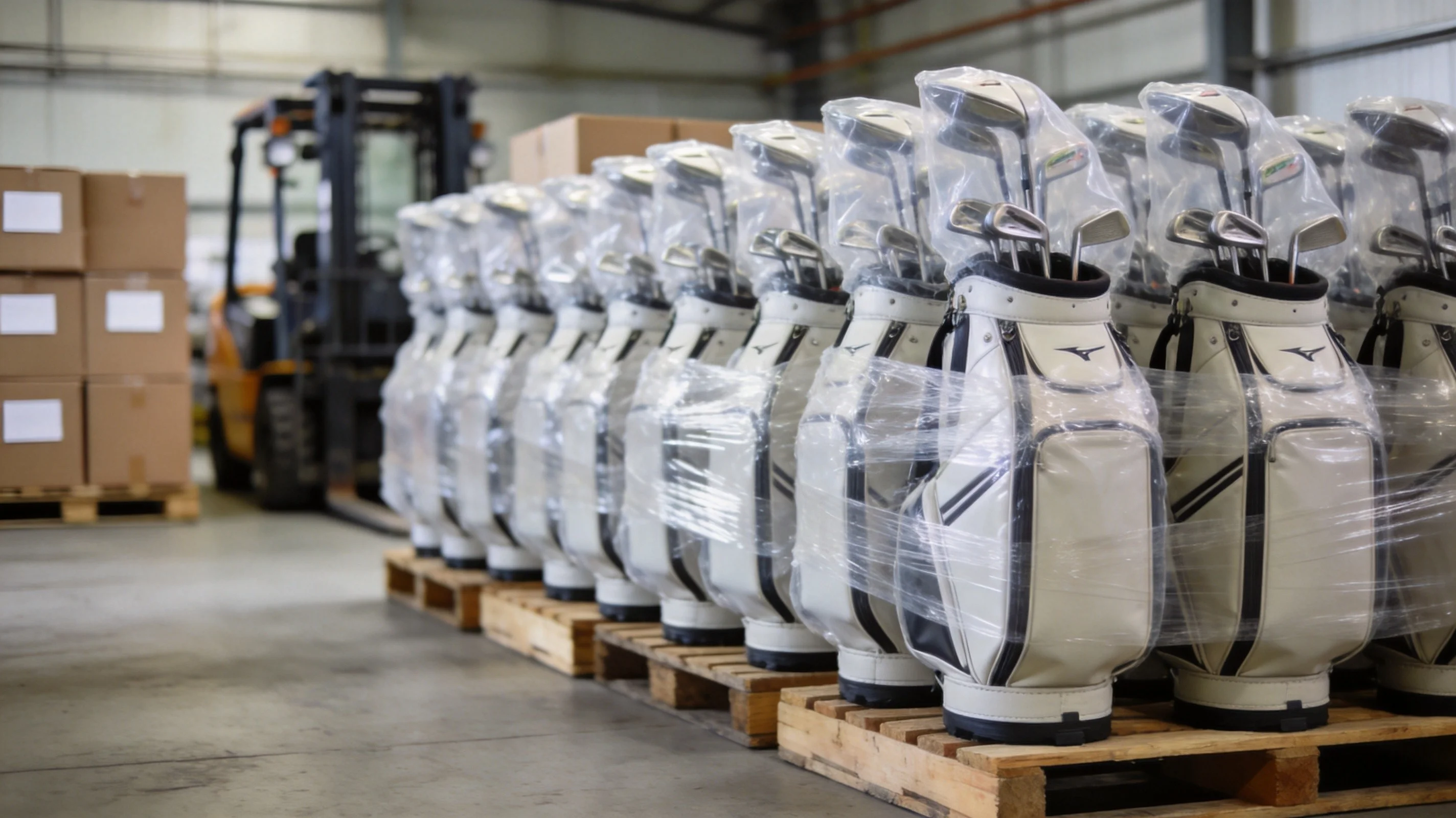
A wholesale fleet must arrive intact and on time, so packing and shipping are part of the decision. Staff bags are large, so they ship flat or in protective individual packing with reinforced corners; wholesale orders go on pallets for sea freight or consolidated cartons for air. Teams ordering for a season should plan for ocean lead time or pay for air on a tight deadline.
Packaging also protects the deco, so the logo panels need cushioning during transit. Confirm the incoterms, packaging and any duties with the supplier up front rather than at the dock. The packaging and shipping guide and order process guide cover the end-to-end logistics.
The test order also de-risks the deco and the colourway with real fabric before any large commitment. Because a small run confirms how the logo reads, how the colour sits on the shell and how the bag balances, a team can correct any surprise while the change is still cheap. The 100-piece test order is the professional's hedge against a full-season mistake.
Cost Levers Unique to a Fleet
A team fleet's unit cost falls with three levers: order volume, colourway consolidation and deco simplicity. Ordering enough units, sticking to one colourway, and keeping the hero logo rich but secondary marks simple all push the per-bag price down. Conversely, many colourways, many deco positions and multi-colour embroidery each add setup that raises cost.
The disciplined move is to fix the fleet plan, consolidate to one design and one colourway, and line-item the deco, then compare quotes on that single spec. That is how two suppliers are compared fairly and how a team keeps its budget predictable. The pricing guide gives a blank comparison table a programme can reuse.
A Fleet Build-Tier Comparison for Teams
The table summarises the three build tiers a team or academy typically orders, so a fleet can be assigned by role with a clear per-tier expectation.
Shipping and duties are a real part of the wholesale arithmetic, and they vary by destination and incoterm. A team should factor ocean freight lead time and any import duties into both the schedule and the total cost, and confirm the packaging protects the logo panels for the whole journey. A fleet that arrives wrinkled or damaged under a bad incoterm fails at the front door, so the handoff terms deserve the same care as the build spec.
A team should also confirm the deco survives washing and travel. Bags that fly, ride in vans and get hosed down are hard on logos, so a colourfast, overcoated method is the safe choice for a fleet that is on the road. Confirming this before a large order beats discovering a peeled logo on the first away trip.
Scheduling Around the Season
Wholesale staff bags have a real lead time, so the calendar is a decision. Sampling takes 10-20 days; bulk production 45-60 days; sea freight then adds weeks. A team that needs bags for a summer season should start sampling in the spring and decide air vs sea by the deadline. Building the schedule backwards from the season is the professional way to plan a fleet.
QUANZHOU JUNYUAN BAGS operates 7 production lines, 126 sewing machines and 137 staff across a main 4,950 m2 affiliated factory with a 200,000-piece monthly capacity and a 200+ brand / 100+ country track record, so a fleet runs alongside a brand's broader season without crowding it. The future dated planning is covered in the staff bag lead time guide.
Managing colourway complexity is a real cost control. Every colourway is a separate production setup, so a team that can consolidate to one shell colour vastly improves its unit price, while a team wanting several colours should expect higher cost and longer runs. The strongest fleets keep one clean colourway and let the logo and trim carry the identity — which is both economical and more professional-looking.
Finally, protect the season from surprises by locking the calendar and the spec early. Sampling takes 10-20 days and bulk 45-60 days, so a team that confirms the sample in time and fixes the full order on a documented spec removes most of the risk of a late or mismatched delivery. The teams that plan this way consistently get their fleet on time and on spec, which is the practical definition of a smooth wholesale season.
Quality and Consistency Across the Fleet
The risk a team cares most about is inconsistency: bags within one fleet that differ in colour, logo or build quality, which undermines the whole point of matching. Consistency is delivered by a written QC protocol that checks every unit against the approved sample — shell colour, deco placement and colourfastness, divider alignment, base, hardware — not by luck. A fleet is only as professional as its least-consistent bag.
We inspect every staff-bag lot against the approved sample and run destructive testing to confirm the bulk matches it, and independent SGS factory verification in March 2026 gives teams third-party confirmation of capability. The quality standards guide and the consistency guide document how this is assured.
Consistency within a large fleet is a production discipline, not a wish. Because a run of several hundred bags is made across many workstations, we hold the colourway, logo placement and deco to the master sample and check batches through production. A team that asks for (and receives) this depth of QC is much less likely to open boxes of subtly mismatched bags — the quiet killer of the whole professional image the fleet was meant to project.
Long-Term Programmes: Re-Supply and Refresh
Teams and academies are recurring buyers: a programme that replaces or adds coaches each year orders again. A long-term wholesale relationship locks a stable design, colourway and deco, keeps a standing spec on file, and gives predictable pricing and a locked schedule so new stock arrives on time each season. Refreshing the fleet every couple of seasons also keeps the branding looking current rather than dated.
For recurring orders the value of consolidating cannot be overstated: the standing spec means no renegotiation of the build each time, and the volume keeps the unit cost at its best. The long-term partnership guide explores how teams turn a first fleet into a standing programme.
Finally, consider the refresh cycle for a team fleet. Bags wear from travel and handling, and a guard or academy that wants to stay current should plan a gentle refresh every couple of seasons, replacing the most-worn bags and topping up as staff grows. Because the spec is documented, a matching top-up is a fast re-run, keeping the fleet coherent without a full redesign every time.
Finally, treat the wholesale relationship as a partnership rather than a one-time purchase. The factory that learns the team's spec, colours and calendar can forecast, price and produce with less friction each season, which lowers cost and risk for both sides. The strongest teams and academies build that relationship deliberately and reap the compounding benefit of a supplier who genuinely knows their fleet.
Factory Verdict on Wholesale Staff Bags for Teams
The wholesale path for teams and academies is a fleet decision: assign a build tier to each role, consolidate to one design and one colourway, validate with a 100-piece test order, and schedule sampling and bulk around the season. Done that way, the fleet is both the best-value buy and the strongest branding a team can place on the course.
Since founding in 2014, QUANZHOU JUNYUAN BAGS has supplied wholesale staff bags to teams, academies and tour programmes. To build a branded fleet for your team, reach us at contact, service@junyuanbags.com, or WhatsApp +86 17750020688.
A repeating wholesale programme also smooths the unpredictable parts of a season. When a coach joins mid-year or a fleet needs topping up after damage, a standing spec lets the factory produce a matching batch quickly and to the same standard, so the fleet never looks assembled from leftovers. That responsiveness is as much a value of a long-term wholesale relationship as the price, and it is the practical reason teams consolidate around one reliable supplier.
The other part of a smooth season is a reliable re-supply lane. By keeping the fleet spec, colourway and deco on file, a team can reorder for the next season, top up for new members or replace a damaged bag without restarting the design conversation. That standing lane is what turns a first wholesale order into a dependable, long-term supply — the real value of consolidating with one factory.
The core lesson for a team or academy is deceptively simple: a wholesale staff bag order succeeds when the fleet plan, the branding and the calendar are decided before the first quote. Assign builds to roles, consolidate to one design and colourway, validate with a 100-piece test order and schedule sampling and bulk around the season, and the fleet arrives on time, on spec and on budget, a unified professional brand on the course. It is this discipline of deciding the whole programme before buying any of its parts that separates a fleet which quietly elevates a team every single tournament from one which simply takes up luggage space in the van.
Since 2014 QUANZHOU JUNYUAN BAGS has built staff and tour bags across 100+ countries for 200+ brands, running 7 production lines with 126 sewing machines and 137 staff in a main 4,950 m2 affiliated factory at a monthly capacity near 200,000 pieces; our founder has worked in the golf bag industry since 2004. Wholesale custom orders follow a standard MOQ of 200 per design and colourway (100-piece test orders), with sampling of 10-20 days and bulk of 45-60 days, and the facility passed independent SGS verification in March 2026. Reach us at service@junyuanbags.com or WhatsApp +86 17750020688 to source a staff bag programme.
| Tier | Fabric / Build | Typical Role | Relative Cost |
|---|---|---|---|
| Value | 600D, 5-6 way | Display, promo, prizes | Lowest |
| Professional | 840D, 7-8 way full-length | Daily coaching, assistants | Mid |
| Tour | 840D-1000D, 14-way + putter | Head pro, daily travel | Highest |
Assign a build tier per role to control cost while keeping branding consistent across the fleet.
Looking for a Reliable Manufacturing Partner?
Build a consistent, cost-effective branded fleet for your team or academy, validated with a 100-piece test order before the full run.
Request a Bulk Quote →Frequently Asked Questions
- What is the MOQ for wholesale golf staff bags?
- The standard MOQ is 200 pieces per design and colourway, with 100-piece test orders available for a first fleet, sampling in 10-20 days and bulk production in 45-60 days.
- How do we keep the fleet looking consistent?
- Consistency comes from consolidating to one design, one colourway and one deco method, then QC that checks every unit against the approved sample for shell colour, logo placement, colourfastness, dividers, base and hardware.
- Should a team order one build or multiple builds?
- Most teams split builds by role: a full or tour build for the head coach, a lighter or crossover build for travelling staff, and a lighter display build for the range. Keep the branding identical so the fleet still reads consistent.
- How much lead time should we allow?
- Sampling takes 10-20 days and bulk production 45-60 days, then shipping time on top. Teams should start sampling in the spring for a summer season and decide air vs sea by the deadline.
- How do we lower the per-unit cost of our fleet?
- Consolidate to one design and one colourway, order enough volume, and keep the hero logo rich but secondary marks simple. That reduces setups and pushes the unit cost down toward the wholesale best rate.
- Can a test order work as a sample for a new team fleet?
- Yes. A 100-piece test order both validates the build and deco on a real batch and outfits a small team, before you commit the full fleet to a bulk run.
Looking for a Reliable Manufacturing Partner?
Wholesale staff bag fleets for teams and academies, built to a consistent spec, factory-direct. Test orders from 100 pieces.
Request a Bulk Quote →