Size & Weight Guide for Golf Staff Bags
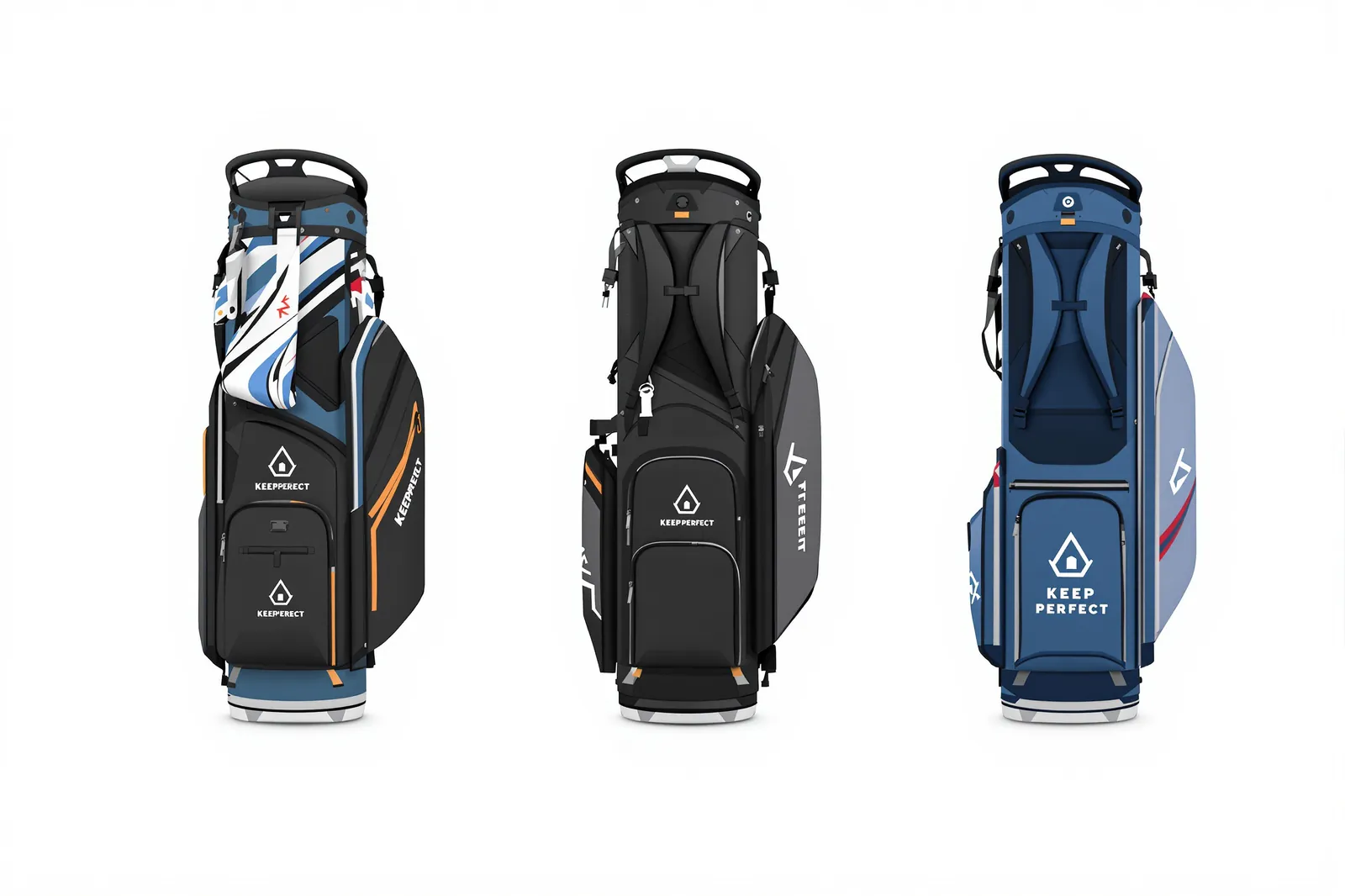
A standard golf staff bag is the largest bag in the sport — typically 34 to 36 inches tall with a wide top opening and generous capacity for a full 14-club set plus extras — and it weighs about 4 to 7 kg empty, so it is built for cart or caddie use rather than shoulder walking. Size and weight are the defining trade-offs of a staff bag: maximum capacity and branding surface against a load you do not want on your back. This guide gives you the numbers and the decision framework for teams, academies, coaches and pro-level players.
Standard Staff Bag Dimensions
A staff bag is built big because it is designed to ride on a cart and to carry a full tournament player's equipment plus branding, not to be carried over the shoulder. Standard staff bags typically stand around 34 to 36 inches tall with a 10-inch or larger opening, hold a full set of fourteen clubs with generous full-length dividers, and weigh anywhere from about 5 to over 8 pounds empty, with the biggest and most padded examples pushing higher for maximum protection and display space. The large top and deep body exist to organise a complete set while keeping logos and sponsor panels highly visible, which is why the dimensions are as much a branding decision as a functional one. Understanding those numbers up front makes it easy to match a staff bag to the cart, the display and the player's real needs rather than overbuying bulk that never earns its weight.
A full-length staff bag stands roughly 34 to 36 inches tall, with a top opening wide enough to accommodate a full set of clubs plus room for larger woods and oversized grips. The wide mouth and generous body are the defining traits — they make clubs easy to access and provide a large surface for team branding, sponsor logos and tour-logo trim.
Because the top opening and divider layout govern how clubs sit, dimension is as much an organisational choice as a fit choice. For a walkthrough of how the internal architecture organises the leader, our staff bag vs cart bag differences article explains how capacity drives the design.
Staff Bag Weight: The Real Number
Empty, a staff bag typically weighs around 4 to 7 kg (roughly 9-15 lbs) — heavier than a stand bag or cart bag because of its larger footprint and sturdier construction. Loaded with a full set of clubs, rangefinder, balls and accessories, a staff bag can push well past 10 kg. That weight is the reason staff bags live almost exclusively on carts and caddies.
Weight is not a flaw in this category; it is the price of capacity and structure. But it does determine who should use one. For the numbers in context across bag types, our weight and portability analysis compares staff, cart and stand bag weights directly.
| Metric | Staff Bag | Cart Bag | Stand Bag |
|---|---|---|---|
| Height (typical) | 34-36 in | ~34 in | ~35 in |
| Empty weight | 4-7 kg | 3-5 kg | 2-4 kg |
| Club capacity | 14+ (max) | 14 | 14 |
| Divider complexity | High, full-length | Medium-high | Medium |
| Intended use | Cart / caddie | Cart | Cart or carry |
Club Capacity and Divider Design
A full set of 14 clubs is the baseline, and staff bags are designed to hold it comfortably plus extra woods and accessories. They typically feature full-length dividers — from 5-way up to 14-way — that keep shafts from tangling and protect grips. The high divider count is a signature of the staff bag segment, protecting the clubs through many mounting and travelling cycles.
Divider choice trades organisation against weight and access. For a close look at that trade-off, our 14-way vs 5-way divider guide lays out the options in depth.
Why Staff Bags Ride, Not Carry
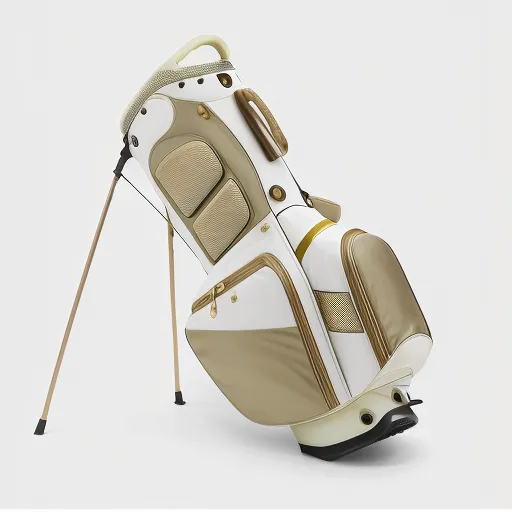
The weight and size of a staff bag make it a cart or caddie product by design. Golfers walking under their own steam should carry a lighter stand bag; the staff bag delivers capacity, organisation and a large branding canvas in exchange for the weight penalty. That division of labour is why the three bag types coexist rather than compete.
Choosing the wrong type ruins the experience either way — a heavy staff bag carried on foot is exhausting, while a walker's stand bag on a cart wastes capacity. The decision starts with how the bag will actually be transported. For coaches, teams and academies deciding between types, our coaches and managers staff bag guide adds practical context.
Who a Staff Bag Suits Best
Staff bags suit professional tour players, caddies, club professionals, teams, academies and sponsors who ride with their clubs and want maximum club space plus a prominent branding surface. The large top and body give logos the visibility that matters for team identity and sponsorship. For organisations that travel as a unit, the capacity and consistent branding surface of a staff bag are real advantages.
When buying for a team or academy, weight across a fleet matters almost as much as unit price: a lighter staff bag in the same size class reduces handling fatigue for coaches and caddies. This is a factor worth putting on the spec sheet. For how teams use staff bags for identity, our branded staff bag visibility guide covers the branding angle.
Sizing Staff Bags for Cart Use
Before buying, confirm the staff bag mounts cleanly on the carts you use. Staff bags are designed to sit on cart platforms and have a base recess for a secure fit, but check the specific cart type — some push carts and trolleys are sized for narrower stand bags. For cart compatibility details beyond this sizing question, our push cart and trolley compatibility guide is the reference.
Specifying a Staff Bag for Your Team?
Whether you need maximum-capacity tour bags or a balanced fleet for a team, we help you pick the right size, weight and divider spec for how your golfers actually move around the course.
Spec Your Staff Bag →Buying Guide: Check the Spec Sheet
When comparing staff bags, put these on the checklist: height and top-opening diameter, empty weight, divider count and whether dividers are full-length, base construction and cart fit, pocket layout and count, and the material and hardware grade. A staff bag is a sizeable purchase, so verify these against your intended use — cart mounting, club set size, branding surface and handling weight — before committing. For a companion feature-level view, our premium staff bag feature guide rounds out what to look for at the pro level.
Measuring a Staff Bag for Your Cart
Because a staff bag lives on a cart, the most useful measurement is often compatibility, not just overall height. Measure the bag's base width and depth against the cart platform, check that the recessed base fits the mounting block so the bag sits without rocking, and confirm the top of the bag keeps the clubs clear of the cart's roof straps and rail. A bag that fits the platform cleanly stays upright and protects your clubs through every round; one that rocks or overhangs invites damage and frustration.
Different trolleys size their platforms differently, so if you are buying for a specific fleet of push carts or trolleys, measure the actual carts rather than assuming a standard. For the compatibility detail across cart types, our push cart and trolley compatibility guide is the reference, and cart mounting guide covers the fitting mechanics.
Weight Distribution and Handling
Weight matters not only in total but in where it sits. A staff bag's heavy base lowers the centre of gravity and makes a loaded bag stable on a cart; a crowded top opening, by contrast, makes the loaded bag feel tippy and top-heavy in handling. When you evaluate a bag, notice how it balances loaded, how much of the mass sits low, and whether you can lift and carry it comfortably for short transfers between car, cart and clubhouse. A heavier bag that is well balanced is often easier to manage than a lighter one that is poorly distributed.
If short carries are part of your routine — from the car boot to the caddy or the classroom to the range — weight matters even though you are not walking 18 holes with it. Set a handling weight you are comfortable with and check the loaded feel, not the advertised empty figure. Our weight and portability analysis gives the handling numbers to compare.
How Size Impacts Travel and Transit
Size has a direct cost when staff bags travel. Larger bags exceed some airline and freight size limits or require a bulky item surcharge, and the bigger the bag the more container or hold space it consumes when moving a team. If you fly with staff bags regularly — or freight them in volume for a brand — the difference between a marginally smaller and a larger bag multiplies across trips and units. Even premium-level sizing should be checked against your airline's current luggage allowances before you commit.
Size also governs how much travel protection you need: a bigger bag needs a larger, better-padded cover. Weigh the capacity and branding value of a full-size staff bag against the travel and freight costs it brings. For guidance on protecting a large bag in transit, our travel bag and cover guide and transport protection guide are the practical reads.
Size as a Branding and Display Asset
A staff bag's size is one of its greatest marketing advantages: the large body and generous opening give logos, sponsor panels and team livery a prominent, highly visible canvas that stand and cart bags cannot match. At tournaments, academies and events, the bag does brand work every time it appears. This is a reason teams and sponsors favour full-size staff bags despite the weight — the display value justifies the bulk.
But that value only materialises if the branding is placed skilfully. A large canvas is wasted on a small or poorly positioned logo; the best designs use the space to create a clear, readable brand statement from a distance. For how to get the most from the staff bag's display surface, our branded staff bag visibility and mobile billboard branding guides cover placement and design.
Comparing Staff Bag Size Ranges
Not all staff bags are the same size, and the range gives you useful texture in the decision. Some premium staff bags are engineered slightly more compact and light to broaden use; others lean into the full traditional size for maximum capacity and image. Between a lighter, trimmer staff bag and a full classic size, the trade is portability and transport ease against raw capacity and display. For teams that move, travel and manage handling day to day, a moderate-size staff bag may be the best balance; for a pure tour statement, the full size delivers the classic look.
State your operation's real constraints — how it moves, how often it flies, how many caddies lift each day — and let size follow those answers rather than fashion. For the full comparison across bag sizes, our cart bag size guide and sizing fit guide put staff, cart and stand bags on one scale.
Making the Size and Weight Decision
Bring the factors together with a simple decision. Write how the staff bag will be used: cart or caddy transport, how often it travels, how many people lift it daily, and how much club capacity plus branding surface you need. From those, choose the smallest bag that still meets your capacity and display goals, and the lightest in that size that retains the structure and divider quality you rely on. Match the result to your actual carts for a clean fit. Worked through with honesty, size and weight stop being abstract specifications and become the two decisions that make a staff bag either a daily asset or a heavy burden.
If you are sourcing staff bags in volume for a team or brand, apply the same logic to the range and confirm sampling covers the loaded, mounted and travelled reality before sealing a spec. Our custom OEM/ODM guide and MOQ and pricing guide will take you from spec to shipped order.
It is also worth planning for the staff bag's hidden costs of size before you buy, because they can outweigh the attractiveness of a large canvas. Bigger bags consume more raw material, cost more to ship and take more space in storage and on a cart, and they need larger, more expensive travel covers. For a team or brand that moves a fleet, these operational costs build quickly, so the marginal display value of a slightly larger bag should be weighed against its across-the-fleet cost. A modestly sized staff bag that travels and stores efficiently is often the more professional ownership choice even when a larger one catches the eye first.
Finally, let the dividers and club capacity reinforce rather than fight the size decision. A well-organised bag with full-length dividers holds its clubs securely and protects them, and this organisation does more for the everyday experience than an inch or two of extra fabric. Match the divider layout to the club set, ensure the full-length dividers protect shafts, and choose the size that supports that organisation at the lowest practical weight. That combination — right size, right weight, right internal layout — defines a staff bag that is actually used and enjoyed rather than admired and complained about.
For those managing a team or academy, staff bag size and weight also shape logistics and staffing in ways that are easy to overlook. A fleet of large, heavy bags needs more hands to load, more truck space to move, more storage room to keep and more caddie effort to handle on the course each day — costs that recur every round, not just at purchase. Choosing a moderately sized, well-balanced staff bag can reduce daily handling strain for coaches and caddies without sacrificing the capacity and branding a team needs, and it pays off in smoother operations across a busy season.
Finally, remember that staff bags are an investment in presence and performance, and the size that serves you best follows your circumstances, not fashion. Take the time to measure your carts, weigh your handling preferences, audit your travel and freight, and confirm the divider layout protects the club set you carry. Worked through together, size and weight stop being abstract catalogue numbers and become deliberate, professional decisions that make a staff bag worth every round it serves.
For coaches and managers planning a fleet, it is worth standardising on a size and weight band so handling, storage and branding stay consistent across the team. A uniform fleet is easier to load, store, brand and maintain, and it presents a cleaner, more professional identity at events than a mix of different sizes. Establishing shared specs — a target height, a maximum handling weight, a divider standard and a cart-fit requirement — makes procurement simpler and ensures every bag on the team meets the same bar of capacity, portability and durability. Teams that standardise this way spend less time managing their equipment and more time on the golf.
Finally, treat the size and weight decision as one you will revisit rather than one you make once. Body of your fleet changes, travel patterns shift with the schedule, and the carts available at different venues differ, so review your staff bag spec on a sensible cadence — a year or so — and adjust the size, weight and divider choices to match the operation you actually run today. A staff bag that is deliberately sized for your present reality serves you far better than one inherited from a past habit, and keeping that decision current is the professional way to manage the largest bags in the game.
Finally, remember that a staff bag is frequently a long-term purchase, one a team may use across many seasons, so choosing the right size and weight is a decision that pays or costs over years, not weeks. Standardising on a spec that fits your carts, your handling and your brand; ordering the dividers and club capacity that protect your sets; and selecting a weight your team can actually manage on a busy tournament day will keep the bag in active service long after a fashion-first choice has been retired. Choose with the long term in mind, and the staff bag becomes a dependable, valued asset rather than a necessary but awkward piece of kit.
And there is one intangible that should anchor the whole decision: the staff bag is the most visible piece of equipment a team or pro carries, so its size and condition communicate professionalism before a shot is hit. A bag that fits the cart, stands with ease and is carried without struggle presents a composed, capable image, while one that is oversized, unwieldy or in poor repair undermines that same impression. Let the size and weight choices also serve the identity you want to project — a considered, well-proportioned bag reinforces the quality of the brand that stands behind it on every image and every round.
Sources
Frequently Asked Questions
- What is the size of a standard golf staff bag?
- A standard full-length staff bag is typically around 34 to 36 inches tall with a wide top opening, and it accommodates a full set of 14 clubs easily plus room for extra woods and accessories. They are the largest conventional golf bag type, designed for cart or caddie use.
- How much does a golf staff bag weigh?
- An empty staff bag typically weighs around 4 to 7 kg (roughly 9-15 lbs), heavier than a stand or cart bag because of its larger size and sturdier construction. Loaded with clubs and gear, it can exceed 10 kg, which is why staff bags are not designed for shoulder walking.
- How many clubs fit in a golf staff bag?
- Standard staff bags hold a full 14-club set comfortably, and their generous divider and top design offers room for extra woods and oversized grips. Many feature full-length dividers to keep shafts from tangling as the bag is carried or mounted.
- What is the difference between a staff bag and a cart bag in size?
- Staff bags are generally larger, taller and heavier than cart bags, with a wider opening for maximum club capacity and space for branding. Cart bags mount similarly onto a trolley but are more compact and lighter. Both ride on carts, but staff bags prioritise capacity and image.
- Who should use a staff bag instead of a cart bag?
- Staff bags suit professional tour players, caddies, golf coaches, teams, academies and anyone who wants maximum club space and a prominent branding surface while riding on a cart. If you need to carry your bag on your shoulder, a lighter stand bag is the better choice.