Best Golf Travel Bags for International Trips
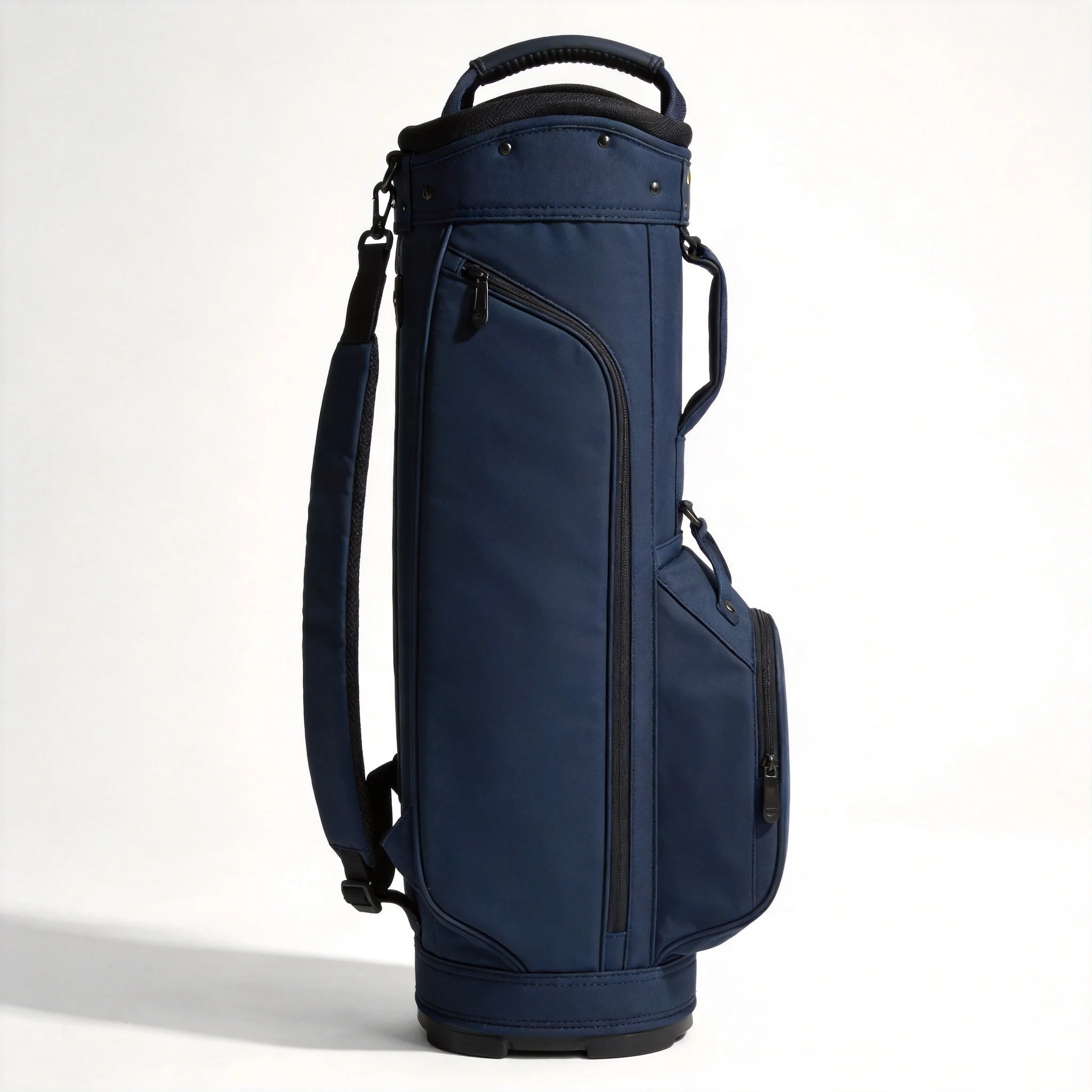
The best golf travel bags for international trips are hard shells for maximum impact and crush protection, or reinforced soft cases with dense padding, good wheels, lockable zippers and club-length protection, sized within most airlines' oversize-baggage limits. Flying with clubs means entrusting them to baggage handlers across countries, so protection depth, wheel durability and secure closure are the deciding features. This guide, written from the factory floor of QUANZHOU JUNYUAN BAGS (founded 2014, 200+ brands, 100+ countries), covers hard vs soft, airline realities, wheels and sourcing so your clubs arrive and your brand benefits.
Why International Travel Demands More Protection
Handling on an international itinerary is the harshest test your clubs face. Your bags are loaded, stacked, dropped, and carted through several airports and transfers. A travel bag that works for a short domestic hop may not survive a long-haul route with bag-drop machines and tight connections. The stakes are high: a bent shaft or cracked club head mid-trip ends your golf holiday and costs a repair bill larger than the bag.
Protection comes from structure and padding. A travel bag must isolate the club heads and shafts from impacts, resist crushing from heavy bags stacked above, and survive being dragged and rolled hundreds of meters through terminals. That is why the "best" travel bag for international flights tends toward more robust construction than a casual weekend tote. From a factory's perspective, building travel bags that survive is about the same discipline as building for tour — strong shells, reinforced rails and quality wheels — which is why the category is a retail mainstay for brands that sell to traveling golfers.
Hard Shell vs Soft Travel Bag
The central decision is hard vs soft. Hard shells (molded plastic or aluminum-framed) offer the strongest impact and crush protection, and are the safest for frequent international travel. Their rigidity absorbs blows better and resists a heavy bag stacking on top. The trade-offs: they are heavier, bulkier to store, and cost more. Soft travel bags are lighter, packable (many fold down), and more affordable, and a good one protects well when its padding is dense and its structure is reinforced.
The middle ground some manufacturers offer is a semi-rigid soft case: a padded fabric shell over a stiff internal frame or high-density foam rails that adds crush resistance while staying foldable-ish and lighter than a full hard shell. For a traveler who flies a few times a year, a quality reinforced soft case balances weight, cost and protection; for frequent international flyers, a hard shell is hard to beat. Our hard vs soft comparison and the travel bags guide map the trade-offs in detail.
Wheels, Handles and Rolling Through Airports
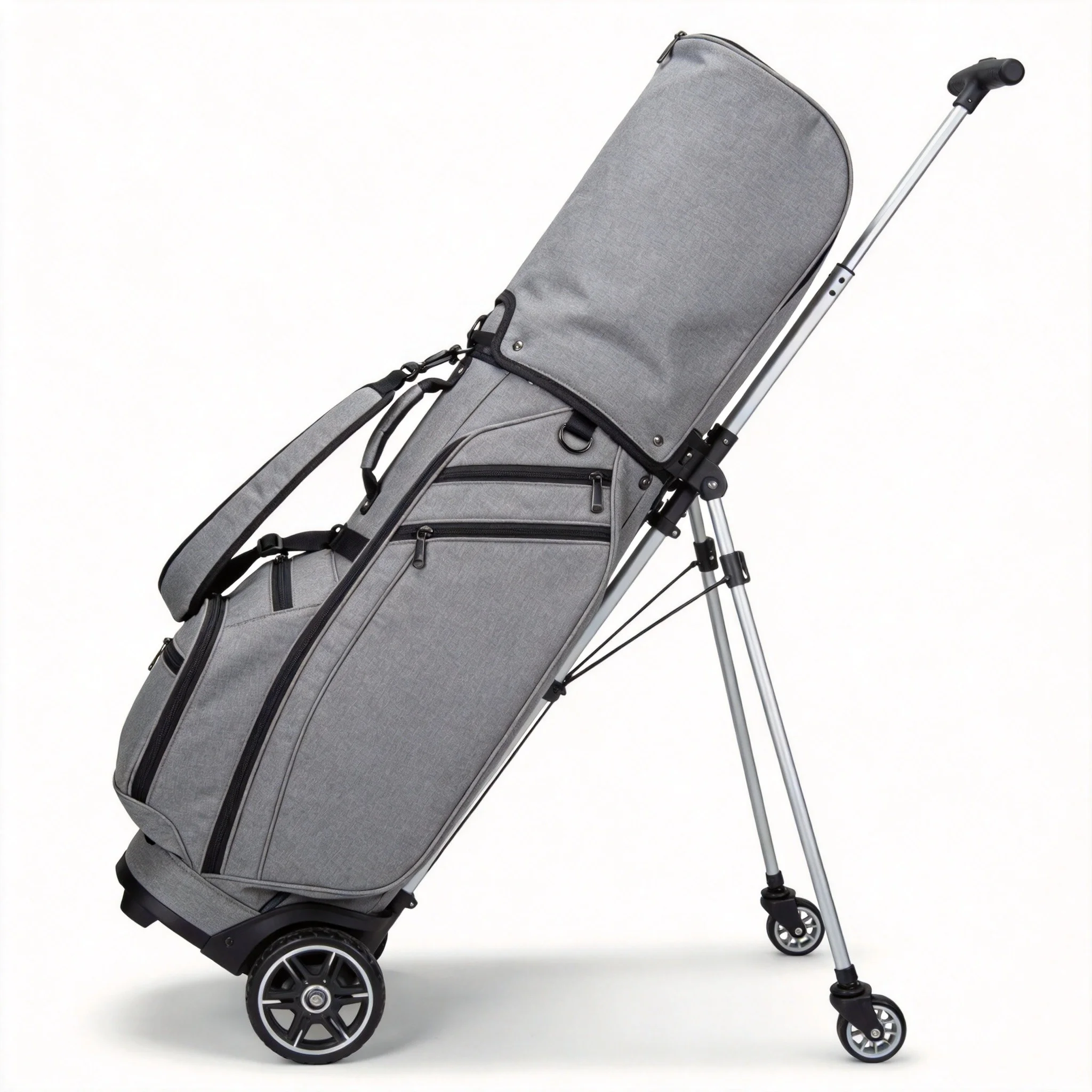
An international trip means long terminal walks, and wheel quality is a make-or-break feature. Look for large diameter, recessed wheels that roll smoothly over gaps and curbs, and a robust, locking towing handle. Cheap caster wheels jam on carpet and catch on thresholds, and the first failure of a travel bag is usually its wheels or handle at an airport. Reinforced, smooth-rolling wheels and a solid handle system are non-negotiable for international travel.
When we build travel bags we use oversized wheels with good bearings and a tested locking telescoping handle, and we stress-test the handle against repeated packing. The bag must also stand upright easily when set down and travel stably on two wheels when pulled. A travel bag that only wheels well when empty is a trap; we test with a full club bag inside. Our travel packing guide covers loading, and both wheeled and non-wheeled options appear in the travel bag lineup and wheeled travel range.
Padding and Club Protection Inside
What happens inside the bag matters as much as the shell. Protection targets two zones: the club heads at the top, and the shafts/grips along the body. The best travel bags have substantial top padding (some 8-15 mm of high-density foam) at the club-head zone, a stiff or padded inner structure that prevents the bag from being crushed down onto the clubs, and often a padded divider or club organizer so drivers and woods do not rattle into each other.
Many travelers add a shaft-protection "iron wrap" or club cap inside; features like a raised base divider that keep the bag from compressing help too. When we engineer travel bags we specify dense closed-cell foam at the head zone and a reinforced internal frame, because that is what transfers a blow away from the clubs. Detailed padding and structure guidance is in our protection guide and materials guide.
Airlines, Oversize Baggage and Sizing
Before buying, understand how airlines treat golf equipment. Most international carriers check golf bags as oversized and/or over/round baggage, often with a set sports-equipment fee or an allowance, and impose size and weight limits. Typical length limits run around 190 cm (75 in) total; weight allowances commonly cap clubs+bags at 20-23 kg but vary by airline and cabin. The practical advice: keep the external bag size within common limits and know your carrier's fee before traveling.
Because size tolerance can be tight, a travel bag built to a sensible external length (typically accommodating a full stand bag plus a little) is safer than an oversized case that triggers additional surcharges or refuses at check-in. Some airlines require wheeled bags to pass, so check. Our airline size guide and baggage limit guide spell out the planning you should do, and our hard case range is sized for common air-travel needs.
Comparison of Travel Bag Types for International Trips
| Type | Impact Protection | Weight Unpacked | Best For | Storage |
|---|---|---|---|---|
| Hard shell case | Highest | 4-7 kg | Frequent international flying | Bulkier |
| Reinforced soft case | Good (with padding/frame) | 2-4 kg | A few trips a year, weight-conscious | Packs smaller |
| Semi-rigid / framed soft | High-moderate | 3-5 kg | Balance of protection and weight | Medium |
Representative figures for mainstream golf travel bags and hard cases.
Security: Locks, TSA and Valuables
A travel bag holds expensive clubs, so closure security matters. Lockable zippers or hasps let you fit a travel lock; if you fly to the United States, use a TSA-approved lock so inspectors can open the bag without cutting it. Reinforce the closure against prying: a single thin zipper is the weakness a handler or luggage thief exploits, while a lockable, reinforced closure deters tampering. Some hard cases use latches that can also be padlocked.
Do not put irreplaceable valuables or fragile items on the outside pockets; keep essentials in carry-on and sensitive gear protected inside. A luggage tag with contact details reduces the odds of a lost bag going unreturned on a multi-stop trip. Good closure and security practice is covered in our airline check-in travel guide and branded travel bag guide.
Materials and Durability for International Handling
International handling is rough on the exterior. Hard shells should be high-impact molded plastic (or aluminum-framed); soft cases should use a robust 600D-1000D fabric with a reinforced, waterproof-resistant base and zipper-protection flaps. Corrosion-resistant zippers and hardware withstand airport environments and moisture. A scuff-resistant base panel and a dirt-resistant shell ease the wear of baggage handling. Water resistance is a real plus — bags get left on tarmacs in rain.
We build travel bags for international use with heavier shells at the base and head zone, reinforced rails, and top-tier zippers because a zipper that fails mid-journey strands a golfer's whole trip. Our materials guide and the travel protection guide compare the shell and hardware options, and extending travel bag life covers maintenance.
Sourcing Travel Bags Wholesale for Retail
Golf travel bags are a high-ticket, high-margin retail category and a natural step for brands selling golf equipment. Wholesale sourcing follows the standard model: a 200-piece MOQ per design, 100-piece test orders, sampling in 10-20 days, bulk production in 45-60 days. Hard cases cost more to produce than soft cases (molding adds tooling and material), so price your SKUs accordingly — and consider offering both a hard case and a soft case in one program to hit two buyer segments.
Because international travelers often buy travel bags as a set with a matching golf bag or travel cover, bundling through one program keeps branding and logistics clean. Our OEM/ODM services, custom solutions and the wholesale section model multi-SKU programs, and the wholesale pricing guide breaks down the cost levers: shell type, wheel system, padding depth and decoration.
Quality Control for Travel Bags
Travel bags carry expensive clubs and face rough handling, so QA must be demanding. At QUANZHOU JUNYUAN BAGS travel bags and hard cases pass three-stage inspection plus travel-specific checks: wheel roll and handle-cycle testing, padding thickness verification, zipper-cycle durability, shell/impact integrity, and closure/lock security. Hard-case shells are checked for material thickness and structural rigidity. Our factory underwent independent SGS and Alibaba verification in 2026.
For a retailer stocking travel bags, the supplier's willingness to prove impact and wheel tests matters, because a bag that fails at an airport damages the brand (and the golfer's trip). The audit questions and inspection checklist we recommend are in our quality standards guide and manufacturer selection guide.
Caring for a Travel Bag
After a trip, empty the travel bag, wipe wheels and base free of dirt and grime, and dry any moisture before storage. Check wheels and the handle for grit — they are the parts that wear fastest. Store a soft case loosely and a hard case closed but empty, away from direct sun that can age plastic and fade fabric. A quick zipper inspection before each trip prevents mid-airport surprises.
Periodically wash the shell with mild detergent, and refresh any water repellency to keep rain off. For thorough cleaning and storage guidance, our travel bag care guide and transport guide cover the full routine that keeps a travel bag flying for years.
Seven Buying Rules for International Travel Bags
- Protection first: hard shell for frequent flying, reinforced padded soft for occasional travel.
- Check wheels and handle: oversized recessed wheels and a tested locking handle survive long walks.
- Pad the club-head zone: dense closed-cell foam and a stiff inner frame transfer blows away from clubs.
- Confirm airline limits: keep external length near 190 cm and know weight tolerance before buying.
- Lockable, tamper-resistant closure: use a TSA-approved lock for US travel.
- Durable exterior: heavy shell/fabric, corrosion-resistant zippers, water-resistant shell for tarmacs.
- Use the low MOQ to test: a 100-piece order validates the build before a retail launch.
Airline policies are also part of the sizing math. Most carriers treat a golf bag as a standard checked item up to the applicable linear-dimension limit, but some charge oversized fees when a hard case exceeds a stated length or combined dimension. Confirming your target carrier's checked limits — and whether they include or exclude wheels — before you spec matters, because a bag that is a few centimetres too long can turn a zero-fee flight into an unexpected surcharge. A domestic-spec hard case may be rejected outright on international legs, so match the case spec to the longest haul your distribution covers, not just the shortest domestic hop.
Frequently Asked Questions
- Hard case or soft travel bag for international flights?
- Hard shells give the best impact and crush protection for frequent international travel. Reinforced soft cases are lighter, packable and more affordable, and protect well when padded with iron protection.
- How do airlines treat golf travel bags?
- Most check them as oversized/overweight baggage with a sports-equipment fee or allowance. Size and weight limits vary; keep the bag near 190 cm length and within the carrier's weight tolerance.
- Do I need a TSA lock on a golf travel bag?
- If flying to or through the United States, yes — a TSA-approved lock lets inspectors open the bag without cutting it.
- How much does a travel bag weigh?
- Empty weights run roughly 2-4 kg for soft cases and 4-7 kg for hard shells. High empty weight reduces your usable baggage allowance, so balance protection against limits.
- Can I wholesale-source golf travel bags?
- Yes. Standard MOQ is 200 pieces per design with 100-piece test orders, sampling in 10-20 days and bulk production in 45-60 days.
- Are travel bags waterproof?
- Most are water-resistant, not fully waterproof. For frequent tarmac exposure, choose a shell with strong water resistance and sealed-base reinforcement.
- What is the lead time for custom travel bags?
- Sampling typically takes 10-20 days; bulk production runs 45-60 days depending on shell type, wheel system and decoration.
Protecting Shafts and Grips Inside the Bag
Protection inside the travel bag is as important as the shell, and the best bags address both heads and shafts. Shafts are most at risk from the bag being compressed or impacted across its length, so a stiff internal wall or high-density foam rail along the body prevents the sides collapsing onto the clubs. Grips and shafts can also rattle during transit; a padded divider or club organizer, and packing towels or clothing between clubs, reduces vibration damage. Loose balls, tees and single clubs should be secured so they do not slam into the frame.
Many travelers use an iron wrap or a club-head protector inside, and some hard cases include an internal divider or opening mechanism that trays the clubs so they cannot shift together. When we engineer travel bags we test with a full club bag inside and check that no compression zone transfers load to the eyelids. A detailed packing protocol that spaces clubs and uses void-filling is in our travel packing guide, and the travel bag lineup shows the internal padding tiers.
Custom and Branded Travel Bags for Clubs and Events
Because traveling golfers fly for tournaments, destination trips and member events, travel bags are also strong branding vehicles for clubs, resorts, sponsors and tour operators. A branded hard case or soft travel bag travels widely and appears at airports and courses, giving a logo ongoing, far-reaching exposure. Clubs give branded travel bags to elite members and teams; resorts bundle them into premium golf-package offers; sponsors use them as tournament swag that gets used long after the event.
Decoration durability matters on a travel bag because it is handled hard and exposed to weather, so the logo must survive baggage handling and tarmac conditions. Because travel bags are high-ticket, branded units often pair with a matching golf bag for a cohesive premium set. Our OEM/ODM services and custom solutions manage branded travel programs, and the wholesale section models multi-SKU premium bundles with travel cases.
Choosing by Your Real Travel Pattern
The best travel bag is the one matched to how you actually fly. A golfer who makes one international trip a year and pack-bags for space may prefer a foldable reinforced soft case that stores compactly at home. A player flying monthly for tournaments or work should own a hard shell for the maximum protection those frequencies justify. And a golfer who ships clubs or uses a mix may value a semi-rigid option that balances protection with weight. Write down trips per year, bag-weight limits and storage space before choosing.
Your travel pattern also dictates the wheels, size and closure you need — long airport walks justify premium wheels; tight airline allowances reward a lean, in-limit size. When we guide buyers we ask this pattern first, because it resolves most of the decision tree cheaply and quickly. The same logic helps retailers cart the travel-bag range that actually sells to their market, and our bag selection guide and wholesale pricing guide support building the right travel-bag assortment.
Renting vs Owning on International Trips
Before investing in a travel bag, do the arithmetic against renting clubs or a travel case at your destination. If you fly once a year, renting may occasionally be cheaper or easier than hauling your own set; if you fly several times a year or want your own clubs and brand, owning the right travel bag pays off quickly. Buying a good bag and using it for years is usually the value play for committed golfers, and a bag that folds and stores tightly makes owning easier in small homes.
There is also the peace-of-mind angle: your own clubs, your own specs, no waiting at rental counters, and no risk of a rental set that does not suit you. For many golfers the decision is less about money and more about consistency. Whatever you choose, a durable travel bag keeps its resale value, and ours are built to, with the travel bag range offering everything from foldable soft cases to tournament-grade hard shells so you match the option to your frequency.
Factory Verdict on International Travel Bags
From the production floor, the best golf travel bags for international trips are those that treat airport handling as the enemy it is: deep protection at the club-head zone, a stiff structure that resists crushing, wheels and handles that survive long terminal runs, and a secure, lockable closure. Hard shells lead for frequent flyers; a quality reinforced soft case balances weight and cost for occasional travel. Either way, the bag's real job is to let your clubs arrive as ready as you are.
QUANZHOU JUNYUAN BAGS has produced golf travel bags and hard cases since founding in 2014, backed by a 200,000-piece monthly capacity and 7 production lines. Whether you are outfitting your own international golf holidays or sourcing a retail travel-bag line, reach us at contact, service@junyuanbags.com, or WhatsApp +86 17750020688.
Looking for a Reliable Manufacturing Partner?
From hard cases and travel bags to golf bags and travel covers, our team builds protection factory-direct. Test orders from 100 pieces, sampling 10-20 days, bulk in 45-60 days.
Request a Bulk Quote →Sources
- [USGA – Equipment Rules and Travel Guidance](https://www.usga.org/)
- [International Air Transport Association – Baggage Guidance](https://www.iata.org/)
- [National Golf Foundation – Golf Travel and Participation Data](https://www.ngf.org/)
- [Golf Datatech – Bag Category Market Data](https://www.golfdatatech.com/)