Hard-Shell vs Soft-Shell Golf Travel Bags Compared
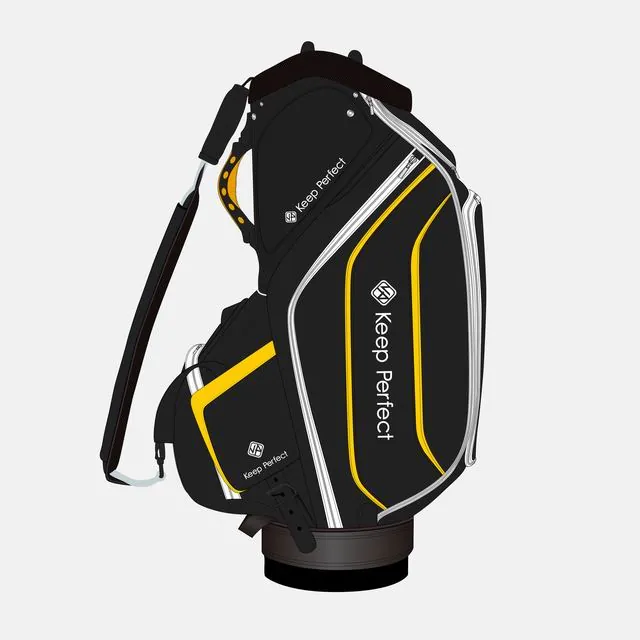
For most golfers the honest answer to hard-shell vs soft-shell is a soft or wheeled-soft bag for regular travel - lighter, easier to store and price - with a hard-shell case reserved for expensive clubs or high-touch, long-haul flyers who want maximum impact protection and accept the extra weight. The two designs solve the same problem - getting clubs to a destination intact - with different trade-offs in weight, protection, price and portability. This guide, from QUANZHOU JUNYUAN BAGS, lays out the real differences so you can choose with your travel pattern in hand. Our founder entered the trade in 2004 and the company was established in 2014; we manufacture on an affiliated 4,950 m² main factory."
How Soft-Shell Construction Protects and Packs
A soft-shell golf travel bag is a bag of padded fabric, usually heavy-denier nylon or polyester with impact-absorbing foam or plush lining around the club heads and a stiffened base. It protects less by brute stiffness than by cushioning: the padded layers absorb and spread the shocks of handling, while the fabric resists abrasion and water. Because it is essentially a very protective textile, it folds or packs flatter when empty and sits lighter on the scales than a hard case.
The soft shell's real strengths are weight, storage and price. It is lighter than a comparable hard case, which matters because airlines charge for checked golf bags by weight; it stores compactly at home or in the pro shop; and it is generally less expensive to manufacture, which shows up in a friendlier retail or wholesale price. For the majority of golfers who travel within a normal checked-weight allowance, the soft bag often carries the clubs and the allowance comfortably together.
Soft shells also accept branding more readily. The broad, smooth fabric panels are ideal for full-colour logos and club artwork, and the construction is easier to embroider and print than a rigid case. For clubs, academies and brands, a soft-shell travel bag is therefore both a practical product and a natural canvas - carrying the logo to every airport the members use, at a weight and price that encourage repeated use.
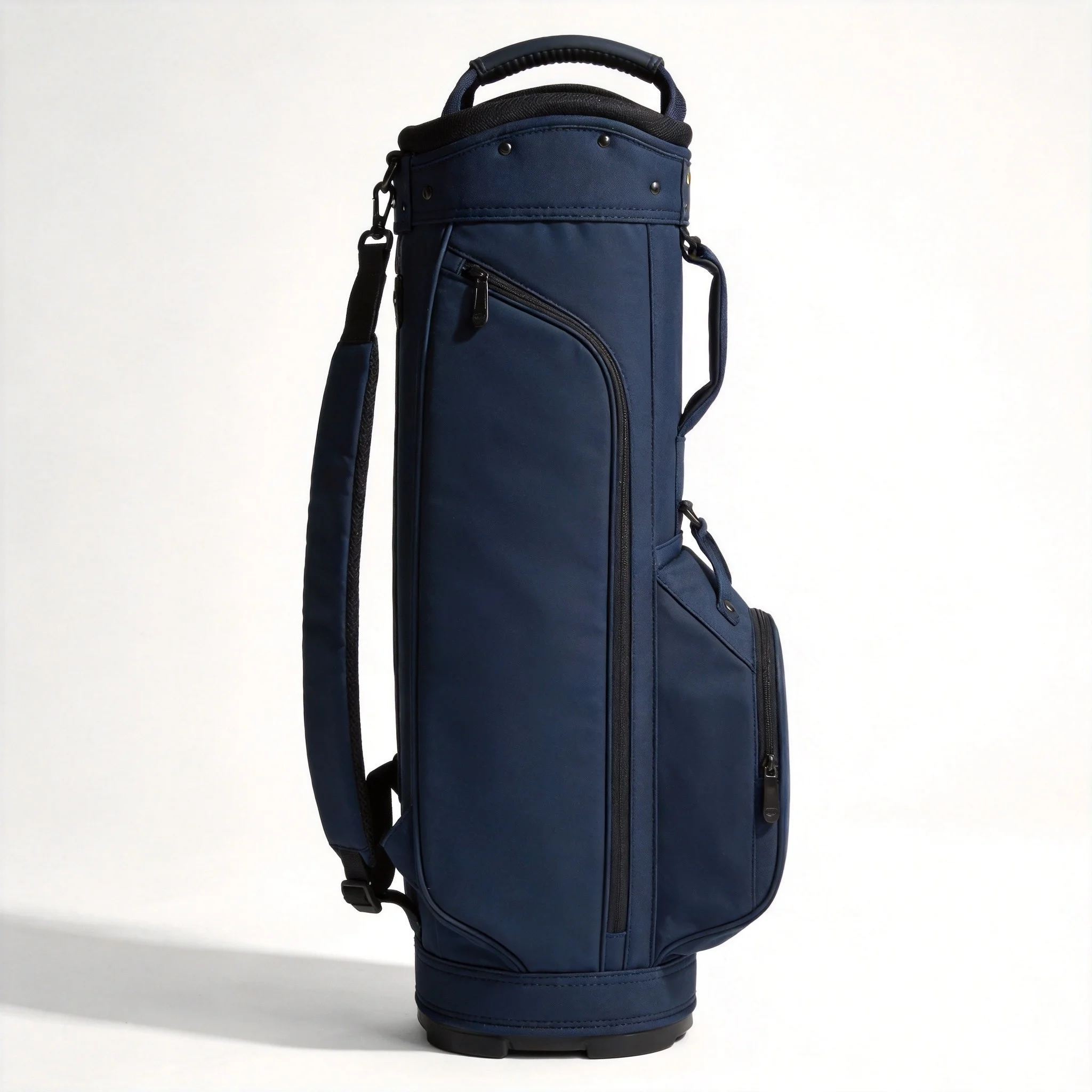
Cushioned Shell
Padded fabric absorbs shock while broad panels carry full-colour branding.
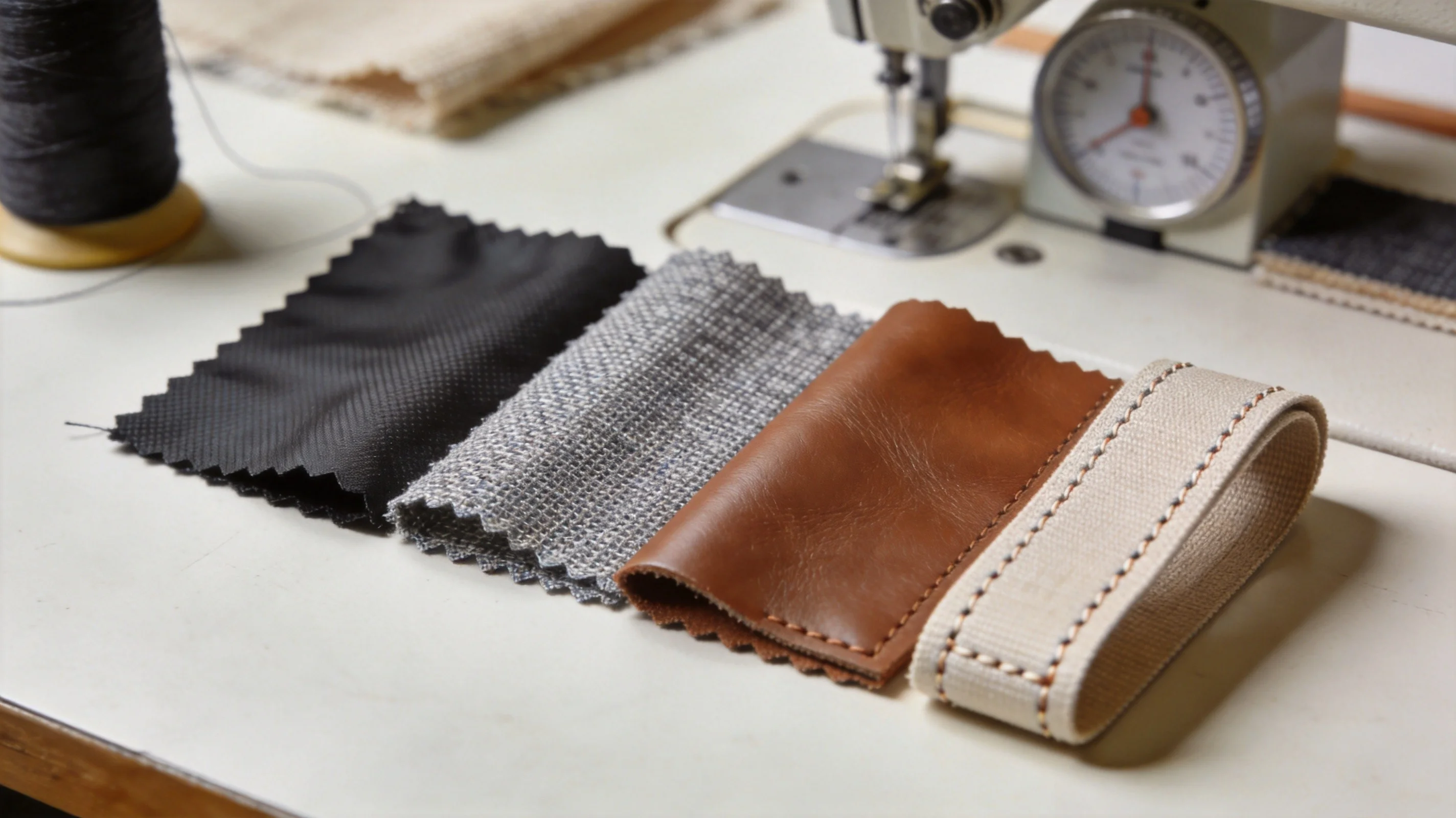
Light Materials
A light, soft construction keeps weight and check-in cost in check.
What a Hard-Shell Case Adds, and What It Costs
A hard-shell golf travel case exchanges cushioning for rigidity: a stiff outer shell, usually moulded plastic or a reinforced composite, holds its shape and physically deflects impact rather than absorbing it softly. This is why a hard case is the strongest defence against the roughest airline handling - a genuine hard case will not be crushed the way a soft bag can be, and it offers the highest confidence that expensive clubs arrive intact on high-touch routes.
That rigidity comes with measurable costs. A hard case is heavier, which pushes a fully loaded bag closer to an airline's checked-weight ceiling and can trigger excess-weight fees; it is bulkier and harder to store when empty; and it is more expensive to build, so it commands a higher price. For handling and storage the hard case is also more demanding - it is less flexible in a car boot and takes more room in the garage or clubhouse.
The decision, then, is a value judgement about the clubs and the journey. For an expensive set on regular long-haul or high-touch flights, the extra protection of a hard case is easily justified even with the weight. For a standard set on routine shorter hops, the weight and bulk of a hard case can be a net liability. Matching the shell to the club value and the travel reality is the essence of choosing well.
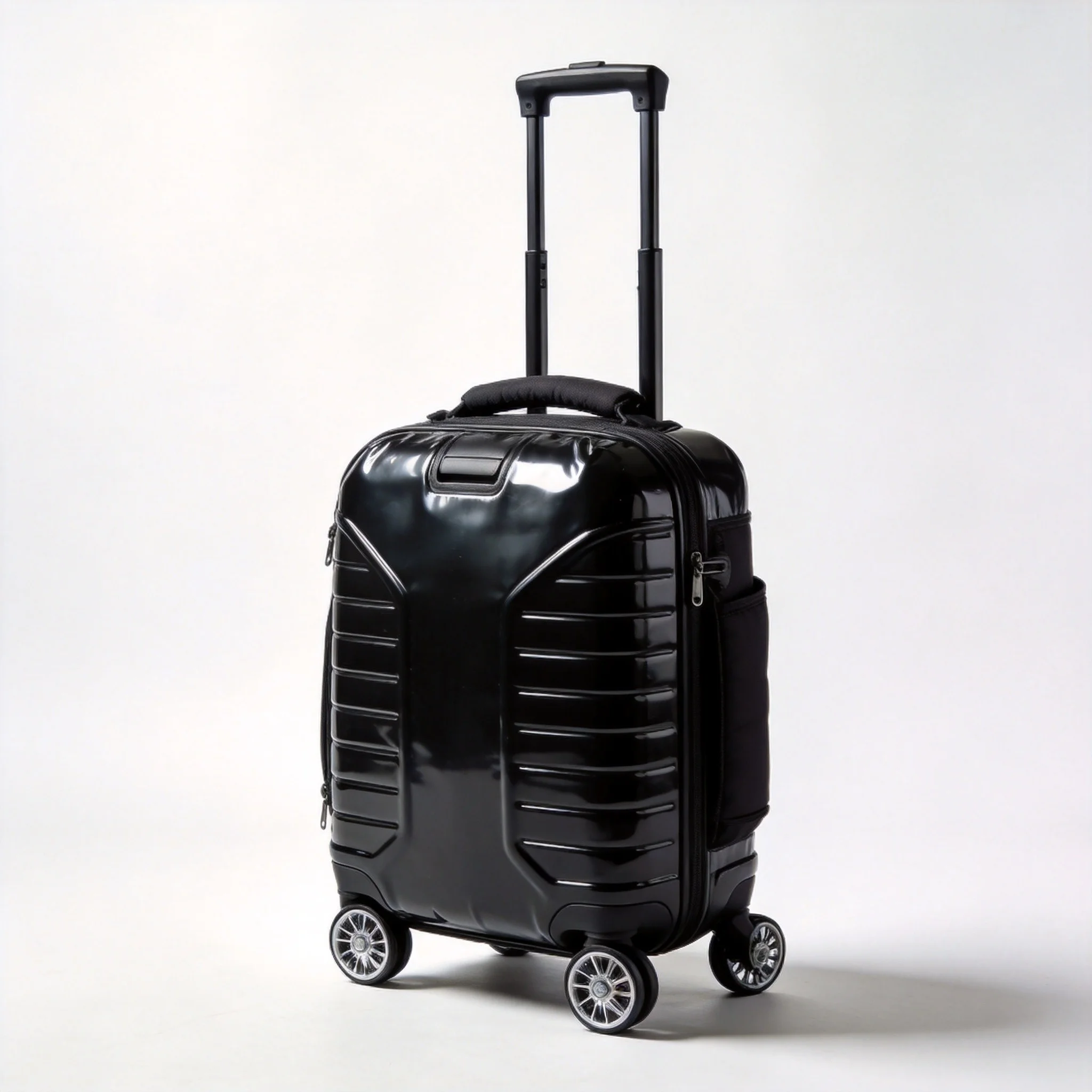
Rigid Defence
A stiff shell deflects impact and holds shape under heavy handling.
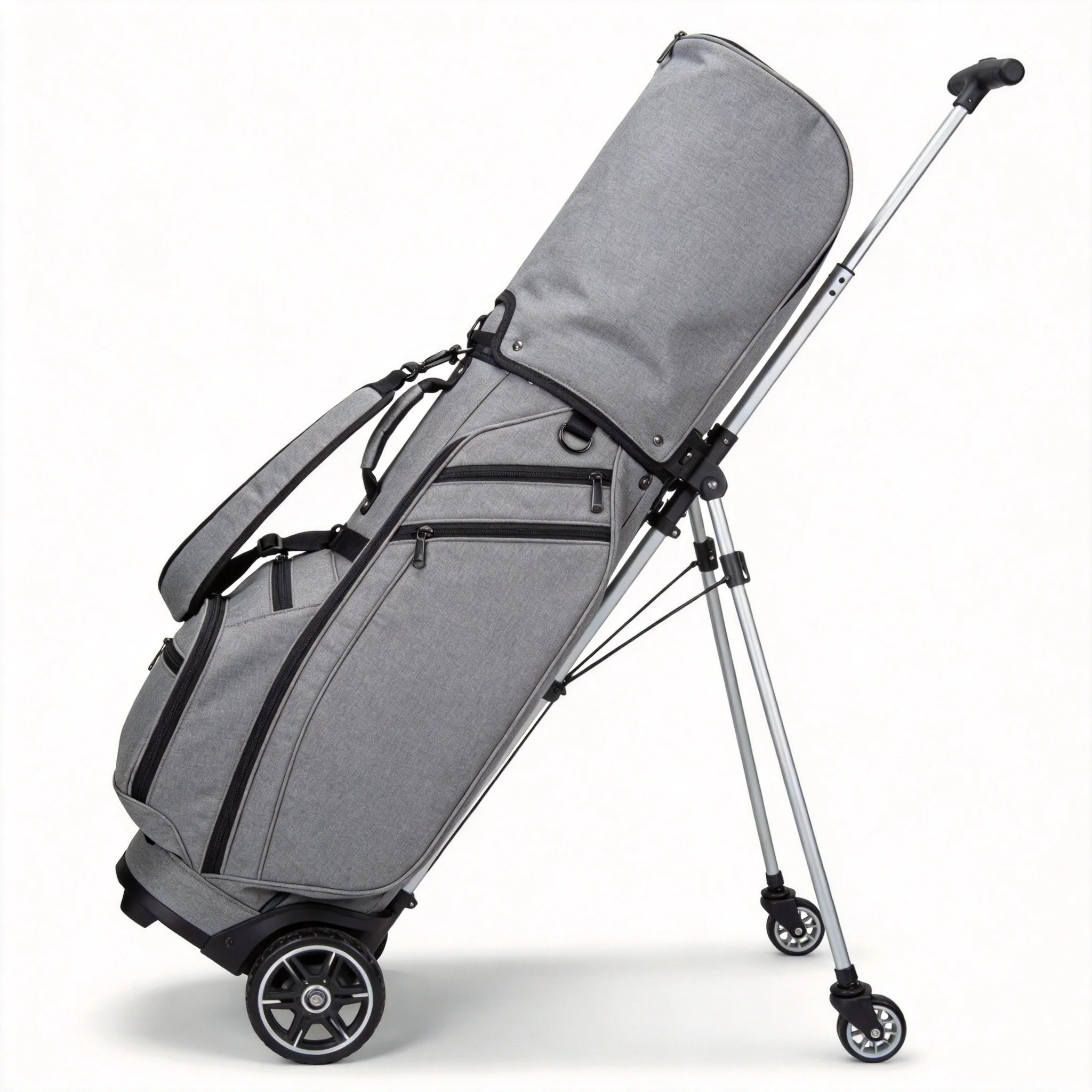
Balanced Design
Soft and hard constructions can both bring wheels for easy terminal travel.
Weight: The Deciding Factor at the Check-In Counter
Of all the differences between hard and soft shells, weight has the most direct, recurring financial consequence. Airlines charge for checked golf bags by weight, and a hard case can add 2-4 kg or more over a comparable soft bag purely from its rigid shell. On routes with a 23 kg economy ceiling, those extra kilograms can be the difference between a clean check-in and an excess-weight charge, and that cost repeats on every single trip.
For the frequent traveller the arithmetic is decisive. A soft bag that saves 2-3 kg reduces the risk of excess charges on every flight, which over a season dwarfs any small price difference between the shells. Conversely, if the golfer is already well under the weight ceiling and wants maximum protection, the extra weight of a hard case is free insurance. The question is not which is lighter in the abstract, but whether my packed bag stays under my allowance with this construction.
Manufacturers make this trade-off transparent when they publish honest empty weights. Our specifications give the empty bag weight so a golfer or brand can plan the packed weight realistically. Weight transparency is exactly the kind of verifiable detail that separates a dependable supplier from one that hides the fine print, and it is what lets you tune your bag - and your packing - to your travel.
Storage, Portability and Everyday Use
Between trips, the two shells lead very different lives. A soft bag folds or compresses relatively flat and stores easily in a closet, under a car boot or in the clubhouse rack; a hard case is a rigid, bulky object that demands floor space. For a golfer with limited storage, a hard case is a real commitment, and for a club or pro shop keeping the range ready for members, the storage footprint of a fleet of hard cases matters.
Portability is likewise a soft-bag advantage on most journeys. Lighter and more flexible, a soft bag is easier to lift into a car, manhandle through a station, or pack alongside other luggage; a hard case is heavier and more rigid to move, though its wheeled variants roll well on smooth surfaces. For travel that mixes car and aircraft, the soft bag's lower weight and flexible form are usually friendlier.
These everyday factors accumulate. A bag that is easy to store and carry is more likely to be used, and each use is both a protected journey and a visible brand impression. For clubs and brands, that favours soft or wheeled-soft as the default with hard case reserved for the demanding flyers. Storage and portability quietly decide how much value a travel bag actually delivers over its life.
Protection Differences Under Real Handling
The honest protection comparison is about the kind of abuse each shell survives. A soft bag resists abrasion, sheds light impacts through padding and protects well on normal handling, but a concentrated or crushing load - a heavy suitcase dropped onto the bag on a carousel, a stack in a van - can deform it toward the clubs. A hard case physically prevents that deflection, so it protects better against the specific, rare but real worst case of crushing impact.
In practice, the difference shows most on high-touch routes with heavy handling and connections, and for golfers with very expensive or irreplaceable clubs. On routine direct flights with normal handling, a well-padded soft bag delivers protection that most golfers find sufficient, and its lighter weight avoids the fees that would otherwise recur. Neither shell removes all risk; both reduce it, to different degrees and at different costs.
There is a middle ground worth knowing: some soft bags are built with a stiffened structure - a perimeter frame or rigid top - that captures much of a hard case's crush resistance while keeping most of a soft bag's lightness. Our travel-covers and hard-case lines can be combined this way, letting a golfer enjoy lighter travel most of the time and deploy maximum protection when the journey demands it.
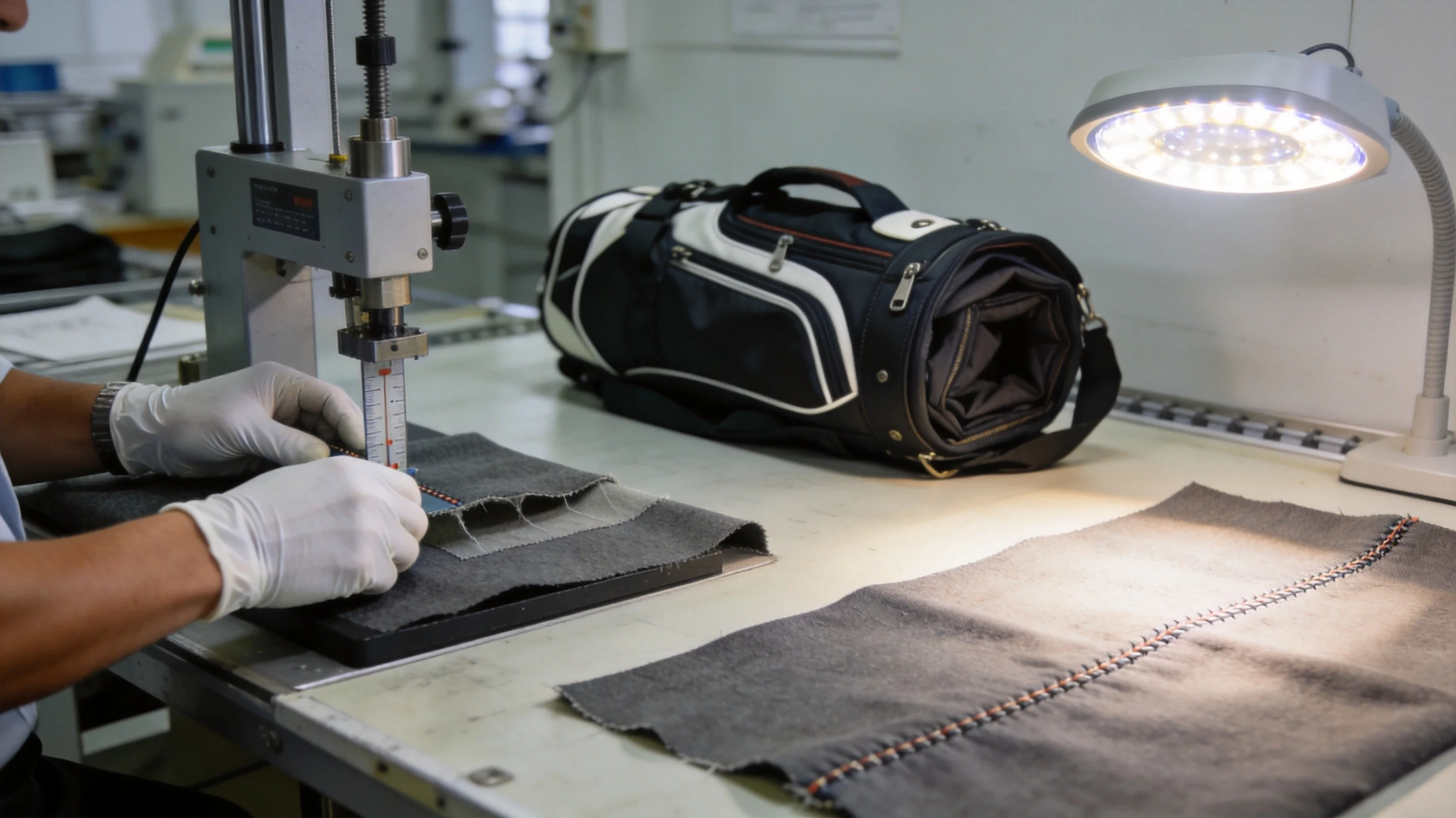
Real-World Testing
Documented inspection and testing verify how each shell construction behaves under handling.
Price, MOQ and the Wholesale Picture
Price is where the two shells diverge most clearly, and it flows straight from construction. A soft bag uses fabric, foam and hardware; a hard case adds a moulded rigid shell and often a more complex wheel and handle system. That difference in material and manufacturing shows in the unit cost, which compounds across an order. For a brand or club buying in volume, the shell choice is a real budget lever.
Volume and minimum order behave the same for both if the economics remain sensible. Our standard MOQ is 200 pieces with 100 available for test orders, so a brand can sample either shell before committing. Because a hard case is more expensive per unit, the MOQ-to-price trade-off can be steeper, which is another reason many programs anchor on soft or wheeled-soft for the core and reserve hard cases for the premium tier.
Wholesale buyers also weigh margin per unit. Soft bags at a lower unit cost can carry an attractive retail margin while remaining accessible; hard cases sell at higher ticket but with thinner volume. A balanced wholesale range that offers soft, wheeled-soft and hard tiers lets a retailer serve the whole market while keeping one brand identity across the family - the pattern we help pro shops and brands stock efficiently.
QUANZHOU JUNYUAN BAGS builds golf travel bags on an affiliated 4,950-square-metre main factory that entered the industry when our founder started in 2004 and was established as a company in 2014. The facility runs seven production lines with 126 sewing machines and a team of 137 staff, supporting a monthly capacity of up to 200,000 units for more than 200 brands across 100+ countries. Sampling typically takes 10–20 days and bulk production 45–60 days, with a standard MOQ of 200 pieces and 100 for test orders. The factory was independently audited by SGS in March 2026. Contact service@junyuanbags.com or +86 17750020688.
Matching the Shell to the Traveller
The shell that is best is the one that matches the traveller's reality, and the main variables are frequency, route, club value and storage. A recreational golfer on occasional flights with a standard set is well served by a soft bag - light, cheap, easy to store and strong enough for normal handling. A professional or high-value traveller facing long-haul, high-touch routes is a natural candidate for a hard case, with the weight accepted as the price of maximum protection.
Club value changes the equation meaningfully. Protecting a set worth thousands with a soft shell on rough routes is a risk some choose not to take; protecting a starter set with a heavy hard case is overkill. A balanced rule is to let the value of the equipment and the harshest expected handling drive the shell choice, not fashion or habit. Heeding that rule keeps both the clubs and the budget happy.
Frequency weighs in on the weight side. The more often the golfer flies, the more a heavy hard case costs them in weight-related charges and handling, and the more a lighter soft or wheeled-soft bag pays for itself. For a genuine frequent flyer, saving a few kilograms per trip is an annuity, so a lightweight but adequately stiff bag often wins. Frequency, value and route together point to the right shell more reliably than any single factor.
Practical Buying and Packing Considerations
Whichever shell you choose, a few practical habits protect the investment. Always protect the club heads - with the padded or stiffened hood a quality bag provides, or additional cushioning for a hard case with space round the heads - and distribute weight low and central so the bag balances and rolls well. Check the shell's empty weight against your carrier's checked allowance and plan the packed weight accordingly.
For a hard case, guard against vibration. A hard case can transmit road or conveyor vibration to the clubs, so cushion the heads and grip area even in a stiff shell. For a soft bag, guard against the concentrated impact of a heavy load dropped onto it. In both cases, packing thoughtfully - protecting what is fragile, balancing weight, keeping the bag within limits - multiplies the shell's natural protection.
Finally, buy from a source that specifies honestly. A manufacturer that publishes dimensions, empty weight, materials and its quality standard - and can point to independent verification such as our SGS audit of March 2026 - lets you decide between shells on facts rather than marketing. An honest spec is the most useful tool in choosing, packing and trusting a travel bag.
A Decision Framework for Your Budget and Season
Bring the decision to your budget and your season. If the investment is primarily to protect a standard set on routine travel, the soft or wheeled-soft bag delivers the most value for the money, keeping weight low, storage simple and the per-unit cost manageable. If the investment is to protect an expensive, difficult-to-replace set on demanding routes, the hard case buys genuine extra protection that is worth its weight.
Season also matters. Peak golf-travel windows in spring and autumn concentrate the trips that matter most, so a bag ordered late misses exactly the journeys where protection and branding pay off. Ordering ahead - our sampling runs 10-20 days and bulk 45-60 days - ensures the right shell is in hand before the season peaks. Treating the shell choice as a planned, seasonal decision rather than a last-minute rush gets you the better bag at the better price.
Ultimately there is no universally right shell, only the one that fits your equipment value, travel pattern, weight sensitivity and storage. Weigh those four against each other - not against a marketing slogan - and the answer becomes clear. A soft or wheeled-soft default with a hard case available to the travellers who need it is the pattern most clubs, brands and frequent flyers arrive at once they do the arithmetic.
A soft or wheeled-soft default with a hard-case option covers the widest membership while keeping weight, storage and price controlled. For the pro shop or brand, offering both under one identity lets each traveller choose the level their journey demands.Materials and Construction You Can Verify
The shell choice is only as good as the materials behind it. For a soft bag look for a high-denier, abrasion- and water-resistant woven fabric; for a hard case the shell is typically an injection-moulded polymer selected for rigidity and impact deflection. The padding in soft and hybrid bags should be dense and resilient so it keeps protecting after many trips, and the base and lower sides should be reinforced to survive the scuffs of handling. Specifications that name the fabric, denier, foam density and reinforcement are far more trustworthy than marketing language.
Verifiable manufacturing completes the picture. A factory that documents its capacity, equipment and staffing, inspects at every production stage and opens itself to independent audit - our affiliated factory runs seven lines with 126 sewing machines and 137 staff at a monthly capacity of 200,000 units, and passed an SGS audit in March 2026 - gives you confidence the shell you choose is built to the standard it claims. Coupled with recognised material and impact test methods such as those from ASTM, the choice between soft and hard becomes evidence-based rather than guesswork.
Matching the materials to the trade-off you accepted is the final step. If you chose soft for low weight and easy storage, the fabric and padding must compensate at the sides and base where protection matters; if you chose hard for maximum rigidity, the shell's deflection performance and the weight it adds are the price of that protection. Either way, a well-made build deserves documentation you can verify before you invest.
Hard-Shell vs Soft-Shell Golf Travel Bag Quick Comparison
This comparison summarises the trade-offs that matter most when deciding between the two constructions.
| Factor | Soft-Shell | Hard-Shell |
|---|---|---|
| Protection type | Absorbs and cushions impact | Deflects and prevents crushing |
| Weight | Lighter (fee-friendlier) | Heavier (may exceed allowance) |
| Storage | Folds flat, easy to store | Rigid, bulky, needs space |
| Price | Lower unit cost | Higher unit cost |
| Branding | Large printable fabric surface | Limited panels, harder to print |
| Best for | Regular, lighter travel | High-value clubs / high-touch routes |
Most golfers are best served by a soft or wheeled-soft bag for regular travel, with a hard case reserved for expensive clubs or demanding routes where maximum protection justifies the weight.
Choose the Right Shell for Your Travel.
Weigh soft, wheeled-soft and hard-shell constructions with honest weight and dimension data. Explore travel covers, wheels and hard cases built to protect clubs across every journey.
See Hard-Case & Travel Options →Frequently Asked Questions
- Should I buy a hard-shell or soft-shell golf travel bag?
- For most regular travel a soft or wheeled-soft bag is best - lighter, cheaper and easy to store; choose a hard case for expensive clubs or high-touch routes where maximum protection justifies the weight.
- Are hard-shell cases heavier?
- Yes - a rigid shell adds 2-4 kg or more over a comparable soft bag, which can push loaded bags toward airline weight ceilings.
- Which protects clubs better?
- Hard cases protect best against crushing impact; well-padded soft bags protect well on normal handling. Match the choice to club value and travel pattern.
- Do soft bags brand better?
- Usually - broad, smooth fabric panels accept large full-colour logos and embroidery more easily than a rigid case.
- What is the MOQ for either shell?
- Our standard MOQ is 200 pieces, with 100 available for test orders to approve a sample first.
- Can I combine soft and hard in one range?
- Yes - many programs anchor on soft or wheeled-soft and reserve hard cases for the premium tier, keeping one brand identity across all.
Sources
- USGA — golf equipment and protection references supporting shell design guidance.
- ASTM International — material and impact test methods informing construction and protection expectations.
- SGS — independent factory verification supporting manufacturing quality claims.
- IATA Baggage — checked-baggage weight context informing the weight trade-off.
Related Reading
Explore more of our expert guidance on golf travel bags and manufacturing to plan the right product for your next trip or program:
- Hard case travel protection — the rigid-shell option for maximum protection.
- Wheeled travel protection — wheeled soft options that balance weight and easy transport.
- How travel bags protect clubs — how the protective layers of each shell work during transit.
- Golf bag materials guide — the fabrics and structures behind each shell type.
- Impact resistance explained — verified protection standards for both shell types.
- Factory-direct wholesale — ordering either shell type at economical factory-direct cost.