Golf Travel Bags Guide 2025: Choose, Pack and Fly Without Damage
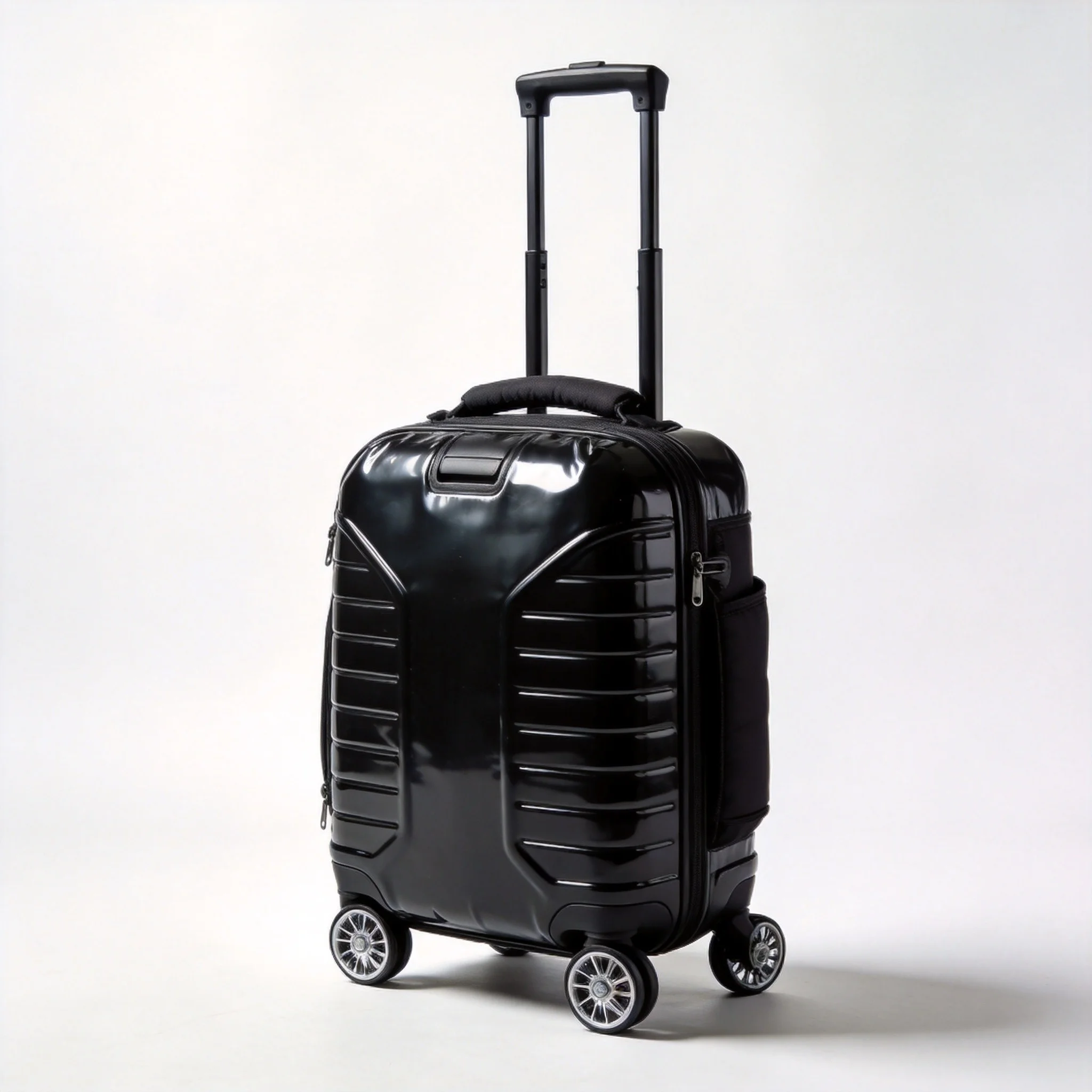
The best golf travel bag for 2025 is a hard-shell wheeled case with a 33-35 in (84-89 cm) shell, carry-on-friendly lockable opening and an aluminium-reinforced bottom, packed with the club heads inverted and a spine protection bar across the top — because baggage handlers drop cases up to several feet and compress them under stacks of other bags. Airlines generally accept one checked bag up to 62 linear inches (157 cm) with club shafts over 3 ft (91 cm) exempt from length limits, but fees, weight ceilings and sports-equipment policies differ by carrier. This guide sets out the trade-off between hard and soft cases, the packing sequence that prevents head and shaft damage, and the sourcing checks retailers and brands should run before committing a private label.
A golf travel bag is not an afterthought accessory; it is the single most important protective item a frequent golfer owns. A full callback set of 14 clubs, a stand or cart bag, shoes and a week of apparel will be dropped, stacked, shoved and thrown through three or four airport carousels on a one-way trip. The difference between a bag that arrives in one piece and one that arrives with a snapped tip is decided almost entirely at the point of purchase and at the moment of packing. The pages below move from the case itself into the airline rules, then the packing method, then value, then how a factory should build and verify them — so you can fly more and repair less.
What Counts as a Golf Travel Bag in 2025
A golf travel bag is a specialist container built to get a full set of clubs from your door to the first tee of a distant course without damage. Two families dominate the market. A hard-shell case has a rigid plastic, polycarbonate or high-density polyethylene (HDPE) body, usually with a reinforced aluminium edge or ABS bottom plate, and offers the highest impact resistance of any option. A soft-shell bag is a heavy-duty fabric cover (often 1680D nylon or 900D polyester) over a frame, with padding and a rigid internal spine, and wins on packing flexibility, storability and weight.
Between the two sits a growing number of hybrid designs that put hard base plates and removable shoulder straps on soft covers, and inflatable internal bladders that clamp clubs in place. Branded units from retailers add logos, livery and club-specific interior systems. Crucially, a travel bag protects the bag and clubs as a system: the external case, internal padding, club securing straps and the small protective accessories (a cover for the stand, a sleeve over head covers) work together. Choosing any one in isolation is how expensive mistakes happen. Refer to the detailed comparison of hard vs soft golf travel shells to calibrate which family fits your flying pattern.
Hard Case vs Soft Case Trade-Off, Plainly
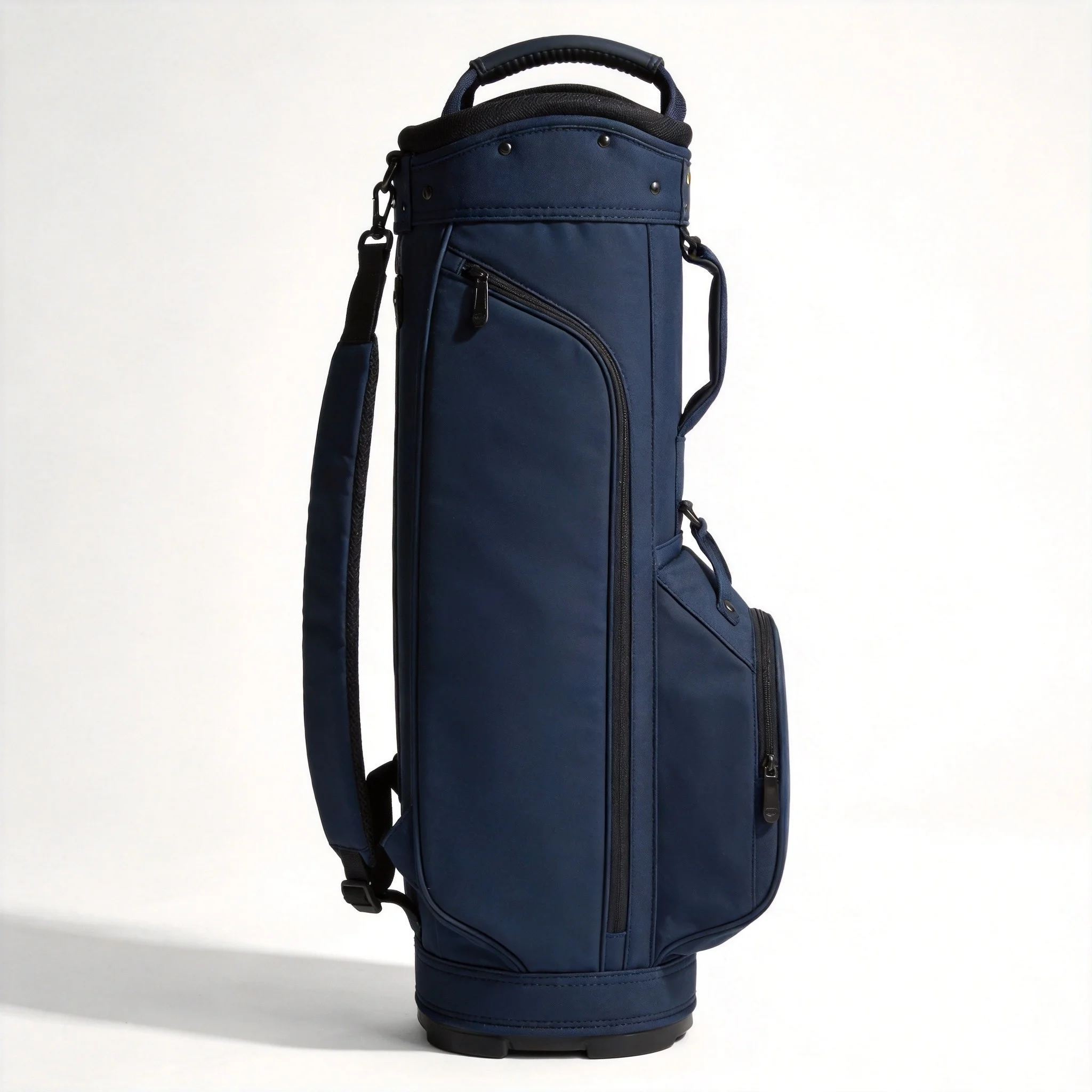
The decision between hard and soft is a balance of four variables: protection, weight, storage and price. A hard case offers the best protection — a rigid shell spreads impact, so a drop on a corner is far less likely to transfer force to the club heads — but it is heavier (often 12-16 lb / 5.5-7 kg empty), bulkier to store and, at full size, can be awkward in a rental car boot. A soft travel bag typically weighs 5-9 lb (2.3-4 kg), folds flat when not in use and lets you squeeze in more apparel, but it relies on the density of its padding and a spine plate rather than on a rigid wall.
For the majority of golfers flying fewer than six times a year on well-handled routes, a well-padded soft travel bag with a hard base plate is more than enough. For regular international travellers, tournament players and those shipping clubs through lax-handling hubs, a hard case repays its weight premium many times over. Note that "hard" and "soft" are not absolute quality markers: a weak hard case can break at the hinge, and a premium soft bag with a full-length locking spine can outperform a cheap hard shell. Judge the construction, not just the label, and use our breakdown of impact-resistance standards for travel cases to compare against published drop and crush tests.
The Numbers That Matter: Dimensions, Ease and Clearance
Three numbers remove most guesswork. First, overall length — a standard golf travel case runs about 33-51 in (84-130 cm); your clubs plus the removable heads must fit with two to three inches of play so the case does not crush the ferrules. Second, empty weight, because it consumes part of your airline weight allowance before a single club is packed. Third, wheels and handles: a genuine 4-wheel spinner with a telescopic handle makes a loaded 30-40 lb case manageable in long terminal walks, while a two-wheel design tracks better over kerbs. Do not rely on the catalogue's "fits most bags" claim — check your bag's actual height against the case's interior, especially if you use a 14-way stand bag whose top sits high.
Clearance matters inside the car too: a 39-in hard case does not fit upright in every sedan boot and almost never fits across a narrow hatchback floor. Measure your vehicle and your golf bag before ordering. Retailers who match travel bags to the customer's car and bag size sell far fewer returns, and the packing advice below converts that match into undamaged arrivals.
Airline Allowances: The Rules That Actually Apply
Almost every airline treats a golf bag as a standard checked item rather than a special oversized piece, but the fine print differs. The industry reference is IATA's IATA recommended practice that clubs over 3 ft (91 cm) are often exempt from the 62-in (157 cm) linear-size rule; some carriers still charge for excess weight above 50 lb (23 kg) on economy. Typical first-checked-bag fees range from $25-50 for domestic flights, with European low-cost and transatlantic carriers either bundling clubs into the baggage allowance or charging a flat sports fee. Weight is the metric most likely to surprise you: a packed hard case with 14 clubs, a full bag and shoes commonly reaches 35-45 lb (16-20 kg) empty-vs-qualified, so budget your allowance around the packed number, not the empty one.
| Carrier family | Typical rule | Weight cap | Fee pattern |
|---|---|---|---|
| Full-service US | Standard checked item | 50 lb (23 kg) | First bag $25-40 |
| European legacy | Special sports item | 23 kg (economy) | Fold into allowance or flat fee |
| Low-cost | Pre-booked checked bag | 20-23 kg | Online pre-book discount |
| Asia-Pacific | Length exemption >3ft | 23 kg standard | Piece system varies |
The rule that catches most travellers is the weight cap, not the length. Keep a travel scale in your packing routine and repack heavy shoes and bottles from the club bag into your hold luggage if needed. Check the carrier's current policy at booking and again 72 hours before departure, because 2025 has seen several fee changes. For the broader picture on getting through security and the carousel intact, the air-travel protection deep dive walks through the full journey.
How to Pack a Travel Bag So Nothing Breaks
Packing order decides survival. The professional sequence is: remove the driver and fairway heads if adjustable, or face the heads downward if fixed; pad the club heads with a head-cover bundle or a stretchable sleeve; place a spine protection bar down the length over the shafts and a padded collar at the mouth of the bag; secure the bag's own zips so the clubs cannot spill; then lock the case and add a zip tie or TSA lock. Inverting the heads matters because a driver head is the single most fragile point of a set, and a hard bag's bottom plate, not the exposed tip, then absorbs the impact.
Fill the empty space so nothing rattles. Shoe bags, a range finder pouch and a folded hoodie act as crush padding; a layer of bubble wrap around the mouth of an iron set is cheap insurance. Never leave the stand-bag legs extended loose, and cover the stand mechanism to stop it catching and snapping. Our step-by-step packing guide lays out the full 12-point checklist with illustrations, and the checklist is worth running even for a short domestic hop, because most damage happens inside a two-hour sector.
Wheels, Handles and Real-World Mobility
A travel bag lives on wheels more than on shoulders. A loaded hard case is heavy, so the wheel-and-handle system determines whether a transfer is bearable or exhausting. Look for a two-tube anti-telescope trolley handle, four inline-skate-style wheels with 360-degree spinner action for airport flats, and a rubberised bottom for kerbs. Some bags add a backpack strap option for the gate or stairs — a genuine benefit for boats and transit legs.
Test the wheels by loading the case with typical weight and pushing it over carpet and a kerb in the shop. Wheels that catch when fully loaded, handles that wobble, and zips that jam under tension are the defects that surface only on a trip, when help is far away. These mechanical details are exactly what a factory checks in a drop-and-roll test, which we describe in the travel-bag durability guide.
Water and Impact Resistance That Is Real
Humidity, rain on the tarmac and condensation in the hold are the quiet killers of clubs, shafts and grips. A travel case should be genuinely sealed around its seam — a decent soft bag uses a sealed, water-resistant interior liner and waterproof coated yarn, and a hard case should have a closed-cell foam seal at the opening. Rust on the wedge faces and mould in the bag are the classic outcomes of a case that claims to be waterproof but leaks at the zip.
Demand a seam-taped liner and, for wet climates, a rapid-drying pocket for damp gloves. Our notes on waterproof golf travel bags for airline check-in separate genuine hydrostatic protection from marketing, and the same logic applies to a case's IP rating claims as it does to a rain cover. If you fly to a humid destination several times a year, a fully seam-sealed interior is not optional.
Locking, Security and What Airlines Do With Baggage
Security has two halves: the lock and the claim. A TSA-approved combination lock lets screeners inspect the case without breaking it; a non-TSA lock risks a cut cable or lock at inspection, and a cracked hard shell from forced opening. The second half is knowing the airline's limited-liability ceiling for checked baggage — typically well under the replacement value of a premium set — which is why many travellers add separate club insurance or a rider on a home contents policy. Airlines handle millions of bags a year and lose or damage a tiny fraction, but when it happens it happens to the expensive set.
Photograph the case closed and open before handing it over, keep the boarding pass stub, and report any damage at the arrival carousel before leaving the reclaim area. A reinforced aluminium extrusion along the leading edges significantly reduces the dents that mark a hard case through a few dozen trips, and the security section of our transport guide expands on the insurance angle.
Combo Set-Ups: Cover Plus Case Plus Club Sleeve
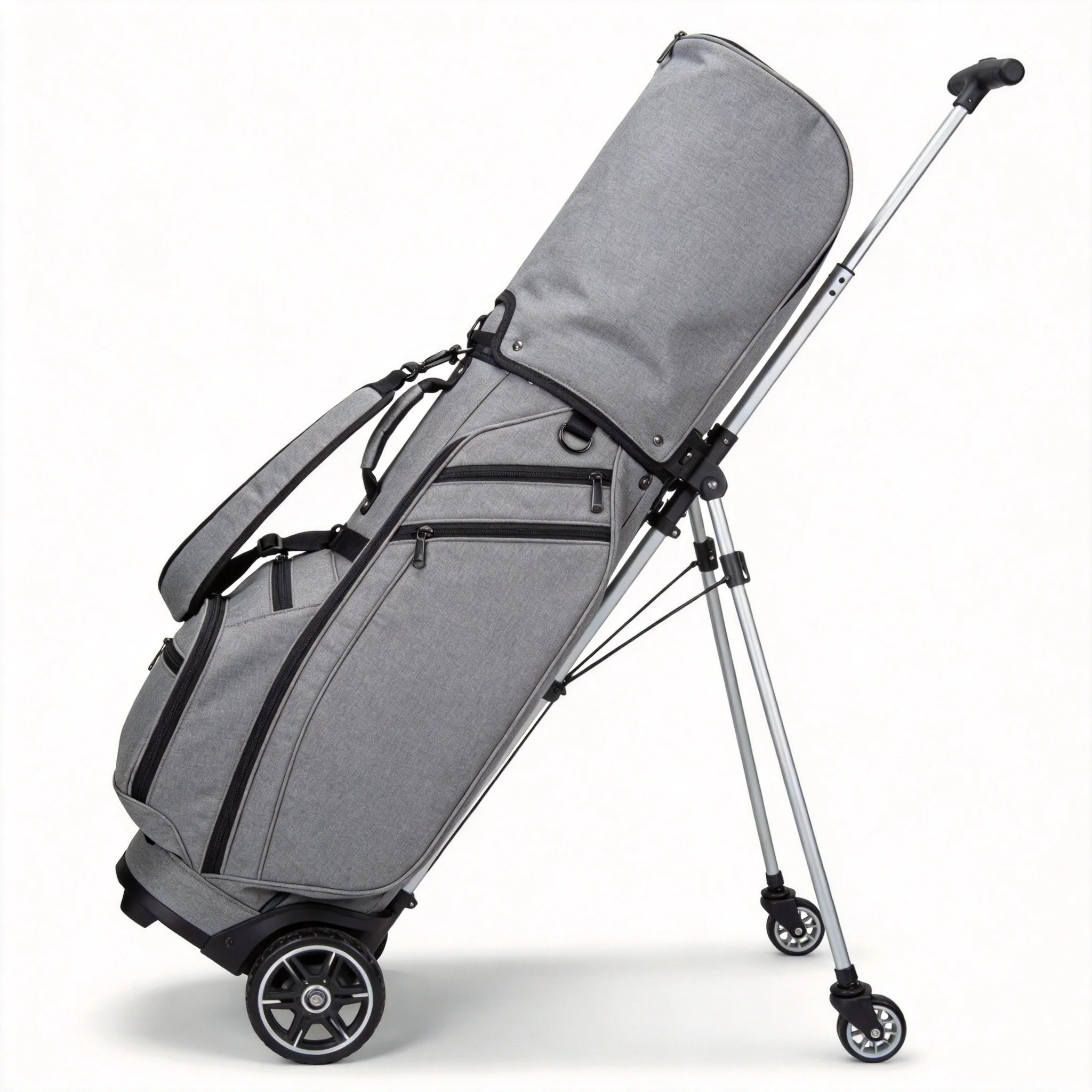
Many frequent flyers run a layered system rather than a single case: a lightweight travel cover for domestic hops, plus a hard case only for long-haul, and a soft club sleeve or padded bag cover underneath either one. The rationale is that the cover protects the bag from scuffs and keeps the stand legs tidy, while the hard case takes the impact. This combos-can-do-more logic also applies at the factory, where a good OEM line will advise on the right layering for a client's airline and route mix.
The layered approach also eases storage in small apartments: the cover folds flat and is always ready. Just remember that every layer adds its own weight, so the total packaged weight — cover plus case plus bag — is what the airline measures. A savvy buyer plans the whole stack at once rather than buying one box. For the full list of compatible accessories and how they clip on, see the travel-cooler and packing accessories coverage in the wider guide collection.
Cost, Value and What to Spend
Prices scale steeply with shell material, wheel quality and closure hardware. A serviceable soft travel bag runs roughly $60-140; a solid mid-range hard case $140-280; and a premium carbon-filament or aluminium-reinforced case $350-600. The value rule is to match the spend to the value of the clubs and the frequency of travel: a golfer with a $1,500 set flying four times a year is economically right to spend $200-300 on protection, while a causal once-a-year flyer can justify only a modest cover. Where the money should go first is the base plate, the spine, the wheels and the closure — the four points that take the load — before any cosmetic upgrades.
A factory can bring that spending into line through a private label: for a bulk order at the standard MOQ of 200 pieces (100 for test orders), a retailer can spec a hard or hybrid case with exactly the wheel, hinge and lock package that matches its market, with sampling in 10-20 days and production in 45-60 days. That is the difference between selling a commodity cover and selling a branded protection product with a margin story, which is detailed in the retailer custom travel bag guide.
When to Skip and Rent Instead
Honest advice includes the cases where a travel bag is the wrong purchase. If you fly two or three times a decade and the destination is a resort that rents clubs or provides storage, renting or taking a fitted club case loaned by the course is cheaper and simpler than buying a protective case you will store for years. Car differentials and boats are other cases where a hard case is impractical. And for travellers whose airlines cap baggage strictly and who already travel with a full-length hard case, a large extra fee can exceed the value of the protection on a cheap set.
Smart golfers calculate the break-even: if a travel bag costs $180 and paid club-repair or replacement averages an expensive repair tip per flight, protection pays for itself once damage is even modestly likely. When the maths says rent, rent with a clear head; when it says buy, do not cheap out on the spine.
How We Source and What a Factory Should Verify
We source travel solutions from an affiliated 4,950 m² factory that has produced golf equipment since 2004 and was established as a company in 2014. It runs seven production lines with 126 sewing machines and 137 staff, turning out 200,000 bags a month for 200+ brands across 100+ countries, and passed its SGS audit in March 2026. For travel cases, the factory verifies shell thickness and material, wheel load ratings, hinge torque, closure lock strength and seam sealing before a batch ships — the ordinary controls that turn "a box" into a dependable product. Sampling runs 10-20 days and bulk production 45-60 days at a 200-piece MOQ (100 for test orders).
Retailers and brands should ask a factory for its wheel-drop test record, the zipper brand and cycle rating, the shell material's cold-crack behaviour, and its insurance allowance declaration. The complete round-up of the best golf travel bags for international trips and the factory-sourcing guidance in the OEM/ODM services overview give the practical checklist to run before you commit to a supplier or a batch.
Conclusion
The right golf travel bag for 2025 combines a dimension-correct case that matches your bag and car, an airline-friendly weight profile, a proper wheel-and-lock system, and a packing habit built around the fragile points — heads inverted, spine bar in place, space padded. Hard cases buy the highest protection for frequent, long-haul and high-value travel; soft cases win on weight and storage; most golfers land on a hybrid or a layered combo. Whatever you choose, verify against the airline's actual weight rule, pack methodically and, if you are sourcing for a brand, hold the maker to drop, wheel and seam tests. Get those basics right and the clubs will arrive as they left — and you will fly, not fret.
Sources
Frequently Asked Questions
- Hard shell or soft golf travel bag: which protects better?
- A hard-shell case offers the highest impact resistance because the rigid shell spreads force away from the club heads, and archives the best drop and crush scores. A soft bag relies on its padding and internal spine, so it protects well for light flying but leaves more risk on rough handlers.
- What is the airline size rule for a golf bag?
- Under IATA recommended practice, clubs longer than about 3 ft (91 cm) are exempt from the standard 62-in (157 cm) linear limit, and a golf bag is usually treated as a standard checked item. Weight caps (about 50 lb / 23 kg) and fees vary by carrier, so confirm at booking.
- What is the most important packing rule?
- Invert or remove the club heads and place a spine protection bar over the shafts, then pad all empty space so nothing rattles. The driver head is the most fragile point, and the bottom plate of the case should take the impact.
- Can I fit extra clothes in my golf travel bag?
- Yes, soft bags in particular have expansion space, and packed shoes and apparel double as crush padding. But every extra pound counts toward the airline weight cap, so weigh the packed case and redistribute heavy items if needed.
- Why should I choose a TSA-approved lock?
- A TSA-approved lock lets screeners open the case without breaking it, while a non-approved lock risks a cut cable or cracked shell at inspection. It keeps the case secure and intact through security checks.
- How heavy is a typical packed golf travel bag?
- A packed hard case with 14 clubs, a full bag and shoes commonly reaches about 35-45 lb (16-20 kg), so a 50 lb (23 kg) economy allowance is usually fine but leaves little margin. Weigh before you fly.
- When should I not buy a travel bag?
- If you fly rarely and the destination rents or stores clubs, renting is cheaper and simpler. For high-value sets flown often or on long-haul routes, a protective case repays its cost quickly.