How to Negotiate Pricing for Wholesale Golf Bag Orders
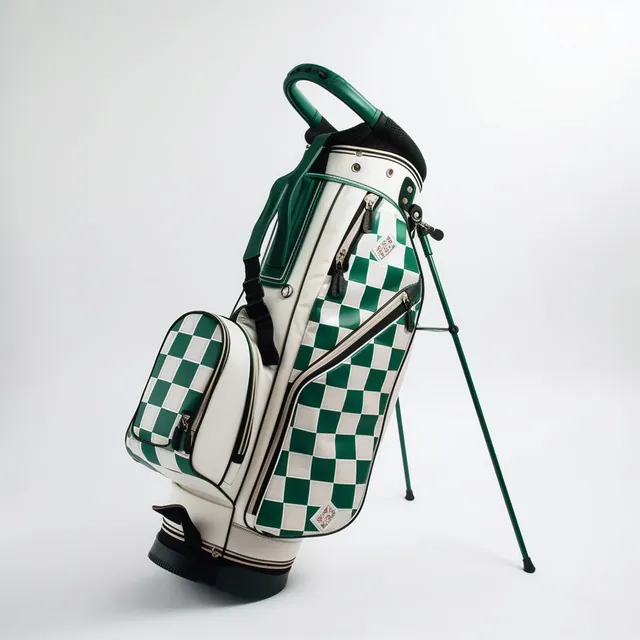
To negotiate the best wholesale golf bag price, anchor the conversation on verifiable unit economics rather than a target number: for a mid-size custom order, material accounts for roughly 55–65% of factory cost, 126 sewing stations and 7 dedicated production lines set realistic capacity ceilings, and a transparent factory direct quote for a 200 MOQ stand bag typically lands in the low double-digit dollar range depending on fabric, hardware and finish. Effective negotiation is less about squeezing a margin and more about aligning order size, lead time, specification maturity and payment terms so the factory can plan capacity and pass savings back. In this guide we break down the cost drivers, quoting logic, negotiation levers and contract safeguards you need when buying wholesale golf bags from a manufacturer (QUANZHOU JUNYUAN BAGS, founded 2014, 137 staff, 200+ active brand partners across 100+ countries, monthly capacity 200,000 units).
Why Factory Cost Structure Beats a Discount in Negotiation
Professional buyers who negotiate wholesale golf bag pricing purely on "percentage off" almost always leave value on the table because the factory has far more flexibility in how it configures an order than in its profit margin. Cost is a stack, and every layer responds to a different lever. Fabric and lining make up the single largest slice of a golf bag bill of materials, so switching to a proven, in-stock material can move the unit price more than any friendly conversation about a discount. As a Quanzhou-based manufacturer operating 7 production lines with 126 sewing machines (149 machines across the facility) and 137 employees, we see daily how spec changes ripple through costing.
Our recommendation is to think in cost drivers before you think in numbers. Hardware (zippers, buckles, stands, leg mechanisms, cart straps), trim, dividers, internal padding and branding technique each contribute to the unit cost and each can be de-scoped if you are flexible. The hidden cost you rarely see quoted is rework: an under-specified order generates more sampling iterations, longer lead times and higher rejection risk, all of which a serious factory must price into a quote. That is why a well-prepared buyer routinely negotiates a lower landed cost than a buyer who simply asks "can you do $X per bag."
The Real Cost Drivers in a Wholesale Golf Bag
Before we discuss tactics, it is essential to understand what actually moves the number. Materials dominate, but they are far from the whole story. Fabric quality and weight (denier, coating, lamination), hardware density, sewing complexity and per-unit labour all feed the same quote. A golf stand bag with a retractable leg mechanism and dual straps genuinely costs more to assemble than a cart bag with a simple handle, and that difference is structural rather than negotiable.
Labour reflects the number of sewing operations per bag. Our line team of 137 includes skilled machine operators; more complex pocket layouts and reinforced stress points mean more machine time and a higher unit labour allocation. Finally, quantity truly matters at the factory: because MOQ units carry fixed set-up and sampling costs, a larger order spreads that fixed load and buys leverage. In our own cadence, standard MOQ is 200 pieces with a test order of 100 pieces, sampling runs about 10–20 days and bulk production runs about 45–60 days — the levers you trade against price are these same variables.
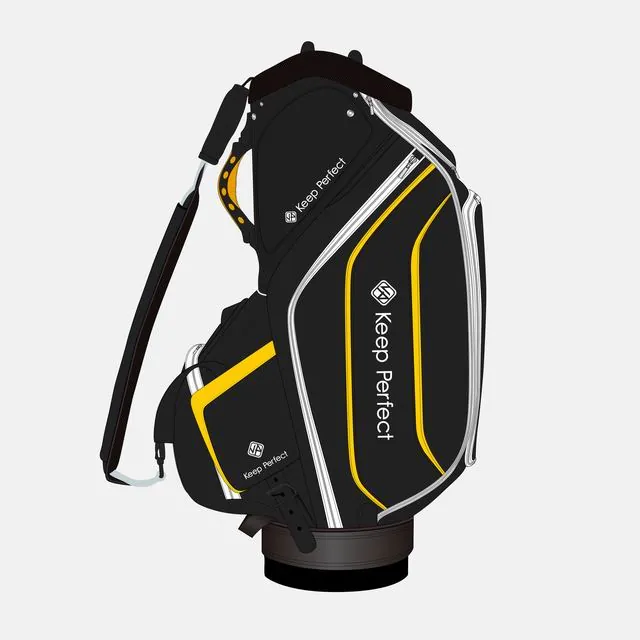
Material & Hardware Weight
Fabric, zippers, stand mechanisms and padding account for the largest share of wholesale cost, so material selection is a pricing lever.
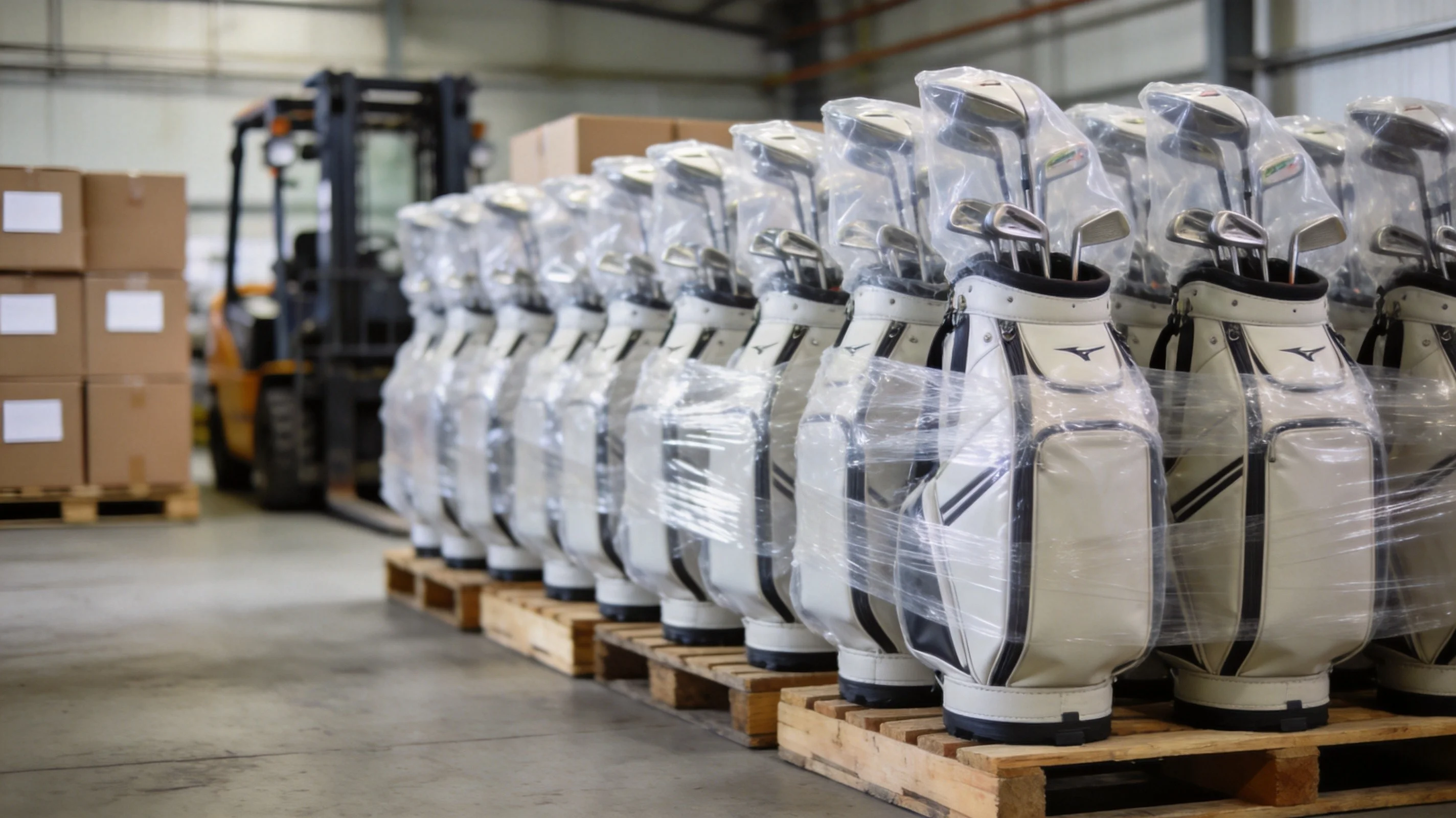
Volume & Logistics
Order size spreads fixed setup costs, while consolidation and shipping mode influence the final landed price you negotiate.
The Cost-Driver Breakdown Table
| Cost Driver | Share of Unit Cost | Negotiation Lever |
|---|---|---|
| Materials (fabric, lining, hardware) | 55–65% | Switch to in-stock fabric; trim hardware |
| Labour & sewing operations | 20–25% | Simplify pockets; standardise layout |
| Sampling & development | 3–6% | Freeze spec early to cut iterations |
| Overhead, QC & compliance | 6–10% | Consolidate orders; longer lead time |
| Logistics & insurance | 4–8% | Consolidate shipments; CIF vs FOB |
These ranges are our working estimates from production at a 200–2,000 unit scale and will shift with raw-material markets, but they give you a defensible framework for where negotiation actually has room to move. When a factory quote is higher than your target, ask which cost driver is above the historical average rather than demanding a global discount.
How Lead Time Becomes a Pricing Lever
Timing is one of the quietest pricing levers in wholesale golf bags. Factories allocate capacity across 7 production lines serving 200+ brand partners in 100+ countries, so a buyer who can commit to standard lead times allows the factory to plan efficiently. In our workflow, sampling needs 10–20 days and bulk production 45–60 days. If you can accept a slot that fills otherwise-idle capacity in a soft season, the factory can often preserve margins while lowering your price because utilisation improves.
The reverse is equally important: unrealistic deadlines force overtime, air freight and priority tooling, and those costs land in your quote. When you negotiate, ask for clarity on the production start week rather than just a promised delivery date, and offer flexibility where you have it. Buyers who schedule around the factory's quieter months consistently win concessions that no amount of polite haggling would unlock, because they are trading a real resource the factory values.
Payment Terms, Deposit and the Role of MOQ
Payment structure is a negotiation point that is frequently misunderstood. A standard wholesale arrangement begins with a deposit (typically 30% at order confirmation) and the balance against the bill of lading, but terms can be shaped by trust and history. For established partners, more flexible structures become possible. Knowing the factory's MOQ positioning matters: at our facility, standard MOQ is 200 units with 100-unit test orders, which is deliberately accessible to help brands validate a line before scaling.
From a negotiation standpoint, a clean deposit and committed schedule give the factory cash-flow certainty, and security of capacity translates into better pricing. Conversely, asking for heavy customisation, credit without history, and rock-bottom pricing all at once forces a factory to price the risk. Choose the terms you want to negotiate on: pick your deposit, your lead time, or your unit price, and lead with the behaviour that the factory can bank on.
Looking for a Clear Wholesale Quote?
Whether you need custom stand bags, cart bags, waterproof lines or travel covers, our team of 137 production staff can prepare a transparent factory-direct breakdown. Send your spec for a structured quote with MOQ, lead time and cost drivers.
Request a Breakdown Quote →Sampling as a Pricing and Risk Check
Never negotiate a large wholesale contract purely on a photo or a previous sample you have not verified to your specification. A structured sampling phase de-risks both sides and sharpens your negotiating position, because the factory is committing to a physical standard rather than an abstract promise. Our sampling runs 10–20 days, and for a low volume test order of 100 units we can validate construction, materials and branding before you commit to full production.
During sampling, record every measurement and finish detail so the bulk order has an unambiguous reference. When the final bulk quote arrives, compare it against the sampled construction, not against the lowest price you have ever seen anywhere. A factory that under-delivers on the sample will not suddenly over-deliver at scale just because you negotiated hard. Protecting cost is also protecting consistency, and the sample is your cheapest insurance.
Certifications, Verification and Price Integrity
A low quote is meaningless if the factory cannot meet compliance and consistency requirements. Wholesale buyers should look for verifiable credentials rather than claims. Our facility was verified by SGS and Alibaba in March 2026, and we operate from Quanzhou, Fujian, with an associated 4,950 m² facility. Independent audit evidence gives you the confidence that the labour, materials and quality processes underpinning a price are real, which protects you from the hidden costs of a bad batch or a compliance failure at the destination border.
When you negotiate, be explicit that pricing is contingent on the factory maintaining its audit standing and quality documentation. Ask how quality is inspected across the 7 lines and what the rejection tolerance is. A factory that can name its testing routine is pricing its true costs; one that cannot is likely quoting optimistically and will recover the difference somewhere later.
Related Guides to Read Next
Pricing fits into a wider wholesale buying workflow. To make your negotiation stick, review the full cost framework in our wholesale pricing guide, understand the production journey in our OEM/ODM process guide, and see the manufacturing and sampling options on our OEM/ODM services and sampling pages. If you are importing from China, also read our step-by-step piece on importing custom golf bags to factor duties and logistics into the landed cost you actually negotiate.
Six Negotiation Scenarios and Their Likely Outcomes
Practical scenarios help translate tactics into behaviour. First, the volume-driven negotiation: you increase order size from 300 to 600 units and ask the factory to spread fixed setup costs, expecting a modest per-unit reduction. Second, the spec-driven negotiation: you move from a custom stand mechanism to a proven cart-bag layout, cutting labour and material step cost. Third, the season-driven negotiation: you commit to production in a quiet month to improve factory utilisation. Fourth, the payment-driven negotiation: you offer a higher deposit for a lower unit price. Fifth, the consolidation-driven negotiation: you combine several product types in one container purchase. Sixth, the partnership-driven negotiation: you sign a framework that guarantees annual volume in exchange for tiered pricing.
Each scenario improves your position honestly, because each gives the factory something real. Wholesale buyers who combine two or three of these levers routinely achieve landed-cost improvements without ever asking for a gift price. The common thread is respecting the factory's economics while protecting your own margin.
Avoiding the Traps That Undermine a Deal
A few mistakes can reverse a strong position. Comparing quotes without identical specifications is the most common error, because two "cart bag" quotes can be built from very different materials and hardware. Chasing the lowest headline price while ignoring lead time and consignment quality leads to expensive rework. Similarly, negotiating without a written spec means every round of emails adds cost rather than clarity. Finally, ignoring logistics can erase the entire saving: confirm whether your quote is FOB or CIF, whether palletisation and inner packing are included, and what the freight risk is.
Experienced buyers also protect themselves with a written agreement that locks the sampled standard into the bulk contract, sets quality thresholds and defines how deviations are handled. When the deal is written to a clear spec, negotiation stops being adversarial and becomes a shared cost-engineering exercise. That is the professional way to buy wholesale golf bags.
The Hidden Cost Drivers in a Golf Bag Quote
A golf bag quote is built from several cost drivers you can prepare to optimise before you negotiate. The single largest is the material: fabric type, coating, webbing, zippers and hardware determine most of your unit cost. Sourcing a proven material mix, rather than demanding a niche finish without volume, lets the factory buy standard stock and pass the saving to you. Because materials are bought at scale, committing to a consistent fabric and colour family across sizes lowers your per-unit price more quickly than any verbal discount.
Labour is the second major driver. Sewing a golf bag is genuinely labour intensive — it demands careful alignment, reinforcement at stress points and consistent seam quality. A factory's cost base, efficiency and staff skill all affect the labour element. At QUANZHOU JUNYUAN BAGS, the founder's 2004 entry into the trade and the company's 2014 founding signal the kind of seasoned teams whose efficiency keeps labour competitive without cutting corners. Overheads such as cutting patterns, finishing, inspection and packing layer on top, and choosing a bag that is simple to produce cleanly keeps the full landed cost predictable.
The order profile drives the remaining cost. Quantity, lead time and specification all move the number. Volumes approaching the 200-unit MOQ or higher let fixed setup spread further, while a rushed 45–60 day production window or an unusual spec raises cost. Before you negotiate a target price, break your order into material, labour and overhead, and identify where volume or specification can give you the most leverage. Knowing your own cost stack is the strongest preparation for any negotiation.
How to Build a Negotiable Order Specification
A well-specified order is far easier to negotiate than a vague one, because the factory can price it accurately and you can compare offers fairly. Start by fixing the bag type, fabric and exact hardware in writing, and use the approved sample as the anchor. When every supplier is pricing the identical specification, you are comparing apples to apples and any price difference reflects real efficiency, not a hidden change in quality or materials. This accuracy protects both sides and makes the negotiation constructive.
Structured specifications also reveal where flexibility can cut cost. If you allow the factory to use standard material stock, a simpler seam pattern or a shared colourway across SKUs, the effort and waste drop and so does the price. The economics of consolidation are explained clearly in our wholesale pricing guide, and they apply here: a slightly more flexible spec is often worth more than a hard-won nominal discount. Present your specification clearly, invite the factory to suggest cost-reducing alternatives, and negotiate on the basis that both sides gain from a smarter build.
A disciplined, governable speculation framework you follow every quote removes emotion from the process. Track every element — fabric, trim, quantity, lead time, packaging and shipping terms — so you can challenge line items with evidence. If a value seems high, ask for the driver: more material, more labour or a longer lead-time premium. When you treat pricing as a transparent engineering exercise rather than a tug of war, both buyer and factory can reach a number that supports a lasting relationship and reliable margin.
Negotiating Payment Terms and Incoterms
Wholesale golf bag pricing is not only about unit cost — payment terms and Incoterms shape your real landed margin and the factory's risk. Discuss whether the price is EXW, FOB or CIF, because each changes who arranges and insures freight, which can be a significant line for a container of bags. Agreeing a realistic Incoterm up front prevents surprising logistics costs and lets you model true landed cost rather than only factory price. Aligning these terms is often as valuable as the unit discount itself.
Payment structure reflects trust built over repeat orders. An established relationship may support a deposit with the balance on inspection, while a first order usually requires a larger deposit in advance. Asking about flexible terms is reasonable once you have a history, because the factory's willingness to extend terms signals confidence in a dependable client. Balance your cash flow needs against the factory's requirement to fund materials and labour across the 45–60 day run, and frame payment as part of the overall value conversation rather than a separate demand.
Finally, agree what happens at the margins: tooling or sampling fees, sample cost offsets against the first order, and any duties or certification in your market. Clarity here avoids disputes and keeps the relationship cooperative. When payment, Incoterms and the sample-fee policy are explicit, the negotiation moves from price alone to a complete commercial package that supports repeat, predictable business — the kind of arrangement our 200+ brand relationships in 100+ countries are built on.
Usually the Talking Points Are About Collaboration
As you finalise deals, remember that wholesale golf bag pricing is ultimately about a relationship, not a one-time discount. The strongest negotiations aim for a price that keeps the factory willing to invest in your account — reserving capacity, smoothing reorders and tightening quality — because a squeezed supplier has little margin left to serve you well. Frame the negotiation around a target that works for both sides, and use the trust you have built to agree terms that hold across multiple seasons rather than a single squeeze.
Cement the outcome with a written order confirmation that records the agreed price, specification, quantity, lead time and Incoterm, so both sides have a single source of truth. This removes the ambiguity that often turns a good negotiation into a later dispute. Because pricing dialogues recur, keep a record of what was agreed and why, and treat each negotiation as one round in an ongoing commercial relationship built on reliability and openness, exactly the approach our 200+ brand partners rely on.
Finally, keep improving the partnership between negotiations. Maintain product quality, share forecasts and pay on time, and the factory will be more willing to give you its best price without a fight. Great wholesale pricing is rarely the result of pressure alone; it is earned through predictability, honesty and volume that make both sides better off. Negotiate well once, then keep delivering, and the price will steadily take care of itself for years.
Frequently Asked Questions
- What is the typical MOQ for wholesale custom golf bags?
- At QUANZHOU JUNYUAN BAGS the standard MOQ is 200 units, with a 100-unit test order available to validate a design before scaling. Smaller brands should confirm test-order options with the factory directly.
- How long does sampling and bulk production take?
- Sampling generally takes 10–20 days and bulk production 45–60 days, spread across 7 production lines. Exact timing depends on specification and current capacity utilisation.
- How much do materials affect the final unit price?
- Materials typically represent 55–65% of unit cost. Choosing an in-stock fabric or simplifying hardware is usually the fastest way to reduce the wholesale price.
- Should I negotiate on unit price or on payment and lead time?
- The strongest position combines levers. Offering schedule flexibility, a clean deposit or a larger consolidated order gives the factory real value it can trade for a better unit price.
- Are FOB and CIF quotes priced differently?
- Yes. FOB does not include ocean freight and insurance, while CIF includes them. Always confirm which incoterm a quoted number refers to so you compare like for like and protect your landed cost.
- How does factory verification support pricing confidence?
- Independent verification (such as the SGS and Alibaba verification completed in March 2026) validates that labour, materials and quality systems behind a price are real, reducing hidden rework and compliance risk.
Sources
- Alibaba Verified Supplier Program — third-party supplier verification and factory auditing references.
- SGS — independent inspection, testing and certification for factory quality assurance.
- USITC HTSUS — Harmonized Tariff Schedule used to estimate import duties on golf bags into the US.
- ISO — international management-system standards referenced in quality-focused manufacturing.