Custom Golf Staff Bags for Tour Players and Sponsors
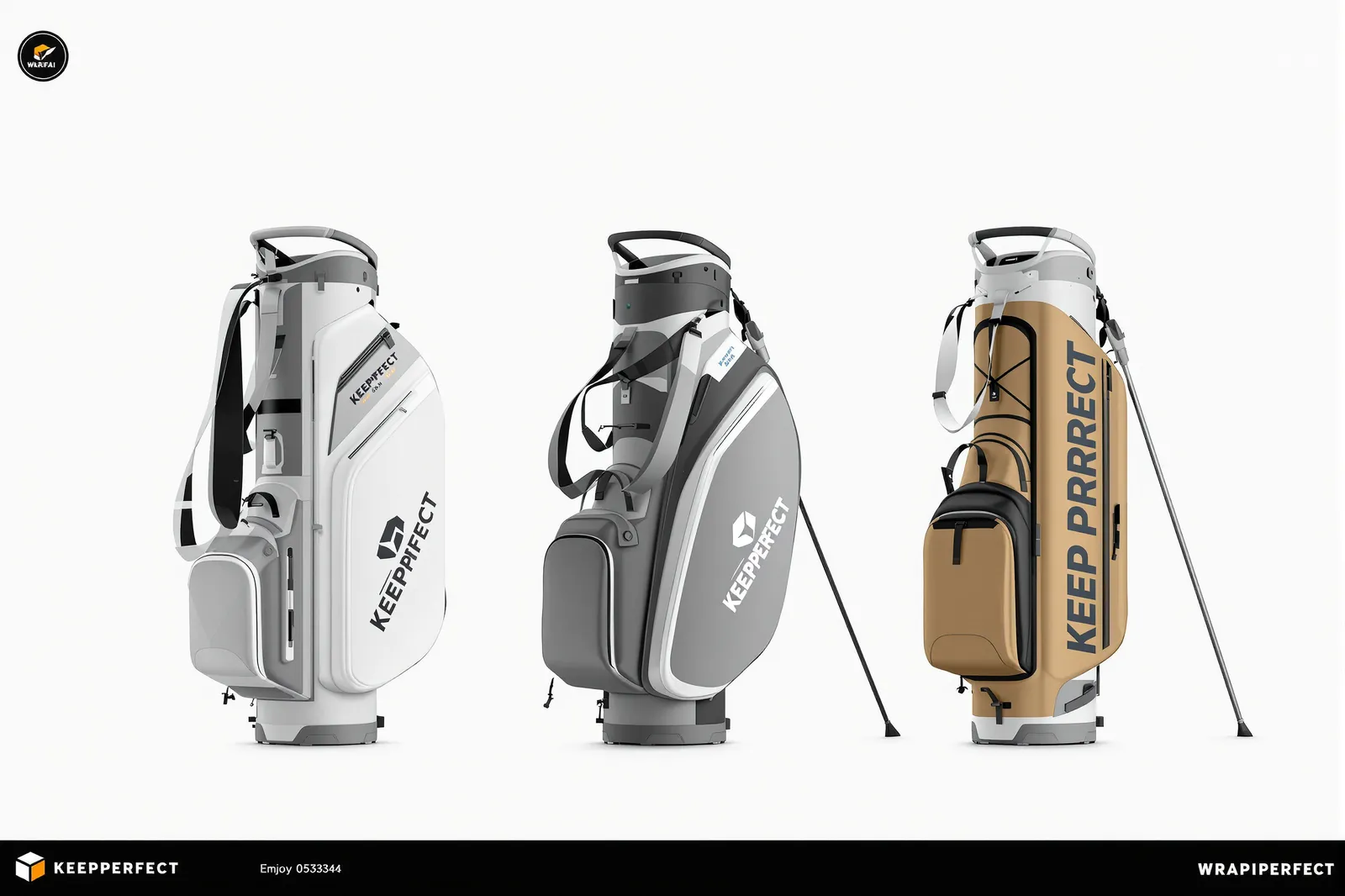
A custom golf staff bag for tour players and sponsors is a large, fully branded bag built to tour-grade spec — 14 clubs carried in full-length dividers, 12-15 pockets, a rigid moulded base, dense 840D-1000D fabric, and a big flat front panel engineered so a sponsor logo and player name are readable on TV and from the gallery. Brands commission these as premium, semi-permanent sponsorship and merchandise assets because a staff bag travels with the player all season and is seen in every broadcast. This guide, written from the factory floor of QUANZHOU JUNYUAN BAGS (founded 2014, 200+ brands, 100+ countries), explains how tour staff bags are designed, decorated and sourced.
Why Sponsors Put Logos on Staff Bags
A staff bag is one of the few pieces of golf equipment that follows a player into every broadcast frame, sits beside them on the cart, and is photographed repeatedly during a round. That makes its front and side panels unusually valuable advertising space: unlike a clubhead or a cap, the bag is large, largely static and always on camera. Sponsors also like staff bags because the asset is durable, travels to every tournament, and does not rely on the player remembering to hold it up.
The commercial logic is simple visibility. For a tour player the bag is personal branding, and for an academy or club professional it is the same idea at a smaller scale. The branding principles are identical whether you buy one bag for a player or a small fleet for a tour program, and they are covered in our brand visibility guide.
How the Branding Surface Is Designed
The design of a tour staff bag starts with the brand surface, not the pockets. The front panel must provide a large, flat, uninterrupted area for a full-colour sponsor logo, and the side panels usually carry a smaller sponsor or a player name. The planned deco dictates where pockets sit, because a zipper or handle running across a logo area ruins the artwork. So the factory artwork the panel before the pocket map.
This is a genuinely different engineering problem from a retail bag, and it is why tour bags are usually OEM-built to a custom panel, not stocked as a generic shell with a logo slapped on. Our customization guide walks through how panels, pockets and logos are reconciled. Brand teams can brief the placement directly via OEM/ODM services.
There is also a placement hierarchy worth agreeing with the sponsor up front: the hero logo on the large front panel, the brand on one side panel, and the player name on a chest panel. Locking this hierarchy before production means every party knows exactly where their mark sits and no seat of the order is decided by guesswork. It also makes the artwork approval cleaner, because each mark's position, size and colour is defined in the same drawing.
Decoration Methods for Tour Bags
Tour staff bags use four core decoration methods, often combined. Screen printing delivers flat, bold full-colour artwork at a low per-piece cost and is ideal for large sponsor logos. Embroidery adds texture and premium feel and is standard for player names and smaller marks. Woven labels give a crisp, durable finish and are often placed on side or chest areas. Heat-press and deboss round out the range for special trims.
Each method suits a different part of the bag and a different budget. A tour bag panel that sees sun, rain and cart friction all season needs a colourfast, abrasion-resistant finish, so factories match the method to the panel surface. For clubs and players who want to understand which option to choose for which logo, our logo decoration guide compares them directly.
Designing Sponsor Placement That Reads On Camera
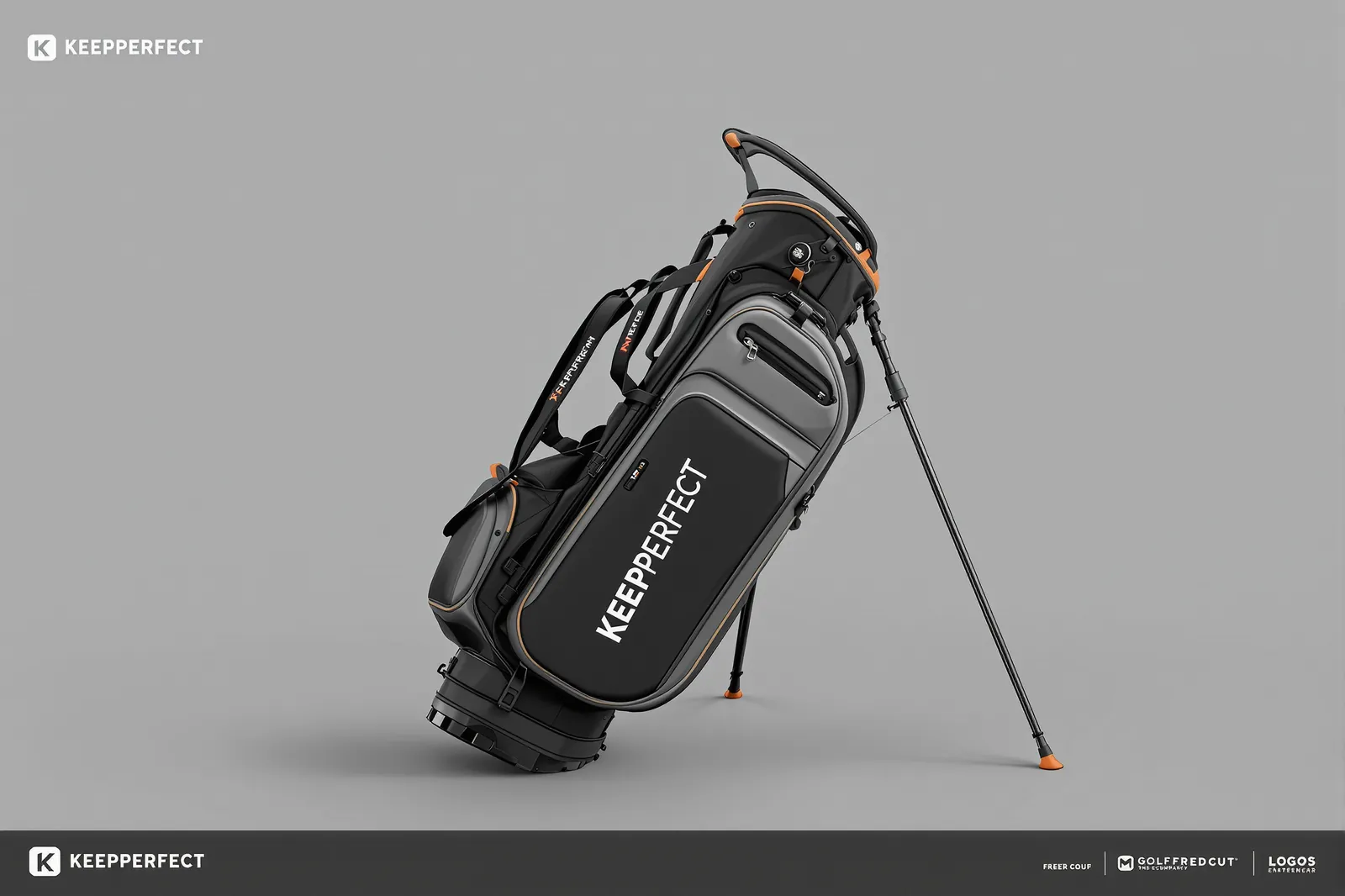
A logo that looks great in a brochure can wash out on TV. Tour bag sponsor placement is engineered for broadcast legibility: the primary logo sits high on the front panel where it is always in frame, uses a contrasting colour and sufficient scale relative to the panel, and avoids the seam line where the front panel meets the base. Secondary sponsors get the side panels, and the player name or monogram often occupies a chest panel.
Colourfast, high-contrast artwork matters as much as size, because a logo that fades into the bag colour adds no value. When we lay out a tour bag we provide a marked-up panel plan the sponsor team can sign off before production, so the placement is intentional rather than accidental. The brand image guide explores this legibility logic in depth.
The sponsor placement also has a practical discipline: never let a logo cross a seam or a pocket zipper, because the break ruins the legibility and can stress the deco at the seam line. We hold every placement clear of structural lines and validate the finished artwork on the real panel, so the mark that is approved is the mark that ships. This is the same discipline that keeps a sponsor's paid-for asset working for the whole agreement rather than failing at the first wash.
Pocket Layout Around the Branded Firewall
Because the front panel is reserved for the main sponsor, the pocket layout wraps around it. The large front-facing pockets (rangefinder, balls and tees, valuables) move to positions that do not break the artwork, while a full-length apparel pocket runs down a side. On a tour bag the caddie's flow matters: balls, tees and a towel waiver should be reachable from the cart without rotating the bag and risking the logo facing away from camera.
This balance between usable storage and clean branding is the core design tension of a tour bag, and it is resolved on the pattern table before any fabric is cut. Our compartments guide details how pros and caddies actually want a staff bag organised in play.
The commercial value of the tour asset also comes from its camera exposure, so we prepare the bag for photography as well as play. A clean panel that reads at broadcast distance, a logo at the sponsor-agreed size, and a bag that stays tidy under a full load all keep the asset looking its best whenever the camera points at it. For a sponsor paying for airtime, a bag that photographs well multiplies the value of what has already been paid for.
Build Spec for Real Tournament Wear
A tour staff bag gets packed, flown, rained on and dragged onto carts weekly, so the build spec is real, not marketing. Dense 840D-1000D shell fabric, a 14-way full-length divider top with a dedicated putter well, a rigid moulded base with feet, and rust-resistant hardware are the non-negotiables. The goal is a bag that still looks professional at the end of a season, because a scuffed, faded sponsor bag damages the brand it is meant to promote.
Factories serving tour programs therefore run stricter QC than for retail lines, validating divider alignment, base rigidity, zipper-cycle counts, strap pull and deco colourfastness on every lot. The quality standards guide documents these test points so a sponsor team knows what to ask for.
The Cost Levers Unique to Tour Bags
Tour staff bags are priced like premium luggage because of the fabric, the full-length divider system and the added design and deco work. The levers that move unit cost are divider count, fabric weight, base construction, number of deco positions, and how many colours run in the sponsor's logo. More logo positions and more colours both push cost up, so a well-scoped sponsor placement keeps the primary logo rich and the secondary marks simple.
Because these are line-itemed, two bags with the same shell can differ meaningfully in price purely on deco. Putting the panel plan and deco spec on paper first is the cleanest way to control it. For a full view of how these combine, our wholesale pricing guide walks through the components.
Ethics and rules matter here too: tour sponsorships sit within the rules of the relevant sanctioning body, and a responsible program confirms the branding size and placement complies before production. We support this by documenting the final panel so both the player and the sponsor have a clear record of what was approved, which protects the deal and the player's eligibility.
A Tour Bag vs a Standard Staff Bag Comparison
The table compares a tour-prepared staff bag against a standard pro staff bag so teams understand what the tour spec changes and where the added cost sits.
A common question is how far the tour spec is worth it over a standard staff bag for a smaller sponsor. The honest answer is that the panel and deco quality carry most of the commercial value, so even a mid-spec shell with a large, durable sponsor panel outperforms a premium shell with a small logo. Sponsors should therefore direct the budget at the branding surface and deco first, and let the build tier follow the amount of televised or on-course wear the bag actually faces.
Player-Grade 14-Way Organization
Touring players are usually particular about club organization, so a tour bag leads with a 14-way full-length divider top: each club has its own slot, the putter gets a dedicated well, and wedges sit in individually staged slots so grips do not tangle. Some players drive this down to a preferred 5-way or 7-way for ease of returning clubs after a shot, so the divider is a genuine player preference we build to rather than impose.
The constant is that dividers are full-length, so shafts never cross and the top keeps its shape under load. This is the single biggest upgrade a serious player notices moving from a cart bag, and it is why the divider dominates the spec conversation. Our divider guide compares the layouts players actually request.
Sponsor-Hardened Durability and Weather
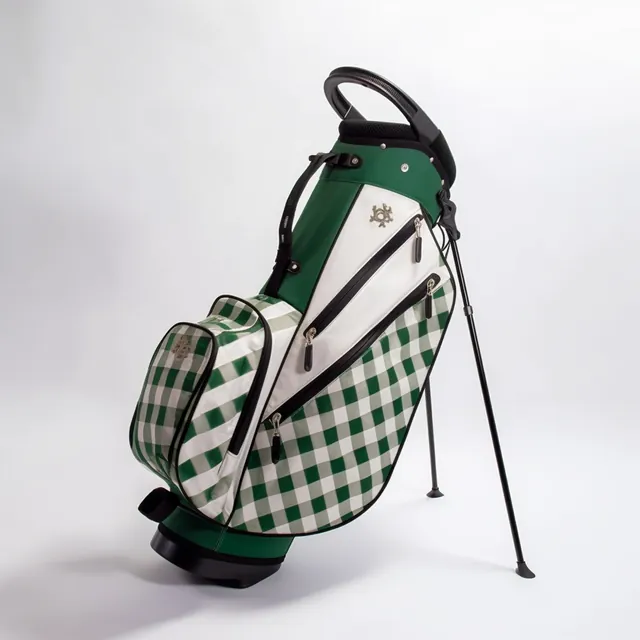
A sponsor's investment must survive a season of touring weather. Tour bags use coated or waterproof shells, sealed seams where required, and a rain hood over the club opening so clubs and the interior stay dry between shots. Lower panels and the base are the most weather-exposed parts, so they are built heavier and drain well rather than waterlog on a wet cart floor.
Because a waterproof shell and a crisp, colourfast logo are both weather-exposed, the deco is matched to the coating so logos do not peel or fade. The waterproof bag guide and weather protection guide explain which shell and finish choices protect both the gear and the branding.
Sponsor agreements often outlive a single season, so we design the deco to be refreshable. Because the panel plan and deco spec are documented, a rebrand or a name change for a new season is a limited re-run rather than a redesign. This refresh path keeps the sponsor asset current and avoids the cost and delay of starting from scratch, which is valuable to both the player and the sponsor across a multi-year deal.
A refresh also protects the sponsor's currency. Logos and players change, and a bag that carries a stale name or an outdated mark stops being an asset and starts being clutter. Because the refresh is a documented re-run, keeping the asset current is cheap and fast, so the bag never lingers past its usefulness on a player's shoulder or a sponsor's invoice.
Sourcing Tour Staff Bags: MOQ and Lead Times
Custom tour staff bags follow OEM economics: a standard MOQ of 200 pieces per design and colourway, with 100-piece test orders for a first production, sampling in 10-20 days and bulk production in 45-60 days. Tour teams often start with a test order to verify the panel layout and deco on a real shell before committing to a season's supply.
QUANZHOU JUNYUAN BAGS operates 7 production lines, 126 sewing machines and 137 staff across a main 4,950 m2 affiliated factory with a 200,000-piece monthly capacity, and passed independent SGS factory verification in March 2026. That capacity comfortably supports a tour-program run together with the rest of a brand's seasonal order.
From Concept to a Season-Ready Tour Bag
A tour bag program moves through a clear sequence: artwork and panel plan sign-off, prototyping of the shell and dividers, a deco sample on real fabric, a 100-piece test order to lock the build, then the bulk run. Each step confirms one variable so the final bag is wrong only where the brand asked for something different on purpose.
Because the sponsor logo is the whole point, the deco sample on actual 840D-1000D fabric is the step that cannot be skipped. We hold the panel plan against the printed sample so a logo that looked perfect in PDF is equally clean on fabric. Brands run this workflow end to end through custom solutions, and the process is documented in our staff bag production process guide.
Finally, match the fleet to the media. A bag that will be on broadcast weekly justifies the full tour spec and a rich sponsor panel; a club or academy bag that is seen mainly in person can carry the same branding on a mid-spec build at a fraction of the cost. The design language stays identical, so the brand reads consistently even where the build tier differs — which is exactly how a brand scales the asset from a single player to a broad programme.
Sponsors and Academies Doing It at Small Scale
The same tour-bag thinking scales down. An academy that wants a matching professional bag for its head pro, or a regional event that wants a premium prize staff bag, uses exactly the same panel-and-deco design approach with a 100-piece test order. You do not need a global tour budget to get a clean, durable, sponsor-ready staff bag.
For clubs and academies the staff bags for teams guide and wholesale section cover low-volume custom programs, and custom solutions handles one-off player specials.
Finally, the durability of the asset mirrors the durability of the relationship. A sponsor who ships a bag that fades in a term is unlikely to renew; a sponsor who sees a crisp, colourfast bag still turning heads at the end of the season has a reason to. We therefore treat the deco and build durability as a direct investment in the sponsor-brand partnership, not an incidental detail.
Factory Verdict on Custom Tour Staff Bags
A custom golf staff bag for a tour player or sponsor succeeds when the branding is designed into the bag rather than added on: a large, legible sponsor panel, a pocket map that wraps around it, deco matched to the shell so it lasts a season, and tour-grade dividers and base beneath it all. Get that engineering right and the bag becomes a durable, on-camera asset every tour week.
Since founding in 2014, QUANZHOU JUNYUAN BAGS has built staff bags for tour programs, academies and brands. To brief a custom staff bag for your player or sponsor, reach us at contact, service@junyuanbags.com, or WhatsApp +86 17750020688.
Since 2014 QUANZHOU JUNYUAN BAGS has built staff and tour bags across 100+ countries for 200+ brands, running 7 production lines with 126 sewing machines and 137 staff in a main 4,950 m2 affiliated factory at a monthly capacity near 200,000 pieces; our founder has worked in the golf bag industry since 2004. Wholesale custom orders follow a standard MOQ of 200 per design and colourway (100-piece test orders), with sampling of 10-20 days and bulk of 45-60 days, and the facility passed independent SGS verification in March 2026. Reach us at service@junyuanbags.com or WhatsApp +86 17750020688 to source a staff bag programme.
| Feature | Standard Staff Bag | Tour-Sponsored Staff Bag |
|---|---|---|
| Face fabric | 600D-840D | 840D-1000D, coated/waterproof |
| Divider top | 5-8 way | 14-way full-length + putter well |
| Branding surface | Small logo panel | Large sponsor panel + side + name |
| Deco positions | 1-2 | 3-6 with colourfast, screen/embroidery |
| Base | Foam or moulded | Rigid moulded pan with feet |
| Weather | Water-repellent | Waterproof shell + rain hood |
| QC depth | Written checklist | Full inspection + deco colourfastness |
Representative factory specifications. Tour spec adds cost through fabric, dividers, base and decoration depth.
Looking for a Reliable Manufacturing Partner?
Whether you need one tour bag for a player or a season supply for a sponsor program, we engineer the branding into the bag from the first sketch. 100-piece test orders, sampling 10-20 days.
Request a Bulk Quote →Frequently Asked Questions
- Why do sponsors invest in custom golf staff bags?
- A staff bag is one of the largest, most static pieces of equipment in every broadcast frame, so a sponsor logo on the front panel is durable, on-camera advertising that travels with the player all season to every tournament. That continuous visibility justifies the investment.
- How is a sponsor logo actually applied to a staff bag?
- The main methods are screen printing for large full-colour logos, embroidery for player names and premium marks, woven labels for crisp small placements, and heat-press for special trims. The method is matched to the panel surface and expected weather so the logo does not fade or peel.
- What is the MOQ and lead time for custom tour staff bags?
- The standard MOQ is 200 pieces per design and colourway, with 100-piece test orders available, sampling in 10-20 days and bulk production in 45-60 days.
- Can a sponsor bag be built waterproof?
- Yes. A waterproof tour bag uses a coated or laminated shell with sealed seams and a rain hood, with deco matched to the coating so branding survives sun and rain through a season.
- Do I need a full tour run, or can I order one player bag?
- You can order test volumes down to 100 pieces through a test order, and one-off player specials are supported through custom solutions. The design and decoration process is the same at any volume.
- What makes a logo legible on camera?
- Legibility comes from high-contrast, colourfast artwork placed high on the front panel, scaled to the panel and kept clear of seams and pockets, plus secondary marks on the sides. We provide a marked-up panel plan before production.
Looking for a Reliable Manufacturing Partner?
From player specials to full tour-program fleets, we build tour-grade staff bags with sponsor-ready branding factory-direct. Test orders from 100 pieces.
Request a Bulk Quote →