Custom Logo Printing & Embroidery for All Golf Bag Types
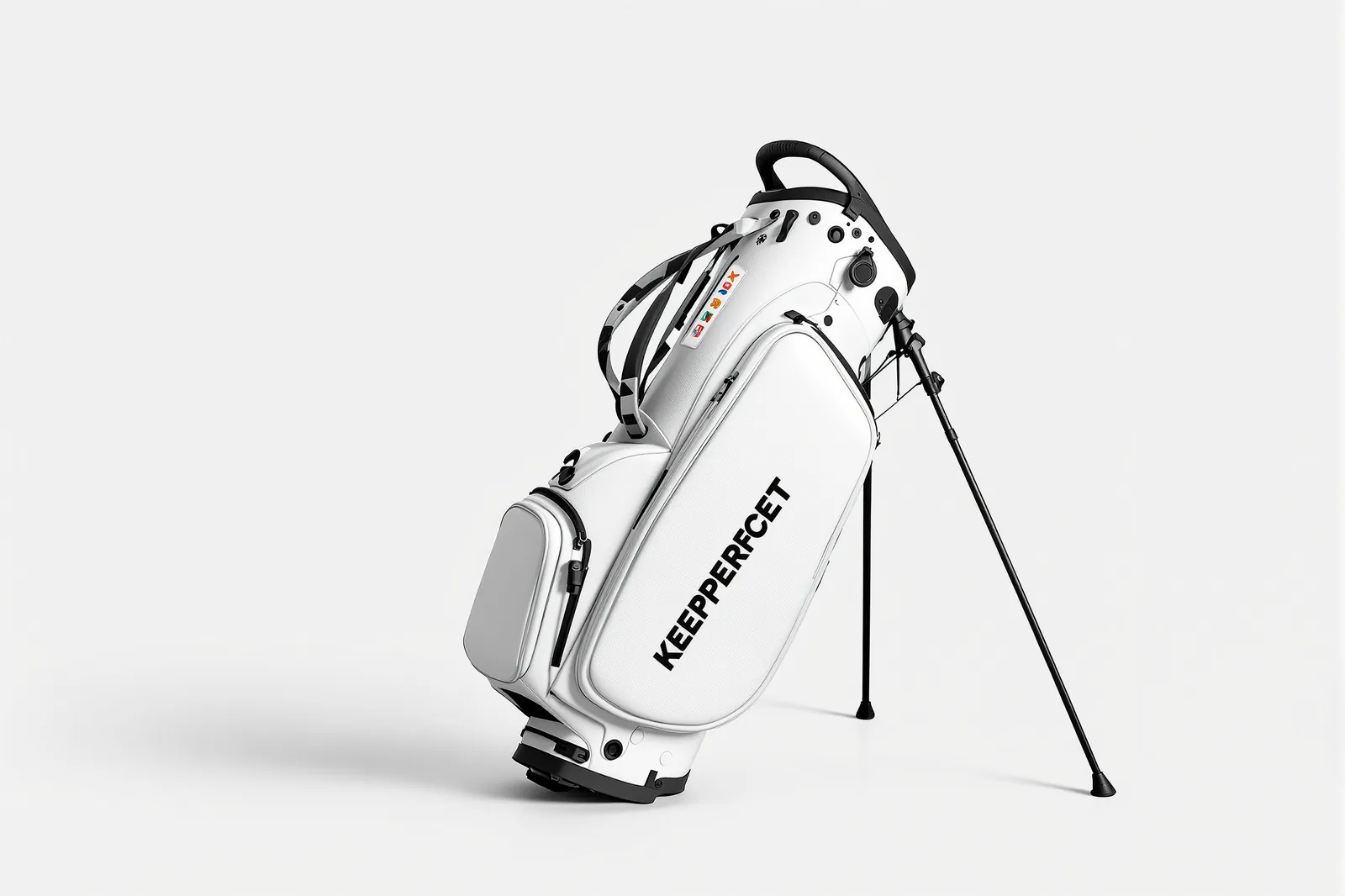
The best logo technique for a golf bag depends on the fabric and the bag type: embroidery suits small, low-color marks on nylon and 1680D panels; screen and heat-transfer printing suit flat polyester panels economically; and sublimation is the only method that delivers full-panel, all-over colour across the entire bag. At QUANZHOU JUNYUAN BAGS, a Quanzhou-based custom golf bag manufacturer founded in 2014 with a founder who entered the bag-making industry in 2004, we apply logos across all four major bag types — stand, cart, staff, and travel — for more than 200 brands shipping into 100+ countries. This guide explains every printing and embroidery method, which fabric and bag each suits, how color accuracy is controlled, and the exact sampling path that protects your logo before a bulk run.
Choosing a logo method is one of the highest-leverage decisions in a custom golf bag project, because it is done once, on every unit, and is extremely hard to correct after the bags ship. The wrong method on the wrong fabric causes cracked prints, fuzzy embroidery, dull color, or peeling that undermines a brand in the hands of every customer. The right method looks crisp, survives years of use, and matches your Pantone colours. This guide breaks the decision into its real parts — the techniques, the material math, the placement, and the approval workflow — so you can specify a logo strategy with confidence and brief a factory precisely.
The Five Main Logo Techniques Explained
Every golf bag decoration method sits on a spectrum from durable-and-simple to colourful-and-canvas-wide. Here is how the five core techniques compare, and the table below summarises them for quick reference.
| Technique | Best For | Color Range | Durability |
|---|---|---|---|
| Embroidery | Crests, badges, low-color marks | Limited (threads) | Excellent |
| Screen Printing | Large simple marks on polyester | Per-colour layers | Good |
| Heat Transfer | Full-colour small/medium logos | Full colour | Good |
| Sublimation | Full-panel, all-over colour | Full colour, no limits | Excellent |
| Woven Label | Small tags, inside labels | Limited (threads) | Excellent |
Embroidery: The Premium Look That Lasts
Embroidery is the default mark for golf because it looks premium and survives the abuse a bag receives — scraping against carts, being packed into trunks, and washing cycles. A stitched logo has physical depth, and on the dense panels of a quality bag it reads as deliberate and long-lasting. Embroidery works best with limited colour counts (typically up to a handful of thread shades), simple shapes, and moderate size, which is exactly what most club crests and brand marks are. For a school or academy it is the classic choice: a stitched crest on a stand or staff bag looks like it belongs on the product.
The limits matter. Filling very large areas with dense stitching can stiffen the fabric and add cost; tiny text below a legible size blurs into mush; and photographic or heavily gradient artwork cannot be embroidered directly. Modern machines also handle a peek cap or patch embroidered separately and then attached, which keeps stitch density consistent on curved panels. If your logo has fine detail, ask the factory to simplify it for embroidery — clean outlines and bold areas read far better than intricate gradients when stitched.
Screen and Heat-Transfer Printing on Polyester
Screen printing is the workhorse for flat polyester panels. It lays down one colour layer at a time, so it is economical for logos with a handful of flat colours on large panels, like a big logo on the side of a cart bag. Heat transfer (including DTF-style transfers) prints full-colour artwork onto a film or transfer that is then heat-pressed onto the bag, which handles gradients, small text, and photographic detail far better than screens. Both methods are clean on smooth 600D and 1680D polyester, and both are generally cheaper per panel than dense embroidery for large or full-colour marks.
The trade-off is durability on textured or high-stretch fabrics. A print on a smooth, stable panel will outlast a print on a stretchy or rough material, so the technique must be matched to the material. On nylon or heavily textured shells, screen and transfer prints can crack at flex points over time, which is why for premium bags many brands choose embroidery or sublimation for high-wear panels. If you need both colour range and durability, sublimation is the strongest answer for a full-colour, panel-wide design.
Sublimation: Full-Panel Colour With No Limits
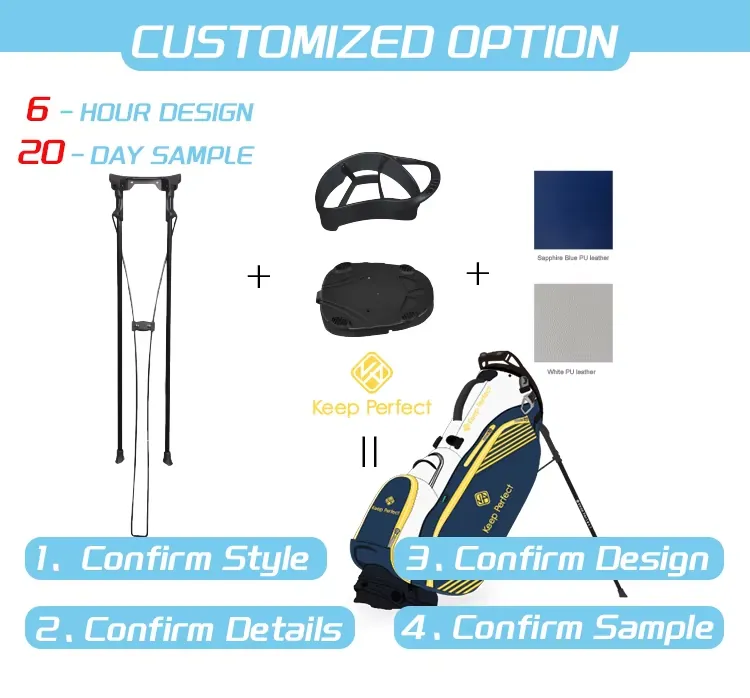
Sublimation is the technique that unlocks the modern full-panel look — a bag wrapped entirely in colour, gradients, graphics, or a pattern with literally no seam-to-seam colour limit. The design is printed onto a transfer paper and then heat-pressed so the dye bonds into the polyester fibres themselves, rather than sitting on the surface. Because the colour is inside the fabric, a sublimated logo and design cannot peel or crack, and it matches every colour the file contains, including gradients and photography. This makes it ideal for bold brand codes, team patterns, or a full-canvas wrap logo.
The critical constraint is that sublimation requires a high polyester-content fabric. Natural or heavily blended materials do not accept the dye correctly, so a sublimated bag must be engineered as a polyester product from the start. This suits most modern golf bag shells, which are polyester-based, but it means you cannot simply "upgrade" an existing cotton or leather-trimmed design to full sublimation without changing the material balance. Where a brand wants both a full-colour design and the durable, stable feel of a premium polyester bag, sublimation is the ideal pairing.
Woven Labels and Inside Branding
Small marks still matter. A woven label — a small stitched tag with the brand name or a mini-logo — is the professional way to brand the inside of the bag, the rain-hood, the handle trim, or the hang-tag loop. Woven labels have excellent durability, hold limited thread colours, and add a finished, factory-grade touch that separates a genuine private-label product from an unbranded one. Many premium programs combine a large exterior technique (embroidery or sublimation) with a subtle woven or printed inside label for depth of branding.
Inside branding is easy to overlook but disproportionately affects perceived quality. A brand that prints a small woven label inside the valuables pocket or on the liner signals care and authenticity to the recipient. For sponsorships and corporate gifts, the inside label is also where to print the recipient's name or a "custom built for [company]" note in a woven or printed format, personalising the item without crowding the exterior canvas.
Matching the Technique to the Bag Type
Different bag types create different canvases and wear patterns, so the technique should align with the bag. On a cart bag, the large flat side panel is the best place for screen, transfer, or sublimation, and it gives the biggest logo surface. On a stand bag, the curved shoulder region and smaller panels tend to suit embroidery better, with the side panel available for a second, larger mark. On a staff bag, the huge side panels are the premium canvas — perfect for sublimation or a large embroidered crest — and the bag's stature justifies spending more on the logo. On a travel bag, which is carried and shoved around, durability wins, so embroidery or sublimation on the shell outlasts prints at flex points.
Our full comparison of materials for custom golf bags explains how the shell choice pairs with decoration. In every case, the principle is the same: place high-detail, full-colour work where the panel is smooth and stable, and place durable stitched marks where the bag flexes or scrapes. Balanced against that is where the logo is most visible, which is why most programs run two techniques — a durable embroidery on the main panel and a full-colour print or sublimation on a secondary panel.
Colour Accuracy: Pantone Matching and Swatches
Colour accuracy is where logo projects succeed or fail, because digital screens misrepresent both printed ink and embroidered thread. The industry-standard approach is Pantone matching: you supply Pantone or PMS references for each brand colour, and the factory matches thread and inks against physical swatches under daylight-equivalent light. Never approve a colour from a photograph; approve it from a physical swatch held against the actual fabric. Embroidered thread of a given Pantone will read slightly differently than printed ink of the same reference because of texture and sheen, so the swatch must be on the actual production material.
During sampling, your approved physical logo swatch becomes the master reference for the bulk run. We log the exact thread and ink formulas so a reorder matches the original. If your brand uses a precise corporate colour, insist on a Pantone-matched approval before beginning production; this single step prevents the vast majority of colour complaints. We have covered the full workflow and pitfalls in our guide to custom golf bag OEM and ODM services.
Placement and the Logo Layout Sheet
Where the logo sits is as important as how it is applied. A professional logo layout sheet maps every mark: the primary logo on the upper side panel at chest height, a secondary mark on the lower panel or base, a tonal mark on the front, and small marks on the rain hood, handle, or inside label. On a cart bag, the main panel is the hero and should get the largest, cleanest logo. On a staff bag, the big side panels are the canvas for the sponsor or crest. On a stand bag, consider both the side panel and the front valuables pocket as logo positions.
Consistency across a fleet or a brand is the goal of a layout sheet. By fixing colour, size, and position in one document, a brand guarantees that every bag in an order — and every reorder — looks the same. Many programs also standardise artwork file formats (vector EPS, AI, or high-resolution PNG on transparent background) so the graphic designers and the factory are always working from the same source. This discipline is exactly what our branding guide describes in depth for full-program planning.
Sampling, MOQ and the Approval Path
No logo technique should go into a bulk run without a physical sample. At QUANZHOU JUNYUAN BAGS, sample development typically takes 10–20 days, and you approve the production-matched sample — same thread, same inks, same fabric batch — before bulk production. That sample is the master reference. Our standard minimum order is 200 pcs per design, and we support a pilot run of 100 pcs, letting you validate the logo on a small batch first. Bulk production then runs 45–60 days. The sampling fee is typically credited forward when you move to bulk, so the risk of validating the logo is low.
Testing is also part of approval. A good factory tests the logo for adhesion, abrasion, and colourfastness on the production fabric before committing. Embroidered and sublimated marks are inherently durable, while pressed prints should be checked for peel resistance under flex. If your product is bound for the US or EU, confirm that the pigment and threads meet the destination's chemical-compliance limits, and request the relevant test reports. This protects you at customs and protects your brand in use. Our quality and testing approach is explained in golf bag manufacturing quality control.
Cost, Volume and Planning Your Decoration Budget
Decoration has a clear cost structure. Embroidery and woven labels price by stitch count and colour count; screen and heat transfer by number of colours and panel area; sublimation by panel area and design complexity. Higher colour counts and larger logos cost more per unit, and per-unit price drops as volume rises. For a brand buying in bulk, it can be cheaper per unit to print full-panel sublimation at volume than to pay careful per-bag embroidery at low volumes. Probably the most useful planning rule is to stage: approve the sample, then scale, and always keep enough budget for the master logo zones rather than spreading a thin design across too many panels.
Because the logo is permanent and highly visible, we recommend treating decoration cost as a core brand expense rather than a line to trim. A slightly costlier, durable technique that survives 100 rounds is cheaper in the long run than a cheaper print that peels after ten. Our detailed treatment of what moves price across the whole bag is in custom golf bag pricing factors.
Sustainability in Logo Decoration
Decoration methods have an environmental footprint too. Water-based inks are increasingly available for printing and reduce solvent load, sublimation adds no extra surface coating or film waste once production is set up, and recycled polyester shells make both print and sublimation viable on a more sustainable base. Some programmes also choose removable branding so a bag can be donated or reused when it retires, extending product life. If sustainability is a brand value, specify water-based inks and recycled shells up front and ask the factory to document them. More options are covered in eco-friendly golf bag manufacturing.
Frequently Asked Questions
- Which is better for a golf bag logo — embroidery or printing?
- Use embroidery for small, low-colour, durable marks on nylon or 1680D panels. Use screen or heat-transfer printing for full-colour marks on smooth polyester, and sublimation when you want full-panel all-over colour. The bag type and fabric decide.
- Can I print a full-colour or gradient logo on a golf bag?
- Yes. Full-colour, gradient, and photographic artwork is best done with sublimation (which bonds colour into the polyester and cannot peel) or with heat-transfer printing. Both handle detail that embroidery cannot.
- How do I make sure my logo colour matches my brand?
- Supply Pantone references and approve a physical swatch on the actual production fabric. Approved thread and ink formulas are then logged so the bulk run and any reorder match the original.
- What is the minimum order for a logo-decorated golf bag?
- The standard MOQ is 200 pcs per design, with a 100-pc pilot run available to validate the logo first. Sampling takes 10–20 days, and bulk production 45–60 days.
- Can sublimation be used on any golf bag material?
- Sublimation requires a high polyester-content fabric because the dye bonds into synthetic fibres. It is ideal for modern polyester golf bag shells but needs the material engineered for it from the start.
- Do you offer sustainable logo options?
- Yes. Water-based inks, recycled polyester shells, and removable branding are available. Our affiliated factory has passed an SGS audit (2026) and documents the compliance destination markets require.
Preparing Artwork That Prints and Embroiders Cleanly
The quality of the final logo depends heavily on the artwork you supply. Vector files (EPS, AI, or PDF) are strongly preferred because they scale to any size without losing sharpness, and they give the factory the cleanest path to stitch or print. Bitmap files work at high resolution (ideally 600 dpi or higher) and must be supplied on a transparent background if the logo sits on the bag fabric directly. Before sending files, confirm the logo's minimum clear space and the smallest size at which text stays legible, especially for embroidery where tiny lettering blurs.
It is also wise to supply both a full-colour version for printing or sublimation and a simplified, high-contrast version for embroidery, since a stitched mark needs bolder shapes and fewer domestic detail lines. Converting gradients to flat colour, reducing to a limited thread palette, and thickening thin strokes are standard embroidery prep. Providing both variants in the brief prevents the factory from weakening your mark to make it stitchable. For the full technique-by-fabric breakdown, our custom golf bag OEM and ODM services guide and our golf bag customization process cover the artwork handoff in detail.
Care, Longevity and Protecting the Finished Mark
A logo that lasts does not end at production — it survives how the bag is used and cleaned. Provide the recipient or the user with basic care guidance: spot-clean prints rather than aggressive scrubbing, avoid long sun exposure that can fade certain inks, and store the bag so flexible panels are not repeatedly creased at the logo. Embroidered and sublimated marks need almost no care, which is why they dominate premium bags; pressed prints benefit from gentler handling at flex points. A durable technique combined with simple care instructions extends the visible life of the brand mark for years.
From a quality standpoint, our factory tests each logo's adhesion, abrasion resistance, and colourfastness on the production fabric during sampling, and we log the approved formulas so a reorder matches. If your product is bound for the US or EU, we confirm the pigments and threads meet the destination's chemical-compliance limits and provide the test reports. This pairing of durable technique and documented testing is what keeps a brand mark looking new long after the invoice closes. Our quality and testing approach is explained further in golf bag manufacturing quality control.
Logo Longevity and Backing for the Best Finish
Beyond choosing a technique, a small bit of preparation extends a logo's life and raises its finish. On many premium bags the main logo sits on a discreet backing panel — a tonal twill or leather-look patch — that frames the mark, protects the surrounding fabric from puckering, and makes embroidery sit clean and flat. A lined or backed decoration feels deliberate and premium, and it is nearly always worth the small extra cost on the primary logo. Where a logo crosses a seam or a zipper, the backing keeps the stitch stable so the mark stays crisp over years of use.
Longevity also depends on matching the palettes to the actual thread and ink formulas. Thread colours and modern inks fade at different rates, so the factory matches the logo against Pantone on the production fabric and logs the recipe. When you reorder, the same formulas keep the mark identical to the original — which matters for team and brand fleets that must stay consistent over seasons. Our farm quality view of this consistency is documented in golf bag manufacturing quality control.
About the Author
This guide was prepared by the production and sourcing team at QUANZHOU JUNYUAN BAGS, a custom golf bag manufacturer in Quanzhou, China. Our factory was founded in 2014, and our founder entered the bag-making industry in 2004, giving the team 20+ years of hands-on experience. We operate 7 production lines with 126 sewing machines and 137 staff, with a monthly output of about 200,000 units, serving 200+ brands across 100+ countries. For project-specific advice, email service@junyuanbags.com or call/WhatsApp +86 17750020688.
Sources & Further Reading
- USGA Equipment Rules — official golf equipment standards referenced for bag construction and compatibility.
- ISO 9001 Quality Management — the quality standard behind our factory's management system.
- BSCI Social Compliance — the social-compliance scheme referenced for responsible manufacturing.
- SGS Factory Audit — third-party audit completed at our affiliated factory in 2026.