Cost Factors That Affect Custom Golf Bag Pricing
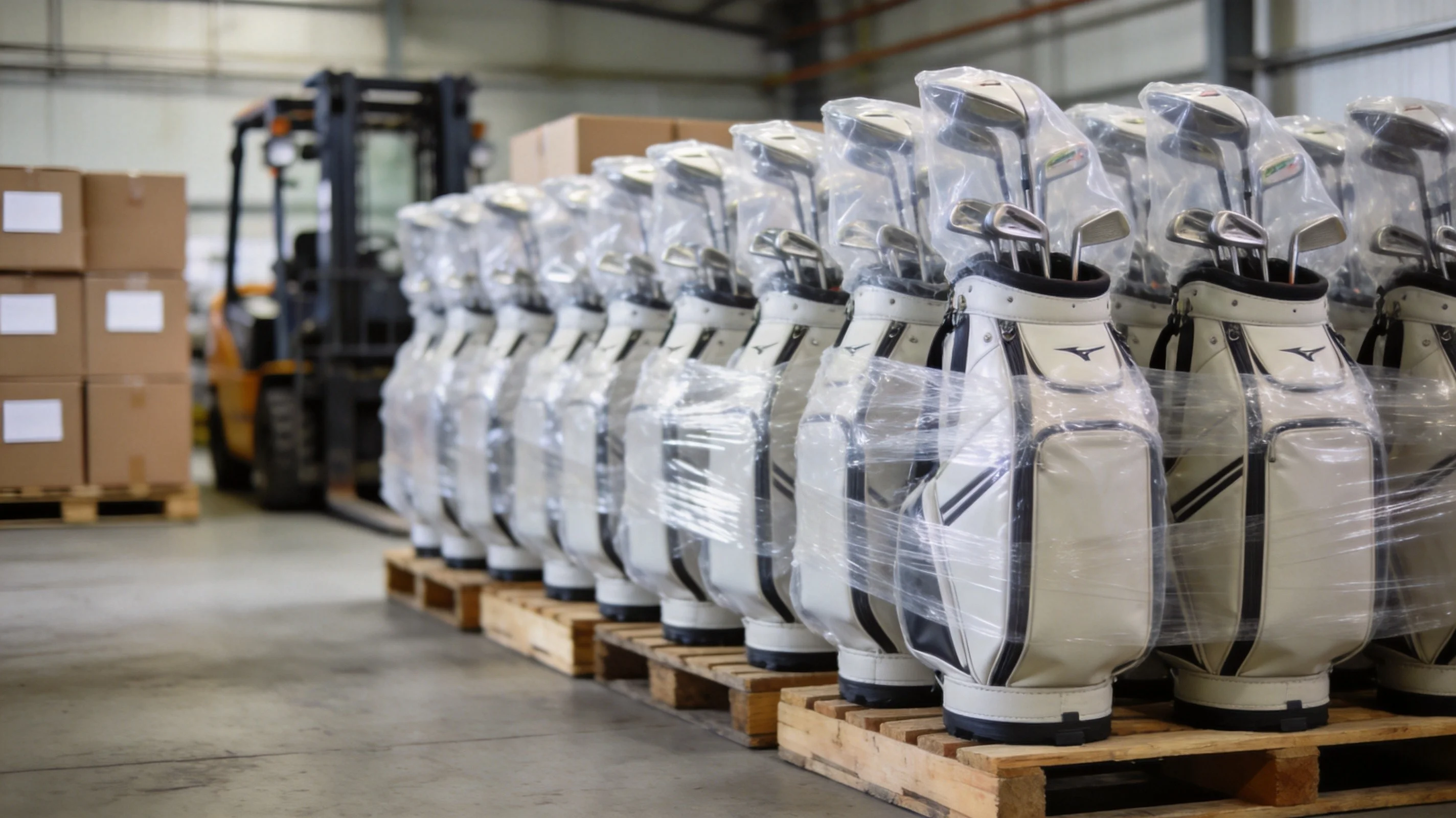
The unit price of a custom golf bag is driven by four cost levers in order of impact: materials, construction complexity, decoration, and order volume — with a standard 200-piece MOQ (and 100-piece test orders) and 10-20 day sampling plus 45-60 day bulk production setting the fixed-cost base. Fixed costs such as pattern cutting and machine setup are amortised across the ordered quantity, which is exactly why consolidating designs and raising volume is the single fastest way to lower per-unit price. This guide explains each lever with real factory economics, written from the floor at the QUANZHOU JUNYUAN BAGS affiliated manufacturing facility in Quanzhou, which runs 7 production lines, 126 sewing machines and a staff of 137 serving 200+ brands across 100+ countries.
The Fixed-Cost Base: Why MOQ Exists
Minimum order quantities are not an arbitrary hurdle; they exist because a bespoke programme carries fixed costs that must be spread across your units. Tooling, sampling, cutting patterns, marketing artwork and machine setup all cost the same whether you order 100 units or 2,000. A standard custom golf bag MOQ of around 200 pieces per design, with 100-piece test orders for new markets, balances these fixed costs against affordability for smaller brands.
Understanding this logic changes how you plan. Cutting an order to its minimum absorbs a per-unit penalty; consolidating designs and colourways into fewer MOQs does the opposite. Each extra design, colourway or pocket variation adds its own MOQ and setup — so the professionals who want the best price rationalise variants whenever they can. Our guide to MOQ and pricing for bulk stand bag orders models this trade-off with concrete numbers.
Materials: The Dominant Cost Driver
Materials usually account for the largest share of a golf bag's cost. The shell fabric is the headline item: heavier, technical weaves cost more than economy polyester. Waterproof construction adds a PU or TPU laminated lining and sealed seams, which raise material and labour cost together. Hardware — zippers, buckles, bases, stand mechanisms — and trim such as piping and brand-labelled zipper pullers round out the material stack.
Two factors amplify material cost: quality grade and brand compliance. A premium fabric with higher denier and a proprietary water-repellent finish costs more, and if you then certify it for REACH in the EU, the testing adds a small per-material cost too. The material decision is therefore not "expensive vs cheap" but "what performance and compliance do my customers need". For a full comparison of shell options, our materials comparison guide lines up the real cost-performance trade-offs.
| Cost Lever | Range of Impact | How to Control |
|---|---|---|
| Materials (fabric, lining, hardware) | Highest — the dominant share | Spec fit-for-purpose, avoid over-engineering |
| Construction complexity | Medium | Fewer pockets & dividers = fewer labour hours |
| Decoration (embroidery vs print) | Medium | Match method to durability you need |
| Order volume / MOQ | High on fixed-cost amortisation | Consolidate designs & negotiate quantity breaks |
| Sampling & development | Fixed one-off | Complete spec to avoid revision rounds |
| Compliance & testing | Low per unit | Budget REACH / RoHS tests into the programme |
Construction Complexity and Labour Hours
A golf bag's price rises with the number of operations needed to build it. A simpler Sunday or lightweight bag with fewer compartments takes fewer sewing hours than a fully featured 14-way stand bag or a staff bag with multiple zones and reinforced pockets. Real factory pricing therefore scales with labour content as much as raw material cost.
This is where an experienced factory pays for itself. A competent manufacturer will flag cost and durability trade-offs during spec, rather than letting unnecessary features quietly inflate your quote. Pocket count, divider arrangement, base reinforcement and strap anchoring method all move the labour line. If you want to feel where the money goes without directly building a bag, our cost breakdown for custom cart bag orders walks through a line-by-line example.
Decoration: Embroidery vs. Printing
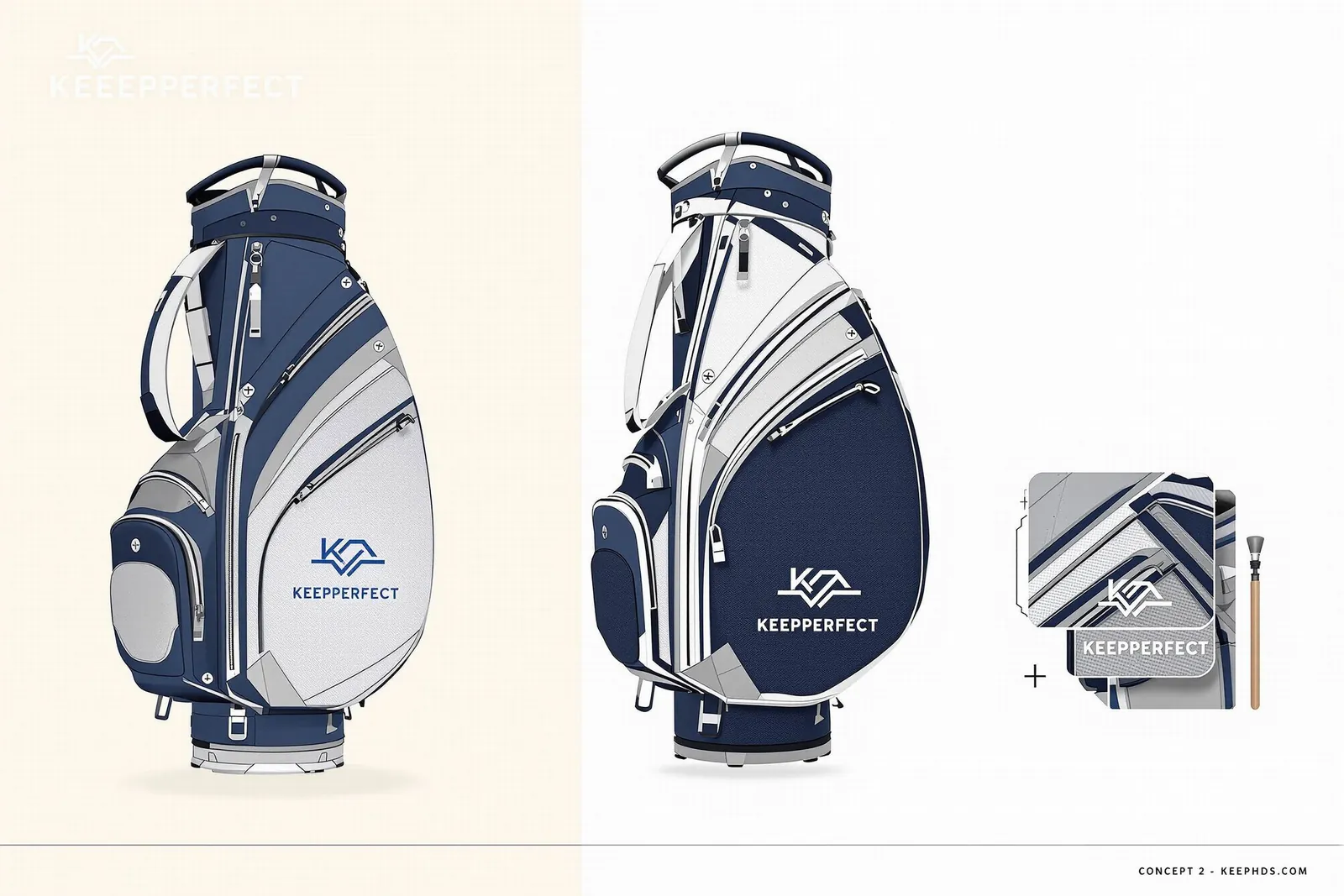
How you brand the bag changes cost meaningfully. Embroidery is the most durable and premium option for logos, but it is slower and material-heavy, so it costs more per logo. Screen printing and dye-sublimation printing allow more colour complexity at lower per-unit cost, though they are less durable under heavy outdoor use. Many brands use a hybrid: embroidered logo plus printed side panels or graphics.
Decoration also concentrates quality risk. Logo placement, thread tension, colour matching and edge alignment all need inspection, and defects here are the most visible kind. Budget for the decoration you genuinely need rather than the most impressive option. For the full toolbox, our guide to logo printing and embroidery compares methods across bag types.
Volume Breaks and How to Negotiate Them
Because fixed costs amortise across quantity, unit price falls as volume rises — but only if you negotiate explicit quantity breaks. The basis for a fair quote is transparent: material cost plus labour plus a margin, with fixed costs divided by volume. Ask for a pricing schedule that shows how unit price steps down at 200, 500 and 1,000 units rather than a single flat quote.
Beyond raw volume, consolidation is a quiet price lever. Combining several colourways into one delivery and one shipping booking reduces handling and freight per unit. Long-term partnership also lowers cost over time as the factory learns your specs, cuts quoting time and reduces defect-related rework. For negotiation tactics that protect margin without squeezing quality, our guide to negotiating wholesale pricing is a practical playbook.
Sampling and Development Budget
Sampling is a fixed, one-time development cost — typically 10-20 days per round — and it can be the most underestimated line in a project. Each revision round adds work and 3-7 days of delay. A complete specification before sampling cuts both time and cost dramatically: exact dimensions, pocket layout, divider count, material weights, zipper type, Pantone colours, decoration placement and packaging.
Define the spec once, review the physical sample rigorously, and treat sample approval as the production benchmark. Every round of clarification spent at the front end is cheaper than a round spent in production. For the full walkthrough of the costing and buying process from enquiry to delivery, our bulk order process guide is the definitive reference.
Compliance, Testing and Hidden Costs
Material compliance adds a modest per-unit cost but a large risk if ignored. REACH testing in the EU, RoHS on plastic or electronic components, and destination-market labelling rules all carry costs that belong in the budget. The cheapest way to handle compliance is to specify compliant materials from day one and ask the factory for matching test reports, rather than discovering a problem at customs.
Freight, duties and port handling are the other hidden line. Design your packaging to minimise dimensional weight, consolidate shipments and plan lead time with buffer so you are not paying expedited freight. Our bulk packaging and shipping guide explains how to control these costs.
Want a Transparent Custom Quote?
Our pricing is broken down into the levers above — materials, construction, decoration and volume — so you can see exactly what drives your cost and where to optimise. Get a line-item quote for your project.
Request a Detailed Quote →Building a Pricing Model That Scales
The buyers who manage golf bag cost best think in systems, not single purchases. They rationalise their range into fewer base designs, negotiate explicit volume breaks, consolidate colourways and delivery, and build repeat relationships so the factory learns their quality bar. They also keep a small buffer for sampling and compliance because surprises are cheaper to absorb in the plan than in the invoice.
Custom golf bag pricing is not a single magic number; it is a transparent cost stack you can understand and influence. Master the four levers — materials, construction, decoration and volume — and keep your MOQ disciplined, and a private-label golf bag line becomes a predictable, profitable investment.
Breaking Down a Custom Bag Price: The Cost Levers
A custom golf bag price is the sum of a handful of levers, and knowing which ones move the number most is the fastest way to control it. The biggest driver is material specification: the shell fabric's denier and finish, the presence of a waterproof or water-repellent laminate, and the type and quality of hardware all change cost noticeably. The second lever is construction complexity — how many panels, seams, pockets and compartments the design requires, because more construction hours mean higher labour content. The third is decoration: embroidery, printing and specialised hardware add both visible cost and, for embroidery, real production time on the line.
Behind those sit volume (higher quantities amortise fixed setup and tooling costs over more units, pulling the unit price down), MOQ structure (whether you qualify for a lower tier), and lead-time pressure (a rushed order often pays a premium for expedited scheduling). The reference facility behind this guide, the QUANZHOU JUNYUAN BAGS affiliated factory, runs 7 production lines with 126 sewing machines for a monthly capacity of roughly 200,000 units — a scale that lets it spread fixed costs across 200+ brands and 100+ countries. That scale is exactly why consolidation of your designs matters: fewer, higher-volume designs always price better than many small runs.
For a full walkthrough of how factory capacity and workflow translate into per-unit cost, our OEM/ODM process guide connects the factory floor to your bottom line, and our price analysis buying guide gives you the market benchmark.
Illustrative Pricing Ranges by Bag Type and Volume
No two designs price identically, but it helps to see realistic bands. A simplified comparison below assumes a standard mid-spec build with one logo, excludes freight and tooling, and shows how volume and feature set move the number. Use these figures as a planning range, not a quote, and confirm each line against your exact spec.
| Bag Type | Base Spec | Lower Volume (200-500) | Higher Volume (1000+) |
|---|---|---|---|
| Stand bag | Nylon, dual strap, basic stand | Higher unit | Lower unit by approx. 15-25% |
| Cart bag | Nylon, 14 dividers | Mid | Volume savings clear |
| Staff bag | Larger shell, more pockets | Higher | Economies on fabric |
| Waterproof build | Laminate + waterproof zips | +premium | Premium persists at volume |
The clear lesson is that spec and volume work together: a modest spec at high volume is the cheapest route to a strong margin for resale, while a heavy spec at low volume is where costs climb fastest. Our stand bag MOQ and pricing guide and cart bag cost breakdown give the detail for those two families specifically.
Hidden Costs Every Buyer Should Budget For
Quoted unit prices never tell the whole story, and the difference between a good estimate and a surprise invoice sits in the hidden costs. Tooling and one-time development — moulds, embroidery digitisation, colour standards, pattern and sample fees — appear once and are often missed in a first glance at a price list. Sampling costs matter too: expect 10-20 days of sampling and, for a genuinely new design, a reasonable sample fee that may be credited back on a full order.
Freight and logistics are the category that most buyers underestimate, especially for bulky bags: by sea in a full container, by less-than-container load, or by air when time demands it, each with sharply different economics. Behind those sit customs and duties, destination taxes, and possible compliance and certification charges if your target market requires REACH, CPSIA or lab testing. Allow for these as a line item rather than hoping they disappear. Our wholesale negotiation guide shows where there is real room to move and where the price is genuinely fixed.
Seasonality, Exchange Rates and Market Conditions
Pricing breathes with the calendar and the currency. Golf demand has a pronounced season in many markets, which nudges capacity, lead times and occasionally prices; ordering in the off-season when factory capacity is easier to obtain can improve your scheduling and leverage. Exchange-rate movement between your currency and the yuan directly moves landed cost and is worth hedging or at least accounting for in your margin.
Raw-materials prices for nylon, polyester, zippers and hardware fluctuate with global markets, and coating or finish chemicals follow environmental regulation and supply. The most reliable protection is a written, itemised quotation that locks material and spec so price changes are driven by agreed changes rather than surprise inflation. Ask your supplier to quote with a validity window and to flag material movements, and always confirm freight and duty terms in writing so the number in your budget is the number you pay.
Building a Realistic Custom Bag Budget
Put all of it together and the recipe for a realistic budget is simple: list your volumes and target spec; get an itemised quote covering materials, construction, decoration and tooling; add sampling, freight, duties and compliance; leave a scheduling buffer around the 10-20 day sampling and 45-60 day bulk window; and fix the commercial terms in writing, including your 200-piece MOQ and 100-piece test order if you are validating a new market. A budget built this way survives contact with reality, and it is the difference between a profitable custom programme and a costly surprise. For the deeper dive on each lever, our value analysis and what a custom bag really costs close out the picture.
MOQ, Test Orders and the Path to Scale
Volume is the single most controllable lever on unit price, and understanding how MOQ interacts with cost keeps you from over- or under-ordering. A standard custom golf bag MOQ is typically 200 pieces per design, with a 100-piece test order available to validate demand before you commit to a fuller run. Those test orders are deliberately priced slightly higher per unit because the one-time setup — digitising embroidery, colour matching, pattern cutting, getting the line configured — is spread over far fewer units. As you move to larger runs, that fixed cost dilutes and the unit price falls, which is precisely why consolidating your designs into fewer, higher-volume stock-keeping units produces the best pricing.
This means the commercially sensible path is to test small, let the data shape your winning designs, and then scale those winners to volume rather than spreading the same budget across many low-volume variants. Buyers who consolidate not only pay less per unit but also simplify their freight, storage and quality checks. For the full logic of MOQ and test orders, our stand bag MOQ and pricing guide dives into the numbers, and wholesale pricing negotiation shows where the real negotiating room sits.
Freight, Duties and Landed-Cost Planning
For an exported product like a custom golf bag, the price you negotiate only matters through the lens of landed cost — the total you pay once the goods reach your warehouse or customer. Landing a bag requires freight (by sea in a full or less-than-container load, or by air when time is tight), destination customs duty and taxes, and any port, handling or broker fees. Because bags are bulky and relatively light, they carry a disproportionately high freight cost per unit relative to their value, which is why packaging, carton density and container loading can swing your landed cost meaningfully.
Estimate landing cost before you commit, not after, and build in a buffer for freight-rate movement. Compare sea versus air honestly by looking at the total cost to market, not just the per-carton rate, and ask your supplier to advise on the most economical loading and shipping method for your volume. Our shipping and freight guide and customs, duties and landed cost give you a working model for the post-factory part of the price.
Planning the Budget That Protects Your Margin
Protecting your margin is a matter of building the price model before signing the order. Write down the target retail or wholesale price your market will support, then subtract landing cost, marketing and channel margin to find the maximum you can pay per unit at the factory. Work backwards from that ceiling to the spec you can afford, choosing materials, construction and decoration that hit the number without sacrificing the durability your buyer expects. This top-down method prevents the classic mistake of designing a beautiful bag you cannot sell profitably.
Leave defensive room in the model: a contingency for sampling, a scheduling buffer around the 10-20 day sampling and 45-60 day production windows, and a margin for freight fluctuation. A budget that survives these variables is a budget that holds. For one more planning reference that connects the numbers to a marketable product, our price analysis buying guide and value analysis complete the pricing picture across bag types and volumes.
Sources
Frequently Asked Questions
- What is the standard MOQ for custom golf bags and how does it affect price?
- A standard custom golf bag MOQ is typically 200 pieces per design, with 100-piece test orders available to validate new markets. Higher volumes lower unit price because fixed costs like pattern cutting and machine setup are spread across more units.
- Which cost factor has the biggest impact on golf bag price?
- Materials usually dominate, followed by construction complexity and decoration. A premium fabric shell, coated waterproof lining and branded hardware can move a bag up dramatically, while volume breaks amortise fixed manufacturing costs.
- Why is custom golf bag pricing cheaper at higher volume?
- Fixed costs such as patterns, sampling, machine setup and marketing artwork are spread over more units at higher volume, lowering per-unit price. Consolidating designs and colourways also avoids paying the MOQ setup multiple times.
- Does embroidery cost more than printing for golf bags?
- Generally yes. Embroidery is more durable and premium but slower and material-heavy, so it costs more per logo. Screen or dye-sublimation printing allows more colour complexity at lower per-unit cost, though it is less durable on heavy outdoor use.
- How long does sampling add to a custom golf bag project and cost?
- Sampling typically takes 10-20 days per round and is a fixed development cost. Multiple revision rounds add 3-7 days each and can raise development spend, which is why a complete spec before sampling reduces both time and cost.