Bulk Golf Bag Order Process: From Inquiry to Delivery
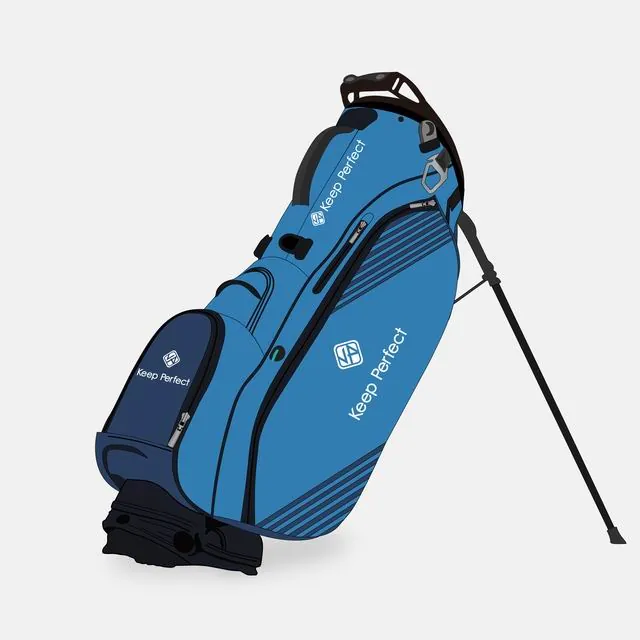
The bulk golf bag order process is a predictable, stage-gated workflow: inquiry and specification (a few days), sample approval (10–20 days), production at MOQ 200 (or 100 for a test order) over 45–60 days, pre-shipment inspection in the final 2–4 days, then freight, customs and delivery — and a supplier producing ~200,000 bags a month with 7 lines, 126 sewing machines and 137 staff can run that whole clock without hiding surprises. This guide walks first-time and repeat buyers through every step from first inquiry to a landed delivery, so you know exactly what to send, what to expect, and how to keep each gate on time and on budget. We describe the process as it runs in our affiliated manufacturing network in Quanzhou, Fujian (main plant 4,950 m², founded 2014, founder in the trade since 2004), and the tariff and trade references are verifiable in the Sources below.
Step 1: The Inquiry and Technical Specification
Every bulk order starts with an inquiry, but the ones that sail start with a specification. The most useful first message to a factory is not “send me your prices” but a clear technical brief: the bag type (staff, cart, stand, travel cover), overall dimensions and weight target, divider count and division, pocket count and placement, strap and leg mechanism, zipper length and gauge, print or embroidery placement and technique, target MOQ, packaging preference and desired lead time. The more a buyer fixes in the first message, the fewer assumption bills they pay later.
A good factory will come back with clarifying questions and a quote that reflects the reality of the spec. If your inquiry is ambiguous, expect the quote to be ambiguous too, and resolve it before committing. In our workflow, the inquiry-to-quote stage normally resolves in a few days once the snapshot of the requirement is complete.
Two habits separate buyers who get accurate quotes from buyers who get pleasant surprises at the end. The first is to confirm the specification against a real reference — a reference bag, a detailed drawing, or dimensions taken from an existing product the buyer trusts — rather than a loose description. The second is to resolve the “nice-to-haves” early: a structural handle, a particular pocket depth, a specific zipper brand or a printed interior label all move both price and lead time. Every deferred decision is a hidden assumption that will surface later, and usually at the least convenient moment of the whole programme.
A complete brief also sets expectations on volume honesty. If you genuinely expect two thousand pieces a season, say so; the factory plans material, cutting and line time against the committed volume, and that planning is what unlocks the better pricing and the protected schedule. Hiding volume reality to get a good first quote is the fastest way to a disappointing second discussion when the real volume appears.
Step 2: Sampling and Approval
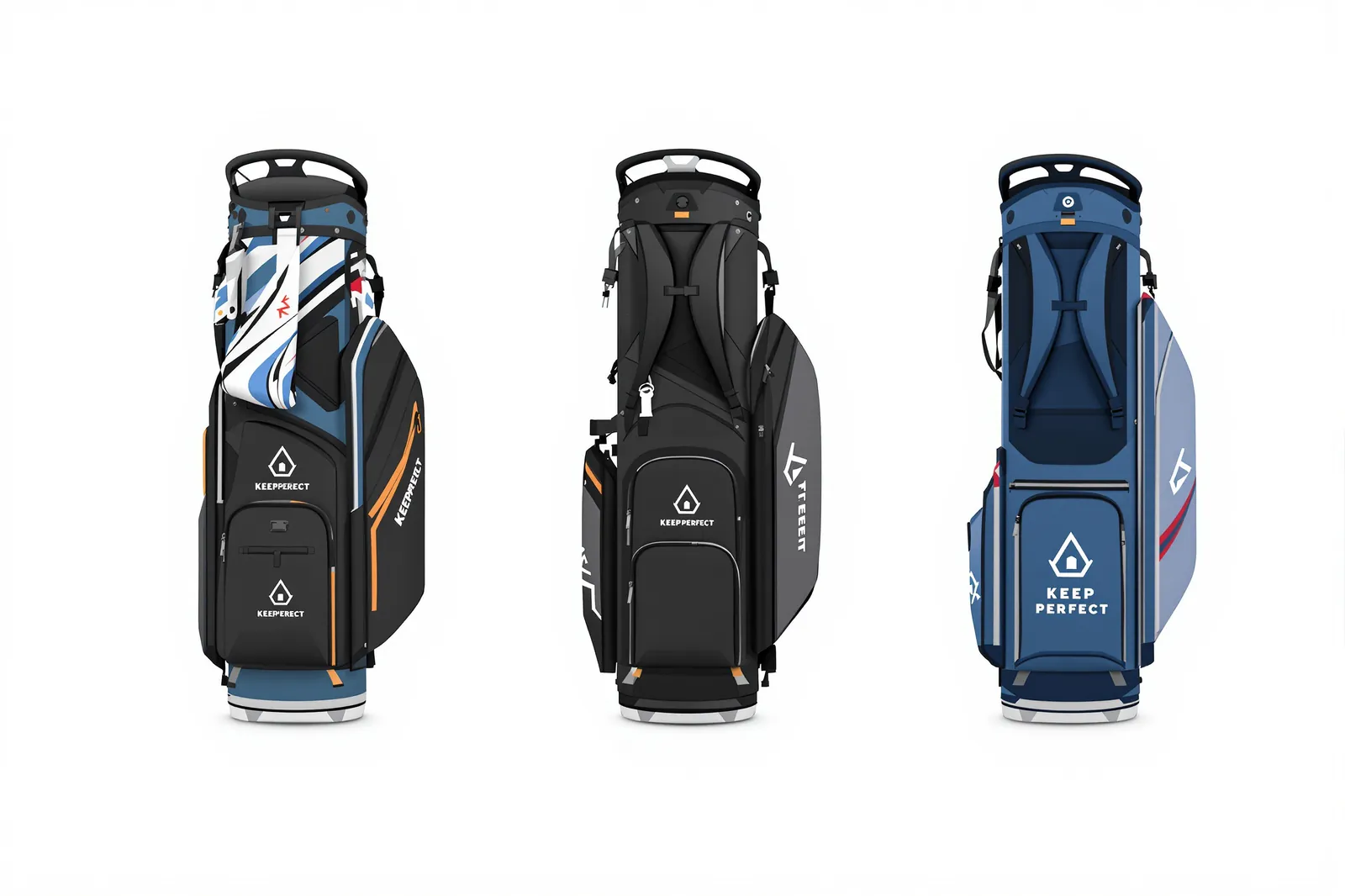
The sample is the frozen contract in fabric. For a custom bulk programme, the factory develops a sample — usually within 10–20 days — covering pattern engineering, cutting, sewing and finishing. The buyer reviews fit, materials, colour, stitching, hardware and the overall feel, and returns one of three verdicts: approve, amend in a defined way, or restart. Every revision round is calendar time, so a buyer who reviews promptly and specifies the change precisely keeps the sample loop short.
When the sample is approved, the master sample is retained and the measurement report written down. From that moment, the sample and its written record become the standard against which bulk production, packing and inspection are measured. Approving a sample is not the end of sampling — it is the beginning of a disciplined production reference.
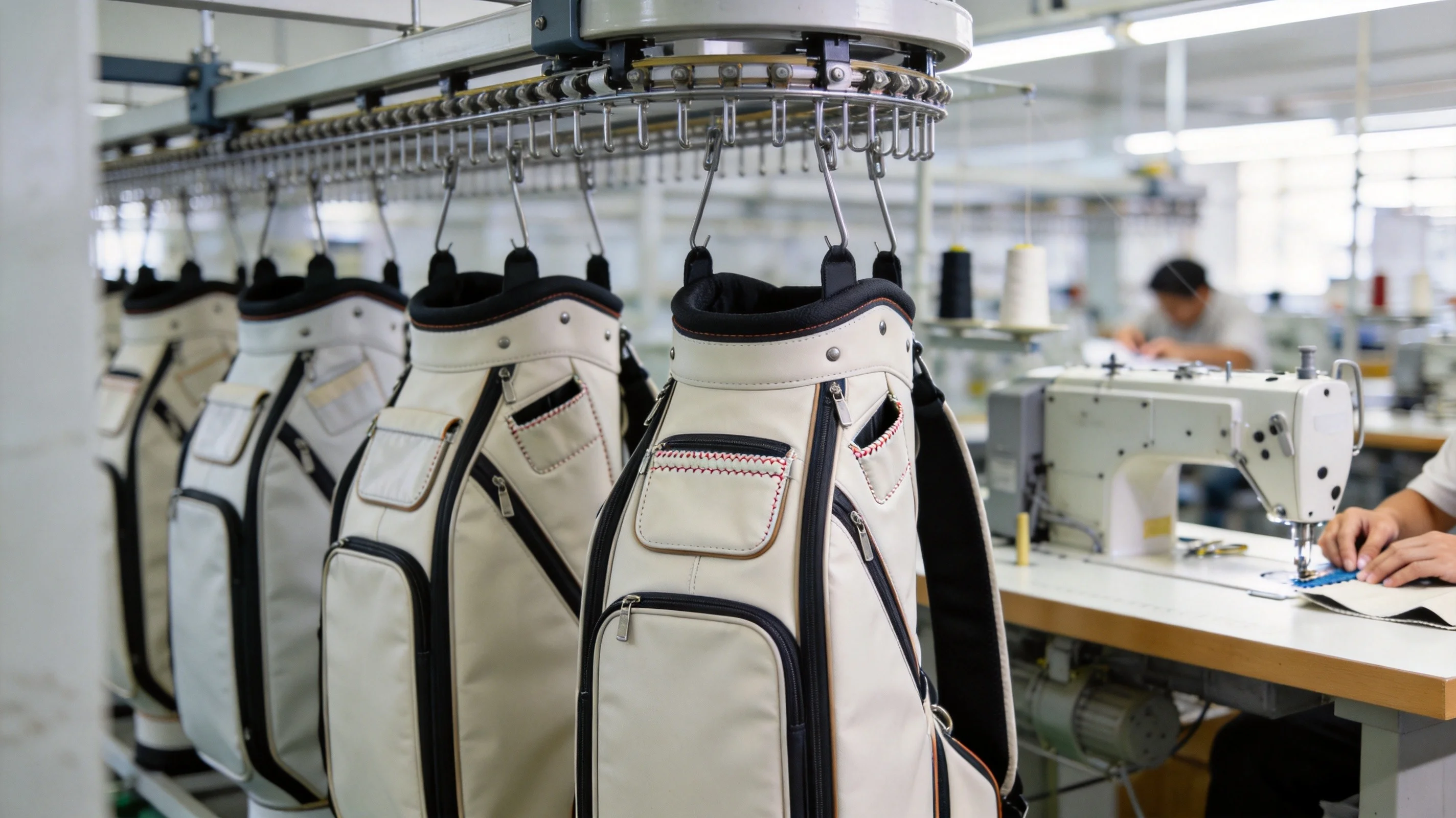
The sample review is also where the buyer protects the brand’s identity. Check logo placement, embroidery or print quality, thread colour and logo geometry against the brand guidelines, because these details are reproduced across every unit in the run. A logo misaligned by a few millimetres in the sample is a logo misaligned by a few millimetres on two thousand bags. This is the stage to fix typography, colour matching and placement — not when the container is already in production.
Finally, keep a written record of every sample change. Comments like “make it look more premium” are not actionable; “raise the zipper by one inch and use a matte black pull” is. The quality of the sample loop is directly proportional to the precision of the feedback, and it is the most controllable input in the entire bulk order process.
Step 3: Confirm the Order, MOQ and Terms
With the sample approved, the buyer converts the quote into a firm order. The order confirmation should lock the specification, unit price, MOQ, lead time, incoterms, payment terms and inspection standard. On MOQ, our working envelope is a standard custom run at 200 pieces and a test order from 100 pieces, so a first-time buyer can validate product, packaging, freight and compliance on a small batch before committing to full volume.
Payment terms in the industry commonly run a deposit at order placement with the balance against shipping documents or pre-shipment inspection. Agree these clearly in writing, and confirm the incoterm — FOB, CIF or DDP — because it decides who owns the freight and the risk. A signed order confirmation that documents every term is the difference between a programme and a disagreement waiting to happen.
It is also worth having a documented change-control rule for the production phase. Once the order is confirmed and material is cut, the specification should be treated as frozen; any deviation — a new colour, a revised pocket, a different hardware finish — goes through a formal change request with a cost and schedule impact statement before the factory acts. This sounds administrative, but it protects both parties: the factory knows it will not be held to an ever-moving target, and the buyer knows that nothing changes without a visible consequence. Season after season, disciplined change control is what keeps a bulk programme inside its budget and its window.
Parallel to change control, agree the inspection and defect language before the run. The AQL standard, the critical/major/minor defect definitions and the acceptance number should be in the order confirmation, not negotiated after a container lands. An ambiguous inspection standard is the standing invitation for a dispute on a non-conforming shipment; a written one is the difference between a clean accept and a costly argument.
Step 4: Material Confirmation and Cutting
The production clock typically starts when the material is confirmed and ordered. In the first 7–10 days of a 45–60 day run, the factory confirms the fabric and hardware lots, checks them against the approved master, and begins cutting. Because colour consistency is the retail brand’s reputation, the incoming fabric is matched dye-lot to dye-lot before it reaches the cutting table, and any rejected lot returns before it touches the product.
This is also the point where you must freeze colours and hardware. A change requested after cutting has started is not a tweak; it is a scrap-and-restart event that shifts the whole calendar. In a well-run process, the buyer approves the colourway and all hard goods at the sampling stage precisely so cutting can proceed without interruption.
Step 5: Sewing, Assembly and Finishing
The long middle of the run is sewing, assembly and finishing — the stage where the bag actually becomes a bag. Across 126 sewing machines and 7 production lines, panels are stitched, hardware is attached, straps and legs are fitted, and the finished product is finished and trimmed. This is where capacity depth matters: enough machines and trained operators to hold the schedule and enough QC headroom to check every piece rather than a thin sample.
Good manufacturers run in-process quality checks through this stage — checking stitch gauge, zipper function, and hardware seating as the bags come down the line — so problems are caught while there is still time and cheaply fixed. The output of this stage is a finished, unbranded-or-branded bag ready for its final checks.
Step 6: Final Inspection, Packing and Handover
In the last few days of the run, the finished bags move through the factory’s 100% finishing checks, then into packing: poly bag, master carton, carton marks, and the packing list that records every carton’s contents. A pre-shipment inspection (PSI) — a statistical AQL draw on the packed goods — verifies both the product and the packing before the container is sealed. Our affiliated network also carries an SGS on-site audit (March 2026), the kind of third-party evidence wholesale buyers increasingly require.
At handover the commercial invoice, packing list and bill of lading must agree with the cartons and with each other. Digitizing the packing data — carton marks, piece counts, weights and the duty code — lets the buyer’s receiving warehouse reconcile the shipment in minutes and lets customs clear it faster. Clean documentation at handover is the last, crucial quality of a well-run bulk order.
Step 7: Freight Booking and Customs Clearance
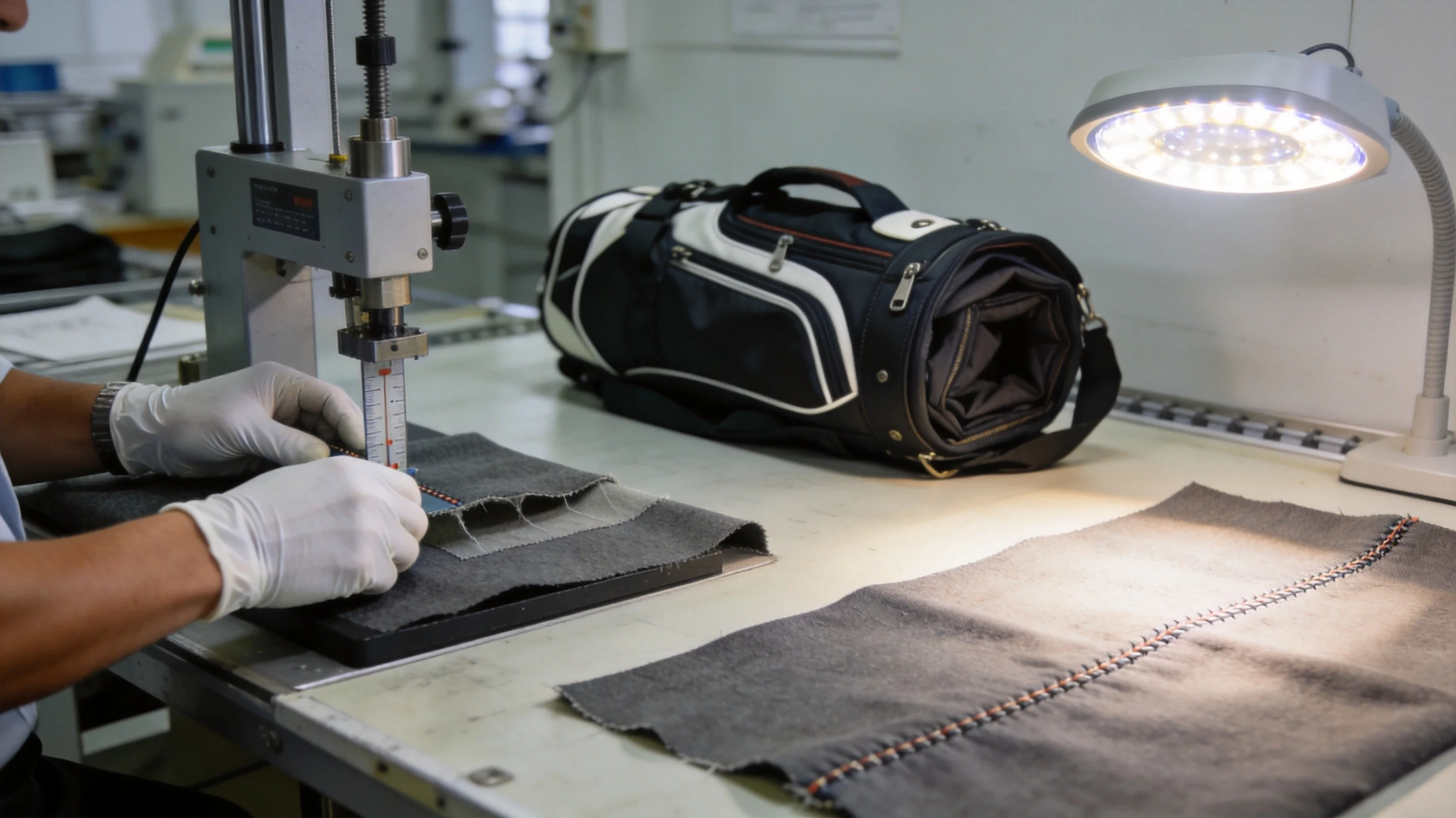
With the goods inspected and packed, the freight stage begins. The buyer’s forwarder (or the seller, under DDP) books the lane — sea FCL for typical bulk runs, LCL for smaller, air for emergencies — and the shipment is loaded and stowed correctly into the container. Golf bags are bulky and volume heavy, so the freight is priced on chargeable volume, and the packing fixed at sampling is what makes the quote honest.
Customs clearance rests on accurate classification and consistent documents. Into the US, golf bags classify under HTSUS heading 4202; into the EU, under CN code 4202. Verify the current duty on the official USITC HTSUS portal or EU Access2Markets at booking time, and file a declaration consistent with the cartons. A discrepancy between the invoice and the packing list at the destination port is the most avoidable cause of a customs hold and its storage charges.
Step 8: Transit and Arrival
During transit the shipment is an insured risk, not a certainty. Marine cargo insurance should cover the cargo value, ideally with humidity and fresh-water cover for textiles. Transit times vary by lane and mode — sea from China to the US or EU runs a number of weeks, air far less, and rail to Europe sits in between — so the calendar should have already added this window on top of the factory’s 45–60 days.
On arrival, the receiving warehouse counts the cartons against the bill of lading, verifies the marks, spot-checks for transit damage and humidity, and reconciles the physical goods against the digital packing list before stock reaches the racks. The order is not complete until the goods are verified, counted and booked into inventory accurately.
Step 9: Receiving, Reorder and the Season Loop
The final step is where a one-off bulk order becomes a repeat programme. Log the arrival accurately, review the cost lines — landed cost, freight per unit, any inspection findings — and use the arrival event as the reorder trigger. Because production takes 45–60 days and transit sits on top, the reorder that sustains a season is placed the day the first delivery enters the warehouse, not the day the shelf looks thin.
A deliberately repeated lane — same product family, same packing, same gateway port — gets cheaper and faster with every run, because the forwarder, the broker, the factory and the receiving warehouse all hold a working template. That is how a single successful bulk order compounds into a dependable, forecastable supply relationship.
Across the whole flow, two resources determine whether a bulk order runs smoothly or badly: the calendar and the documentation. The calendar matters because every stage has a physical minimum — you cannot sew a bag in a day no matter how hard you press — so the buyer who plans backwards from the landed date and then protects that date through each gate wins the season. The documentation matters because a bulk shipment clears, arrives and gets paid on the strength of its paperwork; clean, consistent, digitized documents at every handover are what keep the chain from stalling at the port.
None of this requires heroics. It requires a repeatable method: send a complete brief, freeze the sample, lock the terms, hold the production calendar, inspect the packed goods, verify the duty, reconcile the container and reorder on schedule. A buyer who runs that method once and then refines it through the year finds that bulk golf bag sourcing stops being a yearly gamble and becomes a dependable line of business — the source of the reliable margin and the reliable stock that keep a bag brand growing.
One more practical note: keep a single current record of the specification, the approved sample reference, the agreed terms and the compliance dossier for each product line. When you come to reorder in a new season, you pull that one file and the whole programme restarts from a known, validated state instead of being rediscovered from memory. Buyers who keep this file — and who ask the factory to keep the matching record on its side — find that reorders are faster, disputes are rarer and the relationship is smoother, because both parties are always looking at the same true version of the programme.
Finally, remember that a bulk order is not only a transaction — it is the beginning of a schedule-bound, inspection-disciplined, documentation-heavy working relationship that, done well, repeats itself every season. The buyer who treats the factory as an extension of the brand — briefing fully, paying on terms, freezing specs and communicating changes clearly — reliably wins better scheduling priority and a calmer, more predictable supply line than the buyer who runs each order as a one-off tug of war. Over a few seasons, that relationship quality shows up directly in on-time delivery rates, clean inspections and pricing that holds.
As a practical checklist, the strongest bulk golf bag buyers do the same four things on every order. They agree the full specification and the documentary requirement before the quote is accepted. They close the sample loop with written, numbered feedback inside the sampling window. They freeze the spec and fix the AQL before the production line, not after. And they verify the packed goods against the agreed standard — with an inspection report and a straight set of documents — before the container leaves. Meetings, emails and invoices come and go, but it is the discipline of those four gates that determines whether a season’s bulk programme lands on time, inside budget and to the quality the brand promised its customers.
For buyers managing several SKUs, the schedule is best treated as a portfolio, not a list of independent dates. Because production capacity is shared — 7 lines across many orders — the buyer who staggers SKUs so that materials and line time do not collide gets every SKU to the port on the date promised, while the buyer who floods everything at once forces the factory to sequence and may pay for the clustering in congestion. A rough production calendar, shared with the factory at order time, is the cheapest insurance a multi-SKU buyer can buy.
The same portfolio thinking applies to cash and to freight. Grouping several bulk orders into shared container turns can cut the per-unit ocean freight significantly versus shipping each separately, and it simplifies the documentation into fewer, cleaner shipments. A buyer who plans the year’s programme as a series of consolidated turns, rather than a scatter of emergencies, finds that both the freight line and the duty line settle well inside forecast.
Bulk Order Process: A Stage-by-Stage View
| Stage | Duration | Buyer’s Key Action |
|---|---|---|
| Inquiry & spec | A few days | Send a complete technical brief |
| Sampling | 10–20 days | Approve and freeze the master |
| Order & terms | On confirmation | Lock MOQ, price, incoterm, payment |
| Material & cutting | First 7–10 days | Freeze colours and hardware |
| Production | 45–60 days | Track calendar checkpoints |
| Inspection & handover | 2–4 days | Run PSI on packed goods |
| Freight & customs | Varies by lane | Verify duty and documents |
The Contract Details That Prevent Order Disputes
A bulk golf bag order runs smoothly when the commercial terms are nailed down in writing before production starts. Agree the MOQ and the test-order volume explicitly, the sample fee and the deposit schedule, the acceptance criteria (we use AQL Level II sampling with a stated major-defect limit), and the packing and shipping incoterms. Set milestone dates for sample approval, mass-production start, first-article inspection, and the sailing date, and put a tolerance clause on both delivery date and per-unit price. Clarify who holds the tooling and moulds, what the IP ownership position is for your branding, and how warranty claims for defective units are handled after the container lands. Writing these down upfront is the difference between a one-time transaction and a repeat manufacturing partnership.
Frequently Asked Questions
- What is the first step in a bulk golf bag order?
- Send a complete technical specification — bag type, dimensions, dividers, pockets, zippers, branding and packaging — so the quote reflects reality from the start.
- How long does the whole process take?
- Sample approval runs 10–20 days, production 45–60 days, then freight and customs transit on top — so plan from the desired landed date backwards.
- Can I start with a small order?
- Yes. A test order is accepted from 100 pieces to validate the full chain; the standard custom MOQ is 200 pieces.
- How is quality verified during the process?
- Through in-process sewing checks, a 100% finishing pass and a pre-shipment AQL inspection on the packed goods before the container seals.
- What documents do I need for customs?
- A commercial invoice, packing list, bill of lading and origin certificate that all agree, with the correct HTS/CN code and declared value.
- How do I keep a repeat programme efficient?
- Repeat a validated lane — same product family, packing and gateway — and keep one current compliance and spec dossier per product line.
Sources
Tariff and trade references in this guide can be verified against these official sources:
- US Harmonized Tariff Schedule — USITC — heading 4202 rates for golf bags.
- US Customs and Border Protection — import entry and classification guidance.
- European Commission Taxation & Customs Union — EU customs and combined nomenclature.
- EU Access2Markets — current CN duties and import formalities.
- US International Trade Administration — logistics and import best practice.
Step through the whole process with our wholesale team, review wholesale pricing, or start factory-direct. For custom private-label builds, see OEM/ODM services and custom solutions. Contact service@junyuanbags.com or +86 17750020688.