Cost Breakdown for Custom Golf Cart Bag Orders
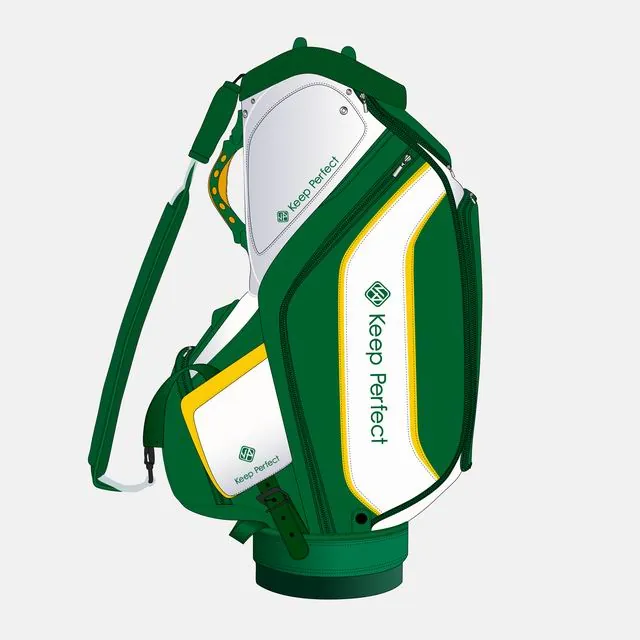
A standard custom golf cart bag lands at roughly US$18 to US$38 per unit ex-factory before volume discounts, and the three items that move that number most are fabric grade, the divider system and decoration complexity — together they typically account for 55-70% of total unit cost. That is the honest starting figure after pricing thousands of private-label and OEM cart bag runs at QUANZHOU JUNYUAN BAGS (founded 2014, founder in the trade since 2004), a factory of 7 production lines, 126 sewing machines and 137 staff that ships to more than 200 brand partners in over 100 countries. The purpose of this guide is to take the guesswork out of the numbers so you walk into quoting, sampling and negotiation with a defensible cost model rather than a finger in the wind.
Cost is the most misunderstood aspect of private-label purchasing precisely because it is rarely transparent. Many buyers receive a single "unit price" with no breakdown, then discover tooling charges, per-piece decoration setup, packaging upgrades, freight and inspection fees spread across separate invoices or, worse, hidden inside the unit price. This article breaks the full landed cost into its real components — materials, labour, tooling, MOQ economics, sampling, decoration, packaging, inspection, freight and duties — and shows which levers actually reduce cost at volume. By the end you will know exactly which questions to ask a factory and which numbers to benchmark against.
How Factory Costing Actually Works
Every golf bag factory builds its quote from a bill of materials (BOM) plus a labour and overhead load. The BOM itemizes every metre of fabric, every zipper, every buckle, every metre of webbing and every label that goes into the bag, multiplied by the current procurement price and a scrap allowance. On top of that sits labour minutes per unit, factory overhead, amortized tooling and a margin. Because the BOM dominates, two quotes for "the same" bag diverge mostly because the factories are not quoting the same materials — one quotes 600D coated polyester while another quotes 1680D ballistic nylon, and the difference is real money.
The practical translation is: you cannot compare unit prices until you compare BOMs. Ask each shortlisted factory for an itemized cost sheet listing fabric type and denier, divider configuration, zipper brand, base plate material and pocket count. The factory that charges more with a thicker BOM is usually the honest one; the factory that charges less with a thin BOM is usually quoting a lighter, cheaper construction. This is why our procurement team's first rule with new partners is "quote the BOM, not the number."
Materials: The Largest Cost Driver
Fabric is the biggest single line item, and the range in price is wider than most buyers expect. A coated 600D polyester is a budget-grade shell; 840D nylon with a TPU coating is the workhorse used by most retail cart bags; and 1680D ballistic nylon or HD jacquard sits at the premium end. Each step up increases both durability and cost. Beyond the shell, the divider system carries a significant share because a full-length 14-way divider requires substantially more material and more precision cutting than a 5-way partial unit.
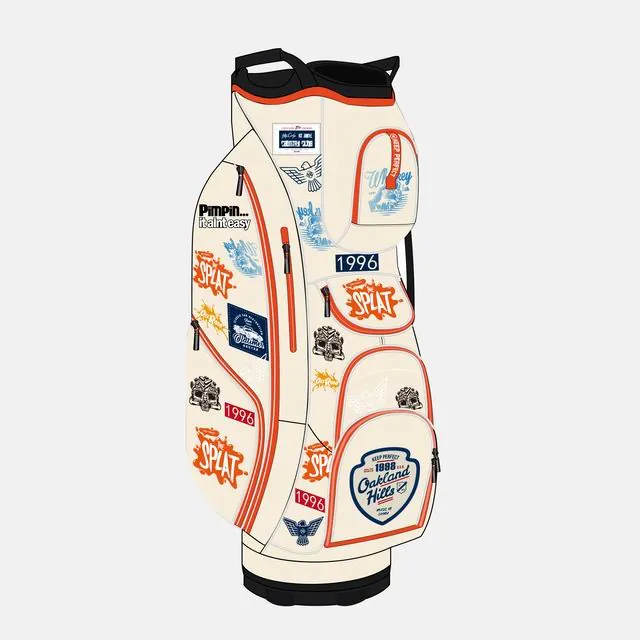
Zippers and hardware are the second silent driver. Cheap metal zippers fail within a season of wet rounds; coil zippers with taped backing and brand-name sliders last several seasons. Hardware such as molded bases, buckles and the top ring can be injection-moulded in-house or bought in, and in-house moulding lowers cost at the price of higher initial tooling. When a buyer insists on the cheapest everything, the factory has no choice but to downgrade the BOM lines that are invisible at purchase — zipper quality, base thickness and stitch density — which is exactly how returns happen. The golf bag materials guide explains the trade-offs of each fabric, coating and hardware option in detail.
Raw material prices fluctuate, and a professional buyer should understand how a factory passes those movements through. Metals, petroleum-based synthetic yarns and zipper assemblies all track commodity and regional supply conditions, so a quote from one quarter may not be reproducible three months later. Reputable factories typically hold pricing for the duration of a confirmed order and then re-quote material on the next run rather than secretly swapping a cheaper BOM to protect margin. When comparing quotes, ask what material price assumption each factory used. A factory that tells you transparently which material inputs moved is far more trustworthy than one that never mentions them — and that transparency is a hallmark of multi-year relationships, which is how most of our 200+ brand partners choose to operate.
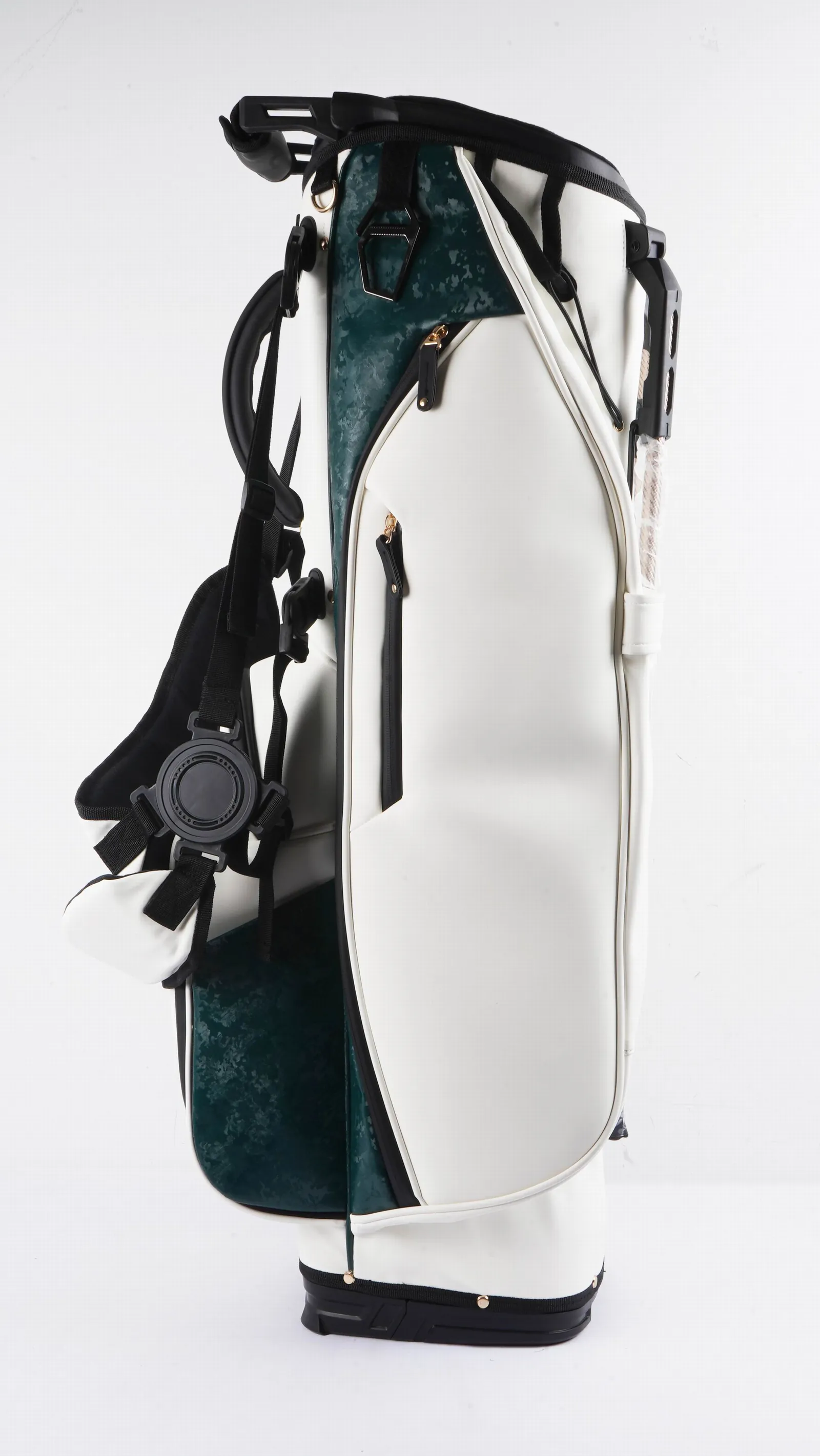
There is also a design-for-cost layer that savvy buyers use before any quote: simplify the pattern. Every extra pocket, every angled seam, every divided zipper opening adds cutting time and sewing minutes. Ask your designer or the factory's pattern team to challenge each feature once — is this pocket essential to the target user? Is this shape worth the extra labour? A disciplined feature review at the design stage can shave 8-15% off realized unit cost without a single visible compromise, because you are removing cost that performs no function rather than downgrading materials the customer can feel. That is the correct order of cost reduction: remove non-functional complexity first, then negotiate materials and volume, and only as a last resort downgrade visible quality.
Labour and Factory Overhead
Labour is a smaller share of cost but not trivial. A typical cart bag represents roughly 45-70 minutes of machine time depending on complexity, and factories price this against local labour rates plus the indirect cost of pattern grading, spreading, cutting, QC and sewing-machine maintenance. Larger, more mechanized factories amortize this across thousands of units and can hold a lower labour load per bag than a smaller workshop making a few hundred.
This is where scale shows. QUANZHOU JUNYUAN BAGS runs 7 production lines with 126 sewing machines and 137 staff across a 4,950 m² main facility and a dedicated affiliated factory, producing roughly 200,000 golf bags a month. That throughput lets us run standardized work cells, so labour minutes per cart bag are consistent and predictable. Consistency in labour load matters because it is the difference between a quoted lead time you can rely on and one that slips when a seasonal rush hits. Our bulk production window of 45-60 days is built around that stable cell structure.
MOQ Economics and Volume Discounts
Minimum order quantity exists because each design requires pattern development, cutting setup and line changeover. Across the industry, the economic MOQ for a custom cart bag design plus colorway is typically 200 pcs, and QUANZHOU JUNYUAN BAGS works to that standard with a test-order MOQ of 100 pcs for buyers validating a market before committing. Below 200 units, per-unit cost climbs steeply because setup is amortized over very few pieces.
Volume drives cost through better material pricing, longer production runs and fewer changeovers. A 500-piece order may come in 8-12% cheaper per unit than a 200-piece run of the same spec, and a 1,000-piece run can reach double-digit savings because the factory buys fabric by the roll at a lower rate and keeps the line running. If you are a growing brand, the highest-leverage negotiation is a volume commitment across a season or across several bag models rather than fighting over a handful of cents on a single small order.
Sampling Costs: What You Pay and Why
Sampling is a separate, deliberate cost line. For a custom cart bag, factories typically charge a sample fee covering pattern drafting, material for one to two physical samples and labour, with fees varying with complexity. The good news is that reputable factories credit or deduct the sample fee from the first confirmed bulk order — a goodwill standard most serious buyers expect. Our sampling window is 10-20 days, and we treat it as a risk-reduction stage: the sample is where divider length, base rigidity, handle anchoring and pocket layout are locked before any bulk tooling.
Never skip the sample, and never evaluate only one. Order the sample, load it with a full set of 14 clubs, mount it on the exact cart type your market uses, and spend two or three rounds with it. The sample fee is the cheapest insurance you will ever buy against a design error multiplied across hundreds or thousands of production units. For the full inquiry-to-approval workflow, our OEM/ODM process guide walks the sampling stage in sequence.
Rule of Thumb for Budgeting
As a planning estimate, allocate roughly 60% of unit cost to materials, 18-25% to labour and overhead, 5-8% to decoration and packaging, and the remainder to QC and margin. Then add freight, insurance and duties on top of the ex-factory figure.
Decoration: Embroidery and Printing Setup
Logos are where many budgets quietly inflate. Embroidery incurs digitizing setup per logo and per-stitch-placement labour; heat-transfer and screen printing incur artwork separation and plate or screen setup. Small, high-stitch-count embroidery logos are more expensive per piece than a single clean screen-printed mark. Multiple placements — front, back, side and pocket flaps — each add a separate step.
To control this cost, standardize your logo on one to two placements for the main production and reserve premium decoration for a hero run. Clarify whether setup fees are one-time or per-color. And beware the temptation to "make the logo bigger" after tooling — every late revision reopens setup cost. Fast, consistent decoration at scale is one reason brands switch repeatedly to factories that run established print and embroidery cells rather than outsourcing the step.
Packaging, Inspection and Compliance
Packaging looks like a small line until you cost a full carton. Individual polybagging with a hang tag, branded carton printing, and inserts each add cost. More importantly, carton dimensions decide freight utilization: a carton that packs its cart bags snugly ships more pieces per container and slashes per-unit freight. Trivial-sounding decisions like carton size and bag folding method have a direct, measurable effect on your CIF landed price.
Third-party inspection is the guardrail against cost-driven quality erosion. Many buyers budget 0.5-2% of order value for an inspection like SGS, the same independent body that audited our factory in March 2026. Compliance costs also sit here: child-safety and flammability rules, packaging material restrictions and EU/US labelling requirements differ by market. Budget for compliance review before quoting, not after your container is held at customs. The quality standards guide details the QC stages and compliance checks a serious buyer should demand.
Freight and Landed Cost
Ex-factory price is only the first third of landed cost. Ocean freight, insurance, port handling, customs duties and local delivery all attach on top, and the total multiplier depends heavily on your Incoterm choice. Under a FOB arrangement you control the freight carrier and see the shipping cost directly; under CIF the freight is (often opaquely) built into the quote. For a cart bag order, freight typically runs 10-25% of ex-factory value depending on volume and destination, with denser cartons and sea freight pushing the percentage down.
The arithmetic is why we advise buyers to request quotes in the Incoterm they actually intend to use and to ask for carton dimensions and a packed-weight sheet so they can build a true per-unit landed cost before comparing suppliers. A factory that helps you optimize carton loading is effectively lowering your freight cost through applied logistics expertise rather than through thin margins.
Currency and payment terms also leak cost if left unchecked. An order quoted in one currency but settled in another carries exchange-rate exposure, and the timing of that exposure differs between letter of credit, telegraphic transfer on signing, deposits and balances on inspection. A deposit-plus-balance structure, with the balance released against shipping documents or a third-party inspection report, spreads risk sensibly for both sides and usually earns a small rate benefit compared with more cumbersome arrangements. Build a one-page cost ledger per order that captures ex-factory price, sample fee, decoration setup, packaging, freight per unit, insurance, duties and banking charges. Running that ledger for a handful of orders teaches you exactly which line items dominate your total cost and where negotiation will actually move the needle.
When You Only Need a Test Order
Not every buyer starts with bulk. Game stores, tour operators and first-time brands often begin with a test order to validate sell-through before committing. That is exactly what our 100-pc test MOQ exists for: a manageable quantity to test the market, the product and the relationship. Test orders still incur setup economics, so per-unit cost will be higher than a full run, but the penalty is small compared with the risk of a 500+ unit commitment built on assumptions. Treat the test run as part of market research and price it as such in your plan.
When you scale from test to repeat, the cost model improves automatically: same designs, same patterns, same tooling, now amortized over more units. This is the path most of our long-term retail and course partners follow — start small enough to learn, then consolidate volume to unlock the per-unit economics. If you are mapping this path for your own brand, the wholesale pricing guide shows how to build the year-one forecast that justifies the volume commitment.
| Cost Component | Typical Share / Range | Main Levers to Reduce It |
|---|---|---|
| Materials (fabric, dividers, zippers, hardware) | 55-70% of unit cost | Standardize specs; buy by roll at volume |
| Labour & overhead | 18-25% | Longer runs, fewer changeovers, mechanized cells |
| Decoration (embroidery/print) | 5-8% plus setup | Limit placements; freeze artwork early |
| Packaging | 1-4% | Optimize carton fill for freight |
| Inspection & compliance | 0.5-2% of order value | Build into budget; choose correct Incoterm |
| Freight & duties | 10-25% of ex-works | Sea freight, dense cartons, full containers |
Realistic Cost Examples
To anchor the numbers, consider three profiles. A budget retail cart bag with a 5-way divider, 600D coated shell, standard zippers and one screen-printed logo tends to sit near the US$18-22 ex-factory range. A mid-market bag with a true full-length 14-way divider, 840D nylon, taped coil zippers, a molded base, six to eight pockets and modest embroidery typically lands around US$26-32. A premium bag using 1680D or HD jacquard with a fully custom divider topology, premium hardware and multi-placement decoration easily reaches US$34-40. These are planning ranges, not quotes — exact numbers depend on volume, current material procurement and market currency conditions.
The cheapest profile is rarely the best value over a full product lifecycle. If a budget bag returns even a percentage point more often than a mid-market bag, the saved material cost quickly erodes. Our experience across 200+ brand partners is that the US$26-32 band offers the best durability-per-dollar for most retail and course applications, and it is the range we recommend most private labels start from.
How to Get a Clean, Comparable Quote
To make this guide operational, send every factory the same information package: target material and denier, divider configuration, pocket matrix, expected decoration placement, target MOQ, destination market, Incoterm and a target landed-per-unit figure. Ask explicitly for an itemized BOM-based quote, carton dimensions, a packed weight, sample fee and refund terms, and production lead time. Then compare like for like rather than headline unit numbers. A factory that opens its costing the way a professional buyer expects is a factory that treats you like a long-term partner.
One closing cost note about cooperation itself: the relationship between buyer and factory has a measurable economic value that rarely appears on any invoice. A factory that knows your brand, your quality bar and your seasonal rhythm quotes faster, samples with fewer rounds, catches quality drift before it becomes a container problem and stays flexible on lead time because it has tooling and patterns already set up for you. That accumulated knowledge is worth real money in avoided delays and rework. This is why, across an industry where churn is common, our long-term partners find that the total landed cost of their cart bag programs actually falls in year two and year three — because the friction of first-year learning disappears. Budget for that trust as an asset, not an expense.
QUANZHOU JUNYUAN BAGS answers exactly these questions during our quoting cycle, with sampling in 10-20 days and bulk production in 45-60 days after approval. If you want a partnered quote for your specifications, contact our quotations team — service@junyuanbags.com or +86 17750020688.
Frequently Asked Questions
- How much does a custom golf cart bag cost?
- Ex-factory pricing typically ranges US$18-38 per unit depending on fabric grade, divider type, pocket count and decoration, scaling down with volume.
- What is the minimum order quantity for custom golf cart bags?
- A standard MOQ of 200 pcs per design/colorway, with a test-order MOQ of 100 pcs. Sampling requires just 1-2 pcs.
- Is the sample fee for a golf cart bag refundable?
- Many factories deduct the sample fee from the first confirmed bulk order. Confirm the terms in writing before paying.
- How long does sampling and bulk production take?
- Sampling takes 10-20 days; bulk production takes 45-60 days after sample approval.
- What hidden costs affect custom golf cart bag orders?
- Tooling, decoration setup, packaging upgrades, freight, tariffs and inspection. Request a fully itemized quote in your intended Incoterm.
- How can I reduce the cost of my custom cart bag order?
- Standardize specs, raise volume, simplify decoration, optimize carton fill and lock a stable lead time.
Cost negotiation is a skill that compounds. Every order teaches you more about which levers the factory can genuinely move, and those lessons become reusable across future programs and even across other bag categories such as staff bags, stand bags and travel covers. Our advice is to capture the numbers, benchmark them openly against market references and never accept a quote you do not understand line by line.
Sources
- US International Trade Administration – Import Tariff and Duty Lookup
- Freightos – Container Freight Rates and Incoterms Explained
- MyGolfSpy – Independent Golf Equipment Testing and Durability Data
- Golf Monthly – Golf Bag Features and Buying Guidance
Content director: QUANZHOU JUNYUAN BAGS. For OEM cart bag costing, email service@junyuanbags.com or call +86 17750020688.