Sustainable Golf Bag Manufacturing 2025
In 2025 sustainable golf bag manufacturing is a practical, verifiable standard rather than a trend: recycled polyester and nylon shells built to full durability spec, lower-impact production processes, and independent audits such as an SGS review all sit within reach of a normal production base, at a typical 200-piece MOQ with 100-piece test orders. The common worry that eco-friendly means weaker or much dearer is largely unfounded when the recycled fabrics are specified properly and the factory documents its process. This guide lays out the materials, manufacturing practices, certifications and sourcing checks that let you buy or build a genuinely more sustainable golf bag without sacrificing durability or pricing sanity.

Why Sustainability Moved From Option to Standard
Consumer and buyer expectations have shifted decisively in the last few years, and the golf industry is being held to the same environmental standards as every other consumer goods sector. Retailers, corporate buyers and tournament organisers increasingly ask for recycled materials, documented process and credible certification before they place an order. A brand that cannot answer those questions is losing relevance faster than a brand that merely talks about it.
At the same time, the material and process to do it properly have matured. Recycled polyester and nylon have reached quality and price points that make them viable for production, and energy, waste and water practices have moved from the margins into mainstream factory operations. Sustainability is no longer a boutique choice; it has become a procurement expectation that a well-run factory simply meets.
Regulators and standards bodies are moving in the same direction, tightening expectations around recycled content claims, chemical safety and worker welfare in the supply chain. For exporters into key markets such as the European Union, demonstrating compliance is increasingly a box that must be ticked before goods are accepted, which elevates sustainability from a differentiator into a threshold requirement for some trade lanes.
The buyer's job is to separate genuine, documented practice from green marketing, which is exactly what this guide helps you do.
It is worth noting at the outset that sustainable sourcing in this sector rarely requires exotic technology. The core building blocks, recycled shells, efficient production, responsible chemical and water handling, and independent audit, are all within the reach of an established, well-managed factory. The challenge is not whether sustainability is possible but whether it is demonstrated with evidence, and that distinction is the heart of everything that follows. Verify, document and communicate, and sustainability stops being a claim and becomes a quiet commercial advantage. The same discipline that makes a factory credible on sustainability also makes it a reliable partner on quality, price and delivery. Sustainability is best treated as one more dimension of factory excellence, verified in the same way, valued for the same reasons.
Approach the sector with that standard in mind and the genuinely sustainable factory becomes easier to find, precisely because so few of its competitors can produce matching evidence.
The Eco-Friendly Materials Actually Used
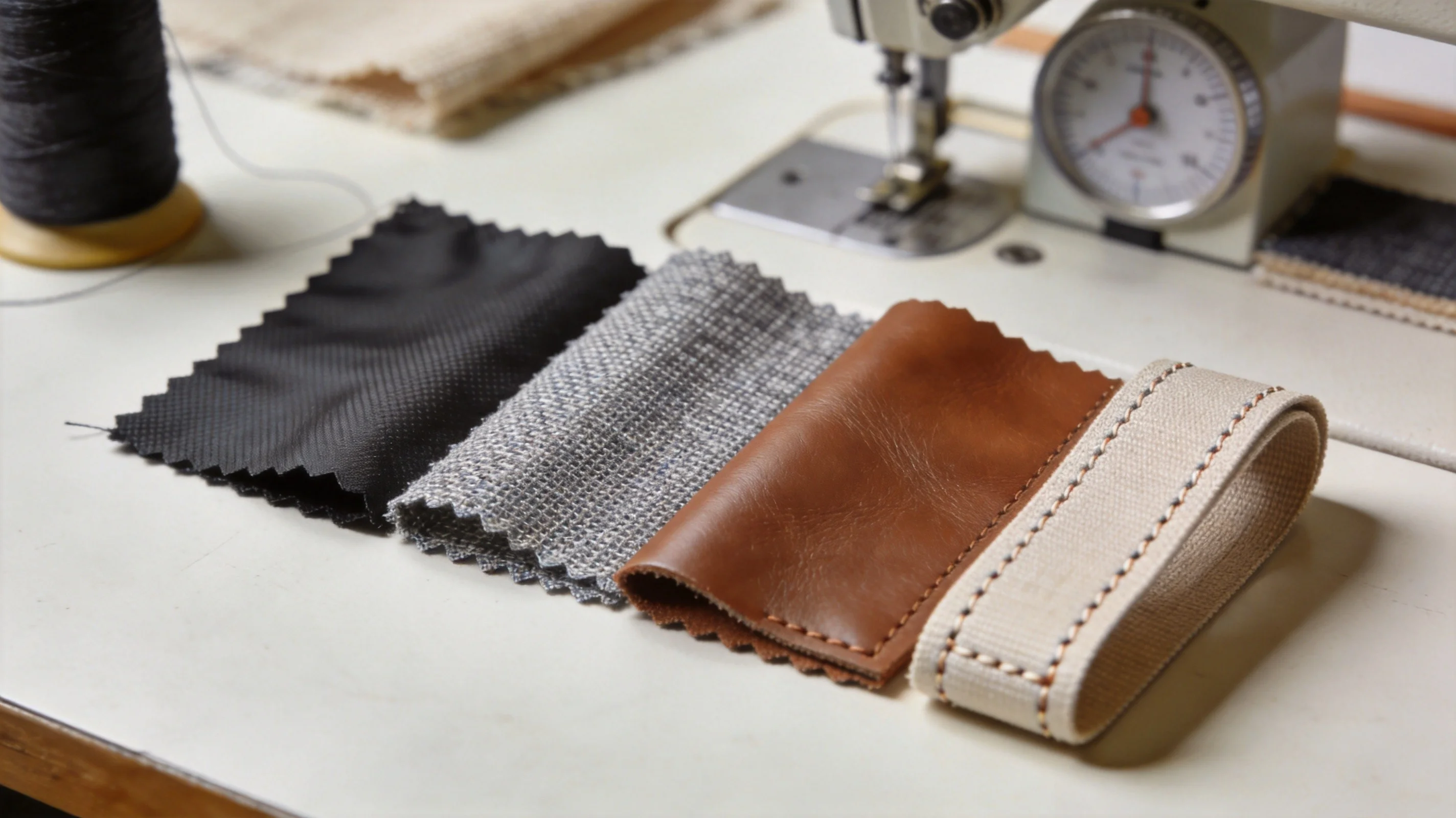
A sustainable golf bag is built from a short list of credible materials rather than clever slogans. Recycled polyester (RPET) is the most common: it is made from post-consumer bottles and recycled waste fabric, spun back into yarn and woven into shell fabric that meets the same denier and abrasion standards as virgin polyester. Recycled nylon from post-industrial fibre and fabric waste offers similar performance for certain applications. Water-based laminates and coatings replace solvent-based finishes, reducing the chemical load in production. Recycled hardware, trims and webbing made from reclaimed materials close the loop on the non-fabric components.
The defining question is whether the recycled material meets the specification you would set for a virgin build. Dense recycled shells, bonded seams and metal stands hold up over the same multi-season life, so choosing eco-friendly does not mean choosing a compromise build. It means choosing where the raw material comes from, not how well the bag is constructed.
Specifying recycled material still requires care with suppliers because the quality of recycled yarn varies widely. A credible source provides certification tracing material back to its reclaimed origin, and a factory that uses such material should be able to show you the same. The short rule is simple: recycled content is only a genuine sustainability choice when it is certified and traceable.
Certification exists precisely to close the gap between intention and proof, and a certificate traceable to the individual material lot is the gold standard. When a factory cannot offer traceable recycled content, the honest move is to say so and specify an alternative rather than to mislabel conventional material.
Lower-Impact Production Processes
Materials are only half the story; how the bag is made matters as much. Lower-impact production shows up in several measurable places. Energy management, where cutting, sewing and finishing use monitored and increasingly efficient power, reduces the carbon footprint of every piece. Waste reduction, including fabric cutting optimisation and recycling of off-cuts, keeps material out of landfill and lowers the raw-material bill. Water management affects dyeing and cleaning processes, and responsible facilities control and treat process water. Chemical handling, the responsible specification, storage and disposal of dyes, adhesives and finishes, is a structural part of environmental compliance.
When you compare factories, ask for specific practices in each area rather than a general claim. Documented cutting optimisation, verifiable energy reporting and a demonstrated approach to process water are the signs of a manufacturer that has built sustainability into its operations rather than bolted it onto a brochure.
One practical example of the difference is cutting yield. A factory that optimises marker layouts can cut a given order from noticeably less fabric, cutting both cost and material waste at once. When this is combined with an active recycling loop for off-cuts and trims, the environmental benefit becomes an operational habit rather than a one-off initiative, and it is precisely the kind of detail that separates a genuinely green factory from a superficially green one.
Similar discipline applies across energy and water. A factory that reports its energy use in absolute and per-unit terms is managing it, and reductions in consumption translate directly into a smaller footprint for every bag shipped. Requesting these figures and seeing them trend downward is more persuasive than any claim that a factory is simply 'greener' than another.
Certifications and Audits That Back the Claim
A sustainability claim is only as strong as the evidence behind it, so certification and independent audit are central. Global standards for recycled content verify that material genuinely comes from recycled sources rather than being relabelled conventional fabric. A third-party factory audit such as an SGS review examines premises, safety, labour, environmental and documented process compliance, and for the example production base featured here an SGS audit was completed in March 2026.
When evaluating a factory, ask to see the audit scope, the certificate, and how corrective actions from any findings were addressed. Recycling certifications should trace the actual material flow, not just brand the company. The more specific and documentable the evidence, the more genuine the practice behind it.
Keep the audit file accessible after you choose a partner, and revisit it periodically, because certifications carry dates and conditions. Re-confirming that the certification remains current and that any required corrective actions have been completed keeps your own sustainability claims accurate and defensible to your customers and to any auditing body further up your own supply chain.
Recertification cycles are part of this. Because audits carry dates and re-verification, a factory that keeps its credentials current is demonstrating ongoing commitment rather than a single historical event, a continuity worth favouring among otherwise-similar suppliers.
A Sustainable Materials Comparison
| Material | Source | Best For | Sustainability Impact |
|---|---|---|---|
| Recycled polyester (RPET) | Bottles, waste fabric | Shells, liners | High material reuse |
| Recycled nylon | Fibre, fabric waste | Durable shells | Waste diverted |
| Water-based coatings | Waterborne chemistry | Waterproofing | Lower chemical load |
| Recycled hardware & webbing | Reclaimed materials | Trims, straps | Closes the loop |
Does Sustainable Manufacturing Actually Cost More
The persistent concern is that eco-friendly always costs more. The reality is more balanced. Sustainably specified raw materials can carry a small premium, but it is frequently offset by the efficiency gains that come with a well-run, waste-conscious factory: better cutting yield, lower energy waste and reduced rework all lower unit cost. Recycled material supply has also stabilised, narrowing the gap between recycled and virgin pricing.
Even where a modest green premium remains, it is typically far smaller than the brand markup on a conventional bag. A buyer who sources an eco-friendly bag from a disciplined factory can achieve a sustainable product at a price that still carries healthy retail margin, which is why sustainability and commercial sense increasingly point the same way.
For a buyer the discipline is to get a priced specification on the same durability spec, both eco and conventional, so the green premium is visible and accountable. In many cases the gap narrows to single-digit percentages, and the ability to sell a verifiably sustainable product easily outweighs it in the market.
Durability and Sustainable Specification Working Together
There is no trade-off between sustainability and durability when the specification is set correctly. A recycled shell specified to the same denier as a virgin shell, with bonded seams, a metal stand and reinforced base, delivers the same multi-season life. The most sustainable thing a golf bag can do is last, because a longer-lived bag needs fewer replacements and less material overall.
This principle reframes how to buy sustainably: choose a durable, repairable build, not just a recycled label. Combined with later steps of the ownership journey, such as care and repair, a durable sustainable bag is the most environmentally sound choice per round played. Specifying for longevity is therefore an environmental decision as much as an economic one.
It follows that a genuinely sustainable golf bag program is really a durable, repairable build on certified recycled material, and that where the two have to be balanced, longevity should usually win. A bag that lasts twice as long halves its material, energy and transport footprint per round, an outcome no recycling badge can substitute for on its own.
Evaluating a Factory's Environmental Practice
Putting the guidance into practice means asking a shortlist of direct questions. Request the recycled-material certifications and any traceability documentation for the fabrics offered. Ask how cutting waste is managed and whether off-cuts are recycled. Confirm energy reporting and any renewable energy use. Ask how process water is treated and how chemicals are handled and disposed of. Finally, request the audit report or a summary of its scope and findings.
Compare the answers across shortlisted factories and weight documentation heavily. A factory that can hand you certificates, reports and process descriptions is demonstrating genuine practice; one that can only describe its intentions in general terms has not yet built sustainability into its operation.
Comfort also derives from a healthy inspection sample. If a proportion of an incoming production lot is independently checked against the agreed specification, it confirms the sustainable build matches the sustainability claim in practice, not just on paper, and provides a final line of defence in front of your own customers.
Sourcing an Eco-Friendly Golf Bag Responsibly
For a brand or retailer that wants a genuinely sustainable line, the practical route is to specify it deliberately and verify it consistently. Define the recycled materials, the lower-impact coatings and the durability spec in writing. Request samples and inspect them for the same quality you would demand of any bag. Order a low-volume test to validate the build before committing to bulk, and finally request the documentation that proves the material and process match the claim.
A responsibly sourced sustainable bag can be handled through the OEM/ODM program, and the wholesale and customisation pathways make it straightforward to introduce eco-friendly options into an existing range. The capacity and minimums are the familiar ones, so the switch to sustainable specification adds process and sourcing questions but not order-structure difficulty. A measured early pilot validates the spec, locks the documentation and proves the economics before the programme scales.
Plan the sustainable spec early in the season and note it in the same approved documents as colour, hardware and sizing, so it is locked into production rather than an afterthought that could slip in translation.
The documentation habit is the key discipline. Keep the recycled-content certificates, the audit record and the energy and waste figures in a single supplier file, and refresh it on a cycle that matches your own claims. This turns an environmental commitment into a managed, auditable practice that you can defend in any customer pitch or trade review.
The Example Production Base Behind the Figures
To make the numbers concrete, the production base referenced here is QUANZHOU JUNYUAN BAGS, founded in 2014 by a founder who has worked in the industry since 2004. It operates 7 production lines, 126 sewing machines and 137 employees, targets roughly 200,000 units of monthly capacity, and has served more than 200 brands across 100-plus countries as an affiliated factory. An independent SGS audit was completed in March 2026. The practical order structure, a 200-piece standard MOQ with 100-piece test orders, 10-20 day sampling and 45-60 day bulk production, applies to sustainable specification just as it does to conventional builds.
This profile illustrates that sustainable capability does not require a special boutique set-up; it lives inside an established, audited, mid-scale production base that documents its process.
Because it is an affiliated rather than a brand-owned facility, it concentrates on manufacturing excellence and responsive service across many clients, which keeps its capability broadly useful to different buyers. Sustainable production is likewise a cross-client capability, so a buyer adopting eco-friendly specification is not asking for novelty but participating in an established part of how the factory already works, which is why sustainable sourcing need not feel risky in 2025. The operational scale and audit history are exactly the evidence a sustainability-minded buyer should collect and weigh when comparing producers.
Putting Sustainability Into Your Own Product Story
Once verified, sustainability becomes part of your brand's story rather than an obligation. Document the recycled content, the audited process and the durable build, and communicate them transparently to your customers. Today's buyers reward honesty and verifiable claims and penalise vague green marketing, so a well-evidenced sustainability story is a genuine commercial asset.
Transparency also protects you: because you can prove the material source and process, your own marketing claims are defensible and your risk of greenwashing criticism is low. That alignment between environmental practice and commercial credibility is the strongest reason to take sustainability seriously in 2025.
Circular Economy and End-of-Life Thinking
A modern sustainability view extends beyond manufacture to what happens when the bag is finally retired. Circular economy thinking asks whether materials can be recovered, whether components such as straps and stand parts can be repairable or replaceable, and whether the brand offers anything that keeps the bag out of landfill longer. A durable, repairable bag is the most straightforward circular win available to the whole industry.
Designing for repairability, such as replaceable straps and accessible stand fastenings, extends usable life and reduces the environmental cost of replacement. Recycling the bag's own materials at end of life is harder for composite builds, so choosing shells that can be reused or re-spun, and hardware that can be separated and recovered, makes the eventual recycling more realistic. These end-of-life features are worth checking when you specify, because they are far easier to design in from the start than to retrofit later.
Buyers can reflect this in a simple specification checklist: certified recycled shell, replaceable straps and stand parts, separated hardware for eventual recovery, and a durable build that rewards longevity. Each line is easy to verify and each pulls the final product toward a genuinely better environmental outcome.
Buyers can reflect this in a simple specification checklist: certified recycled shell, replaceable straps and stand parts, separated hardware for eventual recovery, and a durable build that rewards longevity. Each line is easy to verify and each pulls the final product toward a genuinely better environmental outcome.
Communicating Sustainability Without Greenwashing
Once your claims are documented, communicate them precisely. Use specific, verifiable statements that you can back with certificates and data, and avoid vague superlatives that invite scrutiny. Describe the recycled content exactly, state which independent audit covers the facility, and be honest about what the product does and does not do environmentally.
This precision is now a commercial necessity because regulators and consumers alike have grown sceptical of weak environmental claims. A supplier that communicates with verifiable specifics protects its own reputation and differentiates itself against competitors who rely on slogans. Accurate, evidence-backed communication turns sustainability from a risk into a source of durable trust.
FAQs: Sustainable Packaging
- What eco-friendly materials are used in golf bags?
- Recycled polyester and nylon from bottles and waste fabric, water-based laminates, recycled hardware and lower-impact dyes. RPET shells are the most widely used recycled choice.
- Is recycled material as durable as virgin fabric?
- Quality recycled polyester and nylon meet comparable denier and abrasion standards to virgin fabric. Durability depends on specification and construction, not recycled origin.
- How do I verify sustainability claims?
- Ask for material certifications and traceability, energy reporting, waste and water handling documents, and independent audits. Claims must be backed by documentation.
- Does sustainable manufacturing cost more?
- Sustainably specified materials can carry a small premium, but it is often offset by efficiency and reduced waste. The green premium is far smaller than typical brand markup.
- What MOQ applies to eco-friendly orders?
- Eco-friendly orders follow the same structure, typically a 200-piece MOQ with test orders from 100 pieces, sampling in 10-20 days and bulk in 45-60 days.
- How do I evaluate a factory's environmental compliance?
- Look for independent audits such as SGS, documented waste and water management, energy transparency and responsible chemical handling. A 2026 SGS audit is a strong, verifiable signal.
Sources
- Textile Exchange Recycled Content Standards
- SGS Factory Audit Services
- GOLF.com Sustainability Coverage
Sustainable golf bag manufacturing in 2025 relies on recycled fabrics, water-based finishes, reduced waste and audited factory processes rather than greenwashing claims.
Author: QUANZHOU JUNYUAN BAGS. For a sustainable OEM/ODM specification contact service@junyuanbags.com or +86 17750020688.