How to Protect IP When Manufacturing Golf Bags in China
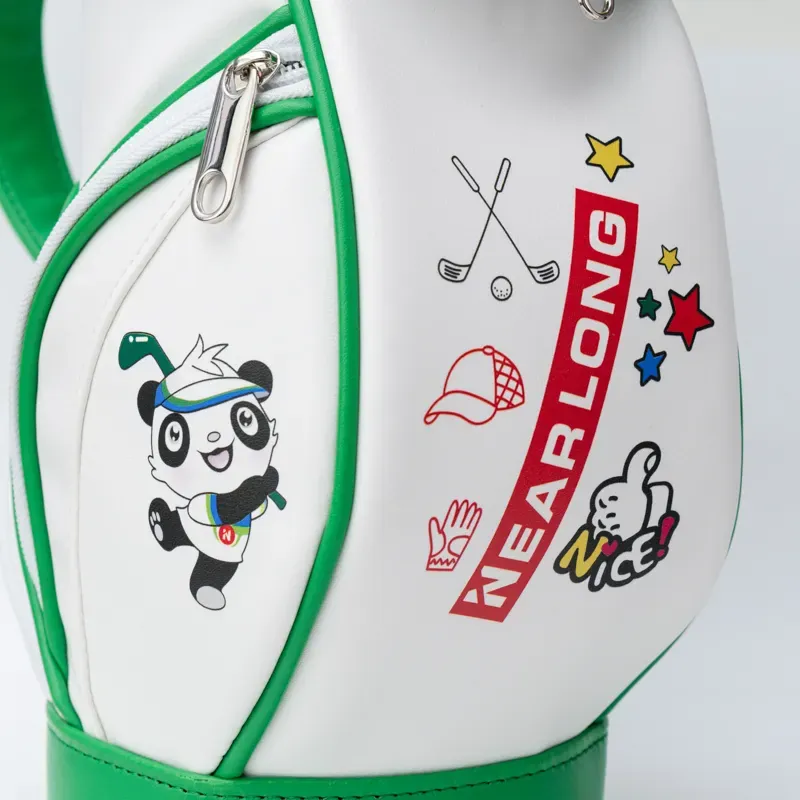
Intellectual property in a golf bag leaks through four doors — the drawing, the sample, the mould and the print file — and each door needs a different lock. An NDA covers the drawing. Sample control covers the physical prototype. A tooling clause and cavity engraving cover the mould. File discipline covers artwork and colour recipes. Brands that lose designs usually had an NDA and nothing else, which is why the leak travelled through a door the contract never mentioned. This guide sets out what each lock costs, what it actually stops, and how to build an evidence trail that survives a dispute on the other side of the world.
Related reading: How Sample Approval Protects the Specification
What Counts as IP in a Golf Bag
Buyers tend to think of IP as the logo. In this product category the logo is the least valuable asset and the easiest to protect. The commercial value sits in the shape — a top collar profile, a pocket configuration, a leg bracket geometry, a divider layout — plus the material recipe, the colour programme and the artwork that carries the brand.
Four kinds of right apply, and they behave differently. Registered designs (called design patents in some jurisdictions) protect appearance. Trademarks protect the name and the badge. Copyright protects drawings, photographs and printed artwork automatically in most jurisdictions, without registration. Trade dress protects the overall look where it has become distinctive. Only two of the four require filing, and filing is what makes enforcement practical.
One more asset is often overlooked: the technical package. A tech pack with measured values, tolerances and construction notes is a document with commercial value, and it is the single most copied item in the category. Treat it as confidential information rather than as a routine attachment to a quotation request.
Trade dress is the right buyers ask about least and benefit from most. A distinctive combination — a contrast piping line, a specific collar profile, a signature pocket placement — can function as an identifier even without a registered design. Building that combination deliberately, and documenting it with dated photography, gives you something to point at when a lookalike appears. A generic black bag with a white logo is difficult to defend because there is nothing distinctive to compare.
The practical conclusion is uncomfortable for small brands: the design decisions that make a bag defensible are the same ones that make it recognisable at retail, and both cost money at development stage. A brand that copies a competitor silhouette saves design cost and inherits the competitor legal exposure, because the copy has no independent rights behind it.
| Asset | Where it usually leaks | Control that works | Typical cost |
|---|---|---|---|
| Product shape and layout | Quoted to another buyer as a stock option | Registered design plus NDA plus tool ownership | USD 400-1,500 per filing |
| Moulds and dies | Re-cut from a sample or copied at a second tool shop | Cavity engraving, tool register, photo audit | USD 30-80 per engraving |
| Artwork and print files | Vector files reused for lookalike products | Release Pantone references only, hold the vector master | Low |
| Material recipe and swatch library | Shared as a full bill of materials | Split specification, codes only, no single full BOM | Low |
| Brand name and badge | Lookalike goods at lower price points | Trademark registration plus customs recordal | USD 250-1,000 per class |
| Photography and catalogue copy | Reused by resellers and marketplaces | Copyright notice, watermarked proofs, dated files | Low |
The NDA: What It Should Cover and Where It Fails
A one-page mutual NDA downloaded from a template is better than nothing and worse than most buyers assume. Three clauses decide whether it has any practical effect: the definition of confidential information, the survival period, and the remedy. Definitions that list only "technical drawings" leave the colour recipe, the bill of materials and the sampling schedule outside the contract.
Survival should run three to five years past the end of the commercial relationship, because lookalike products typically appear in the second or third season. The remedy clause matters more than the penalty figure: an NDA that provides for injunctive relief and specifies the jurisdiction and arbitration seat is enforceable in practice. One that names a court with no connection to either party is decorative.
The party who signs is as important as the text. A signature from a sales manager binds nobody if the entity on the purchase order is different. Get the NDA signed by the legal entity that invoices you, and check the company chop against the business licence. Where a group has several entities, list them all in the signature block rather than assuming the parent covers the subsidiary.
- Definition covering drawings, tech packs, samples, material codes, colour recipes, pricing and order volumes — not only technical documents.
- Survival of three to five years after the last shipment, with no automatic expiry on project cancellation.
- Confidentiality obligations extended to sub-contractors, with the supplier remaining liable for their acts.
- Return or destruction of all materials on request, certified in writing within a stated number of days.
- No use of your samples or photography in the supplier marketing material without written approval.
- Governing law, arbitration seat and a remedy clause that includes injunctive relief.
None of that stops a determined copy. It raises the cost of copying and, more usefully, it creates a documented duty that a later dispute can be built on. An NDA is a foundation for evidence, not a wall.
Samples that leave your office need their own document. A short sample loan agreement — one page, signed by the receiving entity — records that the unit remains your property, may not be disassembled or copied, and must be returned or destroyed on request. That single page converts a gifted prototype into a tracked asset and, in a dispute, into evidence of access.
The commercial relationship also matters. Suppliers protect the customers who pay reliably and communicate clearly, and they deprioritise the ones who treat every conversation as a negotiation. That is not a legal control, but it is a real one, and it is why the brands with the strictest paperwork are often the ones with the fewest incidents.
Compartmentalising the Tech Pack
The most effective protection in this industry costs nothing and is used by very few brands: split the information so no single person holds the whole picture. A pattern maker needs dimensions. A fabric buyer needs material codes. A print vendor needs artwork. A mould shop needs a 3D file. When all four arrive in one PDF, the document becomes a ready-made production package for anyone who receives it.
Practically, issue three documents instead of one. A construction sheet with dimensions, seam types and tolerances. A material sheet with supplier codes and performance values, no end-use description. An artwork sheet with Pantone references and placement, no vector file. Each is useful on its own and incomplete on its own, which is the point.
Keep the master tech pack in your own system with a version number and a distribution log. When a specification changes, issue a new version and withdraw the old one in writing. Uncontrolled versions are how a rejected construction returns two seasons later as a supplier stock item.
The split also forces a useful commercial decision. Under a pure OEM arrangement the buyer supplies the full design and the supplier builds to it; under ODM the supplier contributes part of the design from an existing platform. Mixing the two without saying which applies is how ownership arguments start, and the OEM versus ODM comparison sets out where the line usually falls. If a supplier contributes design work, that contribution needs its own written terms before the first drawing is exchanged.
Tooling, Moulds and the Marks That Prove Ownership
A golf bag typically involves three to six tools: top collar, base plate, divider grid, sometimes a pocket frame and a logo plate. Each is cut to your geometry and each is worth money to a supplier who wants to serve a lookalike buyer without paying for tooling. Ownership is therefore a commercial question before it is a legal one.
Three controls work together. First, a clause stating that all tooling paid for by the buyer is the buyer property, held exclusively for the buyer orders and returnable on request. Second, a cavity engraving — a small buyer code and a tool number cut into a non-visible face, typically USD 30-80 per tool. Third, a tool register that records tool number, cavity count, location, ownership and last service date, photographed during each audit.
The engraving is what makes the clause provable. Without a mark, a tool found at a third-party site cannot be identified as yours. With one, a photograph settles the argument, and a tool that appears in a shipment you did not order becomes evidence rather than suspicion.
Where the tool is paid through a development charge on a 500-piece opening order, state the amortisation explicitly: how much is charged up front, how much is recovered per unit, and at what volume the tool is deemed fully paid. Development work at 500 pieces is normal in this category because the tooling needs volume behind it, and a written amortisation schedule prevents the same mould being invoiced twice under two names. The mechanics of those charges are covered in the tooling and mould cost breakdown.
Plan the exit before you need it. Moving tools between suppliers is routine but poorly handled: a 300-600 kg mould needs crating, transport insurance and a receiving site willing to inspect the cavity faces on arrival. Write the transfer process into the agreement — notice period, condition standard, who pays freight, and what happens if the tool is found damaged. A tool that cannot be moved is not an asset, it is a hostage.
Tool life is part of the same conversation. A steel mould for a polypropylene grid will run tens of thousands of shots before refurbishment, while a cheaper aluminium tool may need rework after a few thousand. Ask for the material and the estimated shot count when the tool is quoted, because a low tooling price often means a shorter life and a second invoice in year three.
Floor Controls: Sample Room, Scrap and Sub-Contracting
The sample room
Every approved sample should carry a serialised label: programme code, colourway, version, date, signature. The archive holds one sealed unit per colourway, stored away from the working sample shelf. The working shelf is where copies begin, because a sample left in the open is a pattern reference for anyone who walks past. When you send a prototype, send a production-representative unit rather than your only golden sample.
Scrap and seconds
Cut panels, rejected bodies and print misprints are the raw material of a lookalike. A programme that produces 500 bags also produces dozens of usable sub-assemblies, and a bin outside the cutting room is an unsecured warehouse. Ask for a written scrap procedure: mutilation standard, quantity log, disposal method and photographic evidence per lot. It sounds excessive until you see a competitor product assembled from another brand rejects.
Sub-contractor disclosure
Moulding, plating, embroidery and printing are routinely sent out, and each vendor is a new party holding a fragment of your design. A sub-contractor list with named processes and site addresses, refreshed at each audit, is the minimum. Better is a flow-down clause requiring those vendors to accept the same confidentiality terms, with the main supplier remaining responsible for compliance.
Field note. A supplier that cannot describe its scrap procedure in three sentences has never been asked. That is not proof of bad intent; it is proof that nobody has set a standard. Write the procedure into the supply agreement and audit it once. The cost is a paragraph, and it closes a door that most brands leave open.
Building an Evidence Trail You Can Actually Use
Disputes in this category are rarely about whether copying happened. They are about proving it happened, by whom, and when. Four habits produce evidence that survives that test, and all four cost almost nothing.
- Timestamp every version you release — PDF metadata plus a dated cover sheet plus an email record of transmission. A file with no date is a file with no history.
- Keep the approved sample sealed and photographed from six angles at approval, with the serialised label in frame.
- Log every shipment of samples, plates and files out of your office, with courier tracking and the receiving name.
- Photograph tool engravings and the tool register at each visit, and file the images against the tool number.
- Retain inspection records from each lot, since they establish what you received and when, which is often the first question in a copying dispute.
- Keep the purchase history and the price you paid, because copying disputes frequently turn on whether a supplier had access at all.
Inspection records deserve a mention because they are usually discarded. A final inspection report tied to a lot number, a sample size and a defect count establishes the condition of goods at a point in time. If a lookalike appears eighteen months later, those records show what your product was, when it was made, and by whom — the foundation of any comparison. The quality control workflow shows what a complete lot file contains, which is the same file you want in an archive.
Registration, Customs and the Enforcement Ladder
Registration is unglamorous and decides most outcomes. File the design in your home market first, because that is where you will sell and where a court is convenient. File the trademark in every market you ship to, in the classes that cover bags and clothing accessories. Where budget allows, add a Chinese filing so action is available at the point of production rather than only at the point of sale.
Customs recordal is the highest-leverage single step for an importer. Recording your registered rights with the customs authority in your market lets shipments be detained at the border, which is cheaper than litigation and faster than a court timetable. It requires a registration certificate, a product identification guide and a contact who can respond within days.
| Route | First response | Cost band | Evidence needed |
|---|---|---|---|
| Letter to the supplier | 1-2 weeks | Low | Signed NDA, sample comparison |
| Marketplace takedown | 2-6 weeks | Low | Registration certificate, listing URLs |
| Customs detention | At shipment | Moderate | Recorded right, product ID guide |
| Administrative complaint | 1-4 months | Moderate | Registration, evidence of similarity |
| Civil action | 6-18 months | High | Full chain of evidence, expert comparison |
| Contract arbitration | 3-9 months | Moderate | Arbitration clause plus records |
Work the ladder from the bottom. A letter costs a morning and resolves a surprising share of cases, because most suppliers would rather keep a paying customer than defend a copy. Escalation exists to make the first letter credible, not to be used by default.
Whatever the route, the comparison file is what decides it. Photograph the two products side by side on a neutral background, from the same six angles, with a ruler in frame. Measure the features that carry the design — collar height, pocket offset, divider layout, piping width — and tabulate them. A comparison table with millimetres in it persuades a customs officer or a tribunal far more effectively than an assertion that the bag looks the same.
Timing matters as much as evidence. Rights are enforced while the goods exist, and a container that has cleared customs is much harder to intercept than one held at the port. If a lookalike is expected in a particular season, record the right and file the product identification guide in advance rather than after the first shipment arrives.
Budgeting Protection Against the Order Value
Spending on IP should scale with the programme, not with anxiety. For a first order of 200 pieces, the priority is a signed NDA with the invoicing entity, a split tech pack and a tooling clause. Total cash outlay: close to zero. For a 500-piece opening development with new moulds, add cavity engraving and a written scrap procedure.
Once a programme passes a few thousand units a year, registration and customs recordal earn their cost. Filing in one jurisdiction typically runs USD 400-1,500 for a design and USD 250-1,000 per class for a trademark at the time of writing, so check the current fee scale with counsel, and both are one-time costs against a multi-season product.
The programmes we run sit inside this framework rather than outside it: development at 500 pieces, 200 per colourway in production, 100 for a trial, samples inside six to ten working days and twelve to fifteen with fresh tooling, bulk in 35-50 days from approval, inspection on the ISO 2859-1 plan at 2.5, T/T 30/70 on FOB Xiamen. Our production base is in Quanzhou under dedicated capacity, with third-party factory audits available on request, and the name on the paperwork is QUANZHOU JUNYUAN BAGS. The company has operated since 2014 with a team that entered bag engineering in 2004, which in practice means the sampling room, the tool store and the inspection bench answer to one schedule.
A simple budget rule keeps this proportionate. Spend nothing beyond paperwork until a programme passes 500 units, then add engraving and the scrap procedure, and only move to filings and customs recordal once a design has sold through one season. A design that has proved demand is worth protecting; one that has not yet sold is worth keeping confidential and nothing more.
Written terms and named owners are the whole of the discipline. Brands that keep a signed agreement, a split specification, an engraved tool and a sealed sample rarely need the enforcement ladder. The four locks cost less than the first legal letter and considerably less than a season of lost margin.
Related reading: What a Tech Pack Should and Should Not Disclose
Next steps: custom solutions, manufacturing capability, and a quotation request. Private Label Programmes. Talk to Us About Development.
Sources and Standards Referenced
- US Customs and Border Protection — intellectual property recordation and detention
- US Federal Trade Commission — advertising and trademark claim guidance
- ISO 9001:2015 Quality management systems — requirements
- ISO 2859-1:2022 Sampling procedures for inspection by attributes
Frequently Asked Questions
Do I need a patent to protect a golf bag design?
Not a utility patent. Registered design protection, sometimes called a design patent, covers appearance and is the relevant right for a bag silhouette, pocket layout or collar profile. It requires filing before the design is public, so file before showing the product at a trade fair.
Is an NDA enough on its own?
No. An NDA covers information, not the physical sample, the mould or the print file. Brands that rely on an NDA alone usually find the copy was made from a sample left in a factory sample room, which is a different door. Use the contract plus sample control plus tool marking.
Who should sign the NDA?
The legal entity that appears on the purchase order and the bank transfer, with a company chop matching the business licence. A signature from an individual sales manager binds nothing if the invoicing entity is a different company. List every group entity in the signature block.
How much does it cost to engrave a mould?
A buyer code and tool number cut into a non-visible face typically costs USD 30-80 per tool. It is the cheapest way to make a tooling ownership clause provable, because a photograph of the cavity settles an argument that otherwise needs expert evidence.
What is a split tech pack and why does it help?
It is the specification issued as three separate documents: construction with dimensions, materials with codes, artwork with Pantone references and no vector file. No single recipient can produce the bag from what they hold, which limits what a pattern maker, fabric buyer or print vendor could pass on.
How long should confidentiality survive?
Three to five years after the last shipment. Lookalike products tend to appear in the second or third season, so a one-year term expires before the copy reaches the market. The term should not end early if the project is cancelled.
Can I stop copies at the border?
Yes, if the right is registered and recorded with customs. Recordal lets a shipment be detained on suspicion, which is faster and cheaper than litigation. It requires a registration certificate, a product identification guide and a contact who responds within days.
What should a scrap procedure cover?
Mutilation standard for rejected bodies and cut panels, a quantity log per lot, the disposal method, and photographic evidence. Rejected sub-assemblies are usable material, and an unsecured scrap bin is how lookalike products get assembled from another brand production waste.
Should I ever send my only approved sample to a supplier?
No. Keep a sealed golden sample in your own archive and send a production-representative unit. A sample that lives on a factory shelf becomes a pattern reference for anyone who walks past, and you lose the only physical standard you can compare later deliveries against.
What evidence matters most in a copying dispute?
Dated transmissions of the specification, the sealed sample with its serialised label, tool engravings with photographs, and lot-level inspection records. Together they establish what you had, when it was made and who had access, which is what a comparison case rests on.
Does registering in China matter if I sell in Europe?
It helps, because action at the point of production is often faster than action at the point of sale. Many importers file in the home market first for cost reasons and add a Chinese filing once a programme exceeds a few thousand units a year.
Is IP protection compatible with a 200-piece first order?
Yes, and it costs almost nothing at that volume: a signed NDA with the invoicing entity, a split tech pack and a tooling clause with ownership language. Registration and customs recordal can wait until the programme is large enough to justify the filing fees.
Review Your Development Terms
Send the NDA and tooling clause you are using and we will mark the gaps that matter before the first sample leaves the building.
Request a Review See Sampling Process