Custom Sunday Bags Wholesale: Lightweight Carry Bags
The lightest format in the range, specified properly — from QUANZHOU JUNYUAN BAGS, a sourcing and programme-management company working with an affiliated factory since 2014 — covering weight budgets, folding mechanisms and why this category suits small first orders.A Sunday bag is a 1.2-1.8 kg carry bag with a 7-8 inch top, 6-9 club capacity and one or two pockets. It is the cheapest format to tool and the easiest to run at low volume: standard MOQ is 200 pieces, and a 100-piece trial is genuinely viable because a Sunday bag uses fewer panels and less hardware than a cart bag. Sampling takes 6-10 working days and production 35-50 days.
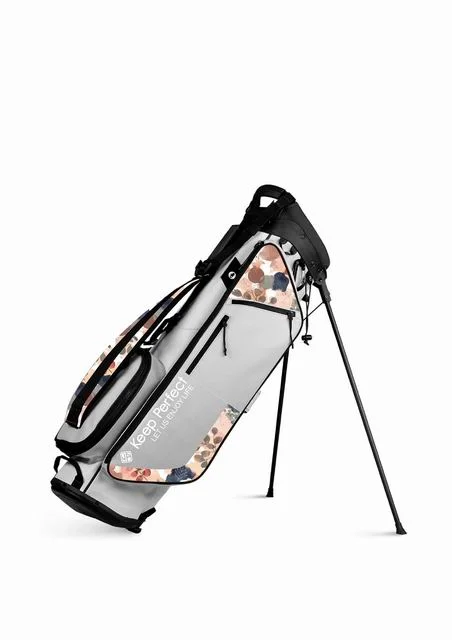
A Sunday carry bag: 7-inch 4-way top, 1.4 kg, one apparel pocket and a webbing strap.
What a Sunday Bag Is For
A Sunday bag is designed around a decision to carry less. The top shrinks to 7-8 inches to hold six to nine clubs, the pocket count drops to one or two, the stand is removed and the strap becomes a simple webbing sling. What is left weighs 1.2-1.8 kg instead of 2.5 kg, and costs materially less to produce.
That makes it the right product for three buyer types. The minimalist player who walks nine holes with a half set. The travel golfer who wants a bag that folds into a suitcase. And the brand building a first range, because the format is the cheapest credible way to put a real golf bag into a product line.
The carry and stand formats are on the same page deliberately — a Sunday bag with a lightweight two-leg stand lands at 1.8-2.2 kg and is usually built from the same pattern family, sharing panels and changing only the base and the leg assembly. Full-size carry and cart formats are on the cart bag page.
The Weight Budget
Weight is the product. A Sunday bag that weighs 2.3 kg has no reason to exist, because a stand bag does the same job with more features. So the weight budget has to be set first and every component chosen against it.
| Component | Light build | Standard build | Heavy build |
|---|---|---|---|
| Top collar | Nylon fabric + plastic rim, 90 g | Moulded plastic 4-way, 180 g | Moulded 6-way, 260 g |
| Body shell | 210D polyester, 120 g | 420D polyester, 190 g | 600D, 280 g |
| Frame / spine | None or HDPE strip, 40 g | HDPE spine, 90 g | Moulded frame, 200 g |
| Base | Fabric base, 60 g | Moulded EVA base, 130 g | Rubber base, 210 g |
| Strap | Webbing sling, 70 g | Padded single strap, 140 g | Dual padded strap, 260 g |
| Hardware + zip | 50 g | 80 g | 120 g |
| Typical total | 1.2-1.4 kg | 1.5-1.8 kg | 2.0-2.3 kg |
Two things drive the number more than the fabric. The base — a moulded EVA or rubber base adds 70-150 g over a fabric base, and it is the first component to cut if weight is critical. And the strap: a padded dual strap can weigh more than the whole top collar. On a Sunday bag a webbing sling with a small shoulder pad is the honest choice.
A caution on marketing weights: almost every published weight for this category is measured without the strap and without the rain hood. Specify the weighed configuration in your copy, or a buyer with a kitchen scale will publish the difference for you.
Folding and Collapsible Mechanisms
Folding is what separates a Sunday bag from a small stand bag, and it is where the design decisions get interesting. Three mechanisms are available at this price level.
- Fixed body. No folding. The simplest, cheapest and most rigid option, and structurally the best — a fixed body holds its shape and protects clubs better than anything that folds. It is also the hardest to ship and to store, which matters for direct-to-consumer brands.
- Mid-body hinge. A hinge at roughly 40% of the height lets the bag fold in half for storage or packing. Adds 80-150 g and 6-10% to unit cost. The hinge is a wear point, so it needs a metal pin rather than a plastic living hinge if the bag is used regularly.
- Fully collapsible frame. The body is fabric, and a removable or integrated frame gives it shape when assembled. Packs flat to a few centimetres, which is the differentiator for travel and for e-commerce packaging. The trade-off is assembly time for the consumer and a less rigid bag in use.
For a direct-to-consumer brand shipping in a mailer, the collapsible frame is worth the extra cost because it cuts carton volume dramatically — often by more than half. For a pro-shop product, the fixed body is better: it looks like a proper golf bag on the rack and it will not arrive folded and creased.
If you specify a hinge or a collapsible frame, add a 200-cycle fold test to the inspection plan. It is a cheap test that catches the single most common failure mode in this category.
Why Sunday Bags Suit Small First Orders
This is the practical reason brands start here. Setup cost per style is dominated by pattern making, cutting dies, top-collar tooling and embroidery programme setup. A Sunday bag has fewer panels, a simpler top and less hardware, so the total setup is a fraction of a cart bag's.
| Cost driver | Cart bag | Sunday bag | Effect on MOQ |
|---|---|---|---|
| Pattern + grading | High (12-18 panels) | Low (6-9 panels) | Lower amortisation per unit |
| Top collar tooling | Moulded 14-way, significant | Moulded 4-way or fabric, minimal | No 500-piece new-pattern floor |
| Hardware count | 20-30 pieces | 6-10 pieces | Lower setup and lower unit cost |
| Embroidery positions | 4-6 | 1-2 | Cheaper programme setup |
| Practical trial size | 200-500 | 100 | Real 100-piece trial |
The consequence is commercial, not just technical. On a Sunday bag a 100-piece trial is a genuine sample of retail demand: you can place it, sell it, and reorder in the same season. On a cart bag a 100-piece trial is a marketing expense, because the setup cost is spread over too few units to be profitable for either side.
That is why this format works so well for a first range, a limited edition, a club colourway or a capsule collection. The full MOQ structure and the negotiation levers are set out on our low MOQ programme page.
Materials and Construction
The shell is usually 210D-420D polyester or nylon. 210D keeps the weight down and is adequate because a Sunday bag carries fewer clubs and is handled more gently than a cart bag. 420D is the sensible upgrade if the bag will be used on a trolley or in wet conditions.
The top collar is the structural decision. A moulded plastic 4-way top at 180 g holds its shape and takes a logo well; a fabric top with a plastic rim at 90 g saves weight but will sag over a season if the bag is loaded with nine clubs. For anything sold at retail above an entry price, mould the top.
The base matters more than buyers expect. A fabric base is cheapest and lightest but wears through where the bag is set down. A moulded EVA base adds 70 g and doubles the life of the lowest panel. Given that the base is the first thing to fail on a lightweight bag, it is usually the right place to spend the weight.
Sunday Bag vs Stand Bag: Where the Line Sits
The two formats overlap at the top of the Sunday range, where a lightweight stand lands at 1.8-2.2 kg. Above that weight there is no reason to buy a Sunday bag, because a stand bag does the same job with more features for roughly the same money. Below 1.6 kg the Sunday bag is clearly its own product.
Three practical differences decide it. A Sunday bag has a 7-8 inch top and holds six to nine clubs; a stand bag has an 8-9 inch top and holds fourteen. A Sunday bag has one or two pockets; a stand bag has five to seven. And a Sunday bag is a carry-only product if it has no legs, which means the player puts it on the ground and it falls over — that is the limitation that pushes some buyers back to a stand bag.
The commercial rule: if the buyer walks nine holes with a half set, sell them a Sunday bag. If they walk eighteen with a full set, sell them a stand bag. Ranges that stock both capture the same customer twice as their game changes.
Branding a Small Bag
A Sunday bag has one large flat side panel and a small end panel — enough for one strong logo and one secondary mark. Embroidery works well at 80-100 mm on the side panel. For a gift or event programme, a single-colour screen print or a heat transfer is cheaper and reads well at this size.
The one branding mistake to avoid is treating a small bag like a big one. Six logo positions on a Sunday bag reads as clutter, not as value. One hero position, one small mark on the pocket and a woven label at the strap anchor is the right density.
Ordering a Sunday Bag Programme
- Confirm the club count and top size (7 or 8 inch) and whether a stand is required.
- Choose the folding mechanism: fixed, hinged or collapsible frame.
- Set the weight budget and choose components against it — base and strap first.
- Send vector artwork for one primary and one secondary position.
- We confirm the spec, sample in 6-10 working days, then produce in 35-50 days at MOQ 200 with a 100-piece trial available.
Frequently Asked Questions
- What is a Sunday bag?
- A Sunday bag is a stripped-back carry bag for a short or practice round: a small top that holds 6-9 clubs, one or two pockets and a simple strap, at 1.2-1.8 kg instead of 2.5 kg. The name comes from the traditional afternoon round. It is the lightest format in the range and the cheapest to produce.
- How light can a Sunday bag realistically be?
- 1.2-1.4 kg with a nylon top, a 210D-420D shell and a webbing strap. Below 1.0 kg you are into ripstop nylon and a fabric rather than moulded top, and durability starts to suffer. Anything advertised under 800 g is usually measured without the strap.
- What are the folding options?
- Three: a fixed non-folding body (simplest, cheapest, most rigid), a mid-body hinge that folds the bag in half for storage, and a fully collapsible fabric body with a removable or integrated frame that packs flat. The hinge adds 80-150 g and 6-10% to cost; the collapsible frame adds more but is the differentiator for travel and for direct-to-consumer packaging.
- Why is a Sunday bag a good low-MOQ product?
- Because it uses fewer panels, less hardware and a simpler top than a cart bag, the tooling and setup cost per style is much lower. That means a 100-piece trial is genuinely viable and a brand-new colourway does not force a 500-piece commitment the way a full cart bag does.
- Can a Sunday bag have a stand?
- Yes, and that is where the format blurs into a stand bag. A Sunday bag with a lightweight two-leg stand lands around 1.8-2.2 kg. Most programmes offer both a pure carry and a stand version from the same pattern family, sharing panels and only changing the base and the leg assembly.
- How many clubs does it hold?
- Six to nine comfortably with a 7-8 inch top. A 4-way divider is the practical maximum at this size; anything more wastes space and adds weight. Half-set and minimalist players are the core user, and that is the buyer the product should be designed for.
- What is the MOQ and lead time?
- 200 pieces per SKU with a 100-piece trial, and the trial is realistic on this format because setup cost is low. Sampling takes 6-10 working days; production runs 35-50 days after approval.
- Is a Sunday bag suitable for corporate gifting?
- Yes, and it is one of the better gift formats: light enough to ship cheaply, useful enough to keep, and large enough to carry a readable logo. A 50-200 piece branded run with one embroidered position is a common order.
Request a Sunday Bag Quote
Tell us the club count, the folding mechanism and your target weight. We will come back with a component breakdown that hits it, plus a price band at 100 and at 200 pieces.