Golf Bag Tooling and Mold Cost in Custom Development
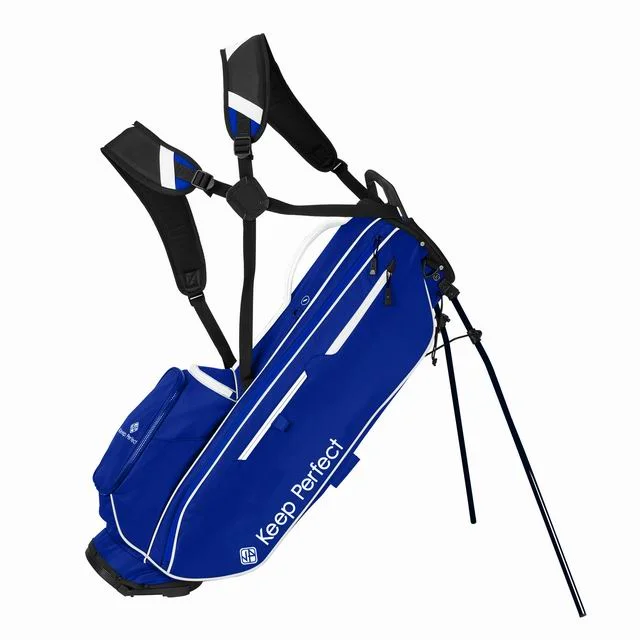
Tooling on a golf bag programme usually lands between USD 4,000 and USD 16,000 across every part, and almost none of it belongs in the unit price. The money goes into four places: a moulded top or divider grid, a base plate, a handful of small hardware parts, and the cutters and jigs that never appear on a quotation at all. Each item is a one-time cost with its own lead time, its own expected life and its own ownership question. This breakdown gives the ranges used in production today, the amortisation arithmetic that decides whether tooling is affordable at 200 pieces or only at 2,000, and the contract language that keeps a paid-for mould from becoming someone else property.
Related reading: Golf Bag Pricing Tiers: Budget, Mid and Premium Explained
Which Parts Need a Tool, and Which Do Not
A soft bag looks like a textile product and is priced like one, but three of its components are injection mouldings, and those three decide the tooling bill. The shell, the pockets, the straps and the lining are cut from cloth with steel-rule dies or a CNC cutter, which is cheap by comparison. The rigid parts are where the money sits.
The top collar or divider grid is the largest single item because it is a deep part with thin ribs and tight dimensional expectations. The base plate is second: it carries the whole loaded weight of fourteen clubs plus the bag, and its wall thickness drives both cost and durability. The leg pivot brackets on a stand bag are third, and they are the part most often forgotten in a budget, because buyers look at the top and the base and assume the rest of the hardware is bought in.
Everything else is either stock or textile tooling. Zips, sliders, D-rings, strap buckles, umbrella clips and feet are catalogue parts and need no tool unless the buyer wants a proprietary shape, which almost never pays back below 5,000 units. Logos need a die or a screen but at a completely different order of cost. The practical rule: if a part is load-bearing, visible at the top of the bag, or intended to carry a brand mark, it probably has a tool behind it.
There is a fourth category that buyers underestimate: the soft tooling used to make the bag consistently. Cutting dies for each fabric panel, sewing jigs that hold a pocket square while the operator sets a stitch line, folder feet that turn a binding at a fixed width, and print screens for each colour in the artwork. None of these is expensive individually. Together they are what makes unit twenty look like unit two hundred.
Tool Cost Ranges by Component
The ranges below reflect single-cavity moulds in a standard grade of steel, made for a programme that will run in the low thousands. Cavity count, polish level and steel grade move these numbers substantially, and the section after this explains how.
| Component | Tool type | Cost (USD) | First article | Expected life |
|---|---|---|---|---|
| Top collar or divider grid | Injection, single cavity | 3,500-9,000 | 15-25 days | 300,000-500,000 shots |
| Base plate | Injection, single cavity | 2,500-6,000 | 15-22 days | 300,000 shots |
| Leg pivot bracket | Injection or die-cast | 1,800-4,500 | 18-25 days | 200,000-400,000 |
| Handle insert or moulded grip | Injection | 1,500-3,500 | 12-20 days | 200,000 shots |
| Logo emboss or deboss die | Compression die | 400-1,200 | 7-12 days | 100,000 impressions |
| Cutting die, per panel set | Steel rule die | 900-2,500 per set | 5-8 days | 30,000-80,000 cuts |
| Sewing jig or folder foot | Machined acrylic or steel | 80-250 each | 3-5 days | Consumable |
| Print screen or transfer plate | Screen or heat transfer | 60-180 per colour | 3-5 days | 20,000-50,000 prints |
A programme that changes the top, the base and the logo, and adds a stand mechanism, therefore carries USD 8,000-14,000 of hard tooling plus USD 1,500-3,000 of soft tooling. That is the number that should sit in a development budget next to the sampling cost, not inside a unit price where it disappears.
Budget line most buyers miss. Soft tooling is usually quoted inside the sampling or first-order charge rather than as a separate line, so it feels free. It is not. When a panel changes after approval, the cutting die is remade, and that cost lands on the buyer as a change fee.
How a Mould Is Priced: Cavity Count, Steel and Polish
Two quotations for the same top collar can differ by a factor of three without either being dishonest. Four variables explain almost all of it.
The four variables behind any mould price
- Cavity count. A single-cavity tool makes one part per cycle; a two-cavity tool doubles output and adds roughly 40-60 per cent to tool cost. Below 20,000 pieces a year, one cavity is nearly always the right answer for a bag part.
- Steel grade. A standard pre-hardened grade suits 300,000 shots. A hardened tool steel costs 25-45 per cent more and buys life measured in millions, which is only relevant for a stock part shared across many programmes.
- Polish and texture. A visible top collar needs a polished or textured cavity, and hand polishing is hours of skilled labour. A matte texture applied by etch adds a step and a fee; a mirror finish on a part nobody sees is money burned.
- Tolerance and cooling. Thin ribs at 1.8-2.5 mm need well-placed cooling channels and a gate position that keeps weld lines away from corner nodes. A tool designed for cycle time rather than for part quality will produce warp, and the correction usually costs more than the original design review would have.
There is also a geography-of-capability factor that has nothing to do with labour rates. A tool shop that has cut twenty golf bag tops knows where the shrinkage runs and cuts the cavity oversized without being told. A general-purpose shop will hit the nominal dimensions and deliver a first article that is 0.6 per cent small. That single correction cycle costs 7-10 days of programme time, which is usually more expensive than the fee difference between the two shops.
Experience of that kind never appears in a quotation. The production base in Quanzhou carries dedicated capacity, with third-party factory audits available on request and has been running bag programmes since 2004, while the operating company itself dates from 2014, which is why the sampling archive reaches back further than the company file does.
Amortisation, Buy-Out and Tool Title
Whether tooling is affordable is entirely a question of quantity. The table below shows the per-unit load at three typical programme sizes, spread evenly across the first order.
| Order quantity | USD 4,000 tooling | USD 9,000 tooling | USD 15,000 tooling |
|---|---|---|---|
| 200 pieces | USD 20.00 | USD 45.00 | USD 75.00 |
| 500 pieces | USD 8.00 | USD 18.00 | USD 30.00 |
| 1,000 pieces | USD 4.00 | USD 9.00 | USD 15.00 |
| 2,000 pieces | USD 2.00 | USD 4.50 | USD 7.50 |
| 5,000 pieces | USD 0.80 | USD 1.80 | USD 3.00 |
At 200 pieces, USD 15,000 of tooling adds more to the unit cost than the fabric does. That is why a genuinely new shape carries a 500-piece development minimum: it is not a sales gate, it is the point at which the tool stops dominating the price. Buyers who cannot commit 500 pieces are better served by a stock top with a custom colourway, or by a hybrid construction that uses an existing grid inside a new fabric top.
Three structures, one clean answer
The commercial question is separate from the arithmetic, and it is about title. There are three common structures, and only one of them is clean. Tooling can be charged as a separate line and owned by the buyer. It can be amortised into the unit price, in which case the supplier normally keeps title and the buyer effectively rents the tool. Or it can be absorbed by the supplier on the understanding that the buyer commits to a volume, in which case the buyer has no asset and no exit.
The clean structure is the first: a separate invoice line, a stated ownership sentence in the purchase order, a storage commitment, and a buy-out value if the programme ends. That last item matters more than it looks. A mould that cost USD 9,000 is worth roughly its scrap weight to anyone but the brand whose logo sits in the cavity, so a buy-out at 20-30 per cent of original cost is a realistic negotiation, not an insult.
Tool Life, Maintenance and Modification
A tool is not a one-time purchase that then disappears. It wears, it needs maintenance, and it becomes obsolete the moment the design changes. Budgeting for the tool but not for its upkeep is the second most common tooling mistake after losing title.
Injection tools for bag parts typically run 300,000-500,000 shots before the cavity needs rework, which at a few thousand bags a year is a very long life. The failure that actually arrives early is not wear but damage: a tool dropped during handling, a cooling line blocked by scale, or a part ejected before it has cooled enough to release cleanly. A maintenance interval of every 50,000 shots, with the cavity cleaned and the ejector system checked, costs very little and prevents most of it.
Modification is where budgets break
Modification is the expensive part. Changing the shape of a divider slot means welding up the cavity and re-cutting, which costs 30-60 per cent of a new tool and takes 10-15 days. Changing the top oval by more than 2 mm usually means a new cavity insert rather than a weld repair, and at that point the honest comparison is a new tool. Buyers should treat the top geometry as frozen from the moment the tool is released, and should not accept a supplier who says it can be adjusted later without a cost.
Cutting dies are a different economics. Steel-rule dies for fabric panels cost USD 150-450 each and last 30,000-80,000 cuts before the rule dulls and the panel edge starts to fray. On a 2,000-piece run that is irrelevant; on a five-year programme it is a recurring cost that should appear in the supply agreement as a replacement item.
Storage is a real cost. A tool stored at a production site occupies rack space and needs to be findable years later. Ask how tools are logged, whether the cavity carries a programme code, and what happens if the site moves. Buyers have lost tools to a factory relocation more often than to a dispute.
Cutting Dies, Jigs and the Tools Buyers Forget
The soft tooling list is unglamorous and it is where first-article quality is won. A cutting die that is 2 mm out on a curved panel will make every pocket sit slightly off, and no amount of operator skill will fix it. A folder foot set at 12 mm instead of 10 mm changes the look of every binding on the bag.
The full list for a typical cart bag is roughly: eight to fourteen panel cutting dies, two to four pocket dies, one or two binding folder feet, a strap-tacking jig, a pocket-positioning template, a logo placement gauge, and one screen or transfer plate per print colour. Individually these are USD 60-450. Collectively they are USD 1,500-3,000, and they are the difference between a sample that matches the drawing and a bulk run that drifts.
Two of them deserve special attention because they are frequently skipped. The pocket-positioning template is what keeps a side pocket at the same height on every bag; without it, the operator eyeballs the placement and a 4 mm drift becomes a visual defect at AQL 2.5 inspection. The logo placement gauge does the same job for the brand mark, and on a premium programme a 2 mm logo drift is a critical defect rather than a cosmetic one.
From 3D File to First Article: The Timeline
Tooling lead time is not a single number. It is a sequence, and each stage has a fixed cost in days that does not compress because the buyer is in a hurry. The sequence below runs 15-25 days for a top collar and is the one to put in a project plan.
- Design freeze and CAD review, 2-3 days. Wall thickness, draft angle, gate position and shrinkage allowance are agreed against the mating parts. Changing anything after this point costs days.
- DFM feedback, 1-2 days. The tool shop returns a manufacturability note. Ignoring it is the most reliable way to buy a second tool.
- Tool design and steel order, 3-5 days. The mould base is ordered and the cavity blocks are cut to size.
- Rough machining, 3-5 days. CNC roughing of the cavity and core, plus the ejector and cooling layout.
- EDM, heat treatment and polish, 4-7 days. The finish pass, the hardening cycle and the hand work that decides how the part looks.
- T1 first shot, 1 day. The first parts come off the tool and are usually wrong in at least one dimension.
- Dimensional report and CMM check, 1-2 days. The part is measured against the drawing, not eyeballed.
- Correction and T2, 5-8 days. Weld, re-cut, re-polish, re-shoot. Most tools need one correction cycle; a well-designed one needs none.
- Approval and handover, 1-2 days. The signed first-article report becomes the reference for every later shot, and the tool is logged into storage.
In programme terms, that means sampling runs 12-15 working days when a new mould is involved, against 6-10 working days on stock parts. If the first article needs a second correction, add 5-8 days, and plan the launch date around the second cycle rather than the first. The bulk window that follows runs 35-50 days once the sample is signed off.
The step buyers most often compress is the first one. A tool released against a drawing that is still changing will be re-cut at the buyer expense, and the argument about who pays is unwinnable because the drawing revision history shows the change came after release.
Clauses That Protect a Tooling Investment
Four clauses cover almost every dispute that arises over bag tooling, and none of them is unusual or hostile. A supplier who resists all four is telling you how the relationship will go when the programme gets difficult.
- Title and location. The tool is buyer property, is identified by a programme code, is held at a named site, and may be inspected or photographed on request.
- Buy-out value. If the programme ends, the buyer may remove the tool or sell it back at a stated percentage of original cost, typically 20-30 per cent.
- Change control. Any modification to the tool is quoted and approved in writing before work starts, with an agreed day count.
- Maintenance and replacement. The supplier maintains the tool at agreed intervals and replaces worn cutting dies at cost, with the replacement treated as a programme expense rather than a new development.
A fifth clause is worth adding for multi-colourway programmes: exclusivity. If the same top mould is used to produce a bag for a competing brand, the buyer has paid for a tool that now serves a rival. Exclusivity for a stated period, or a per-shot royalty, is a reasonable ask when the tool cost sits with the buyer.
For the surrounding development steps, our OEM and ODM services sets out how sampling and tooling run in parallel, and the golf bag OEM process guide shows where each tool milestone falls against the production calendar. A cart bag cost breakdown puts tooling in proportion against fabric, labour and freight.
Sources and Standards Referenced
- ISO 2859-1:2022 Sampling procedures for inspection by attributes
- ISO 9001 quality management requirements, including design and change control
- ASTM D638 tensile properties of plastics, used for moulded part validation
- ASTM standards catalogue for plastics and textiles
- ISO TC 38 textiles standards index
Next steps: custom solutions, manufacturing capability, and a quotation request.
Frequently Asked Questions
How much does golf bag tooling cost in total?
A programme that changes the top, the base and the logo, and adds a stand mechanism, typically carries USD 8,000-14,000 of hard tooling plus USD 1,500-3,000 of soft tooling such as cutting dies and jigs. A programme reusing stock rigid parts may need only USD 1,500-3,000.
Which part is the most expensive to tool?
The top collar or divider grid, at USD 3,500-9,000, because it is a deep part with thin ribs and tight dimensional expectations. The base plate follows at USD 2,500-6,000. Both are single-cavity moulds in standard pre-hardened steel.
How is tooling cost calculated per bag?
Divide the tool cost by the order quantity it is recovered over. USD 9,000 across 200 pieces is USD 45 per bag; across 2,000 pieces it is USD 4.50. Tooling dominates the unit price below about 500 pieces, which is why new shapes carry a 500-piece development minimum.
Do I own the mould if I pay for it?
Only if the purchase order says so. Paying a tooling line does not automatically transfer title in every jurisdiction. State that the tool is buyer property, is held at a named site, is identified by a programme code and can be inspected on request.
What does buy-out mean in a tooling clause?
It is the price at which the buyer can take the tool away, or sell it back, if the programme ends. A realistic figure is 20-30 per cent of original tool cost, because a mould cut for one brand has little value to anyone else beyond its scrap weight.
How long does it take to cut a new mould?
Fifteen to twenty-five days for a top collar, from design freeze to first article. Sampling then runs 12-15 working days with the new tool against 6-10 on stock parts. If the first article needs a correction cycle, add five to eight days.
How many shots does a golf bag mould last?
A standard injection tool for a top or base runs 300,000-500,000 shots before cavity rework. At a few thousand bags a year that is a very long life. Early failures usually come from handling damage or blocked cooling lines rather than wear.
What does it cost to change a design after the tool is cut?
Welding up and re-cutting a cavity costs 30-60 per cent of a new tool and takes 10-15 days. Changing the top oval by more than 2 mm usually requires a new cavity insert, at which point a new tool is often the better comparison. Freeze the top geometry at release.
What is soft tooling and why is it charged?
Soft tooling is cutting dies, sewing jigs, folder feet, positioning templates and print screens. It costs USD 1,500-3,000 for a cart bag and it is what keeps unit twenty identical to unit two hundred. It is often bundled into a sampling charge, which makes it feel free until a panel changes.
Can I avoid tooling by choosing a stock design?
Yes, and it is often the right first move. A stock top and base with a custom fabric, colourway and logo keeps tooling under USD 2,000 and makes a 100-piece trial realistic. The compromise is that the silhouette is shared with other brands.
Who pays if the tool is damaged in production?
That depends on the maintenance clause. Normal wear is the supplier cost; damage from mishandling is usually the supplier cost too, while damage caused by a buyer-driven design change is the buyer cost. Write the split down rather than relying on goodwill.
Is tooling cheaper if I order more cavities?
No, more cavities cost more, typically 40-60 per cent extra for a second cavity. Cavity count buys cycle time, not price. Below 20,000 pieces a year, a single cavity is almost always the correct choice for a golf bag part.
Scope a Tooling Budget
Send the parts you intend to change and the quantity you can commit, and you will get a tooling schedule with cost, lead time and amortisation per unit at three order volumes.
Request a Tooling Quote Custom Development