Golf Bag Factory Audit Checklist for Importers
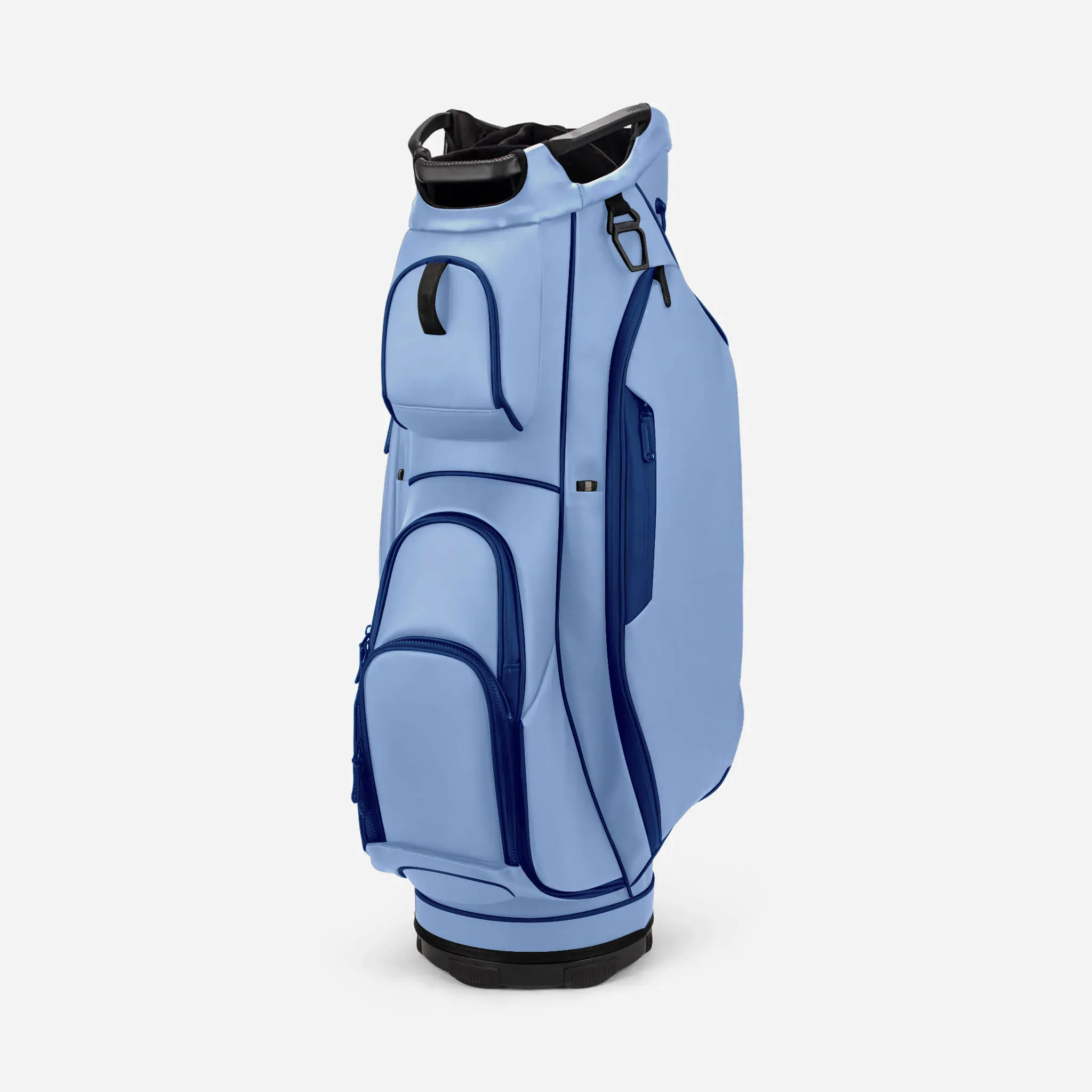
A golf bag supplier audit answers one question in a single day: can this site build your bag, to your tolerance, in the volume you actually need, without quietly changing anything after the sample is signed. Certificates on the wall and the showroom display do not answer it. What does is six things you can count on the floor — cutting capacity, sewing lines and their work-in-progress, tube and frame assembly jigs, hardware setting stations, the inspection bench with its gauges, and how cartons are stacked before loading. Run the checklist below against a real lot at AQL 2.5 under ISO 2859-1, and the visit produces a commercial document instead of a set of photographs.
Related reading: Supplier Questions That Expose a Weak Bag Programme
What an Audit Is Supposed to Prove
Three claims need independent evidence. First, that the legal entity you will pay actually runs the site you will visit. Second, that free capacity exists inside your production window rather than after two larger accounts have been served. Third, that quality control is a documented routine with records you can pull, not a verbal assurance given across a meeting table. A visit that tests none of the three is a factory tour with lunch.
Four audit types get confused constantly. A desktop check verifies registration and paperwork. A social audit examines hours, wages, age verification and safety. A technical audit samples product and reviews inspection history. A capability audit counts machines, jigs and operators, then models what the site can physically output. For a first order of golf bags, capability and technical carry the most weight; the social file becomes decisive the moment you sell into club, corporate or resort channels that ask for it.
Budget is modest against the exposure. A one-day third-party technical audit typically lands between USD 300 and USD 900 plus travel at the time of writing, confirm current rates with the provider, and needs 5-10 working days of scheduling notice. Sending your own QC lead costs more in airfare than in fees and is usually worth doing once, for the supplier you intend to keep.
The output you want is not a score. It is a list of measured facts — machines, operators, output per shift, sample sizes on inspection sheets, defect counts per lot — with photographs and dates behind each one. Everything else is opinion.
Documents to Request Two Weeks Before You Book Flights
Ask for the file set in advance, then read it against the site you walk. Gaps between paper and floor are the most useful thing an audit produces, because they show which claims are copied from a template.
- Business licence with legal name, registered address and business scope visible. That name must match the proforma invoice and the bank beneficiary exactly.
- ISO 9001 certificate plus the scope statement. Confirm the scope covers bag production rather than a generic commercial description.
- The latest full third-party report, including the corrective action plan and evidence of closure, not just the cover page and the logo block.
- Material test reports for shell fabric, lining, coating and trim: SVHC screening, azo dyes, phthalates, and nickel release for metal hardware.
- Machinery list with machine type, brand and year, plus operator headcount per line for the most recent normal month.
- Capacity statement showing the current order book, lines committed and the earliest free sewing week.
- Sub-contractor list naming every process sent out: moulding, plating, embroidery, printing, foam lamination.
- Insurance certificate and bank details, checked against the licence name before any deposit moves.
Two documents are habitually missing and both matter more than the certificates. The first is a calibration record for the measuring equipment used at final inspection — steel rules, top-oval templates, height gauges, colour cards. The second is the defect and rework log for the past quarter. A plant that cannot produce either is not measuring; it is looking.
Read the test reports the way a laboratory would. Confirm the report number is traceable to the supplier, the sample description matches the material you specified, the test method is named with its year, and the result column carries actual values rather than a pass stamp. A report with no measured values, no method reference and no laboratory accreditation mark is a page of reassurance rather than evidence.
One more file deserves a specific request: the approved sample archive. Every serious programme keeps a signed, dated sample for each colourway, sealed and labelled, retrievable years later. If the archive does not exist, the standard you are about to approve will be whatever someone remembers in eighteen months.
The Floor Walk: Six Stations in Ninety Minutes
Walk the line in process order, not in the order your host suggests. Process order exposes the bottleneck. A guided route exposes the showroom.
Cutting and material store
Count fabric rolls and check lot numbers against the swatch you approved. Ask for the marker and the layer count per cut. A plant cutting eighteen layers of 600D on a die press is working inside tolerance; one cutting thirty layers to save a pass is sacrificing accuracy for throughput, and panel dimensions drift across the lay. Look at storage as well. Roll goods left on a concrete floor through a humid week take up moisture and shrink after cutting, which shows up months later as a bag that will not sit flat.
Sewing lines
Count machines, count operators, count bundles in work-in-progress, and compare the three ratios against the capacity sheet. Golf bag assembly needs single-needle lockstitch, double-needle, bartack and a walking-foot machine for webbing and binding. A line without a bartack unit cannot anchor strap boxes or leg brackets properly. Then ask how colourways are separated: light and dark panels sharing one rack is how dye transfer appears in a shipment three weeks after loading.
Tube, frame and hardware assembly
This station is where a golf bag stops resembling a backpack and where most audits stay too shallow. Look for tube bending jigs, a rivet press rather than a hammer and punch, and a leg-mechanism bench with a function test rig. Ask the operator to open and close a stand bag ten times while you watch. A mechanism that needs two hands on a cold morning becomes a retail return in November.
Final inspection and packing
The inspection bench needs a D65 light box, a gauge table carrying the top-oval template, a height gauge for stand models and a record sheet with a stated sampling plan. Check the AQL line on that sheet. Sampling at 2.5 under ISO 2859-1, general inspection level II, is the baseline for this product; a bench pulling five bags from a 500-piece lot is not applying any recognised scheme. Packing should show metal detection, a polybag suffocation warning and a designated carton drop area.
Capacity Math: Making the Numbers Agree
Multiply lines by operators by realistic output per operator-hour and see whether the claim survives. Roughly 0.9-1.3 bags per operator-hour is credible for a bag of this complexity. A site quoting three bags per operator-hour on a 14-way cart bag is describing a different product, or counting only the final assembly step.
| Station | Unit measured | Observed output | Monthly at 25 days |
|---|---|---|---|
| Cutting (CNC plus die press) | panels per day | 900-1,400 | 22,500-35,000 panels |
| Sewing, 5 lines at 22 operators | bags per day | 460-580 | 11,500-14,500 bags |
| Tube and frame assembly | bags per day | 480-600 | 12,000-15,000 units |
| Final inspection | bags per day | 550-700 | 13,750-17,500 inspected |
| Packing and carton | cartons per day | 120-160 | 3,000-4,000 cartons |
The arithmetic usually lands somewhere unexpected: a 500-piece order consumes barely one shift of sewing. Bulk lead time of 35-50 days on this product is therefore not machine time. It is material lead time, colourway sequencing and the queue behind other accounts, which is exactly why the audit has to establish where your order sits in that queue.
Ask what is running on the lines this week and for whom, in general terms. A vague answer means the capacity is either fully booked or not real. A plant with an honest order book will name the week your slot opens, because it needs the booking as much as you need the date.
If your bag needs any moulded part — a top collar, a base plate, a divider grid — walk to the tool store and ask for the mould register. It should record tool number, cavity count, ownership, location and last service date. Tools held on a buyer account must be listed as such. A site that cannot produce a register is a site where your tool will be mixed into a rack and used for whoever asks next. Teardown photos of the cavity faces tell you the maintenance regime faster than any verbal answer.
Scheduling deserves the same scrutiny as machinery. Ask for the production plan for the coming four weeks, then look for how many changeovers sit on each line. A line that switches colourway or model every two days loses 40-90 minutes per changeover to re-threading, tension resetting and first-piece approval, and those minutes come out of your delivery date. A plant that batches colourways into three-day blocks is telling you it understands the cost of switching, which is a better predictor of on-time delivery than any machine list.
| Evidence | What good looks like | Fail signal |
|---|---|---|
| Inspection records | Lot size, sample size, AQL, defect count per lot | Identical sample size for every lot regardless of quantity |
| Calibration | Annual certificates for rules, gauges, scales, colour equipment | No records, equipment unmarked |
| Seam validation | Grab strength to ASTM D5034, 250 N minimum on shell seams | Visual checks only, no pull data |
| Defect rate | Major defects under 2.5% with a trend chart | No numerator, only reassurance |
| Rework log | Quantity, cause code, operator, date | Rework absorbed silently at packing |
| Metal detection | Every finished bag passed, daily test piece logged | Detection applied to cartons only |
Quality System Evidence: What the Records Should Say
Certificates prove intent; records prove practice. Pull the last three months of final inspection reports and check three things. The sampling plan is stated. Defects are classified as critical, major or minor. Every corrective action is closed with a date and a name attached.
Do the sampling arithmetic yourself before you travel. A 200-piece lot at general level II is drawn at 32 pieces with an acceptance number of two major defects; a 500-piece lot is drawn at 50 pieces with an acceptance number of three. An inspection sheet that shows a fixed sample of ten, whatever the lot size, is decorative rather than functional. The mechanics of the scheme are worth reading properly once — the AQL 2.5 walkthrough sets out how the accept and reject numbers behave at each lot size.
Then ask to see a rejected lot. A plant that has never rejected anything is either perfect or not looking, and the second is far more common. A rejected lot with documented rework and re-inspection is a healthier sign than a spotless file, because it proves the system can stop a shipment.
Sampling capability matters as much as inspection. Where a colour or construction change is needed, 6-10 working days is the normal turnaround, stretching to 12-15 where a new mould has to be cut. A supplier who cannot commit to that range in writing is buying samples from somewhere else.
Chemical, Social and Sub-Contractor Files
Chemical compliance is a moving target. The SVHC candidate list is revised roughly twice a year, so a report older than twelve months is a starting point rather than proof. Ask which materials were tested, at which laboratory, and whether the scope covers coating, PU trim and thread rather than the shell fabric alone. The REACH requirements for imported bags explain what a European importer carries as the party placing goods on the market.
Social records are inspected, not admired. Compare time records against wage slips for the last pay period, check age verification for every operator hired in the past year, look at chemical storage with secondary containment, and confirm that exits open from the inside without a key. None of that is exotic. It is the difference between a supplier you can put in front of a corporate buyer and one you cannot.
Sub-contracting is the most under-audited item in this product category. Moulding, plating, embroidery and screen printing are routinely sent out. Get the list, then ask how those vendors are approved and how colour is controlled across two sites. An unlisted sub-contractor is where your specification quietly changes hands.
Scoring the Audit and Writing It Into the Contract
Score in five blocks: capability, quality system, chemical compliance, social compliance and commercial transparency. Weight them to your channel. A brand selling through green-grass pro shops should weight capability and quality. A corporate gift programme should weight chemical and social files, because the buyer asking for them is your client, not you.
- Fix the block weights before the visit, in writing, so the score cannot be reverse-engineered afterwards.
- Score each block from 1 to 5 and attach the evidence reference — photograph number, document name, machine count.
- Photograph everything you counted, including the oil-stained parts of the floor. Clean rooms photograph well and prove nothing.
- Write the corrective action list with owners and dates, and agree who pays for the fixes.
- Move findings that affect product into the supply agreement as an annex: sampling level, colour tolerance, test protocol, packaging spec.
- Re-audit the two weakest blocks at the first bulk run rather than twelve months later.
The annex step has commercial value that is easy to underestimate. Inspection criteria, sampling level, colour tolerance and corrective commitments belong in the purchase contract, not in an email thread. When a dispute surfaces at the 500-piece mark, the annex resolves it in an hour instead of a quarter.
Commercial transparency is the fifth block and the one buyers score most subjectively. A quote that arrives as a single number per unit cannot be audited. A quote broken into material, labour, trim, packaging, tooling and margin can be discussed, and the supplier who offers the breakdown has usually thought about where the cost actually sits. Ask how tooling is invoiced — one line on the first order, amortised across units, or charged separately with ownership transferred to you. All three are workable; silence on the question is not.
For reference, the terms most of these audits end up checking: 200 pieces per colourway, 100 for a trial, 500 where a pattern is opened from scratch; bulk at 35-50 days from sample approval; AQL 2.5 under ISO 2859-1 at level II; T/T 30/70 with FOB Xiamen. Production for the programmes we run sits in Quanzhou on dedicated capacity, with third-party factory audits available on request, traded under QUANZHOU JUNYUAN BAGS. Operations date from 2014, built by a team that has been in bag making since 2004.
Field note. The most common audit failure is not a missing certificate. It is a site that passes the walk and then runs your order on another line in another building, because the order was brokered onward. Get the production address in writing and compare it with the loading address on the bill of lading.
Red Flags Worth Ending a Visit For
- No work-in-progress visible for any current order, in a plant claiming a full book.
- An immaculate sample room and no quality station anywhere on the production floor.
- A capacity claim that exceeds machine count multiplied by realistic shift output.
- Refusal to name sub-contractors, or to allow a line visit during a working shift.
- A payment demand beyond the standard 30/70 T/T split before the first order ships.
- No defect records, no calibration file and no rejected lot in the past year.
A supplier that survives this checklist will rarely be the cheapest quote on the table. It will be the one whose 500-piece run still matches the sample you signed, which is the only performance number that matters once the cartons are on the water.
If you are preparing for a first visit and want the technical questions pre-loaded, the bag manufacturer selection guide covers the commercial side of the same conversation.
Related reading: What a Good Audit File Looks Like at Year Two
Next steps: custom solutions, manufacturing capability, and a quotation request. See Quality Standards. Custom Programmes.
Sources and Standards Referenced
- ISO 9001:2015 Quality management systems — requirements
- ISO 2859-1:2022 Sampling procedures for inspection by attributes
- ASTM D5034 Breaking strength and elongation of textile fabrics (grab test)
- ASTM D2261 Tearing strength of fabrics (tongue method)
- ECHA REACH regulation — understanding the supplier obligations
Frequently Asked Questions
How much does a golf bag factory audit cost?
A one-day third-party technical audit generally falls between USD 300 and USD 900 plus travel at the time of writing, confirm current rates with the provider. A combined technical and social audit over two days costs more. The airfare for your own QC lead to attend usually exceeds the audit fee itself.
How long does an audit take to arrange?
Allow 5-10 working days of scheduling notice for a third-party provider, plus two weeks before that to collect documents. The visit itself is one day for a site with under 300 operators. Report turnaround is typically 3-5 working days after the walk.
Should the audit be announced or unannounced?
Announced for a first visit, because you need the records prepared and the right people present. Unannounced for re-audits on an existing supplier, where the point is to see the normal state of the floor rather than a rehearsed one.
What if the supplier has no ISO 9001 certificate?
It is not automatically disqualifying, but it shifts the burden of proof. Ask for three months of inspection records, a calibration file and a rework log instead. If none of the three exists, the quality system is the inspector, and that is a single point of failure.
How do I verify a capacity claim?
Count machines and operators, then multiply by realistic output per operator-hour, roughly 0.9-1.3 bags for a golf bag. Compare that with the claim and with the current order book. A 500-piece order should consume about one shift of sewing on a five-line plant.
What does AQL 2.5 mean in an audit context?
It is the acceptance quality limit applied to sampling under ISO 2859-1. At general inspection level II, a 200-piece lot is drawn at 32 pieces and accepted with two major defects; a 500-piece lot is drawn at 50 and accepted with three. The audit checks whether the supplier applies a plan at all.
Do I need a social compliance audit for golf bags?
Yes if you sell to clubs, resorts, corporate programmes or any retailer with a vendor code. The file covers hours, wages, age verification, chemical storage and exit safety. Without it you are limited to channels that never ask, which are usually the lowest-margin ones.
Which documents should be checked against the legal entity?
Business licence, proforma invoice, bank beneficiary and bill of lading consignor should all carry the same name and address. A mismatch is the clearest signal that the party invoicing you is not the party producing.
How often should a golf bag supplier be re-audited?
Annually for a stable supplier, and again whenever ownership, site, sub-contractor list or product category changes. The trigger that matters most is a new production site, because nothing on the previous audit transfers to a different building.
What are the clearest red flags on a floor walk?
No work-in-progress for current orders, no inspection station on the production floor, a capacity claim that fails simple arithmetic, refusal to name sub-contractors, and a payment demand above the standard 30/70 split. Any two of those together justify walking away.
Can an intermediary pass the same audit?
An intermediary has no floor to walk, so the technique changes. Ask for the production address, the sub-contractor list, and permission to audit the actual site. If those are refused, you are buying a margin rather than a manufacturing relationship.
What should go into the supply agreement after an audit?
Sampling level and AQL, colour tolerance with a stated measurement method, test protocol and acceptance values, packaging specification, and the corrective action list with dates. Attach them as an annex so disputes are settled by document rather than by memory.
Book an Audit Support Call
Send the supplier name and the order profile, and we will tell you which stations to count first and which documents usually do not exist.
Talk to Our Team See Manufacturing