Sourcing Agent vs Direct Factory: Which Should You Choose
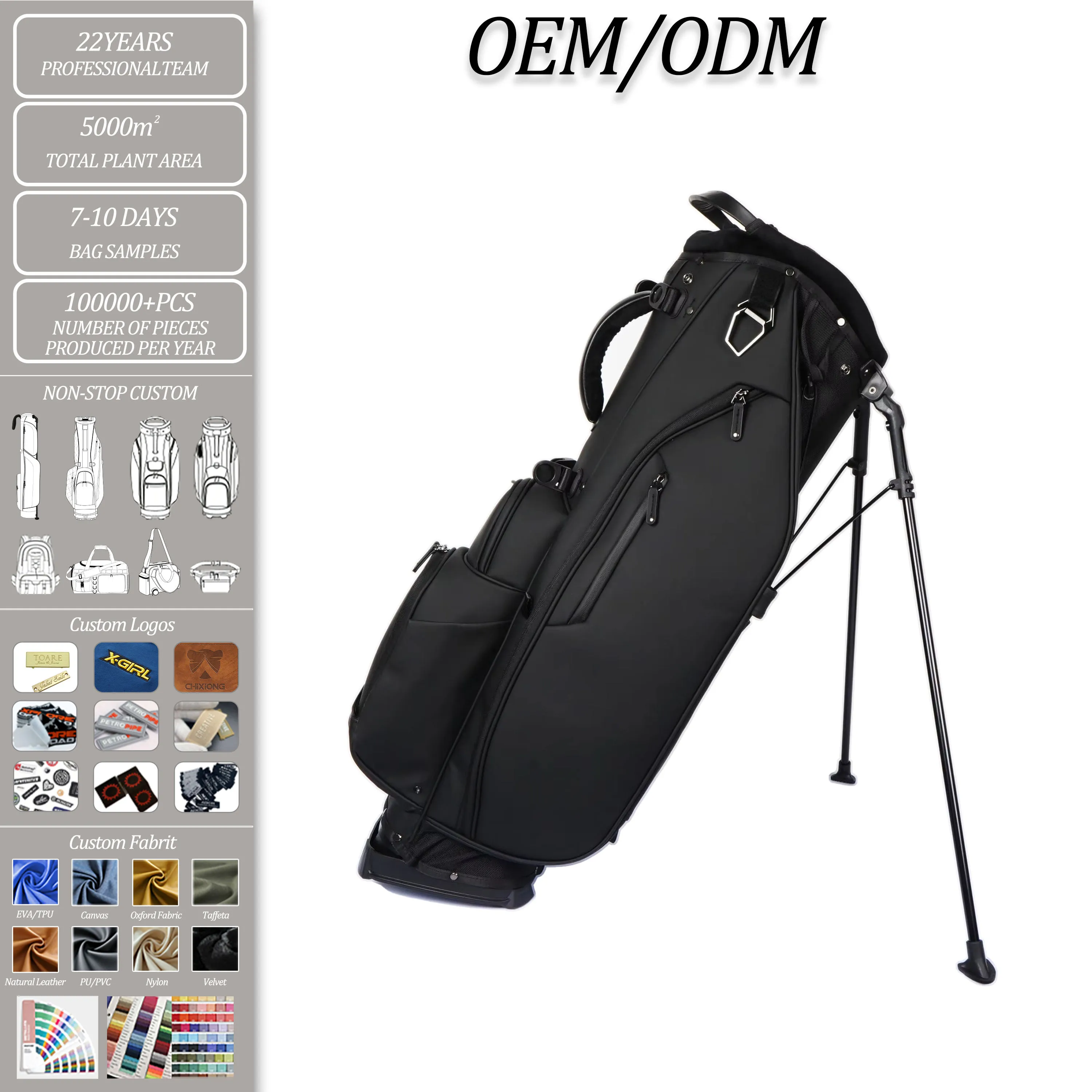
Two supplier types dominate this category and they are not variants of the same thing: an intermediary that resells capacity it does not own, and a production site that owns the machines, the tooling and the quality records. The difference surfaces in three places — where your money goes, who can change the specification without telling you, and how quickly a defect reaches somebody with the authority to fix it. Everything else, including how polished the quotation looks, sits downstream of that structural question. This comparison sets out how to tell the two apart inside one call, what each model costs at 200 to 500 pieces, and where a programme-management arrangement fits between them.
Related reading: The Audit That Separates a Site From a Broker
Three Supplier Roles You Will Actually Meet
The first role is the intermediary: an export agent, reseller or sourcing office that holds no machinery and books capacity at a site it does not own. Its commercial logic is aggregation — several products, several small orders, one invoice, one English-speaking contact, one freight consolidation. It earns a commission of roughly 3-8% on FOB value, or a markup of 10-20% folded into the unit price, and it can be genuinely useful when your first order is 100 units spread across three unrelated items.
The second role is the direct production site. It owns cutting tables, sewing lines, assembly benches and an inspection room, and it quotes from its own cost base rather than from a price another party has already marked up. It can show you work-in-progress for your order, change a stitch density on the floor, and tell you which week your colourway enters the line. Its weakness is breadth: ask it for bags, headcovers and a travel cover in one shipment and it will either decline or quietly sub-contract two of the three.
The third role is the programme manager — an organisation that holds development, sampling control, tooling management and inspection, while individual processes such as moulding or metal plating run at approved vendors under its specification. This is where we sit: a sourcing and programme-management company running development and quality across a supply base, with output on dedicated capacity, with third-party factory audits available on request in Quanzhou. It is a real structural position, not a diplomatic way of describing the first role, and the test is simple — can the party show you the tools, the inspection records and the site, and put its name on the corrective action?
Labels matter less than the legal entity behind them. Three names appear on a golf bag transaction: the party that invoices you, the party that produces, and the party that loads the container. When all three are the same, you have a direct relationship. When they differ, you have a chain, and every link in that chain is a place where information and responsibility can be lost.
Where the Indirect Route Earns Its Fee
It would be dishonest to argue the intermediary model is always worse. For a brand testing three product categories at 100 units each, the arithmetic favours aggregation: three suppliers mean three sets of tooling conversations, three inspection bookings, three sets of documents and three freight bookings, and the administration cost of that easily exceeds a 5% commission.
The model also earns its fee in payment bridging. A production site running 30/70 T/T wants 30% before it buys fabric. An intermediary with a balance sheet can offer 60-day terms because it carries the exposure, and for a young brand with tight cash that flexibility has a real price attached. Language, documentation and freight consolidation complete the list of legitimate reasons to pay somebody a margin.
The problem starts when the fee is invisible. Ask for an ex-works price and a FOB price for the identical specification, then ask a second source for the same two numbers. A gap of 12-20% between the site price and the price you were quoted is the fee, and it is not dishonest as long as you know it exists. What is dishonest is tooling invoiced twice — once as a development charge and again amortised into the unit price — or a sample fee that reappears on the bulk invoice.
| Cost line | Direct production site | Intermediary |
|---|---|---|
| Unit price basis | Own material and labour cost plus margin | Site price plus 3-8% commission or 10-20% markup |
| Tooling | Invoiced once, ownership negotiated | Often bundled into unit price, ownership unclear |
| Sampling | In-house, 6-10 working days typical | Requested from a third party, add 3-7 days |
| Inspection | Internal QC plus buyer or third-party audit | Usually a visual check before consolidation |
| Payment terms | 30/70 T/T standard | Sometimes 30-60 days, priced into the margin |
| Change control | Specification change handled on the floor | Change relayed through two parties |
Freight is the quiet variable in this comparison. An intermediary consolidating six brands into one 40ft container can offer a per-unit freight figure no single small brand could negotiate alone, and that saving can offset part of the margin. The trade-off is visibility: you will not know which vessel, which port of loading or which consolidation warehouse your cartons sat in, and when a container is short-landed the explanation arrives second-hand.
Ask who books the space and in whose name the bill of lading is issued. A bill issued to your company, from Xiamen, against your supplier invoice, gives you title and a paper trail. A bill issued to somebody else gives you a promise. This single detail has settled more disputes than any clause about quality.
Where It Costs You: Four Leaks Buyers Discover Late
Specification drift
A specification passed through an intermediary loses detail at every hop. A tech pack calling for 600D PU-backed polyester at 2.0 mm divider wall becomes "600D bag, strong" by the time it reaches a line supervisor, and the first sample comes back in 420D. The drift is rarely malicious. It is ordinary compression of information by people who were not in the original conversation, and it is why sample approvals take two rounds instead of one.
Tooling without a title
Moulded parts — top collar, base plate, divider grid — require tools cut to your geometry, typically USD 3,500-9,000 for a 14-way grid with 15-25 days to first article. If the tool is paid for by an intermediary and held at a site you have never visited, you own nothing at the end of the programme. A change of supplier then means paying for the tool a second time, and a dispute over the first. Ask for the tool invoice in your name and a clause stating that the tool is your property, held for your orders only.
Quality without a witness
Inspection is where the structural difference bites hardest. A direct relationship lets your QC lead stand at the inspection bench. A chain inserts a person who has never sewn a bag between your standard and the person measuring it. When a defect rate runs at 4% instead of the 2.5% acceptance limit, the conversation has three participants and no owner.
The fourth leak is time. A defect discovered at retail travels back through the retailer, the importer, the intermediary and finally the line. By the time it reaches somebody who can adjust a bartack tension, the replacement stock is already on the water and the fix applies to the next order rather than the current one. Response time, not unit price, is the number that decides whether a small quality issue becomes a season-long problem.
The Document Trail That Identifies the Role
Paperwork answers the question faster than any conversation, and it is difficult to rehearse. Request the following before the second call and read them together rather than one at a time.
- Business licence scope. Manufacturing entities carry production and processing wording; intermediaries carry sales, consultancy or import-export wording.
- Customs registration type. A production entity is registered as a producer as well as a consignor; an agent typically is not.
- Consignor on the bill of lading. Compare the shipper name with the invoicing entity. A third name means at least one layer you were not told about.
- Tooling invoice issuer. Whoever invoices the mould should also hold it, or the ownership clause should say otherwise in writing.
- Audit report site address. A report naming a site the supplier cannot show you is a borrowed document.
- Headcount split. Ask how many people are in production and how many in the office. A 4,000-unit-per-month claim from an eleven-person office is arithmetic fiction.
- Machinery ownership or lease. Lease documents are fine. No documents at all usually means the machines belong to somebody else.
Read those four core documents against each other rather than in isolation. The licence address, the audit report site address and the loading address should agree. The business scope should mention production, not only sales. The shipper on the bill of lading should be the invoicing entity or an approved forwarder acting for it. Any single mismatch has an innocent explanation. Three mismatches together describe a chain, whatever the sales material says.
Where a supplier answers honestly that it books capacity elsewhere, that is not a disqualification. It is information. The decision then turns on whether the intermediary adds something you cannot buy directly — a category mix, a compliance file, a payment bridge — or only a name on an invoice.
Six Questions That Settle It in One Call
These are ordered so that the answer to each one makes the next harder to avoid. Ask them in sequence and take notes rather than impressions.
- Which address will physically produce this order, and can we visit it during a working shift? A hesitant answer is the whole answer.
- Who cuts the shell fabric — you, or a vendor? Cutting is the process most often outsourced and the one that determines dimensional consistency.
- Who holds the top-collar and base-plate tools, and in whose name are they invoiced?
- What is your sample turnaround on a colour change, and who signs the approval? A 6-10 working day answer with an in-house sample room is credible; 20 days with no sample room is not.
- Which laboratory tests the fabric, and can you send the report with measured values rather than a pass stamp?
- If we find a defect at final inspection, who stops the shipment, and how long does that decision take?
The sixth question is the one that separates the models most cleanly. A production site can stop a line in an hour because the person answering the phone owns it. A chain needs agreement from a party that is not in the building.
A second technique works when answers sound equally polished: ask one narrow technical question and listen for specifics. Ask which thread is used at the leg bracket and at what stitch density. A site answers in numbers — a bonded nylon at eight to ten stitches per inch with a box-X at the bracket. A party reading from a catalogue answers with adjectives. Two or three of those questions will tell you more than an hour of presentation.
Matching the Model to Order Size
Structure should follow volume and variety, not preference. The table below reflects what tends to work in practice for golf bags, where tooling, fabric minimums and inspection labour all behave differently at 100, 500 and 2,000 pieces.
| Order profile | Model that usually fits | Reason |
|---|---|---|
| 100 units, three categories, market test | Intermediary | Consolidation beats specification control at this size |
| 200-500 units, one colourway, own artwork | Direct site | Specification and colour control are the risk |
| 500+ with a new mould | Direct site, tooling agreement | Amortisation and tool ownership need one counterparty |
| Bags plus headcovers plus towels, annual programme | Programme management | One QA standard across several processes |
| Replenishment four times a year | Direct site, annual price agreement | Repeatability and stable colour matching |
| 2,000+ with a retail compliance file | Direct site plus third-party audit | Social and chemical evidence must be site-specific |
Volume is only half the calculation. The other half is how often the product changes. A single colourway replenished quarterly rewards a direct relationship, because the second and third runs are where specification control pays for itself. A catalogue that rotates six colourways a year rewards whichever party can absorb the sampling load, and that is usually whoever has an in-house sample room rather than a queue of supplier requests.
There is a middle path worth naming: start direct with one hero product, and keep the intermediary option open for the accessory categories where your volume will stay small for a year or two. Mixing models by category is normal in this industry and considerably cheaper than forcing one structure across a whole catalogue.
Tool amortisation deserves its own line in that calculation. At 200 pieces, a USD 6,000 mould adds USD 30 to every unit; at 1,000 pieces it adds USD 6. Neither number is wrong, but the first one needs to be a deliberate decision rather than a surprise on the invoice. Spreadsheet the tool over the units you genuinely expect to sell in eighteen months, not the units you hope to sell.
How the Commercial Terms Differ in Practice
Numbers expose the model faster than descriptions. Intermediaries tend to quote a single unit price with everything folded in, because the fold is the business. Production sites tend to quote a price per unit plus tooling, sample cost and packaging as separate lines, because those costs sit in different places in their books. Neither format is wrong, but only the second can be interrogated line by line.
On our programmes the thresholds are 200 pieces per colourway, with 100 accepted for a trial and 500 when a pattern has to be opened from scratch. A sample comes back inside six to ten working days, and takes twelve to fifteen if a fresh tool must be cut. Bulk follows 35-50 days after the sealed sample is signed, goods are checked against the 2.5 acceptance limit of ISO 2859-1 at level II, and payment is T/T 30/70 against FOB Xiamen. Stating those numbers up front is itself a filter: a supplier who will not commit to a sampling window in writing has not decided who owns the schedule.
The name on the paperwork here is QUANZHOU JUNYUAN BAGS, a business operating since 2014 on the strength of a team working in bag engineering from 2004. That history matters less than the operating consequence: development, sampling approval and inspection are handled by the same group that answers for the shipment, so a defect conversation has one participant on the supply side rather than three.
Price validity is the last element of the quote worth pinning down. Coated fabric and PU trim move with resin and oil prices, and a quotation without a stated validity period is an invitation to renegotiate at deposit stage. Ask for 30 or 60 days in writing, with a defined mechanism if the base material moves beyond a stated band. The mechanics of that conversation are set out in the wholesale pricing guide and are the same whichever supplier model you choose.
Spec tip. Ask for the cutting plan and the marker for your shell panels before approving a sample. A supplier that cuts in-house can produce both within a day. One that cannot usually says the cutting room is busy, which is a polite way of saying the cutting room belongs to somebody else.
A Decision Rule for the First Order
For a first order, pay for structure rather than for the lowest unit price. Place 100 units with the party you intend to keep, visit once, and put the specification, colour tolerance and inspection level into an annex to the purchase order. If the first run lands within tolerance, scale to 500 and negotiate tooling amortisation from a position of evidence. The OEM and ODM process guide maps the stages between an approved first sample and a repeatable shipment.
The reverse path is expensive. Brands that start with the cheapest quote at 500 pieces usually discover the specification gap after the goods are loaded, and the cost of a rework or a markdown exceeds the margin they saved on the first order by a wide multiple.
If the order spans several categories and you cannot yet justify a direct relationship, an intermediary is a rational first step — provided you know the fee, own the artwork, and keep the approved sample in your own archive. For the cost structure that sits behind these decisions, the China cost breakdown shows where each line of a quotation comes from.
Related reading: How Payment and Tooling Terms Are Structured
Next steps: custom solutions, manufacturing capability, and a quotation request. Compare Factory-Direct Terms. OEM and ODM Services.
Sources and Standards Referenced
- ISO 9001:2015 Quality management systems — requirements
- ISO 2859-1:2022 Sampling procedures for inspection by attributes
- ASTM D5034 Breaking strength and elongation of textile fabrics (grab test)
- ECHA REACH regulation — understanding the supplier obligations
- US Customs and Border Protection — importer of record requirements
Frequently Asked Questions
How can I tell whether my supplier owns the production site?
Compare the invoicing entity, the shipper on the bill of lading and the address on the audit report. If three names appear, at least one layer exists that you were not told about. Then ask to visit the site during a working shift. A refusal settles the question faster than any document.
Is an intermediary always more expensive?
Not always. At 100 units across several categories, consolidation, documentation and freight handling can cost less than managing three suppliers yourself. The problem is invisible margin, not margin itself. Ask for a site price and an FOB price for the same specification and you will see the fee.
What margin should I expect an intermediary to add?
A commission of 3-8% on FOB value, or a markup of 10-20% embedded in the unit price, is the normal range at the time of writing. Anything above 20% usually reflects either very low volume or a chain of two intermediaries rather than one.
Does a direct relationship lower the MOQ?
Not automatically, but it makes the threshold negotiable. Ours sits at two hundred units to a colour, a hundred on trial, five hundred for a pattern opened from zero. An intermediary quoting below those numbers is usually pooling your order with somebody else run.
Who should own the injection mould for a top collar or base plate?
You should, if you paid for it. A 14-way divider grid tool runs USD 3,500-9,000, so ownership is worth a clause. Specify that the tool is your property, held for your orders only, and that it must be returned or transferred on request.
Why does sampling take longer through an intermediary?
Because the request travels to a third party and the reply travels back. An in-house sampling room turns a colour change in six to ten working days, and needs twelve to fifteen when a new tool is involved. Add 3-7 days for each extra hop in the chain.
How much slower is a defect response through a chain?
In practice a week or more per layer, because the decision to stop a shipment sits with a party who is not in the building. On a 35-50 day bulk schedule, a two-week delay in that decision usually pushes the delivery window.
Can I get 60-day payment terms from a production site?
Rarely on a first order. Standard terms are 30/70 T/T, with 30% at order confirmation. Longer terms usually come from an intermediary carrying the exposure, and that cost appears in the unit price rather than in a financing line.
What does a programme manager supplier do, in plain terms?
An organisation that controls development, sampling, tooling and inspection across several approved production processes, rather than owning every machine itself. It differs from a pure intermediary by holding the specification and the corrective action, which means it can stop a shipment.
Which model suits a brand launching one bag in one colourway?
A direct relationship. One product, one colourway and one artwork means the risks are specification, colour and tooling, and all three are easier to control with the party that owns the cutting table. Start at 100 units, then scale.
What should be in the purchase annex regardless of supplier type?
Construction and material specification, colour tolerance with a measurement method, sampling level and AQL, test protocol, packaging specification, tool ownership, and the corrective action commitments. An annex converts a conversation into an enforceable standard, which matters most when the entity you pay is not the entity that runs the machines.
Does a direct site remove the need for a third-party inspection?
No. It removes a layer between you and the inspector, which is a different benefit. Independent inspection using the ISO 2859-1 scheme at 2.5 still adds value on a first bulk run, because an independent sample is harder to argue with than an internal one.
Send Us the Quote You Received
Forward the quotation and the specification, and we will tell you which cost lines are site costs, which are agency margin, and what a direct comparison would look like.
Get a Second Opinion See How We Work