MOQ for Custom Printed Golf Cooler Bags
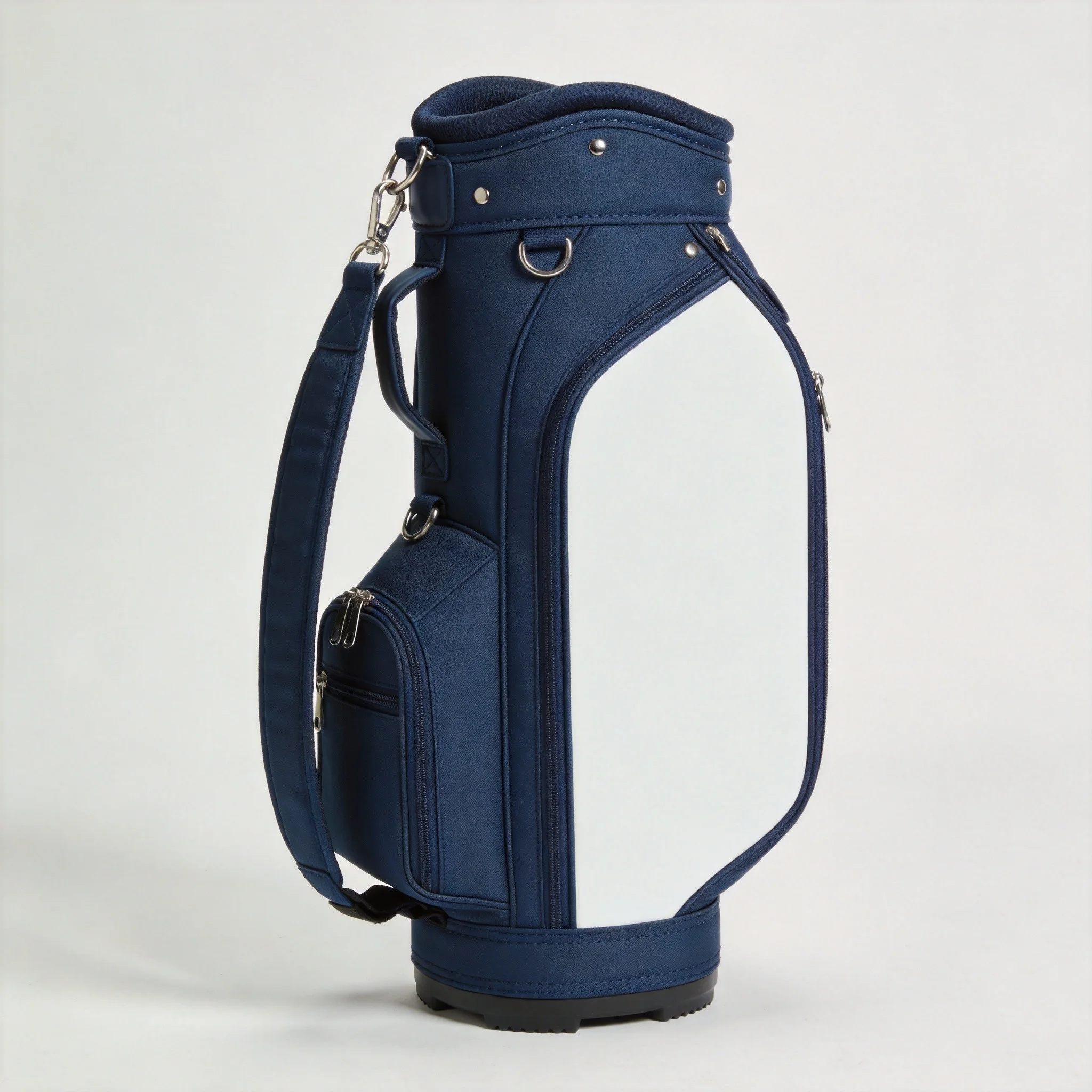
The standard MOQ for custom printed golf cooler bags is 200 pieces per design and colourway, with a 100-piece test tier for validating a new program before you scale up; sampling takes 10-20 days and bulk production runs 45-60 days. What you pay and how fast you get them then depends on capacity, insulation, decoration method and how many colours are in the print. This guide is written from the production floor of QUANZHOU JUNYUAN BAGS — founded in 2014, with the founder entering the industry in 2004, serving 200+ brands across 100+ countries from a 4,950 m² affiliated factory — so the numbers below are the ones a real factory actually uses, not marketing averages.
Whether you are a pro-shop owner stocking a cooler line, a resort buying branded giveaways, a corporate team seeding a golf event, or a brand building a whole cooler range, the minimum order quantity is the first number that decides whether a project is viable. Miss the MOQ structure and you either over-commit cash on a design you have not tested, or you build a program at a cost per unit that quietly erodes the margin. This guide walks you through the MOQ framework, what drives it, and how to plan an order that hits your budget and your calendar.
Why Factories Impose an MOQ at All
A minimum order quantity is not an arbitrary gate the factory puts up to make life difficult. It reflects the economics of how a made-to-order cooler bag is actually built. Every custom design needs clarity: pattern pieces, fabric and insulation cut in specific widths, printing screens or heat-transfer films, cartons and packing. These setup costs are spread across the order, so below a certain volume the per-unit price rises sharply and the whole program stops making sense for buyer and maker alike.
MOQ also protects factory scheduling. A facility running 7 production lines with 126 sewing machines and 137 employees and a monthly output of roughly 200,000 pieces has to commit machine time, cutting capacity and labour to your order. A reliable MOQ lets the factory plan fabric purchasing, schedule sewing and allocate QC inspection so that your delivery date is met. In our experience, buyers who understand this produce smoother programs — they ask for the MOQ before they ask for the price, because the two are tied together.
The Standard MOQ and the Test Tier
Across the golf cooler bag category, the conventional MOQ is 200 pieces per design and colourway. That means if you want the same cooler in four colourways, each colour is its own 200-piece commitment. This is the volume at which unit cost becomes rational, printing plates amortise sensibly, and the factory can hold quality consistent lot to lot.
For programs where you have never worked with a supplier, or where you have a new graphic you want to confirm first, the practical answer is the 100-piece test order. A test tier lets you validate four things before committing to scale: the print quality and colour match of your logo, the insulation actually keeping contents cold to spec, the feel of the fabric and zippers, and the cart-mount or strap hardware. In our workflow, a buyer who runs a 100-piece test then scales to 200+ smoothly avoids the expensive surprise of approving a full order on a sample that never matched production.
The sample-before-bulk guide explains how to make a test run productive, from brief to feedback loop.
What Drives the Price and the MOQ
Two cost families decide both the MOQ and the per-unit price of a custom printed cooler bag. The first is the bag itself: capacity, insulation thickness, liner, shell fabric and hardware. A 24-can cooler bag with a thick closed-cell foam core costs more than an 8-can personal pack, and that difference is roughly linear in materials. The second family is decoration: how the logo gets onto the shell and in how many colours and positions.
Because decoration setup is a fixed cost, pushing a single design across a larger quantity lowers each logo's share of the screen or film cost. This is why a 200-piece order with one clean screen-printed logo prices more favourably per unit than 50 pieces with a four-colour heat-transfer print. The practical rule: decide the bag, then decide the decoration, then look at how volume divides that fixed setup cost. Our cooler bag pricing guide digs into the full cost ladder.
Decoration Methods for Printed Cooler Bags
Printing is where most cooler bag MOQ decisions get confusing, so it helps to know the four common methods and how each treats minimums and colour cost. Understanding these lets you brief a decoration that meets your brand standard without inflating the MOQ.
- Screen print: the classic for flat, high-contrast logos at volume. Each colour is a separate screen, so a one-colour logo is economical and allows a lower per-unit cost at the 200-piece MOQ. Best for bold, simple brand marks.
- Heat transfer / vinyl: prints a full-colour or photographic design onto a film first, then bonds it to the shell. Great for gradients and detail, and suits smaller quantities because there is no per-colour screen set-up. Slightly higher per-unit cost than screen print.
- Embroidery: adds a woven, upscale texture. Most expensive per unit and more limited on fine detail, but the most premium look for a resort or member-only program. Works well on a dedicated branding patch or a leather-look label.
- Labels and hang tags: for a clean, fabric-brand look or for care and origin information, labels avoid shell printing entirely and keep the MOQ low with minimal setup.
A sports or event programme often mixes methods — a screen-printed main logo plus an embroidered patch for the premium tier. The logo printing and embroidery guide compares results and MOQ treatment across golf bag types.

How Capacity and Insulation Change the MOQ
Within the 200-piece framework, the specific bag you choose shifts the per-unit price even though the MOQ stays put. Higher capacity means more fabric, more foam and heavier hardware per unit, so a 24-can insulated cooler costs more to build than a 12-can pack at the same quantity. The MOQ function does not need to change — a factory can build any volume bracket at 200 pieces — but your total budget scales with the build.
Insulation is the other big variable. A typical golf cooler bag carries a 12-15 mm PE foam core, which delivers the commonly expected several hours of cold retention. Hot-climate programs or full-day events warrant a thicker 15-20 mm core plus a heat-reflective outer, which adds both material and a little production complexity. Confirm the insulation thickness and the retention target with the factory at the quoting stage, so the MOQ and price you are given match the performance you actually need.
Landing Cost: MOQ Is Only Part of the Story
The MOQ tells you how many you have to buy; the landing cost tells you what each piece truly costs in your warehouse. Beyond the FOB factory price, factor in freight, customs duties, any import duties or taxes in your market, and the cost of cartons, inserts and any retail-ready packaging. A cooler bag that looks cheap at the factory can carry a heavy freight share because it is bulky relative to its weight.
Because cooler bags are bulky, most buyers quote full container or LCL freight carefully. A few extra cents of air in packaging can add real dollars per carton. When you brief a program, ask for the packed carton size and volume so your freight estimate is honest. Full landed-cost modelling is exactly what our capacity and insulation guide and the wholesale pricing negotiation guide walk through step by step.
Timeline: Sampling and Bulk Production
Two clocks run on a cooler bag program. Sampling typically takes 10-20 days, during which the factory produces a physical sample — actual shell, insulation, liner, zippers and print — for your approval. This is where you check colour match, logo placement, capacity, and whether the insulation meets the retention you expect. Approving the sample mentally against the weather you will actually play in is the highest-leverage check in the whole program.
Once the sample is approved, bulk production runs 45-60 days depending on volume, capacity and the complexity of the decoration. A simple 200-piece run in one colour can land near the short end; a large multi-colourway order with heavy insulation sits near the long end. Add shipping time on top, and a sensible buyer works backwards from a target launch date to set the factory prompt. The full order path — from inquiry to delivery — is laid out in our order process guide.
| Cold-Retention Assumption | Recommended Foam | MOQ | Sampling | Bulk Lead |
|---|---|---|---|---|
| Standard round, both climates | 12-15 mm PE | 200 pcs | 10-20 days | 45-60 days |
| Hot climate / full-day | 15-20 mm + reflective | 200 pcs | 10-20 days | 50-60 days |
| New program validation | any | 100 pcs (test) | 10-20 days | short run |
Representative figures; confirm exact timelines and lead with the factory at quoting, as they vary with capacity, insulation and decoration.
Planning a Program That Fits the MOQ
Once you know the framework, the question is how to shape your brand and calendars around it. The most common mistake is designing for a volume that is out of reach of the MOQ — for example, wanting sixteen colourways at a small total quantity, which fragments the 200-piece-per-colour commitment into a budget that does not math. The workaround is to consolidate: reduce colourways, or combine several small programmes into shared blanks with different print positions rather than entirely new structures.
A second practical lever is seasonal planning. Cooler bags peak in spring and summer demand. Ordering for the season well in advance, committing to a firm MOQ, and taking delivery before the wave lets you negotiate better unit pricing and secure capacity in the factory's busy window. A brand that plans a full branded cooler line ahead of the season, validates with a test tier, then releases 200+ per colourway, consistently wins on both cost and on-time delivery.
How We Handle MOQ and Test Orders
At QUANZHOU JUNYUAN BAGS the everyday framework is exactly as described: a 200-piece MOQ per design and colourway, a 100-piece test tier for new programmes, sampling in 10-20 days and bulk production in 45-60 days. We run 7 production lines with 126 sewing machines and 137 employees inside a 4,950 m² affiliated factory, turning out roughly 200,000 pieces a month, and we hold three-stage inspection on every lot. In 2026-03 the factory underwent independent SGS verification, and we ship to buyers in the US, EU, Australia, Japan and markets across 100+ countries.
When a new cooler programme comes in, the first thing we clarify is the volume bracket and the decoration. If a buyer is unsure whether a graphics style will print well on a given shell, the test tier is the cheapest way to find out. If a buyer needs a promotional one-off below MOQ, we advise on consolidating it with another design or ordering a ready stock colourway to reach the line. Straight talk about MOQ saves our buyers time and money, and it is how we have earned 200+ brand partnerships.
Ready to Brief Your Cooler Bag MOQ?
Tell us your target capacity, decoration method and volumes and we will return a spec sheet with per-unit pricing, a sampling timeline and a bulk schedule. Test orders from 100 pieces help you validate before you scale.
Request a Bulk Quote →Ways to Lower Effective MOQ for a Promotional Run
If a strict 200-piece commitment feels heavy for a one-off corporate gift, there are legitimate ways to make it more efficient. Ordering an existing stock colourway with a single screen-printed or heat-pressed logo is the leanest path — the shell is already in production, so the factory only adds decoration. Consolidating a promotional design with a matching retail order spreads the MOQ across two uses of the same blank. And if your decoration is a simple label or patch rather than full-shell printing, the effective minimum is often lower because setup is minimal.
The key is to treat MOQ as an optimisation problem, not a wall. A brand that understands how blanks, colourways and decoration methods interact can often get a branded cooler bag into a gift budget that on paper looked out of reach. That is exactly the kind of planning a good factory partner helps you do, and our corporate golf cooler events guide and 2026 cooler bag trends guide give the merchandising and branding angles.
Quality Control Across a Custom Print Run
An MOQ order is only worth committing to if the quality holds lot after lot, and that is where factory QA earns its keep. For cooler bags the failure modes are specific: leaking seams that soak the insulation, print that cracks or peels after a few washes, zippers that jam under a full load, and foam that flattens over a season. A sane programme checks these on the sample and then again during bulk with AQL sampling on every lot.
Ask the factory to confirm four things at quoting: a leak-proof liner test, a retention time stated under defined conditions, print adhesion on the actual shell fabric, and a closure that passes a loaded abrasive check. When those are verified on the test tier, scaling to a full MOQ is low risk. The quality control testing standards guide lists the checks a serious cooler bag should pass.
Sourcing and Shipping Considerations
Because cooler bags are bulky, shipping is a real line item. Confirm the packed carton size and volume early so you can compare FOB quotes honestly against landed cost. For smaller orders, LCL consolidation works; for a strong seasonal programme, a full container brings the best freight rate per unit. Factor in your market's import duties and any certifications your retailer requires — for example, textile compliance documentation for EU or US retail listings.
A manufacturing partner that ships to your territory regularly can flag freight and compliance gotchas before you hit them. We have shipped cooler and golf bag programmes to buyers across the US, EU, Australia and Japan, and we keep compliance documents current for those markets. The EU import compliance guide and our supply chain logistics guide cover the shipping side in detail.
Order Consolidation and Multi-SKU Planning
One of the most effective ways to make an MOQ work for your business is to stop thinking in single products and start thinking in programmes. If you own a golf line, you probably order more than coolers — cart bags, travel covers, staff bags, towels and accessories all come from the same kind of factory. Because setup and logistics can be shared across a mixed order, combining several SKUs into one shipment often unlocks better freight rates and simpler container planning than shipping each product separately.
From the factory side, a multi-SKU order lets us schedule machine time more flexibly. Cooler bags use different cutting and sewing steps than cart bags, so a balanced mix that fills idle capacity actually helps us hold reliable lead times across the whole order. When you plan a cooler bag MOQ, ask how it fits beside your other branded gear in a combined order — the answer is usually that both ship more economically together, which is why so many of our brand partners run their cooler, bag and accessory lines as one annual programme rather than as disconnected purchases.
Within that combined order, treat the cooler MOQ as a shared decision rather than a fixed wall. If you are 50 pieces short of the 200-piece cooler line but are already ordering a container of other bags, the combined freight and setup logic may make it rational to top up the cooler to the line and take the better per-unit cost. The order process guide shows exactly how a consolidated programme flows from inquiry through production to delivery.
Building a realistic budget for a custom printed cooler bag starts and ends with the MOQ math. Take the target per-unit price and multiply by the full quantity — that is your product budget. Add decoration setup, which is a fixed cost independent of volume, then add freight, duties and packaging. Divide that total by the number of pieces and you have the true landed per-unit number you can price against your retail or margin target.
Because the MOQ is per colourway, watch the multiplier: three colourways at 200 pieces is 600 units of budget commitment even though the "200 MOQ" sounds modest. Plan quantity first, then colourways, and let the unit cost fall where it falls. A brand that models this honestly rarely gets surprised at invoicing, because the fixed setup costs were visible from the start. Our cost breakdown guide and the pricing factors guide give a full template for this kind of modelling.
Finally, budget in the test tier. Spending a small amount on a 100-piece validation is often the single best insurance against approving a full order on a sample that does not match production. That modest investment protects the whole MOQ commitment and is the difference between a smooth programme and an expensive re-run.
Cooler bags are a warm-season product, so calendar timing shapes how comfortably you can hold the MOQ. Demand for golf coolers climbs through spring and peaks in summer, which is exactly when factories get busy. A buyer who commits to a seasonal MOQ early — say a spring order placed in the previous winter — secures capacity, often negotiates better unit pricing, and takes delivery before the heat wave rather than after it.
Off-season orders are the mirror image of that bargaining position. A factory with soft capacity in a quiet quarter may be more flexible on a modest order that fills machines that would otherwise sit idle. If your programme can flex its timing, asking about off-peak scheduling can unlock a better deal on the same MOQ. We routinely advise buyers on the sweet spot between seasonal demand and factory availability, because matching your cooler order to the production calendar is one of the cheapest ways to stretch a branding budget.
Frequently Asked Questions
- What is the MOQ for custom printed golf cooler bags?
- The standard MOQ is 200 pieces per design and colourway. A 100-piece test tier is available to validate print quality, insulation and build before scaling up.
- Can I place a small test order before a full MOQ?
- Yes. A 100-piece test order lets you confirm printing, insulation and hardware before committing to the full quantity, and it is the lowest-risk way to start a new programme.
- How long does sampling and bulk production take?
- Sampling typically takes 10-20 days depending on design and decoration; bulk production runs 45-60 days. Add shipping time on top when planning a launch date.
- How does printing method affect cost and MOQ?
- Screen print is economical for bold, flat logos at volume; heat transfer handles gradients and detail with a slightly higher cost; embroidery is the premium option. Each colour and position adds to decoration cost.
- Can I lower the effective MOQ for a one-off promo?
- Yes: order an existing stock colourway with a single print, consolidate a promo with a retail order, or use a label or patch decoration which needs minimal setup.
- What should I check before approving a cooler bag sample?
- Confirm colour match and print adhesion, capacity, insulation retention against your expected conditions, zipper and closure quality under a full load, and the cart-mount or strap hardware.
A custom printed golf cooler bag programme starts with one number — the MOQ — and the rest follows from how you shape capacity, insulation, decoration and timing around it. With a 200-piece standard, a 100-piece test tier, 10-20 days of sampling and 45-60 days of bulk production, there is a clear and predictable path from idea to a branded cooler on the course.
For a custom cooler bag built and printed to your brand, contact QUANZHOU JUNYUAN BAGS at contact, service@junyuanbags.com, or WhatsApp +86 17750020688. Explore the available blanks via our golf cooler bags range and the custom solutions page.