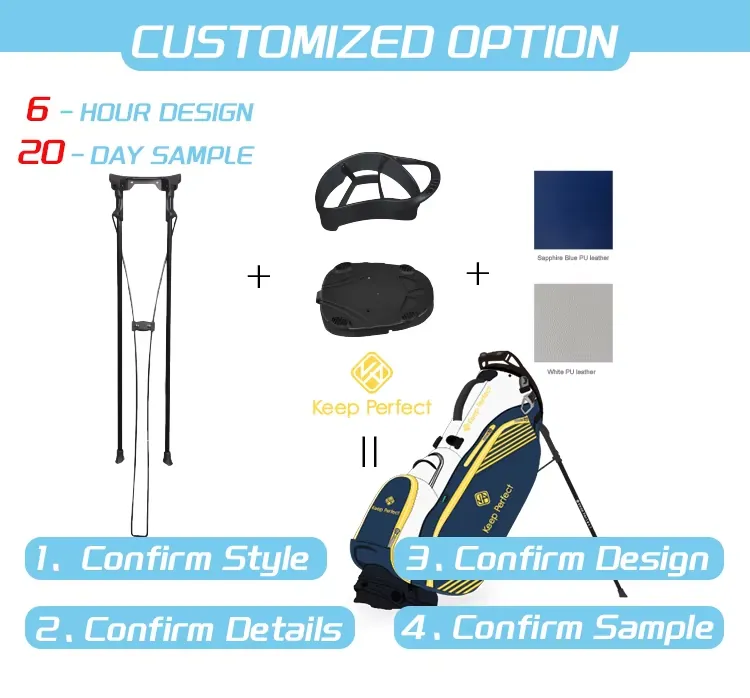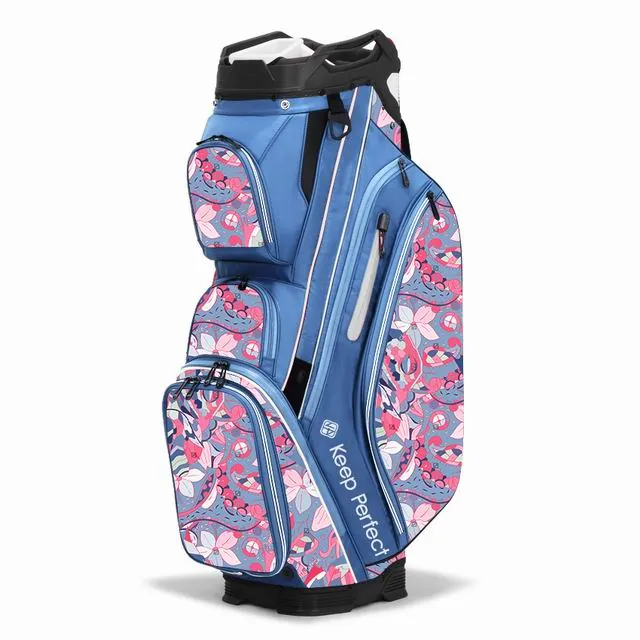
A disciplined golf bag supply chain is a measurable profit lever: an integrated OEM supplier running 7 production lines, 126 sewing machines and 137 staff can produce roughly 200,000 bags a month, serve 200+ brands across 100+ countries, and hold samples to 10–20 days and full production to 45–60 days — provided the specification, packing profile and lead-time gate are fixed early. This guide is for wholesale buyers who need a defensible answer to one question: how do you turn a golf bag inquiry into landed, duty-cleared, quality-assured cartons without blowing either the budget or the season? Drawing on official tariff frameworks, public customs guidance and the operating experience of our affiliated manufacturing network in Quanzhou, Fujian (main plant 4,950 m², founded 2014, founder in the trade since 2004), we unpack sourcing, procurement, lead-time engineering, freight, customs, receiving inspection, inventory, risk and sustainability — every link that decides whether a bulk golf bag programme wins or leaks margin.
Contact the team at service@junyuanbags.com or on WhatsApp/WeChat at +86 17750020688 to have a lead-time, packing and freight plan built for your next wholesale programme before you book a single sleeve.
A programme that protects specification, packing and season calendar rarely fails; one that does not, rarely surprises you happily.
One more discipline pays disproportionately: measuring the programme, not just the supplier. Track your own purchase order accuracy and your own forecast error side by side with the factory’s on-time rate, because the weakest link in a chain is usually not the factory. A buyer whose forecast was 40% optimistic will see a warehouse of leftover stock no matter how punctual the sewing floor is. Set the customer-facing service promise from the landed, cleared date—not from the factory ex-works date—so that everyone inside the chain is measured against the same moment the buyer actually cares about: stock available to sell. That single alignment, more than any freight discount, is what turns a competent supply chain into a genuinely optimised one.
Why Supply Chain Discipline Decides Bulk Golf Bag Margins
For buyers at scale the product is only half the story; the chain that delivers it is the other half. A golf staff bag, cart bag or stand bag is a low-margin, logistics-heavy SKU. The landed cost is the sum of the FOB price, inland haulage, ocean or air freight, marine insurance, duties, brokerage, port handling and last-mile delivery. Swing a couple of percent in any of those components and a wholesaler can erase the entire gross margin before the first unit sells. That is why professional importers treat supply chain optimisation as a profit-line function.
The levers are well understood. Buyers who lock three fundamentals — a single-version specification, a stable packing profile and a committed lead-time calendar — routinely hold landed cost inside a narrow forecast band. Buyers who renegotiate specs, change carton sizes or request split shipments after sampling pay twice: once in rework, once in freight booked on the wrong weight and volume.
Global Golf Bag Trade Flows: Where the Volume Lives
Golf bag manufacturing is concentrated in Asia, and within Asia the needle-and-thread base clusters in China’s Fujian and Guangdong provinces with secondary hubs in Vietnam and Indonesia. Golf bags are labour-intensive and sewing-heavy: a single stand bag may contain 40–120 cut parts and metres of zipper, webbing and binding tape, which makes skilled stitching capacity the scarce resource. When a wholesale price looks too good, the QC depth behind the sewing floor is almost always the omitted variable.
On the demand side, the United States and the European Union are the two largest destination regions for golf hard goods, and both apply duty structures a buyer should model before quoting a price list. Under the US Harmonized Tariff Schedule (HTSUS), golf bags fall in Chapter 42 under heading 4202 and carry a rate well below many textile headings; the EU classifies them under Combined Nomenclature (CN) 4202 with an autonomous duty that you and your broker should verify for the current year. These figures belong in your sourcing model before the order ships, not after.
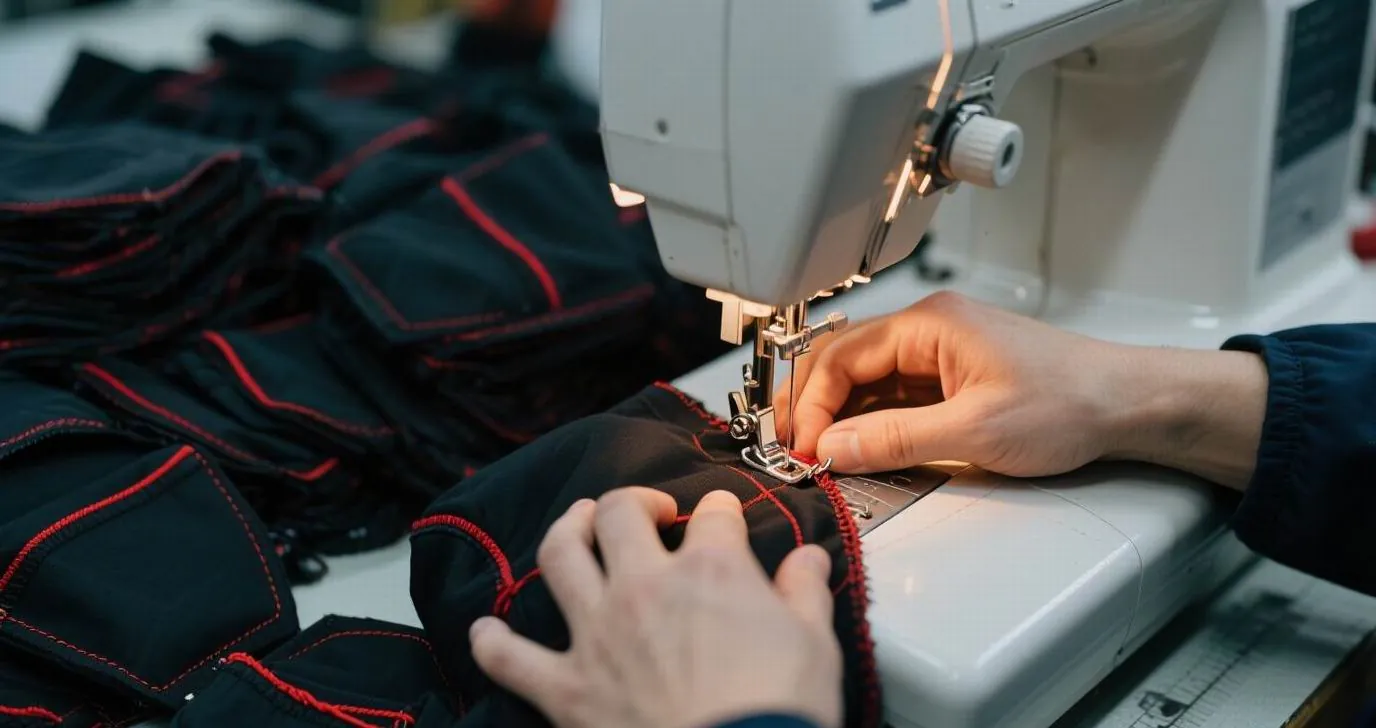
Inside the Integrated Sourcing Model at Quanzhou
Our model is an affiliated manufacturing network rather than a single walled plant. The main plant is a 4,950 m² facility in Quanzhou, Fujian, founded in 2014 by a founder who has worked in the bag trade since 2004. Capacity runs to 7 production lines, 126 sewing machines and 137 staff, supporting a printable output of about 200,000 bags a month. That scale matters for three reasons: it lets the plant hold enough matched fabric and hardware lots to keep colour and tone consistent across big batches; it absorbs sampling pressure without stealing line time from production; and it gives QC enough headcount to inspect every piece instead of a thin sample.
Because the network is affiliated and not a broker reselling another floor, we control the material list, the pattern library and the inspection gate. We have also passed an SGS on-site social and technical audit in March 2026 — a concrete data point for brands whose retail customers now audit the audit.
One structural advantage of a dedicated sewing network is the ability to keep pattern engineering, cutting and sewing on one site. Pattern files that were drafted and tested for one machine set can drift when moved to a new floor; co-locating them removes that variance. For a repeat buyer this means the 200th reorder behaves like the first: same panel shapes, same stitch gauge, same zipper pull geometry. In practice we advise brands to hold their approved sample and the corresponding measurement report as the master, and to ask for a photo-documented first-article check on every new colourway before the full batch runs. That single habit prevents the most common and most expensive failure in bulk soft-goods: a colourway that looks acceptable in a single sample photo but drifts across a three-thousand-piece batch.
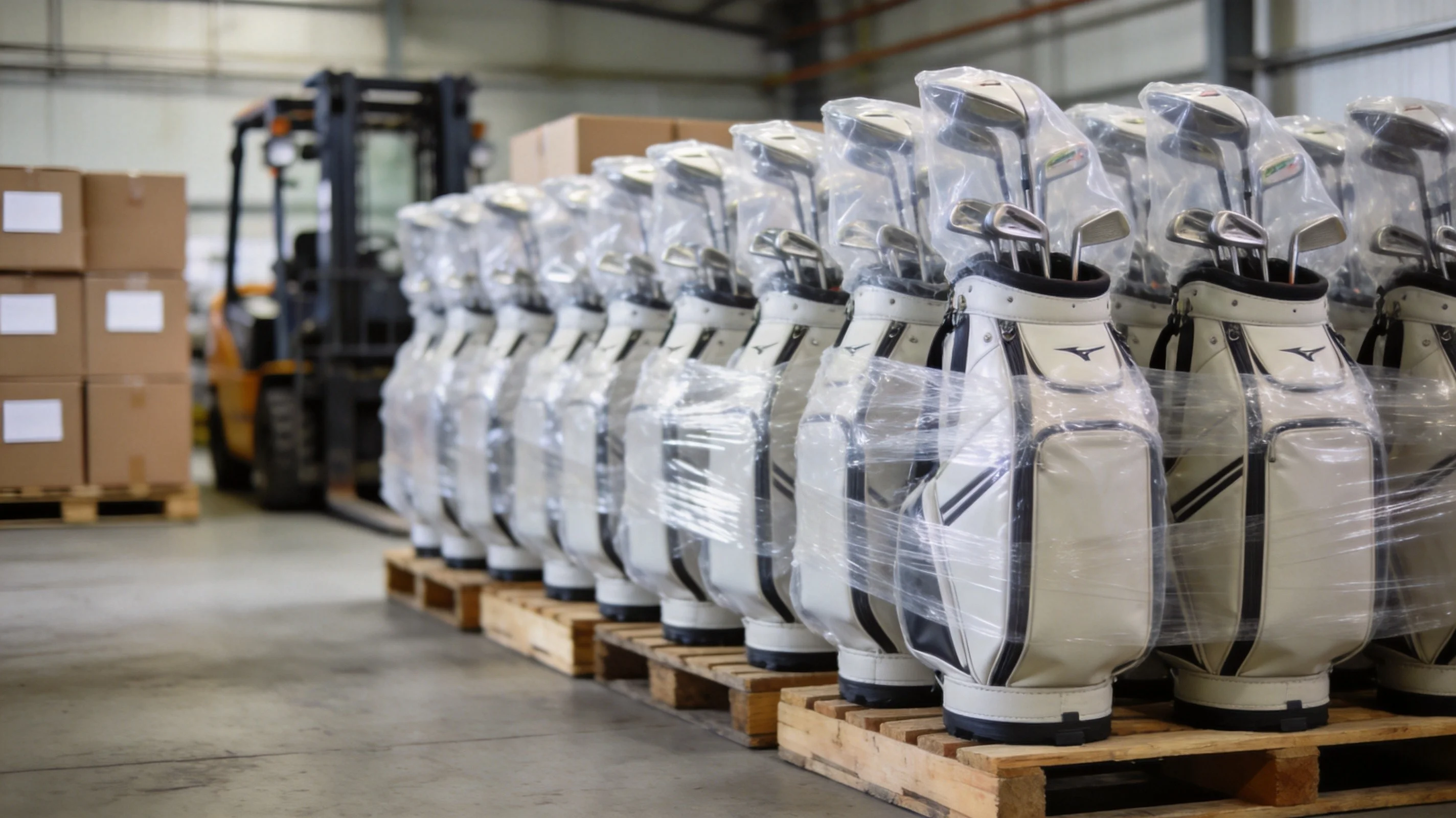
Packing is too often decided on the last Friday of a programme, and it is exactly where bulk programmes give back their best margin. Golf bags vary enormously in how they collapse. A staff bag with a rigid top opening and full-length dividers holds its shape aggressively; a travel cover or a soft stand bag can collapse flat. The skilled move is to spec the bag so that the two-dimensional collapse is controlled: fixed zipper positions, removable or hinged lumbar support, and a cut that allows the bag to lie flat without permanent creasing. When cutting and packing work together, a container carries material more efficiently and the carton stays within the dimensional weight your forwarder quoted. This is freight savings earned in product design rather than paid for in airfreight.
Raw Material Sourcing and Vendor Qualification
A golf bag is only as durable as its weakest component, and the list is long: 840D nylon and two-tone polyester face fabrics, heavy-duty zippers, coated buckles, EVA back panels, aluminium and plastic leg sets, foam padding, webbing, hook-and-loop, plus hang tags and retail cartoning. Each category should be sourced through a short list of qualified vendors, each with a written specification and an incoming-inspection record.
Ask any candidate factory for three things: a written material list naming the grade and GSM of each textile; a zipper and hardware grade statement; and evidence that lot-to-lot colour is managed by dye-lot rather than hope. Colour control alone is worth the diligence — a retail shelf of mismatched navy bags is a brand emergency. On our floor every incoming fabric lot is checked for colour, finish and weight against the approved master, and rejected lots return before they reach the cutting table.
Procurement Planning: Specs, Samples and the MOQ Reality
Procurement starts with a rock-solid technical specification, not a mood board. The spec should fix bag type, dimensions, divider count and division, pocket count and placement, strap system, leg mechanism, zipper length and gauge, print or embroidery placement, packing method, master-carton size and the inspection standard. Every number fixed here is time bought back in sampling and production.
On minimums and timing, plan on the published envelope: a standard custom run has a MOQ of 200 pieces, test orders are accepted from 100 pieces to de-risk a first trial, a sample needs 10–20 days, and full production runs 45–60 days. A programme that respects a two-week sampling gate and a 45–60-day production gate — and adds freight and buffer on top — is a programme that ships on time.
Lead-Time Engineering: From Inquiry to Port-Dated Shipment
Lead time is the most negotiated, most misunderstood number in wholesale buying. Break it into five segments and control each one, or the total drifts: (1) requirement definition and quoting, ±3–7 days; (2) sample approval, 10–20 days including a revision round; (3) material confirmation and cutting, usually the first 7–10 days of production; (4) sewing, assembly and finishing, the long middle of a 45–60-day run; and (5) final inspection, packing and handover to the forwarder, 2–4 days.
The most honest advice for a buyer is to book the sample early and freeze it. Every sample revision is a week of calendar time no factory can recover by sewing faster without cutting corners. At Quanzhou we protect the sample so the production standard is locked before a single bulk roll is cut — the single biggest de-risking move a wholesale buyer has.

Logistics and Freight Optimisation: Sea, Air and Rail
Freight is where careful buyers recover the most margin. Golf bags are bulky but not heavy, so the working metric is chargeable volume: bags spend space far faster than weight. Poly bags compress, but padded cart bags with rigid leg sets consume large CBM per piece. Packing design is therefore a freight decision — moving from a 2-piece to a 4-piece master carton that lowers dimensional weight can cut per-unit freight 10–20% at zero cost to the product.
For most programmes sea freight via FCL remains the value champion for runs of hundreds to thousands of pieces; air offers the emergency lever for samples, reorders of hot SKUs and season-critical stock; rail corridors from China to Europe sit in between on speed versus price. Model all three with your forwarder at RFQ stage so the price you quote your own customer already carries a defensible freight assumption.
Tariffs, Duties and Customs Compliance (US & EU)
Customs is where well-meaning buyers lose money by guessing. Golf bags imported into the United States are classified under HTSUS heading 4202 and the applicable rate is published by the US International Trade Commission; into the EU they fall under CN 4202 with a rate and formalities documented in the EU’s Access2Markets tool. Verify the classification and rate at booking time against those authority sources — do not rely on memory or word of mouth.
Rates change: the US has reshaped tariff schedules across consumer goods in recent years and EU duties are revised annually. Compliance data (origin, materials, value, HTS/CN code) should be captured at the factory at packing time, not reconstructed at the border. One mismatch between the commercial invoice and the packing list can stall a container and trigger storage charges that dwarf the haul that caused them.
Quality Assurance in Transit and Receiving Inspection
Quality risk travels with the carton. A pre-shipment inspection (PSI) at the factory — a statistical AQL check on the packed goods — is the highest-value QC dollar a buyer spends. Many importers also commission an independent third-party inspection on top of the factory’s own 100% department checks. After arrival, a receiving inspection should verify carton count, master-carton barcode, per-carton colour and hang-tag accuracy, and a destructive check of stitching and zipper function before stock hits the racks.
A clean handoff needs disciplined paperwork: the packing list must match the invoice, the bill of lading the booking, and the carton marks the customs documents. Any mismatch is an invitation for a hold and a storage bill.
Inventory, Warehousing and Demand Forecasting
For a wholesaler or brand, inventory policy trades stockout risk against carrying cost. Golf is seasonal — the northern-hemisphere peak window runs spring into early summer — so a forecast that captures the season, the reorder pipeline and the 45–60-day factory lead time plus its shipping window is the backbone of the plan. Under-forecast and you miss the season; over-forecast and you hold cash in cartons through winter.
Operationally, separate the forecast (volume) from the commitment (firm orders) and keep reorders tight: lock a base quantity, then use the factory’s lead time as the reorder trigger. A reorder placed the day stock enters the warehouse, not the day it nearly runs out, is the difference between a full season and a clearance rack.
Risk Management and Contingency Planning
Every working supply chain carries risk: port congestion, container volatility, capacity spikes, fabric-price swings and sudden tariff announcements. The professional response is posture, not prediction. Concretely: hold a second qualified factory or freight corridor in reserve; keep safety stock on slow-moving hero SKUs; and write contracts with quantity flexibility at the margin rather than rigid take-or-pay volume on an unproven design.
Our 200+ brand / 100+ country footprint shows how resilient buyers behave: they commit early, freeze specs and never charter a one-off crisis lane without first re-testing the two obvious answers — ship by sea two weeks earlier, or split the order across two production windows.
A second, often underestimated cost is the documentation loss during a long move. Commercial invoices, packing lists, bills of lading, certificates of origin and, for some markets, SGS or third-party inspection reports all have to arrive in the buyer’s hands in the same state they left the factory. In our experience the cleanest way is to digitize every document line at the packing stage: carton marks, weights, piece counts and the HTS/CN code on each master carton. When the receiving warehouse can reconcile the physical cartons against a digital packing list in minutes rather than days, both customs clearance and downstream stock accuracy improve measurably.
Finally, think about how the golf bag market season actually breathes. Retailers and pro shops commit to spring programmes in the preceding autumn, which means the buying decision and the factory booking often happen against a different freight rate and a different duty environment than the delivery quarter. A buyer who locks both the factory lead time and a freight rate band at booking time protects the programme from the two variables most likely to move: ocean freight and any mid-year tariff change. Forcing those two to be fixed at quote time — even as a corridor with a cap — is the difference between a forecast that holds and a forecast that quietly rewrites itself.
Sustainability and Compliance in the Chain
Sustainability has moved from a marketing sticker to a supply-chain requirement, especially for EU-facing brands subject to packaging and due-diligence expectations and US retailers with responsible-sourcing programmes. Practical, low-cost levers: recycled or bluesign-tracked fabrics, reduced package weight, cartons sized to kill dimensional-weight waste, and sites that can evidence a social-compliance audit. A March 2026 SGS audit of our Quanzhou main plant is exactly the document-chain evidence an EU or US retail buyer asks to see.
The cheapest sustainability win in a golf bag programme is packing: a properly collapsed carton that ships the same volume in less CBM cuts both freight and packaging waste. Design for transportability first, and the sustainability story follows naturally.
Key Supply Chain Performance Metrics
| Metric | Typical Value | Why It Matters |
|---|---|---|
| Sample lead time | 10–20 days | Fixes the product standard early |
| Production lead time | 45–60 days | Drives season-calendar planning |
| Standard MOQ | 200 pcs | Minimum efficient custom run |
| Test-order MOQ | 100 pcs | De-risks a first programme |
| Monthly capacity | ~200,000 bags | Supports large wholesale volume |
| Lines / staff | 7 lines / 137 staff | Line depth protects QC headcount |
| Sewing capacity | 126 machines | Stitching is the bottleneck resource |
| Landed-cost leakage | <5% target | Freight and duty leakage erode margin |
Frequently Asked Questions
- How long does a custom golf bag sample take?
- A standard custom sample, including pattern, cutting, sewing and finishing, typically needs 10–20 days. The clock starts when the technical specification is frozen, so lock the spec before counting.
- What is the production lead time for a bulk order?
- Full production runs 45–60 days from material confirmation depending on bag complexity and colour count. Add freight and customs windows on top to schedule a port-dated arrival.
- What is the minimum order quantity for custom bags?
- The standard custom MOQ is 200 pieces, with test orders accepted from 100 pieces so a brand can validate product and process before a full run.
- How do I calculate landed cost and avoid margin leakage?
- Landed cost equals FOB plus freight, insurance, duty, brokerage, port handling and last mile. Verify the duty against the official HTSUS or EU CN rate at booking, and model freight on chargeable volume, not gross weight, because golf bags are bulky.
- Do you ship to the US and the EU?
- Yes. We ship to 100+ countries for 200+ brands, with sea (FCL), air and rail-lane options, and a licensed forwarder can manage the customs documentation on route.
- How do I ensure quality on a long-distance bulk order?
- Require a pre-shipment inspection (AQL statistical check) before the goods leave and a receiving inspection on arrival. Our Quanzhou main plant is SGS-audited (March 2026) and runs its own 100% department checks.
Sources
Duty and classification references in this guide can be verified against these official sources:
- US Harmonized Tariff Schedule (HTSUS) — USITC — official heading 4202 rate lookup for golf bags.
- US Customs and Border Protection — import entry and classification requirements.
- European Commission Taxation & Customs Union — EU customs duty and combined nomenclature.
- EU Access2Markets — current CN duties and import formalities.
- US International Trade Administration — market intelligence for consumer-goods importers.
Explore wholesale golf bag sourcing, review wholesale pricing and talk to the factory-direct team. For custom private-label work, see OEM/ODM services and custom solutions.