Key Factors to Consider When Buying a Custom Golf Stand Bag
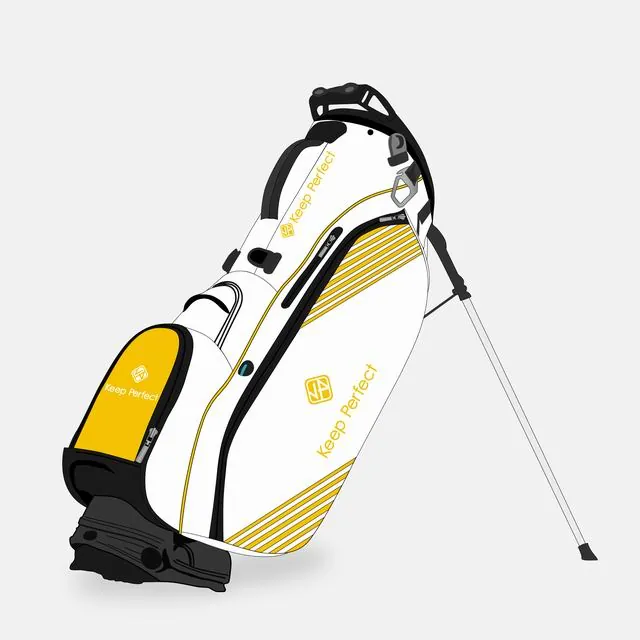
The seven factors that decide whether a custom golf stand bag programme succeeds are target-user fit, material and build quality, the stand and dual-strap system, divider and pocket layout, branding options, MOQ and pricing, and factory QC — with a standard 200-piece MOQ, 100-piece test order, and 10-20 day sampling plus 45-60 day bulk production framing the whole engagement. A custom stand bag is a product built for a specific walker, so every choice should trace back to who carries it and how. This guide lays out each factor in priority order, written from the production floor at the QUANZHOU JUNYUAN BAGS affiliated facility, which runs 7 lines and 126 sewing machines serving 200+ brands across 100+ countries.
Define the Target User First
The fastest mistake in custom stand bags is designing for a generic "golfer" instead of a specific one. Your buyer's height, strength, and whether they walk or ride determine weight budget, strap fit and feature set. A junior or smaller-framed walker needs a light, well-balanced bag with a comfortable harness; a broader-shouldered player can carry a fuller-featured bag.
Document the target user and use case before touching material specs — it decides every downstream decision. If you are unsure how to translate a user profile into a bag specification, our sizing and fit guide converts height, build and playing style into concrete bag parameters.
Materials and Build Quality
Material selection drives both durability and price. High-denier nylon or polyester shells resist abrasion; TPU or PU laminated versions add waterproofing for wet climates. The stand bag's seams, zippers and base reinforcement determine how long it survives daily drops and heavy use — the features that separate a one-season bag from a multi-year one.
When pricing, remember that stand bags are labour-intensive: the stand mechanism, dual straps and multiple pockets add construction hours that affect unit cost. Balance performance against cost honestly. Our materials comparison and durability analysis give you the framework for both sides of that decision.
The Stand Mechanism and Carrying System
The stand and the harness are the stand bag's most distinctive engineering. A lightweight, sturdy stand must open reliably and keep the bag upright on uneven ground across thousands of cycles; the dual-strap system must distribute weight comfortably. Both are high-wear components where quality — spring tension, leg pivots, strap padding and anchoring — determines real-world lifespan.
Test these components hard in your sample: open and close the stand repeatedly, walk with the bag loaded, and check the strap anchoring. The stand-bag-specific testing procedures are laid out in our long-lasting stand bag guide.
| Factor | What to Evaluate | Why It Matters |
|---|---|---|
| Target user | Height, strength, walk vs ride | Sets weight and fit budget |
| Materials | Denier, laminate, seam spec | Determines durability and price |
| Stand system | Open/close cycles, stability | High-wear, defines lifespan |
| Dividers & pockets | Count, layout, access | Drives usability and cost |
| Branding | Embroidery vs print | Brand impact and quality risk |
| MOQ & price | 200 pcs, 100 test, volume breaks | Defines business model |
| Factory QC | Audits, inspection rights | Protects the actual batch |
Divider Layout and Pockets
The internal layout is what golfers interact with every round. Divider count — from 4-way to 14-way — trades club organisation against bag weight and access speed. Pocket placement and sizing determine where balls, tees, rangefinder, wallet and rain gear live. Too many compartments add cost and weight for marginal benefit; too few frustrate on course.
Match the layout to the target user's actual needs. A walker who values fast access may prefer fewer, better-placed pockets; a player who carries a lot of gear needs more capacity. Our storage compartment guide and divider comparison help you spec the right internal architecture.
Branding, Colours and Decoration
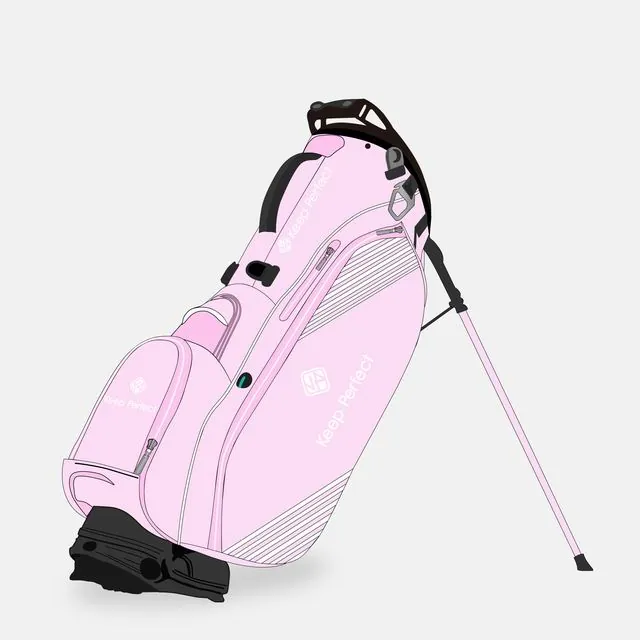
For a custom bag, branding is the point. You can specify shell and accent colours, place your logo via embroidery for a durable premium finish or printing for colour complexity, and add brand-labelled hardware like zipper pullers. Colour matching to Pantone references must be agreed and checked on the sample.
Decoration concentrates the most visible quality risk — logo placement, thread tension and colour accuracy need careful inspection. Because it is customer-facing, it deserves as much attention as the structural build. For the full options set, our logo and embroidery guide compares decoration methods for every bag type.
MOQ, Pricing and Lead Times
The commercial framework keeps the project viable. Expect a standard 200-piece MOQ per design with a 100-piece test order for market validation. Sampling runs 10-20 days, bulk production 45-60 days, and freight adds 10-25 days — plan roughly 70-90 days total. Unit price follows materials, construction complexity, decoration and volume, so consolidate designs to control cost.
Two resources make the numbers concrete: our MOQ and pricing guide for stand bags and custom bag pricing analysis lay out real levers and negotiation logic.
Factory Quality Control and Verification
Never trust a catalogue photo. Establish documented quality control: check the factory's certifications and audit history, insist on a physical sample review, and reserve the right to a third-party pre-shipment inspection on the actual batch. A factory running in-line checks at cutting, sewing and finishing, plus a final inspection, is one you can rely on at scale.
Verified QC turns a single order into a repeatable business. For the certification standards and the exact inspection checks, our factory certifications guide and QC testing standards are the definitive references.
Ready to Source Custom Stand Bags?
We help brands translate a target-user profile into a manufacturable stand bag — from ODM base designs to full custom builds, with transparent MOQ and documented QC.
Start Your Stand Bag Project →A Checklist Before You Commit
Before placing the order, run this checklist: a written target-user profile; a material and seam spec with durability targets; confirmed stand and strap components; a divider and pocket layout matched to use; agreed Pantone colours and decoration method; a signed MOQ, pricing and lead-time schedule; and a documented QC and inspection plan. Walk the checklist line by line and a custom stand bag programme becomes a predictable, profitable product.
Stand Bag vs Cart Bag: Get the Category Right
The first and cheapest decision is choosing the right category, because a custom programme is expensive to restart. A stand bag is built for walkers who carry: it adds a stand-and-leg mechanism and a comfortable harness, and tends to be lighter and more balanced so it rides well on the back. A cart bag is built to sit on carts and trolleys, often lighter in the right places for that role with a lower, stable profile but no stand. Choosing the wrong one forces you to design around a bad foundation.
Ask which of your target users actually walk and carry, ride a cart, or mix. If the core buyer walks a full 18 with the bag on their shoulders, stand bag is the category; if they ride and care mostly about cart-mounted organisation, a cart bag serves better. Our stand vs cart bag comparison and category differences help you lock this before committing budget.
Choosing the Stand Mechanism for Your Terrain
The stand mechanism is the stand bag's defining engineering, and matching it to terrain protects the bag and the walking experience. Systems differ in how the legs deploy, how wide and stable they sit, and how reliably they retract; a bag whose stand destabilises on slopes frustrates on hilly courses and risks the bag tipping. Evaluate the mechanism in the conditions your users actually face — flat parkland versus steep links or hilly terrain — and favour a mechanism with a generous, stable leg spread and positive lock.
The mechanism is also a high-wear component that cycles thousands of times, so ask how the factory tests it for open-and-close reliability and whether the reason mechanism can be serviced. Choosing a proven mechanism from a factory with verified testing of the stand saves you field failures later. For the deeper test procedures, our stand durability guide is the reference.
The Ergonomics of the Carry Experience
Ergonomics decides whether your stand bag gets used or resented. The dual-strap harness must distribute weight comfortably, with padding that sits right and adjustable geometry that fits the range of body types in your market; the bag must hold its balance on the back rather than tipping or sliding. Weight distribution matters as much as total weight — a well-balanced three kilograms can carry better than a badly balanced lighter bag, because where the load sits governs how it feels.
Design the harness and balance for your primary user profile and validate them with physically trying the bag loaded. For the principals behind a comfortable, balanced carry, our ergonomic design and comfort design guides cover padding, balance and strap geometry in detail.
Balancing Features Against Weight and Cost
Every feature on a stand bag — more dividers, more pockets, a bigger stand, heavier hardware — adds weight and cost. The discipline of a good custom spec is deciding which features earn their place for your buyer and cutting the rest. A walker who values fast access may prefer fewer, better-placed pockets over maximum storage; a golfer carrying a lot of gear needs the capacity and will accept the gram. Every added gram is carried for 18 holes, so weight is a genuine cost, not a nitpick.
Set a weight budget from your target user and hold it during development, testing that each feature justifies its contribution to the total. Our weight and portability analysis and bag weight breakdowns give you the data to trade features against weight honestly.
Working With Your Factory on Custom Stand Bags
A custom stand bag is a collaborative build, so choose a partner whose process matches a real schedule. Confirm the MOQ and pricing structure — typically a 200-piece standard with a 100-piece test order to validate demand — and lock the lead times: sampling runs 10-20 days and bulk production 45-60 days after approval, with freight on top. Agree an itemised quote covering materials, construction, decoration and tooling, and the QC and inspection plan including your right to a pre-shipment inspection. A factory that documents these steps, as the QUANZHOU JUNYUAN BAGS facility does across its 7 production lines, turns a custom order into a repeatable product.
The design process itself happens best over samples: approve a physical sample for materials, stand function, harness ergonomics and branding before sealing a spec, and use the ODM base designs to accelerate to market when a full bespoke build is more than you need. Our custom stand bag branding guide and OEM/ODM process guide walk through launching efficiently.
A Practical Buying Checklist
Close your sourcing with a scoring checklist that prevents slips: a written target-user profile; the bag category locked (stand for walkers); a stand mechanism proven for your terrain with factory testing; an ergonomic dual-strap harness validated on the loaded sample; a weight and feature balance you can defend; itemised MOQ, pricing and lead times in writing; and documented QC with a pre-shipment inspection right. Score each candidate against these and you will pick a stand bag that sells, carries well and lasts — and you will avoid the most common sourcing regret of investing in the wrong foundation. For one more layer of buyer assurance, our wholesale quality standards gives the checklist to run on the actual goods.
One factor that buyers underestimate is the influence of the fabrics and finishes on both cost and perceived quality, because the shell is the first thing a customer sees and touches. A high-denier, well-textured shell reads as premium and survives years of course handling, while a thin, generic fabric fades and scuffs quickly. Colourfastness under UV, the quality of the laminate or coating, and how the fabric behaves at the seams all contribute to the bag that arrives at your customer's door versus the sample you approved. Specify the shell with durability and brand identity in mind, and confirm the sample matches the production fabric so the delivered goods look and perform as designed.
Finally, consider how the whole programme will be serviced after it ships. A stand bag that can be repaired, whose components are available and whose tolerances are documented, is easier for you to support through warranty, after-sales and repeat orders. Establishing the QC, inspection and warranty terms in writing at the start — rather than discovering them only when a problem appears — protects your brand and keeps happy customers returning. These are the business details that turn a well-built stand bag into a durable, profitable product line, and they deserve as much planning as the bag itself.
When you move from comparing candidates to actually building the bag, a few practicalities will make or break the programme. Keep the design disciplined and the feature set defensible, since every added pocket and divider costs weight and money without always adding value your buyer perceives. Insist on a physical sample review in your own hands before you sign off the bulk, and use it to confirm every factor this guide has flagged: stand reliability, harness comfort, divider layout, shell quality, branding reproduction and the base build. And take the time to fix the details on that sample — colour match, logo placement, seam feel — because changes are cheap at sample stage and expensive once the line is running.
The other practical reality is that a custom programme lives or dies on communication and documentation. Keep the target-user profile, the spec sheet, the MOQ, pricing, lead times and QC plan all in writing, and agree them with your factory before production starts rather than discovering differences later. An ODM base design accelerates the process when you are new to the category; full OEM customisation gives you complete control when you know exactly what you want. Worked through with discipline, a custom stand bag becomes not a one-off project but a product that grows with your brand across seasons.
The team behind the bag matters as much as the bag itself, because a custom programme succeeds on collaboration. Choose a factory you can communicate with clearly, one that asks the right questions about your target user and gives honest answers about feasibility, lead time and cost rather than promising whatever you want to hear. The reference facility behind this guide, QUANZHOU JUNYUAN BAGS, was founded in 2014 and its principal has been in the industry since 2004, giving it two decades of production experience filtered through a documented SGS audit passed in March 2026 — the kind of depth that turns a spec sheet into a reliable product. Look for that mix of experience, transparency and verified quality when you choose your partner.
Finally, keep the seasons in mind: golf is cyclical, and curating your programme around the timing of demand — entering production off-peak, planning lead times around peak-season capacity — saves money and protects your delivery commitment. Work with your factory to plan production windows, sample early, and reserve capacity for your verified winners. A stand bag programme managed this way is not a single purchase but a repeatable, scalable engine, and that is precisely what turns a well-specified bag into a durable commercial success.
One more factor that deserves a place at the top of your list is the factory's ability to protect your brand identity through the details of decoration. Embroidery, screen printing, debossing and full-shell branding each carry different cost, durability and visual quality, and the right choice depends on your design and your budget. Confirm the decoration reproduces cleanly at sample stage — thread counts, colour matching and proof layout — because a premium shell is wasted if the brand mark on it is fuzzy, off-hue or likely to crack after a season. The logo is the part of the bag your customer sees and remembers most, so give the branding of your custom stand bag the scrutiny and the QC it deserves.
Finally, look for evidence rather than claims in everything you verify, because a custom bag programme rests on trust earned through testing, documentation and feedback. Ask which durability and QC tests the factory runs on stand bags, request the results and switch revision dates, and see actual samples or a video of the production line rather than relying on catalogue photos. Confirm the factory's stated capabilities — how many production lines, how firmly the MOQ and lead time are quoted, and how a documented audit such as the 2026-03 SGS verification backs the operation. Evidence-based verification like this is what separates a supplier you build a line on from one you take a gamble on.
Sources
Frequently Asked Questions
- What is the minimum order quantity for a custom golf stand bag?
- A standard MOQ for a custom stand bag is typically 200 pieces per design, with 100-piece test orders available to validate a new market. Higher volumes lower unit cost as fixed setup costs are amortised.
- What makes a good custom golf stand bag?
- A good custom stand bag balances a reliable dual-strap carry system, a sturdy lightweight stand mechanism, a functional divider layout, well-placed pockets and weather protection — all matched to its target user's height, strength and how they play.
- How long does producing a custom stand bag take?
- Sampling typically takes 10-20 days, then bulk production takes approximately 45-60 days after sample approval. Including freight, plan roughly 70-90 days from kickoff to delivery.
- Can I fully customise the colours, dividers and branding of a stand bag?
- Yes. You can specify shell colours, divider count and layout, pocket configuration, stand type, logos, embroidery and hardware. ODM base designs are faster; full OEM customisation gives you complete control at higher development cost.
- How do I check the quality of a stand bag before a bulk order?
- Order and physically inspect the sample: stand mechanism durability, strap anchoring, seam strength, zipper glide, divider integrity and logo reproduction. Confirm your right to a third-party pre-shipment inspection on the actual batch.