Wholesale Golf Stand Bags: Quality Standards for Bulk Buyers
Quick Answer
Wholesale golf stand bags must meet quality benchmarks including material tear strength (minimum 25N), zipper durability (10,000+ open/close cycles), seam pull strength (150N+), and waterproof coating performance. Bulk buyers should require AQL-based inspection standards, third-party testing reports, and a factory whose production capability is backed by verifiable capacity. Consistent quality across batches depends on the factory's raw material traceability systems and standardized assembly protocols.
For B2B buyers purchasing golf stand bags at volume, the quality standard that matters is the one that is written into the specification, verified through a multi-gate inspection under an AQL sampling plan, and backed by a factory whose real capacity—lines, machines, headcount and audit history—can withstand the pressure of a bulk run. Quality in wholesale is not a marketing adjective; it is a measurable, inspectable contract between buyer and factory. This guide sets out the concrete quality standards bulk stand bag buyers should specify, inspect and enforce, with the physical tests, the acceptance thresholds and the documentation that turn “good quality” from a vague hope into a checkable specification.
Defining Quality Before the Bulk Run
The first principle of wholesale quality is that it must be defined in writing before production starts. A standard that exists only in the buyer’s head, or in vague phrases like “make it good,” cannot be inspected against and cannot be defended in a quality dispute. The professional standard is a written specification sheet covering dimensions, weight, materials, construction, stitching, hardware and finish, plus an agreed defect classification. In our affiliated factory this specification is locked at sample approval, so the production line and the inspection team work against the same fixed reference the buyer signed off. Anything defined after the run is negotiation, not quality control.
Wholesale golf stand bag quality standards for bulk buyers rest on MOQ, fabric grade, seam construction, stand hardware and AQL sampling.
A common mistake among first-time bulk buyers is to focus quality attention almost entirely on the visible surface—the fabric and the logo—while the load-bearing and mechanical components receive no specification at all. In a stand bag, the seams around the club pocket, the attachment points of the stand legs and the base, and the stitching that holds the bag together under the loaded weight are where premature failure actually happens. A quality specification that omits seam strength, stitch density and hardware pull strength is effectively specifying only the skin of the product. The difference between a stand bag that lasts two seasons and one that fails in weeks is usually invisible in a photograph and entirely visible in the test report.
Finally, quality in wholesale is a relationship asset, not just a delivery checkpoint. A factory that has worked with a brand across seasons accumulates the exact tolerances, preferences and inspection habits that brand requires, so that recurring programmes get faster and cleaner with each cycle. Each audit, each inspection report and each clean or corrected batch becomes part of the shared operating knowledge between the two parties. Buyers should therefore treat the quality file as a living relationship—updating the specification as the product evolves, recording what worked and what did not, and carrying that baseline forward—so that the quality they receive is not a one-off effort but the steady output of a mature partnership.
The practical consequence of a well-specified quality standard is felt in the numbers that matter to a business: fewer returns, fewer customer complaints, lower inspection-rejection rates and, over time, better pricing, because a predictable low-defect programme is cheaper for a factory to run than one riddled with rework. Quality control is therefore not a cost to be minimized—it is an investment that compounds. The buyer who specifies clearly, inspects seriously, documents completely and builds a long relationship with a factory whose real capacity is verifiable gets a supply chain that delivers consistent stand bags order after order, season after season. That consistency is the true return on the discipline described throughout this guide.
A final word on documentation format: keep the quality record digital, versioned and shared. The specification, the test reports and the inspection findings should live in a format both parties can reference instantly, with a clear version number every time the spec changes, so there is never any doubt about which version governs the current run. When disputes arise—and in a long sourcing relationship a few will—the versioned record resolves them in minutes instead of weeks, because both sides are looking at the same agreed document. This is the quiet discipline that keeps the business moving while others are still arguing about whose memory of the specification is correct.
For the buyer, quality standards and the commercial terms should be agreed as one package rather than two separate conversations. The price, the specification, the inspection gate, the defect handling rule and the documentation requirement all define what is being bought, so they belong in the same confirmation. When they are agreed together at sample approval, there is no later ambiguity about whether an inspection is included in the price or whether a defective batch carries rework cost. This bundling is the difference between a clean, enforceable bulk programme and one that unspools into disputed invoices when something goes wrong—and in wholesale golf stand bags, where volumes and values are large, that clarity protects the margin on every order.
One of the most useful tools a buyer has at qualification time is the mock order—a paid small run, ideally at the 100-piece test quantity, treated exactly like a real commercial order. It tests not only the product quality but the full operational behaviour: how the factory responds to a spec, how it communicates through the sampling gates, whether it meets the promised dates, and whether the inspection documentation it promises actually arrives. Because the quality of the working relationship determines the quality of the product across a whole season, the mock order reveals more about future performance than any amount of sample-room touring. Many experienced buyers make this small, deliberate test a standard step before the first large commitment.
That is why the most reliable wholesale buyers request the physical test data, not just a sample. They ask which tests the factory can run in-house, what the process limits are, and whether the fabric supplier’s own test certificates are retained on file. A factory that traces its materials—keeping the lots, supplier certificates and test results behind each run—gives a buyer a quality chain that can be audited. This traceability is particularly valuable when a batch recurs season after season, because the solid record proves that this season’s bags match the quality of the approved programme rather than drifting.
There is a subtlety in how a quality standard is applied at scale that separates disciplined factories from the rest: consistency across the batch. A single beautiful sample proves nothing about a thousand bags, because the challenge of bulk production is keeping every unit inside the tolerance while the line runs. The disciplined factory checks not just that units match the sample but that variation stays within agreed limits across lines, shifts and days—tracking stitch count, seam alignment and hardware fit at defined checkpoints so that drift is caught early. The buyer’s protection here is the in-process gate and the documentation behind it, which is why a factory that can show per-line check logs is inherently more trustworthy than one that exhibits only a polished sample room.
The other subtlety is the treatment of rework. In a well-run bulk programme, some units will fall outside tolerance and be set aside for rework or rejection—this is normal and healthy, and a factory that reports it transparently is protecting the standard. What is not acceptable is a factory that quietly releases borderline units into the packed batch to “make the numbers.” The professional contract between buyer and factory is that defects are either reworked to spec or excluded, and that the final inspection catches whatever remains. Agreeing this handling rule in advance, in writing, keeps the release decision honest.

The Physical Tests a Stand Bag Should Pass
| Quality attribute | What is verified | Typical method |
|---|---|---|
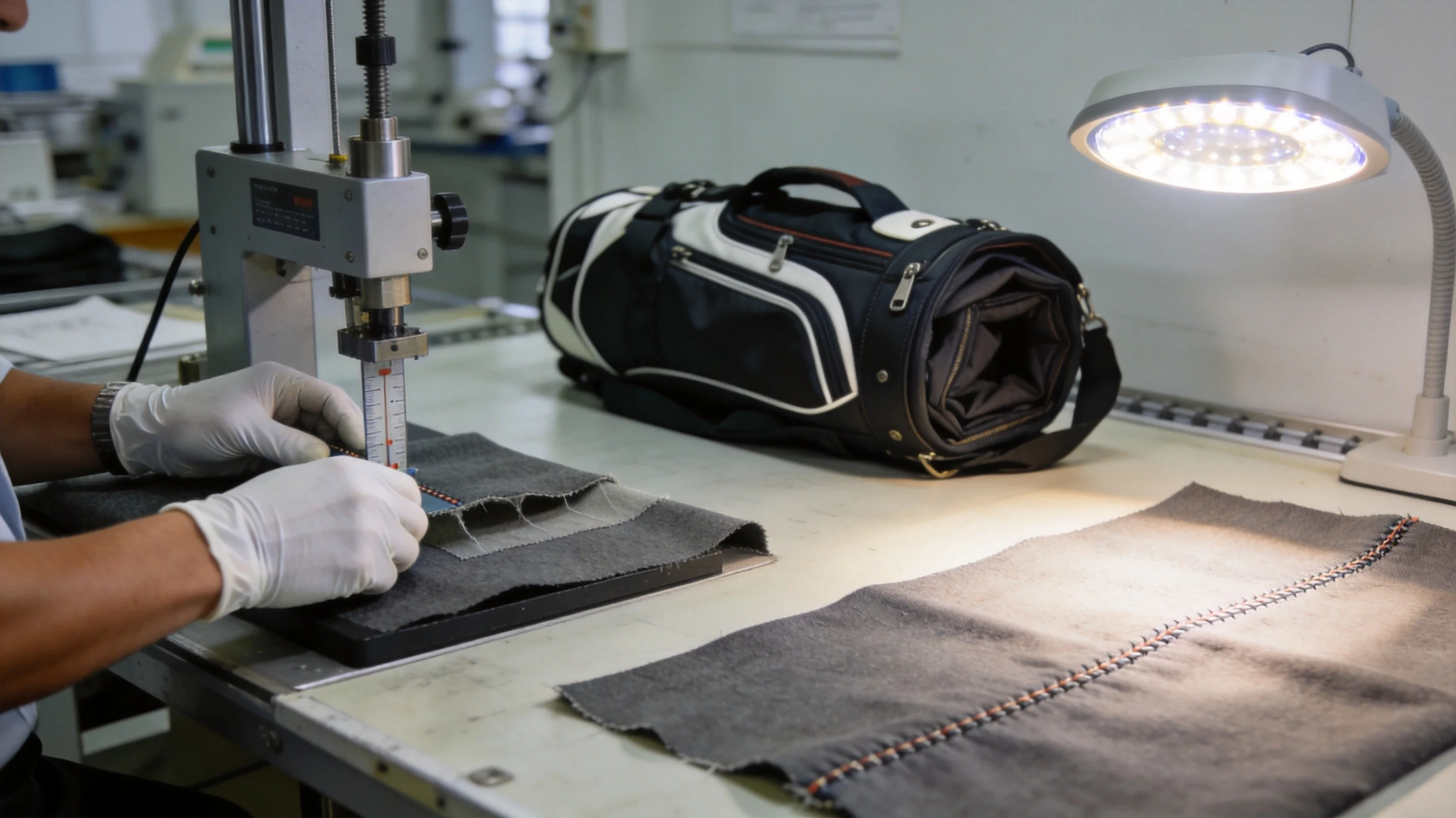
| Tensile strength | Fabric and seam resistance | Breaking-force test on fabric & seams |
| Colour fastness | Dye permanence to light & rubbing | Grey-scale wash & crocking test |
| Stand mechanism | Deployment & durability | Repeated open/close cycling |
| Zipper & hardware | Sliding, locking & pull strength | Cycle test & pull-load test |
| Stitch integrity | Seam opening under load | Seam-slippage & seam-strength test |
| AQL acceptance | Packed-batch defect rate | AQL sampling: critical/major/minor |
These tests are not academic. They are the standard evidence that finished units actually meet the specification, and they are the basis on which a buyer’s inspection team either accepts a shipment or flags it. A factory that can run these tests in-house and produce reports is far easier to qualify than one whose quality claim rests only on a promise. The specific limits—the acceptable breaking force, the colour-fastness grade, the stand-cycle count—should be written into the specification so both sides inspect to the same numbers.
Why the Stand Mechanism Is the Quality Anchor
For a stand bag, the stand mechanism is the component that most defines the product, and the one most likely to fail if quality is skimped. The legs, the hinge and the balance must deploy reliably, support the loaded bag and survive repeated use without bending or jamming. This is an engineered moving part, not a cosmetic one, so it carries its own test—a repeated open/close cycle count—and its own material grade in the specification. A bulk buyer who wants stand bags that will not embarrass the brand should give the stand mechanism its own quality line, its own inspection checkpoint and its own acceptance threshold.
The Multi-Gate Inspection Process
Quality in a bulk run is protected by inspecting at multiple points, not once at the end. In our workflow the gates run: incoming material on receipt, work-in-progress checks on the sewing lines, a mid-production sample against the approved unit, and a final AQL-based inspection of the packed cartons before loading. Each gate produces a written report the buyer can request, which builds a complete quality record for the order. This structure means defects are caught at the stage where they are cheap to correct, rather than discovered after the container has sailed. Buyers who schedule an independent third-party inspection into the same gates get an additional layer of verification without slowing the line.
Understanding AQL and Defect Classification
AQL—acceptable quality limit—is the statistical standard that governs how many defects are acceptable in a sampled batch. It classifies defects into critical (unacceptable, potentially hazardous or face the product unusable), major (likely to affect function or saleability) and minor (cosmetic, not affecting function). The buyer and factory agree the AQL limits in advance, typically expressed with upper limits like 0/2.5/4.0 for critical/major/minor. A professionally specified bulk order states its AQL in the confirmation, so that a non-conforming shipment is a measurable breach, not a matter of opinion. This is the single clearest way to make stand bag quality enforceable.
Inspection Sampling: Random, Representative, Documented
The way units are sampled for inspection determines whether the result means anything. Sampling should be random across the batch, drawn from different lines and different packing points, so that the sample represents the whole order rather than the best cartons. Each inspected unit is checked against the specification and the physical test thresholds, and the findings are recorded per unit so the buyer can see exactly what passed and what did not. A documented inspection is the basis for accepting, re-working or rejecting a shipment with confidence; an informal “look at a few bags” is no protection at all for a bulk investment.
Packaging and Labelling as Quality Criteria
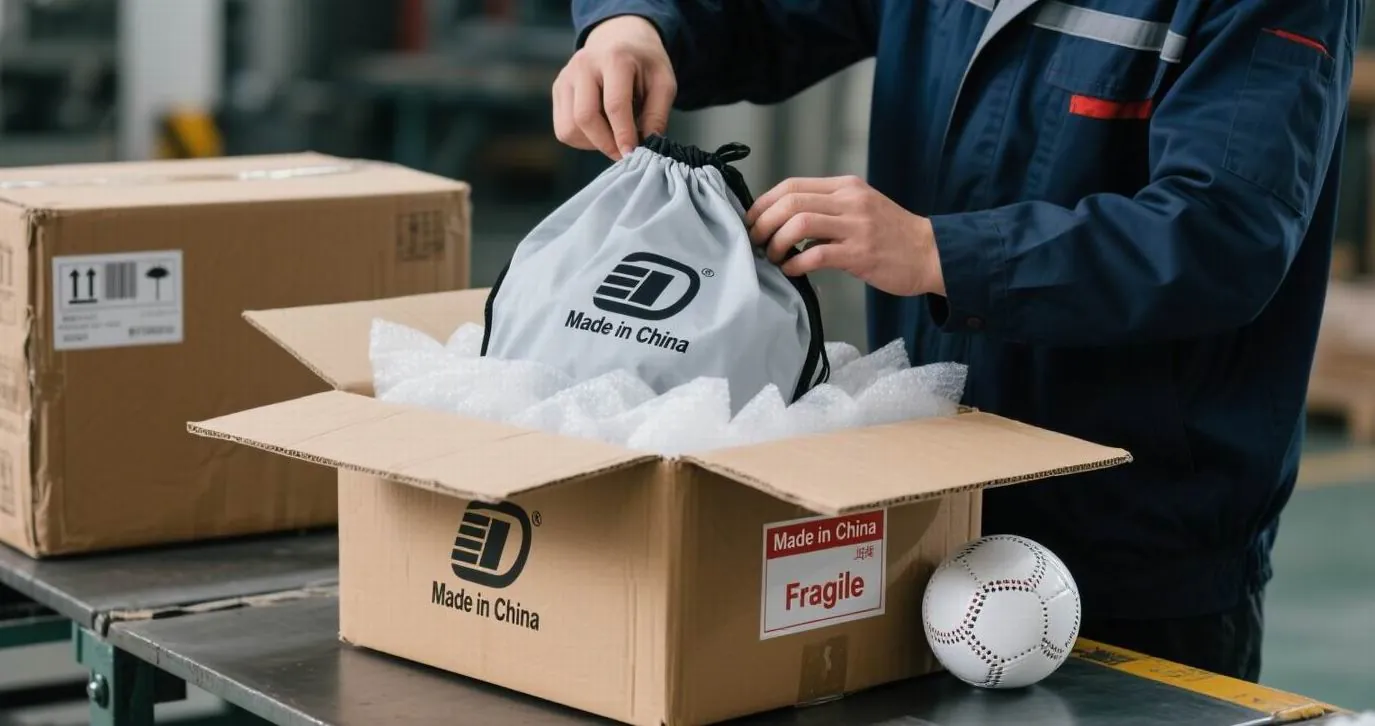
Quality extends to the packaging, because how a bag is packed determines whether it arrives intact. Specification should cover per-unit protection, carton construction, the number of units per carton and the labelling—carton marks, product codes and any market-required labelling. Inadequate packaging causes damage in transit that the buyer absorbs, even when the bags themselves were made well. A standard bulk packing intent is polybag protection per unit and sturdy export cartons; branded or retail-ready packaging is an upgrade. The packaging grade belongs in the specification and the inspection, not as an afterthought discovered at first damage claim.
Worker Skill and Line Discipline
The engineering behind quality is only as good as the hands that execute it. Stitch count per inch, consistent seam allowances, correctly aligned hardware and clean finish lines all depend on skilled sewing and disciplined line supervision. In our affiliated factory, 137 employees across 7 lines operate 126 sewing machines, and quality discipline is maintained through in-process checks at defined points on each line. For a bulk buyer, the practical translation is that a factory’s headcount and line structure are not trivia—they are the physical basis of its ability to hold consistent quality at volume. It is worth verifying this base before committing to a large run.
Verifying the Factory’s Quality Base
A factory’s quality claims are best verified through independent evidence rather than its own brochure. In our case, the affiliated factory in Quanzhou—in business since 2014, founded by a principal who entered the trade in 2004—operates with a documented capacity of roughly 200,000 golf bags per month across 7 lines, and passed a third-party SGS audit in March 2026. An audit report of this kind, coupled with reference orders from existing brand buyers and the ability to show inspection records, is far more persuasive than a page of adjectives. Buyers should ask for such evidence as part of factory qualification.
The MOQ That Makes Quality Affordable
Quality and volume are linked: below a certain volume, a factory cannot afford the inspection depth and skilled labour that consistent quality requires. Our standard MOQ for a custom stand bag is 200 pieces per design, with a 100-piece test order for first-time validation. The test order is a deliberate quality instrument—it lets the buyer inspect units made on the real production line, verify consistency with a sample and confirm the factory’s discipline before committing to a full bulk run. In practice, the test order is the cheapest way a brand validates that the written quality standard is actually met in production.
Documentation: The Quality Paper Trail
The quality record is only as useful as its documentation. A complete bulk order should generate a set of written documents the buyer can keep: the approved specification, sampling-test reports, in-process check logs and the final AQL inspection report. These documents serve three purposes—they prove the order met the standard, they provide the evidence base if a dispute ever arises, and they become the baseline for future reorders and negotiations. A buyer who keeps this file, and expects the factory to keep the matching record, converts every order into a reusable quality asset rather than a one-off transaction.
For the buyer’s own planning, quality standards and lead time are two sides of the same coin. A bulk stand bag order typically runs a sampling window of 10–20 days and a production window of 45–60 days after sample approval, and it is within that production window that the inspection gates must be scheduled. A quality programme that is not built into the production timeline—that is expected as an afterthought at the end of a rushed run—will fail precisely because there was no time to inspect properly. The professional buyer books the final AQL inspection and any third-party visit into the schedule from the start, so that the quality standard has the time and the allocation it needs to be enforced.
Equally, the buyer should recognise that enforcing a standard is a shared responsibility. A factory can only hold quality to the limits that were specified, and only against a specification that is realistic for the price. A specification that demands a leather-grade finish at economy pricing is inviting disappointment from the start. The honest conversation is one in which the target quality, the specification, the material grade and the price are aligned and fixed together, so that the inspection measures a commitment both sides understood and accepted.
Frequently Asked Questions
- What quality tests should a bulk golf stand bag pass?
- Core tests cover fabric and seam strength, colour fastness, stand-mechanism cycling, zipper and hardware function, and stitch integrity, verified through AQL sampling on the packed batch.
- What does AQL mean in a bulk order?
- AQL (acceptable quality limit) is the statistical standard setting how many critical, major and minor defects are acceptable in a sampled batch, agreed in writing before production.
- Why is the stand mechanism so important for quality?
- It is an engineered moving part that must deploy and support the loaded bag reliably; skimped stands fail with use, so it gets its own material grade and cycle test.
- Can I inspect my order before it ships?
- Yes. A final AQL inspection is standard before loading, and you can schedule an independent third-party inspection into the same gate for extra verification.
- What is a reasonable minimum order for quality stand bags?
- The standard MOQ is 200 pieces per design, with a 100-piece test order to validate equality on the real production line before committing to volume.
- How do I verify a factory’s quality claims?
- Ask for independent evidence such as a third-party audit (like a March 2026 SGS inspection), reference orders from existing buyers and written inspection records.
- Does packaging count as part of quality control?
- Yes. Per-unit protection, carton construction and labelling affect whether bags arrive intact, so the packaging grade belongs in the specification and the inspection.
Sources and Further Reading
For the regulatory context that sits alongside quality control, consult the USITC Harmonized Tariff Schedule for HTSUS 4202 on US import classification, the U.S. Customs and Border Protection import guidance, and the European Commission’s Taxation and Customs Union for CN 4202. For textile chemical and product-safety limits in the EU, review the European Chemicals Agency REACH guidance and the EU Product Safety requirements.
For the sourcing path around quality, see our guides on wholesale golf bags, our OEM & ODM services, the golf bag wholesale pricing guide, plus factory-direct manufacturing and custom solutions.