How to Negotiate MOQ With a Golf Bag Factory
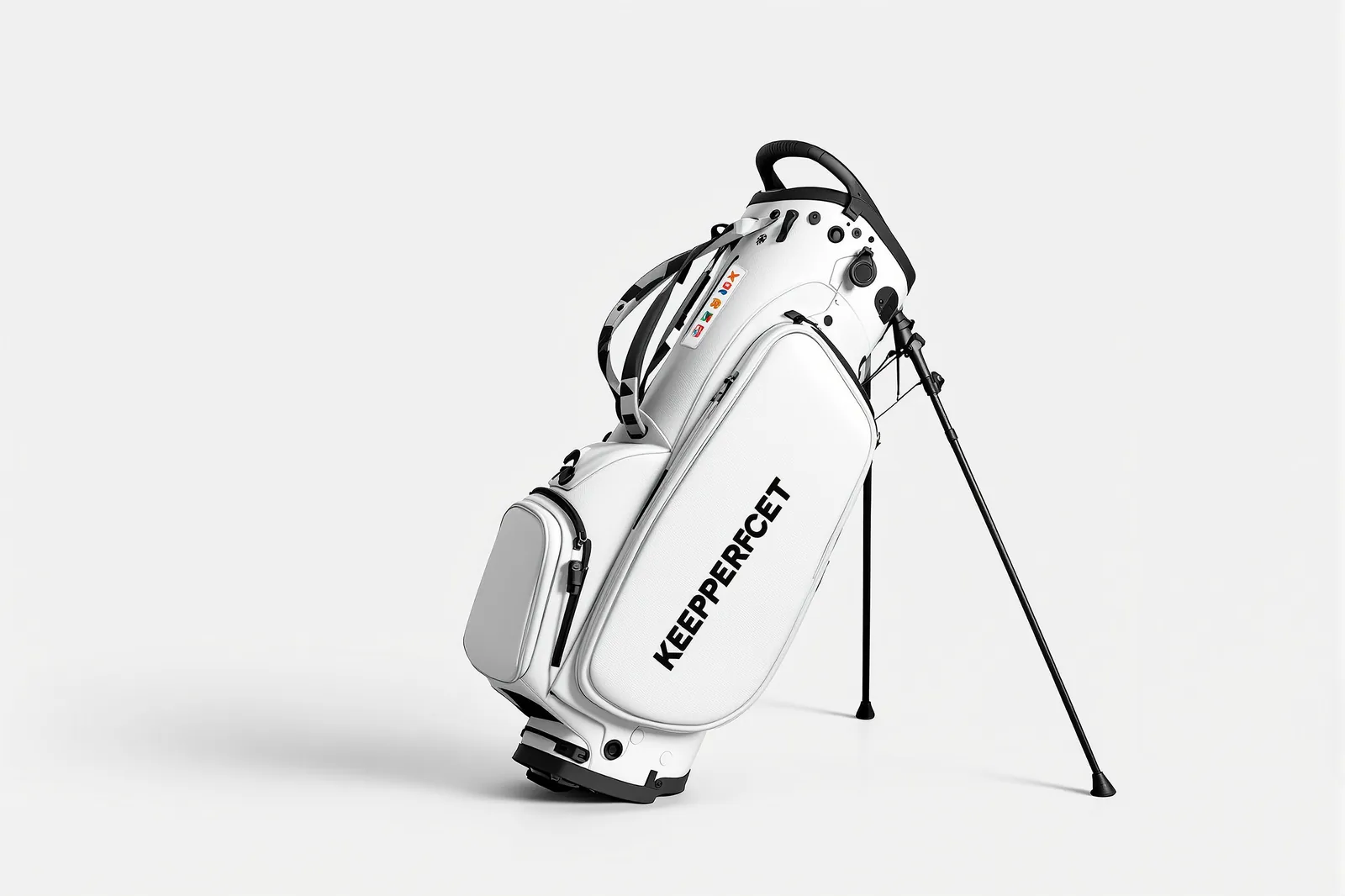
MOQ is not a number a supplier owns and defends; it is the sum of four separate minimums, and only one of them has anything to do with sewing. Fabric comes in dye lots with a mill floor, trim comes in rolls, the line needs a changeover window, and the inspection plan needs a lot large enough to sample. Argue with the total and nothing moves; argue with the components and most of them flex. This guide works from a 200-per-colourway baseline, a 100-piece trial option and 500 pieces for a new development, with sampling at 6-10 working days (12-15 when a fresh tool is cut), a bulk window of 35-50 days, inspection at AQL 2.5, and 30/70 T/T on FOB Xiamen terms.
Related reading: How Wholesale Golf Bag Pricing Is Actually Built
Why the Number Is Higher Than the Sewing Cost Suggests
A first-time buyer looks at a golf bag and sees forty minutes of sewing, so a 200-piece minimum feels arbitrary. The sewing is genuinely the flexible part. What is not flexible is that the shell fabric has to be woven and dyed in a batch, the zip has to come off a roll of several hundred metres, and the cutting table needs a bundle thick enough to keep a cutter busy for a shift.
That is why MOQ behaves nothing like a volume discount. At 200 pieces the per-unit factory cost is only 10-14 % above the 500-piece cost, and most of that gap is setup rather than material. The reason suppliers hold the line at 200 is not margin on the last 100 units; it is that below 200 the order stops fitting the production calendar at all.
There is also a quality argument that buyers rarely hear. A 40-piece run gives an inspector almost nothing to sample: under AQL 2.5 at general inspection level II a lot of 40 draws 8 pieces, so a 5 % defect rate can pass unnoticed and then appear across the whole shipment. Larger lots give a statistically meaningful sample, which protects the buyer more than the supplier.
Understanding that reframes the negotiation. You are not asking for a favour on price; you are asking a supplier to break a batch into a smaller one, absorb the setup, and accept a thinner inspection sample. Each of those has a cost, and each can be paid in something other than money.
Four Minimums Hidden Behind One Word
Suppliers use "MOQ" for four different things, sometimes in the same email. Getting the definitions separated is the single highest-value move in the whole conversation, because two of the four are usually negotiable and one is nearly fixed.
| Term | What it actually means | Typical number | How much it moves |
|---|---|---|---|
| Sampling minimum | Pieces made before bulk to approve materials and construction | 1-3 sets | Fixed, but the fee is often credited against bulk |
| Trial order minimum | Smallest bulk run accepted to test the line | 100 pieces | Negotiable with a committed follow-on order |
| Per-colourway minimum | Units per colour and print combination | 200 pieces | Movable by consolidating colourways |
| New development minimum | Units required when a new pattern or tool is built | 500 pieces | Movable only by paying tooling separately |
The distinction that catches buyers is per-colourway versus per-order. A 600-piece order in three colourways is three 200-piece runs, not one 600-piece run, and it consumes three fabric dye lots and three line changeovers. A 600-piece order in one colourway gets better pricing and a shorter lead time than the same 600 split three ways, often by 4-7 % per unit.
Ask the question directly: "Is this 200 per colour, per model, or per purchase order?" A supplier quoting per order and then invoicing per colour has not lied, but the buyer has not read carefully. Put the definition in the quotation, not in a later email.
Field note. The cheapest way to test whether a supplier is quoting a real minimum or a negotiating position is to ask what happens at 150 pieces. A real constraint produces a specific answer, usually a fabric surcharge figure. A negotiating position produces a vague one.
What Actually Sets the Floor: Fabric, Trim and Changeover
Behind every per-colourway minimum is a bill of materials with its own floors. Mapping them explains why 200 is the number rather than 100 or 300, and which one you can move.
| Cost driver | Supplier-side floor | Bags it supports | Can it move? |
|---|---|---|---|
| Shell fabric dye lot | 300-1,000 m per colour | 230-770 bags at 1.3 m each | Yes, via stock colours or a short-run surcharge |
| PU or PVC trim | 100-300 m per colour | 100-250 bags | Yes, trim is often stocked in cores |
| Zip chain | 200 m per colour and size | 150-180 bags on a main zip | Yes, standard black is a stock item |
| Webbing and binding tape | 500 m per colour | 300 bags and up | Partly, cores are stocked and accents are not |
| Cutting bundle | 40-60 pieces per size and colour | Under 40 the cutter loses a shift | No |
| Line changeover | 4-8 hours per colourway | One shift at 200-400 pieces a day | No |
The fabric row is where most negotiations actually live. A golf bag shell consumes roughly 1.1-1.5 running metres of 1.5 m wide fabric once pockets, gussets and the base are counted, so 200 bags need 220-300 m. A mill dye lot starts at 300 m for a stock-quality polyester and 500-1,000 m for a custom shade, which means a 200-piece order in a bespoke colour sits below the mill floor and somebody has to pay the difference.
That difference is usually 6-11 % on the fabric line, and it is why the same bag quoted in a stock navy and in a Pantone-matched teal can differ by USD 1.10-2.20 per unit at 200 pieces. It is not the supplier extracting margin from a small order; it is a mill charging for a short dye lot.
Trim behaves differently. Black zip chain, natural white webbing and standard grey binding are held in stock in quantities that make a 200-piece run trivial. Change any of them to a colour and the floor jumps to a roll, typically 200-500 m, which can be several times the order requirement. This is why good programmes keep the structural trims neutral and spend colour on the shell and the logo.
Changeover is the one that cannot be argued with. Setting a sewing line for a new colourway means changing thread, bobbins, machine settings, and often the layout of a twelve-station line: 4-8 hours of lost output. At 200 pieces that cost is absorbed; at 60 pieces it dominates the price and makes the order unprofitable at any unit price the buyer would accept.
The Arithmetic of a Small Run
Numbers end arguments that adjectives cannot. The model below is a simplified but realistic build: USD 31.50 of variable material and labour per bag, USD 800 of fixed setup per colourway covering sampling, cutting preparation, line changeover and first-article approval, and 12 % for overhead and margin.
| Quantity | Setup per unit | Cost before margin | Quoted unit price | Index vs 200 |
|---|---|---|---|---|
| 100 | USD 8.00 | USD 39.50 | USD 44.25 | 112 |
| 200 | USD 4.00 | USD 35.50 | USD 39.75 | 100 |
| 500 | USD 1.60 | USD 33.10 | USD 37.07 | 93 |
| 1,000 | USD 0.80 | USD 32.30 | USD 36.20 | 91 |
Two things follow from that table. First, the step from 100 to 200 is worth 11 % and is almost entirely setup; the step from 200 to 1,000 is worth only another 9 % and is spread across material and efficiency. Second, no supplier can quote 100 pieces at the 200-piece price without losing money, which is why a demand for parity at half volume usually produces a quiet reduction in specification rather than a discount.
Use the model in reverse when a supplier quotes. Ask for the setup figure as a separate line. If a quotation shows USD 44 at 100 pieces and USD 39.75 at 200, the implied setup is around USD 800 and the variable cost around USD 31.50, and you can check that arithmetic in a minute. A quote whose numbers do not reconcile tells you something about how the rest of the document was built.
The index column is also the honest answer to "how much should I pay for flexibility". A 100-piece trial at 112 index costs about USD 450 more across the run than 200 pieces at 100 index. That is a reasonable price for testing a market with real product instead of samples, provided the trial is structured so the follow-on order actually happens.
Seven Levers That Move Volume, Not Quality
Every lever below trades something other than product quality. That matters, because the levers buyers reach for first, thinner fabric, fewer stitches, cheaper hardware, are the ones that damage the product and the brand.
| Lever | What it costs you | Typical effect |
|---|---|---|
| Consolidate to one or two colourways | A narrower launch range | Removes 200-400 pieces of minimum per dropped colour |
| Use mill stock colours for the shell | Less exact brand colour | Removes the short dye-lot surcharge of 6-11 % |
| Carry the setup as a separate fee | USD 400-900 upfront, often credited | Unlocks a 100-piece first run |
| Commit to a 12-month forecast | A planning obligation, not a purchase | Typically halves the trial minimum |
| Book an off-peak production slot | A 3-5 week later delivery window | Fills idle capacity at the 200-piece floor |
| Split delivery across two shipments | Extra freight and handling | Lowers the cash outlay without changing MOQ |
| Share one fabric across two models | Design compromise on the second model | Pools two small orders into one dye lot |
The forecast lever is the strongest and the least used. A signed 12-month forecast of 600 pieces, released in three call-offs of 200, gives a supplier the same planning certainty as a 600-piece order and costs the buyer nothing but a commitment to plan. Most suppliers will move a trial from 200 to 100 on that basis, because the changeover is amortised over the forecast rather than the single run.
The setup-fee lever is the most misunderstood. Paying USD 400-900 for sampling, pattern work and changeover is not a markup; it is the fixed cost being moved out of the unit price so that a small run becomes possible. Ask for it to be credited against the first bulk order above 300 pieces, which is a normal and fair structure.
The off-peak lever is worth raising explicitly. Golf bag production runs on a seasonal curve with peaks ahead of spring in the northern hemisphere, and a line in a quiet month has capacity that is otherwise wasted. A buyer willing to take delivery three to five weeks later, in the right window, can often get a 200-piece run accepted at a price that would be refused in peak season.
Two levers to avoid. Reducing the number of colourways below what the market needs damages sell-through, and pooling fabric across two models with different abrasion requirements usually ends with the lighter model wearing through at the base. Both look like savings on the quotation and are not savings on the P&L.
What Not to Trade Away
Negotiation is only useful if the product survives it. Five things are worth paying for at any volume, and giving any of them away to reach a lower minimum is a false economy that surfaces at the first return.
- Seam construction at load points. Bar-tacks at strap anchors, divider junctions and pocket corners cost cents and prevent the failures that generate refunds.
- Fabric grade. Dropping from 600D to 420D to hit a price is visible within a season at the base and the pocket edges, and it cannot be fixed later.
- Hardware material. Zinc-plated where stainless was specified shows up as rust at the clip within months in a humid market.
- Inspection scope. Level II sampling under ISO 2859-1 is the floor; accepting "we check everything" in place of a sampling plan removes your only independent evidence.
- Tooling title. If you pay for a mould, own it in writing, with the right to move it. A tool you funded but do not own is leverage you have given away.
The one concession that is usually safe is packaging. A polybag, a hangtag and a carton configuration can be simplified or deferred without touching the bag, and it is worth USD 0.15-0.40 per unit at 200 pieces. If a supplier needs a concession to make a small run work, offer packaging first.
Payment terms are the other place buyers push too early. The standard structure is 30 % deposit with the balance against the bill of lading, and it exists because a 200-piece order ties up material cash for six to eight weeks. Asking for 20/80 or net-30 on a first order signals a credit risk, and the response is usually a higher unit price rather than a concession. Terms improve with a shipment history, not with argument.
Exclusivity deserves a mention because it is frequently demanded and rarely earned. Territorial exclusivity on a stock design at 200 pieces is not a realistic ask; on a custom development at 500 pieces with a forecast, it is a normal part of the deal. Tie exclusivity to a volume threshold and a review date, and it stops being an argument.
The Conversation, Opening to Close
Most MOQ conversations fail in the first email, because the buyer leads with a target price and the supplier answers with a minimum. Lead with the specification and the plan instead, and the minimum becomes a variable in a shared calculation.
Open with the spec, not the price
A first message that names the bag type, the fabric, the pocket count, the target market and the launch window gives a supplier enough to quote properly. A message that says "what is your best price for 100 golf bags" produces either a refusal or a number built on assumptions the buyer will later reject.
Ask for the cost build-up
Request the setup line, the fabric consumption per bag, and the per-colourway breakdown. Suppliers who work with professional buyers expect the question. The answer also shows whether 200 is a material constraint or a scheduling one, and which lever to pull.
Close with a written schedule
Finish with dates rather than intentions: sampling start, sample approval, bulk start, ex-works date. Lead times run from sample approval, not from the purchase order, and a 35-50 day bulk window quoted from the PO date will be wrong by however long the sample takes to approve.
- Send the tech pack and the launch window, and ask for a quotation at 100, 200 and 500 pieces in the same colourway.
- Ask which line items change between those three quantities, and specifically for the setup figure.
- Propose the structure: 100-piece trial with a setup fee, followed by a 500-piece order within 90 days.
- Fix the sampling window at 6-10 working days, stretching to 12-15 when a fresh tool or pattern has to be built.
- Confirm the inspection plan at AQL 2.5, level II, with the sample size spelled out for your lot.
- Fix the price validity period, 30-60 days, and the clause covering fabric or freight movement beyond it.
- Sign the purchase order with the MOQ definition, colourway count and delivery dates written into it.
Putting the Deal in Writing
An MOQ agreement that lives in an email thread will be reinterpreted by the third shipment. Four clauses prevent almost every dispute, and none of them is unusual in a professional supply relationship.
First, define the minimum precisely: units per colourway, per model, per purchase order, and whether a colourway means a shell colour or a shell plus print combination. Second, state the trial structure: quantity, setup fee, credit condition and the deadline for the follow-on order. Third, fix the lead time to a trigger, "35-50 days from written sample approval", rather than to a calendar date that assumes the sample passes first time.
Fourth, attach the quality plan. Level II sampling under ISO 2859-1, the sample size for the agreed lot, the fail threshold, and the tests it must clear, with grab strength on the seam held at 250 N to ASTM D5034 as the normal entry point. A supplier operating to ISO 9001 will already have a documented version of this; ask to see it rather than accepting a verbal description.
One structural point is worth stating plainly. A sourcing and programme-management company sits between the brand and the production floor, which means the MOQ conversation can be had once and applied across several factories rather than renegotiated per site. That is the practical advantage of working through a programme manager rather than a single production unit: the minimum is negotiated against consolidated volume.
None of this requires adversarial negotiation. The suppliers worth keeping are the ones who explain which minimum is real, quote the setup honestly and hold a delivery date. If a supplier will not separate setup from unit price, or will not state a sample size for inspection, the MOQ is not the problem. The terms in this guide are the ones QUANZHOU JUNYUAN BAGS has worked to since 2014, with a team in the category since 2004. More background on what small runs realistically look like is in the low MOQ guide, and the wider pricing structure is covered in the wholesale pricing guide.
Sources and Standards Referenced
- ISO 2859-1:2022 Sampling procedures for inspection by attributes
- ISO 9001 Quality management systems
- ASTM D5034 Breaking strength and elongation of textile fabrics (grab test)
- ASTM D2261 Tearing strength of fabrics (tongue method)
- US Customs and Border Protection, trade and import guidance
Next steps: custom solutions, manufacturing capability, and a quotation request.
Frequently Asked Questions
What is a realistic MOQ for custom golf bags?
200 pieces per colourway is the working minimum for a custom bag, with 100-piece trials possible where a tool or pattern already exists and 500 pieces for a new development. Anything quoted well below 200 usually means a stock design with a logo applied, not a custom build.
Why is golf bag MOQ higher than for other bags?
Fabric consumption. A golf bag uses 1.1-1.5 running metres of shell fabric once pockets, gussets and the base are counted, so 200 bags need 220-300 m, which is close to a mill short-run floor. Trim rolls and a 4-8 hour line changeover add to the floor.
Is MOQ per colour or per order?
It should be stated explicitly because both are used. The normal structure is 200 per colourway, so a 600-piece order in three colours is three runs, three dye lots and three changeovers. Ask the question before the quotation is signed, not after the invoice arrives.
How much more does a 100-piece run cost per unit?
On a typical build with USD 31.50 variable cost and USD 800 fixed setup, 100 pieces prices at about USD 44.25 against USD 39.75 at 200, an 11 % premium. Almost all of that gap is setup, which is why paying it as a separate fee is a fair structure.
Can I negotiate MOQ down without paying more?
Sometimes. Consolidating colourways, using a mill stock colour, or committing to a 12-month forecast can each reduce the effective minimum because they remove a dye lot or amortise a changeover. What cannot be removed is the changeover itself, which is 4-8 hours of lost line output.
What is a setup fee and should I pay it?
A setup fee of USD 400-900 covers sampling, pattern preparation, cutting setup and first-article approval. Paying it separately is what makes a 100-piece run viable. Ask for it to be credited against the first bulk order above 300 pieces, which is a standard arrangement.
Does a forecast commitment really lower the minimum?
Often it halves it. A signed 12-month forecast released in call-offs gives a supplier the planning certainty of the full volume, so the changeover is amortised across the year rather than one run. The buyer commits to a plan, not to an immediate purchase.
What should never be cut to reach a lower MOQ?
Seam reinforcement at load points, fabric grade, hardware material, inspection scope and tooling ownership. Each of those costs cents at order stage and produces refunds, rust or a tool you cannot move later. Packaging is the safe concession, worth USD 0.15-0.40 per unit.
What payment terms are normal for a first order?
30 % deposit with the balance against the bill of lading, on FOB Xiamen terms. The structure exists because a 200-piece order ties up material cash for six to eight weeks. Pushing for 20/80 or net-30 on a first order usually produces a higher unit price instead of a concession.
How long does production take after the MOQ is agreed?
Bulk runs 35-50 days from written sample approval, not from the purchase order date. Sampling needs 6-10 working days, stretching to 12-15 when a fresh tool or pattern is built, so the total from order to ex-works is typically 8-10 weeks.
How do I verify quality on a small first order?
Agree the inspection plan in writing: ISO 2859-1 at level II, an AQL of 2.5, and the sample size stated for your lot. Two hundred pieces puts thirty-two bags on the table with a rejection threshold of three majors, and seam grab strength is tested to 250 N under ASTM D5034.
Is it worth splitting one order across two shipments?
It reduces cash outlay and warehouse pressure without changing the MOQ, at the cost of extra freight and handling, typically USD 250-600 per additional shipment depending on route. It is a cash-flow lever, not a price lever, and it should not be presented as one.
Get a Three-Tier Quote
Send the tech pack and launch window and you will get pricing at 100, 200 and 500 pieces with the setup line shown separately, so the minimum is a calculation rather than a position.
Request Three-Tier Pricing See Low MOQ Options