Golf Pencil Bag Manufacturing and Wholesale Small Orders
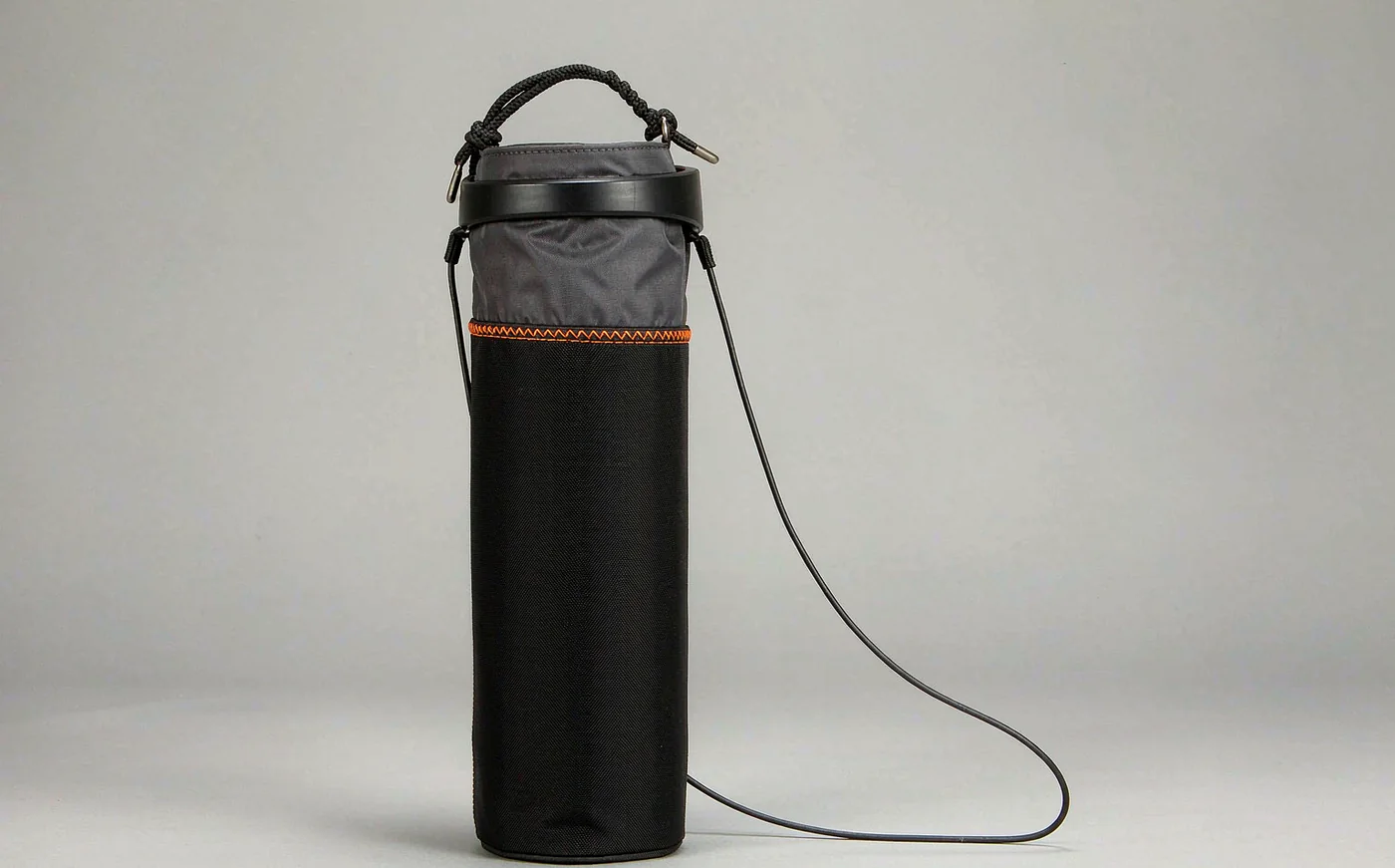
A pencil bag is the leanest product in the golf bag catalogue, and at a 0.6-1.3 kg finished weight there is nowhere to hide a bad decision. It is a tube with a rigid mouth, a padded base, one strap and enough pocketing for balls, a glove and a bottle, built around five to eight clubs rather than fourteen. Because the shape is simple, buyers assume the sourcing is simple too, which is exactly where small orders go wrong: the quantity floor is set by fabric roll minimums, not by sewing time. On this programme the order floor is 200 pieces for each colourway, a 100-piece trial is workable when the shell fabric comes from stock, sampling runs 6-10 working days, bulk takes 35-50 days from sample sign-off, and inspection is AQL 2.5 under ISO 2859-1.
Related reading: Small Batch Custom Golf Bags: What Is Actually Possible
Pencil, Sunday and Range Bags: Three Products, One Cutting Table
The three names travel together in buyer emails and mean different things once a pattern is being made. Slimmest is the pencil type: 127-178 mm across the top opening, 760-860 mm tall, three or five wells, finished weight 0.6-1.3 kg, and no legs of any kind. A Sunday bag usually measures 180-215 mm at the mouth and may carry a small fold-out stand. A range bag is designed around a bucket of balls, so it opens wider, drops most of the pocketing and gains a heavier floor.
The buyer overlaps across all three: someone who already owns a full-size bag and wants a second, lighter option for practice, nine holes, or a trip where the main bag stays in the car. That customer is price-aware but not indifferent to finish, which places the product in an awkward band, roughly USD 7-16 FOB, where the fabric choice moves the landed price further than the labour does.
For a brand, the pencil bag is often the entry SKU that gets a new label onto a pro shop rack at the lowest unit cost. It is also the SKU most likely to be reordered, because it wears out faster than a cart bag. The base and the mouth absorb punishment every round, and a 420D shell at 0.9 kg is not built to survive five seasons of weekly play.
Shell Construction and What Each Option Adds in Grams
Four constructions cover almost every pencil bag sold into the wholesale channel. The choice is driven by target weight, retail price and whether the bag is meant to stand up empty or only when loaded.
| Construction | Shell fabric | Finished weight | Cost index | Where it fits |
|---|---|---|---|---|
| Single-wall tube | 420D polyester, 0.6 mm PU | 0.85-1.05 kg | 100 | Promotional, club logo, entry retail |
| Board-stiffened shell | 600D polyester, 1.0 mm PU | 1.05-1.30 kg | 118-132 | Standalone product, daily range use |
| Ripstop featherweight | 210D nylon ripstop | 0.60-0.75 kg | 115-140 | Travel sleeve, walking-focused SKUs |
| Coated waterproof shell | 300D ripstop, 1.5 mm PU | 0.95-1.15 kg | 135-160 | Wet-climate markets, premium tier |
Single-wall tube
Cut as one body panel plus a gusset, or as two mirror panels with a centre seam. Here the fabric is the structure, so the tube holds shape only while clubs are inside. Set it down empty and it folds along the seam line, and that fold turns into a permanent crease within a month of retail handling. This is acceptable for a giveaway bag and unacceptable for a bag sold at USD 90 retail.
Board-stiffened shell
A stiffener sits between the outer fabric and the lining: 0.8-1.2 mm PE board down the spine plus a 2.0-2.5 mm PE sheet in the base. That combination keeps the tube cylindrical with nothing inside it, and it adds 60-110 g. It is the construction that survives a season of daily range use, and the one to specify whenever the pencil bag is the product rather than a promotional vehicle.
Ripstop featherweight
210D ripstop nylon with a 0.15 mm PU coating gets a bag down to 0.62-0.72 kg, at a cost premium of 15-25% over 420D polyester and with a genuine durability trade-off at the base rim. When a brief asks for sub-700 g, the workable answer is ripstop body plus a moulded base, because the base is the one place where saving weight is a false economy.
Fabric grade also writes the water story. A 600D polyester with a 1.0 mm PU backer shrugs off a shower. A 420D with a 0.6 mm backer wets through at the seam in about 20 minutes of steady rain. Neither qualifies as waterproof in the sense buyers expect from a waterproof golf bag, so the honest line on the spec sheet is water-repellent shell with hood included.
The Circle-to-Tube Seam and the Rigid Mouth
The bottom of a pencil bag is a disc sewn into a cylinder, and that single seam decides whether the product reads as a USD 14 bag or a USD 7 bag. A flat circle joined to a tube has to be eased: the circumference of the disc and the circumference of the tube must agree within 3 mm, or the seam puckers and the base sits at an angle that no amount of packing will hide. Seam allowance runs 8-10 mm, closed with a three-step zigzag so the curve can stretch instead of popping.
Under the fabric sits 4-6 mm of EVA, then a 2.0-2.5 mm PE sheet or a moulded PP shell. On a legless bag the base is also the wear part: it is set down 30-60 times a round on cart paths, gravel and clubhouse stone, so a fabric-only base on thin nylon abrades through at the rim inside a season.
The mouth needs a rigid ring for the same reason a full-size collar does. Without one, the top oval closes 6-10 mm under the weight of eight grips, and every club then drags on the lining on the way in. A 3.5 mm PP ring, or 4 mm aluminium wire threaded into a folded channel, costs very little and is the most visible quality difference between two bags sitting at the same wholesale price.
Pocketing is where a cheap pencil bag announces itself. Two pockets are enough on a bag this size: a front apparel pocket 280-320 mm deep and a valuables pocket 130-150 mm wide near the mouth, with a mesh bottle sleeve as the third if the target market expects one. A pocket whose base is not bar-tacked at each lower corner will split within a season, because a full pocket on a 0.9 kg bag carries more load than the panel behind it was designed for. A number 5 coil zip with a 25-30 mm moulded pull is the right hardware at this price; a number 3 zip saves cents and fails at the slider.
- Pattern and circumference check. Tube circumference and base disc are compared on the table before cutting; anything over a 3 mm mismatch goes back to the pattern room, not to the sewing line.
- Cut and fuse. Shell, lining and PU backer are cut with grain direction marked. A body panel cut off-grain twists in the tube and pulls the mouth oval out of true.
- Base assembly. EVA pad and PE plate are stacked, then riveted or stitched into the base disc before the disc meets the tube.
- Body seam. Double-row lockstitch at 8-10 stitches per inch, seam pressed open, then bound or topstitched so the raw edge cannot fray against clubs.
- Base join. Disc eased into the tube in four quadrants, three-step zigzag, then a topstitch ring 12 mm above the seam.
- Ring insertion. Rigid ring or wire set into the mouth channel, ends overlapped 40 mm and wrapped so they cannot work loose.
- Pocket and hardware. Pockets attached with bar-tacks at every stress corner; strap anchors box-X stitched through a reinforcement patch.
- Turn, topstitch and gauge check. A 38 mm gauge is inserted and withdrawn from every well to confirm the mouth has not closed during assembly.
Small-Order Economics: Why 200 Is a Real Floor
Quantity floors in this category come from the dye house, not from the sewing floor. A mill will typically run a minimum of 300-500 m per colour on 600D polyester, and a pencil bag consumes roughly 0.9-1.1 linear metres of 1.5 m wide shell fabric once pockets, binding and an 8-12% cut loss are counted. One 300 m roll therefore covers about 270-330 units. A 200-piece colourway order sits comfortably inside a single roll, and that is the arithmetic behind the number rather than an arbitrary rule.
The stock-shell route
Where a brand needs 100 pieces for a launch, a club event or a test market, the workable route is a stock shell colour from a held range of roughly a dozen shades, with everything else customised: piping, zip pulls, hood, strap pad, woven label and a heat-transfer logo. No dye lot is opened, the cutting ticket fits inside existing roll stock, and the trial quantity becomes viable. What the buyer gives up is exact shell colour, which matters for a fashion-led range and does not matter for a corporate or club order.
The new-pattern route
A new body pattern, a new base tool or a new mouth ring geometry is a development project rather than a colour change. That work carries a 500-piece opening quantity, because the pattern, the first-article sample and the tooling amortisation all have to land somewhere. Where the buyer pays for tooling separately and keeps ownership of it, the opening quantity can be negotiated down, and the tool stays with the buyer if the relationship ends.
| Order band | What is customised | Indicative FOB (USD) | Versus 500 pcs | Sampling |
|---|---|---|---|---|
| 100 pcs | Trim, labelling, hood, stock shell | 9.90-15.80 | +10-15% | 6-10 working days |
| 200 pcs | Shell colour from stock or dyed | 9.20-14.60 | +4-7% | 6-10 working days |
| 500 pcs | Full custom, new pattern or tool | 8.40-13.20 | base | 12-15 working days |
| 1,000 pcs+ | Full custom, repeat build | 7.90-12.40 | -5-8% | 6-10 days on repeat |
Field note. A 100-piece trial is only cheap if the shell is stock. Buyers who ask for a custom Pantone shell at 100 pieces are usually quoted 200-piece pricing anyway, because the mill surcharge for a short dye lot gets absorbed into the unit price rather than shown as a separate line.
Tolerances and Tests Worth Writing Into the Tech Pack
Pencil bags are simple enough that buyers often send a photo and two dimensions. That works until the second order, when the base arrives 8 mm wider and the hood no longer fits. The six values below prevent almost every first-article dispute on this product.
| Parameter | Production tolerance | Consequence if missed |
|---|---|---|
| Top opening oval | ±2 mm both axes | Grips bind, hood will not seat |
| Body height | ±5 mm | Cart sleeve fit, retail display height |
| Base disc circumference | ±3 mm vs tube | Puckered seam, bag leans when set down |
| Finished weight | ±5% of target | Freight cost, carry comfort claim |
| Seam density | 8-10 stitches per inch | Seam grin under club load |
| Colour match, same lot | ΔE ≤ 1.0 | Panel-to-trim mismatch at retail |
Physical testing on a pencil bag is narrow but not optional, because the failure that ends a reorder is a torn strap anchor or a split base, both of which show up on a shoulder in the street rather than inside the warehouse. A practical protocol: shell grab strength to ASTM D5034 with 220 N minimum in the warp direction, tear strength to ASTM D2261, a 400 N static pull held for 60 seconds at each strap anchor, 3,000 open-close cycles on the main zip, a 1 m drop onto the base in three orientations, and colour fastness to light to ISO 105-B02 wherever the shell is a saturated colour that will live in a car boot.
Acceptance is set by AQL 2.5 under the ISO 2859-1 level II scheme. From a 200-piece lot, thirty-two bags come out of the draw and two majors are the tolerable ceiling, with the draw checked for mouth oval, base join, stitch density, strap anchor stitching, zip function and label placement. Defect classes are settled before the run starts, not argued over afterwards: a puckered base seam is major, a 3 mm topstitch wander is minor.
Branding and Carton Planning at Low Volume
Branding on a pencil bag has three realistic methods and one trap. A woven label sewn into the front panel seam is the most durable and the cheapest at volume, and it survives washing and abrasion. A heat-transfer logo sits flat on the fabric, photographs well, and starts to lift at the edges after 18-24 months of flexing on a curved panel. A debossed rubber or TPU patch gives the most premium read and adds 12-25 g plus a stitching operation. The trap is embroidery on a curved tube panel: the hoop cannot follow the curve, so the design distorts unless it is split into two hoops, which doubles the labour.
- Label position is fixed at 40-60 mm below the mouth on the front panel, so it stays visible when the bag is standing on a rack.
- Strap pad takes a woven tab or a small heat transfer better than direct embroidery, because the pad flexes with the shoulder.
- Hood should carry a matched logo; a branded bag with a plain hood is the most common mismatch we see on arrival.
- Carton count runs 20-25 pieces for a pencil bag, with a carton volume of 0.055-0.07 cbm; mixed colourway cartons add 6-9 minutes of picking labour per carton.
- Poly bag and hangtag are worth specifying in writing, because retail-ready packing changes the carton count and therefore the freight calculation.
Freight is a larger share of landed cost on this product than on any other bag type. A pencil bag carton at 0.06 cbm and 20 pieces means roughly 1,100 pieces fit a 40 ft high cube once pallet and loading loss are allowed for, and a 100 g weight saving per bag across 1,100 pieces is 110 kg, which is about two cartons of nothing. That is why fabric weight decisions get made with the freight table open, not just the sample in hand.
What to Send With an Enquiry
A pencil bag brief that can be quoted in a day has five elements: the club count and top opening in millimetres, the target finished weight with a tolerance, the shell fabric and coating, the branding method with artwork, and the quantity split by colourway. Add the retail price band and the destination market, because both change the recommendation more than buyers expect.
If the quantity in mind is 100, say so at the start rather than after the quote. The answer will be a stock-shell configuration with a custom trim package, and the sampling step will show whether the shell shade is close enough for the market. If the quantity is 500 or more, the conversation moves to pattern development and a moulded base, which is a different project with a different lead time. Either way, the low MOQ programme exists for exactly this range, and the company behind it has been building bags since 2014, with people who joined the trade in 2004.
Sources and Standards Referenced
- USGA Rules of Golf, Rule 4.1b (14-club limit)
- ISO 2859-1:2022 Sampling procedures for inspection by attributes
- ASTM D5034 Breaking strength and elongation of textile fabrics (grab test)
- ASTM D2261 Tearing strength of fabrics (tongue method)
- ISO 105-B02 Colour fastness to artificial light
Next steps: custom solutions, manufacturing capability, and a quotation request.
Frequently Asked Questions
What is the minimum order quantity for a custom pencil golf bag?
The floor is 200 pieces per colourway, which matches one 300 m roll of 600D shell fabric after pockets and cut loss. A 100-piece trial is possible when the shell comes from stock shades and the customisation sits in trim, labelling, hood and strap pad. A brand-new pattern or base tool moves the opening quantity to 500 pieces.
How much does a pencil golf bag weigh?
Between 0.6 kg and 1.3 kg finished, depending on construction. A single-wall 420D tube lands at 0.85-1.05 kg, a board-stiffened 600D shell at 1.05-1.30 kg, a 210D ripstop featherweight at 0.60-0.75 kg, and a coated waterproof shell at 0.95-1.15 kg. Weight tolerance is normally ±5% of target.
Can a pencil bag hold a full set of 14 clubs?
It physically can, but the top opening of 127-178 mm and three to five wells make it uncomfortable to use that way, and the grips will bind on insertion. Pencil bags are designed around five to eight clubs for practice, nine holes or travel, with the full set staying in a cart bag.
Why does my pencil bag collapse when I set it down?
Because a single-wall tube has no structure without clubs in it. The fix is a stiffened construction: 0.8-1.2 mm PE board down the spine plus a 2.0-2.5 mm PE base sheet, which adds 60-110 g and keeps the tube cylindrical when empty. A rigid mouth ring is also required, or the top oval closes by 6-10 mm.
What is the difference between a pencil bag and a Sunday bag?
A pencil bag is the slimmer of the two, at 127-178 mm across the top with no legs. A Sunday bag measures 180-215 mm at the mouth, often carries a small fold-out stand, and holds a slightly fuller set. Both are secondary bags for short rounds, and the choice usually comes down to whether the player walks.
Can I order 100 pieces in three different colours?
Only if all three shells come from the stock fabric range. Custom shell colours are priced at the 200-piece colourway minimum, so three custom colours means 600 pieces in total. The common workaround is one custom colourway plus two stock shades differentiated by trim, piping and labelling.
What does a pencil golf bag cost FOB?
Indicative ranges are USD 9.90-15.80 at 100 pieces, 9.20-14.60 at 200 pieces, 8.40-13.20 at 500 and 7.90-12.40 above 1,000. Terms are T/T 30/70 and FOB Xiamen. Fabric grade, base construction and branding method move the number more than the quantity band does.
How long does production take?
A stock-material sample closes in 6-10 working days, and a new pattern or tool pushes that to 12-15. Once the sample is signed off, goods take 35-50 days. The short end assumes a single colourway and materials on hand; colour count and fabric lead time stretch it toward 50 days.
What inspection standard applies to pencil bags?
The plan is ISO 2859-1 level II at an AQL of 2.5, which draws thirty-two bags from a 200-piece lot and permits two majors inside the draw. Checks cover mouth oval, base join, stitch density, strap anchor stitching, zip function and label placement, with defect classes agreed before the run.
Do pencil bags work as travel bags for clubs?
They work as a lightweight sleeve inside a travel cover, and some buyers market them that way for a second set or a short trip. They are not a substitute for a padded travel cover on a flight, because the base and the mouth are not built to absorb airline handling.
Which physical tests should a pencil bag pass?
Grab strength to ASTM D5034 at 220 N minimum in the warp, tear strength to ASTM D2261, a 400 N static pull for 60 seconds at each strap anchor, 3,000 zip cycles, a 1 m drop onto the base in three orientations, and colour fastness to light to ISO 105-B02 for saturated shells.
Does the mouth ring really matter at this price point?
It is the cheapest visible upgrade on the product. A 3.5 mm PP ring or a 4 mm aluminium wire in a folded channel stops the top oval closing under the weight of eight grips. Without it, clubs drag on the lining on every insertion and the mouth looks worn within weeks of retail use.
Get a Pencil Bag Quote
Send the club count, target weight and quantity split for your pencil bag, and a costed specification with a stock-shell and a custom-shell option comes back within two working days.
Request a Quote See Low MOQ Options