Golf Bag HS Code and US Import Tariff Explained
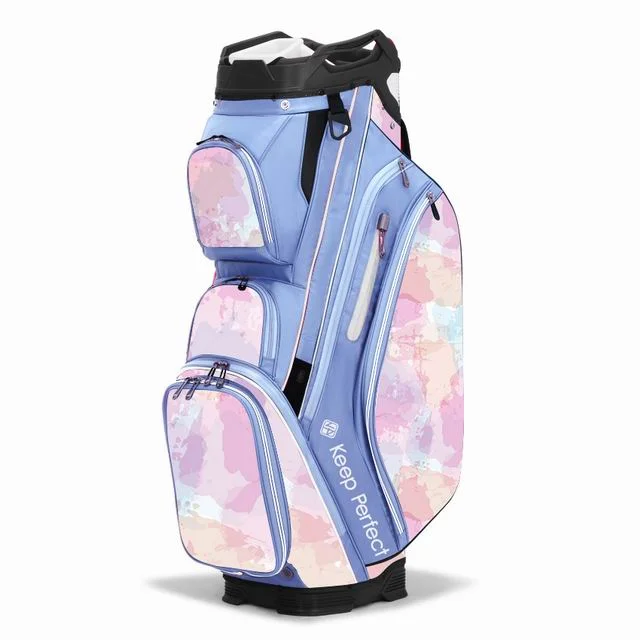
A golf bag with a textile outer surface classifies in HS heading 4202, subheading 4202.92, and the duty you actually pay is set by the ten-digit US tariff line, the country of origin and whatever trade measures are in force on the day of entry. Classification is only half of the calculation; the other half is customs value, which for US imports is built on the price paid rather than on a CIF total. Because tariff rates on Chinese-origin goods have fluctuated sharply since 2025, buyers should verify the current rate with a licensed customs broker before ordering, and should model exposure as a range rather than a single number. The mechanics below apply to a 200-piece trial or a 550-bag container alike; a sampling round of 6-10 working days and a bulk run of 35-50 days is long enough for a rate to change between quotation and arrival.
Related reading: Which shipping term carries the risk: FOB, CIF or DDP
Where Golf Bags Sit in the HS Nomenclature
The Harmonized System is a six-digit nomenclature maintained by the World Customs Organization, and every national tariff schedule in the world is built on top of it. Golf bags live in Chapter 42, heading 4202, which covers travel goods and similar containers. The heading is written broadly enough to capture trunks, suitcases, sports bags, insulated bags and a long list of containers that share a function rather than a material, and golf bags are treated as sports bags within it.
Below the heading, the nomenclature splits by outer surface material rather than by end use. Subheading 4202.91 covers articles with an outer surface of leather or composition leather; 4202.92 covers an outer surface of plastics or textile materials; 4202.99 catches everything else. Almost every bag in commercial production lands in 4202.92, because the outer shell is normally 600D or 1680D polyester, nylon, or a PU-coated fabric, with synthetic leather trim that does not change the classification of the article as a whole.
Outer surface, not trim, decides the subheading
The single most common classification error in this category is reading the trim instead of the shell. A bag with a PU leather collar, synthetic leather pockets and a leather-look base panel is still a textile-outer-surface article if the dominant visible surface is woven fabric. Classification follows the material that gives the article its essential character when no single material covers the whole exterior, and customs authorities consistently apply that test to bags with mixed panels.
The mirror error also happens: a bag marketed as leather look with a shell of PVC sheeting is classified as plastics rather than textile, and that can land on a different statistical line with a different duty outcome. The practical control is a material breakdown in the tech pack that states the outer surface composition by percentage of visible area, not just the fabric specification for the body panels.
From Six Digits to a Ten-Digit US Line
The six-digit subheading is the same in every country that applies the HS. What differs is everything to the right of it. The United States publishes the Harmonized Tariff Schedule, which extends each subheading into eight-digit tariff lines and ten-digit statistical reporting numbers. Duty is assessed at the eight-digit level and the ten-digit number is what the entry filer reports. Two bags that both sit in 4202.92 can therefore attract different treatment if they fall on different national lines.
Because the right-hand digits are national, a supplier quoting a Chinese export code is not giving you a US import code. That sounds obvious, yet it is a routine source of confusion in purchase orders, where a supplier writes a ten-digit number on the commercial invoice and the broker has to reclassify on arrival. The correct workflow is to classify against the destination tariff schedule, confirm the result with the broker before the first shipment, and record the agreed line on the purchase order so that repeat orders do not drift.
Where the classification is genuinely uncertain, the importer can request a binding ruling from US Customs and Border Protection, submitting the product specification, material composition and photographs. A ruling is binding on CBP for that article and that importer, which converts a judgement call into a documented position. For a brand building a multi-year range, a ruling on the core bag family is cheap insurance against a later penalty assessment.
Customs Value Is a Separate Question
Duty is charged on customs value, and customs value in the United States is normally the transaction value: the price actually paid or payable for the goods when sold for export. That is a different base from the CIF value used in the European Union and many other markets. US customs value generally excludes international freight and insurance, so a supplier invoice quoted CIF has to have those elements backed out before the duty calculation.
Four additions catch buyers out. Assists, meaning materials, tooling or design work supplied free or at reduced cost by the buyer, are added to the price. Royalties and licence fees related to the imported goods are added. Selling commissions are added, although buying commissions are not. Proceeds of resale that accrue to the seller are added. A brand that pays for its own logo moulds, or that sends fabric to a supplier, has created an assist and should be telling the broker about it before entry rather than after.
Understatement is the other direction of error, and it carries more risk. Declaring a value below the price paid to reduce duty is a violation regardless of who prepared the invoice, and the importer of record signs the entry. Where the supplier and the buyer are related parties, the transaction value is still acceptable if it approximates one of the test values, and the broker will normally ask for evidence. First-sale valuation, using the price in an earlier sale to an unrelated buyer, is available in some structures but depends on facts that must be documented, not assumed.
Rates, Trade Measures and Why the Number Moves
The tariff schedule publishes a general (normal trade relations) rate, a special rate column for countries with preferential agreements, and a column for countries without normal trade relations. Golf bags from China pay the general rate, which for this group of products has historically sat in the mid-to-high teens as a percentage of customs value; confirm the current figure for your exact line rather than relying on a remembered number.
On top of the published rate sit the trade measures. Section 301 of the Trade Act of 1974 has been used since 2018 to impose additional duties on specified Chinese-origin goods, and the lists, rates and exclusion processes have been revised repeatedly. Further changes have been announced and implemented at short notice since 2025, and some measures have been adjusted, suspended or replaced within a single shipping cycle. A buyer building a 2027 price list on a rate read in 2025 is building on sand.
| Source of duty | Where it is published | How to verify it |
|---|---|---|
| General (NTR) rate for the HTS line | HTSUS, Chapter 42 | Look up the exact 8-digit line, not the 6-digit subheading |
| Section 301 additional duty | USTR notices and CBP CSMS messages | Ask the broker to check the current list status and rate |
| Reciprocal or special measures | Presidential proclamations and Federal Register | Confirm applicability by origin and product scope |
| Antidumping or countervailing duty | ITC and Commerce orders | Check the scope language; bags are not normally covered |
| Fee and merchandise processing charge | CBP entry regulations | Confirm the current ad valorem and minimum/maximum |
Reading a rate change correctly
The practical lesson is that classification alone does not give you a duty figure. The number is a function of the line, the origin, the value and the measures in force at the time of entry, and it can change between the date you quote a retail price and the date the container clears. Any landed-cost model that does not treat duty as a variable with a validity period will eventually be wrong.
Modelling Duty Exposure Without Guessing
Since the rate itself is uncertain, the useful exercise is sensitivity: how much does each percentage point of duty cost per bag, and what does that do to a container? The arithmetic is simple and it does not require knowing the rate in advance.
| Customs value per bag | Per 1 point of duty | Per 5 points | Per 10 points | On 550 bags, per 1 point |
|---|---|---|---|---|
| USD 28.00 FOB | USD 0.28 | USD 1.40 | USD 2.80 | USD 154 |
| USD 45.00 FOB | USD 0.45 | USD 2.25 | USD 4.50 | USD 248 |
| USD 72.00 FOB | USD 0.72 | USD 3.60 | USD 7.20 | USD 396 |
That table does three things for a buyer. It shows that duty moves the landed cost far more than a normal price negotiation; a ten-point swing on a USD 45 bag is USD 4.50, which is a third of the entire gross margin on a mid-market product. It shows why the container quantity matters in the duty conversation as much as the unit price. And it gives a defensible way to write a price list: build the retail price on a duty range, then state in the terms when and how the price will be adjusted if the rate at entry falls outside that range.
The clause that makes this work is not legal drafting, it is arithmetic. Fix the customs value, state the duty rate used, state the validity period, and specify the mechanism: either a price adjustment, a shared split, or a right to cancel before shipment. A supplier who quotes DDP will usually absorb this risk inside the unit price, which is one reason a DDP number looks higher than FOB plus duty at first glance.
Entry Mechanics That Affect the Number
Duty is one line on an entry summary that contains many others. The merchandise processing fee is charged ad valorem with a minimum and a maximum, so small shipments pay the minimum and large ones hit the cap; the broker statement will show which applies. Harbour maintenance and similar charges apply to ocean cargo. Together these can add a percentage point or two to the effective cost of a container regardless of the tariff rate.
The Importer Security Filing, commonly called ISF or 10+2, must be filed at least 24 hours before the cargo is loaded at the foreign port. It requires supplier identity, manufacturer identity, country of origin, commodity description and the HTS number, among other data elements. A late or inaccurate filing attracts a penalty, and a container can be held at destination for a discrepancy as small as a mismatched supplier name. This is the single most common administrative failure on a first import, and it happens because the data sits with three parties who do not talk to each other.
The entry summary, CBP Form 7501, is normally filed within ten working days of entry, and the importer must have a bond in place before the first entry. Duty is paid at that point. Records supporting the entry, including the commercial invoice, packing list, bill of lading, proof of origin and any assist documentation, must be retained and made available on request; the retention period is five years from the date of entry.
Field note. Keep the classification decision and the valuation basis in one file per SKU, with the date each was confirmed. When a rate changes or a line is revised, the file shows what you relied on and when, which is the difference between a documentation dispute and a penalty case.
When Classification Is Challenged
CBP audits entries after the fact, and a classification that was never questioned at the port can be re-examined years later. The exposure is the duty underpayment plus interest, and the penalty scale under 19 U.S.C. 1592 runs from negligence through gross negligence to fraud, with corresponding multiples of the loss of duty. A genuine mistake disclosed voluntarily before an audit is treated far more leniently than the same mistake discovered during one.
There are two practical defences. The first is a binding ruling, which shifts the question from judgement to documented position. The second is contemporaneous records showing the material composition and the reasoning, because most disputes turn on facts about the product rather than on the legal text. A tech pack with a surface composition breakdown, photographs of the shell and a note of the subheading reasoning is enough to resolve most queries without a penalty.
There is also a recovery route. Duty paid on imported goods that are later exported can be recovered as drawback, generally up to 99% of the duty paid, subject to the applicable rules and the claimant keeping the import and export records linked. For a brand that imports samples, sells some of them and exports others, drawback is often left unclaimed simply because nobody tracked the pair.
Working the Number Into a Programme
Classification and tariff work belongs at the quotation stage, not at the arrival stage. Four habits keep it under control.
- Classify once, in writing. Agree the HTS line with the broker before the first shipment and put it on the purchase order so repeat orders do not drift.
- Separate value from freight. Keep FOB value, freight and insurance as distinct lines on the commercial invoice, because the US duty base excludes freight while other markets include it.
- Write the duty assumption into the price. State the rate used, the validity period and the adjustment mechanism in the offer, so a rate change is a commercial event rather than a dispute.
- File ISF early. The 24-hour pre-loading deadline is measured from the vessel, not from the factory gate, and a 35-50 day production run gives no margin for a late filing.
Customs questions also interact with the technical file. A bag that claims a recycled content percentage needs the supporting documentation to survive both a green-claims challenge and a customs valuation query, and a bag classified on the basis of a coated fabric needs the coating weight recorded. Our import walkthrough covers the document pack, and the wholesale pricing guide shows how duty sits against the other landed-cost lines.
What the broker needs from you
Most classification delays are not legal problems, they are missing inputs. A broker can file an entry in an hour if the data arrives in one file, and will chase a factory for a week if it does not. The sequence below is the one that clears fastest.
- Product description in plain language, naming the article as a golf bag or travel cover rather than a generic sports bag, with the intended end use.
- Outer surface composition by percentage of visible area, listing shell fabric, coating, trim and base material separately.
- Construction notes that affect the subheading, such as whether the bag has a rigid frame, wheels or an insulated compartment.
- Commercial invoice with FOB value, freight and insurance split out, plus the currency and the Incoterm named with the port.
- Origin evidence for the finished goods, since the tariff treatment follows the country of origin rather than the country of export.
- Prior rulings or a draft classification position, so the broker can confirm rather than start from scratch.
Send that pack before the vessel sails, not after it arrives. An entry filed on good data is a routine event; an entry filed on a guess becomes a correction, and a correction at the wrong moment becomes a penalty file.
QUANZHOU JUNYUAN BAGS issues the component weight list and outer surface breakdown with every first order, which is the part of the pack a factory usually cannot supply. Duty itself remains the importer's calculation, and it should be modelled as a range with a validity date rather than as a fixed number.
Next steps: custom solutions, manufacturing capability, and a quotation request. EU REACH compliance for golf bag materials. Golf bag container loading calculation.
Sources and Standards Referenced
- U.S. Customs and Border Protection, trade and entry requirements
- U.S. Customs and Border Protection, rulings and informed compliance
- U.S. Federal Trade Commission, country-of-origin and labelling guidance
- ISO 2859-1:2022 Sampling procedures for inspection by attributes
- ISO 9001:2015 Quality management systems
Frequently Asked Questions
What HS code do golf bags use?
Heading 4202, subheading 4202.92, which covers travel goods and similar containers with an outer surface of plastics or textile materials. The six-digit subheading is the same in every HS country; the eight and ten-digit extensions are national and decide the duty. Confirm the full line with a broker before your first entry.
Does the outer material change the golf bag HS code?
Yes, at subheading level. Leather or composition leather outer surface moves the article to 4202.91, while textile or plastic sheeting stays in 4202.92. Synthetic leather trim on pockets and collars does not change a textile-shell bag, because classification follows the material giving the article its essential character.
What is the US duty rate on golf bags from China?
It has moved repeatedly. The general rate for textile travel goods has historically sat in the mid-to-high teens, and Section 301 additional duties on Chinese-origin goods have fluctuated sharply since 2025. Verify the current combined rate with a licensed customs broker against your exact ten-digit line before you commit to a retail price.
Is freight included in US customs value?
Normally not. US customs value is built on transaction value, the price actually paid or payable for the goods, and generally excludes international freight and insurance. That differs from the European Union, which assesses duty on a CIF basis, so a CIF invoice has to be broken down before the US duty calculation.
What is a binding ruling and should I request one?
A written decision from US Customs and Border Protection on how a specific article classifies, binding on CBP for that importer and product. It costs nothing but time and converts a judgement call into a documented position. For a core bag family sold over several seasons, it is cheap protection against a later penalty assessment.
Who is responsible for classification, me or my broker?
The importer of record is legally responsible, even though the broker prepares and files the entry. A broker acts on your instructions and cannot absorb your liability. That is why the classification decision should be agreed in writing and kept with the technical file rather than left entirely to the filing desk.
What is Section 301 and does it apply to golf bags?
Section 301 of the Trade Act of 1974 is the statute behind additional duties imposed on specified Chinese-origin goods since 2018. Whether your bags are covered depends on the product description and the current list status, which has changed repeatedly. Ask the broker to check the CBP CSMS messages for the entry date.
When must ISF be filed?
At least 24 hours before the cargo is loaded on the vessel at the foreign port. The filing needs supplier and manufacturer details, country of origin, the HTS number and a commodity description. A late or inaccurate filing can trigger a penalty and hold the container at destination.
What happens if I misclassify an import?
You owe the duty underpayment plus interest, and penalties under 19 U.S.C. 1592 scale from negligence to fraud. A voluntary disclosure made before an audit is treated far more leniently than the same error found during one, which is why contemporaneous records of the material composition matter so much.
Can I recover duty if I re-export the bags?
Yes, through drawback, generally up to 99% of duty paid on goods later exported, provided the import and export records are linked and the claim is filed within the applicable period. Many brands leave this unclaimed because samples and stock transfers are not tracked as matched pairs.
Does packaging affect the classification?
Usually not, if the packaging is normal for retail sale of the bag. A set packed with accessories can change the analysis, because a set classified by its essential character may follow the bag, while goods put up separately are classified separately. Describe the retail pack in the ruling request.
Do I need a customs bond before the first shipment?
Yes, a bond must be in place before the first entry, either a single-transaction bond or a continuous bond. A continuous bond is normally cheaper from the second shipment onwards. Brokers can arrange either, but the importer of record remains liable for the duty.
Check the Classification Before You Price
Send the bag specification and we will return the subheading, the material breakdown the broker will ask for and a per-point duty sensitivity table for your quantity.
Request a Classification Pack See Wholesale Pricing