Golf Bag Hanger Loop and Clip Hardware Selection
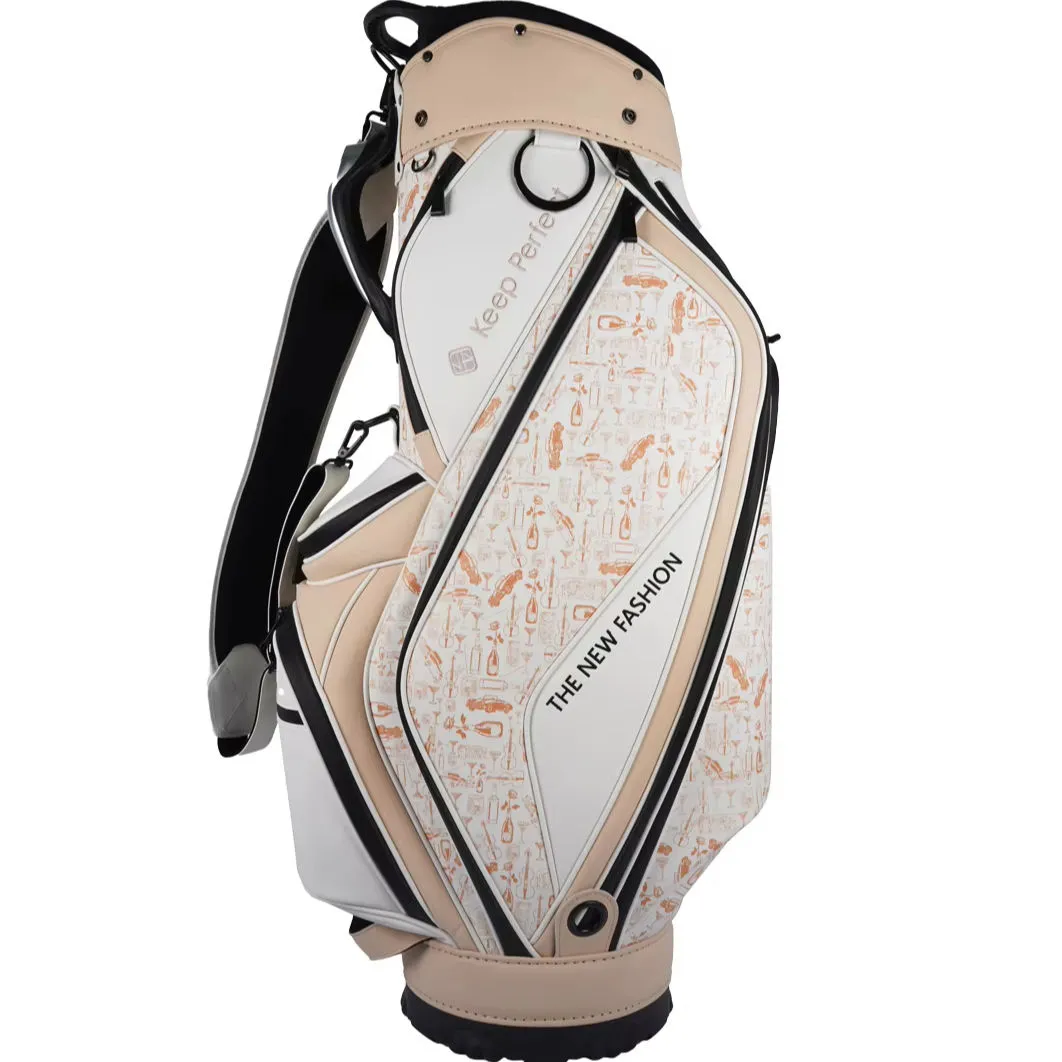
A hanger loop is a strip of webbing, a rivet and forty cents of hardware, and it is the component that decides whether a loaded bag survives a season hanging in a pro shop. Get the loop right and nobody notices; get it wrong and a 6 kg bag tears out of the top panel on the shop floor, in front of the account. Clips carry a smaller load and generate a disproportionate share of complaints, because they sit where a hand goes twenty times a round. Minimums, timing and inspection follow the trim pattern of any programme: Minimums run at 200 pieces per colourway with trials at 100, sample sets back in 6-10 working days, and production held to 35-50 days, all inspected to AQL 2.5.
Related reading: Rivets, Loops and Clip Systems Across a Bag Range
A Small Part With a Large Failure Consequence
The hanger loop exists for storage, not for play. Retailers hang bags on a rail, greenkeepers hang them in a shed, and owners hang them in a garage for six months a year. That means the loop and its anchor see a continuous static load of the fully loaded bag, 6-9 kg for a staff bag with clubs, over weeks rather than seconds. Static load is the harshest test a sewn or riveted joint can face, because there is no recovery between loading cycles.
Clips do the opposite job. A towel clip, a glove clip or a rangefinder carabiner sees 0.2-1.5 kg, but it is operated repeatedly, exposed to sweat and sunscreen, and often the first thing a customer touches in a shop. A clip that sticks, loses spring tension or sheds its plating becomes a review comment, and review comments about hardware travel further than comments about fabric.
The two parts also fail differently, which is why they should not be specified together. A loop fails at the stitch line or the rivet hole, progressively, with visible fraying. A clip fails suddenly, when a spring gives or a gate does not close, and it usually takes a towel or a rangefinder with it. One needs a static load test; the other needs a cycle test.
There is a third failure that belongs to neither part: the panel. A rivet pulled through a single layer of 600D polyester will hold for months and then tear a 20 mm slot. The hardware is almost never the weak link; the anchor is. Any specification that names the clip but not the reinforcement behind it is incomplete.
Loop or Clip: Two Different Jobs on One Bag
Buyers often describe both as "hardware" and receive quotations that treat them as one line item. They are separate decisions with separate standards, and the bag usually needs one loop and two to four clips.
Webbing hanger loop, sewn
A 25 mm webbing loop, folded and stitched to the top panel or under the collar, with an internal opening of 60-90 mm so a rail hook or a cart hook passes through. Polypropylene webbing at 1.2-1.8 mm is the default: cheap, rot-proof, and strong enough at 800-1,200 N breaking. Polyester at 1.0-1.4 mm costs perhaps 30 % more and resists UV and abrasion better, which matters on a bag that hangs outdoors.
The stitch pattern is the whole part. A box-X with two rows at 8-10 stitches per inch, using bonded polyester thread at 60-80 tex, distributes load into four directions. A single bar-tack is not equivalent: it concentrates load on one line and tears the webbing along the needle holes at about 60 % of the box-X strength. This is the single most common shortcut in low-cost hardware assembly.
Metal D-ring or triangle on a webbing tab
A die-cast or stamped ring on a short tab, used where the bag is hung from a hook rather than a rail. It presents a rigid opening, so it does not collapse under load, and it wears far longer than webbing against a metal hook. The trade is weight and noise: 12-25 g per ring and a metallic clack against the cart frame. Rings are usually 25-30 mm internal, in zinc die-cast with chrome or nickel plate, or in 304 stainless for coastal markets.
Spring clip or gate clip
A POM or glass-filled nylon body with a stainless spring, 55-75 mm long, 4-8 g. This is the right part for a towel or a glove: light, non-marking, and cheap at USD 0.06-0.22. The spring is the life limit. A 302 stainless spring cycled 10,000 times loses 10-20 % of its tension; a cheap carbon steel spring rusts and loses 40 % or more in a season.
Carabiner or snap hook
An aluminium 6061 gate carabiner, anodised, 18-30 g, rated 2-4 kN in a proper climbing-grade part and far less in a decorative one. For a golf bag the load does not require climbing ratings, but the gate does need to close reliably with one hand. Die-cast zinc snap hooks at USD 0.22-0.55 are the common choice; stainless at USD 0.55-1.40 is chosen where salt water is a factor.
Base Materials and the Cost They Carry
Four material families cover almost every clip and ring on the market, and each has a characteristic failure that shows up at a predictable time.
| Item | Material | Unit weight | Working load | Salt spray | Cost (USD) |
|---|---|---|---|---|---|
| Hanger loop, sewn | PP or polyester webbing, 25 mm | 6-11 g | 25 kg static | Not applicable | 0.05-0.14 |
| D-ring on tab | Zinc die-cast, chrome plated | 12-25 g | 20 kg static | 24-48 h | 0.22-0.55 |
| D-ring on tab, marine | 304 stainless | 14-28 g | 25 kg static | 96-200 h | 0.55-1.20 |
| Towel or glove clip | POM with 302 stainless spring | 4-8 g | 5 kg | Spring only | 0.06-0.14 |
| Clip, glass-filled nylon | PA66-GF30 with stainless spring | 6-10 g | 8 kg | Spring only | 0.10-0.22 |
| Snap hook or carabiner | Aluminium 6061, anodised | 18-30 g | 15 kg | 96-200 h | 0.70-1.60 |
| Snap hook, stainless | 304 stainless, polished | 20-34 g | 25 kg | 200 h plus | 0.55-1.40 |
Two entries deserve a warning. Die-cast zinc is inexpensive and looks excellent when new, but its plating fails first at the gate and at sharp edges, and once moisture reaches the zinc under the chrome the part blisters from the inside. Zinc pest, an intergranular corrosion that makes the casting swell and crack, appears on parts made from contaminated alloy and can destroy a batch in a humid warehouse within a year.
Acetal, or POM, is the default for clips and the default for a reason: it is stiff, dimensionally stable and does not squeak. It is also the most UV-sensitive polymer in common use on a golf bag. Unstabilised POM left in sunlight chalks, then embrittles, and a clip that flexed happily at 20 °C snaps at the gate after 300 hours of exposure. Either specify a UV-stabilised grade or plan on replacing the part every second season.
Weight is worth counting, because hardware accumulates. A staff bag with one loop, three clips and two rings carries 40-70 g of hardware; a cart bag with the same count in stainless carries 80-120 g. On a stand bag where every 20 g matters to the leg spring, plastic clips are not a cost compromise, they are the correct engineering answer.
Attachment: Stitch, Rivet or Both
The anchor decides the load rating, and there are only three options worth considering. Each has a failure mode that can be predicted from the panel it is fixed to.
| Method | Typical pull-out | Panel requirement | Failure mode |
|---|---|---|---|
| Box-X stitch, 2 rows at 8-10 spi | 400-600 N on 25 mm webbing | Single layer 600D with interlining | Webbing tears along needle holes |
| Bar-tack only | 250-350 N | Single layer, no interlining | Tack pulls through, 20 mm slot opens |
| Rivet, 8 mm barrel with washer | 300-500 N | Reinforcement plate behind shell | Hole elongates, rivet pulls through |
| Stitch plus rivet | 600-800 N | Plate plus interlining | Panel delaminates around the plate |
Stitch plus rivet is the correct answer for a hanger loop on a staff bag, and it is what most volume programmes converge on without being asked. The stitch carries the static load; the rivet stops the stitch line from propagating if one row fails. The cost difference over stitching alone is a rivet at USD 0.01-0.03 and about 12 seconds of operator time.
Rivet material matters more than buyers expect. Aluminium is light and will not rust, but it has roughly half the shear strength of steel and it deforms under sustained load, which is exactly the load a hanger loop applies. Steel rivets need plating and will bleed rust onto fabric if the plating is thin at the mandrel break. Copper or brass rivets are traditional on leather trim and are strong, but they discolour pale fabrics over time.
The panel behind the anchor is the part that gets skipped. A 30 x 40 mm reinforcement of 1.5 mm PE board or a double layer of 600D, placed inside the shell behind the loop, spreads the load from roughly 150 mm² to 1,200 mm² and turns a tear-out into a non-event. On a bag with no internal board at the top, the loop will always be the first thing to fail, whatever the hardware.
Placement is the last variable and it is usually decided by aesthetics. A loop mounted 15-20 mm below the collar, centred on the spine, keeps the hanging bag balanced; a loop offset to one side will hang the bag at an angle and load one stitch row twice as hard. On a stand bag the loop must also clear the leg hinge sweep, or the first deployment of the legs abrades the webbing.
Corrosion, Nickel Release and Coastal Markets
Hardware is the only part of a golf bag that a buyer touches with bare skin, repeatedly, often with sunscreen or sweat on the hands. That turns a corrosion question into a compliance question in Europe, and into a warranty question everywhere else.
Salt spray performance separates the price points cleanly. Zinc die-cast with decorative chrome survives 24-48 hours before red rust appears at the gate; nickel plating reaches 48-72 hours; 304 stainless 96-200 hours; 316 stainless beyond 200. Anodised aluminium sits at 96-200 hours depending on coating thickness and sealing, with Type II anodising at 10-25 µm being the usual specification.
Nickel release is a separate mechanism from corrosion and is regulated on its own terms. Under REACH, items intended for prolonged skin contact must release less than 0.5 µg of nickel per cm² per week, tested to EN 1811. A cheap nickel-plated clip can pass a salt spray test and fail nickel release, because the two measure different things. For a European programme, ask for the release test rather than the plating thickness.
Coastal and humid markets shift the material selection rather than the price. A 304 stainless ring adds USD 0.35-0.70 over die-cast zinc and removes the plating failure entirely; in a salt-air environment that is the cheapest reliability purchase on the bag. Aluminium is the wrong answer where the part rubs against another metal, because the anodic coating wears through and the exposed alloy pits quickly.
Field note. Test the clip with sunscreen on your hands, not clean ones. Oxybenzone and avobenzone in sun cream attack some plating systems and most printed pulls, and the staining appears as a dull grey patch that will not polish out. It is a five-minute test that predicts a whole class of returns.
Load Ratings and How to Verify Them
A hardware specification without a test method is a preference. Four tests cover the realistic failure envelope, and all of them can be run on a bench with a spring scale, a rig and a timer.
- Static hold. Hang the rated load times three, for 24 hours, from the loop and from each clip. Three times the working load is the conventional margin for a static hanging part; less than that and creep becomes the mechanism.
- Cycle the gate. Open and close each clip 10,000 times at 30 cycles per minute, measuring closing force every 2,000. A loss of more than 20 % means the spring will not hold a towel by the end of a season.
- Pull to destruction. Fix the panel, pull the hardware at 100 mm/min, record peak load and where it fails. If the hardware outlives the panel, the panel needs the reinforcement plate.
- Corrode it. 48 hours of neutral salt spray for plated parts, 96 for stainless, assessed for red rust and blistering at the gate, the rivet and any cut edge.
- Age it in light. 300 hours of xenon-arc exposure for any polymer clip, then a cold impact at -20 °C. This is the test that catches unstabilised POM before a season does.
Interpretation matters as much as execution. A loop that reaches 600 N and fails by tearing the webbing is a good result, because the panel held. A loop that reaches 350 N and fails by pulling the rivet through the shell is a bad result even though the number is only slightly lower, because the failure mode is a hole in a visible panel rather than a frayed strap. Record the failure location on the report, not just the load.
Sampling for hardware follows the same AQL 2.5 logic as the rest of the bag. A 200-piece lot means thirty-two units examined at level II, and a third major closes it. The hardware checks inside that draw are plating defects at the gate, spring return on every clip, rivet seating and washer presence, loop stitch density, and colour match against the master.
One thing that is not worth testing at the sampling stage is the UV resistance of the loop, because the test takes weeks. That belongs in the material approval file, where the webbing supplier declares a UV-stabilised grade and the colour fastness to light is recorded to ISO 105-B02 against a retained grey scale. Buyers who skip that step discover faded loops on the shop rail, which is the most visible place a bag can fail.
Writing Hardware Into the Tech Pack
Hardware lines in a tech pack are usually one row of a trim table, which is why they cause so many disputes. Six fields turn that row into something an inspector can check.
- Item and function, so the loop is not confused with a cart strap anchor or a towel ring.
- Base material and finish with the standard named, for example 304 stainless polished or zinc die-cast with 15 µm nickel chrome.
- Dimensions including internal opening, webbing width and, for a clip, overall length and gate opening.
- Attachment method and reinforcement, naming the stitch pattern, thread, rivet size and the plate behind the panel.
- Rated load and the failure location expected, which is what makes a pull test meaningful rather than decorative.
- Corrosion and compliance declarations, including salt spray hours and, for Europe, nickel release.
Cost is the easy part once those fields are set. A complete hardware set of one loop, three clips and one ring lands at USD 0.55-1.30 in plastic and plated zinc, or USD 1.40-3.10 in stainless and anodised aluminium. On a 200-piece order that is a difference of roughly USD 170-360 across the run, which is negligible against the cost of a single field failure on a staff bag.
Where the hardware is being specified for a bag that will hang in retail for months, the loop deserves the stainless and the reinforcement plate, and the clips can stay plastic. That split is common on staff bags and rare on cart bags, which is exactly backwards from where the failures actually occur. The staff bag range shows how the loop is positioned on a bag that is expected to hang loaded, and the strap design guide covers the neighbouring question of how webbing loads are carried through the top panel. Hardware sourcing has run through QUANZHOU JUNYUAN BAGS since 2014, backed by a team in the trade since 2004.
Sources and Standards Referenced
- ECHA, Understanding REACH restricted substances (nickel release)
- ISO 2859-1:2022 Sampling procedures for inspection by attributes
- ASTM D5034 Breaking strength and elongation of textile fabrics (grab test)
- ASTM D2261 Tearing strength of fabrics (tongue method)
- ISO 105-B02 Colour fastness to artificial light
Next steps: custom solutions, manufacturing capability, and a quotation request.
Frequently Asked Questions
How strong should a golf bag hanger loop be?
It should hold 25 kg static, which is roughly three times the loaded weight of a staff bag. A box-X stitch on 25 mm webbing reaches 400-600 N, and adding an 8 mm rivet with a reinforcement plate behind the shell takes the assembly to 600-800 N before anything yields.
Is a stitched loop or a riveted loop better?
The combination is better than either alone. The stitch carries the static load and the rivet stops a failed stitch row from propagating into a tear. Stitching alone is fine on a light cart bag; a rivet without a reinforcement plate is worse than stitching, because it pulls a slot through the panel.
What webbing should a hanger loop use?
Twenty-five millimetre polypropylene at 1.2-1.8 mm is the default, with 800-1,200 N breaking strength. Polyester costs about 30 % more and resists UV and abrasion better, which matters on a bag that hangs outdoors for months.
Why do plastic clips break after a season?
UV degradation of acetal. Unstabilised POM chalks and then embrittles, so a clip that flexed easily when new snaps at the gate after roughly 300 hours of sunlight. A UV-stabilised grade or a glass-filled nylon body solves it for a few cents per part.
What is the difference between a towel clip and a carabiner?
A clip is a 4-8 g plastic part with a stainless spring, rated around 5 kg, for a towel or glove. A carabiner is an 18-30 g metal gate part rated 15-25 kg for a rangefinder or an accessory pouch. Clips are cheaper and lighter; carabiners hold a heavier item and survive abrasion.
How many hours of salt spray should golf bag hardware survive?
Zinc die-cast with decorative chrome manages 24-48 hours before red rust shows at the gate, nickel plating 48-72, 304 stainless 96-200, and 316 stainless beyond 200. Anodised aluminium sits at 96-200 hours depending on coating thickness and sealing quality, so a salt-air market should be quoted stainless from the start.
What is nickel release and why does it matter?
Nickel release measures how much nickel migrates onto skin from an item in prolonged contact. Under REACH, items for prolonged skin contact must release less than 0.5 µg per cm² per week, tested to EN 1811. A clip can pass salt spray and still fail this, because the two test different things.
Where should the hanger loop be positioned?
Centred on the spine, 15-20 mm below the collar, so the loaded bag hangs level. An offset loop hangs the bag at an angle and doubles the load on one stitch row. On a stand bag the loop also has to clear the leg hinge sweep or the webbing abrades on the first deployment.
What rivet should be used on a golf bag?
An 8 mm barrel rivet with a backing washer, in steel with adequate plating or in copper where a traditional look is wanted. Aluminium is light but has roughly half the shear strength of steel and deforms under the sustained load a hanger loop applies.
How is hardware load tested before bulk?
Three times the working load held for 24 hours, 10,000 gate cycles with closing force measured every 2,000, a pull to destruction at 100 mm per minute recording both peak load and failure location, and 48-96 hours of neutral salt spray on plated parts.
What does a full hardware set cost?
One loop, three clips and one ring runs USD 0.55-1.30 in plastic and plated zinc, or USD 1.40-3.10 in stainless and anodised aluminium. Across a 200-piece order the difference is USD 170-360, which is small against the cost of a single loop failure on a staff bag.
Does hardware affect the MOQ of an order?
Not usually, because most clips, rings and webbing are stock items available in low quantities. Bespoke cast or stamped parts are different: a custom die-cast ring needs tooling and typically 500 pieces to justify it, while colour-matched webbing is a 200-piece proposition.
Ask for a Hardware Spec Sheet
Send the bag type and target market and you will get a hardware list with materials, rated loads, attachment detail and the corrosion standard each part should meet.
Request Hardware Spec See OEM Services