Top Golf Stand Bag Design Trends for 2026–2030
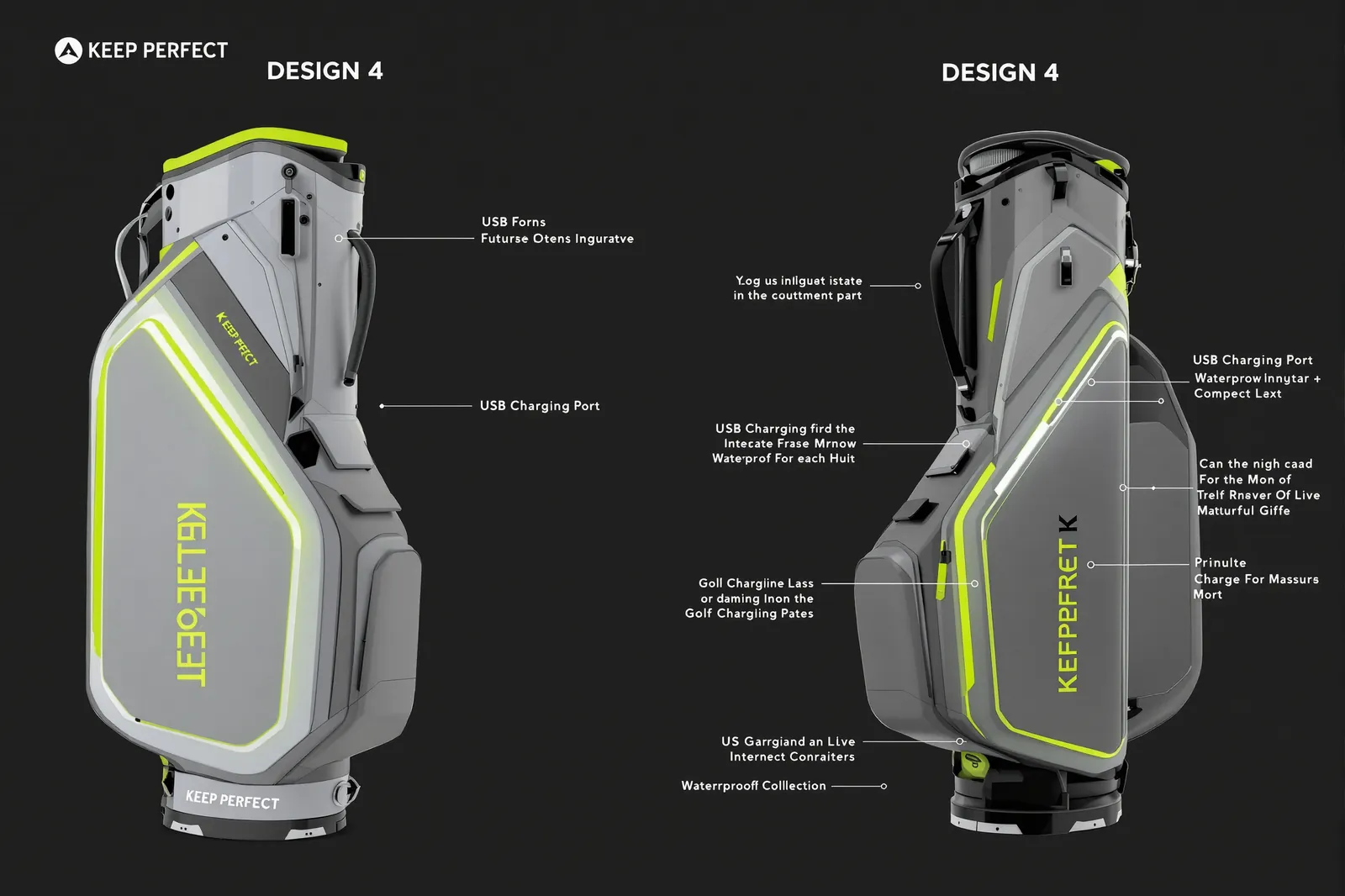
Golf stand bag design for 2026–2030 is defined by a smarter balance of light weight and durability, with the mainstream moving to a 1.8-2.6 kg empty bag built from recycled, coated fabric, full-length dividers as standard and a refined, breathable dual-strap harness that carries an approximate 10-14 kg loaded round comfortably. Sustainability has shifted from a marketing extra to a baseline expectation, colourways are pushed by visibility and brand identity, and ergonomics continue to mature so the bag disappears on your back. This guide from QUANZHOU JUNYUAN BAGS (founder entered the industry 2004, company established 2014, serving 200+ brands across 100+ countries) analyses the design currents shaping stand bags over the next five years.
Trend 1: Mid-Weight Beats Ultra-Light
The most significant design trend for the 2026 to 2030 period is a shift away from chasing the lowest possible weight and toward a mid-weight bag that balances portability with the durability, organisational capacity and stability players actually rely on. Early ultra-light bags saved grams by trimming dividers, shrinking pockets and lightening the stand, but too often that left a bag that flexed, tangled the clubs or struggled to stand on uneven ground. The new consensus is a pragmatic middle band, generally around 1.8 to 2.4 kilograms, that keeps the bag light enough to carry comfortably while preserving full-length dividers, useful pocket volume and a stand that behaves on the course. For manufacturers and brands this is a more honest target, because it lets the product sell on how it performs fully loaded rather than how it feels empty in the hand.
The most consequential shift of the next five years is a mature attitude to weight. The early years of the lightweight movement were a race to the lightest possible bag, with some models dipping under 1.3 kg. Designers and consumers have since learned that an extremely light bag can feel flimsy, sway on the back, and suffer thin fabric and stripped dividers.
The 2026-2030 sweet spot is therefore a comfortable mid-weight bag around 2.0-2.3 kg empty, with a sensible range of 1.8-2.6 kg. This gives designers room for durable fabric, full-length dividers, a proper back panel and a stable stand without giving up carrying comfort. Ultra-light bags under 1.8 kg remain for minimalist competitive walkers who trim their load, while the everyday golfer gets a bag that is genuinely comfortable to carry and genuinely durable.
From a manufacturing standpoint this is a healthy correction. Weight is an engineering trade-off, and the mid-weight range lets a factory build strength and comfort into the same grams. Brands now brief factories on a weight budget plus a durability target, rather than a single featherweight number. Our weight and portability analysis breaks down where the grams go and how mid-weight builds stay robust.
Expect marketing language to follow: instead of "the lightest bag ever", brands will talk about "the lightest bag that is still durable" and "a comfortable weight you can carry all day". That is a more honest and more useful promise for the walker.
Trend 2: Full-Length Dividers Become Standard
Full-length dividers — partitions running the whole depth of the bag so each club occupies its own quiet lane — are moving from premium option to standard on stand bags. The reason is that walkers tip their bag on the stand constantly, and part-length dividers leave grips to tangle, slowing every shot and fraying nerves.
By 2030 the entry-level stand bag will routinely offer a 5-way or 6-way full-length divider layout, separating the driver, fairway woods, hybrids, irons and wedges with individual lanes. Heavier 14-way full separators will stay the domain of cart bags and riders, but a clean, full-length 5-way layout is now the walker's default expectation rather than an upsell.
Inside the trend are quieter refinements: flexible tops that let clubs sit at a comfortable angle, pass-through slots that avoid snagging putter grips, and divider geometry tuned to reduce rattle on a tipped bag. These micro-details are where factories differentiate, and they are the visible payoff of designing the divider and the stand as one system. Our divider and storage systems guide maps the layouts in detail.
For buyers, the test is simple: slide the longest club in and out repeatedly on a tipped bag. A bag whose full-length dividers keep the driver quiet and tangle-free is delivering the trend's real value.
Trend 3: Sustainability Moves to the Baseline
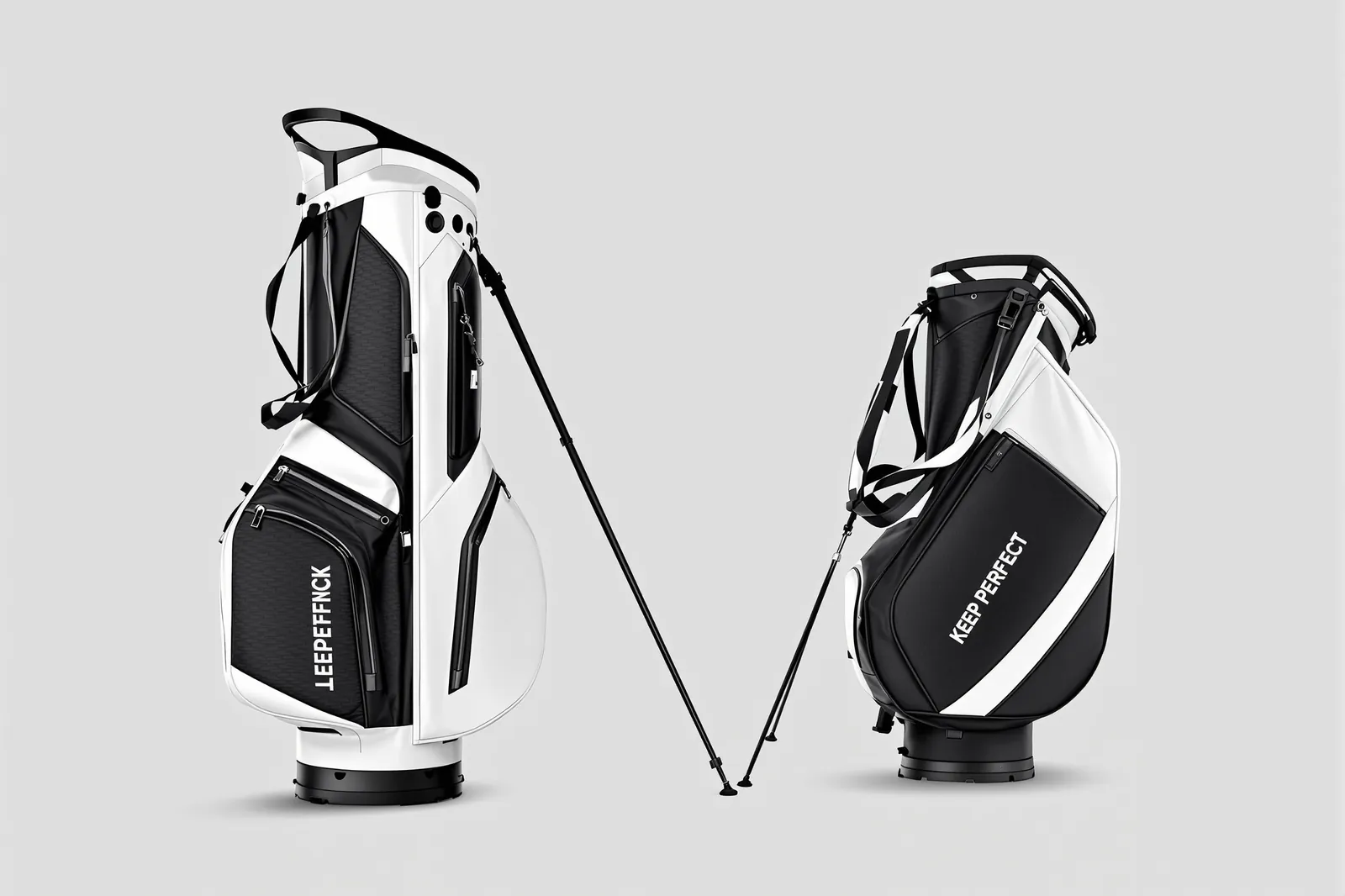
Sustainability is no longer a niche selling point in stand bags — it is becoming the baseline customers expect. Recycled nylon and RPET (recycled polyester) fabrics, water-based instead of solvent coatings, lower-impact dyeing and fully recyclable packaging are all entering mainstream production.
Driving this are two forces. First, brand sustainability commitments: major golf and sportswear brands are pushing suppliers toward verified eco-materials to meet their own climate targets. Second, customer preference: golfers increasingly ask where a product is made and what it is made from, and reward transparent, eco-conscious construction.
The engineering challenge is that recycled materials must match virgin fabric in durability and weight. Factories are solving this through fabric blends, recycled yarns of the same denier, and coatings that add performance without harming the recycled core. Our sustainable materials guide and eco-friendly manufacturing cover these material pathways.
By 2030, expect sustainability to be a checkbox rather than a headline. The differentiators will be material durability, verified sourcing (for example, third-party audits such as the SGS audit our affiliated factory passed in March 2026) and honest labelling, rather than a single recycled claim.
Trend 4: Ergonomics and the Smart-Fit Harness
Ergonomics continues to be the quiet engine of stand bag design. The next generation of dual-strap harnesses is moving toward smart-fit adjustment: straps that are easy to fine-tune to the user's body, with breathable contoured padding, quick one-handed release and optional waist or sternum stabilisers.
The goal is a bag that rides like a calm, well-fitted backpack — snug against the spine, weight centred and low, with no pressure points digging into the neck. Because a walker carries for four hours, even small ergonomic wins compound dramatically. Designers are therefore spending proportionally more of the weight budget on the harness and back panel than on extra pockets.
Body-matching is also growing. Expect to see more proportion-scaled bags for different frames — an extension of the junior and women's lines gaining ground in stand bag design. A bag that fits the body is not a luxury; it is the feature that determines whether the round is pleasant or punishing. Our ergonomic benefits guide and posture while carrying guide detail the physiology behind these choices.
The trend's payoff is a bag you stop thinking about. The best praise a modern designer can receive is that a golfer no longer notices their bag — and harness refinement is the main route there.
Trend 5: Colour, Visibility and Brand Identity
Colour is enjoying a bold revival in stand bag design. Where predominantly black or dark bags once dominated, the new direction favours bright, visible panels, contrasting accents and expressive colourways. This is partly practical — a vivid bag is easier to spot at a glance in a crowded bag-drop — and partly personal, letting golfers project style.
For clubs, academies and teams, colour is now central to identity. A signature colour used across bags, and a large, clean branding panel, turns every bag into a walking advertisement for the club, exactly as the broader brand-exposure trend describes. Pantone-matched colour ensures the printed or woven colour matches the brand standard across a whole batch.
Factory capability is keeping pace. Colour-matched dye lots, colour-fast fabric that does not fade through a season, and woven or printed panels that hold detail are all standard at a well-instrumented factory. Our colour psychology guide connects colour choice to perception and purchase behaviour.
Expect 2026-2030 to celebrate colour — from subtle two-tone elegance to confident statement panels — while never losing sight of the durability that keeps those colours clean round after round.
Trend 6: Organisation That Reflects Real Use
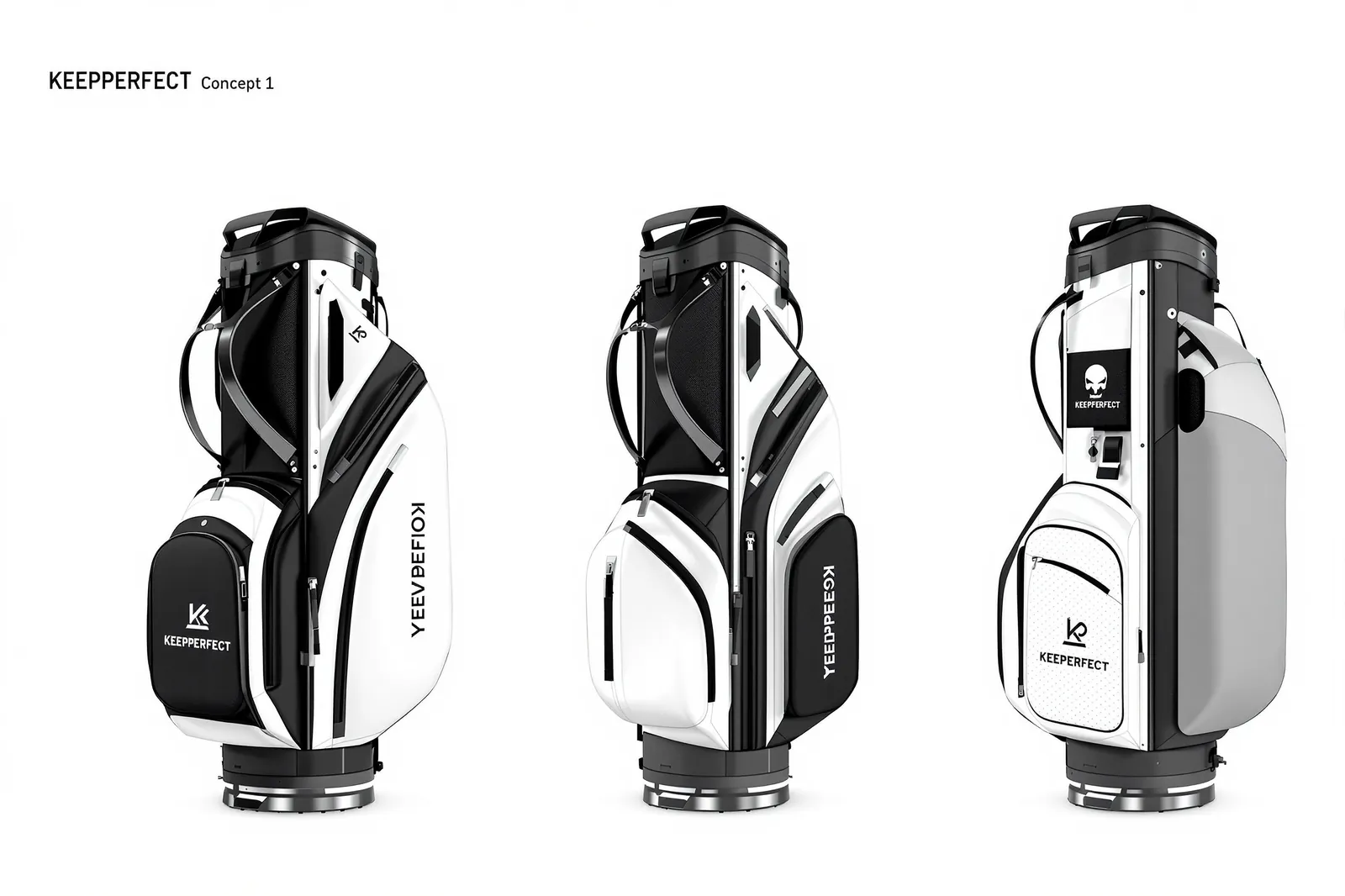
Pocket design is shifting from more-is-better to curated organisation. Designers are studying how walkers actually use a bag mid-round and building pockets around that behaviour, cutting the pocket count to the essentials that earn their weight.
The modern layout centres on a few high-value pockets: a soft-lined valuables pocket for phone and keys, an insulated cooler pocket for a drink, a large apparel pocket for a layer, and a quick-access rangefinder or glove stash. Angled and reachable-by-hand pockets let a walker grab an item without taking the bag off, which is the kind of subtle gain that shapes a round.
By 2030 expect more modular organisation: removable pouches, tool-free compartment customisation and hybrid open-tray designs for tools and balls. The principle is that empty grams in unused pockets are wasted grams, so the layout should match the golfer, not an imaginary maximum. Our storage guide covers pre-round packing that works with a leaner layout.
For the walker this means a bag that is lighter simply because it is not carrying a dozen rarely-opened pockets — a quiet but powerful trend that supports the overall move to honest mid-weight.
Trend Snapshot Table
| Trend | 2026-2030 Direction | Impact on the Walker |
|---|---|---|
| Weight | Mid-weight 1.8-2.6 kg | Light enough, genuinely durable |
| Dividers | Full-length as standard | Fewer tangled clubs on the stand |
| Materials | Recycled fabric, water-based coating | More sustainable, equal durability |
| Harness | Smart-fit, breathable, adjustable | Better posture and shoulder comfort |
| Colour | Bold panels, brand identity | Visibility and personal style |
| Organisation | Curated, modular pockets | Lighter bag, right features |
Summary of the six design currents shaping stand bags to 2030.
Reading across the table, a coherent arc emerges: the industry is converging on a lighter, more honest, more ergonomic and more sustainable bag. None of these trends is revolutionary on its own, but together they describe a meaningful upgrade in what a walker can expect by 2030 — a bag that combines the comfort of lightweight design with the durability and identity that modern golf demands.
How These Trends Meet Manufacturing
Each design trend lands on the factory floor in a concrete way. Mid-weight builds require precise material and pattern engineering to hold a target weight. Full-length dividers need careful cutting and stitching so lanes stay straight. Recycled fabric needs quality control so batches match specifications. Colourways require Pantone-matched dyes and colour-fast tests.
This is exactly where a well-instrumented factory earns its role. Sustaining a 7-line, 126-sewing-machine, 137-staff operation with a 200,000-unit monthly capacity means every material and every step is verified against the same standard whether a brand orders 200 or 20,000 pieces. Sampling lets a brand confirm weight, colour and comfort before committing to a run, which is why we always prototype first.
Wholesale buyers planning a new line should align their spec with the trends early. Our stand bag quality standards and MOQ and pricing guides lay out the commercial path for bringing a trend-driven bag to market.
At QUANZHOU JUNYUAN BAGS we build golf stand bags on an affiliated 4,950 m² main factory whose founder entered the industry in 2004 and was established as a company in 2014. The facility runs 7 production lines with 126 sewing machines and a team of 137 staff, supporting a monthly capacity of up to 200,000 units for more than 200 brands across 100+ countries. Sampling typically takes 10–20 days and bulk production 45–60 days, with a standard MOQ of 200 pieces and 100 for test orders. The factory was independently audited by SGS in March 2026. Contact service@junyuanbags.com or WhatsApp +86 17750020688.
Whether you are designing for your own brand or refreshing a lineup for the next five years, aligning with these currents early puts you ahead of a market that rewards the comfortable, durable, sustainable stand bag. Contact QUANZHOU JUNYUAN BAGS at service@junyuanbags.com or WhatsApp +86 17750020688 to brief a 2026-2030 stand bag, or browse the product range.
Trend 7: Stand Mechanism Innovation
The legs that define a stand bag are themselves evolving. The trend for 2026-2030 is toward lighter, faster and more reliable deployment: legs that snap open with a lighter movement, lock more positively, and retract so cleanly they vanish into the base when you shoulder the bag.
Lightweight alloys and precision hinges are replacing heavier mechanisms without sacrificing strength, which supports the broader mid-weight goal. Some designs integrate the stand and base as a single impact-absorbing unit, so the whole load of a set-down is spread rather than concentrated on one hinge pin. Because a walker sets the bag down on every approach shot, a mechanism that opens smoothly and stands firm on a slope is worth real money.
Five-legged bases remain the stability benchmark for uneven lies, while two-legged designs stay lighter and cleaner for minimalist bags. The shared direction is reliability: a stand that never fails mid-round. Our durability guide explains how hinge and base are tested to survive a full season of set-downs.
The 2026-2030 Buyer's Checklist
Bringing the trends down to a practical decision, a walker buying a stand bag in this period should look for six things. To make the choices concrete, here is what to check on the shop floor or in the spec sheet before you commit:
- Weight budget: an empty weight around 1.8-2.6 kg that still feels solid, not flimsy.
- Full-length dividers: a 5-way or 6-way layout that keeps clubs tangle-free on the stand.
- Sustainable build: recycled or water-based materials without a durability compromise.
- Smart-fit harness: padded, breathable, adjustable dual straps with easy release.
- Stable stand: a mechanism that opens firmly and stands calm on a slope.
- Curated pockets: the valuables, cooler, apparel and quick-access pockets you actually use.
Working through this list is faster than comparing feature counts, because it filters straight to what a walker values. A bag that passes all six is delivering the substance of the trends rather than their marketing. For a deeper factory-side view of these quality points, our weight and carry load guide completes the picture.
Manufacturing Outlook and Lead Times
For brands and distributors, planning a 2026-2030 stand bag line means locking the design direction early so a factory can engineer to it. A mid-weight, sustainable, ergonomic bag is not built by bolt-on tweaks; it is specified on the pattern table, where divider layout, fabric denier and harness geometry are decided together to hit a target weight and cost.
Because recycled materials and new harness systems benefit from prototyping, a sample-first workflow is strongly advisable. Confirming the loaded carry, Pantone colour and durability on a real prototype before committing to a full run avoids costly rework and keeps the launch on schedule. Sampling typically takes 10-20 days and bulk production 45-60 days, with a standard MOQ of 200 pieces per design and colorway and 100 for test orders.
Working with a factory that runs 7 production lines with 126 sewing machines and 137 staff, supporting a monthly capacity of up to 200,000 units, gives a brand the flexibility to scale from a test run to a full retail launch without changing partners. Multiple production lines also mean a brand can run several moulds, colours or designs in parallel, keeping launch schedules tight even when the lineup expands. Third-party verification such as the SGS audit in March 2026 on our affiliated factory adds buyer confidence in quality and compliance across regions from the US and EU to Japan and Australia, and gives retail and e-commerce buyers the documented assurance buyers' teams increasingly demand before approving a new supplier or line.
What the Mid-Decade Golfer Expects
Stepping back, the golfer of 2026-2030 views the stand bag differently from a decade earlier. They buy fewer, better products, care where materials come from, want a bag that fits their body rather than a generic one, and are willing to pay a little more for durability and comfort that last. In practical terms they carry a lighter bag, walk more often, and expect their equipment to support a more active, walk-friendly relationship with the game.
This is good news for well-designed products. The mid-weight, sustainable, ergonomic stand bag is exactly what this customer is looking for, and brands that read the trend early are positioned to lead their segment. Because the design direction is now clear, the strongest differentiator has shifted from novelty to execution — how well the bag carries, how robust the materials are, how precisely the brand colour is matched, and how honestly the product is made and labelled.
For the individual golfer, the practical takeaway is reassuring: choose a modern mid-weight bag with full-length dividers, a smart-fit harness and a stable stand, and you will be carrying the best-balanced equipment this generation of stand bag design has produced.
Design a Trend-Ready Stand Bag
Build a 2026-2030 Stand Bag
Prototype a mid-weight, sustainable stand bag to your exact spec. Test orders from 100 pieces, sampling 10-20 days, bulk production in 45-60 days.
Request a Bulk Quote →Frequently Asked Questions
- What is the biggest golf stand bag trend for 2026-2030?
- The biggest trend is a smarter balance between light weight and durability, typified by a 1.8-2.6 kg empty bag made from recycled, coated fabric with full-length dividers and a refined dual-strap harness.
- Are golf stand bags getting lighter?
- Yes, but more intelligently. Rather than chasing the lowest possible number, designers produce a comfortable mid-weight bag around 2.0-2.3 kg that is durable, with genuine ultra-light bags reserved for minimalist walkers.
- Are sustainable materials really being used in stand bags?
- Yes. Recycled nylon and polyester, water-based coatings and lower-impact dyeing are now common, driven by brand sustainability goals and customers who reward eco-friendly construction.
- Will stand bags become smarter or connected?
- Partially. Lightweight and practical features such as valuables pockets, quick-access organisers and stable stands dominate, while connected technology remains a niche premium extra rather than a mainstream expectation.
- How is colour used in 2026-2030 stand bag design?
- Colour is used for both visibility and brand identity. Bold, bright panels and monogrammed colourways let walkers express personal style while clubs and courses use a signature colour for team identity.
- How do I get a stand bag designed to 2026-2030 trends?
- Work with a factory on a custom spec. At QUANZHOU JUNYUAN BAGS, sampling takes 10-20 days and bulk production 45-60 days, with a standard MOQ of 200 pieces per design and colorway, and 100 for test orders.