Eco-Friendly Golf Bag Manufacturing: Sustainability in Practice
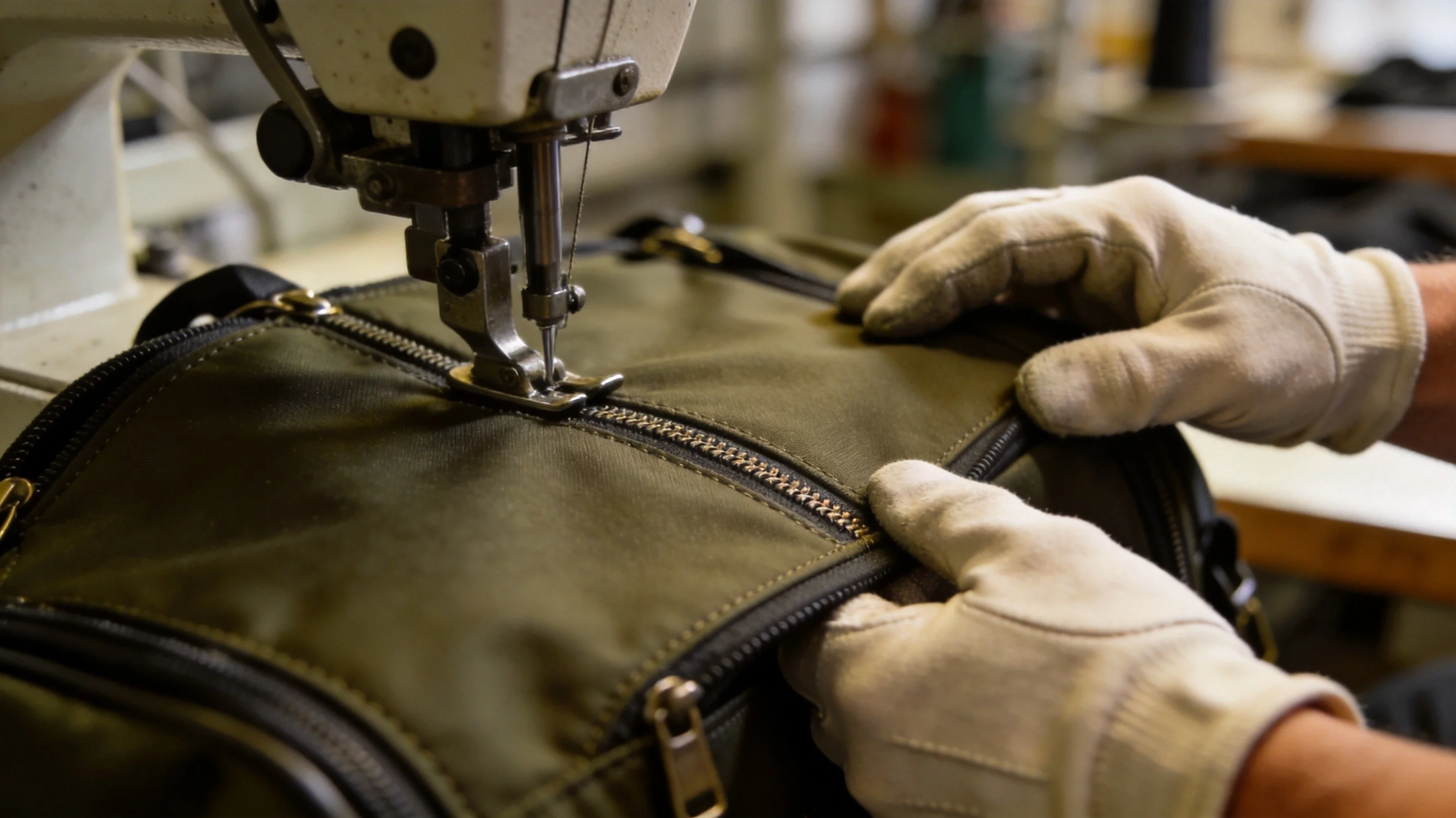
Sustainability in eco-friendly golf bag manufacturing means verifiable material sourcing, reduced cutting waste, cleaner chemistry, efficient energy use and an audited facility — and it is available commercially at a 200-piece MOQ with 100-piece test orders, sampling in 10-20 days and bulk production in 45-60 days.
Sustainability is easy to say and harder to run. Inside a working golf bag factory it takes concrete, measurable form: the fabric is certified recycled or organic, the cutting floor wastes as little cloth as possible, the print shop uses water-based inks, the machine lines run efficiently, and an independent auditor has checked the whole operation. This is what separates a genuinely sustainable factory from a marketing story.
This article looks inside QUANZHOU JUNYUAN BAGS, a golf bag manufacturer in Quanzhou, China founded in 2014 (our founder entered the golf bag industry in 2004). We explain how sustainability is applied on the production floor and what evidence a buyer should collect to trust it.
What Sustainability Looks Like on the Factory Floor
Sustainability on the floor is not a banner; it is a set of systems. Material sourcing starts it — a buyer chooses a GRS-certified recycled shell or a GOTS organic lining, and the factory manages that claim with the same discipline as any spec. From there, each production step has a greener version. Cutting shows the first real gain. Computerized marker nesting arranges every pattern part to use fabric densely, and nested cutting combines multiple parts so offcuts shrink. Those offcuts feed linings, pockets and binding instead of landfill, so the fabric a buyer pays for becomes a bag, not scrap. Decoration follows with water-based inks; finishing applies cleaner dyes and coatings; and quality control keeps defects low so no energy or material is wasted on failed bags. Together these steps produce an eco bag through the same efficiency that keeps cost competitive. Our manufacturing page maps the floor.Material Sourcing with Verification
The credibility of an eco factory rests on material sourcing. A recycled shell means the rPET fabric carries a GRS or RCS certificate; organic linings carry GOTS; clean chemistry shows bluesign or OEKO-TEX data. The factory's job is to keep that documentation current and pass it to the buyer. At QUANZHOU JUNYUAN BAGS, sustainable fabrics are managed like any core material: ordered against forecast, checked on arrival, and tracked so each finished bag can be tied to its material lot and certificate. This traceability is what makes an eco claim repeatable lot after lot. Recycled and organic yarns are now commodities, so verification does not inflate cost much. It does, however, turn a vague 'green' claim into a documented, defensible one. Our materials guide shows how fabrics are specified and sourced.
Reducing Cutting Waste
Fabric is the most expensive input in a golf bag, so using it completely is both an environmental and an economic priority. Computerized marker nesting and automated cutting dramatically cut offcuts compared with manual layouts, and disabled-yield tracking lets the factory measure the improvement. Reusing offcuts for linings, pocket bags, binding and internal panels closes the loop further. Small pieces that used to be waste now become functional parts, lowering the bag's true material consumption. A buyer can ask for yield and offcut-reuse figures to gauge a factory's real performance. High utilization is a measurable sustainability gain that also lowers unit cost. Our quality control guide describes how cutting precision feeds into final quality.Cleaner Chemistry and Decoration
On the floor, sustainability touches chemistry. Cleaner dyes and coatings that meet bluesign or OEKO-TEX criteria reduce harmful substances, and water-based screen inks cut VOC emissions in the print shop. These choices make the factory a safer, cleaner place to work as well as a greener one to buy from. For the buyer, the practical request is the chemistry data behind fabrics, trims and inks. OEKO-TEX® Standard 100 data on the finished bag means it is safe to handle; bluesign-processed inputs mean the chemistry was addressed at the source. Cleaner chemistry is a measurable, auditable claim, which is why it is more trustworthy than general green slogans. Our certification guide lists which reports to collect from any factory.Energy Efficiency and Rework Reduction
Energy is a quiet but steady drain on a factory's footprint. Efficiency comes from scheduled production runs that avoid repeated machine warm-ups, optimized settings that hold tension and temperature steady, and lighting and equipment tuned for lower consumption. Rework reduction is an equally important energy story. Every defective bag consumed fabric, energy and labor before it failed; preventing defects therefore saves all of those resources. A factory with a low defect rate is intrinsically more sustainable. Consistent quality at the first pass is how an eco factory protects both its footprint and its cost. This focus on doing it right the first time is a core theme of our quality control overview.
Facility Audits as the Proof
The most comparable evidence of factory-level sustainability is an independent audit. A social-compliance audit verifies working conditions, safety, labor practices and environmental management. Widely used provider SGS conducts such factory audits to recognized protocols. QUANZHOU JUNYUAN BAGS completed a 2026 SGS factory audit, giving buyers third-party assurance that supplements material certificates. This is the kind of concrete, checkable signal that separated responsible suppliers from superficial ones. When you evaluate a factory, ask which audits it has completed, the date, and the scope. Combine a facility audit with GRS, GOTS, bluesign and OEKO-TEX material data for a complete view. Our about page summarizes our compliance position.Completing the Loop: Packaging and End of Life
Sustainability inside the factory extends to what leaves it. Packaging is specified for recycled content, recyclability and minimal filler, so the box around the eco bag is as responsible as the bag itself. Efficient packing also ships more bags per container, cutting transport footprint. End-of-life thinking completes the loop. Bags designed with compatible polymers and identifiable materials are easier to reuse or recycle; durable construction delays replacement. Even without a full recycling scheme, honest end-of-life communication builds trust. A factory that considers packaging and end of life demonstrates life-cycle thinking rather than a single-material fix. Our procurement guide covers how to specify these requirements.Cost, MOQ and the Commercial Reality
There is a persistent myth that sustainable manufacturing is for large orders only. In practice, recycled and organic materials are bought like any fabric, so a 200-piece custom MOQ with a 100-piece test order is entirely realistic for an eco line. Sampling runs 10-20 days and bulk production 45-60 days. Cost stays in check because recycled yarn is a commodity and efficiency lowers waste. Any premium is usually modest and can be offset by lighter packaging and cleaner, cheaper-to-apply decoration. This commercial realism is why eco manufacturing is spreading. A brand does not need special volumes or a premium budget to run a verified sustainable line. Our order process guide explains how such a line is quoted and sequenced.Conclusion: Sustainability That Can Be Seen and Checked
Sustainability in eco-friendly golf bag manufacturing is at its strongest when it is visible and checkable: certified material, high fabric yield, clean chemistry, low defect rate, reduced packaging, and an SGS audit on file. These are concrete, measurable, and comparable across factories. QUANZHOU JUNYUAN BAGS applies these practices across 7 production lines with 126 sewing machines and 137 staff at about 200,000 pieces per month, serving 200+ brands in 100+ countries from the factory it founded in 2014. Because sustainability is applied through the same efficient process that keeps costs competitive, it sits naturally inside a 200-piece MOQ. To discuss an eco program, contact service@junyuanbags.com or +86 17750020688.Designing Sustainability into the Product's Useful Life
Sustainability inside the factory only tells half the story; the other half is how long the bag lasts in the golfer's hands. A bag engineered for years of use — reinforced stress points, robust straps, sealed seams and tough bases — saves more resources over its life than cutting waste in a single production run. This is why durability testing is inseparable from sustainable manufacturing. Fabric that passes abrasion and tear tests, hardware that survives zipper cycles, and coatings that keep weather out all postpone replacement. A durable sustainable bag is the double win: smaller footprint now, smaller footprint later. QUANZHOU JUNYUAN BAGS pairs sustainable materials with the same durability engineering applied to its conventional line, so an eco bag does not trade away longevity. The result is a product whose environmental merit compounds across its active life rather than fading after one season.Granular Levers: Thread, Binding and the Small Parts
Sustainability is in the granular details as much as the headline fabric. Binding and thread run the full length of a bag and, chosen from recycled or natural materials, move the recycled share up meaningfully when multiplied across seams. Small parts are not invisible to the footprint — they accumulate. Efficient construction limits how much of these consumables a bag needs. Pattern nesting, streamlined seams and minimal trim reduce the thread, tape and binding consumed without compromising strength. Waste reduction at this level is quiet but continuous. A factory that manages granule-level choices together with the shell and chemistry presents a coherent sustainability profile. When the small parts align with the big ones — recycled binding in a recycled shell, cleaner thread in a clean bag — the story holds together end to end.Sustainability as Worker and Community Value
Eco-friendly manufacturing is also a worker and community story. Cleaner chemistry means fewer hazardous substances handled on the lines, safer air in the print and finishing areas, and better conditions for 137 staff at QUANZHOU JUNYUAN BAGS. Water-based inks and low-VOC finishes improve the working environment directly. Social-compliance audits such as the 2026 SGS audit verify that labor practices, safety and environmental management meet recognized standards. This protects the people who make the bags and gives buyers assurance that the products carry ethical weight, not just green labels. For the community, reduced chemical discharge and responsible waste handling lessen the factory's local footprint. Sustainability, in this reading, is not abstract — it is visible in safer workplaces, cleaner neighborhoods and measurable environmental practice. That is a story worth telling buyers and golfers.KPIs a Sustainable Factory Should Report
A serious sustainable factory reports numbers. Useful KPIs include fabric yield from marker nesting, offcut reuse rate, defect or first-pass yield, energy per bag, water and chemical usage in finishing, and annual audit status. These move sustainability from opinion to measurement. For a buyer, asking for these KPIs signals sophistication and forces the supplier to get concrete. A factory that cannot quote its yield or defect rate likely has not integrated sustainability into operations the way it claims. Measured factories continuously improve because they can see the trend. That is the compounding advantage of KPI-driven sustainability: each season's small gains reduce cost and footprint together, which is exactly the dynamic QUANZHOU JUNYUAN BAGS aims for across its lines.Water and Chemical Use in Dyeing and Finishing
Water and chemical use are the hidden load of textile manufacturing. Low-impact dyeing, efficient dye cycles and responsible effluent treatment reduce the burden, while cleaner chemistry cuts the volume and hazard of chemicals entering the process. A sustainable bag's coating and finish are the everyday evidence of this discipline. Durable water-repellent treatments that carry restricted-substance data, PU and TPU coatings applied with cleaner processes, and dye-lot control that minimizes re-dyeing all lower impact. For the buyer, the practical ask is process and product data: the chemistry reports behind the bag and, where shared, the factory's water and chemical management. These hard signals separate genuine process improvement from a recycled shell bolted onto an otherwise unchanged operation.Mapping Certificates to the Whole Supply Chain
A single certificate tells only part of the story. Map the full chain: GRS or RCS certifies recycled yarn and fabric, GOTS certifies organic fiber and social criteria, bluesign validates production chemistry, OEKO-TEX tests the finished product, and an SGS audit checks the factory. Each covers a distinct link. A coherent sustainability profile links these documents so a claim at any point is backed by its certificate. There should be no gap where an 'eco' part is undocumented — every component with a claim carries its evidence. When no piece of the chain is left uncertified, the sustainability story survives any audit. That completeness is what sophisticated buyers reward, and it is the standard at which QUANZHOU JUNYUAN BAGS assembles its sustainable programs.Sustainability as Part of the Workforce Ethic
On the floor, sustainability often relates to how the workforce is treated and how hazards are managed. Cleaner chemistry means the 137 staff at QUANZHOU JUNYUAN BAGS handle fewer hazardous substances, and water-based inks improve air quality in the print and finishing areas. Social-compliance audits verify the labor and safety side: fair hours, safe conditions and proper management. A factory that passes an SGS audit demonstrates that its environmental claims rest on a foundation of ethical operations. For the buyer, this connection matters because sustainability without workforce ethics is hollow. A product's green story is only credible when the people who made it were treated responsibly — a dimension the audit confirms and that strengthens the whole eco narrative.Marrying Sustainability with Commercial Viability
The sustainability that lasts is the one that also pays. In golf bag manufacturing, efficiency is the bridge: less waste, higher yield and fewer defects lower both cost and footprint, so the eco factory is also the cost-effective factory. This alignment is the reason sustainable manufacturing sticks. Commercial viability also means pricing that works for the buyer. Recycled near-virgin pricing, practical MOQs and offsetting savings from lighter packaging keep an eco program affordable, so it survives budget reviews rather than being cut as a premium. When sustainability and commercial success reinforce each other, the program compounds. That is not a trade-off but a durable model, and it is precisely how QUANZHOU JUNYUAN BAGS runs its environmentally and commercially sound production.Bringing the Whole Team Into Sustainability
A sustainability program is only as strong as the team behind it. Early on, materials and sourcing lead; but as a program matures, engineers learn to design for yield and disassembly, machinists manage waste precisely, and QC verifies recycled versus conventional lots so they never mix in inventory or production. Committed teams adopt the discipline that makes certification real: separated material lots, clean-cut scrap handling and honest marking on every bill of materials. This internal alignment is what turns a paper commitment into a process that audits cleanly year after year. Letting each function own its eco KPI builds ownership rather than a top-down mandate. When everyone from the pattern cutter to the final inspector knows their role in the footprint, sustainability stops being a slogan and becomes the factory's operating rhythm.Scaling an Eco Program Smartly
Scaling an eco program is an exercise in discipline, not just volume. The smart path expands certified lines that already hold documentation, converts one best-selling style at a time, and grows MOQ gradually with supplier confidence — rather than rebranding the whole catalog at once and straining both supply and claims. Internal processes scale with the volume: separated lots must survive larger runs, QC checks must multiply, and inventory systems must track certified versus conventional stock without ambiguity. Manual shortcuts that pass at 100 pieces are untenable at 1,000, so systems need to be built as the program grows. The reward of disciplined scaling is a program that holds its integrity and its price as it widens. A factory that grows eco volume alongside its process controls — which QUANZHOU JUNYUAN BAGS does line by line — keeps the sustainable promise reliable at every new scale.An Opening Note on This Guide's Scope
This guide concentrates on the durable, certified-materials approach that linings, shells and padding can adopt today. Its examples focus on the recycled and verified-chemistry routes with mature supply, and it treats bio-based or other frontier options as evolving rather than ready for volume. Throughout, the factory references reflect a representative certified-capable manufacturer (named QUANZHOU JUNYUAN BAGS where a concrete example helps); figures such as MOQ, lead time and capacity illustrate a workable operating model rather than a promise for every supplier. Read the checklist as a decision filter and the numbers as planning anchors. Actual details always follow from the specific factory, material and audit documents you request in your sourcing conversation.Sustainability Practices Inside a Golf Bag Factory
| Area | Practice | Evidence | Benefit |
|---|---|---|---|
| Materials | Certified recycled / organic sourcing | GRS / GOTS / bluesign / OEKO-TEX | Defensible eco claims |
| Cutting | Marker nesting, offcut reuse | Yield data | Less fabric waste |
| Chemistry | Cleaner dyes, water-based inks | bluesign / OEKO-TEX | Lower VOC, safer product |
| Energy | Scheduled runs, low rework | Process data | Lower energy per bag |
| Compliance | Facility audit | SGS social-compliance audit | Assured labor & environment |
| Packaging | Recycled, reduced, reusable | Spec sheet | Less waste & shipping cost |
Looking for a Reliable Sustainable Manufacturing Partner?
Partner with a factory where sustainability is visible and auditable: certified materials, waste-reducing cutting, clean chemistry and a 2026 SGS audit. 200-piece MOQ, 100-piece test orders, sampling in 10-20 days, bulk in 45-60 days.
Request a Sustainable Bulk Quote →Frequently Asked Questions
- What does sustainability mean inside a golf bag factory?
- It means verified material sourcing, reduced cutting waste, lower-chemical finishing, efficient energy use and audited working conditions — not just a greener-looking shell.
- How do factories reduce fabric waste?
- Through computerized marker nesting, nested cutting that combines multiple parts, offcut reuse for linings and pockets, and precise ordering aligned to actual demand.
- Is recycled fabric the only sustainable option?
- No. Cleaner chemistry, organic linings, water-based decoration, reduced packaging and durable construction are all part of a balanced sustainability plan.
- What certificates verify factory sustainability?
- Material-level GRS/RCS/GOTS/OEKO-TEX and facility-level audits such as SGS; QUANZHOU JUNYUAN BAGS holds a 2026 SGS social-compliance audit.
- Can eco-friendly manufacturing keep MOQs practical?
- Yes. Sustainability options sit inside a 200-piece standard MOQ with 100-piece test-order options, so they are accessible to mid-size brands.
- Do sustainable practices affect bag durability?
- No — durability is a separate, complementary goal. Environmentally sourced fabric still passes the same stress, abrasion and waterproof tests as conventional fabric.