Golf Stand Bag Weight Limits and Ideal Carry Loads
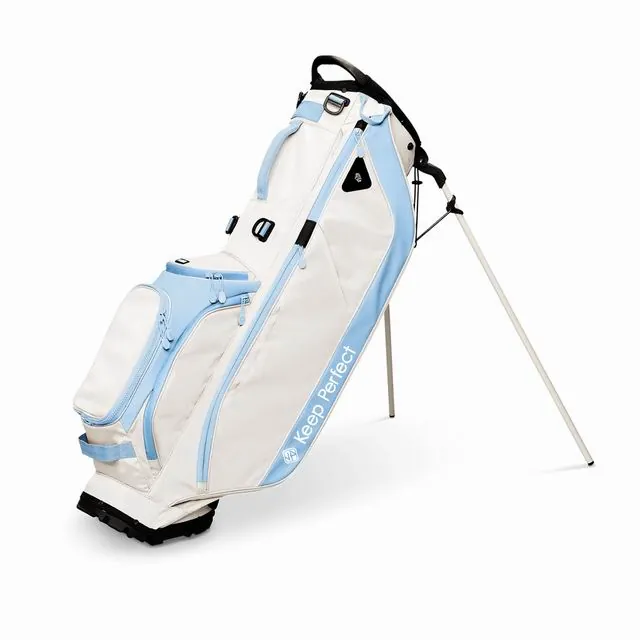
A comfortable golf stand bag for walking weighs roughly 1.8-2.6 kg empty and carries a working load of about 10-14 kg with a full set of clubs and gear, and the ideal rule for back-friendly play is to keep the empty bag light and then pack no more than you actually use so the loaded weight on your shoulder stays close to the lower end of that range. The bag's frame, legs and straps are built to a normal working load, but comfort — not raw capacity — is the real limit, because an overpacked 15 kg bag tires you and strains your back and the bag's mechanisms. This guide from QUANZHOU JUNYUAN BAGS (founded 2014, serving 200+ brands across 100+ countries) breaks down weight limits, comfortable carry loads and how packing choices keep you light over 18 holes.
Do Stand Bags Have a Weight Limit?
Stand bags have no hard regulatory weight limit, but they do have a practical ceiling set by how heavy a golfer can carry comfortably and how much load the stand mechanism and frame are engineered to support day after day. The empty bag weight is only half the equation, because the full carry load, clubs, balls, drinks, rain gear and valuables, can more than double it, and that total is what your shoulders and back actually feel. A workable rule is to keep the fully loaded bag within a range your own body can carry without strain, typically around 20 percent or less of your body weight for most players, and to watch the stand mechanism, since repeated heavy loads over years can fatigue the hinge and legs. Settling the empty bag weight, the fully loaded weight and the stand's rated cycle life together gives a far more honest picture than a single headline number.
Yes in practice, even where no number is printed on the bag. A stand bag is engineered around a normal working load — roughly the weight of 14 clubs plus balls, tees, a few layers and a bottle. Below that weight the frame, legs and straps work as designed; well above it the bag becomes unwieldy, the legs and hinge take excess stress, and the strap attachments work harder. So the practical limit is a mix of the bag's structure (keep load within typical capacity) and the walker's body (keep load light enough to carry comfortably).
It is worth separating two different "limits" people ask about. The first is the bag's structural capacity: how much the frame, hinges and straps can carry before they strain or fail. The second is the comfortable carrying limit for the golfer: how much a body can haul for four hours without strain. These are related but distinct. You can push a bag toward its structural limit and still be carrying far more than is comfortable, or feel fine carrying a load well under what the bag can take. The number that should govern a walker's choices is the comfortable one, not the structural maximum.
Manufacturers rarely print an explicit load limit because a normal set of 14 clubs plus a reasonable kit lands comfortably inside the design range, and the human variable dominates beyond that. What a factory does guarantee is that the frame, leg mechanism, strap anchors and base are built and tested to survive a normal working load season after season. Staying within that working range keeps both the bag and the body healthy, which is exactly why this guide exists.
The honest limit is usually comfort before structure. A bag rarely fails outright at 14 kg; rather, the walker runs out of energy and the bag starts to feel broken-in-bad by the back nine. Keeping the load in the comfortable range protects both the golfer and the bag. The mechanisms most at risk from an overweight bag are the leg hinge, which takes the whole load on every set-down, and the carry-strap anchors under constant tension. Our stand bag durability guide covers how those parts are built and tested.
Ideal Empty Bag Weight
A good all-round walking stand bag sits around 1.8-2.6 kg empty. Lighter ultra-light bags exist at under 1.5 kg, while durable pro bags loaded with dividers and a hard base land at the heavier, 2.2-2.6 kg end. The ideal for most people is the lightest bag that is still well-built — because every saved gram is carried for all four hours — balanced against construction strength so the bag does not become flimsy.
The weight of the empty bag is a product of three things: the shell fabric grade, the divider system, and the frame plus leg mechanism. A full 14-way divider layout and a hard, durable base add grams because they add material; a minimal five-way divider and a lightweight base save them. When a factory builds to a target weight, it trades these deliberately — a bag advertised at 1.8 kg has made different choices about dividers and base than one at 2.6 kg, and both can be legitimate for different golfers.
For distributors, this is why weight class and selling story must be set together. A light spec is right for a portability-first line, a heavier durable spec for a strength-first line, and the material choices that hit each weight are engineering decisions made on the pattern table, not bolt-on tweaks. That is precisely where a factory's material and cost engineering experience earns its keep for a brand.
Reading "lightweight" correctly matters here. A lighter stand bag is more comfortable to carry, and that is a genuine product benefit; but lightness should come from smart materials and construction, not from thin fabric or stripped dividers. A quality ~2 kg bag with strong frame and good dividers is typically better than a fragile 1.4 kg bag that tears or deforms. To compare portability properly, our weight and portability analysis and lightweight portability features lay out exactly how those grams are saved.
How Much Does a Full Load Weigh?
Here is a realistic breakdown of a loaded stand bag on an average walker's back. These are approximate, and the numbers shift with your clubs and gear, but they give a fair picture of where the load comes from. Laying the load out this way makes one thing obvious: the clubs themselves are the biggest single item, and after that, additions like drinks and layers stack up quickly. Understanding your own breakdown is the first honest step to a lighter round.
| Item | Typical Weight |
|---|---|
| Stand bag empty | 1.8 - 2.6 kg |
| 14 clubs | ~3.5 - 5.2 kg |
| Balls, tees, markers | ~0.5 - 1 kg |
| Layers / jacket | ~0.5 - 1.5 kg |
| Water bottle / drinks | ~0.5 - 1 kg |
| Rangefinder, gloves, misc. | ~0.3 - 0.8 kg |
| Realistic loaded total | ~7 - 12 kg |
Approximate loaded weight breakdown used for comfort planning.
The point of the table is that the empty bag's weight is only a fraction of the total on your shoulders. Two walkers with identical clubs can differ by several kilograms purely by what they pack. This is why, for a comfortable carrying round, discipline with packing beats obsessing over the last 200 grams of empty bag. The heavier your typical gear, the more valuable a lighter empty shell becomes.
There is a caveat worth remembering: a slightly heavier bag that is comfortable to control can beat a nominally lighter one that sways awkwardly. The table helps you find your personal total, but the real "weighing" happens on your back, over the course of a full round. Small choices about packing, and about how the bag rides, shape that experience far more than any single declared weight.
Comfortable Carry Load for Your Body
General guidance for a comfortable carry is to keep a loaded stand bag in a range your body handles without strain — for most healthy adults, roughly up to around 10-14 kg is manageable, with lower loads obviously easier, and lighter walkers, older players and anyone with back concerns better off at the light end. Across a four-hour round the difference between 9 kg and 13 kg is the difference between finishing strong and finishing tired.
A useful self-test before committing to a loading habit: put the bag on fully loaded, walk a hundred metres, and notice how you feel at the shoulders, between the shoulder blades and in the lower back. If you are already adjusting or shifting to compensate within a minute, the load is at the heavy end of what your body is comfortable with, and a lighter pack will pay off over the back nine. The carry experience is a marathon, not a sprint; it is judged over four or five demanding kilometres, not the first tee.
Two bodies can disagree completely on the same weight, which is why the smartest approach is personal: know your own comfortable ceiling, plan to the lighter side of it, and treat "I could manage it" as a sign to take less next time. Especially for walkers who play weekly, a load that is merely manageable for one round becomes cumulative strain over a season. Protecting that margin is how you stay on the course all year rather than nursing a back between rounds.
Weight distribution beats absolute weight every time. A well-balanced bag keeps the load centred and low, close to the spine, so it feels lighter and is easier on the body. This is why the same 11 kg can feel either comfortable or punishing depending on how the bag balances around you. Positioning the load close to the back and using both straps properly matters as much as the number on the scale. For the carry mechanics, our carry comfort and weight distribution guide and posture while carrying explain how load position protects the body.
Packing Light: The Fastest Way to a Lighter Round
Before buying a lighter bag, look in your current one. The quickest and cheapest weight you can shed is sitting inside the pockets. Every extra item you never use is dead weight carried for four hours, and most golfers can cut a slice of the loaded weight with an honest sort-out. Save the heavier kit for days and rounds where it genuinely earns its place, and the everyday round will feel far easier.
- Trim the ball stock: a dozen heavy balls adds real grams; carry six, buy if needed.
- Leave the 15th club and heavy unmade spares at home or in the locker.
- Pack one light layer, not a full change, for a typical round.
- Fill the bottle when you will use it, not pre-loaded and unused.
- Consolidate extras: one rangefinder pocket, one glove, not duplicates.
- Use the valuables pocket for smalls instead of loose items.
Packing light is free, immediate and the single biggest weight lever available to a walker. Taking 2 kg of unnecessary weight off your back is the same as upgrading to a bag 2 kg lighter in an afternoon, at no cost. It also reduces wear on the bag's frame and straps and makes the carry noticeably easier. For more on the feature choices that help, the lightweight features guide and storage compartments guide complement this one.
Does Weight Belload the Mechanism and Frame?
An overloaded bag shortens the life of the moving parts. The leg hinge, springs and strap anchors are engineered to a working load; regularly carrying well beyond that stresses them, loosens the pivot and can deform the frame over time. A bag is not designed to haul everything the car boot can hold — it is designed for the clubs and a reasonable kit. Keeping the load in its intended range is genuine maintenance for the mechanism, and it is why durable pro bags are still built to carry only a normal set.
The loading also affects how the bag moves on the course. A heavily overloaded bag sways more as you walk, because its centre of gravity swings further from the body, which makes you work harder to control it and wears the straps and anchors through the extra movement. A near-empty bag, by contrast, can feel unbalanced too, because the mass sits low and the bag rides oddly. The comfortable working range keeps the load high enough to sit well and light enough to control — another reason a reasonable kit beats either extreme.
It also matters for the base and the legs. Setting a very heavy bag down onto its legs on every hole puts the whole load through the hinge; keeping weight normal lets the legs open and lock cleanly and last. Unless you are comfortable treating the bag as replaceable, keep it within its working weight. The durability consequences are covered in durability testing and bag maintenance.
Sourcing Stand Bags by Weight Class
For brands, the weight class you pick defines the customer story. A light ~1.8 kg bag sells portability; a durable ~2.4 kg bag sells strength; a mid 2.0-2.2 kg bag sells balance. Deciding the target weight before production matters because weight is set by material and divider specs. All are produced to the same factory logic: 200-piece MOQ per design and colorway with 100-piece test orders, sampling in 10-20 days and bulk in 45-60 days.
It is worth prototyping your weight class with a real club set fitted before committing to a large run. A weight target on paper can shift a meaningful fraction once your dividers, base and fabric are fixed, and a prototype lets you confirm the bag carries well loaded, not just empty. Because weight, comfort and durability compete for the same grams, getting the balance right at the sample stage is far cheaper than correcting it after moulds, logos and a full production batch have been committed.
At QUANZHOU JUNYUAN BAGS we build stand bags in several weight classes depending on materials and features. For range planning, see stand bag range and the sourcing workflow on OEM/ODM services and custom solutions.
Frequently Asked Questions
- What is the ideal weight for a golf stand bag?
- A comfortable carry stand bag typically weighs about 1.8-2.6 kg empty. Loaded with a full set it can reach roughly 10-14 kg, so a lighter empty bag and disciplined packing make the biggest difference to comfort.
- How much weight can a stand bag carry?
- A full set of 14 clubs plus a normal kit loads a stand bag to about 10-14 kg. The mechanisms and frame are built to a working load in that range, but comfort rather than capacity is the real limit for carrying.
- How can I reduce my stand bag weight?
- Carry fewer extra items: slim the ball stock, leave the 15th club and heavy spares at home, carry one light jacket rather than a full change, and pack the water bottle only when you plan to need it.
- Does stand bag weight affect the mechanism?
- Yes. An overpacked, very heavy bag stresses the legs and hinge mechanism and the strap attachments. Keeping load within a normal working range protects the bag and makes it last longer.
- Is a lighter stand bag always better?
- Not always — too light can mean fragile fabric or thin dividers. The best bag balances light weight with durable construction, which is why a quality 1.8-2.6 kg bag built with strong materials beats a flimsy ultra-light.
- How is a good stand bag carry weight achieved?
- Through balanced dual straps, a centred low centre of gravity, breathable back padding and durable lightweight materials. Comfort depends more on weight distribution than on the absolute weight figure.
Weight Limits for Different Golfers
Weight comfort is personal. A fit 20-year-old walker may happily carry 12 kg, while a senior recovering from back trouble is better at 8-9 kg. Rather than chasing a universal number, match the loaded weight to the individual's strength and history. For lighter-framed players, juniors and seniors, prioritize the lowest practical empty weight plus disciplined packing, and use both straps so the load spreads evenly. Our guides for senior carry bags and senior stand bags recommend weight classes for those groups.
As a rough framework, match bag type and packing to body type. For a light or smaller-framed walker, keep the empty bag under about 2.2 kg and pack to the lean end, because a relatively small absolute surplus feels large to that body. For an average adult, a mid-weight durable bag with a full kit is generally comfortable. For a stronger walker who wants less frequent trips and full access, a heavier durable spec can be worth it. In every case, use both shoulder straps and keep the load snug against the body, because posture and balance do more for comfort than any single number on a scale.
The universal rule, though, is the same for everyone: keep the load close to your body, centred and as light as you reasonably can, and the round stays comfortable and the bag stays healthy. When in doubt, take the lighter amount — you will not miss it by the last hole, and your back will thank you.
Factory Verdict: Light, Balanced and Within Limits
There is no single magic number, but the working guidance is clear: choose a stand bag around 1.8-2.6 kg empty, aim for a loaded carry you can handle comfortably (typically up to ~10-14 kg), and protect both your back and the bag by packing light and keeping the load centred. Weight that rides well beats weight you can barely lift — and on the course, comfort is the score that always counts.
Bring the three rules together and the pattern is simple. First, buy a bag whose empty weight and build match how you play and how much you carry. Second, pack to no more than you will actually use, editing freely each round. Third, use both straps and let weight sit low and centred so the bag rides with your body rather than against it. Follow those three and the exact kilogram figure matters far less than the comfortable, easy round it produces every time you tee up.
At QUANZHOU JUNYUAN BAGS we have built comfortable, well-balanced stand bags since 2014 across 7 production lines. If you want a bag tuned to a specific weight or a comfortable line for your brand, reach us at contact, service@junyuanbags.com, or WhatsApp +86 17750020688.
Build a Comfortable Carry Bag
Prototype a stand bag to your target weight and comfort spec. Test orders from 100 pieces, sampling 10-20 days, bulk production in 45-60 days.
Request a Bulk Quote →