How to Adjust Straps on a Golf Stand Bag for Maximum Comfort

To adjust the straps on a golf stand bag for maximum comfort, start loose, put the bag on with your clubs inside, then tighten each shoulder strap so the bag sits flat against your upper back with the top around your lower spine and roughly 50% of the weight on each shoulder — then fasten the sternum strap just below the collarbone so the straps cannot slide. Most discomfort from carrying a stand bag comes from two avoidable causes: straps that are too loose, letting the bag swing and drag on one shoulder, and neglecting the sternum strap, which keeps the load centered. This guide, written with input from the same QUANZHOU JUNYUAN BAGS factory that has built stand bags since its 2014 founding (our founder entered the industry in 2004), walks you through a repeatable five-minute strap setup that carries comfortably for a full 18 holes.
Why Strap Adjustment Matters More Than You Think
Carrying a properly adjusted stand bag is a genuinely lightening experience; carrying a poorly adjusted one makes a light bag feel heavy and a heavy one unbearable. An unadjusted strap lets the bag hang low, swing across your back as you walk and settle onto one shoulder, which forces your torso into a subtle twist to balance the load. Over a round of 6 km or more of walking, that twist and one-sided loading translate into a sore shoulder, a stiff neck and a tired lower back — none of which your swing needs.
It is worth spending five minutes on setup because you will not be resetting it mid-round. Once the straps are tuned to your height and the contents are balanced, the bag stays put through the whole walk, and you can focus on the course instead of constantly hitching the bag back onto your shoulder. The posture benefit is real too: a centered carry lets you walk tall rather than hunched, which is one of the reasons walking golfers report less fatigue than the swing itself would suggest. That connection between carry setup and posture is explored further in our article on stand bags and posture.
Anatomy of a Stand Bag Strap System
Before you adjust anything, know the parts. A modern dual-strap stand bag system typically has four adjustable points: two shoulder straps (each with its own length-adjust slider), a sternum or chest strap that clips across the front, and in some models an upper load-adjusting strap near the top of the bag. The shoulder pads sit on the upper traps and distribute load over a wider area; the sternum strap keeps the two shoulder straps from sliding outward; the bag's center of gravity is usually set so the heavier club heads ride lower.
The number of straps and their adjustability is actually a design decision made in the factory. Single-strap bags are simpler and lighter, while dual-strap systems spread weight across both shoulders and are now standard on walking stand bags. If you are choosing between them, our stand bag weight and carry load guide explains how strap configuration relates to the loads a bag is built to carry. Knowing which type you have changes how you tune it — dual straps need balancing, a single strap just needs length.
Before You Adjust: Pack the Bag Properly
You cannot set straps on an empty bag, because the empty bag tells you nothing about its real balance. Load the bag the way you will carry it: all your clubs in place, balls in the pockets you actually use, and your rangefinder, gloves, water and tees where they normally sit. A stand bag carries best when the heavier items (clubs, spare balls) sit low and toward the bag's base, keeping the center of gravity down rather than dumping weight high on your back.
Balance the load side to side as a rough rule of thumb. A bag that is obviously heavier on one side will fight every strap adjustment, because the strap can shorten the hang but cannot correct a lopsided weight distribution. If your bag has side pockets and you carry phones, snacks and medical kits, alternate their placement between pockets or keep heavier items centered near the spine of the bag. Our pocket organization guide covers distributing weight sensibly across compartments before you ever touch the straps.
Step-by-Step: Setting the Strap Length
The core adjustment is simple and takes under a minute. Unclasp and fully loosen both shoulder straps so there is no tension, then put the bag on as you normally would. Holding the bag on your back, reach for the two adjuster sliders and tighten each strap a small amount — a couple of centimeters at a time — until the bag rises to a comfortable height.
Here is what the climb should feel like. When the straps are at the right length, the top of the bag should rest roughly level with your lower spine, and the bag should settle flat against your back with its weight between your shoulder blades. The straps should sit on your upper shoulders without biting into your neck, and the bottom of the bag should not be dragging on your lower back or banging your hips as you walk. If the bag rides too high it suffocates your shoulders; too low and it sways into your hips. Tighten in small increments on both sides together so you do not create a tilt.
Balancing a Dual-Strap System
If your stand bag has two straps, the aim is not just length but balance. After the initial tightness, check whether one shoulder is taking more load than the other. A simple test: with the bag on, loosen your grip slightly and notice which strap you feel tugging first. The side that pulls harder is carrying more than its share; tighten the other side slightly (or loosen the heavy side) to equalize.
Readjust a fraction at a time — the sweet spot is often a difference of a centimeter or less between the two straps. When balanced, the bag feels like it is floating on both shoulders rather than hanging from one, and you should be able to walk with your hands free and the bag staying put through shoulder swings. If you find the balance can never be achieved, check the bag's contents are not loaded lopsided; a heavier ball pocket on one side will defeat every strap tweak. This is also where factory design matters — a well-designed stand bag has the strap attachment points set so a normal load carries level, which we build into stand bags across our product range.
Tuning the Sternum (Chest) Strap
The sternum strap is the most underused adjustment on a golf stand bag, and the easiest way to add comfort. It runs horizontally across your chest, clipping the two shoulder straps together above the sternum. Its one job is to keep the shoulder straps from sliding outward off your shoulders — and by doing so, it keeps the whole bag centered and prevents the straps from slipping down your arms.
Set it high and snug, but not tight. The ideal position is just below your collarbones, where it can do its job without restricting your breathing or your swing. You should be able to take a normal deep breath while carrying, and the strap should hold the shoulder straps in place without chafing. If you have never used the sternum strap, try it for a round — most golfers who do report the bag feels markedly more stable and that single-sided tugging disappears. On some bags the sternum strap height is adjustable on a small rail so you can fine-tune it to your torso.
Weight Distribution and Walking Posture
A correctly adjusted stand bag should let you walk tall. Carrying the bag centered and level keeps your spine long and your shoulders relaxed, which keeps your energy in your legs rather than fighting the load with your neck and upper back. Think of the bag as sitting on a shelf formed by your shoulder line and upper back, not as something you are hauling.
Two posture cues help. First, let the bag settle and then roll your shoulders back once — the bag should fall into a natural resting position rather than you hunching to meet it. Second, as you walk, your hands should rest naturally at your side or on the push-cart-free walk; if you find yourself holding the strap or pressing the bag into your back, the fit is still wrong. If you generally switch between carrying and riding, our walking vs riding guide helps you pick the right bag and carry setup for how you actually play.
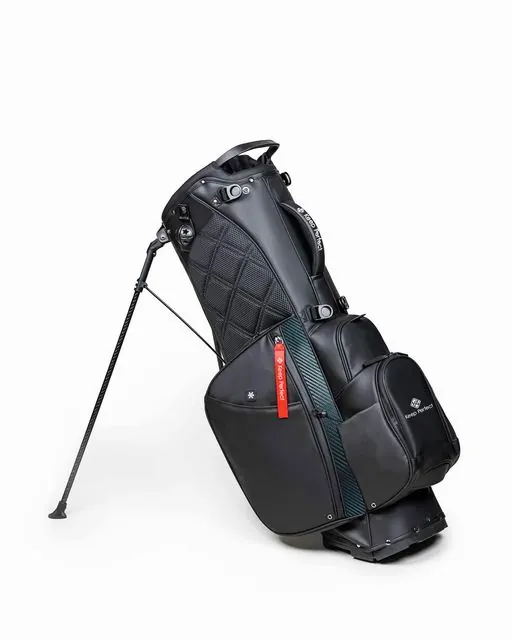
Balanced, Not Just Tight
The goal is an even split of weight across both shoulders so the bag floats behind you through the whole walk.

The Underused Sternum Strap
Fastened just below the collarbones, it keeps the shoulder straps centered and stops the bag slipping off.
Common Strap Adjustment Mistakes
The most common mistake is leaving the straps too loose. A loose strap lets the bag swing and drag, which is exactly the off-center, hunched carry that causes pain — looseness is not comfort. The second is ignoring the sternum strap entirely, expecting length alone to hold the bag. The third is tightening one strap while forgetting the other, which tilts the bag. And the fourth is adjusting the straps on an empty bag, then wondering why it feels different once loaded.
A fifth, subtle mistake is over-tightening until the bag rides too high, which loads your shoulders vertically and can cause pressure points. The correct height is low enough to feel balanced, not high enough to sit on the neck. If you consistently feel pressure in one spot, adjust and walk a few practice steps before judging — a strap felt fine standing still can be wrong the moment you move. If discomfort persists after a proper setup on a quality bag, our ergonomic stand bag guide covers which design features address chronic carry pain.
Adjusting for Height, Body Type and Layers
Your strap settings are personal, and they change with what you wear. A golfer who is taller or shorter than the bag's default strap range will need to find a setting within whatever adjustability the straps offer, and some will find a bag whose straps simply do not reach a comfortable length — in which case the bag is the problem, not your body. Torso length matters more than overall height, because the strap needs to bridge from your shoulders to the bag's attachment points.
Layers change the fit too. The straps you set in a light polo in June will feel tight over a base layer, mid-layer and waterproofs in January. Re-tune the straps at the start of each season rather than living with a winter-fit setting all summer or vice versa; a minute of adjustment is cheaper than a season of shoulder pain. If you buy for others — a junior, a spouse or a team the bag is made for — remember the strap range should suit the smallest and largest expected user, which is a spec worth confirming at purchase. Our junior and amateur stand bag guide notes which strap designs adjust easily for growing players.
Keeping Straps in Adjustment: Maintenance
Good straps stay where you set them; worn ones drift. The length-adjust sliders grip the webbing with friction, and as the slider or webbing wears, the settdot can slip during a round. If you find yourself re-tightening the same strap repeatedly, the webbing or slider is worn and it is time to replace the strap rather than keep fighting it. Webbing should also be kept free of grit, which accelerates wear on the friction points.
Clean the straps occasionally with a damp cloth and mild soap, dry them fully before storing, and check the stitching at the strap junctions for loose or worn bar-tacks — the junction takes the most abuse of any point on the bag, and a frayed stitch there is a safety issue, not just a comfort one. Straps and pads are among the most replaced components on any golf bag, and they are often available as spare parts. The full cleaning and care routine is covered in our stand bag care guide.
Strap Adjustment Settings at a Glance
| Adjustment Point | Default Starting Setting | Comfort Check | Adjust When |
|---|---|---|---|
| Shoulder strap length | Loosened fully first | Bag top level with lower spine; weight between shoulder blades | When bag rides high, low or one-sided |
| Dual strap balance | Tighten both together | Equal tension on both shoulders | When one side tugs first |
| Sternum strap | Just below collarbone, snug | Straps stay centered; easy breathing | When straps slip off shoulders |
| Load within bag | Heaviest items low and centered | No lopsided pull | Before any strap tuning |
| Seasonal layers | Re-tune per season | Comfortable with the layers you wear | Start of each new season |
Representative guidance for standard dual-strap stand bags; exact feel varies by bag design, body type and load. Older or worn straps should be replaced, not re-adjusted.
When to Adjust vs When to Replace Straps
Adjustment only works if the strap system is healthy. If a strap has a stretched, cracked adjuster, frayed webbing, a loosened seam at the junction or a pad that has flattened and no longer cushions, no amount of adjustment will restore comfort — the component needs replacing. Most quality stand bags use standard-width webbing, and replacement straps or pads are commonly available or can be fitted by a bag specialist.
As a rough guide, replace rather than adjust when: the strap will not hold its setting under the bag's weight, there is visible wear or a broken stitch at the junction, or the pad is worn through. A strap that has been weakened is not worth risking on a full walk, because a sudden break mid-round is dangerous. Catching wear early is the cheapest path to keeping a good bag comfortable for years, which is exactly the kind of component-level thinking our durability analysis gets into.
How Factory Design Makes Adjustment Easier
Not all straps adjust alike, and the design decisions made in the factory determine how easy your setup is. Good stand bags use smooth-gliding adjusters, generously padded shoulder straps and a sternum strap on a small height rail, so the balance you need is reachable and holds. Cheaper bags sometimes use short webbing travel, hard adjusters or unpadded straps, which make a comfortable fit harder or impossible to achieve.
As a manufacturer, we set strap engineering as a priority for walking stand bags — consistent bar-tacked junctions, quality sliders and adequate padding — because a bag that cannot be made comfortable is a bag that does not get used. If you are buying in bulk or specifying a custom stand bag, it is worth stating the expected user range and working with a factory that can build the strap system to your spec, which is where custom solutions come in. Our materials guide covers the padding and webbing grades that hold up over years of carry.
Frequently Asked Questions
- How should golf stand bag straps sit on the shoulders?
- They should sit flat across your upper shoulders with the bag's weight settling between your shoulder blades, so the bag rides balanced behind you rather than dragging on one shoulder.
- How long should the straps be on a golf stand bag?
- Start loose, put the bag on, then tighten each strap so the top of the bag rests level with your lower spine. Both sides should carry roughly equal load.
- When is a dual-strap system better than a single strap?
- A dual-strap system spreads weight across both shoulders and keeps the bag centered, which is why most modern walking stand bags use it for full 18-hole rounds; single straps suit lighter, shorter carry.
- Where should the sternum strap sit?
- Just below the collarbones, snug enough to keep the two shoulder straps from sliding off but without restricting breathing or swing.
- Why does my stand bag keep slipping off my shoulder?
- Usually the straps are too loose, the sternum strap is unfastened, or the bag is unbalanced or too empty. Check strap length and contents first.
- Should I adjust the straps on an empty or loaded bag?
- Always load the bag with your normal clubs and contents first; an empty bag cannot be set correctly because its weight distribution is nothing like your real carry.
The Factory Verdict on Comfortable Carrying
Maximum comfort from a golf stand bag is a combination of a well-designed strap system and a correctly tuned one. A five-minute setup — pack properly, start loose, set each shoulder strap so the bag sits flat and level around your lower spine, balance both sides, and fasten the sternum strap — will carry comfortably for a full round. When straps are worn or poorly designed, replace them or change the bag; a good strap system should hold its setting and its comfort for years.
QUANZHOU JUNYUAN BAGS has built comfortable walking stand bags since its 2014 founding, serving 200+ brands across 100+ countries from an affiliated Quanzhou factory with 7 production lines, 126 sewing machines and 137 staff. If you are specifying or sourcing stand bags with the strap systems your players need, send your spec to contact, service@junyuanbags.com, or call +86 17750020688.
Looking for a Reliable Stand Bag Partner?
Whether you need standard or custom stand bags with the strap systems your golfers rely on, our team can build to your spec with factory-direct pricing. Test orders from 100 pieces, sampling in 10-20 days, bulk production in 45-60 days.
Request a Bulk Quote →