Durability Tips for Golf Sunday Bag Users
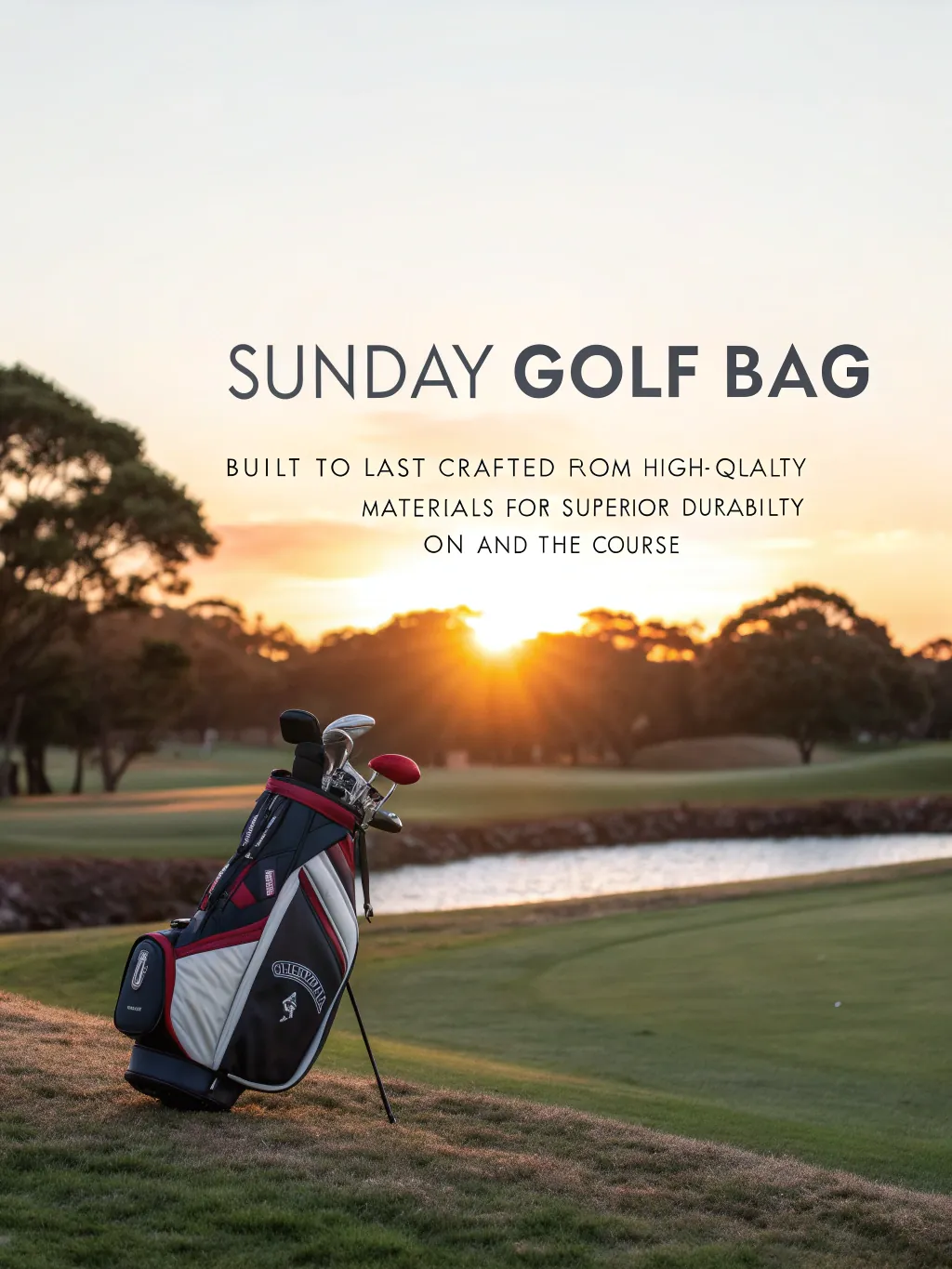
A quality golf sunday bag lasts several years when you buy a 600D-840D shell with reinforced straps and high-grade zippers, and you care for it correctly: empty and air-dry after damp rounds, clean with mild detergent, refresh water repellency seasonally, and store loosely rather than collapsed. Durability on a lighter-weight carry bag is less about weight and more about the three components that fail first — the zipper, the shoulder strap junction, and the top handle — plus the fabric grade and how moisture is managed. This guide, written from the factory of QUANZHOU JUNYUAN BAGS (founded 2014, our founder entered the golf bag industry in 2004), gives sunday bag owners practical, factory-backed maintenance and buying tips to keep a bag in service for years.
What Actually Determines a Sunday Bag's Lifespan
Before maintenance, understand what makes a sunday bag durable in the first place. Three factors dominate. First, fabric grade: a 600D-840D polyester or a ripstop nylon resists abrasion and tearing far better than a flimsy 300-420D pant, and coated or laminated shells resist moisture. Second, hardware quality: zippers are the single highest-failure component on any golf bag, and a #5 or #8-grade zipper with smooth sliders outlasts cheap ones dramatically. Third, construction reinforcement: bar-tacked strap junctions, a full-width reinforced top handle, and doubled-back seams after the bag from tearing under load.
When a sunday bag fails early, it is almost never because it was too light — it is because one of these three elements was under-specified. A reputable factory applies tensile and seam-pull checks to every lot; at QUANZHOU JUNYUAN BAGS, 7 production lines and 126 sewing machines among 137 staff maintain consistent tolerance across runs. You can read more about how the wider range is built and maintained in our care and longevity guide.
Zippers: The First Thing to Die — and How to Stop It
Zipper failure is the number one durability complaint across all golf bags. The usual culprit is debris: sand, grass seed and clay work into the zipper teeth, causing jamming that the owner forces, which bends teeth and strips sliders. Prevention is simple. After every round — especially on sandy or coastal courses — check the main-compartment zipper and pull any visible grit from the teeth before opening and closing. Do not force a stuck zipper; a gentle tug in reverse usually clears a jam, and a dab of a dry lubricant (a silicone-based spray, not oil, which attracts dirt) keeps sliders smooth.
On pocket zippers, which see more frequent cycles, the same care applies. Buying a bag with a pull-open zipper on high-use pockets and a sturdier zipper on the main tub is a smart durability choice. If a zipper does fail, it is often repairable — a professional can replace a slider without re-stitching the whole panel. Our bag organization and care tips and materials guidance at golf bag materials guide provide more detail on zipper grades and hardware.
The Shoulder Strap and Top Handle: Carry Points to Protect
A sunday bag's strap junction is where durability is truly tested, because every round the wearer lifts, slings and adjusts the bag. A properly made bag has the webbing strap bar-tacked at the attachment and reinforced with a welded or doubled-back panel so the strap cannot tear free under load. As an owner, inspect this junction seasonally: look for fraying webbing, a loosening buckle, or any sign the bar-tack stitches are pulling. Tighten ladder-lock buckles, and if webbing frays, stop using that shoulder until a professional repairs or replaces it.
The top grab handle is the other overlooked carry point — it is what everyone reaches for lifting the bag out of a car or off a cart. A full-width reinforced handle with a panel backing survives years of grabs; a simple strap loop ravels quickly. When buying, verify the handle is reinforced; when owning, check it along with the strap each season. These carry points are precisely what our quality standards verify on every production lot, and they are the parts generic "light but weak" bags under-build.

Reinforced Carry Points
Bar-tacked, reinforced strap junctions and handles are the difference between a bag that lasts and one that tears at the hip.

Ordered Pockets
Keeping metal, valuables and moisture in dedicated pockets limits scratches and water damage to the bag shell.
Cleaning a Sunday Bag Correctly
Cleaning does more than remove dirt; it prevents the abrasive wear and staining that shorten a bag's life. The correct routine is: empty every pocket, brush away loose dust and grass with a soft dry brush, then clean the shell with a soft brush or cloth and a mild detergent in lukewarm water. Rinse thoroughly so no abrasive grit remains to work into zippers, and never submerge the whole bag or machine-wash it — that can damage coatings, seams and hardware. If a specific stain persists, treat it locally rather than aggressively scrubbing the whole bag.
Frequency depends on use: a bag used weekly in summer deserves a clean every few weeks and a deeper seasonal clean; a bag used occasionally can go a full season. The key is always to finish with thorough air-drying — never store a damp bag, because trapped moisture accelerates seam and hardware corrosion. Our cleaning a lightweight sunday bag guide walks through materials and products that are safe for coated fabrics.
Drying and Moisture Management
Moisture is a sunday bag's quiet enemy. Even a water-repellent shell breathes, and a rain-exposed bag with a closed, wet main tub can harbor moisture that weakens seams, corrodes zippers and metals, and promotes mildew smell. After any damp or humid round, open all zippers and pockets and let the bag air-dry for a few hours in the shade before storing. Never fold a wet bag into a car boot or bag sleeve — that seals in the moisture.
If your bag has a DWR-style water-repellent coating, refresh it once a season with an appropriate spray treatment, and keep an eye on laminated or PU-coated shells for cracking at fold points. For heavier rain protection, consider a bag with taped or welded seams or a compatible rain hood. Deeper waterproofing and coating maintenance is covered in our waterproofing maintenance guide.
Storage That Preserves the Shell
How you store a sunday bag between rounds matters enormously. The two storage mistakes that shorten bag life are storing it fully collapsed and zipped shut, and storing it damp. A fully collapsed bag creases the shell permanently, and creased fabric is where coatings crack and fabrics abrade. Instead, keep the bag loosely open on a shelf, peg or wide hook so it keeps its shape, with pockets slightly open or lightly packed to retain form.
Store in a cool, dry, shaded place away from direct UV (which fades and weakens fabrics) and away from damp basements or garages that invite mildew. If the bag has been in rain or salt air, a wipe-down and dry-out before storage pays off. For a fuller treatment of offseason and long-term care — including the best environments and packing methods — our seasonal storage guide and long-term preservation guide offer step-by-step routines.
Choosing a Durable Sunday Bag at Purchase
The cheapest durability upgrade happens at the point of purchase. When buying a sunday bag, verify four spec points: the fabric denier and whether it is coated, the zipper grade on main compartments and pockets, the strap attachment method (look for bar-tacking and a reinforced panel), and the top handle construction (a full-width reinforced handle beats a simple loop). If a retailer lists only "lightweight" without these specifics, ask, because weight claims without durability specs often hide thin materials.
For brands buying in bulk, specifying these points in the RFQ locks in quality from the start. A factory-direct order at the standard 200-piece MOQ (100-piece test) lets you inspect a production sample against a checklist before scaling. Our durability standards overview and materials guide give buyers and owners the same vocabulary factories use.
How Long Should a Sunday Bag Last?
| Component | Typical Lifespan with Care | Main Failure Cause | Prevention |
|---|---|---|---|
| 600D-840D shell fabric | 3-5+ years | Abrasion, UV fading | Clean, shade-store, refresh coating |
| Zippers | 2-4 years | Sand and grit jamming | Clear debris, don't force, dry-lube |
| Shoulder strap junction | 3-5 years | Weaving fatigue, tear | Bar-tack check, replace webbing |
| Top handle | 3-5 years | Raveling of simple loop | Choose full-width reinforced handle |
| Seams | 3-5 years | Trapped moisture weakness | Air-dry damp bags, never store wet |
Lifespans are representative for quality construction with routine care; exact figures vary with fabric, hardware, climate and frequency of use.
Seasonal Maintenance Checklist
- Every round: clear zipper teeth of grit; wipe damp shell; never force a stuck zipper.
- Monthly: inspect strap junction and handle for fraying; tighten any loose buckles.
- Seasonal: deep clean with mild detergent; refresh water/UV-repellent coating; check seams and hardware.
- Off-season: store loosely, dry and shaded; keep pockets lightly open to retain shape.
- For bulk buyers: verify fabric denier, zipper grade, strap bar-tack and reinforced handle in the RFQ and sample.
Durability vs. Truly Light Bags: An Honest Note
It is worth being direct: not every light golf bag is durable, and not every durable bag is light. Some "ultra-light" sunday bags use such thin fabric and minimal reinforcement that they sacrifice real-world lifespan, and buyers sometimes interpret "lightweight" as "fragile." Three years of service without a torn strap or jammed zipper is a better marker of value than a gram count alone. The best sunday bags are light because they are honestly engineered — minimal but reinforced — not because components were skimped. If an ultra-light option is your priority for a specific use, our ultra-light sunday bag guide separates the genuinely well-built from the merely thin.
How Factories Test Durability Before You Buy
Durability is not magic; it is measurable, and a reputable factory proves it in testing. The core checks for a sunday bag are: seam-pull or tensile strength on the main seams, bar-tack verification at the strap junction, zipper cycle testing (opening and closing the main compartment thousands of times to confirm the slider and teeth hold), fabric weight and denier verification, and color fastness to light and rubbing. Some suppliers also run a static-load test on the carrying points — for example, confirming the strap junction holds a specified pull force without tearing.
Know the numbers behind the tests. A shoulder-strap junction expected to survive real use is commonly specified to hold a static load in the 100-150 N range; a zipper approved for heavy use should complete its cycle count without jamming. When you read a claim that a bag is "reinforced," ask what reinforcement means in practice: bar-tacking, a welded or doubled-back panel, a full-width handle backing. These are the same standards we apply across 7 production lines and 126 sewing machines at QUANZHOU JUNYUAN BAGS, and independently verified through the 2026-03 SGS and Alibaba audits. The vocabulary in our quality standards guide will help you ask the factory the right questions.
Durability Across Climates and Course Conditions
Where and how a sunday bag is used determines which durability factors deserve attention. On sandy coastal courses, grit is the enemy — it works into zippers and abrades bottoms, so a reinforced bag bottom and frequent zipper cleaning matter most. In humid subtropical regions, moisture and mildew dominate, favouring coated or laminated shells and disciplined air-drying. In very sunny, high-UV areas, fabric fade and weakening from light become the primary wear, so UV-resistant dyes and a shaded storage habit pay off. In cold inland climates, stiffening zippers and embrittling plastic hardware in low temperatures argue for quality sliders and buckles.
Match the bag's materials to your dominant condition rather than buying one generic "durable" product. A 600D shell with a PU coating suits damp or coastal play; a UV-stabilised 840D shell with a reinforced bottom suits sun and rough terrain; a ripstop weave protects against tear spread in brushy courses. Buying with climate in mind is a durability decision made before the first round, and it usually costs no more than guessing wrong and replacing the bag early. Our materials guide maps shell choices to conditions.
Signs Your Sunday Bag Needs Attention
Catching a problem early is the cheapest durability move. Learn the early warning signs: a zipper that starts catching or snagging (clear it and lubricate before force bends the teeth); webbing at the strap junction that begins to fray or shows pulled stitches (stop carrying until reinforced); a top handle that feels loose or shows stretched stitching; shell coating that starts cracking or flaking at fold points; and any seam that puckers or shows exposed thread. Each of these signals a pending failure you can usually prevent or fix cheaply now rather than replace expensively later.
Create a simple seasonal once-over: empty the bag, check every zipper over its full travel, tug the strap and handle with moderate force, inspect the bottom and high-wear panels for abrasion and the seam stitches for integrity, and test the buckles and sliders. Fifteen minutes twice a year catches virtually every problem before the bag fails mid-round. It is the same discipline factories use at final inspection, applied at home with no tools.
Repairing vs. Replacing: When It Pays
Because a sunday bag is simple and has few components, small repairs are often worthwhile. A jammed or failed zipper slider can frequently be replaced by a repair shop without re-stitching the whole panel; a frayed strap or webbing can be re-sewn or replaced; a loosened buckle or clip can be swapped. If the shell itself is intact and the failure is one component, repairing extends life cheaply and is the more sustainable choice. Every component you repair instead of replacing the whole bag keeps material out of landfill — a genuine sustainability win that a sustainability-minded golfer should weigh.
Replacement becomes the right call when the failure is structural: a shell that has abraded through, a tub that has collapsed or delaminated, multiple component failures, or mildew that has penetrated the fabric and odor that cleaning cannot fix. As a rule of thumb, if repairs cost more than half the replacement price, or if two or more independent components fail in the same season, the bag has returned its value and a fresh one is the better buy. That lifecycle honesty is why buying a durable bag up front — rather than the cheapest available — is the sustainable and economical choice from the start.
Making Durability a Buying Checklist for Bulk Orders
For pros, academies and brands ordering sunday bags in volume, durability belongs in the written specification, not left to chance. Build a short checklist to include in the RFQ: fabric denier and coating; zipper grade on the main tub and pockets; strap attachment method (bar-tacked and panel-reinforced); top handle construction; minimum static-load expectation on carry points; bottom reinforcement; and the supplier's QC steps (incoming inspection, in-line seam checks, AQL-based final inspection). Ask to approve a production sample against this list before bulk begins.
A low-MOQ test order — our standard is 200 pieces, with 100-piece test orders — is the perfect vehicle to validate durability at scale without a big commitment. Order a small pilot, use it in real conditions for a season, then scale the design that survived. For full guidance on comparing suppliers on construction and QC, our manufacturer selection guide and durability standards roundup give buyers a rigorous, factory-level checklist.
Frequently Asked Questions
- How long does a quality golf sunday bag last?
- With graded fabric, reinforced straps and good zippers, plus routine care, a sunday bag commonly lasts several years. There is less surface area and fewer components to fail than a full stand bag.
- How do I clean a golf sunday bag?
- Empty it, brush loose dirt, clean with a soft brush and mild detergent, rinse thoroughly so no grit remains, and air-dry all pockets open before storing.
- What fails first on a sunday bag?
- Zippers jammed with sand, the shoulder strap junction tearing, and the top handle failing are the most common, followed by seam weakness from trapped moisture.
- Should I store my sunday bag collapsed or open?
- Store it loosely open on a shelf or hook, dry, with pockets lightly open, rather than fully collapsed and sealed, which creases the shell and traps moisture.
- Which fabric lasts longest in a sunday bag?
- 600D-840D polyesters or ripstop nylons give the best durability-to-weight balance; 420D is lighter but less abrasion-resistant. Coatings and sealed seams improve moisture resistance.
- How do I keep a sunday bag water-repellent?
- Refresh a DWR-style or PU coating once a season and prevent coating cracks at fold points so damp-climate rounds are handled properly.
- Where can I get a durable sunday bag built to last?
- QUANZHOU JUNYUAN BAGS builds sunday bags with graded fabrics and reinforced carry points. Contact service@junyuanbags.com or +86 17750020688 for retail or bulk options.
The Factory Verdict on Sunday Bag Durability
Seen from the production line, durability in a golf sunday bag comes down to honest engineering on three carry-critical components — the zipper, the strap junction and the top handle — plus a fabric grade that matches your climate. With quality construction and a simple care routine of empty, dry, clean and loose-store, a sunday bag routinely outlasts expectations because there is simply less that can go wrong.
Whether you are an owner protecting a favorite par-3 bag or a brand specifying a durable private-label line, the same logic applies: choose reinforced carry points and graded fabric, keep moisture managed, and correct small problems before they become tears. QUANZHOU JUNYUAN BAGS (founded 2014, serving 200+ brands in 100+ countries) can help you specify, sample and source bags built to last — reach us at contact or service@junyuanbags.com.
Looking for a Reliable Manufacturing Partner?
Whether you need durable custom sunday bags, stand bags, cart bags or travel covers, our team is ready to bring your vision to life with factory-direct pricing and quality control on every lot.
Request a Bulk Quote →