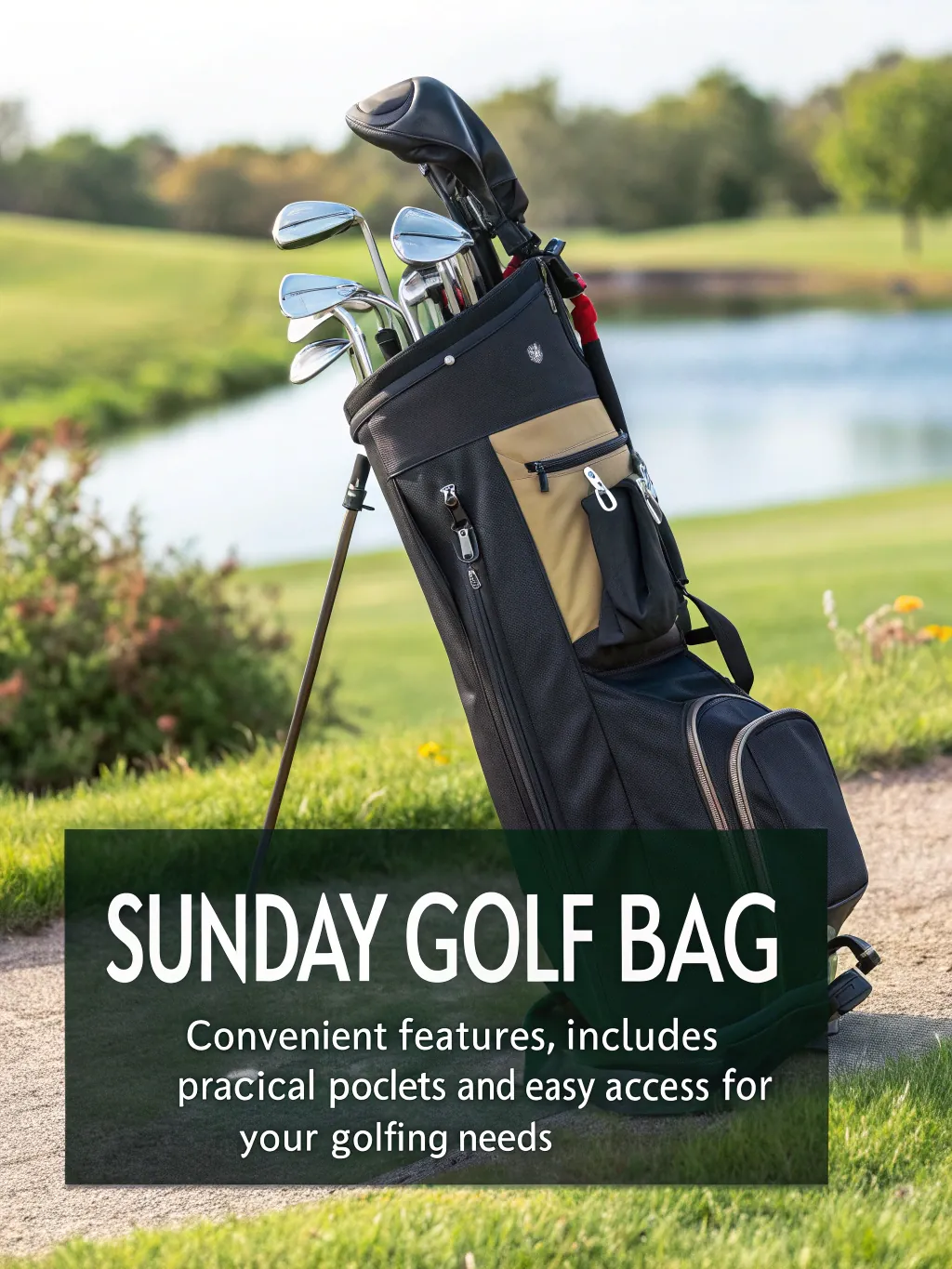
The overwhelming benefit of an ultra-light sunday bag for the casual golfer is removing the two biggest barriers to more golf—transport effort and fatigue—by weighing roughly 1.3–2.2 kg empty (about 2.9–4.85 lb), carrying 4–8 clubs in a compact silo, and packing down small enough to live in the boot or suitcase; golfers who switch from a full tour bag commonly report playing more casual rounds simply because grabbing the light bag is effortless. This guide spells out the practical, physical and financial benefits of ultra-light sunday bags for casual players, where the trade-offs bite, and how to choose—with sourcing context from the affiliated QUANZHOU JUNYUAN BAGS manufacturing facility.
1. Who the Casual Golfer Really Is
The casual golfer is defined not by handicap but by habit: a couple of rounds a month, more range visits than course days, clubs that live in a boot or a spare room, and a desire to be on course quickly without lugging a full tour system. For this player, a bag's job is to get in the way as little as possible—to hold a few clubs securely, carry comfortably over a short walk, and disappear when not in use. An ultra-light sunday bag fits that brief precisely, because its entire design exists to minimise the effort between "I feel like a quick nine" and "first tee."
A tour-grade 14-way stand bag, by contrast, broadcasts a seriousness of purpose and weight that the casual player rarely needs. It is heavier, bulkier, and demands a full load to justify itself. The casual who buys a tour bag and carries twelve clubs they rarely use is paying weight and cash for capacity they do not use. Selecting the right tool starts with an honest read of your own habits; our sunday bag vs. stand bag guide helps you place yourself correctly before spending.
2. The Effort Factor: Removing Friction From More Golf
The most underrated benefit of a lightweight sunday bag is psychological: removing the "hassle tax" that keeps casual golfers from playing. A bag that is heavy and awkward sits in the garage; a bag you can lift with one finger rides in the boot and makes the spontaneous round possible. Golf becomes a habit when the barrier to starting is small, and an ultra-light bag shrinks that barrier more than any other single piece of equipment.
Concretely, that effort saving shows up in daily logistics: lifting the bag into the boot takes no thought, carrying it from the car to the clubhouse or the first tee is effortless, and setting it down for a range session or a short loop of holes takes a second. For golfers with back concerns, the reduced carry weight also lowers the physical risk that comes with schlepping a heavy, unbalanced bag. The accumulated daily savings—in lifting, carrying and storing—are exactly what converts a would-be casual golfer into an actual one.
3. The Fatigue Curve Over Nine Holes
Anyone who has carried a heavy bag has felt the switch where a round turns from pleasure into endurance. On a casual nine-hole walk, the difference between a 1.5 kg sunday bag and a 3.5 kg touring bag is felt in the shoulder after the third hole and in the swing by the seventh. Since casual golfers typically want to enjoy the round rather than train through it, keeping fatigue low is central to the experience.
Ultra-light bags achieve this not only by absolute weight but by how the weight sits: a balanced, comfortable strap system keeps a light shell from becoming an awkward load. A 1.8 kg bag that hangs poorly can feel worse than a 2.4 kg bag that balances. The genuinely good ultra-lights manage both—light shell plus clean ergonomics—so the golfer forgets the bag entirely and stays fresh to the last putt. For the comfort engineering that makes a light bag feel even lighter, see our ergonomic bag design guide.
4. Packability: The Bag That Lives Where Golf Happens
One of the clearest advantages of an ultra-light sunday bag is how little space it occupies when full of clubs and how flat it packs between rounds. Because it is small and light, it fits where a tour bag never will: in a family car boot beside the shopping, in a locker at the club, in the back seat, or as a flat-packed companion in a suitcase for travel. This packability is why the category is beloved by travellers who want to bring clubs without shipping a full case.
For the casual who plays sporadically, "out of sight, out of the way" is a real benefit: the bag stays ready and unobtrusive, and heading out for a quick nine costs nothing in set-up. For travel, pairing a packable sunday bag with a protective case a few times a year is a lighter, cheaper alternative to owning and shipping a full tour bag. If staying under airline size and weight rules matters to you, our travel bag size guide is worth reading before you fly.
| Attribute | Ultra-Light Sunday | Standard Stand Bag | Tour/Cart Bag |
|---|---|---|---|
| Empty weight | 1.3–2.2 kg | 2.2–3.0 kg | 3.2–4.5 kg |
| Club capacity | 4–8 | 10–14 | 14 |
| Ease of carry | Excellent | Good with harness | Low |
| Packed size | Very compact | Moderate | Large |
| Best for | Casual, range, travel | Walking regulars | Cart, tournaments |
5. Financial Appeal of a Smaller Bag
Because an ultra-light sunday bag uses less material and simpler construction, it is typically the most affordable category of golf bag. For the casual golfer who plays a couple of rounds a month, paying tour-bag prices for capacity they will never load is poor value; a well-made lightweight sunday bag delivers most of the carrying experience at a fraction of the cost. The money saved is better spent on balls, green fees or a better putter—things the casual player actually uses.
That said, price alone is a poor guide: some "ultra-light" bags are marketed at premium prices without delivering better weight, comfort or durability. Use a small check—empty weight fully configured, pad on the strap, how it packs—rather than brand or price to choose. A value-focused casual golfer who weighs a couple of candidates will reliably land a light, comfortable, durable bag without overpaying.
6. Where the Trade-Offs Bite
Honesty requires flagging what an ultra-light bag gives up, so casual golfers buy with open eyes. The main trade-offs are club capacity (usually 4–8 clubs, not 14), minimal padding (so clubs rely on a firm base and divider for protection), and no tour-grade organisation (fewer pockets, simpler layout). For the casual who carries a partial set on a short round, none of these are real losses; for a player who needs 14 club slots, heavy padding or a secure stand, an ultra-light bag is the wrong tool.
There is also a durability nuance: an ultra-light shell can be less forgiving of rough handling, so care in transport helps it last. The good news is that a quality ultra-light construction with reinforced load points and a firm base holds up well in normal casual use. If you are weighing how many clubs to carry, our club capacity guide helps you pick the right partial set for your rounds.
7. Making the Switch From a Full Bag
Casual golfers considering a move down often wonder whether they will regret losing the capacity. In practice, the switch usually produces a lighter, freer game: you carry only the clubs you hit, rediscover your favourite handful of clubs, and stop dragging a tour bag for a nine-hole stroll. The clubs you leave behind stop being a burden, and your swing thanks you for a balanced load.
The transition is easiest when you keep a full-featured stand bag for the occasional competitive or heavy round and use the ultra-light for the majority of casual play. That two-bag rotation avoids forcing the small bag to do everything and extends both bags' useful life. Casual golfers who make this switch consistently report playing more often because the equipment no longer discourages them from heading out—the single biggest benefit of all.
8. Buying the Right Ultra-Light Bag
Use a fast five-point checklist and buy with confidence. First, weigh the bag fully configured—shell, strap, hardware—and confirm it sits near 1.3–2.2 kg. Second, check the strap: padded, adjustable, with a non-slip surface is the comfort floor. Third, verify a firm base and a full-length divider so your clubs are protected despite minimal padding. Fourth, confirm it packs small and sets up in under a minute for storage and travel. Fifth, pull firmly on the loaded strap to test the anchor and inspect the seams for reinforced stitching. A bag that passes all five and fits your price is a sound pick.
If you are deciding between a sunday bag and a slightly larger lightweight stand bag, weigh your typical round: a true ultra-light wins for range and quick nines; a mini stand bag adds club capacity and on-course stability if you regularly carry more clubs. For that middle decision, our sunday bag storage and travel advantages clarifies the difference.
9. Sourcing Ultra-Light Sunday Bags for a Brand
For brands eyeing this category, "ultra-light" is a product feature to engineer honestly, not a positioning of the whole manufacturer. The affiliated QUANZHOU JUNYUAN BAGS facility builds a broad range of bags; it brings the same systems approach—seven production lines, 126 sewing machines, a staff of 137, monthly capacity near 200,000 units, and more than 200 brands across 100+ countries—to a compact sunday line. The value is reproducible light construction: thinner but well-engineered shells, reinforced load points, packable shapes, and sample iteration within a 10–20-day development window and production spanning 45–60 days. A March 2026 SGS audit underpins the quality system behind those claims.
When you brief a partner on an ultra-light sunday bag, specify the portability targets in writing: empty weight including hardware, packed footprint, carry-comfort checks and the durability of the lightweight build. A factory that can tune these dimensions as a system—and test the assembled product rather than quote a shell figure—will deliver a line that holds up to the rating and the road. If broader factory criteria matter, our certification checklist names what to verify first.
10. The Bottom Line

For the casual golfer, an ultra-light sunday bag is the best value-per-pound improvement you can make to your bag. It removes the effort and fatigue that discourage casual play, packs into the most convenient corners of your life, costs less than a full bag, and covers the quick-round, range and travel needs that dominate casual golf. Accept its honest limits—fewer clubs, less padding, simpler organisation—and choose with a five-point checklist so you get genuinely light, comfortable, durable construction rather than a marketing number. Pair it with the occasional use of a full bag for serious rounds, and the ultra-light sunday bag will quietly increase how often you play—and how much you enjoy the game.
Ready to develop or source an ultra-light sunday line that balances weight and durability? Contact our manufacturing team to talk through weight targets, strap systems and compact construction.
11. Practical Notes on Carrying an Ultra-Light Bag
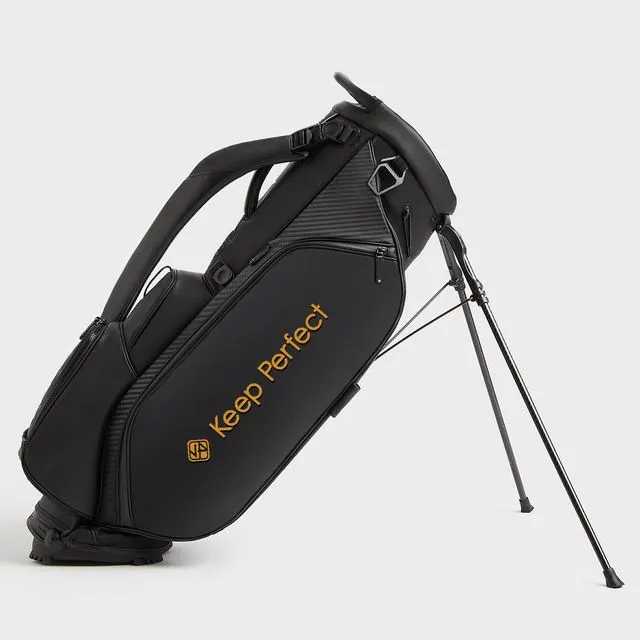
Getting the most from an ultra-light bag is as much about how you use it as what it weighs. Carry only the clubs you will genuinely hit on a short round; there is no virtue in stuffing eight clubs when your usual quick round wants four. Alternate between rounds means the bag stays balanced and the load stays minimal. Set it down thoughtfully on level ground and carry it high and close to your body for the most natural posture on the walk. These small habits keep a light bag feeling even lighter and protect the clubs your reduced padding relies on.
Storage discipline matters too. Because an ultra-light shell forgives less than a heavy one, keep it out of direct, prolonged sun, store it dry, and never leave it compressed under a heavy load for months. Keeping the strap and zippers clear of sand and grit keeps them smooth. A short, seasonal clean keeps the fabric and hardware in tune, and the routine is light—see how to care for a lightweight golf bag for specifics. A few minutes of upkeep preserves the effortlessness and durability that justify the purchase, round after round.
There is also a genuine social benefit worth naming. Because the ultra-light bag is compact and unobtrusive, it travels easily to casual settings—a friendly loop of nine, a par-3 course, a pitch-and-putt, a range after work or a trip to visit friends where clubs tag along. Removing the friction of equipment makes golf easier to fit around life rather than requiring life to fit around golf. For casual players, that flexibility is often the difference between "I played three times this year" and "I played three times this month." The lightweight sunday bag quietly buys back that freedom, and that is precisely the benefit most worth paying for.
When you factor in the enjoyment of a freer, lighter carry, the modest cost of a good ultra-light bag is repaid many times over in rounds played. Choose honestly, carry lightly, keep it simple, and the small bag does a surprisingly big job for the casual game.
A useful comparison for the casual buyer is between an ultra-light sunday bag and a slightly larger lightweight stand bag. At roughly 2.2–2.6 kg, a mini stand bag adds a real stand, better dividers and capacity for 10+ clubs, yet stays far lighter than a tour bag. For a casual golfer who sometimes carries a fuller set, that middle option covers more ground; for one who almost always plays a partial set on quick rounds, the true ultra-light wins on cost, ease and packability. Weigh your own mix of quick nines and fuller rounds and choose the tool that matches the majority of how you play, rather than the minority that pushes you up-market.
Casual golfers should also remember that an ultra-light bag pairs well with several everyday carry items: a few tees in the small pocket, a ball retriever clipped to the outside, a lightweight water bottle in a side holder, and a compact rain cover stored flat. Thoughtful packing keeps the small bag's balance clean and its contents reachable. Good organisation is arguably more important on a light bag than a large one, because you have fewer pockets to hide the clutter; keeping it lean preserves both the balance and the effortlessness that made you buy it in the first place.
The calmest summary for a casual golfer: buy the lightest bag that honestly covers your clubs and your carrying comfort, verify it with a simple weight-and-strap check, keep it organised and maintained, and let it live where you can grab it easily. Do that, and the ultra-light sunday bag becomes the gear that finally makes casual golf as effortless as you always wanted it to be.
One more benefit worth weighting for the casual golfer is the lighter wear on the game's best asset, your own body. Carrying a heavy, unbalanced bag repeatedly strains the shoulder, lower back and even the neck as you compensate. An ultra-light bag, kept balanced and worn properly, sharply reduces that loading, so the casual rounds you play do not quietly turn into aches. For older golfers or anyone nursing a back or shoulder issue, this ergonomic dividend can be the single most valuable reason to go light. It is the kind of benefit that is invisible on a spec sheet yet unmistakable at the end of a season of easy carrying.
And because casual golf is, above all, about enjoyment, choose a bag you actually like looking at and handling. Ultra-light sunday bags come in a broad range of colours, fabrics and clean designs that suit a personal yet understated style. A bag that feels good in the hand and looks right in the boot or on the shoulder makes the whole casual ritual more pleasurable. Pair a sensible build with a style you enjoy, and the lightweight bag becomes a small, dependable companion that quietly makes the game more fun, more often.
The path to more enjoyable casual golf starts with the very simple idea that equipment should help, not hinder. An ultra-light sunday bag embodies that idea completely.
Choose the size that matches your rounds, verify the weight and strap honestly, keep it light, and let the bag do its one job supremely well: disappear while you play.
Frequently Asked Questions
- What is an ultra-light golf bag?
- An ultra-light golf sunday bag weighs roughly 1.3-2.2 kg empty, carries about 4-8 clubs, and packs small for easy storage, the boot and travel. It trades club capacity and padding for effortless carrying.
- Who benefits most from an ultra-light sunday bag?
- Casual golfers who play a few rounds a month, range-practice regulars, players with back concerns, and travellers who want a packable club carrier. It removes the effort and fatigue that discourage casual play.
- Is an ultra-light golf bag durable?
- When well built, yes. Durability lives at load points, reinforced strap anchors, a firm base and good seams, rather than in fabric weight. A quality ultra-light construction holds up well in normal casual use.
- What is the difference between a sunday bag and a stand bag?
- A sunday bag is lighter, more compact and holds fewer clubs (4-8), while a stand bag carries a full 14-club set with a harness and stand. Sunday bags suit casual and range play; stand bags suit serious walkers.
- Can I travel with an ultra-light sunday bag?
- Yes. It packs small and light, often into a suitcase, and is far easier than shipping a full tour bag. Pair it with a protective case and check your airline's size and weight limits.
- Why should a casual golfer switch to an ultra-light bag?
- It lowers the barrier to playing, reduces fatigue on a short round, packs into convenient spaces, and costs less than a full bag. Casual golfers often report playing more because grabbing the light bag is effortless.
About QUANZHOU JUNYUAN BAGS
This guide was written by our manufacturing team at QUANZHOU JUNYUAN BAGS, a Chinese golf-bag maker established in 2014 whose founder entered the trade in 2004. We run an affiliated 4,950-square-metre factory with seven production lines, 126 sewing machines and 137 staff, producing up to 200,000 units a month for more than 200 brands in 100+ countries. Sampling takes 10-20 days, bulk production 45-60 days, standard MOQ 200 pieces (100 for test orders), with an independent SGS audit in March 2026. For sourcing your next Sunday-bag line, reach us at service@junyuanbags.com or +86 17750020688.