Waterproof Stand Bags vs Waterproof Cart Bags Compared
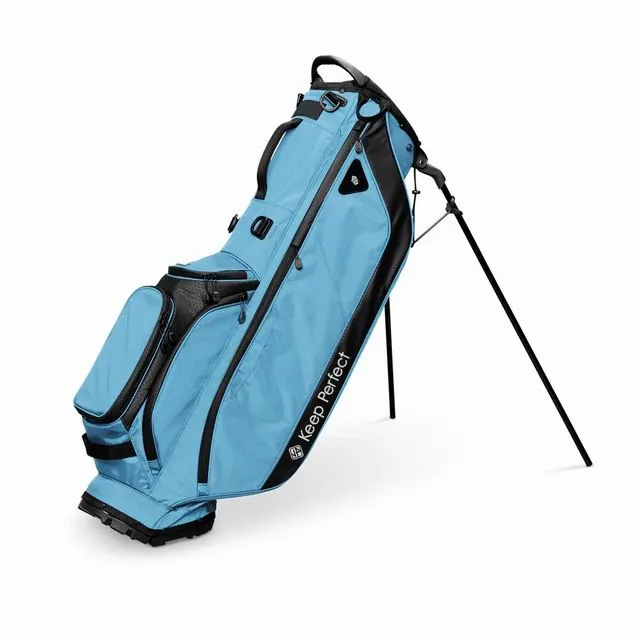
A waterproof stand bag suits golfers who carry and want a light bag that seals out rain, while a waterproof cart bag suits golfers who mostly ride and want maximum capacity, stability and the easiest full waterproofing — so choose based on how you actually play, not on either type alone. The distinction runs deeper than the straps: a stand bag has a leg mechanism and a top opening that must stay accessible, which makes genuine waterproofing a careful balancing act against carry weight, while a cart bag stays mounted, tolerates a heavier coated shell and can be sealed more thoroughly with fewer compromises. This guide, prepared with the QUANZHOU JUNYUAN BAGS factory in Quanzhou (founded 2014; founder in the golf bag industry since 2004), compares the two on the dimensions that matter for wet-weather golf — weight, stability, capacity, sealing and cost — so you can pick the bag that fits your game.
Both waterproof stand bags and waterproof cart bags keep clubs dry, but they solve different problems for different players. A walker who carries fourteen clubs wants a bag light enough to shoulder and sealed well enough to withstand a drizzly round. A rider who spends the day in a cart cares less about carry weight and more about a bag that holds everything, sits still, and shrugs off whatever weather the course throws at it. Understanding that difference in intent is the key to choosing well and, for a buyer or brand, to specifying the right product.
Weight: The Fork in the Road
Weight is the single biggest reason players reach for a stand bag over a cart bag. A waterproof stand bag is built to be carried, so it uses a lighter coated shell and only the seam sealing it strictly needs, keeping it within a carryable weight even with the weather layer. A waterproof cart bag, by contrast, has no obligation to be carried; it is heavier, holds more and can use a thicker waterproof shell with more comprehensive sealing because the rider never lifts it.
That weight gap is the practical verdict for most golfers. If you walk and carry even some of your rounds, the stand bag's weight advantage wins every time. If you ride exclusively on courses where carts are mandatory, the cart bag's extra capacity and stability are worth the weight you never have to carry. Walking and using a heavy cart bag will tire you out and make the day less enjoyable, which is exactly the trade-off to avoid.
Stability and Mounting on the Cart
On the back of a cart the two bags behave very differently. A cart bag is purpose-built to ride: it has a wide, flat, non-slip base that seats squarely on the rack, a full-length top and often a molded or padded base that grips the rack, so it stays put at corners and on slopes. A stand bag, even with its legs folded, has a narrower base and a leg mechanism that can shift on the rack, so it tends to move more unless it is carefully strapped with both the bottom and top straps.
For a rider, this stability is reason enough to favor a cart bag on wet days, when a slipping bag is more than an annoyance — it can bang clubs together or shift the cart's balance. For a walker who occasionally rents a cart, the stand bag mounts fine, but you should expect to strap it firmly. The full securing sequence that keeps either bag stable on a ride is covered in our securing your cart bag guide.
Ease of Waterproofing, Compared
This is where the comparison becomes genuinely technical. Because a cart bag never has to be carried, it can be made waterproof with a heavier hand: a thick laminated shell rated to a high water-column, a full set of heat-sealed or welded seams, watertight zippers and a roomy rain hood, all with no weight penalty to the user. A stand bag must achieve similar protection inside a strict weight budget, which means choosing lighter materials, sealing only the most exposed seams and using a compact hood — a harder balancing act that not every bag gets right.
The honest conclusion is that a fully waterproof cart bag is the easier product to build and, all else equal, the more thoroughly sealed. A waterproof stand bag is the more impressive engineering because it delivers strong protection at a weight a walker can honestly carry. If waterproof verifiability is your priority and you ride, a cart bag gives you the most confidence; our heavy rain performance guide digs into what verifiable waterproofing means in practice.
Capacity and Pockets
Cart bags hold more, and for many riders that is the point. A cart bag is taller and wider with a bigger footprint, typically a full-length 14-way dividers top and a generous array of pockets for a cooler pocket, valuables, rain gear, rangefinder and more. A stand bag is smaller and leans on a tighter, more efficient pocket layout to keep weight down, usually carrying a full set of clubs but with less spare room for non-essential gear.
If your round demands a lot of gear — a cooler, layers for up-and-down weather, a full rain suit, extra gloves — a cart bag fits it far more easily. If your bag is lean by design and you value a tidy, light kit, the stand bag's tighter pockets are an advantage, not a limitation. The organizing principles for either type are in our cart bag size guide and the compartment tips common to modern golf bags.
Durability and Long-Term Cost
With a heavier shell and fewer moving parts to flex, a waterproof cart bag is often the more durable product over very long-term, high-volume course use. Its fixed form and thicker coating take the repeated mounting, the weather and the bumping of daily course service without the seam and hardware fatigue that a frequently-carried, lighter stand bag can experience. A stand bag's leg mechanism and folding points are inherently more to maintain, which matters if the bag will live on a busy course or fleet.
That said, both are built to last years with reasonable care, and a well-built waterproof stand bag handles constant use fine. The durability question should factor into a couple of purchasing decisions: course operators and resorts that expect thousands of mounts a season typically favor the toughness of a cart bag, while an individual who carries and cares for one bag gets excellent life from a stand bag. Longevity is one of the dimensions our cart bag durability guide examines.
Waterproof Stand Bag vs Waterproof Cart Bag: Comparison Table
| Criterion | Waterproof Stand Bag | Waterproof Cart Bag |
|---|---|---|
| Primary use | Carrying / walking | Riding / cart use |
| Carry weight | Light, carryable | Heavier, not for walking |
| Capacity | Full set, lean pockets | Full set + more gear |
| Cart stability | Strap firmly, narrower base | Very stable, purpose-built |
| Waterproof ease | Balanced vs weight | Easier, thicker sealing |
| Best for | Walkers in rain | Riders, courses, fleets |
General comparison for typical waterproof models; exact specifications vary by design, material and construction. Confirm details with the factory for a specific bag.
Which Should You Buy or Commission?
Choosing between the two is really answering one question: do you carry or do you ride? If the answer is even sometimes "I carry," a waterproof stand bag is the safer, more comfortable choice, and if it is "I ride, and I want maximum gear and simplicity," a waterproof cart bag wins. For a mixed golfer — someone who walks some rounds and rides others — a light, cart-compatible waterproof stand bag offers the best of both in a single bag.
For clubs, resorts and retail brands, the choice of which to stock or commission usually follows your users. A course with mandatory carts sells more cart bags; a walking-friendly course or a junior academy sells more stand bags. Many programs offer both in matched branding so the customer picks the right format. For the full range and material options, browse our golf bag products, or start a custom program through custom solutions.
Factory Verdict on the Stand vs Cart Question
There is no single "better" waterproof bag — there is the one that matches how you play. Walkers get the carry weight of a stand bag and its balanced weather sealing; riders get the capacity, stability and thorough waterproofing of a cart bag. The few players who do both are best served by a light, cart-compatible waterproof stand bag. Specify the format first, then the material and sealing details, and you get a bag you will actually enjoy in the rain.
We build both formats at QUANZHOU JUNYUAN BAGS, an affiliated Quanzhou factory founded in 2014 with 7 production lines, 126 sewing machines, 137 staff and roughly 200,000-piece monthly capacity, serving 200+ brands across 100+ countries and passing a third-party SGS factory audit in March 2026. To discuss a waterproof stand bag or cart bag program, contact our team, service@junyuanbags.com, or call +86 17750020688.
The Wet-Weather Use Case for Each Bag
Match the bag to the wet-weather scenario you face most. If your rain rounds happen while you walk a course that does not offer carts, a waterproof stand bag is non-negotiable because you physically must carry it. If you ride a cart at a course with mandatory cart use — the common model across much of the US — a waterproof cart bag is the simplest, most sealed answer. If your course and habits mix both, a light, cart-compatible waterproof stand bag bridges the two.
Scenario matters more than brand preference here. Players who are forced to ride but buy a stand bag end up with a bag that neither carries comfortably for long nor mounts with cart-bag stability; players forced to walk with a heavy cart bag end up worn out by the second nine. Thinking in scenarios — walk vs ride, wet vs dry season — is how the right waterproof format reveals itself. Our walking vs riding guide frames this decision cleanly.
Rain Hoods Differ Between the Two Formats
The rain hood behaves differently on each bag. On a stand bag the hood is essential because the open top is the main leak point and the bag stays upright and exposed while you carry; a snug, fitted hood seals around the shafts and is worth its weight. On a cart bag the hood is more of a bonus, because the bag stays in one place and can be angled or parked to shed water, so some riders never use it even when the shell is sealed.
That difference matters when you compare price and weight: a stand bag that ships without a proper fitted hood is not really a wet-weather stand bag, while a cart bag without a hood can still be a solid rain performer if its shell and seams are sealed. Ask whichever bag you are considering whether the hood fits the actual top and how well it seals around your club set. Hood design and fit are detailed in our rain cover technology guide.
Which Holds Up Better Over a Wet Season
Longevity under repeated wetting is a fair question for both. A waterproof cart bag, with its heavier shell and fewer moving parts, tends to hold up well under constant use and repeated soaking, since there is less to flex and wear and the coating is thicker. A waterproof stand bag carries a durability challenge of its own: a moving leg mechanism, folding points and the constant flex of being carried on and off, which can stress seams and hardware over time even when the shell itself is sound.
Neither is fragile if built and cared for well, but the calculation favours a cart bag for heavy fleet or daily use and rewards choosing a stand bag with good hardware and seam construction if you carry all season. The maintenance that keeps both going through wet years — rinsing salt, drying storage, checking seams and zippers — is covered in our bag maintenance guide.
Pricing and Value Between the Two Formats
Price follows construction complexity rather than size alone. A fully waterproof stand bag can cost more per gram than a cart bag because sealing a light, carryable shell with a fitted hood is harder to engineer. A waterproof cart bag, simpler to seal and heavier, can offer strong capacity and protection at a very competitive factory-direct price. For a buyer comparing head-to-head, the value winner depends on which format you actually use, not on sticker price alone.
Buying direct from the factory also changes the math, because you remove retail and distribution margins from whichever format you choose. If you are sourcing for a brand, the volume and MOQ of each format shape the per-unit economics — a topic our MOQ and pricing guide explains in detail.
The Comfort Factor: Carrying a Sealed Bag
Comfort on the back is where a waterproof stand bag earns its keep — and also where a poor one fails. A well-built waterproof stand bag spreads the sealed-shell weight across a dual-strap harness and sits at the right height, so the extra grams of waterproofing are barely noticed over a round. A poorly balanced one concentrates weight awkwardly and makes a wet afternoon miserable. Cart bags can and do ignore this entirely, because the rider never carries them.
That comfort is a real buying reason for walkers: a waterproof stand bag must be a bag you still enjoy carrying, or it fails its primary purpose no matter how dry it keeps your clubs. When you test one, load it fully, walk a little and pay attention to balance and strap feel, not just the waterproof label. The ergonomics of a comfortable carry bag are examined in our ergonomic stand bag guide.
Storage and Off-Course Handling
What happens between rounds matters as much as what happens on them. A waterproof cart bag stores easily — it stands upright on its flat base, holds its shape and can sit in a garage or pro-shop storage without fuss. A waterproof stand bag, with its legs and lighter shell, stores well too but benefits from being stood on its feet rather than leaning heavily, so the leg mechanism is not stressed for long periods. Both store cleanest when dry and empty of damp gear.
For courses, resorts and retailers, storage and handling of a fleet affect longevity: a stack of stored bags should not crush the shells or deform bases, and wet bags should be dried before going into a rack. A small routine — wipe the base, open pockets to dry, stand bags on their feet — protects a fleet all season. Our seasonal storage guide covers off-season and short-term storage for every bag type.
The Cost of Each Format in a Fleet Program
For a club, resort or brand deciding between the two formats, cost lands on volume and use. A waterproof cart bag is usually cheaper per unit to build to a given sealing standard because it is simpler to seal, and it serves cart-heavy facilities in high volume. A waterproof stand bag costs more per unit for equivalent protection because of the lighter-shell engineering, but it is the correct buy for walking programs, junior academies and regions where players carry. The right choice is the one that matches your users, not the one with the lower sticker.
Buying a matched fleet of either format at factory-direct prices keeps unit cost predictable, and sampling lets you confirm construction before committing to a large run. For a program across multiple sites, a standardised spec for one format simplifies maintenance and reordering. The cost and value logic for custom golf bag programs is laid out in our cart bag cost breakdown guide.
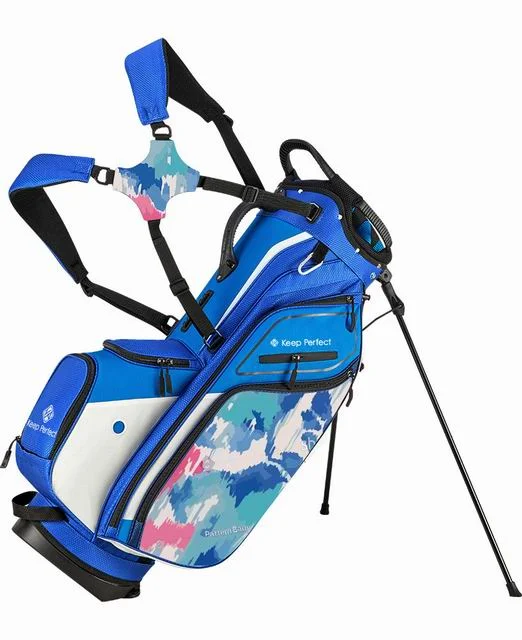
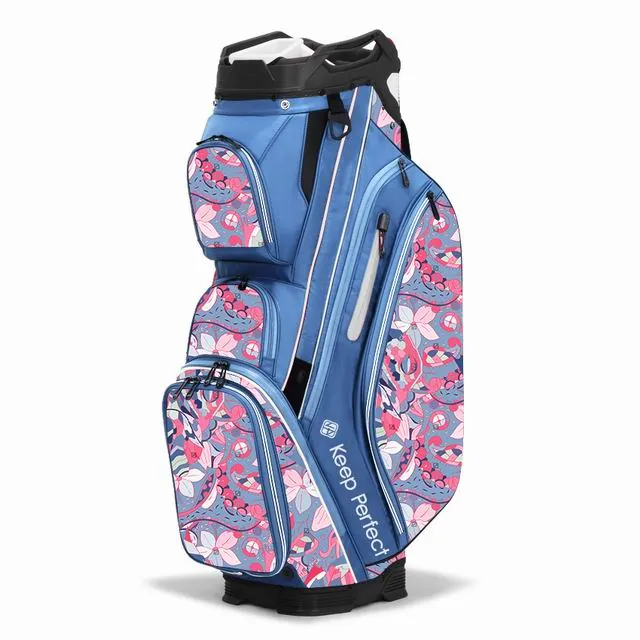
Visual Comparison of the Two Formats
Frequently Asked Questions
- Which holds more gear: a stand bag or a cart bag?
- Cart bags generally hold more. They are built wider and taller with a bigger footprint and typically a full-length 14-way dividers top, so they carry a full set of clubs plus more pockets and gear than a stand bag.
- Is a stand bag or a cart bag easier to waterproof?
- A cart bag is easier to make fully waterproof because it has no leg mechanism and stays mounted, so a heavier coated shell and more seam sealing add less practical weight. A stand bag must stay light, which makes full waterproofing more of a design trade-off.
- Can I carry a waterproof cart bag?
- You can, but it is heavy and not designed for walking. A full-size cart bag can weigh several kilograms empty, so most walkers choose a waterproof stand bag, which is built with a lighter shell and dual-carry straps.
- Which is more stable on a golf cart?
- A cart bag. Its wider, flatter base seats squarely on the rack and it is purpose-built to ride, so it sits more stable than a stand bag, whose leg mechanism and narrower base move around more on the rack.
- Do I need a separate rain hood for either bag?
- Most fully waterproof models ship with a fitted rain hood for the top opening. For a cart bag the hood is convenient but less critical because the bag rarely moves; for a stand bag the hood is essential since the open top is the main rain entry point.
- What is the MOQ and lead time for custom waterproof bags?
- Standard MOQ is 200 pieces per design and colorway with test orders from 100 pieces. Sampling takes 10-20 days and bulk production 45-60 days at QUANZHOU JUNYUAN BAGS.
Looking for a Reliable Golf Bag Partner?
Whether you need standard or custom waterproof golf bags built to your spec, our team can help. Test orders from 100 pieces, sampling in 10-20 days, bulk production in 45-60 days.
Request a Bulk Quote →