Golf Cart Bag Trends 2026: Style, Function and Durability
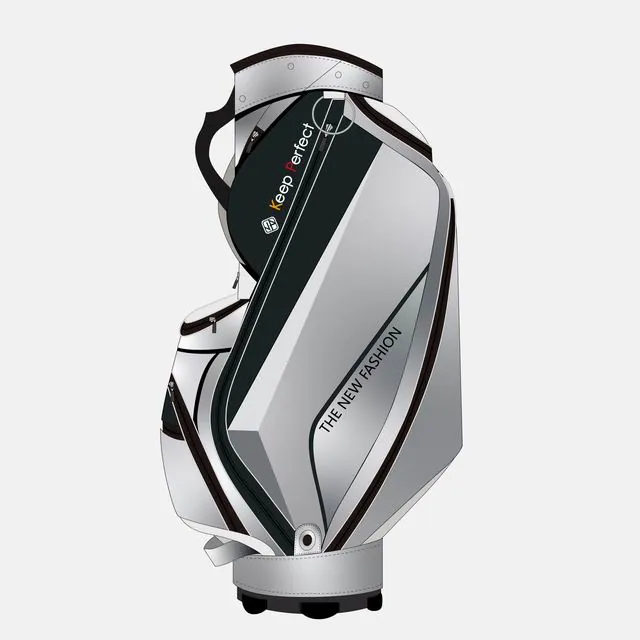
The dominant golf cart bag trends for 2026 are modular organization, factory-sealed waterproofing, recycled-fibre shells, minimalist two-tone design and smart storage features — and at the manufacturing level, the single largest shift is that "durable" now means seam-sealed waterproof construction with a tested, quantified build rather than simply thicker fabric. That is the outlook from QUANZHOU JUNYUAN BAGS (founded 2014, founder in the trade since 2004), whose 7 production lines and 126 sewing machines build about 200,000 golf bags monthly for 200+ brand partners in over 100 countries. This guide reads the 2026 trendset across the three axes buyers actually choose on — style, function and durability — with the production reality behind each so you can separate durable trends from passing fads.
Reading a trend correctly matters because the gap between what customers want and what a brand ships is where both opportunity and missteps live. A brand that ships a waterproof cart bag as standard, or a modular bag that simplifies storage, is meeting a proven demand before competitors consolidate around it; a brand that chases a novelty gimmick risks building inventory nobody repurchases. This article is structured the way a purchasing decision actually unfolds: style first because it sells, function second because it keeps users, durability third because it determines returns — with data and design trade-offs drawn from real OEM programs rather than show-floor claims.
Before the trends, two framing disciplines help you read them correctly. First, distinguish a durable trend from a passing fad by evidence of repeat purchase: in our experience across 200+ brand partners, when a feature like waterproofing or a putter well shifts from "nice extra" to "expected default" across programmes, it has crossed into real-trend territory, whereas a purely aesthetic gimmick tends to surface and fade within a season. Modularity, sealed waterproofing and recycled fabric have all passed that repeat-purchase test for 2026, which is why this guide treats them as anchors. Second, separate product trends from manufacturing trends. Product trends change season to season; manufacturing trends—seam-sealed construction, recycled yarn at retail strength, quantified durability testing—are slower and more structural, and they quietly raise the floor for what any good bag must be. A brand still shipping last decade's construction falls behind regardless of how fashionable its colours are, so read this guide with both lenses: what to sell this year, and what capability to secure for the next several seasons.
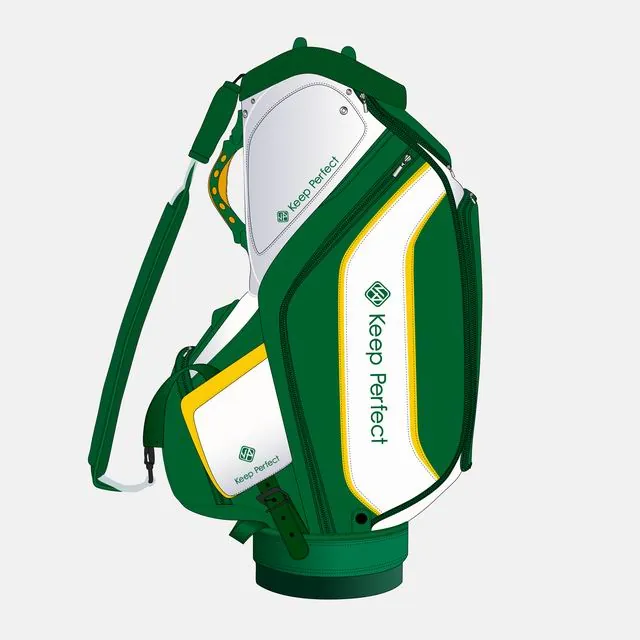
Trend 1: Modular and Interchangeable Design
Modularity is the strongest functional trend of 2026. Instead of owning several bags for different purposes, golfers increasingly want one cart bag whose accessory pods and panels can be reconfigured. Detachable, zip-off side pockets, cooler sleeves and valuables pouches let a golfer add capacity for a long resort day or strip weight for a quick club championship round. Interchangeable colour panels turn a single modular bag into a personally styled one, which appeals strongly to the younger demographic reshaping casual golf.
From a manufacturing view, modularity is more demanding than it looks: every detachable point must be a secure, durable attach system that does not rattle on the cart, and each interchangeable cover must fit a sealed colourway so panels can be swapped without losing waterproofing. The engineering cost sits in the attachment hardware and the QC of interchangeable parts, which is why modular bags cluster at mid-market and above. For brands, modularity is attractive because one platform can serve multiple colourways and configurations from shared tooling, lowering SKU proliferation.
Trend 2: Factory-Sealed Waterproofing Goes Mainstream
Waterproofing moved from a premium option to a near-standard expectation in 2026. Players want one bag that stands up to rain, dew and coastal spray without a separate rain cover to fumble with mid-round. The modern approach is a seam-sealed shell — a TPU- or PU-coated fabric whose seams are taped and the base coated — paired with waterproof taped zippers and a fully seam-sealed valuables pocket, delivering protection claimed at a water-column rating verified in testing rather than by vibes.
The production implication is substantial. Sealing every seam and using waterproof zippers adds labour and material, raises the defect surface for QC, and demands a factory that can execute seam-taping consistently across a run. This is exactly the kind of capability a real OEM line holds and a thin job shop often fakes with marketing. A genuinely waterproof bag is verified at each stage, which is why buyers should ask for the water-column rating and the test method. For the full treatment of how waterproofing is built and tested, see our golf bag materials guide and the waterproof testing standards in the quality standards guide.
Trend 3: Recycled and Low-Impact Fabrics
Sustainability is no longer a niche ask; it is a mainstream purchasing criterion, especially for resort fleets, corporate programmes and younger golfers. The 2026 standard is recycled-polyester shells made from post-consumer PET bottles, often certified to recognized recycled-content standards, engineered to the same 600D-1680D abrasion strength as virgin fabric. Because recycled yarn has matured, brands can state a real sustainability benefit without conceding the durability that keeps returns low.
Two secondary levers round out the sustainability package: repairable design and low-impact finishing. Repairable cart bags with replaceable pockets and straps extend service life and reduce replacement frequency, and water-based adhesives and low-VOC coatings reduce the environmental footprint of production. For a brand positioning on sustainability, these combine into a credible story tested at the material level. The deeper material science behind sustainable options is covered in our materials guide.
Trend 4: Minimalist Exterior, Organized Interior
Style in 2026 is moving toward clean, minimalist silhouettes: fewer, better-placed pockets on the outside, and more considered organization inside. Flush, low-profile zippers and integrated handle loops give a tailored look, while the interior gains a full-length 14-way divider, a dedicated putter well and structured sleeves for gadgets. The philosophy is that a cart bag should look quiet but organize a busy game — visually calm, functionally deep.
This trend rewards factories that cut clean lines and crop detail tightly, because a minimalist bag has nowhere to hide sloppy stitching. It also shifts value toward the divider and internal sleeve architecture rather than the number of external pockets. Buyers evaluating a minimalist design should inspect the internal layout even more carefully than a pocket-heavy bag, since the organization is now the product. See the golf bag types guide for how divider configurations vary.
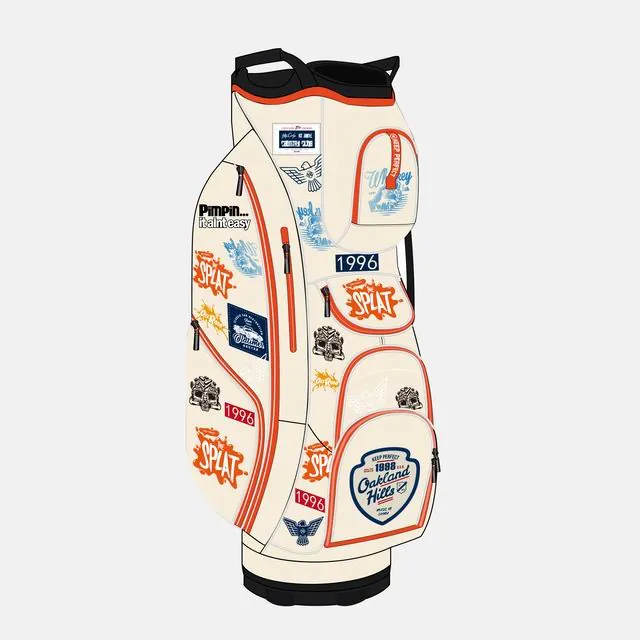
Trend 5: Smart and Quick-Access Storage
Convenience features are expanding the 2026 cart bag. Magnetic fasteners are replacing fiddly zippers on frequently used pockets, so a phone or rangefinder is accessible with one hand on the cart. Integrated magnetic closure at the top of a valuables pocket, front-facing rangefinder and glove pockets, and a dedicated fleece-lined phone sleeve are now common asks. Anti-theft detail — lockable valuable pockets and secure zipper heads — is growing with the rise in urban and resort play where bags are left by buggies between greens.
From a production angle these features are individually simple but add up: magnets need secure mounting that survives repeated closure without detaching, and each pocket geometry must be cut and sewn precisely. The net effect is a bag that feels premium because the small frictions of a round have been engineered away. Smart storage is where style and function visibly merge, converting daily convenience into a feature buyers repeat in reviews.
Trend 6: Colours and Finishes
Colour direction in 2026 favours muted, premium neutrals and sophisticated multi-tone schemes over loud graphics. Deep still-life greens, sand, charcoal and navy anchor the palette, often with a single bold accent on the trim or a pocket. Durable matte and pebbled finishes, plus subtle tonal texture, give cart bags a quiet-luxury feel that photographs well on the course and in the car park. Two-tone panel designs, once a niche, are now a mainstream idiom for expressing brand identity without shouting.
For OEM programmes the finishing matters as much as hue: matte coatings resist fingerprints and show fewer scuffs than gloss, and dark bases mask trail wear. A brand's colour story should survive the production reality of repeat dye lots across a run, which is why factories hold fabric colour matching to a standard and verify across production. When finalizing a palette, ask for the colour-roll standard and approve against a physical swatch rather than a screen under office light.
Trend 7: Durability as a Quantified Spec
The durability trend of 2026 is that "durable" became a measured, testable claim rather than a vague adjective. Buyers now expect a stated abrasion rating on the fabric, a verifiable water-column rating on waterproofing, tested stress points on seams and reinforcement, and evidence of zipper cycle testing. This is a response to a market tired of "lifetime" bags that fail at the handle in a season. At the factory level it means documenting weight, stitch gauge, base plate thickness and reinforcement at every stage, which our lines do across 7 production cells.
For a brand, quantified durability is a commercial asset: it converts a subjective quality story into data a retailer or procurement team can compare. Ask a factory for the test numbers behind its claims — the same independent, repeatable evidence that SGS-style factory audits verify. A factory that can hand you a durability dossier is giving you the tools to win the buy. This is the discipline behind our OS-level QC, detailed further in the quality standards guide.
Trend 8: Versatility and Multi-Use
Finally, cart bags are getting more versatile, blurring the boundary with travel and weekender bags. Removable cooler sleeves, laptop-friendly interior sections and pack-flat design are appearing in premium cart bags so the same piece works for the course, the gym bag or the flight home. This versatility matters to a generation that values fewer, smarter owned items. It also extends the brand's reach beyond the 18th hole into a wider lifestyle moment.
The trade-off is structural: multi-use features add compartments, zippers and weight, so a versatile bag must still center its load low and stay durable on the cart. The winning design keeps the multi-use additions modular or removable rather than letting them compromise the riding core. For brands, versatility broadens the addressable market for a single SKU and strengthens margin by adding perceived value that survives comparison.
Trend 9: Weight-Aware Design (Not Weight Obsession)
Because a cart bag rides rather than being carried, the 2026 design conversation has matured from chasing the lightest possible number to engineering a weight-aware build — one with an appropriately balanced, reinforced structure that is not heavier than it needs to be. The trend is toward eliminating needless weight in trim and hardware while keeping the structural core that makes a bag ride well. This is a refinement of the old lightness race, not a return to it, and it reflects a category that has learned that a featherlight bag with a weak base is a bad trade. Lightness is a real product characteristic in this framing, but it works best in service of balance and a stable ride rather than as a headline manufacturing identity.
For a buyer this means asking where weight sits, not just how much there is. A bag that shaves weight by thinning the base plate or handle webbing will show its weakness under a full set, while one that trims dead trim weight and keeps the riding core strong offers genuine benefit. Evaluated loaded-on-the-cart and on slopes, the weight-aware outcome is a bag that pushes easily and stays planted; that is the 2026 standard worth purchasing and, for OEM work, worth specifying deliberately.
Trend 10: Regional Variation and Localisation
Trends are global in direction but local in expression, and 2026 highlights three regional lanes. Wet-climate and coastal markets (the British Isles, the Pacific Northwest, tropical Asia, Australia) push hardest on sealed waterproofing and quick-dry interiors, because morning dew and sea spray are everyday. Densely urban and resort markets lead on anti-theft and quick-access storage, since bags sit unattended by buggies between greens. And the younger, fashion-forward segments in North America and Europe drive modular colour and recycled-material style statements. Reading the trend for your market means weighting these regional emphases rather than importing one global template.
Manufacturers serve this by offering standard modules that can be recombined per market — a waterproof core with interchangeable accents, or a modular pod system with regional accessory variants — so a brand can localize without multiplying tooling. This is where a flexible OEM partner adds value: the same platform ships waterproof to the coast and accent-led to the city, keeping both markets served from shared production economics. It is a practical expression of the modular trend applied to the supply chain itself.
2026 Trend Quick Sheet
Modular pods and colour panels; seam-sealed waterproofing as standard; recycled 600D-1680D shells; minimalist exterior with deep internal dividers; magnetic quick-access and lockable pockets; muted two-tone palettes; and durability stated as tested numbers.
| Trend (2026) | What It Means | Production/Commercial Note |
|---|---|---|
| Modular design | Detachable pods, colour panels | One platform, many SKUs; higher attach hardware cost |
| Sealed waterproofing | Seam-sealed shell, taped zippers | Verify water-column rating and test method |
| Recycled fabric | RPET shells at retail strength | Credible sustainability without durability loss |
| Minimalist exterior | Fewer pockets, tailored look | Value moves to dividers and internal sleeves |
| Smart storage | Magnetic, quick-access, lockable | Premium feel; secure magnet mounting required |
| Colour direction | Muted neutrals, two-tone accents | Approve against physical swatch across dye lots |
How to Put Trends to Work for Your Brand
Turning a trend into a product requires disciplined translation. Start by choosing the two or three trends that match your audience — a course-fleet brand may lead with waterproofing and durability data, while a lifestyle brand may lead with modular style and recycled fabric. Then lock a specification before sampling: fabric and rating, divider topology, waterproofing level, closure systems and palette. Sampling in 10-20 days lets you see and touch the translation before any tooling commitment, and bulk production in 45-60 days at MOQ 200 (test order 100) gives a realistic runway to a seasonal launch.
The most reliable way to validate a trend bet is to sample it, put it on real carts for real rounds, and let the feedback steer the build before you scale. QUANZHOU JUNYUAN BAGS develops these trend combinations in-house and works with brands to match a spec to a market.
There is also a sourcing question every brand should ask while riding a trend: is my factory capable of the specific construction the trend requires, and can it hold that capability at volume? Sealed waterproofing requires seam-taping skill that not every line possesses; modular attachments require secure hardware engineering; recycled fabric at strength requires the right yarn supply. A factory's capability is part of what makes a trend commercially viable rather than a one-off sample. That is why the most useful conversation with a potential partner is not "what is your price" but "walk me through how you build, seal and test the specific features I want to sell." The answer separates a trend-reader from a factory that can actually deliver one. Our manufacturing capability pages detail exactly the lines, machines and QC that back these builds, and our OEM process guide covers how a trend is turned into a production spec.
Finally, timing. Trends have a launch window, and 2026 programmes should be locked for early-season delivery so the new bag is on shelves and in fleets when buying peaks. With sampling in 10-20 days and bulk production in 45-60 days at an MOQ of 200 pcs (test order 100 pcs), a brand can move from spec to shippable product in roughly one season, which is enough runway to test, adjust and still hit the market with a trend-relevant bag. If you want to be on the front of the 2026-2027 cycle rather than chasing it, starting the spec conversation now is the single most useful step — contact our development team at service@junyuanbags.com or +86 17750020688.
The 2026 cart bag market rewards brands that lead on two or three genuine trends while holding a durable, verified core, and punishes those that chase everything at once with a flimsy build. Commit to a focused trend strategy, quantify the durability you promise, and partner with a factory that can actually build and test what you spec.
Frequently Asked Questions
- What are the biggest golf cart bag trends for 2026?
- Modular interchangeable pockets, sealed waterproofing, recycled fabrics, minimalist design with organized interiors, magnetic quick-access closures and built-in anti-theft storage.
- Are waterproof golf cart bags becoming standard?
- Yes. Seam-sealed, TPU-coated shells with taped waterproof zippers are moving from premium to mainstream expectation.
- What colors are trending in golf cart bags in 2026?
- Muted premium neutrals and earth tones—deep greens, sand, charcoal, navy—with sophisticated two-tone schemes and one bold accent.
- What is a modular golf cart bag?
- A cart bag with detachable accessory pods and interchangeable panels so golfers reconfigure pockets and colours per round instead of owning multiple bags.
- Are recycled materials durable enough for golf cart bags?
- Yes. Recycled-polyester shells now meet the same 600D-1680D abrasion strength as virgin fabric, so sustainability need not cost durability.
- How can a brand launch a cart bag that taps 2026 trends?
- Work with an OEM factory: lock a spec on modularity, waterproofing, recycled fabric and closures, then sample in 10-20 days and produce in 45-60 days. MOQ 200 (test 100).
Trend analysis informs but does not replace verification. Use the references below for market context, then confirm any trend you adopt with a physical sample and your own fit tests before committing production volumes.
Sources
- Golf Digest – Golf Equipment and Bag Trends
- Golf Monthly – Golf Bag Reviews and Design Trends
- Golf Business Community – Player Equipment and Sustainability Trends
- MyGolfSpy – Independent Golf Equipment Testing
Content director: QUANZHOU JUNYUAN BAGS. For trend-driven cart bag development, email service@junyuanbags.com or call +86 17750020688.