Waterproof Golf Stand Bag Options for Wet Weather Golfing
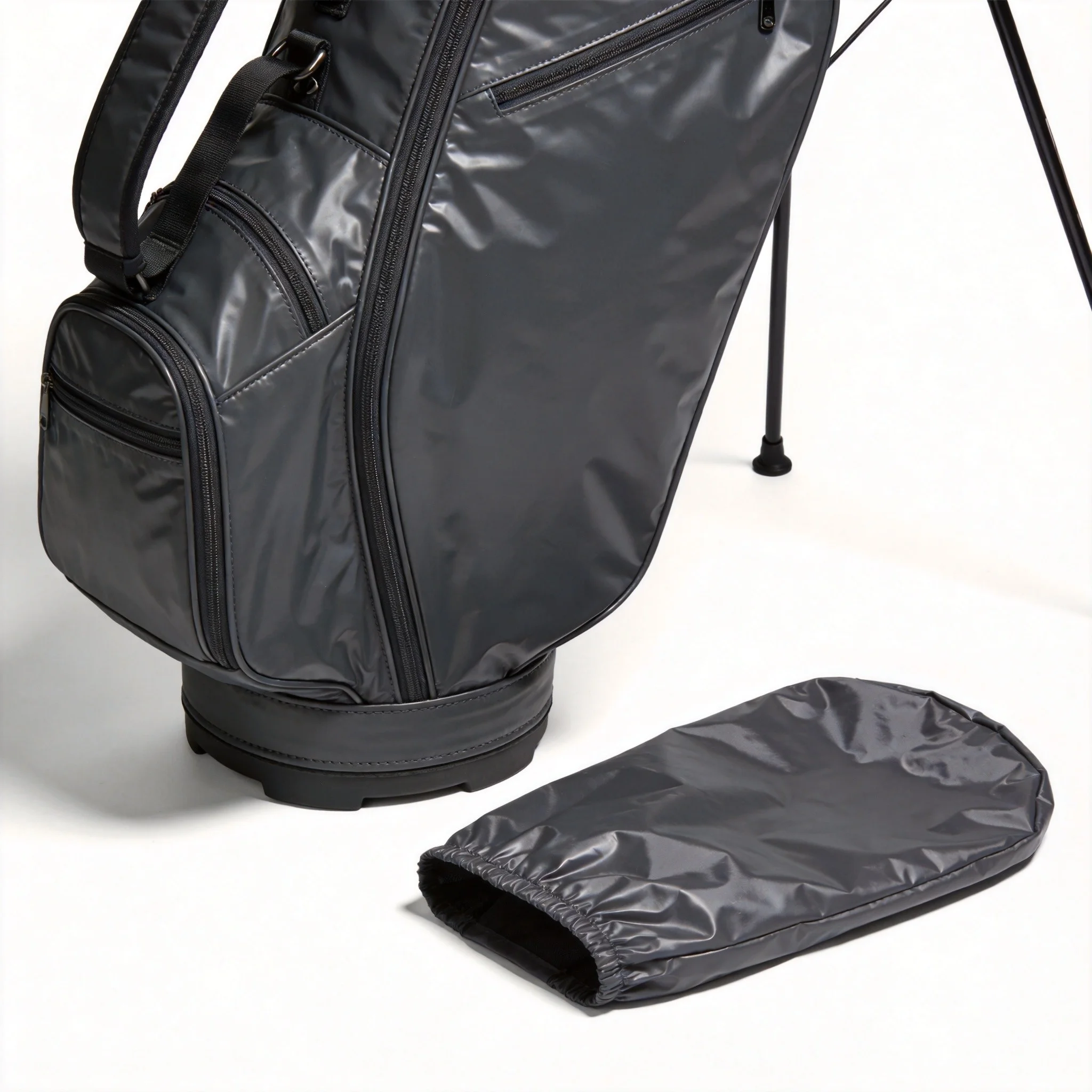
For wet-weather golfing, the practical options in a waterproof golf stand bag are a coated nylon or polyester shell with heat-sealed or welded seams, water-resistant zippers, a fitted rain hood that seals the top opening, and a drainage point that lets an open pocket shed water instead of pooling. Played properly, a fully waterproof stand bag keeps a dozen-plus clubs and their grips dry through a round in steady rain, which matters because a wet grip changes how a club feels at address and a wet club head needs more attention between shots. The trade that defines this category is weight: a stand bag is meant to be carried, so genuine waterproof stand bags solve the sealing problem without the heavy shell a cart bag can tolerate. This guide, written with the QUANZHOU JUNYUAN BAGS factory in Quanzhou (founded 2014; our founder entered the golf bag industry in 2004), walks through the material, construction and hardware choices that make a stand bag genuinely ready for wet weather.
A stand bag sits on your back in exactly the weather that drowns an open top: the opening faces up, the legs swing, and the outer pockets are at rain level on every fairway. That is why a waterproof stand bag is not the same product as a water-resistant one. Water resistance is a coating that sheds drizzle; waterproofing here means the bag keeps clubs dry under sustained rain through seam sealing and a hood. Deciding which you really need depends on where your rounds happen and how often you are caught out, but for players in rainy regions or for club fleets that expect to play through, the fully waterproof design is the reliable answer.
Bag Styles Within the Wet-Weather Category
Waterproof stand bags are not one product; they come in a spread of sizes and strap formats that suit different kinds of wet-weather play. At the light end is the compact waterproof carry bag, built for a half set and for players who want the lightest possible walk in drizzle. In the middle is the full-size waterproof carry stand bag, big enough for fourteen clubs with the dual-strap harness that makes walking comfortable, and this is the mainstream of the category for weekday and club golfers.
Above that sit hybrid and cart-compatible waterproof stand bags that add a stable base and stronger strap hardware while keeping carry straps for flexibility. These suit players who sometimes ride and sometimes walk and want one weather-ready bag for both. And for players who mainly ride, a waterproof cart bag is the heavier, more sealed alternative. Understanding the range helps you match the right form to the round you actually play, and our stand vs cart guide sharpens the walk/ride split.
How Waterproofing Is Verified and Tested
A waterproof claim is only worth what it can be measured against. In the trade, shell fabrics are rated by a hydrostatic head figure — expressed in millimetres — that states the height of a water column the fabric resists before leaking. A high figure and a confirmed coating or laminate are the quantitative side of waterproofing. The qualitative side is construction: seams must be sealed, zippers must be water-resistant and the hood must actually fit, because a high-rated fabric with leaky seams is still a leaky bag.
Serious factories back these claims with testing. Fabric can be tested for water resistance on standard textile equipment, and finished bags are commonly checked with a light-rain or spray test that passes water over the shell and seams to confirm the seal holds. If you are commissioning bags for a wet region or a brand that must guarantee dry clubs, ask your factory what tests the shell and the finished bag go through. Our waterproof testing guide covers the checks that distinguish a real product.
Dividers and Club Fit in the Rain
Waterproofing and club fit work together. A stand bag needs a divider system that keeps clubs upright and separated, and in wet weather that organization matters twice: it protects club heads and grips from bumping, and it means fewer fumbles pulling clubs in the rain when you want speed. A full-length divider top that runs to the base is the strongest, keeping each club in its own channel, while a top-only divider is lighter but lets shafts cluster.
Pair the divider layout with how a hood seals around it. A hood designed around the real top circumference, not a generic cover, pulls tight around the club shafts so water runs off rather than leaking around the openings between dividers. If your clubs vary widely in grip size, confirm the hood's cinch accommodates them. The dividers-and-club-fit logic for carry bags is developed further in our stand bag fit guide.
Strap and Harness Comfort When You Carry
Since a stand bag is carried, the harness is a big part of whether you actually use it. A good dual-strap harness spreads weight across both shoulders and is adjustable so the bag settles at the right height, and in wet weather you want the straps and buckles to resist water and stay grippy. Padded, breathable shoulder sections reduce fatigue on a long carry in a drizzle, and quick-adjust buckles let you fine-tune the fit when you add a rain layer mid-round.
Harness comfort is also a durability matter: wet conditions wear straps and clips faster, so corrosion-resistant hardware and well-sewn webbing matter. A bag you comfortably carry all season is one you will actually take out in wet-weather weeks. The ergonomic and comfort principles behind a well-designed carry bag are covered in our ergonomic stand bag guide.
Why Wet-Look and Breathability Matter as Much as Sealing
Genuinely waterproof stand bags walk a tightrope between keeping rain out and letting moisture out from inside. A shell that blocks water perfectly can also trap heat and condensation, which makes a bag sweaty on the back on a humid day and, worse, can leave a damp microclimate inside that damages clubs and holds between rounds. Modern waterproof stand bags therefore balance the sealed shell with breathability somewhere in the design — usually through breathable linings, breathable materials on non-critical panels, or moisture-wicking interiors.
This is a detail worth asking about, not just on the marketing copy but at the factory. A bag that is only sealed and never breathes may win the waterproof test but lose the comfort test, and a player who is hot and clammy by the third hole stops appreciating the dry clubs. The best waterproof carry bags treat waterproofing and breathability as two halves of the same product. If you are commissioning for a brand, confirming the interior treatment and the breathability balance at sampling stage is one of the most valuable checks you can make with your factory contact.
The Leg Mechanism and Wet-Weather Durability
A stand bag's legs are its most vulnerable moving part, and wet weather is exactly when that vulnerability shows. Mud, grit and water work their way into the leg pivots and mechanisms, stiffening the action or, over a wet season, wearing the moving parts so the legs start to sag. A well-built waterproof stand bag uses corrosion-resistant leg hardware, often a robust kickstand-style pivot, and seals or shields the mechanism where it can, and it repays a quick rinse after muddy rounds.
When you evaluate a stand bag for wet-weather life, look at the legs as closely as the shell. Are the pivots protected from grit? Is the leg hardware coated or stainless where it matters? Does the bag stand reliably on a wet surface without the legs creasing or sliding? These are the questions that separate a bag that lasts several wet winters from one that wobbles after one. The durability logic that governs this moving part is expanded in our bag durability analysis.
Sourcing and Budget Guidance for a Waterproof Stand Bag
Price follows the materials and the sealing more than the size of the bag. A coated nylon or polyester shell with taped seams sits at the value end and is enough for most casual wet rounds; a laminated shell with heat-sealed critical seams and a premium hood sits higher, justified if you play rain regularly or a brand must guarantee dry clubs. Hardware quality — zippers, buckles, strap clips — and breathability also move the price, so setting a realistic budget depends on the level of protection you actually need rather than the biggest number a retailer offers.
For a brand or a club buying in volume, factory-direct pricing removes retail margins from whichever construction level you choose. If cost is the constraint, ask your factory about the value spec — a coated shell with taped critical seams and a good hood often gives 90 percent of the protection at a meaningfully lower price. The cost and value framework for custom waterproof bags is explained in our golf bag cost factors guide.
Testing Your Waterproof Stand Bag Before the Season
Buying a waterproof stand bag is one thing; confirming it works before a rain round is another, and a simple at-home test avoids surprises. On a dry day, set the bag upright and pour water slowly over the shell and seams, checking from inside for any penetration; run a wet cloth over a closed zipper and inspect underneath; and fit the hood and shake it gently to see if water runs off or works its way around the shafts. These quick checks tell you whether the bag does what its label claims and where its weaknesses are.
Doing this before the wet season and again before a big tournament is a habit serious golfers and course staff value. If a test shows a leak, it is far better to catch it at home than at the first tee of a soggy round. The same checks are the ones a factory applies when it tests waterproof claims in the first place, so running them yourself gives you a fair read on any bag. For a deeper walk through waterproof verification, our waterproof testing guide is the reference.
Who Should Choose a Waterproof Stand Bag
A waterproof stand bag is the right call for a clear list of players. It suits walkers in rainy regions who carry clubs and refuse to let weather decide their round. It suits club members at courses that keep play going through winters. It suits juniors and seniors who want the lightest bag that still protects clubs. It suits players who keep a second bag for all-weather use. And it suits brands and academies that want a durable, branded bag for a defined group who will genuinely carry it in wet weeks.
The bag is less necessary for riders on cart-only courses, for players who cancel at the first drop of rain, or for those who only want a fashion waterproof look without sealed construction. Matching the product to the player is the whole point of this guide, and it is the same principle we apply when a customer asks us to spec a wet-weather bag. If you are deciding across the whole stand vs cart family, our comparison guide covers the format decision as well.
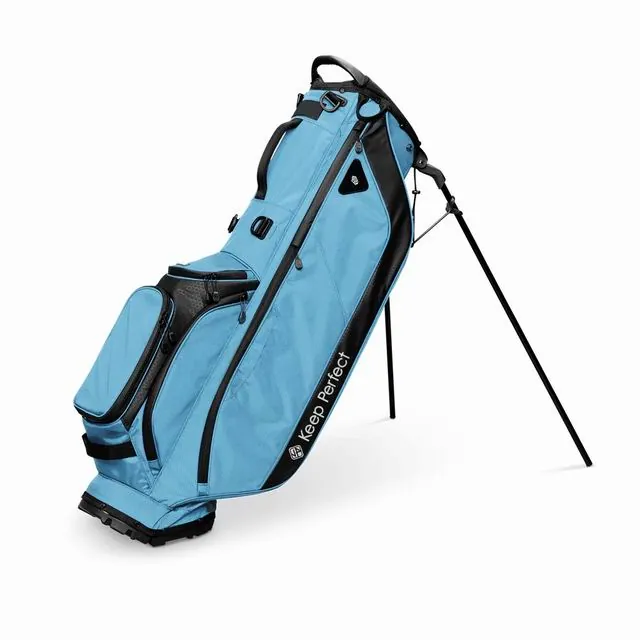
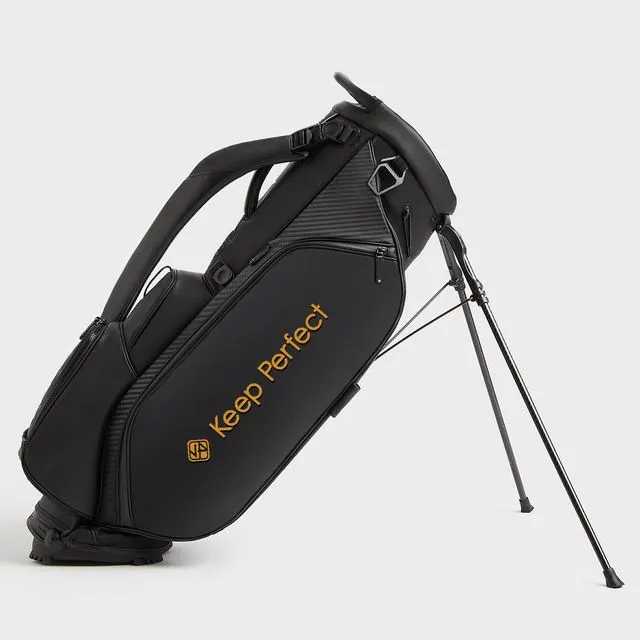
Stand Bag Diagrams and Anatomy at a Glance
Custom Waterproof Stand Bag Production at Our Factory
QUANZHOU JUNYUAN BAGS manufactures waterproof stand bags from an affiliated Quanzhou factory that began operations in 2014, founded by a team whose founder entered the golf bag industry in 2004 and brings 20 years of experience. The facility operates 7 production lines with 126 sewing machines and 137 staff, for a monthly capacity of about 200,000 pieces. We supply more than 200 brands across more than 100 countries, and the affiliated factory passed a third-party SGS factory audit in March 2026.
For waterproof stand bags, our minimum order quantity is 200 pieces, with test orders from 100 pieces, and sampling takes 10-20 days with bulk production running 45-60 days. Waterproof construction — sealed shells, taped or heat-sealed seams, fitted hoods and corrosion-resistant hardware — is checked through the QC process before packing. If you are commissioning a private label or OEM waterproof stand bag, our private label stand bag guide explains what we deliver at the specification and sampling stages.
Frequently Overlooked Details on a Wet Rounds Bag
A handful of small details separate a genuinely wet-ready stand bag from a merely labelled one, and they are easy to overlook when buyers focus on the shell. Check how the pocket rain flaps seal under pressure, whether the valuables pocket is waterproof as well as the shell, and whether the hose-out or scratch panel on the front is truly durable rather than cosmetic. Confirm the handle and toe area are sealed, since water pools there when the bag rests against a wet cart or wet tee mat.
Also check the closure of the top when you use the hood and the drainage of the bag's base if it is a hose-out style. These details cost little to add but make a real difference on the wettest days, and they are exactly the kind of spec point a factory can confirm before you order. If you are building a wet-region program, reviewing the fine construction details with the factory at sampling is the highest-value conversation you can have.
The Role of the Rain Hood in Player Confidence
The rain hood does more than keep water off: it let a player step to the first tee in standing rain confident the clubs behind are dry. Confidence is real value in golf, and a well-fitted hood delivers it in a way no shell alone can match. When a hood fits tightly around the club shafts and the bag's top, rain sheet water over the cover and off rather than finding a gap, and a player who believes the bag works will actually go out and play a rainy week instead of scratching the round.
That is the quiet difference between a wet-ready bag that gets used and one that sits in a shed. Test the hood's fit with your own clubs, check that its cinch holds through a windy walk, and confirm it packs away easily when the sun returns. A waterproof stand bag only earns its place in your rotation if the hood inspires the confidence to use it, and the same principle should guide how a factory fits hoods to a custom spec.
Comparing Waterproof Stand Bag Material Options
| Shell Material | Water Resistance | Weight & Feel | Typical Use |
|---|---|---|---|
| Coated nylon (PU) | Good, value end | Light to medium | Casual wet rounds |
| Polyester with TPU/PU coating | Good, durable | Medium, crisp | All-round carry |
| Laminated / bonded shell | Excellent | Premium feel | Heavy rain, brands |
| Recycled material build | Good+ | Varies | Sustainability-focused |
Material guidance is general; confirm spec and test results with the factory for a custom build.
Hands-On Maintenance That Keeps It Dry
Even the best waterproof stand bag depends on maintenance to stay waterproof. Rinse the shell after a muddy or coastal round to wash away grit and salt that can eat coatings, dry the bag fully before storing, and avoid storing it tightly balled or damp for long stretches. Keep zippers free of sand — a gritty zipper wears its water-resistant coating fast — and gently clean the shell with a soft cloth and mild soap rather than harsh detergents that can strip the coating.
Periodic re-proofing with a suitable textile waterproofing product refreshes the shell for another season if your bag starts to wet out. Check the seam tapes and hood for wear each season and have a minor repair done before a leak becomes a soak-through. This small routine — rinse, dry, protect, check — is the difference between a waterproof bag that lasts years and one that quietly stops being waterproof. The full care sequence is in our maintenance guide.
A Buying Checklist for Your Next Waterproof Stand Bag
To bring the whole discussion together, run a final checklist when you buy. Confirm the club capacity fits your set, that the shell carries a measurable water-resistance figure, and that the seams are sealed and the useful zippers water-resistant. Confirm the hood fits the actual top and seals around your clubs, the harness is comfortable loaded, and the legs use corrosion-resistant hardware that stands reliably. Check the valuables pocket is weather-protected and confirm the bag's total weight is one you will carry.
Then decide on the protection level your region and playing habits justify, and set a budget that buys the construction rather than just the label. For a custom or private label order, share this checklist with your factory at sampling so the build is confirmed before bulk production. When the checklist clears, you have a wet-ready stand bag you can trust through the soggy months ahead.
Frequently Asked Questions
- How waterproof is a waterproof golf stand bag?
- A waterproof golf stand bag keeps clubs and contents dry in steady rain through a coated or laminated shell, heat-sealed or welded seams, protected zippers and a fitted rain hood. No bag is fully submersible, but a properly sealed stand bag survives a round in heavy rain.
- What is the difference between waterproof and water-resistant golf bags?
- Water-resistant bags have a fabric coating that sheds light drizzle but opens seams and zippers to moisture, while waterproof bags add seam sealing, watertight zippers and a rain hood so standing water does not reach clubs. For genuine wet-weather golf choose a fully waterproof design.
- Is a rain hood included with a waterproof stand bag?
- Most full waterproof stand bags ship with a fitted rain hood that covers the top opening and the upper pockets. The hood is the single most important part of a stand bag in rain because the top opening is where water otherwise enters.
- Why are stand bags harder to waterproof than cart bags?
- A stand bag must remain light enough to carry and it has a moving leg mechanism and a top opening that must stay accessible, which create extra seams and a large exposure point. Sealing those without adding weight is the engineering challenge.
- What is a good MOQ for custom waterproof stand bags?
- The standard MOQ at QUANZHOU JUNYUAN BAGS is 200 pieces per design and colorway, with test orders from 100 pieces for new designs or brands validating a style before scaling.
- How long does sampling and bulk production take for a waterproof stand bag?
- Physical sampling takes about 10-20 days to lock the coated fabric, seam sealing and hood fit, and bulk production runs about 45-60 days depending on fabric availability and decoration complexity.
- Can I add custom colors and logos to a waterproof stand bag?
- Yes. Waterproof stand bags can be produced in custom colors with printed or label branding, and the factory can adapt shell color, pocket layout and rain hood to your spec through custom solutions.
Looking for a Reliable Golf Bag Partner?
Whether you need standard or custom waterproof golf bags built to your spec, our team can help. Test orders from 100 pieces, sampling in 10-20 days, bulk production in 45-60 days.
Request a Bulk Quote →