How to Start a Private Label Golf Bag Line With a Factory
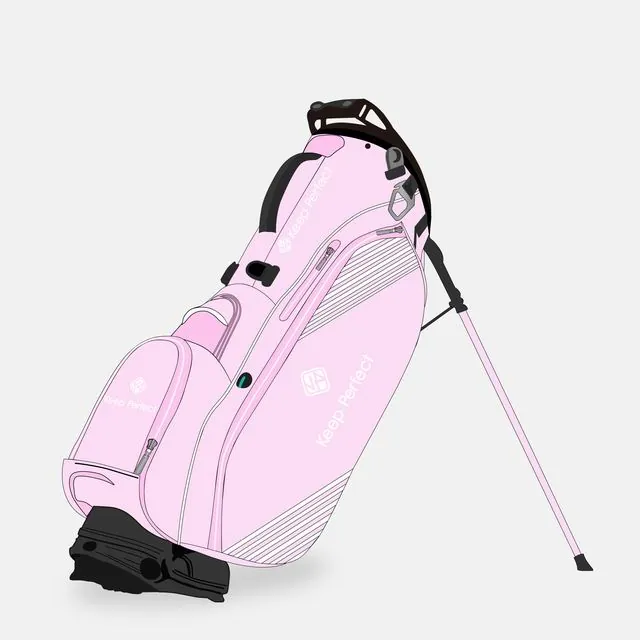
You can launch a private-label golf bag line with a factory in three disciplined phases — selecting proven reference models, approving a physical sample, and placing a test order — and with an accessible MOQ of 200 units (100 units for test orders) you can validate the market before scaling. At QUANZHOU JUNYUAN BAGS, sampling runs 10–20 days and bulk production 45–60 days across a 7-line facility with 126 sewing machines and 137 staff that serves 200+ brand partners in 100+ countries. Private label means your name goes on the bag while the factory handles manufacturing, enabling a brand to own product without owning a factory.
What Private Label Golf Bags Really Mean
Private label is the fastest route to a branded golf bag line because you configure an existing manufacturing model under your own name, colours and logos rather than inventing an entirely new product from scratch. The factory provides the production knowledge, the sewing operations and the quality systems, while you own the brand, the packaging and the route to market. This model lowers your capital requirement dramatically compared with building a factory, and it lets you test demand early with a modest order.
Unlike a fully bespoke ODM project, a private-label line typically starts from proven reference models the factory already produces. This reduces development risk, shortens the sampling window to the 10–20 days we see at our Quanzhou facility, and keeps unit cost predictable. Your differentiation comes from branding, colourways, material choices and packaging — exactly the levers that most golf brands use to stand out without reinventing the bag.
Choose the Bag Types for Your Line
A coherent private-label line usually covers the categories your customers actually carry: a stand bag for walking golfers, a cart bag for riding players, and often a travel bag for those who fly. Designing a focused collection rather than a random assortment strengthens your brand identity. Within each type you can create distinct colourways or finish tiers that give customers choice while keeping production efficient.
Your choice of types also shapes factory fit. A facility strong in standard stand bags and cart bags, like our 7-line operation, lets you source several SKUs from one verified partner. Combining multiple bag types in a single order also builds the volume that improves your pricing position, as explained in our wholesale pricing guide, because fixed setup costs are shared across the collection.
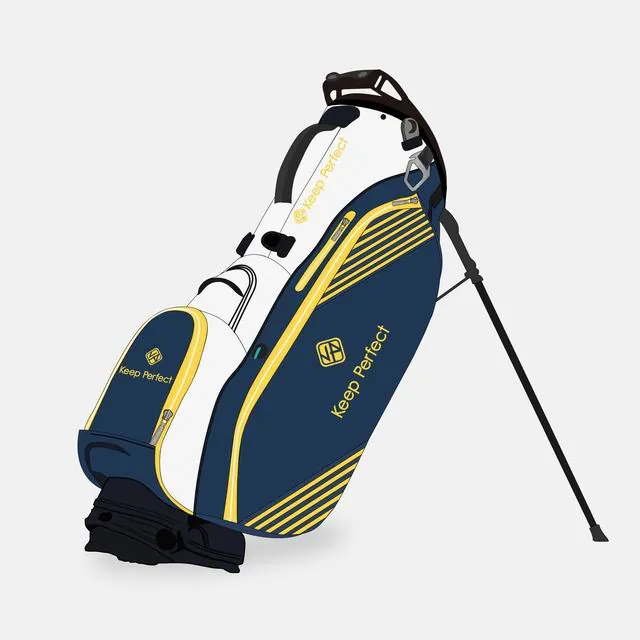
Walkers' Stand Bag
A carry-friendly reference model with dividers, pockets and reinforcement, branded under your label for walking golfers.
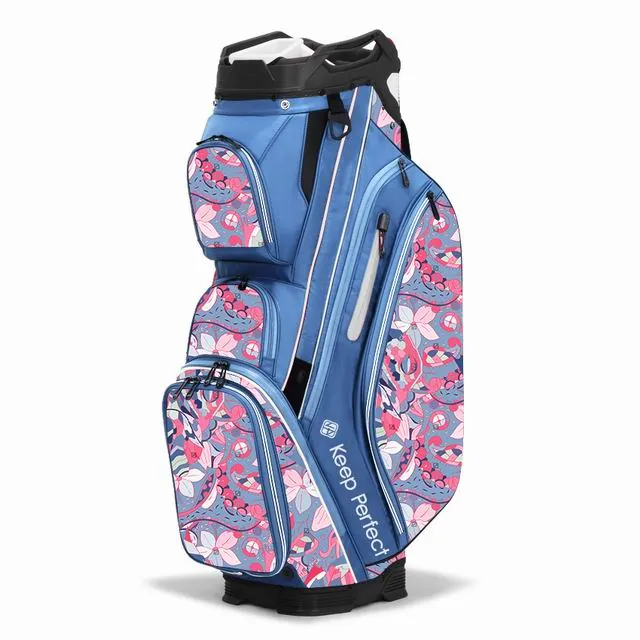
Riders' Cart Bag
A cart-optimised model with full dividers and organisation, giving riding players a branded option in your collection.
Define Your Branding and Colours
Your private-label identity lives in the details: logo placement, colourways, material finish and packaging. Decide where your logo sits (front pocket, tonal brand panels or subtle embroidery), which colours define each SKU, and whether you will use embroidery, sublimation or printed labels. Preparing vector logo files and Pantone references before sampling keeps every bag consistent from sample to bulk.
Differentiation also flows from material and trim choices. Choosing a distinctive fabric or a standout stitch detail gives customers a reason to choose your label over generic stock bags. Because these choices affect unit cost, balance distinctiveness with margin. A verifiable, 4,950 m² associated facility in Quanzhou can help you explore material options that keep your line unique without inflating the price beyond your target.
Set Your MOQ and Test-Order Strategy
| Order Stage | Quantity | Purpose |
|---|---|---|
| Sample / development | 1–3 pieces | Validate design, material and branding |
| Test order | 100 units | Confirm quality in real production |
| Standard MOQ | 200 units | Begin a viable private-label run |
| Scale-up | 200+ units / container | Improve unit cost and build margin |
The staging model protects you while you prove demand. A small test order of 100 units lets you confirm quality and market acceptance before you commit to the 200-unit standard MOQ and beyond. Because the factory spreads fixed setup across volume, scaling toward a full container both lowers your unit cost and strengthens your partnership, as our wholesale pricing guide details.
Basics: the Private-Label Production Workflow
Understanding the production cadence keeps your launch credible. Once you approve the sample, bulk production at our facility runs 45–60 days across the 7 production lines, followed by packing and logistics. Knowing this timeline lets you plan freight, marketing and launch dates months ahead rather than discovering the gap late. A clear schedule also lets you synchronise with your freight forwarder for a landing date that suits your sales season.
During production, agree on quality-control gates so the private-label batch meets the sampled standard. Confirm how many units are inspected, at which stages and what the rejection tolerance is. Consistent QA protects your brand because in private label, your name is what is at stake on every bag. Independent verification credentials, such as the SGS and Alibaba verification completed in March 2026, give your end customer confidence in the product's provenance and consistency.
Ready to Launch Your Private-Label Line?
Start with reference models, a 100-unit test order and a verified factory. Our Quanzhou team will help you configure a focused collection with sampling (10–20 days) and clear MOQ guidance.
Plan Your Line →Cost and Margin Planning for a Private Label
Profitability in private label depends on controlling the same factors that drive any wholesale deal: unit cost, landed cost, and sell-through. Use the cost-driver logic from our wholesale pricing guide to estimate material, labour and overhead, then layer freight, insurance and any duties via your import process. Because your name is on the product, margin must also fund the quality and consistency that protects your reputation over repeated orders.
Price your bags with enough headroom to support sampling, marketing and potential rework in early runs. As volume grows, unit cost typically falls, so re-invest some of the improvement into better materials or packaging to strengthen the brand. A private-label line that starts lean and improves with volume outperforms one that over-invests before proving demand. That is the discipline our 200+ brand partners apply as they scale.
Building the Brand Around the Product
Once your bags exist, the work is showcasing them consistently. Establish clear product photography, spec sheets and packaging that present the line professionally to distributors and customers. A cohesive visual identity across stand bags, cart bags and travel bags builds recognisability, which is the real asset private label creates. Use the sample as the photography hero so the imagery matches exactly what customers receive.
Pair consistent product quality with consistent messaging. If you promise a durable, well-organised bag, ensure the manufacturing and QA deliver exactly that. Because private-label buyers cannot inspect a factory, your brand's credibility rests on every detail being reproduced faithfully order after order. A verified, experienced factory makes that promise achievable, turning a first collection into a repeatable franchise for your business.
Related Guides to Read Next
Private label is a specific case of OEM/ODM work, so our OEM/ODM services and process guide give the full workflow. The private-label overview and wholesale pages explain the offer structure, while the pricing guide helps you model margin. For factory fit, the factory selection guide is a strong companion.
Common Private-Label Pitfalls to Avoid
Several mistakes undermine a first line. Ordering too many SKUs before proving any sells dilutes capital and complicates the factory. Skipping a test order and betting a full MOQ on one sample raises avoidable risk. Treating branding as an afterthought, or comparing quotes without identical specifications, each erode margin and consistency. Finally, ignoring production lead time means missed launch deadlines and rushed freight.
The reliable sequence is narrow first, prove with a test order, then expand. Keep specifications identical across price quotes, and lock the production schedule early against the 45–60 day run time. When you respect the factory's lead time and start with a focused, well-specified line, private label becomes a dependable path to owning a golf bag brand without owning a factory.
Intellectual Property and Brand Protection
Launching a private-label line means putting your name on products, so protecting your brand and designs should be part of the plan from the start. Register your trademark for the classes covering golf bags and sporting goods before you commit significant volume, because a protected name is far easier to defend and promotes in the long term. Confirm with your legal advisor the right jurisdictions for your target markets, and keep your logo, slogan and product naming consistent so they build recognisable, protectable equity.
Designs deserve protection too, especially if you develop a distinctive silhouette or functional feature. Where appropriate, consider protecting the design or relevant branding elements, and ask the factory to sign a confidentiality or non-disclosure agreement covering your specs, drawings and manufacturing details. A reputable, verified factory, such as one audited by SGS and Alibaba in March 2026, respects these arrangements and keeps your product information confidential, protecting your differentiation from being copied by competitors.
Finally, document ownership of any artwork, patterns or technical files you share, and clarify in the supply agreement who owns the CAD or sample files and how they may be used. This prevents ambiguity about your brand assets as your range grows. Clear IP protection, paired with a trusted, confidential manufacturing partner, converts a private-label initiative from a product launch into a durable, defensible business asset you can invest behind over many seasons.
Packaging, Labeling and Compliance for Your Label
When your name is on the bag, packaging and labelling become part of your brand. Design packaging that protects your products and reinforces the visual identity you established for the line, and make sure carton markings, colourways and branding stay consistent with the approved sample. Retailers and end customers judge quality partly by presentation, so investing in clean packaging elevates the perceived value of every private-label piece you ship.
Labeling also carries a compliance dimension. Confirm which care, content or origin labels your target markets require and ensure the factory can supply them correctly, then include these requirements in your order specification so they arrive with the product rather than as a fix later. Because a physical product crossing borders triggers import documentation, keep your labels and records aligned with the paperwork you prepare for clearance. Getting labeling right from the first order avoids re-labelling costs and shelf-readiness delays.
Establish who supplies the labels and how they are applied, whether at the factory during production or by your own team. Consistent, compliant labeling protects both your brand and your retail relationships, and it signals to partners that your line is professional end to end. Packaging and labeling are where a private-label product proves it is a serious, sustainable brand — not just a bag with a logo — and that professionalism carries through repeat orders and growing distribution.
Scaling From Test Order to Full Collection
A successful test order is the green light to scale deliberately rather than speculate. As orders grow, expand SKUs one at a time, add volume on models that sell, and retire lines that do not earn their shelf space. Review the sell-through and return patterns from your test and early orders, and reinvest what improves: a higher-turning colourway, a better material or a more compelling pack. This data-driven expansion keeps a private-label line healthy as it broadens across the market.
Consolidate volume to strengthen your position. Reordering proven styles toward the 200-unit MOQ and beyond, and combining multiple SKUs into a single container, spreads fixed costs and improves unit economics, as our wholesale pricing guide shows. Predictable, repeat volume also deepens your partnership with the factory, earning priority treatment and better terms over time. A streamline-sell-and-scale discipline turns a first private-label experiment into a compounding category for your business.
Finally, protect quality as you grow by holding every bulk run to the approved sample and agreed inspection gates. Confirm the factory keeps your material and colourway availability so reorders match, and schedule production within the 45–60 day window so your launch seasons stay on track. Scaling with disciplined standards and a trusted partner means each new SKU reinforces the brand equity you built, giving you a private-label line that grows reliably with your market.
Working With the Reference Model System
Understanding the reference-model system is what makes private label both fast and low-risk. In this model, you start from an existing production model the factory already manufactures reliably, then change the branding, colours and selected details to make it yours. Because the construction is proven, many of the risks of a completely new design — hidden seams, hardware failure, assembly problems — are already resolved. This is why a private-label launch built on reference models can move from a 100-unit test to a full line quickly and consistently.
Choose your reference models with care so the range feels like yours rather than generic. Selecting models whose proportions, organisation and finish genuinely fit your brand, then unifying them with a strong colourway and clear logo placement, creates a private-label line with its own identity while retaining the factory's proven build quality. Because you are not redesigning from a blank sheet, you can also negotiate from a more predictable cost and lead time, which we explain in our wholesale pricing guide.
Communicate clearly which elements are changeable on a reference model and which are fixed, so there are no surprises at sampling. Some aspects, such as interior structure or hardware, may be standardised for efficiency, while the outer look can be fully yours. Confirming this before the 10–20 day sampling begins keeps the brief realistic and the expectation aligned. The reference-model system is the bridge between a custom feel and proven, scalable manufacturing — exactly the efficiency a growing brand needs.
Avoiding Common Private-Label Pitfalls
Even a well-planned private-label line can stumble on a few recurring mistakes. Starting with too many SKUs before proving one sells stretches capital and complicates the factory. Skipping the test order and betting the full MOQ on a single sample raises avoidable risk. Neglecting to confirm terms in writing, from MOQ to sample fees to labelling, invites confusion at the moment you need clarity most. And letting brand consistency slip across colours and packaging weakens the very identity you are building.
Under-specifying at the sampling stage is another quiet trap. If colour, material and branding are not fixed with the factory before the 10–20 day sample window, the sample can miss your expectation and stretch your schedule with revisions. Overvaluing a nominal discount over a verified, consistent manufacturer can also cost more in rework and returns than the saving. Mitigate these risks by fixing the specification early, staging volume, and confirming every commercial and technical point in writing.
Finally, treat the first line as a learning platform. Review sell-through and margin honestly, prune what does not perform, and reinvest in what does, using the test-order discipline to keep risk contained while you learn. A private-label line that launches lean, reviews its own performance and scales winners is far more likely to become a durable brand franchise than one that over-invests in unproven breadth. Avoiding these pitfalls through discipline and measurement is the practical path to a sustainable private-label business.
Structuring the Commercial Agreement Clearly
A clear commercial agreement protects both you and the factory across the life of your private-label line. Put the key terms in writing from the outset: the MOQ and test-order quantity, sample fees and any credits, unit price and how it may change with volume, lead times for sampling and bulk, and any shipping or Incoterm preferences. Documenting these now prevents the ambiguity that so often surfaces when the first container is being finalised. A written agreement is the backbone of a dependable repeat relationship.
Specify the quality and consistency commitments as explicitly as the price. Agree whether each bulk run is built to the approved sample, which inspection gates are used, and what the rejection and rework tolerance is, so your name is protected on every piece that ships. Confirm how change requests are handled and priced, and how confidentiality and intellectual property are respected, particularly when you develop distinctive branding or designs. Clarity on these points turns a price agreement into a true business partnership.
Finally, agree a sensible review cadence so the terms stay fair as your business grows. As volume rises, revisit pricing, sampling turnaround and capacity priority so the relationship rewards your growth rather than becoming static. Keep payment terms realistic for both sides, balancing your cash flow with the factory's need to fund materials and labour across the run. A clearly structured, periodically reviewed commercial agreement is what lets your private-label line scale with confidence and trust.
Frequently Asked Questions
- What is the minimum order for a private-label golf bag line?
- The standard MOQ at QUANZHOU JUNYUAN BAGS is 200 units, with a 100-unit test order available to validate quality and demand before scaling.
- How long does it take to launch a private-label line?
- Sampling takes 10–20 days and bulk production 45–60 days. Add freight and planning time, so budget several months from spec approval to launch.
- Do I need my own designs for private label?
- No. You can start from proven reference models the factory produces, then differentiate with your own branding, colours, materials and packaging.
- How is private label different from ODM?
- Private label configures an existing product model under your brand, while ODM develops a more bespoke product. Both use the factory for manufacturing; you own the brand.
- Can I combine several bag types in one order?
- Yes. Combining stand bags, cart bags and travel bags in a single order spreads fixed setup costs and strengthens your pricing position.
- How do I keep quality consistent across orders?
- Freeze the approved sample, agree quality-control gates for the 45–60 day run, and source from a verified facility such as one audited by SGS and Alibaba in March 2026.
Sources
- Alibaba — supplier verification and private-label sourcing platform references.
- SGS — independent auditing and certification for factory quality and consistency.
- ISO — international standards underpinning quality-management systems.
- USGA — golf equipment and playing-standard references for brand credibility.