Smart Golf Bag IoT Features 2025
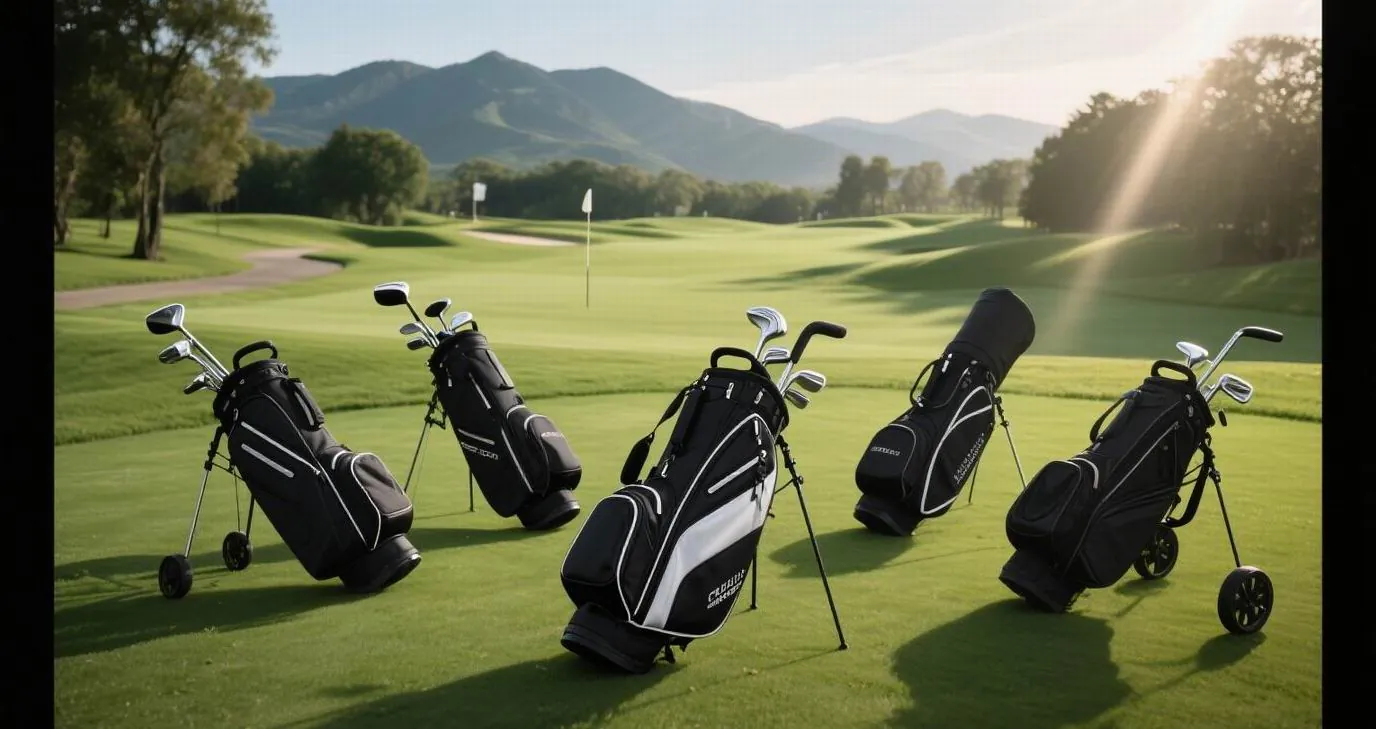
IoT turns a 2025 golf bag from a passive carry device into a connected source of useful data: sensors collect location, carry weight, tagged-club inventory and battery level, then share them over Bluetooth Low Energy to a phone app and, when you allow it, a cloud — delivering distances, theft deterrence, fleet and club reporting to solo golfers and courses alike, while a responsible design keeps your data local, encrypts it and gives you control over where it goes. This guide, written from a golf bag factory in Quanzhou, China, explains how the Internet of Things actually works inside a bag, what it genuinely adds and the reliability, security and privacy rules you should insist on.
What IoT Means for a Golf Bag
The Internet of Things, in plain terms, means a bag that senses and communicates. Instead of just holding clubs, an IoT bag contains small components that measure its state — weight, location, what is inside — and transmit that information over a local connection such as Bluetooth to your phone, and optionally onward to a cloud service. The intelligence lives partly in the bag and partly in software, and the value appears when the two meet in a useful, well-designed interface.
Seen from the factory floor, IoT is a discipline as much as a feature set. It demands that sensing, power, connectivity and sealing be engineered together so the bag communicates reliably for years, rather than a few circuits stapled onto an ordinary shell. That is why a well-made IoT bag costs more and why a cheap one disappoints: the difference is almost entirely in how carefully the connected system is built, protected and supported, not in exotic parts.
It is also worth being precise about what IoT is not. A connected bag does not replace the distance app on your phone or the rangefinder in your hand; it complements them by making the bag itself one more useful node in a network the golfer already uses. And a bag that merely contains a sensor is not truly IoT until the data reaches you in a useful way — which is why the app, the cloud policy and the support commitment are part of the product just as much as the shell and the stitching. Keeping this whole-systems view in mind is the single best protection against buying a bag that advertises connectivity but delivers little of its actual value.
The Connectivity Backbone
At the centre of every IoT bag is its connectivity. The workhorse is Bluetooth Low Energy, which links the bag to your phone within about 100 metres of open air while drawing almost no power, carrying status updates, sensor readings and notifications throughout a round. GPS provides the wide-area position — it knows where the bag is across the course or region — and, where a design chooses it, a network connection pushes data to a cloud for remote checking that works far from the bag.
These layers work together rather than competing. Bluetooth answers "is the bag right here with me," GPS answers "where is the bag," and the cloud answers "how is the bag right now, from anywhere." A well-integrated bag hides the plumbing and presents one clear picture, letting you move seamlessly from having the bag at your side to checking on it from the clubhouse, without thinking about which radio is doing what. Our connected features and GPS integration articles unpack this backbone further.
Interoperability is the quiet trend shaping this backbone. Rather than building a walled garden, increasingly the best designs let a single everyday device be the endpoint — the phone already in your pocket — and offer a clean path to pair with whichever distance and performance ecosystem you trust. This matters because connectivity only adds value when it reaches you through tools you naturally use; a proprietary gadget you must learn and remember adds overhead rather than removing it. The direction of travel, especially for golf-specific equipment, is toward smaller, interoperable radios that behave like a familiar accessory instead of a separate platform demanding its own habits and logins.

Data That Flows Off the Bag
IoT's defining promise is data, and a 2025 bag generates a small but genuinely useful flow of it. During a round the sensors report live carry weight and club presence; the location layer records where the bag has been so a forgotten bag is findable; and the app tracks battery, usage and occasionally rounds. For a solo golfer this data means convenience — distances, loss-prevention, a glance at how heavy the bag is getting. For the design itself, it enables the responsive behaviours that make the bag feel smart.
Because so much of the value lives in data, honesty about its limits matters. The bag records what its sensors can measure, not a complete biography: GPS positions reflect satellite visibility, weight readings are indicator-level, and club checks only cover tagged clubs. A well-designed app presents this data as useful and clearly bounded, rather than implying precision it does not have. That restraint is part of what separates a trustworthy IoT product from a marketing sheet with a sensor attached.
The flow of data also points to a design principle that honest makers take seriously: minimise what the bag retains unless the golfer wants it. There is no reason for a bag to keep a permanent, detailed record of every round unless you opt into that for your own analysis, and the most responsible designs default to storing only the recent state the features need and discard or anonymise the rest. This is the hardware equivalent of good data hygiene, and it matters because a connected object that quietly hoards years of personal activity is a liability regardless of whose hands it ends up in. Ask, simply, what is stored, for how long, and who can see it.
GPS and IoT Location in Practice
Location is the IoT feature golfers feel most directly. Multi-constellation GPS places the bag to within a few metres outdoors and serves the course map with front, middle and back distances, while the Bluetooth layer confirms the bag is at hand. Together they deliver the two most common location needs — playing with confidence and finding a bag that wandered off — from a system that quietly works in the background of every round.
In practice the GPS layer is also the foundation for rescue and fleet value. If a bag is lost on the course or left at an airport, its last-known position marks where recovery begins, and a club managing many rental sets can see precisely which bag is where at any moment. This is IoT showing its real, unglamorous strengths: not spectacle, but dependable answers to ordinary problems about where equipment is. Security and theft-deterrence depth is covered in our anti-theft technology article.
IoT Security and Theft Deterrence
A connected bag has to earn trust on security. On the deterrence side, an IoT bag is less attractive to opportunistic theft because a visible tracker raises the odds of recovery, and motion or out-of-range alerts tell you the moment the bag moves without you. On the technical side, a quality design encrypts its data, authenticates pairing so strangers cannot connect, and lets you revoke access or wipe the device before resale — the connected equivalent of a lockable compartment.
These protections matter because the bag's own sensors create the data an attacker might want. The responsible posture is defence in depth: the radio links are encrypted, the app holds data locally by default, cloud sharing is opt-in and clearly explained, and you always retain a way to take the bag off-grid or wipe it. Ask a maker whether pairing requires your approval, whether data leaves the device only with consent and how you can fully reset the bag, and you will quickly separate trustworthy IoT from connected-for-the-sake-of-it.
| IoT element | Role in the bag | Practical limit | Who values it most |
|---|---|---|---|
| Sensors | Weight, club count, motion | Indicator-level, calibrate | Walkers, individuals |
| Bluetooth LE | Phone link, status, presence | <100 m open air | All, everyday use |
| GPS | Wide-area position | A few metres, outdoors | Travelers, clubs |
| RFID inventory | Confirm tagged clubs | Needs tagged clubs | Premium, fleet |
| Cloud sync | Remote status, history | Optional, needs support | Multi-set clubs |
Powering an IoT Bag
An IoT bag draws a constant, low current just to stay awake and connected, so power engineering shapes the whole experience. In 2025 the norm is a rechargeable cell of roughly 5,000 to 20,000 mAh that runs the sensors and radios while also serving as a power bank for your phone and rangefinder. A smart power policy matters as much as raw capacity: the design should sleep the radios when unused, wake on need and clearly show charge, so a weekend of play does not hinge on a half-forgotten cable.
The real cost is rhythm and weight, not electricity. You adopt a charging routine like any connected device, accept the pack's added grams and eventually service or replace the cell — which is why a removable, replaceable pack is a mark of a serious IoT product. Manufacturers that state battery life tested under load, with GPS active and a phone connected, deserve far more trust than those quoting idle standby. For the full picture of capacity, charging standards and battery care, our power management guide is the place to start.
App, Cloud and Ecosystem
The app and ecosystem are where IoT value is finally experienced. A well-built companion app assembles distance, location, inventory, weight and charge into one clear view, works offline for the bag's essential functions and treats the cloud as an optional convenience rather than a gatekeeper. A mature ecosystem also plays well with the tools you already own — the distance app you keep, the rangefinder you trust — instead of forcing you into a walled garden that only its own platform understands.
The decisive rule is the same as every connected product: keep the core local and treat connectivity as enhancement. Ask what the bag does the day the cloud shuts down, how long firmware updates are committed and whether a login is ever required for basic operation. Because a golf bag should last years but apps can be discontinued, the hardest-wearing IoT products anchor their value in the bag's own local functions and let the software fade gracefully, rather than tying durable equipment to transient services.
A healthy ecosystem is also honest about battery and data. It should tell you at a glance how much charge remains and what a long round with GPS active will cost you, and it should only push data to the cloud when you enable that, not as a silent default. Watch for the small signals that reveal whether the maker respects you as the customer of the bag rather than a data source for an ecosystem: no nagging to create an account, no unexplained background cloud traffic, no requirement to keep an app alive to keep the bag working. When connectivity looks like service, the design is mature; when it looks like obligation, it is probably monetising you.
Privacy and Data Governance
IoT is inseparable from data, so privacy is a design decision, not an afterthought. An IoT bag generates genuine personal information — where and when you play, your club set, your carry weight over a season — and a responsible maker keeps that data on your device and account, shares it only with your consent and lets you delete it easily. The same steps that build trust for a smartphone should apply to a connected bag, because the bag quietly knows a lot about you.
Your side of the bargain is to read the privacy posture before buying. Favour designs where data stays local by default, remote or cloud use is opt-in and clearly explained, and deletion and export are straightforward. Be wary of any product that depends on harvesting or sharing your data to fund a low price, since your location history is a poor currency to pay for a golf bag with. A trustworthy IoT bag gives you the connected convenience and keeps the private details firmly yours.
There is a continuity angle here that a golfer who upgrades or sells should never overlook. Before you pass a connected bag along, you should be able to wipe it completely — remove location history, unpair from your phone and restore it to a clean state — so the next owner starts fresh and your activity does not follow the hardware. The presence of a straightforward factory reset and a clear data-deletion path is a strong signal that a maker treats privacy as a real obligation rather than a checkbox, and it protects you not just while you own the bag but after you part with it. Any connected product that makes it hard to erase yourself is storing something you do not want stored.
Reliability of Connected Devices
The reliability of an IoT bag is a design trait rather than a given, and it is where connected products most often let golfers down. Modules must be sealed behind waterproof laminated fabric in impact-resistant housings, ports covered with rated caps, and wiring routed through a protected channel so folding and handling never pinch it. The IPX ingress rating is the short check that matters, and it deserves a place beside every other specification you compare.
Beyond sealing, a durable IoT bag is serviceable: the battery is replaceable, the module can be repaired or updated rather than condemning the whole bag to the bin. Electronics add failure points a mechanical bag never had, and careless integration — a module left at the base to sit in water, cabling crushed by the stand — fails on real courses. Because reliability comes from disciplined design and honest maintenance paths, our quality standards and materials guides explain the durable shell every connected feature relies on.
IoT Value for Solo Golfers and Clubs
IoT pays different dividends to different users, and matching the investment to the user is the sensible way to buy. For a solo golfer, the value is daily and personal: instantaneous distances, a dependable loss-prevention layer, carry-weight feedback and charging through long rounds. For a club or academy managing many sets, the value scales dramatically into fleet management — a single view of every bag's location and club inventory turns dozens of otherwise-identical pieces of equipment into a manageable, auditable inventory.
The lesson from the factory is to let the use case define the specification. An individual needs a lean, local-first, easy-to-maintain bag; an institution can justify richer connectivity, cloud reporting and RFID on a fleet where the data saves real time and money. Buying the club's fleet spec for your personal bag, or skimping on fleet features an institution clearly needs, wastes money in both directions. Match the IoT investment to who will actually use the data.
Roadmap: IoT Features Coming Next
The next phase of golf bag IoT is calmer and more integrated rather than more complicated. Chips and batteries keep shrinking, steadily reducing the weight and cost that currently temper connected stacks in carry bags. Charging is normalising around wireless standards, and bags are opening to the wider ecosystem of distance apps and wearables rather than locking golfers into proprietary platforms. The pervasive trend is for the connected layer to become quieter and work more seamlessly with tools the golfer already owns.
The stable principle underneath is that connectivity serves the bag, never the reverse. The durable shell, sealing and comfortable carry remain the foundation, and IoT is an enhancement layered on top. Buy the bag for its construction, add the connected features that fit your actual use, and verify sealing, serviceability, offline function and privacy as you would for any long-term purchase. For the broader trajectories of these technologies, our AI applications and future trends articles look further ahead.
Connectivity Built on a Bag That Lasts
IoT sensors, GPS and app integration, coordinated in durable, weather-sealed golf bags. Custom connected-bag programs for brands.
Explore Connected Custom Bags →Conclusion
IoT in a 2025 golf bag is a genuine but bounded transformation: sensors and connectivity turn a passive bag into a source of distances, location, club and weight data that serves solo golfers and clubs alike, powered by Bluetooth, GPS and an optional cloud. Its value is real when matched to your use, its reliability depends on sealing and serviceability, and its trust depends on security and privacy you can check. Choose the connected features that fit how you play, keep the durable shell as your foundation, keep data local and controlled, and an IoT bag becomes a quietly invaluable companion rather than a fragile gadget.
Sources
Frequently Asked Questions
- What does IoT mean for a golf bag?
- Sensors collect data such as location, weight, inventory and battery, and share it over Bluetooth and GPS to an app and sometimes a cloud, turning a passive carry device into a connected source of useful information.
- What data does an IoT golf bag collect?
- Usually location history while in use, estimated carry weight, tagged club inventory, battery level and usage patterns. A responsible design keeps this on your device and account and gives deletion control.
- Do I need a cloud account for an IoT golf bag?
- Good designs keep core functions local and make the cloud optional for convenience. Prefer local-first bags, because app support can end while the bag should last years.
- How secure is a connected golf bag?
- A quality bag encrypts data, authenticates pairing and lets you revoke access. Ask about pairing approval, whether data leaves the device only with consent, and how to wipe before resale.
- Is IoT value different for solo golfers and clubs?
- Yes. Individuals gain distances, loss-prevention and charging; clubs managing many sets gain major fleet-level location and inventory reporting.
- Will an IoT golf bag become obsolete?
- Core sensors and connectivity use mature standards, but software support can end. Choose local-first features and check the update commitment so value survives a discontinued app.