Golf Bag Security and Anti-Theft Technology in 2025: What Works and How to Buy It
Golf bag security in 2025 runs on four layers — RFID chips and GPS trackers that locate a bag, TSA-compliant combination locks that stop casual theft, audible alarms and motion sensors that deter snatching, and clever pocket architecture that hides valuable compartments — all of which must be built into the bag, not bolted on in a way that breaks a 4,950 m² production line producing for 200+ brands. This guide explains each security layer, how they combine on the course and while travelling, and how an OEM buyer proves a security bag before committing to scale.
Why Bags Are Stolen, and What Deters a Thief
A golf bag holds a small stack of money in a rugged package: clubs that retail for hundreds, electronics in the pockets, and the bag itself. Theft happens in a few predictable windows — a bag left at the clubhouse steps for thirty seconds, a rental cart loaded at a resort, an unattended locker, or a stroller rolling off the 18th green. The patterns repeat, which is why the same countermeasures keep appearing across brands: the goal is never to make a bag unstealable, but to make it dramatically more trouble to steal than the one next to it.
Deterrence, recovery and evidence are the three things a good security feature provides. Deterrence stops the theft attempt before it happens — a lock, an alarm, an obviously hidden pocket. Recovery finds the bag after the fact — a GPS chip tells you where it is. Evidence identifies what happened — a travel record or purchase history that narrows a theft window. A complete security strategy usually needs more than one of these, because each closes a different gap.
GPS Tracking, RFID and Recovery Equipment
GPS tracking is the recovery layer. A small tracker hidden in the bag — often behind the pocket lining or in the base, where it cannot be found and removed easily — reports the bag's location to a phone app. For a golfer it is a genuine anti-loss tool: a forgetful owner can check where the bag is before a panic; an owner who has had a bag taken can see it on a map. For the bag itself, a clear scale is what matters. A tracker that relies on a phone nearby is much weaker than one with its own connectivity, and a battery that is hard to recharge in situ needs a serviceable access or a cartridge change.
RFID serves two purposes. On the course, an RFID tag is often used for bag-tag check-in and cart assignment, letting a facility track which bag belongs to which member and spot a bag taken out with the wrong group. In a retail or loss-prevention context, RFID supports inventory control. A bag that ships with a compatible RFID tag gives facilities and owners a standard way to identify and recover it. Confirm the tag standard used, because a non-standard tag is a paperweight at the resort that most needs it.
Locks, Combination and TSA-Compatible Options
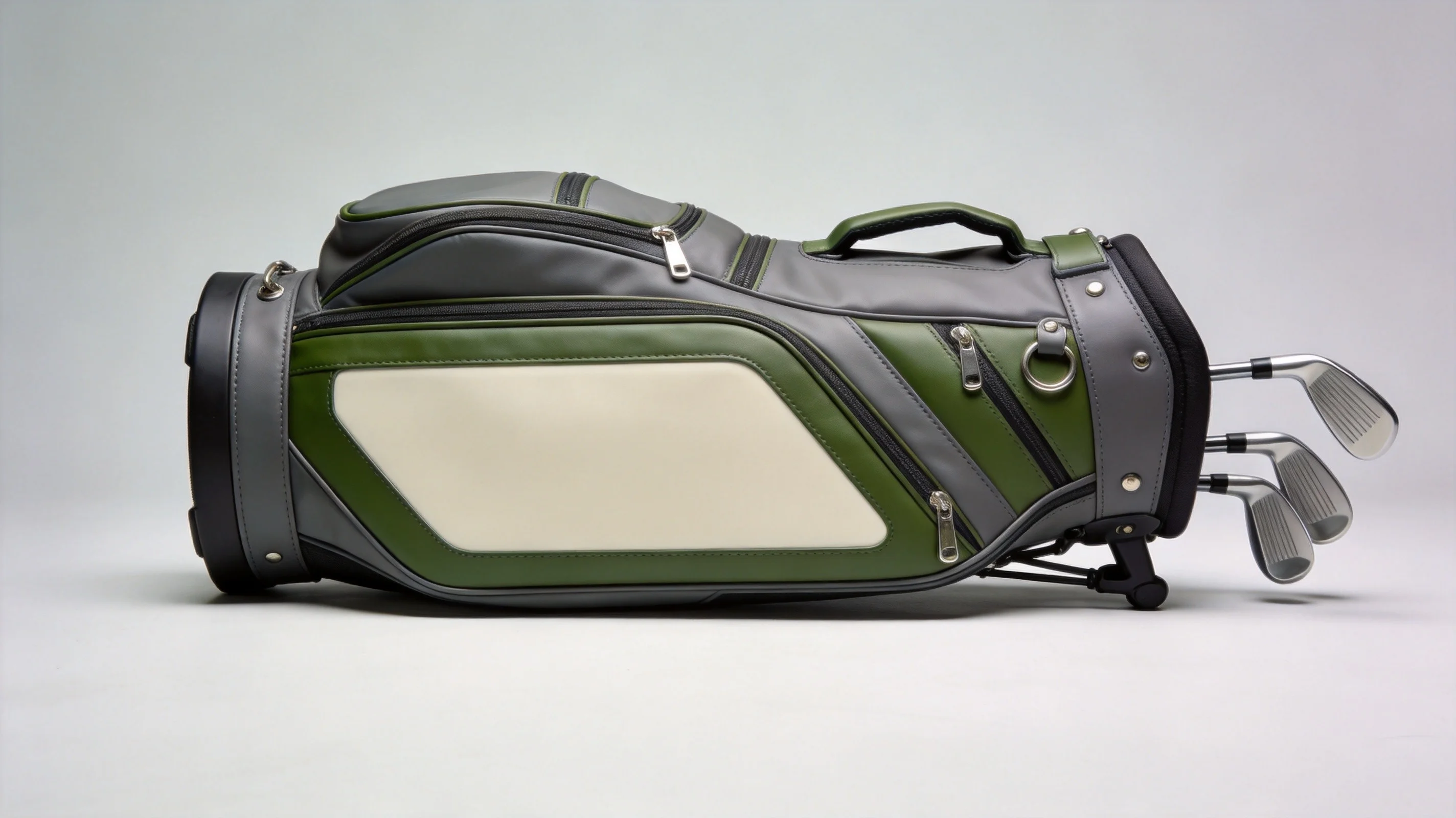
A lock does two honest jobs: it stops a casual thief from opening the valuables pocket, and it secures the bag for travel. The best current option for the golfer who flies is a TSA-compatible combination lock on the main valuables compartment, which lets airport inspectors open it with their master key without forcing the zipper, then re-lock it. A traditional padlock secures a bag to a rack on the course but fails at airports, where it is simply cut off by security if it cannot be opened. Matching the lock to the use case is the difference between a feature and a nuisance.
For the course, the lock should be soft to the hand, damage the pocket structure as little as possible, and avoid scratching clubs when the bag is dropped. Combination locks remove the fob problem — a key that is always missing — but the owner must remember the code, so a factory that ships a lock should also document how to reset and recover a forgotten combination. And any lock is only as strong as the fabric it mounts to; asking for reinforced zipper pulls and a reinforced lock panel turns a thin security theatre into real protection.
Alarms, Motion Sensors and Deterrence
Deterrence electrics are the layer that stops a snatch or a rummaging hand. A compact alarm unit inside a pocket, with or without a motion detector, sounds an audible alert when the bag is lifted without authorisation. Set it and the bag defends its own position; on a rack or beside a trolley it turns a thirty-second grab into a loud, attention-drawing event. Battery life is the watchword — an alarm that dies after a weekend or a summer is worse than none, because the owner learns to ignore it.
Sound level and behaviour matter more than the tech spec. A genuinely useful alarm is loud enough to carry across a course, simple to arm and disarm, and fails safe — it should never lock a well-intentioned owner out or trigger constantly in normal use. Test the false-alarm rate, because a bag that shrieks every time it is lifted onto a cart is a bag whose alarm gets permanently disabled. The same discipline of certified, weather-sealed, maintainable electronics that applies to a charging pocket applies here.
| Security layer | Best use | Key spec to verify | Limitation to plan for |
|---|---|---|---|
| GPS tracker | Locate a lost or taken bag | Own connectivity, battery life | Needs power and a signal |
| RFID tag | Facility check-in and inventory | Tag standard compatibility | Non-standard tag is a paperweight |
| TSA combination lock | Valuables pocket, air travel | Inspector access, reset process | Owner must remember the code |
| Alarm / motion sensor | Deter snatch, protect a parked bag | Sound level, false-alarm rate | Battery warns and fails safe |
| Hidden pocket architecture | Hide valuables in plain sight | Reinforced pulls and panel | Owner must remember where it is |
Hidden Compartments and Clever Pocket Design
One of the cleverest security features on a modern bag needs no electronics at all: a valuables compartment that is invisible until you know it is there. A hidden flap, a pocket disguised inside the back panel, a liner-locked vault where the branding sits — a casual thief looking through the obvious pockets finds nothing, and an informed owner loses no time at all. Design here is more powerful than locks, because it removes the temptation before a lock is ever tested.
The trade-off is routine access. A hidden compartment that is too well hidden becomes a daily inconvenience, and one that is too easy to find defeats its purpose. The best designs put the immediate-need items — phone, wallet, passport at a border—in the hidden vault, and leave ball-teed and weather gear in the obvious pockets. Reinforcing the panel and the zipper pull on that vault is essential, because an alarm and a hidden spot both lose value if a heavy hand tears the fabric to get at what is inside.
Buying Security Features for OEM and Private Label
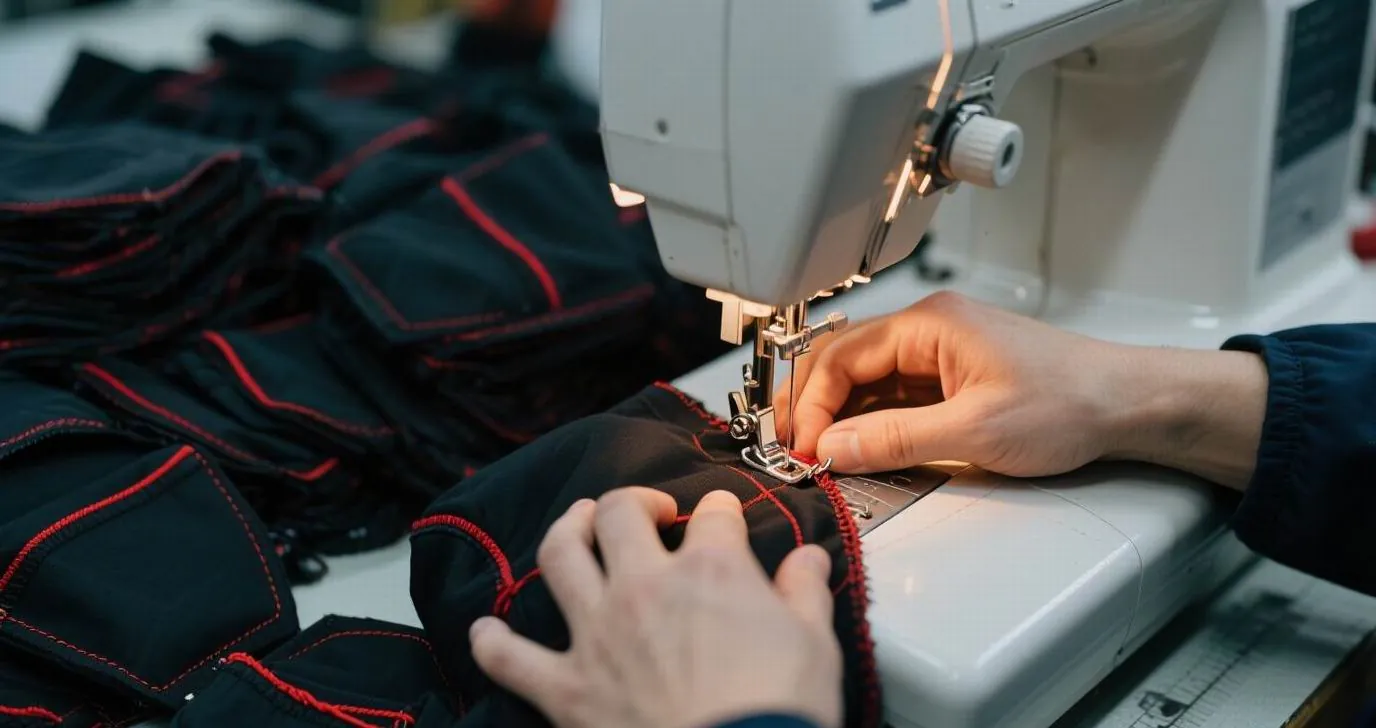
For a brand, a security feature is only as good as the electronics and the seam it sits in, so buyer discipline mirrors the charging-bag story. Start with a factory that can show its credentials — a 2014-founded, SGS-audited facility with 7 lines, 126 sewing machines and about 137 staff producing up to 200,000 pieces a month for 200+ brands in 100+ countries — and then demand the documentation for every electronic add-on: the tracker's connectivity and power, the alarm's certification, the lock's manufacturing standard, and the RFID tag's compatibility.
Prove the whole product with a structured test order — 100 pieces against the 200-piece MOQ — through sampling of 10–20 days and bulk of 45–60 days. Test the lock against daily use, the alarm for false triggers, the tracker for battery and real-world recovery, and the hidden pocket for durability. Every security feature must survive the same rain, heat and jolting as the bag itself, so treat a security claim as a promise to be verified, not a sticker to be believed.
Match the feature set to the destination market as well as the product. A range sold heavily at airport retail leans on the TSA lock and the tracker, since travel is where most of those units spend their working life; a club-line range leans on the hidden compartment and the alarm, since the course is its home; a resort rental line leans on RFID and tracking for the facility's own loss control. Segmenting for the use case turns a generic "secure bag" into a targeted story each buyer recognises in one glance.
Also remember that security claims must be honest to be legal, and effortless to stay credible. A feature described accurately and simply in the manual and on the shelf label builds trust; a feature oversold as unbreakable invites a return the first time it is defeated. The strongest positioning in this category is modest and specific — "recovers your bag", "stops a casual theft", "hides your passport —" because buyers who have been burned by overpromise reward exactly that honesty.
A practical final habit: review the security story of a bag the way a thief would, before you commit to it. Place the bag beside your own gear and ask where a phone would be easiest to reach, where a lock would stop you, where a hidden pocket is genuinely invisible, and how long snatching it would take. That honest walk-around, more than any brochure, reveals which layers are real and which are theatre — and it is exactly how a discerning owner will judge your product too.
Whatever combination you settle on, keep the anchor simple in your own mind: security in a golf bag is a measured investment in peace of mind, not a promise of invincibility. The right features, honestly built and clearly explained, make a valuable set far safer across a course, a resort and an airport — and that calm, assured ownership experience is precisely the quality a thoughtful buyer is paying for.
The Reality of Security in 2025
The honest summary of golf bag security in 2025 is that no single feature makes a bag bulletproof, and expecting it to sets up failure. A GPS tracker does not stop a theft; it recovers a bag. A lock does not stop a determined thief; it stops a casual one. An alarm does not hold a bag; it creates the commotion that ends an attempt. The real protection is a layered system — deter, recover, evidence — built into a bag that is otherwise well made, so that stealing it is always more trouble than the reward justifies.
For the owner of a valuable set, the smartest investment is the combination: a hidden compartment for the irreplaceable items, a TSA lock for travel and the valuables pocket, a tracker for recovery, and an alarm for deterrence where the bag is parked. Choose the pieces that match how and where you play, not all of them for their own sake, because a bag layered with features it never needs is heavier and more complex than the security it buys you.
Biometrics and the Next Security Layer
The newest layer on the market is biometrics — opening the valuables compartment with a fingerprint rather than a key or a code. It adds convenience for the owner and a genuine barrier for a thief who does not carry the owner's fingerprint. On a well-built bag the sensor sits in the frame or under the flap, is weather-sealed, runs on a small certified battery, and fails open rather than locking the owner out if it drains. For a travelling owner worried about a snatched bag, it pairs cleanly with a hidden compartment and a tracker.
The honest caution is that biometrics are a convenience-and-deterrent feature, not a barrier against every attack. Settle for what it truly adds — no fob to lose and a pocket that unknown hands cannot open easily — rather than marketing that implies a fingerprint makes a bag unstealable. Keep a mechanical over-ride for the owner and for border staff who may need access, documented in the manual, so a proud security feature never becomes a trap that blocks you from your own clubs.

Hardening a Bag Against Course and Event Dynamics
The reality of deterrence, again, is that a thief behaves differently in a resort, a club, an event and a public practice range. At a members' course, the main risk is opportunistic — a passer-by reaching into a pocket while the owner is on the green. At a crowded public event or a festival, the risk escalates to an organised snatch from a rack of identical rental bags. The design should match the setting: a subtle valuables pocket for the members' club, a loud alarm and a visible lock for a public event, and a tracker everywhere for recovery when deterrence fails.
Physical hardening is an underestimated ally. Reinforced zipper pulls that cannot be yanked apart, a lock panel with a metal plate behind it, and a base that cannot be cut open easily are all unglamorous details that quietly raise the effort needed to steal. A bag that is visibly built to resist — solid pulls, confident stitching, clean reinforced stress points — reads as "more trouble than it is worth" to the person deciding in three seconds whether to attempt it.
A final course reality is the car boot. A bag in a car is often stolen not for the clubs but for the whole kit, so a security feature that works in the boot — a tracker that reports a bag pulled from a parked car, or a visible hard lock that deters a break-in from targeting the bag — adds value well beyond the course. Think of security as covering the full journey from clubhouse to car, not only the first tee.
Warranty, Servicing and the Lifecycle of Security Electronics
Every electronic security feature — tracker, alarm, biometric sensor — has a lifecycle, and the warranty and servicing terms decide how long the security promise lasts. Ask who supports the electronics after the sale: whether the factory can replace a tracker battery or a sensor, update lock or alarm firmware, and re-certify a repaired unit, and how a buyer gets a spare or a return handled. The 126 sewing machines and 7 lines of the affiliated golf bag factory can resew any pocket for life, but the electronics need a separate skill and a test bench, so a real service answer matters.
Battery and firmware policies are the buyers' and owners' deciding detail. A tracker or alarm with a non-replaceable battery is a component with a countdown; confirm either a rechargeable design, a user-serviceable cell, or a factory swap path. Deliver firmware updates for safety and behaviour rather than leaving a product frozen at its ship date. Clear, honest terms on both turn a security feature into a lasting reassurance instead of a shelf date on your peace of mind.
For OEM buyers, fold these terms into the contract before the first order — the warranty window, the spare-cell strategy, the update path and the repair turnaround. Verifying this on a 100-piece test order against the 200-piece MOQ, through a 10–20 day sampling and a 45–60 day bulk cycle, lets you catch a weak service promise before it becomes ten thousand units of your name with an unusable lock. A security feature is ultimately only as good as the company that stands behind it fixing it for the life of the bag.
Frequently Asked Questions
- Is a GPS tracker worth it in a golf bag?
- Yes if you move around courses and resorts and value recovery. A tracker with its own connectivity locates a lost or taken bag on a map; check battery life and how it is recharged or serviced.
- What is the best lock for a golf bag?
- A TSA-compatible combination lock for travel and the valuables pocket, so airport inspectors can open it with a master key instead of cutting it off. For a rack or trolley, a simple padlock works.
- Do golf bag alarms actually work?
- Yes, as a deterrent. An alarm with a motion sensor makes a snatched bag loudly conspicuous; verify the sound carries, the false-alarm rate is low, and it fails safe rather than locking the owner out.
- Are hidden pockets better than locks?
- Often the most effective feature is one with no electronics: a hidden valuables compartment removes the temptation before a lock is tested. Pair it with a lock and an alarm for a fully layered defence.
- How do I secure a bag when flying?
- Use a TSA-compatible lock, put irreplaceable items in a hidden compartment, and ideally add a tracker so a bag that goes astray in transit can be located. Confirm the lock lets inspectors in without damage.
- What should an OEM buyer verify for security bags?
- The electronic documentation (tracker connectivity, alarm certification, RFID compatibility, lock standard) and a test order proving the features survive real rain, heat and use. Sample 100 pieces against a 200-piece MOQ.
About the Manufacturer
QUANZHOU JUNYUAN BAGS operates a 4,950 m² affiliated production floor established in 2014, founded by a team that entered the luggage and bag trade in 2004. The site runs 7 production lines with 126 sewing machines and about 137 employees, producing up to 200,000 pieces a month for 200+ brands across 100+ countries. Standard MOQ is 200 pieces with 100-piece test orders; sampling takes 10–20 days and bulk production 45–60 days. The facility passed SGS audit in March 2026. Contact service@junyuanbags.com or +86 177 5002 0688.
Related Reading on Smart and Secure Bags
Explore the complementary layers: the biometric security systems for golf bags, how IoT technology integrates into a smart bag, the GPS and location tech in modern golf bags, and the IoT feature set available to bag buyers.