How to Pack Your Golf Bag Properly
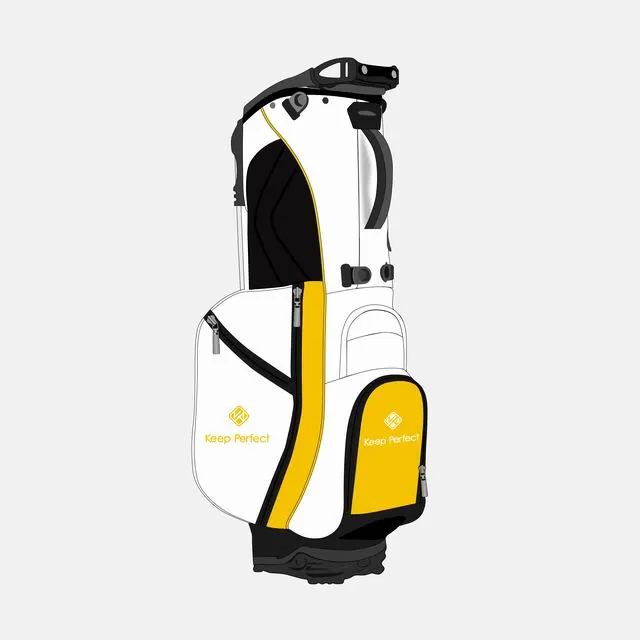
Packing a golf bag properly comes down to three rules that apply to every bag type and player: load clubs longest to shortest down the spine with the large-headed clubs low, keep the heaviest items (balls, water, rain gear) at the bottom and close to your back when carrying so the centre of gravity stays low, and give every pocket one assigned job so the items you reach for every hole are the fastest to grab. Done correctly, a well-packed bag feels balanced on the back, stays stable on a cart, protects clubs from collision, and saves you minutes across a round by ending the frustrated rummage. This guide, written by QUANZHOU JUNYUAN BAGS, lays out the exact packing method used by tour caddies, and how the bag’s own divider and pocket design supports it.
Why Packing Order Actually Changes Your Round
How a bag is packed is easy to dismiss as housekeeping until the reality of a full round sets in. A bag that is over-loaded at the top tips forward when standing, tugs at your shoulder when carried and slides around on the cart. A bag where clubs are jumbled wastes two or three minutes a round in searches and, worse, lets club heads collide and scuff against each other. Over four hours those small inefficiencies add up to fatigue and frustration.
Good packing also protects equipment. A driver head banging against an iron during a cart ride or a walk gradually damages shafts and faces, and a rangefinder thrown loose into a main pocket rattles and can fail. Organisation is really protection in disguise — the cheapest upgrade to any bag’s effective performance is loading it deliberately rather than randomly.
The method that follows is what caddies use: a fixed order for clubs, a deliberate weight distribution, and a pocket map with one job per pocket. It takes one careful setup and then seconds a round to maintain, and it works identically for a walker’s stand bag, a rider’s cart bag and a tour-style staff bag.
Step 1: Load the Clubs Longest to Shortest
The starting rule is simple and near-universal: clubs go into the bag longest to shortest — driver, woods and hybrids up top, irons in descending length toward the shorter, higher-lofted clubs, wedges and putter nearest the front or in their dedicated slot. This keeps the long, large-headed clubs at the bottom of the divider where they have the most support, prevents grips from tangling across one another, and gives you a natural scanning order when you reach for a club.
How exactly they sit depends on the divider layout. On a 14-way top, each club has its own slot, so the ordering is precise and unchanging — grab the slot, and the club is right. On a 5-way or 4-way top, clubs are grouped: woods in one cluster, then long-mid irons, then short irons and wedges, with the putter in its own well. Both work; the point is to establish one order and keep it so your hand knows where to go.
For a deeper explanation of how divider geometry protects and organises clubs, see our 14-way vs 5-way divider guide. The right divider system is the foundation a good packing order is built on.
Step 2: Distribute Weight From the Bottom Up
One detail that separates a comfortable carry from a tiring one is how the bag sits when the straps are on. A bag weighted towards the bottom leans back against the body and keeps the back straight, while a top-heavy load tips forward and forces the shoulders to do extra work with every step across the fairway.
Weight placement is the skill that separates a comfortable bag from an agonising one. The guiding principle is a low centre of gravity: the heaviest items — a full ball pocket, a full water bottle, the rain gear that lives in the main pocket — go at the bottom of the bag and as close to your back as the design allows. The lightest, high-frequency items — tees, markers, a ball or two — stay in small accessible pockets up top.
This matters most when carrying. A bag with heavy items up high acts like a pendulum — it leans back and tugs at your shoulders with every step. Loaded low and close to the body, it settles on your hips and carries almost naturally. On a cart the same logic keeps the bag planted and stable instead of top-heavy and prone to tipping.
It is worth rebalancing as the round proceeds. As you drink the water, eat the snacks and use range balls, remember that lightening the bottom slightly lightens the pull on your shoulders during the back nine. A pack-and-repack check at the turn keeps the balance intentional.
Step 3: Map the Pockets — One Job Per Pocket
The pocket plan is the single biggest time-saver. Assign each pocket a fixed job and keep it that way every round, so your hands build muscle memory. In a typical well-organised bag: the valuables pocket, lined and zipped, holds phone, wallet and keys; the ball pocket holds a full box and is placed for a one-hand grab; a glove pocket keeps spares dry; the main apparel pocket holds outerwear and towels; and an insulated sleeve or cooler pocket holds drinks.
A sound order is to put the items you reach for every hole — tees, ball marker, a ball — in the most accessible pocket, and the items you reach for once a round — rain gear, the rangefinder’s case — deeper. The result is that most of your reaches are a quick grab instead of a dig. Our golf bag organisation guide walks through a complete pocket-by-pocket setup in more detail.
Consistency is the multiplier. Once a player packs the same way every time, they no longer think about where anything is — they just reach. That repeatable calm is what a professional’s bag feels like, and any player can build it with a fixed routine.
Protecting Clubs, Rangefinders and Valuables
Collision damage is the quiet cost of a badly packed bag. Fully separated clubs in a full-length divider barely touch, but a jumbled 4-way invites head-to-head contact on every bump. Where dividers are partial or bridges run across the top, use headcovers on the woods and organise so similar-length clubs sit together to minimise rattling. The extra seconds spent ordering clubs save the shafts and faces that a season of careless packing would slowly ruin.
Valuables and electronics deserve the same care. A rangefinder should live in a padded sleeve or lined pocket, not slide loose against a bottle. A smartphone in a damp outer pocket is a risk on humid days. When a bag has a dedicated lined valuables pocket, use it — that is what it is built for.
For travellers, the same protection logic scales up. Protecting clubs in transit — with headcovers, strategic padding and the right travel bag — is covered in depth in our golf travel bag packing guide.
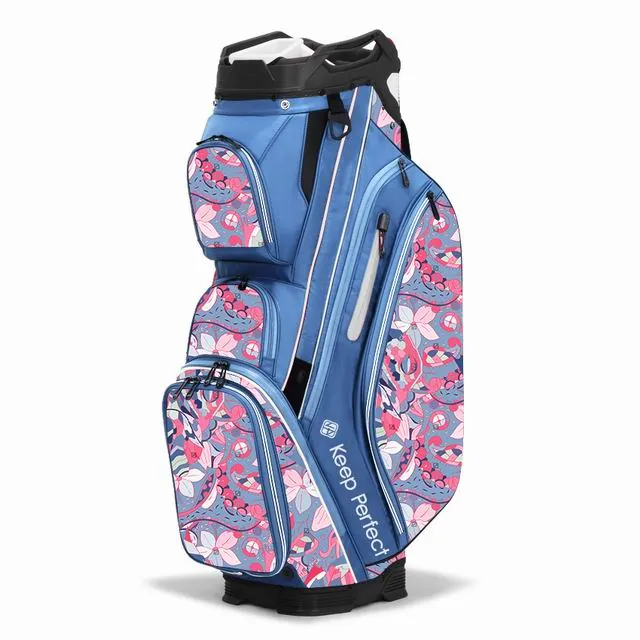
A Bag Packed for Fast Access
Ordered clubs and one-job pockets turn a round into unhurried reaching instead of frustrated digging.
Packing for Walking vs Riding a Cart
When you ride, weight becomes a supporting factor rather than the whole story, but a balanced bag still protects the clubs from rattling and keeps heavy objects away from the mid-section where they press into the structure. Riding bags perform best when the core weight sits low and the clubs stay upright in a well-designed divider system, which is exactly the stability a factory tests before a line is dispatched.
The packing priorities shift depending on whether the bag is carried or ridden. A walker wants the lightest, best-balanced load: minimal extras, a single water source, no redundant gear that adds grams on the back. Every unneeded item is weight to carry for four hours, so the walker packs lean and values a low centre of gravity above storage capacity.
A rider, by contrast, can afford a fuller bag — more layers, a bigger drink, a bulked-up range kit — because the cart carries the load. The rider still wants even weight distribution so the bag sits stable on the tray, and still wants the fast-access pocket map for reachability from the cart seat. Many riders find a cart bag naturally suits this fuller lifestyle, while walkers gravitate to a light stand bag.
Most players mix both in a season, which is why a bag that rides the cart and carries occasionally is a practical sweet spot. Our stand bag vs cart bag comparison helps match the bag type to how you actually play.
Packing for Travel: The Same Rules, Higher Stakes
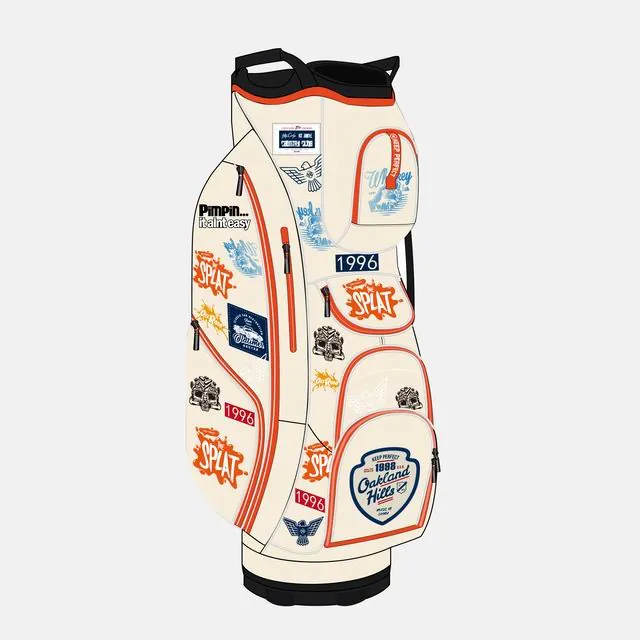
Weight Where It Belongs
Keeping the heavy pockets at the bottom and the clubs upright keeps the bag stable across a full round.
When the bag is going in the air or a car boot, the same packing logic applies with higher stakes. Protect the large club heads, pad the valuables, and distribute weight low so the bag travels balanced rather than listing. A good practice is to secure clubs at the head and grip so nothing shifts in transit, and to shield the larger heads with covers.
Travellers also need to keep the bag within airline expectations on weight and dimensions, and to plan for the unexpected — a lost bag, a tight connection, a rough baggage handler. Packing essentials into a carry-on (spare glove, a few balls, layers) protects against the worst outcome of a checked bag gone missing. The protection and packing order for the road are covered further in our travel bag guide linked above.
It also pays to keep the travel bag itself organised the same way — a fixed place for clubs, shoes, and the range kit — so the whole travelling setup works as one predictable system rather than a jumble of cases.
Weather-Ready Packing for Real Rounds
A properly packed bag is also a weather-ready bag. Keep the rain gear and a towel in the main apparel pocket where they are reachable fast when the sky turns, rather than buried. Assign the valuables pocket to items that must stay dry and use it religiously. If the forecast is unsettled, add a spare glove and a dry layer and plan to rebalance when the round is done and the wet layers come out.
Moisture management is part of packing too. Dry wet towels outside or in a ventilated pocket, never trap damp things against electronics, and after a wet round unpack and dry the bag itself before the next use. Our seasonal storage guide covers the drying and storage routine that keeps a packed bag ready at all times.
For players in consistently wet markets, a weather-resistant or waterproof build changes the calculus — our waterproof stand vs cart bag comparison helps match protection to the climate.
The Weekly Reveal and Bag Maintenance
Packing happens every round, but a full unpack is the weekly maintenance that keeps the system working. Once a week — or after any wet or dirty round — empty the entire bag, brush debris from the base and dividers, wipe the pockets and let everything dry open. This is also the moment to rediscover lost balls, reorganise stray items back into their assigned pockets, and reset the packing order.
Habit keeps a bag from slowly becoming an unplanned jumble. Over a month, the ball pocket migrates, the glove bags up, and the rangefinder drifts into the wrong pocket unless actively reset. The weekly reveal fixes that in about ten minutes and is the hidden habit behind every always-organised bag. A robust bag is easier to keep this way, and our quality standards guide explains the construction that supports heavy use.
Packing Mistakes That Undermine a Round
A packed bag that is tidy in the garage can still fail on the course the moment the order of pockets breaks down, so the real test is whether the routine holds under a little pressure. Keep the sequence deliberately short and repeatable, and it becomes a habit that protects the round rather than a task that adds to it.
The most common packing failures are predictable and avoidable. Loading heavy items high turns a carry into a chore and a cart bag into a tipper. Jumbling clubs guarantees head contact and slow reaches. Sticking the rangefinder loose invites damage, and burying rain gear means getting soaked while you dig for it. Each is a small error that compounds across a round.
The second class of error is overloading — carrying far more than the round needs. Extra weight taxes the lower back over 18 holes whether carried or shoved into a cart. A lean, deliberate kit that uses the bag’s best pockets beats a jammed bag that cannot breathe or balance. Knowing what to leave out is as important as what to put in.
Finally, failing to reset. A bag that is only packed, never unpacked and reorganised, drifts into chaos within weeks. The ten-minute weekly reveal is the antidote, and it is the single habit that keeps a good packing system working every single round.
How the Right Bag Supports the Right Pack
Bags intended for regular play differ from lightweight travel models mainly in how much structure they add in exchange for support. A model with a rigid base, firm dividers and reinforced handles carries a full fourteen-club set without deforming, while a lighter bag asks you to trade some of that firmness for reduced total weight. Buyers choosing a retail line usually favour the structured build, because returns and complaints tend to trace back to bags that sag or twist under a normal load.
A good packing system is only as strong as the bag it operates in. Full-length dividers make the club order hold; a well-placed valuables pocket makes protection automatic; a low-minded base design keeps the balance honest; and a good pocket map only works if the bag has the pockets in the right places. This is why the bag and the method go together.
For buyers and brands, it also means the bag’s organisational design is a feature worth specifying — not a trimmable extra. Whether you are a retailer choosing stock or a brand sourcing private-label, a bag engineered for organisation and balance carries more value to the end player than a bag that merely looks tidy. Our golf bag types guide helps assess which body style matches which player.
QUANZHOU JUNYUAN BAGS supplies golf bags from an affiliated 4,950-square-metre main factory whose founder entered the industry in 2004 and which was established as a company in 2014. The facility runs seven production lines with 126 sewing machines and a team of 137 staff, supporting a monthly capacity of up to 200,000 units for more than 200 brands across 100+ countries. Sampling typically takes 10-20 days and bulk production 45-60 days, with a standard MOQ of 200 pieces and 100 for test orders. The factory was independently audited by SGS in March 2026. Contact service@junyuanbags.com or +86 17750020688.
Quick Reference: A Pocket-by-Pocket Packing Map
The table below is a workable pocket map for a fully loaded bag, matched to how often each item is reached during a round.
| Pocket / Area | What Goes In | Access Frequency | Notes |
|---|---|---|---|
| Valuables pocket | Phone, wallet, keys | Once a round | Lined and zipped; keep dry |
| Ball pocket | Full box or a dozen | Every few holes | Place for one-hand grab |
| Tees & markers pocket | Tees, markers, divot tool | Every hole | Tiny, always front |
| Glove pocket | Spare gloves | When needed | Keep dry and clean |
| Main apparel pocket | Rain gear, towels, layers | Once a round | Heavier items low |
| Insulated / cooler | Drinks and light snacks | Every few holes | Low for balance |
Adapt the map to your own playing kit, but keep one rule fixed: one pocket, one job, kept every round, so your hands build a routine and your reaches stay fast.
Pack a Bag That’s Built to Be Organised.
A well-designed bag makes good packing automatic. Source stand, cart or staff bags with full dividers, smart pocket maps and low-balanced designs. MOQ 200, sampling 10-20 days.
Explore Golf Bag Types →Frequently Asked Questions
- What order should clubs go in a golf bag?
- Load clubs longest to shortest — driver and woods at the back, irons in descending length, wedges and putter at the front or in their dedicated slot.
- How should I distribute weight in my golf bag?
- Keep the heaviest items — balls, water, rain gear — at the bottom and close to your back so the centre of gravity stays low and the bag carries stably.
- What goes in which golf bag pocket?
- Assign each pocket one job — valuables (lined and zipped), balls, tees, gloves, main apparel, and an insulated cooler — and keep it fixed every round.
- Should I pack differently for walking than riding?
- Yes. Walkers pack lean for the lowest weight and a low centre of gravity; riders can carry a fuller kit but still want even weight and fast access from the cart.
- Does packing protect my clubs?
- Yes. Fully separated clubs in a full-length divider barely touch; a jumbled bag lets heads collide and scuff on every bump.
- When should I unpack and repack my golf bag?
- Unpack the whole bag weekly or after any wet or dirty round, dry it open, and reset each pocket to its assigned job.
Related Reading
- 14-Way vs 5-Way Divider Guide — How divider geometry protects and organises clubs.
- Golf Bag Organization Pro Tips — A complete pocket-by-pocket setup.
- How to Pack a Golf Travel Bag — Protecting clubs in transit.
- Stand Bag vs Cart Bag — Match bag type to how you actually play.
- Seasonal Storage Guide — Keeping a packed bag ready all year.
- Waterproof Stand vs Cart Bags — Match protection to the climate.
- Golf Bag Types Guide — Match body style to player.
Sources
- PGA Tour — illustrates caddie practice and how professionally packed bags are organised and balanced.
- USGA — rules and equipment-care references supporting sound bag organisation and protection.
- R&A — golf rules references relevant to managing equipment during a round.
- SGS — independent factory verification supporting the construction claims in this guide.