Vessel is golf's clearest example of a true luxury bag brand — a premium house whose identity is premium materials (waterproof-rated shells, napa leatherette accents, metal hardware), considered design and a price point far above the volume premium tier. It sits at the very top of the premium segment that market research shows is growing fastest (Mordor Intelligence projects premium bags to outpace the overall roughly USD 1.25 billion golf bag market), driven by personalization and the fitting ecosystem. For wholesale and OEM planners, Vessel is the definitive benchmark for a luxury-tier program: a case study in how materials, finish, restraint and premiumization translate into sustained margin. This review grades Vessel's 2025 range across materials, build, design identity, price-value and its strategic lesson for the top of the market.
Vessel has rewritten what golfers expect from a premium bag — elevating the bag from a practical accessory to a near-luxury item. This review assesses whether the premium is grounded in real materials and construction, where the line sits in the market, and what a factory can learn from its execution.
Vessel's Luxury Positioning
Vessel deliberately operates at the top of the market, competing with premium carry, cart, stand and travel products priced well above mainstream brands like TaylorMade, Titleist and PING. Its differentiation rests on unmistakable premium materials, tight manufacturing tolerances, and a design language of clean lines and subtle refinement rather than instructional feature-dumping. For the golf pro, executive or status-conscious golfer, Vessel is a statement product — and in a growing premium market, statement positioning commands genuine margin.
Positioning a product as luxury is a discipline of consistency: every choice reinforces the premium — materials, presentation, service and price. Vessel locks that consistency across its range so the cost reads as commitment rather than markup, which is why its luxury positioning has become economically durable. For a program aiming at the top tier, the lesson is that luxury is a systems promise, and each visible and service detail must be engineered to the same standard or the perception weakens.
Vessel's luxury repositioning is a pricing decision backed by materials: by committing the full premium story — waterproof-rated shells, napa leatherette, metal hardware — it creates a product whose price is itself a signal of quality. That pricing logic works only because the materials genuinely read as premium and the build survives seasons, so the aspirational value is real rather than manufactured. For any brand targeting the top tier, Vessel is the proof that premiumization can be engineered, not just priced.
For planners, Vessel proves that at the right quality level, price is a feature. A factory that can execute premium materials and finish can support a genuine luxury tier where competitors without that capability simply can't follow.
Premium Materials: The Core of the Story
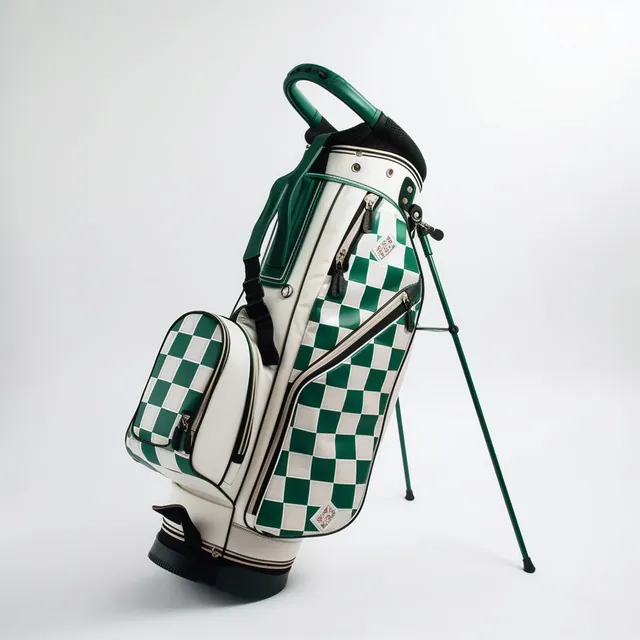
Materials are Vessel's foundation. Premium waterproof-rated outer materials, napa leatherette accents, brushed metal hardware and dense, structured webbing give Vessel bags a tactile and visual quality that mass-market products cannot match. This finish-first philosophy carries into details — zipper pulls, trim stitching and hardware — that read as deliberate. The result is a bag that looks and feels expensive and, crucially, maintains that impression through seasons of use.
Premium materials justify price only if they are real and verified. The luxury story lives in open, testable evidence: the waterproof rating of the shell, the type and grade of the leatherette, the density of the webbing and the finish of the hardware. These are attributes a buyer can inspect and a factory can certify, and when they are documented the premium price converts a skeptic. When they are only claimed, the premium collapses on the first genuine comparison.
The premium story is carried by material grade, hardware and finishing discipline rather than feature count. Dense waterproof-rated shells, soft napa leatherette trims, brushed metal hardware and structured webbing give Vessel a tactile quality no volume product can imitate cheaply. Evaluating any luxury bag therefore means verifying these physical attributes — material grader, hardware realness, finish consistency — because in the luxury tier the hand-feel is the message.
Reading Vessel's materials is done in the hand: dense waterproof-rated shells, soft napa leatherette trims, brushed metal hardware and structured webbing. These are not decorative — they carry the weather rating and the longevity claim. Evaluating any luxury bag therefore means verifying material grade, hardware and finish against the same criteria a buyer would apply to a premium object, not a golf accessory.
From a sourcing standpoint, Vessel demonstrates where true premium cost sits: material grade, hardware quality and finishing discipline. Our materials guide explains how to evaluate these attributes on data rather than appearance.
Waterproof Engineering Meets Luxury
A defining Vessel capability is combining luxury finish with genuine weather protection. The flagship lines use waterproof-rated construction — sealed seams, rated materials and robust closures — so a bag that looks like a luxury accessory also protects clubs in rain. This marriage of premium aesthetics and all-weather function is exactly where the market is heading: weather resistance has become an expected baseline, and doing it invisibly inside a premium product is the hard part. We detail the technical requirements in our weather-protection guide.
The engineering that keeps clubs dry inside a luxury exterior is the hardest-won right to the price. It demands sealed seams and rated materials executed to tolerances that preserve a clean, premium face, and validated by ingress testing rather than assumption. Because that combination is difficult, it is a durable barrier to copycats and the honest core of the value story. A private-label luxury program must therefore match the waterproof spec exactly, or its premium will leak in more ways than one.
Vessel's engineering signature is making genuine protection invisible behind a clean premium exterior. Sealed seams, rated materials and robust closures secure the clubs while the bag presents as a premium object, and that invisibility is exactly what makes it hard to copy — the weather engineering must work without cheapening the look. Buyers should validate ingress and seam construction with the same rigor they would for a performance bag, because luxury and engineering durability are not mutually exclusive and must both hold.
Vessel's distinguishing engineering feat is making luxury and weather protection coexist invisibly. Sealed seams, rated materials and robust closures protect clubs while the exterior stays a clean premium statement. That engineering invisibility is difficult — the protection must work without cheapening the look — which is precisely why it is a durable moat. Buyers should verify ingress protection and seam construction regardless of how premium the exterior appears.
Design Identity and Restraint
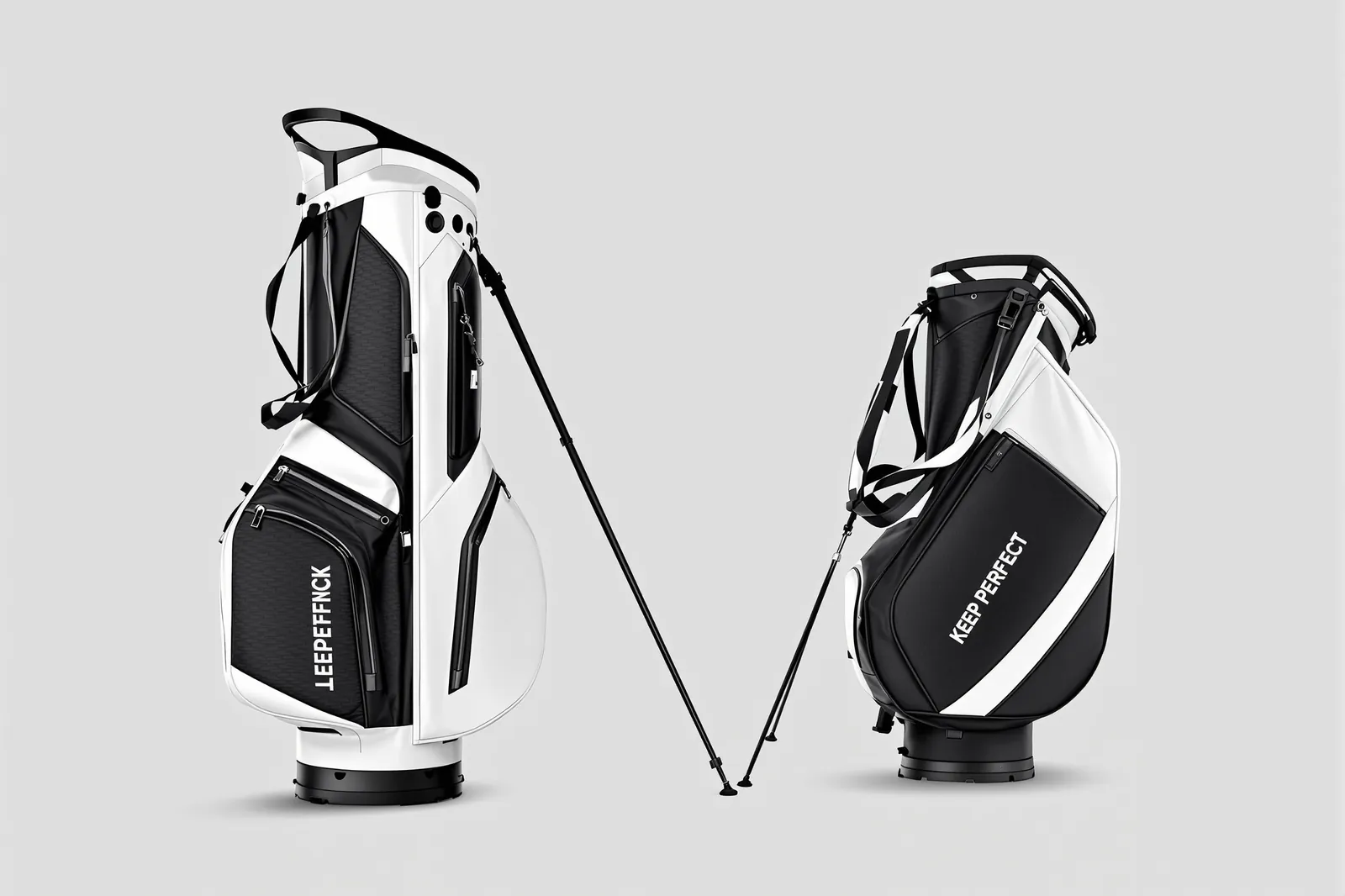
Vessel's design is defined by restraint — clean profiles, thoughtful organization rather than pocket overload, and proportions chosen for visual and physical balance. This restraint signals confidence: the product doesn't need to advertise features to be premium. Organization remains fully functional, with full-length dividers and considered pocket layout, but the presentation is understated elegance. For a buyer who wants a bag that projects quality on the first tee and maintains it in the boardroom, Vessel's visual discipline is the point.
Restrained design protects long-term value in another way: it ages well. A clean shell with honest materials and coherent proportions still looks current several seasons later, supporting both the owner's satisfaction and the resale market. For a factory, delivering restraint means controlling every visible surface to tight tolerances — finish, trim alignment, hardware placement — because in a minimal design there is nowhere for flaws to hide. That discipline is the hidden cost of looking effortless.
Restraint is what makes Vessel's products read as luxury rather than excessive. Fewer, better-chosen details per face, muted hardware and proportions chosen for balance create designs that stay current across seasons — unlike feature piles that date fast. Executing restraint well is harder than adding features, because it demands disciplined decision-making at every stage, which is precisely why it functions as a barrier to copycats and a source of durable brand value.
Restraint is Vessel's design signature: fewer, better-chosen details per face, muted hardware, proportions tuned for balance rather than surface. This signals confidence and reads as premium across seasons and trends. For any brand, restraint is a competitive choice — it sacrifices flash for longevity of impression, and it is far harder to execute well than feature overload, requiring disciplined decision-making at every factory hand-off.
We explore how restraint-based pocket architecture is executed in manufacturing in our compartment design guide — a clean layout is far harder to build to tolerances than one that just adds pockets.
| Vessel Line | Best For | Signature Feature | Tier |
|---|---|---|---|
| Premium carry / stand | Luxury walkers | Napa leatherette, waterproof shell | Luxury |
| Premium cart bags | Luxury cart golfers | Waterproof construction, metal hardware | Luxury |
| Travel / locomotive | Traveling luxury buyers | Protective, premium carrying | Luxury travel |
Build Quality, Hardware and Longevity
Vessel's premium extends to engineered durability: dense webbing, robust zippers and hardware, reinforced bases and clean stitching. The goal is a bag that not only looks premium at purchase but holds its identity through a hard season — an integrity that supports its sustained price. From a QC standpoint, Vessel is a masterclass in the details an OEM must verify: hardware cycles, seam strength, material abrasion resistance and finish consistency. Our quality control guide lists the checks that protect a premium investment.
Vessel's premium is engineered to last: dense webbing, robust zippers and metal hardware, reinforced bases and clean stitching survive a season (or several) without reading as worn. This longevity underwrites the high price and the prestige. From a QC standpoint it is a masterclass in what to verify — hardware cycles, seam strength, abrasion resistance and finish consistency — because in the luxury tier, an aging flaw erodes far more trust than in volume products.
Trend Alignment: Premiumization and Personalization
Vessel sits precisely on the industry's strongest structural trend — premiumization. Market research consistently finds the premium bag segment growing faster than the market average, driven by customization, the fitting ecosystem and consumers who treat the bag as part of their equipment identity. Vessel also aligns with personalization: a luxury line that can layer monogramming, custom colors and bespoke touches amplifies its appeal to executive and branding clients. Our personalization guide covers how factories deliver this.
Executing personalization profitably requires a factory that can handle low-volume, high-variety production without wrecking cost or lead time. Monogramming, custom colorways and bespoke trims all add value only if they are delivered precisely and on schedule, so the capability to manage variety is itself a premium asset. A partner with flexible small-batch lines turns the personalization promise into a dependable, margin-rich business rather than a bespoke novelty.
Premiumization compounds for a luxury brand because it rides buyer psychology as much as data: in the fastest-growing bag segment, buyers treat price and quality as linked signals, so a premium product that delivers on materials reinforces its own demand. Personalization extends that pull — a monogrammed or custom-built bag becomes a one-of-one object and a gifting or corporate credential. The pairing of premiumization with a personalization layer is a high-margin, low-volume recipe a well-sourced program can replicate.
Vessel sits at the intersection of the two strongest structural trends: premiumization — the fastest-growing segment of the bag market — and personalization, where monogramming, custom colors and bespoke touches elevate a product into a one-of-one statement. That alignment lets it capture both the executive buyer upgrading for identity and the corporate account buying personalized gifts and branding. For a program targeting high-margin, low-volume demand, this exact pairing is the proven recipe.
Vessel is precisely aligned with premiumization, the bag market's fastest-growing segment, and pairs it naturally with personalization: monogramming, custom colors and bespoke touches elevate an executive or branding commission into a one-of-one object. This is a direct template for any brand targeting high-margin executive, corporate and pro accounts — invest in materials and a personalization layer, and the premium becomes personal rather than merely expensive.
Price-Band Positioning and Total Cost of Ownership
Vessel commands the highest tier of the bag market, with prices well above mainstream premium and materially above entry lines. The opening is that the value case is built on materials, craft and an emotional premium — a bag that feels like an object of quality. For resellers, Vessel's positioning protects margin and retail price integrity because the brand is aspirational rather than volume-driven. For budget-focused buyers, Vessel is simply out of reach, which is precisely its point: it is not competing for that buyer.
Vessel's price defends itself through the honesty of what the buyer receives and the integrity the brand protects by not discounting it into commodity territory. On total cost of ownership, a premium Vessel that holds up across seasons and holds its association often outperforms cheaper bags replaced more often, and disciplined price integrity preserves retail margin and resale value. For resellers, that means lower markdown risk; for buyers, a defensible rationale to invest in fewer, better.
Vessel Versus the Luxury-Adjacent Field
In the upper-tier market, Vessel competes with other premium-craft houses and the top lines of mainstream premium brands. It differentiates by committing to luxury materials and presentation more consistently than volume-premium rivals, which reserve premium touches for flagships. Compared with a brand like Mizuno (craft, restraint) Vessel adds overt luxury materials and a higher price narrative; compared with TaylorMade's ecosystem-integrated premium, Vessel is pure product statement. We map the premium field in our premium brand comparison.
Benchmarking a Luxury-Tier Program on Vessel
For a brand or OEM planning a genuine luxury tier, Vessel is the benchmark to reverse-engineer. Critical learnings: invest where it is visible — premium waterproof materials, napa leatherette, metal hardware, clean finish; restrict the line rather than sprawl; make restraint the design language; and verify construction quality so longevity justifies price. A factory with top-spec material sourcing, precision construction and rigorous QC can execute this profile, and we detail the path in our workflow guide.
Delivering a luxury tier demands that the brand experience match the product: premium presentation, clear warranty language and a coherent story across the range, so the high price feels considered rather than arbitrary. A private-label luxury program that invests in materials without matching packaging, service and messaging will undercut the premium. For an OEM partner, this means controlling every customer-touching detail, because in the luxury tier the moments around the product are as much the product as the bag itself.
Reverse-engineering Vessel for a luxury program yields a concrete bill: premium waterproof materials graded and tested, napa leatherette and metal hardware where they are felt, a disciplined line rather than sprawl, restrained design language and verified construction longevity. Each of these is an auditable spec a factory can deliver and a buyer can inspect in sampling. Because luxury is a commitment to consistent excellence at every step, the program that stages and verifies it methodically wins the premium tier.
To build a genuine luxury tier, Vessel is the benchmark to reverse-engineer: invest where it is visible in premium materials and finish; keep the line disciplined rather than sprawling; make restraint the design language; and verify construction longevity so price is justified. A factory with top-spec sourcing, precision construction and rigorous QC can execute this — the path is opaque at the surfaces but clear in engineering.
Final Verdict on Vessel 2025

Vessel is the definitive luxury golf bag brand: unmistakable premium materials, refined waterproof engineering, disciplined design and a price point that is itself a brand statement. It serves the executive and status-conscious golfer who wants a bag that projects quality, and it aligns perfectly with the industry's premiumization trend. It is not for budget shoppers, and function-maximalists may prefer more feature-dense competitors — but as a benchmark for the top of the market and for any brand considering a luxury tier, Vessel is the reference.
Vessel's Brand Experience Beyond Product
Luxury in golf bags is as much experience as object. Vessel reinforces its premium price with premium retail presentation, consistent unboxing, clear warranty language and a coherent story across its range — all of which make the high price feel considered rather than arbitrary. For a buyer, this is a reminder that the moments around the product — packaging, service, warranty, messaging — must match the product's quality tier or the premium collapses. A private-label luxury program is incomplete without a matching brand-experience layer.
The Resale Value and Prestige Argument
A luxury bag's value is partly about longevity of demand. Vessel's prestige products tend to hold association and appeal across seasons, which supports strong resale and reinforces the perception that the purchase is an investment in status, not a consumable. This matters to the executive buyer weighing cost and to the reseller managing margin and markdown risk. Brands can cultivate the same effect through durability, coherent design and disciplined price integrity rather than promotional discounting.
Vessel-Inspired Features Worth Adopting at Lower Tiers
Not every luxury feature must be luxury-priced. Key Vessel-inspired details can be adapted profitably into mid or premium tiers: full waterproof construction, leatherette or metallic accents, magnetic or easy-access pockets, and a visibly high-value hardware finish. Adopting these selectively delivers the perceived-luxury dividend without the full price and sourcing burden. For OEM planners, this is the pragmatic way to capture some of the premiumization trend for buyers who will not pay Vessel prices.
Frequently Asked Questions
- Is Vessel worth the luxury price?
- For the executive, pro or status-conscious golfer, yes — the price reflects real premium materials, waterproof construction, refined hardware and durable finish, and the brand's aspirational positioning protects sustained value.
- Are Vessel golf bags waterproof?
- Yes — flagship Vessel lines use waterproof-rated construction with sealed seams and rated materials, combining luxury aesthetics with genuine all-weather protection for clubs and apparel.
- How does Vessel compare to TaylorMade or Titleist?
- Vessel commits to overt luxury materials and presentation more consistently than volume-premium brands, which reserve premium touches for flagships. Vessel is a purer product statement; TaylorMade and Titleist offer broader, more feature-varied ranges.
- Who is Vessel golf bags best suited to?
- Golfers who want a bag that projects executive-level quality — pros, business travelers and status-conscious players who value materials, craft and restraint over maximum feature count and lowest price.
- What can a factory learn from Vessel's approach?
- That luxury margin comes from visible investment in premium materials and finish, a disciplined (not sprawling) line, restrained design and verified construction longevity — all deliverable by an OEM with top-spec sourcing and rigorous QC.