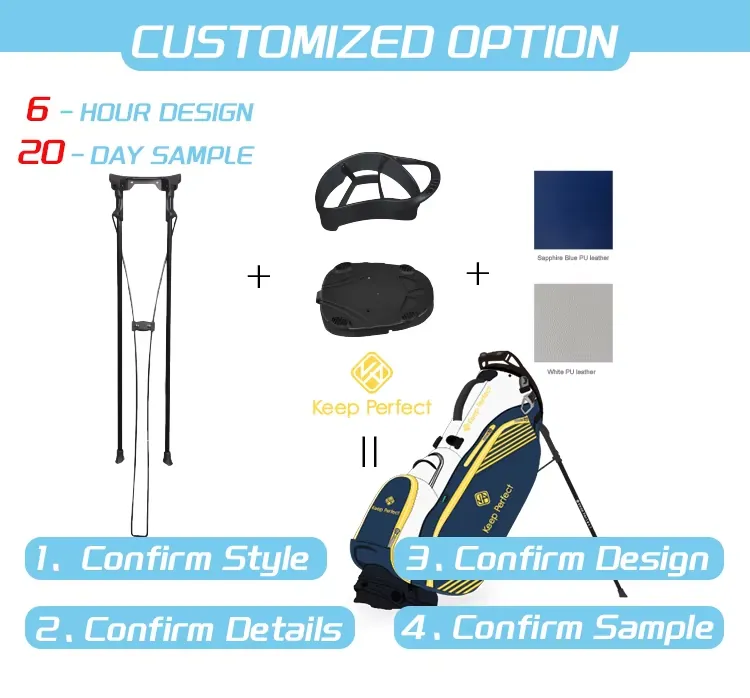
Mizuno is a premium, performance-first Japanese golf brand that holds a permanent place on market-research rosters of the world's leading golf bag companies (Grand View Research, Mordor Intelligence). Its 2025 bag line is smaller, more considered and more purely artisanal than its American rivals — the standout is the Pro waterproof cart series, built to a heritage of Japanese metals and craftsmanship, aimed at the golfer who buys fewer but better products. For wholesale and OEM planners, Mizuno is the clearest case study in how a focused, high-quality premium line earns brand loyalty and margin without chasing volume. This review grades Mizuno's 2025 bags across performance, craftsmanship, materials, price-band placement and what it teaches a private-label program about premium positioning.
Mizuno's identity is rooted in precision — the famous "Nothing feels like a Mizuno" sums an obsession with feel and quality. That philosophy carries into its bags through refined materials, quiet engineering and a resistance to trend-chasing. This review assesses where that approach wins and where a more feature-saturated competitor might appeal more.
Mizuno's Positioning in the Bag Market
Mizuno occupies the premium-craft end of the bag market. Unlike brands that flood the range with variants, Mizuno concentrates on a tighter, higher-quality lineup — a deliberate strategy consistent with its overall brand. Market research consistently includes Mizuno among leading bag players, but its differentiation is not breadth: it is the integrity of build and the premium feel of materials. For the right buyer — a quality-first golfer or reseller — Mizuno's bags command loyalty that volume-brands rarely earn.
Mizuno's premium-craft positioning is a deliberate concentration of brand strength rather than a breadth play. By producing a tighter, higher-quality line, it signals that every product carries the full weight of the brand's craftsmanship, and premium buyers respond to that confidence. For OEM planners, this is the cleanest demonstration that disciplined focus on fewer, better products can command better margins and deeper loyalty than SKU sprawl.
For a private-label planner, Mizuno demonstrates that you can build a profitable premium line on depth of craft rather than width of SKUs. The strategic lesson is that disciplined focus, backed by measurable quality, sustains premium pricing.
The Pro Waterproof Cart Series

Mizuno's flagship contribution is its Pro waterproof cart-bag series, marketed on premium materials and genuine waterproof construction for demanding climates. It targets the dedicated cart golfer who wants a bag that protects clubs and apparel year-round. This series embodies Mizuno's approach — fewer, better — replacing a sprawl of options with a single highly engineered, weather-secure product. Waterproofing here is treated as seriously as any club technology, with sealed construction and rated materials at the core.
The Pro waterproof series earns its position on documentation, not reputation: sealed construction, rated materials and tested ingress performance are the evidence behind the premium. Because waterproofing claims are now compared hard by data-literate buyers, a line that can show its testing and spec clears the trust bar quickly, while one that only says 'waterproof' struggles. For a private-label brand, requiring that document in sampling is the difference between a defensible premium product and an exposed promise.
The Pro waterproof cart series is where Mizuno's craft thesis becomes concrete: a premium cart bag engineered for genuine weather protection with sealed construction and rated materials. More than a wet-climate product, it is a statement that the brand treats the bag as seriously as any club, and that restraint in range size funds real engineering depth. For any line claiming premium waterproof ability, this is the reference to reverse-engineer and verify with ingress testing.
For buyers, the Pro series is a strong reference for what a credible premium waterproof cart bag contains: sealed seams, rated fabrics, robust zippers and stable cart geometry. Any OEM claiming parity should be able to document the same construct — our weather-protection guide lists what to verify.
Craftsmanship and Material Quality
Craftsmanship is Mizuno's defining asset. Expect select synthetics and, in premium lines, refined trims, meticulous stitching, durable hardware and a finished weight that balances well on the shoulder or cart. The organization is deliberate and understated: functional 14-way or full-length dividers, thoughtfully positioned pockets and clean profiles without visual clutter. This restraint is a feature, not a lack — it signals confidence in the product rather than dependence on flash.
A premium product's quality bill is the honest sum of its seams, hardware and shell. Mizuno concentrates cost on visible durability: better zippers that cycle smoothly, reinforced seam lines, a base that resists flex under load and materials chosen for hand-feel as much as strength. This is why the brand can justify its price — the money is observable in the build. For a private-label program, the same spend allocation is the difference between looking premium and being made well.
Craftsmanship in a Mizuno is read in detail: stitch density and alignment, hardware grain, zipper smoothness, base rigidity and the way premium materials respond to the hand. These are the signals of a brand that treats construction as the product, and they are exactly what a buyer should inspect and an OEM should specify as measurable tolerances rather than adjectives. Because craftsmanship costs real time and material, it must be designed into the spec and verified in sampling, not assumed.
Evaluating Mizuno's craft means reading quality into the details others skip: stitch density and alignment, hardware grain, zipper smoothness, base rigidity and the hand-feel of premium materials. These are the signals of a brand that treats construction as the product. Buyers should compare these against the same build criteria they use for any premium line, and OEM buyers should specify them in measurable form rather than as adjectives.
From a manufacturing lens, Mizuno is a lesson in where cost should go: premium materials, precise construction and quality hardware — exactly the attributes our testing standards guide says to verify rather than assume.
Performance, Comfort and Build Efficiency
Performance in Mizuno bags is about genuine daily utility: bags that organize well, carry or sit stably, and resist wear through a long season. The brand is not chasing featherweight grams at the expense of durability; it prioritizes a balanced, dependable bag. Comfort comes from considered strap design and base geometry rather than gimmicks. The trade-off is that some feature-maximalists may find Mizuno's restraint short on novelty, while quality-first buyers will find the restraint refreshing.
Performance in Mizuno's line is daily integrity: bags that organize well, sit stable, and hold up without drama across a full season. Comfort follows from considered strap and base geometry rather than bolt-on gimmicks, and the build philosophy rewards reliability over novelty. Buyers who value a bag that quietly does its job for years will find that efficiency is not absence of features but confidence in the features it commits to.
Mizuno optimizes for balance over novelty — light enough to walk, stable enough on a cart, organized enough for a full season and durable enough to justify the price. Comfort is engineered through considered straps and geometry rather than gimmicks, and efficiency through concentrating those investments into fewer products. The result is a bag that meets the eye as premium and holds up in daily use, which is the honest foundation of its price.
Mizuno's performance claim is balance: light enough to walk, stable enough on a cart, organized enough for daily use and durable enough to hold up for seasons. Comfort comes from genuinely considered straps and geometry rather than gimmicks. The brand's efficiency is that it concentrates engineering into fewer, better products — a model that converts restrained line size into visible quality.
This balanced-engineering philosophy maps neatly to our ergonomics and comfort guide, which frames reputation: reliability and balance beat novelty for long ownership satisfaction.
| Mizuno Series | Best For | Defining Strength | Positioning |
|---|---|---|---|
| Pro waterproof cart | Quality-first cart golfers | Genuine waterproof construction | Premium |
| Cart / full-feature lines | Better players, daily use | Deliberate organization, durability | Mid-premium |
| Carry / stand options | Walking-focused players | Balanced carry, comfort | Mid-premium |
Organization and Everyday Utility
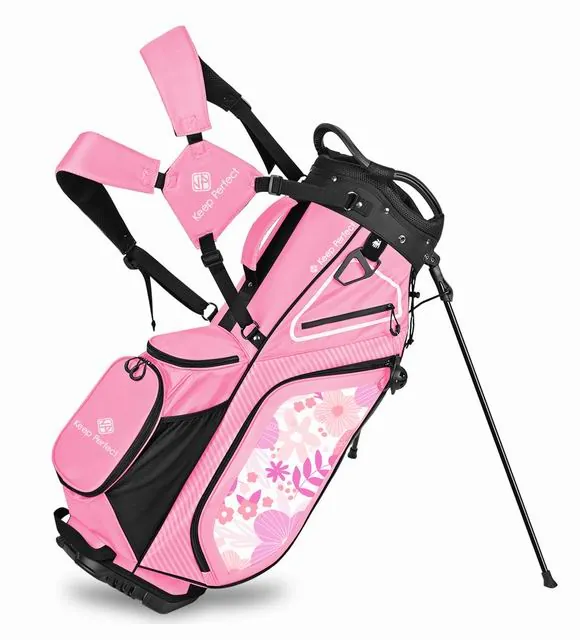
Mizuno's organization philosophy is "everything in its place, nothing extra." Full-length dividers protect clubs, pockets are positioned for real access on cart and carry, and the bag reads as considered rather than crowded. For golfers at the top of a long season, this means fewer frustrations and a more dependable routine — a subtle but powerful driver of brand loyalty. We explore the manufacturing implications of this pocket architecture in our compartment design guide, since a clean layout is far harder to execute well than one that simply adds pockets.
Organization is where Mizuno's discipline pays every round: full-length dividers keep clubs from clattering, pockets sit where real access happens, and the bag reads tidy rather than cluttered. This 'everything in its place' philosophy compounds into loyalty, because routine reliability is what golfers feel most. A laid-out pocket architecture that is consistent is far harder to build than one that just adds pockets — and it is what buyers should test.
Trend Alignment: Craft, Durability and Longevity
Mizuno rides a durable and increasingly relevant set of trends: premiumization, quality-over-quantity buying and sustainability-adjacent longevity. In a market where the premium segment is growing faster than the average per Mordor, a brand that justifies higher prices through genuine craft and durability is well placed. Its focus on fewer, longer-lasting products also aligns with sustainability-minded consumers who prefer ownership cycles extended by quality — even if Mizuno doesn't loudly market it, durable construction is an environmental benefit in itself.
Craft and durability are sustainable positions because they answer a growing set of buyers at once: those upgrading for quality, those who prefer fewer but better products, and those weighing environmental impact through longer ownership. A bag that genuinely lasts replaces several cheaper ones and keeps its place in the market regardless of fast-moving fads. It is a low-noise but high-compound strategy, and one that does not depend on selling novelty.
Mizuno sits on the durable trends of premiumization and quality-over-quantity, both accelerated by golfers who increasingly prefer fewer, better, longer-lasting products. Its durable construction is also a quiet sustainability benefit, extending ownership cycles without a loud campaign. For a brand entering premium territory, this alignment shows that craft and longevity are resonant, defensible positions.
Price-Band Positioning and Value
Mizuno bags sit firmly in the premium tier, priced above mass-market and mid-range imports. The value case rests on craftsmanship, durability and brand trust rather than on the lowest sticker. Because the brand's pull is quality rather than sheer volume, retail price integrity is comparatively stable, and resellers can carry Mizuno with confidence about perceived value. For buyers who compare on total cost of ownership — how long a bag lasts and how well it holds up — Mizuno's pricing often proves defensible.
Mizuno's value argument is a durability economics story: a bag that holds its integrity for years can outlast two cheaper replacements, making the higher upfront price economical for a committed player. That story is credible only if the build is real and the warranty is honored, which is why Mizuno's restraint pays — it focuses spend on longevity rather than novelty. For a buyer weighing premium, testing that durability claim in the hand and the spec is the responsible way to decide.
Value in premium is often a total-cost-of-ownership argument rather than a sticker comparison. A bag that holds up for several seasons and keeps its integrity outlasts two cheaper replacements, so the higher upfront price can be the economical choice for a committed player. That is the story quality-first buyers need to hear, and it is only credible if the durability is real and the warranty is honored.
A premium price survives only while the buyer can verify what they are paying for. With Mizuno the payment is discoverable in materials, seam quality and a waterproof rating documented in spec, and that verifiability is what makes the premium rational rather than aspirational. For a private-label program, the same logic applies: if every premium component is inspectable and every claim is test-backed, the price reads as honest, and honest pricing is redirected and defendable through seasons.
Mizuno's premium pricing is sustained by the integrity of what you actually receive: real waterproofing, durable materials and refined construction. On total cost of ownership, a long-lasting Mizuno often proves comparable to cheaper bags replaced more often. The value story is therefore built on durability economics rather than lowest sticker, which is exactly the case quality-first buyers need to hear.
Mizuno Versus the Premium Field
In a crowded premium space, Mizuno differentiates with restraint and craft rather than breadth. It sits close to luxury-craft rivals on materials, but without the overtly luxury price markers of a dedicated house brand. It offers less range and fewer headline innovations than American volume-premium brands, which is a strength for the quality-first buyer and a weakness for the feature-chaser. We compare the full field in our brand comparison review.
In a crowded premium field, Mizuno stands apart by committing consistently to craftsmanship and restraint, whereas volume-premium rivals reserve premium touches for flagships and lean on range breadth. It is closer to a luxury-craft house on materials but without the overt or high-end luxury price markers of a dedicated house brand. For quality-first buyers this makes Mizuno an ideal middle-premium benchmark; for feature-chasers it will feel deliberately spare.
Benchmarking a Private-Label Premium Line on Mizuno
Mizuno is arguably the best benchmark for a brand that wants to compete on craft rather than volume. The playbook: a tight lineup of genuinely waterproof, well-organized, premium-material bags; visible construction quality; and restraint that signals confidence. An OEM partner with documented material sourcing, waterproofing and quality control can deliver this profile. We lay out that spec-to-production path in our workflow guide and customization guide.
The Mizuno model is a specification, not a vibe: a tight line of genuinely waterproof, well-organized bags; visible material and hardware quality; restraint as a design language; and longevity that justifies price. To execute it, a factory must document waterproofing, material sourcing and quality control, and a buyer must verify those in sampling. The private-label opportunity is to deliver that craft with greater customization speed and more favorable volume economics than a heritage giant.
The playbook Mizuno models is discipline: a tight line of genuinely waterproof, well-organized bags; visible material and hardware quality; restraint that signals confidence; and longevity that justifies price. An OEM with documented waterproofing, materials sourcing and quality control can deliver this profile. The private-label opportunity is to match that craft with greater customization speed and better volume economics.
Final Verdict on Mizuno 2025
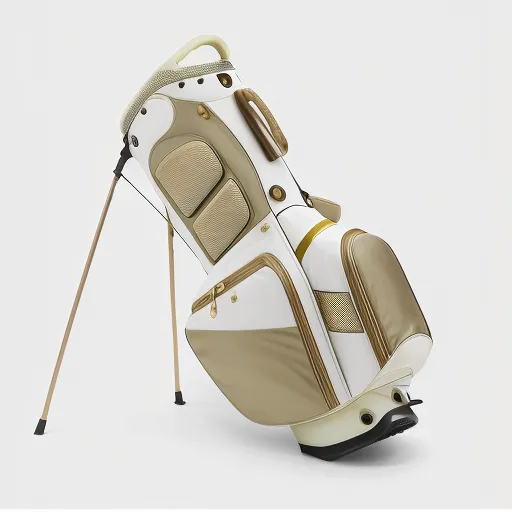
Mizuno's 2025 line is a focused, thoroughly engineered premium offering — best exemplified by the Pro waterproof cart series — and a masterclass in quality-over-quantity brand building. It suits the quality-first golfer who values craft, durability and restraint and accepts a premium price; it is less suited to budget shoppers or those who want maximal feature variety. Its alignment with premiumization and longevity makes it a resilient, respected competitor and a strong model for differentiated premium positioning.
Mizuno's 2025 line rewards the quality-first golfer who values craftsmanship, durability and restraint and accepts a premium price; it is less suited to budget shoppers or those wanting maximal feature variety. Its focused waterproof pro series and quiet confidence make it a benchmark for premium positioning and a compelling model for any brand building a craft-led, quality-over-quantity line.
The Mid-Range Gap: Mizuno's Quiet Opportunity
Mizuno's silence in the busiest tier is also an opening for others. The mid-range — where most volume and upgrade dollars sit — is crowded with feature-rich but often unremarkable bags. A brand able to bring Mizuno-caliber material quality and reliable waterproofing to a mid price undercuts the premium incumbents while out-crafting the volume players. The strategic insight is that craftsmanship does not have to mean luxury pricing; importing the discipline of fewer, better products into the mid-tier is a differentiated, defensible position for an OEM-backed private label.
Mizuno in the Metro and Travel Bag Context
Mizuno's craftsmanship translates unevenly across formats, which is itself a clue. In premium cart and stand bags the construction-led approach shines. In the fast-moving travel and metro segments — where light weight, packing speed and durability under airline handling dominate — the quiet-craft philosophy still applies if engineering follows: add protective reinforcement, stable bases and resilient wheels, not just premium trim. For a factory partner, extending a craft-led brand into travel means making that segment's durability standards part of the spec, so 'premium' carries over not just in materials but in surviving transit.
Sustainability Through Longevity in Mizuno's Model
Mizuno's strongest environmental argument is longevity: a bag built to hold up for seasons is, by definition, a more sustainable purchase than one replaced yearly. That durability story is credible and understated, avoiding the greenwashing risks of louder claims. For buyers, 'long product life' is a real, documentable sustainability attribute — backed by warranty and repairability — and it is the easiest environmental message for any quality-led brand to honestly own without complex certifications.
Frequently Asked Questions
- Is Mizuno's waterproof cart bag really waterproof?
- Yes — the Pro waterproof cart series is crafted with genuine waterproof construction: sealed seams and zippers, rated waterproof materials and premium build, making it a strong choice for golfers in heavy-rainfall climates.
- Who is Mizuno golf bags best suited to?
- Quality-first golfers who value craftsmanship, durability and understated design and who prefer fewer, better products over feature-maximalist ranges. It is also a strong fit for resellers targeting premium, quality-conscious shoppers.
- How does Mizuno compare to Titleist or Callaway?
- Mizuno offers a tighter, more craftsman-focused premium line, while Titleist and Callaway offer broader ranges with more headline features. Mizuno wins on material feel and longevity; the others win on range breadth and feature novelty.
- Is the Mizuno premium price worth it?
- For quality-first buyers, yes — the premium reflects genuine waterproofing, durable materials and refined construction, and on a total-cost-of-ownership basis a long-lasting Mizuno often proves defensible.
- What does the Mizuno strategy teach a private-label brand?
- That you can build a profitable premium line on craft and focus rather than SKU sprawl — a tight line of genuinely waterproof, well-organized, premium-material bags with visible quality can sustain premium pricing and loyalty.