Golf Cart Bag Weight and Balance for Stable Cart Rides
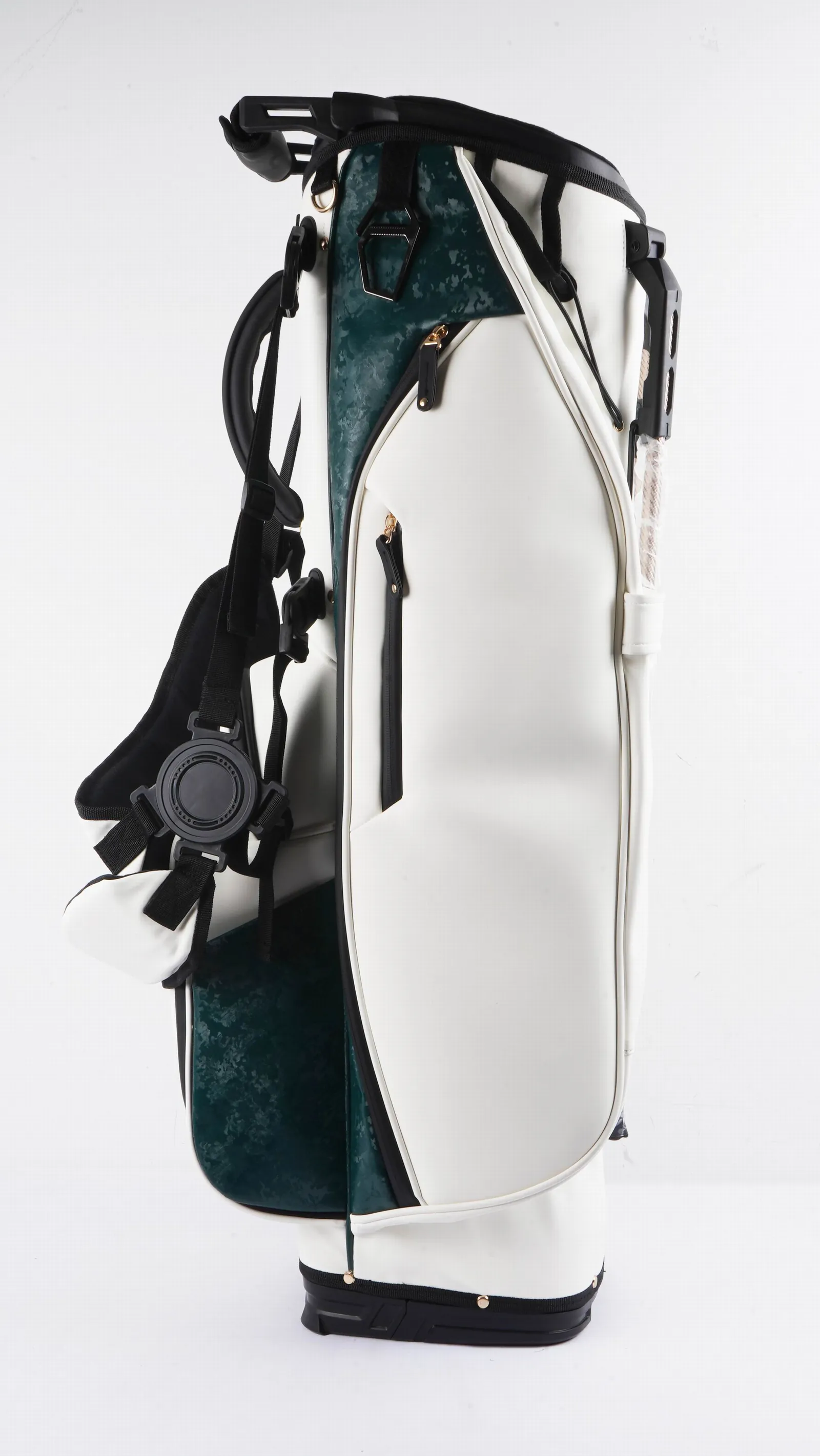
A cart bag stays stable on the cart when three things line up: its loaded weight is distributed with a low center of gravity, its rigid base footprint matches the tray, and that base resists sliding — and of these, balance and base design matter far more than the advertised empty weight. Read on, and you will also learn why a featherweight bag can ride worse than a heavier one, how to run a five-minute stability test, and exactly which numbers to put in an OEM spec. If you are still deciding between styles first, our golf bag types guide lays out how cart bags compare with stand, staff and Sunday bags on stability and carry. That is the practical summary of thousands of cart-bag rides observed and engineered at QUANZHOU JUNYUAN BAGS (founded 2014, founder in the trade since 2004), a factory with 7 production lines, 126 sewing machines and 137 staff whose cart bags ride with more than 200 brand partners in over 100 countries. This guide explains the physics of a stable ride in practical terms, the numbers that matter, and how to evaluate — or specify — weight and balance so your bag does not wobble, list or slide on a tilted, moving cart.
A stable ride is not about weight for its own sake. A typical loaded cart bag carries 14 clubs plus balls, tees, a rangefinder and accessories, easily reaching 8-10 kg or more even though the empty bag weighs only 1.7-2.5 kg. What determines stability is where that 10 kg sits relative to the base, how the base contacts the tray, and how the structure resists the forces of braking, turning and slopes. Buyers who only compare empty weights miss this entirely and end up frustrated with a featherweight bag that still tips. This guide re-trains the evaluation around the two things that actually matter: center of gravity and contact/stability at the base.
The Physics Everyone Can Use
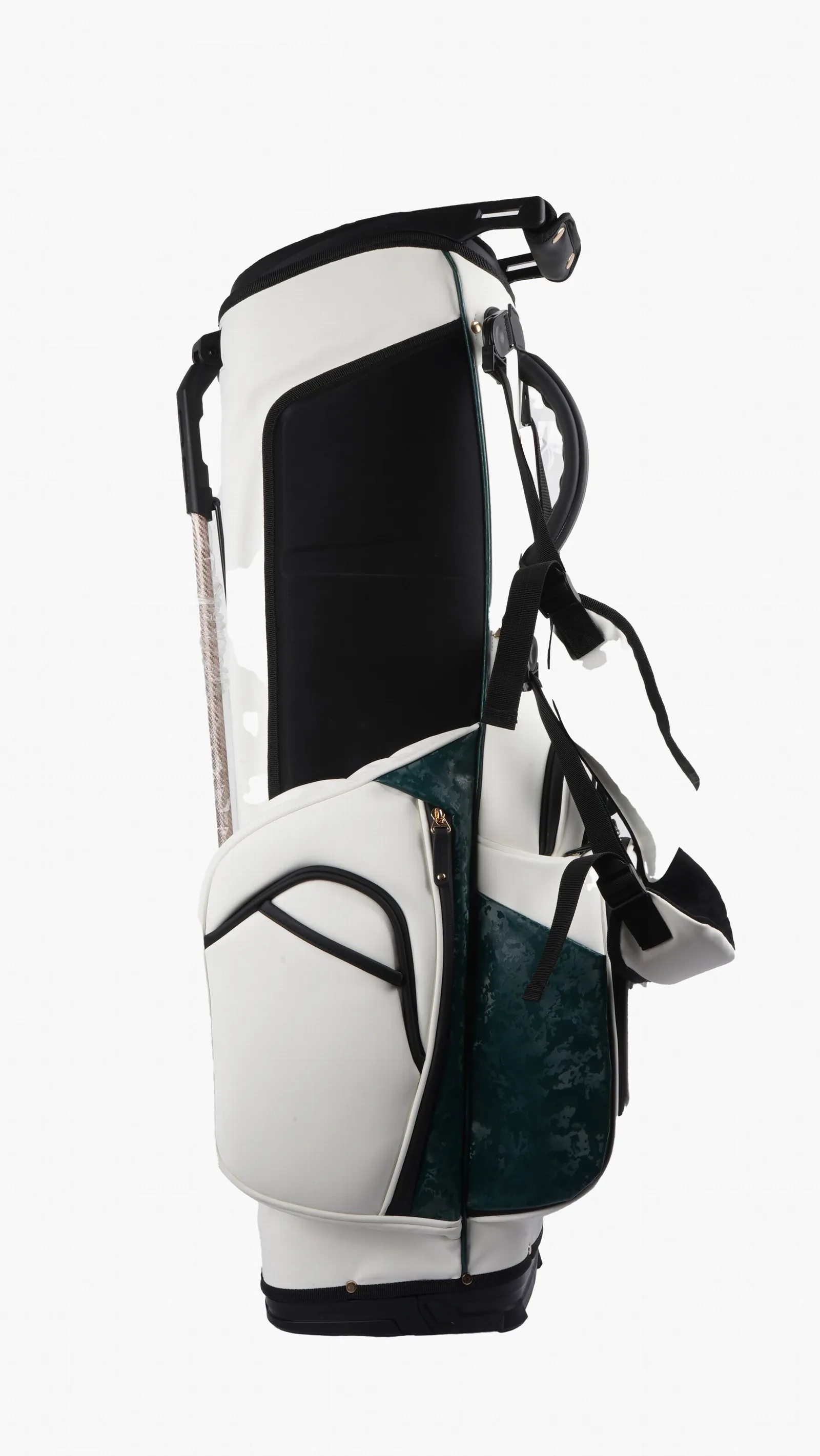
Think of a cart bag as a vertical lever standing on a small platform. Its stability depends on two things: how low and central the bulk of its weight sits, and how wide and grippy the base is. A low center of gravity means that when the cart leans into a turn or brakes, the bag has a large margin before it begins to tip; a high center of gravity means a modest lean can be enough to start it rocking. A wide, rigid base footprint gives a large "footprint of support," while a narrow or tapered base concentrates everything on a small point and turns into a natural wobble.
Sliding is a separate but related failure. On a slope, the horizontal component of the weight pushes sideways against the tray; if the base is flat with no molded grip and the straps are loose, the bag creeps. The fix is both design — a molded base with recessed grooves that lock around the tray edges — and habit — snug straps at both the top and the base. Between them, the physical margin of stability is large enough that even a fairly heavy bag rides perfectly when the base and center of gravity are right.
How Much Weight Is Right for a Cart Bag?
Empty weight between roughly 1.7 and 2.5 kg covers the majority of standard cart bags, and the difference within that band is mostly trim, pocket count and reinforcement rather than inherent quality. The mistake is treating the lowest number as the best product. A bag that reaches a very low weight by thinning its base plate, handle webbing or top ring will ride worse under a full set, because the ring that should transfer load is weak. The better buying lens is: is the weight present where the structure needs it?
There is a legitimate role for weight-aware design — eliminating dead trim and needless bulk without weakening the structure — but it is not the same as a race to the lightest possible bag. For a cart bag, the object is largely glued to a motor, so the practical savings from shaving a few hundred grams are minor, while the cost in stability from under-building is real. A balanced bag at the mid-range of the weight band is, for most riders, the better purchase than an ultralight bag with a soft base.
The Base: Where Stability Is Won or Lost
The base is the single most important stability component. A stable cart bag uses a rigid, injection-molded HDPE or reinforced base plate whose footprint is close to the widest body diameter, so the support area is large and flat. Recessed grooves or ridges in the base engage with the cart tray and the straps, resisting both sideways sliding and forward creep under acceleration. A base that tapers to a narrow bottom, or that is made flexible, converts any slope into a lean.
Base rigidity and size are cheap to verify. Squeeze the base between two hands — a rigid plate should resist strongly; a floppy one compresses. Set the bag on your cart tray and check that the base footprint covers the tray with little to no overhang or play. And tip the loaded bag on a slope to confirm that a rigid, wide base holds it planted. For the full checklist of structural specifications behind a durable base, our quality standards guide covers base plate, seam and reinforcement standards.
Center of Gravity: Engineering the Load Low
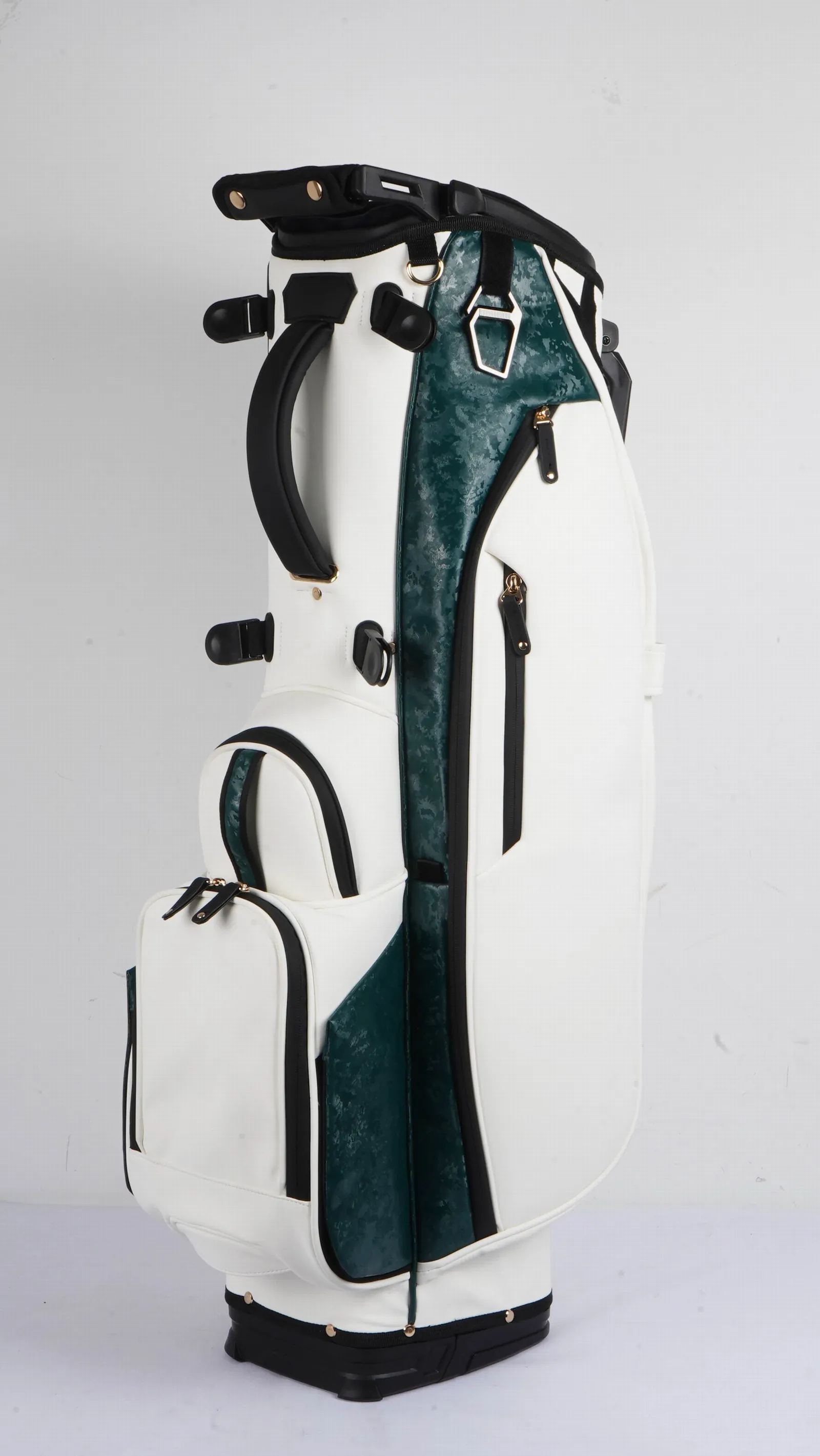
Where the loaded weight sits is largely a product of internal design. A bag with a heavy base plate and its densest materials low keeps the loaded center of gravity down near the tray, while a bag with heavy upper pockets and a light base lets the weight ride high. Patterns and specifications differ here between factories, which is why two bags of similar empty weight can ride very differently. In production we position the base weight and distribute internal structure to keep the loaded center of gravity low and central, since that is what a stable cart ride depends on.
This is also where the division between carrying and riding changes the design brief. A stand bag built for the shoulders spends its weight on keeping the carry light and the legs working, whereas a cart bag spends its weight on exactly the base plate and low structure that a stable ride needs. That is why comparing two bags only on empty weight — a number some retailers advertise loudly — hides the real difference. The honest comparison adds loaded balance: take the same clubs, load each bag and mount both on the same tray. When buyers switch from "how many grams is it empty" to "how does it sit when loaded," stability stops being a marketing claim and becomes something they can check on any trolley in a few seconds. Our cart bag size and dimensions guide walks through how base footprint and tray fit lock that stable seat in place.
You can sense this immediately on a real cart. Load a bag fully, mount it on a slightly tilted tray, and release it: a low-center-of-gravity bag stays put, while a top-heavy one lists and may drop a strap loose. This test does not need instruments — it needs five seconds on the cart you ride. For evaluators spec'ing a fleet, ask the factory where the base weight is and how the loaded center of gravity behaves; a factory that can answer with engineering intent rather than reassurance is a factory that has actually designed for stability.
One quantitative shortcut we use internally and recommend to partners is to weigh the loaded bag normally and then again with the bag tipped upside down on a scale, comparing where the balance sits. It is a rough but honest measure of how much of the total weight wants to settle low. When most of the loaded weight measures near the base end, the bag will ride low and planted; when the balance measures high, expect listing on slopes. It is not a lab test, but it predicts real behaviour better than reading an empty-weight label, and any buyer can run it in under a minute before committing to a sample.
For riders who play several times a week, the return on getting this right compounds across every outing and every cart path. A bag that stays put frees you to focus on the shot instead of rescuing gear, protects clubs from the rattling that a wobbling bag causes, and extends the life of both the bag and its straps. Balance, in other words, is not a niche feature for serious fleet buyers — it is the difference between a bag that disappears into the round and one you are forever fussing over. It is worth the five-minute test before purchase and a thirty-second strap check before every round.
Strap Securing and Tray Interaction
No amount of design replaces correct strapping. A stable mount uses a strap at the base or mid-body in addition to the top, so the bag cannot pivot on its bottom edge. Many cart bags provide a dedicated central strap pass-through channel so the strap threads cleanly without crushing pockets or deforming the divider ring. If the bag has no clean path for the strap, the strap will crush the top edge and deform the ring — a common, preventable cause of instability and internal damage.
Pay attention to where the strap naturally wants to sit. A bag designed with vertical strap guides keeps the ratchet strap square and re-tightens without fighting the bag's shape; a bag without them forces the strap to squeeze the shell and holds the bag less firmly. On electric trolleys, verify the bag's strap mounts align with the trolley's clamp points, and that the loaded center of gravity sits near the wheel axle for easy pushing. A stable mount is the product of both bag design and correct technique. Where the bag is strapped also changes how the weight behaves: a strap that rides too high lets the base swing free and pivot, while a strap that sits at mid-body or lower locks the bag's heaviest end down to the tray — so when in doubt, favor the lower strap position on a trolley.
Balance Under Full Load: The Real Test
Every stability measure in this guide is tested the same way a player experiences it: fully loaded, on a real cart, over an actual course. Empty-bag feel is almost useless — the bag's balance only reveals itself with 10 kg inside. When evaluating, load the bag to a full 14-club set with a reasonable amount of ball and accessory weight, set it on the cart you use, and deliberately brake, turn and park on a slope. Note whether the bag stays upright, whether the base holds and whether the straps stay snug. Repeat the test on both a riding cart and a push trolley if you use both.
This loaded test is also the most important step in an OEM programme, which is why our sampling strongly encourages a field test rather than a shelf inspection. The 10-20 day sampling window is explicitly there so a partner can take the sample out for at least a couple of rounds and return with feedback before bulk production in 45-60 days. A centre-of-gravity issue found in the sample is a one-day design fix; the same issue found after tooling or after a container arrives is an expensive, avoidable disaster.
Weight Distribution Across Pockets
How a user loads the bag also shapes balance, and good bag design helps by placing heavy-capacity pockets low. A cooler sleeve near the base, ball sleeves and valuables pockets positioned low keep weight down; a rangefinder pocket perched high on the back, loaded with a heavy device, pulls the center of gravity up and backward. For riders, a simple habit — keep the heavy gear in low pockets — dramatically improves stability on a bag that is otherwise well balanced, and it is worth knowing so you get the full benefit of a good design.
For OEM buyers there is a corresponding design responsibility: arrange the pocket plan so that the naturally heavy items land low. This is part of the balance engineering we tune at the pattern stage, and it is why a bag's pocket layout is not just an organizational choice but a stability choice. A bag designed so its largest, heaviest storage sits low and forward is effectively pre-balanced for the way golfers actually load it, delivering stable rides before the user even thinks about technique. For a deeper look at the fabrics and base materials that support a stable, durable shell, our golf bag materials guide covers the reinforcements and base-plate options that keep weight where it belongs.
Common Stability Problems and Fixes
Two recurring complaints deserve direct fixes. A bag that lists to one side under a full set usually means an asymmetrical pocket load combined with a soft base — the fix is a rigid, symmetric base and a reminder to balance heavy pockets. A bag that creeps forward on slopes almost always comes from a flat, non-gripping base and loose base straps — the fix is a molded base plus a snug mid-body strap. Both problems are design-fixable rather than inherent to cart bags, and both should be tested for before you commit to a product or a production run.
When a fleet or a single bag still wobbles after these checks, inspect the top ring. A tapered or soft top ring that flexes under the weight of a full set allows the clubs to shift and the whole bag to rock. A rigid, reinforced top ring holds its shape and keeps the divider geometry stable, which anchors the shafts and, through them, steadies the bag. Ring rigidity is one more structural detail that separates stable bags from wobblers and is worth checking by pressing on the ring's wall with a hand.
A Five-Minute Balance Test Any Buyer Can Run
You do not need an instrumented trolley to judge balance. A fair test takes five minutes and a real cart. Load the bag to a full 14-club set with realistic accessory weight — this matters, because an empty bag tells you almost nothing. Place it on the cart tray with the strap snug at top and base, then do three checks. First, release it on a gentle slope and watch for forward creep or sideways sliding. Second, lean the cart into a simulated turn and notice whether the bag rights itself or lists. Third, look at the base under load: is it planted flat, or is the bag rocking on a tapered edge?
Run these same three checks against a bag you already trust and you will have a baseline. A candidate bag that fails any check on a good mount is a bag whose balance design or base is poor, regardless of its label, price or marketing. We routinely invite OEM partners to field-test samples in exactly this way, because a centre-of-gravity issue surfaced in the 10-20 day sampling phase is a trivial design update, whereas the identical issue discovered after a container ships is an expensive return. If you spec a fleet, add this test to your acceptance criteria and the balance problems largely disappear before they reach your members.
| Stability Factor | What Matters | How to Verify |
|---|---|---|
| Empty weight | 1.7-2.5 kg (3.7-5.5 lb) | Balance matters over the lowest number |
| Center of gravity | Low and central | Real cart test on a slope |
| Base | Rigid molded HDPE, wide footprint | Squeeze base; check tray coverage |
| Strap path | Clean pass-through/strap guides | Thread strap; check ring not crushed |
| Pocket load | Heavy storage low and forward | Load realistically; observe listing |
| Top ring | Rigid, reinforced | Press ring wall; check no flex |
Spec'ing Balance Into a Custom Cart Bag
For OEM buyers, balance is a spec, not an accident. Put the base plate material and thickness, the intended loaded center of gravity, the pocket plan and the top ring reinforcement into the specification sheet alongside fabric and dividers, so the factory engineers to them rather than improvising. A factory worth its price can state how it achieves a low loaded center of gravity and hold it across a run; ours does by building base weight and structure distribution into the pattern. If a supplier cannot discuss balance engineering in practical terms, treat that as a signal to probe further.
QUANZHOU JUNYUAN BAGS engineers cart-bag balance for brands and course fleets with these methods, working within an MOQ of 200 pcs (test order 100 pcs), sampling in 10-20 days and bulk production in 45-60 days. Our facility — a 4,950 m² main factory with seven production lines, 126 sewing machines and 137 staff, and affiliated factory partners for overflow — was verified by SGS in March 2026, and supports more than 200 brands across 100+ countries. If you want a bag engineered to ride stably on your fleet, start with the custom solutions path or write directly to our team at service@junyuanbags.com or +86 17750020688.
Frequently Asked Questions
- How much should a golf cart bag weigh?
- About 1.7-2.5 kg (3.7-5.5 lb) empty. Balance with a full set matters more than the empty weight alone.
- Why does my golf bag tip over on the cart?
- Tipping usually comes from a high center of gravity, a narrow or non-rigid base, or top-heavy loading. A rigid molded base and a low, even center of gravity fix it.
- What is the best base for a stable cart bag?
- A rigid molded HDPE base with a footprint close to the body diameter and recessed grooves that lock into the cart tray provides the most stability.
- Does a lighter cart bag ride better?
- Not necessarily. A lightly built bag with a thin base may ride worse; the goal is balanced weight with a sound structural core.
- How do I test a cart bag for stability?
- Load it with 14 clubs, set it on a slight tilt or your actual cart, and confirm it stands upright without listing and the base does not slide.
- Can a factory engineer better cart bag balance?
- Yes. Pattern engineering positions base weight and internal structure to keep the loaded center of gravity low. MOQ 200 (test 100), sampling 10-20 days, bulk 45-60 days.
Sources
- Golf Digest – Golf Bag Stability and Equipment Guidance
- Golf Monthly – Golf Bag Weight, Balance and Cart Reviews
- MyGolfSpy – Independent Golf Equipment Testing
- USGA – Rules of Golf and Equipment
Content director: QUANZHOU JUNYUAN BAGS. For balance-engineered cart bags confirmed on real carts and slopes under full loads, email service@junyuanbags.com or call +86 17750020688.