Women's Golf Bags 2025: A Guide to Fit, Function and Style
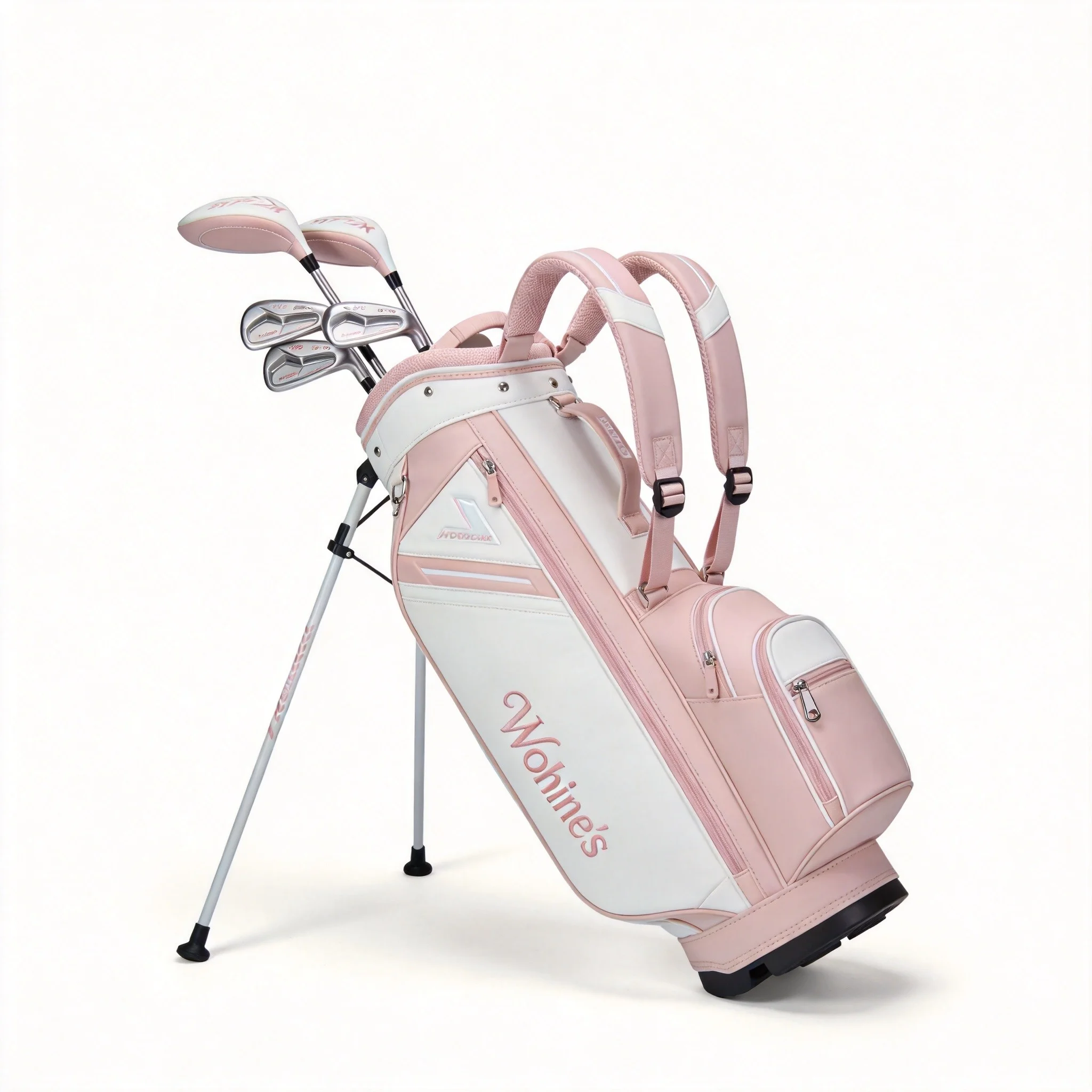
The best women's golf bag for 2025 is the one whose geometry fits a woman's frame before its colour is considered — an ergonomic, women's-specific harness, a walking weight near or under 5 lb (2.3 kg) for carry models, and a category matched to how she actually plays: walkers choose a lightweight stand bag, riders a flat-base cart bag, and golfers who split their time a hybrid. Bag height, strap separation and pocket reach are engineered for a smaller torso and a typical women's club complement, so fit and balance matter more than any finish. Start with the fit numbers, then let style and colour be the satisfying finish, and the bag quietly improves every round for years.
Women's participation in golf and women's-specific purchasing are both growing strongly, yet the women's bag range is thinner and less often done well than the men's. That makes choosing well easier to get right and easier to get wrong. This guide converts welcome marketing into a repeatable method — match the format to the habit, verify the three fit numbers, confirm the ergonomics are genuinely women's, then choose the look. It covers the same judgement for players and for retailers sourcing a women's line that fits before it is branded.
What 'Women's' Means in Bag Geometry, Not Just Colour
A genuinely women's-specific bag is decided on the pattern table, not the colourway. The meaningful differences are dimensional: the bag is built shorter so the base sits at the correct height against a hips; the strap spacing is narrowed and the harness shaped to fit a smaller shoulder and torso; dividers and pocket mouths are lowered and deepened so the typical player reaches them without bending; and the overall weight target is tuned for a lighter carry. Colour and trim are the visible layer on top, but they should never be the entire product. When a brand sources a women's line, the specifications that matter are the strap pitch, the bag's finished height, the empty weight and the pocket geometry, because those are what make the difference between a bag that is merely pink and one that genuinely fits. A factory that engineers the geometry before applying the colourway, rather than recolouring a men's pattern and relabeling it, is the partner that can build a category that retains players.
The biggest misconception is that a women's golf bag is simply a men's bag in pastel. The real differences are geometric and ergonomic, and they matter to fit far more than colour does. A well-designed women's bag sits lower on the back and closer to the body, with a shoulder strap positioned and shaped for a narrower frame, so the weight carries closer to the spine and fatigue drops across 18 holes. The typical women's set is also shorter — no driver in some cases, a reduced long game — so bag height and divider sizing follow a smaller default, and pockets are placed within a woman's reach rather than low on a tall torso.
Separating the genuine geometry from the colourway is exactly what the guide to women's design features walks through. A bag that gets the geometry right works for a woman regardless of its colour, and one that only changes the colour is a men's bag that happens to be pink. Judge a women's bag on the harness, height and balance first, then let the finish be the fun part.
The Carry Versus Cart Question for Women
Before choosing anything, decide the playing style, because it decides the category. A woman who walks regularly with her clubs wants a lightweight stand bag with a comfortable, well-fitted harness, where weight and the strap matter most. A woman who mostly rides a cart, or who wants the deepest organisation and protection, wants a cart bag with a flat base and full-length dividers. A woman who splits the two, as most do, gets the most from a hybrid — light enough to carry, stable enough to sit well on a cart. Matching the bag to the dominant habit prevents the two most common buying errors: buying a carry bag meant for more riding, or a cart bag too heavy and stiff for real walking.
On the factory side the women's cart and stand formats come in the same construction grades as the main range, so a player does not sacrifice durability to get a better-fitting, lighter bag. The same geometry carries into the bolder finishes seen in the women's collection, and the walk-versus-ride decision is worked through in more depth in the walking versus riding guide.
Weight, Length and Strap Fit as Hard Numbers
Treat the key fit metrics as numbers you can check rather than adjectives. Weight is the obvious one: a comfortable walking bag is noticeably lighter, and realistic per-format weights let a buyer compare without lifting. Club length matters because it drives bag length and divider sizing — a set built with shorter irons or a reduced long game wants a bag that does not over-compensate with too much default headroom. Strap fit is the one metric you cannot fully read on paper: the harness must sit at a height and angle that place the load closer to the spine rather than on the edge of the shoulders, which is why trying a bag loaded with your own clubs beats judging it empty.
A useful home test isolates the three numbers before you commit: weigh the empty bag and the bag loaded with your set; measure how low the top collar sits relative to your height; and adjust the harness and walk a few steps to feel where the load lands. If all three land comfortably, the geometry is doing its job no matter what the label or the colourway claims.
Organisation and Pocket Reach Built to the Short Course
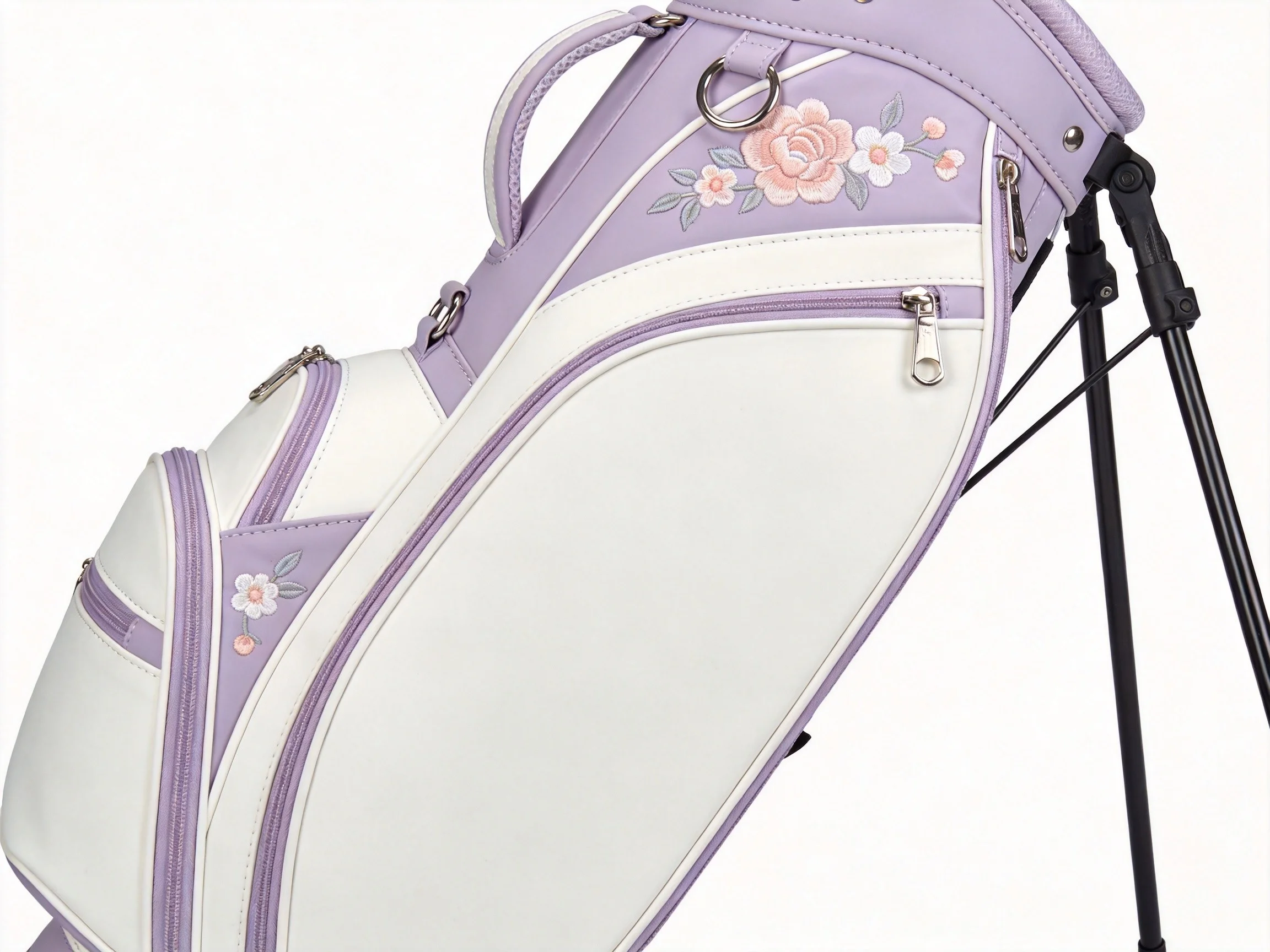
A women's bag should organise a round the way it is actually played, which is often on a shorter course with more wedges and a lighter bag. The pocket layout should keep balls, tees, gloves and a few essentials within easy reach, with a secure valuables pocket and, ideally, a small insulated slot for a drink on a hot day. Because a carry bag is on the back, keep the pocket count proportionate so organisation does not become weight: a handful of well-placed pockets beats a dozen that add bulk and open at awkward angles.
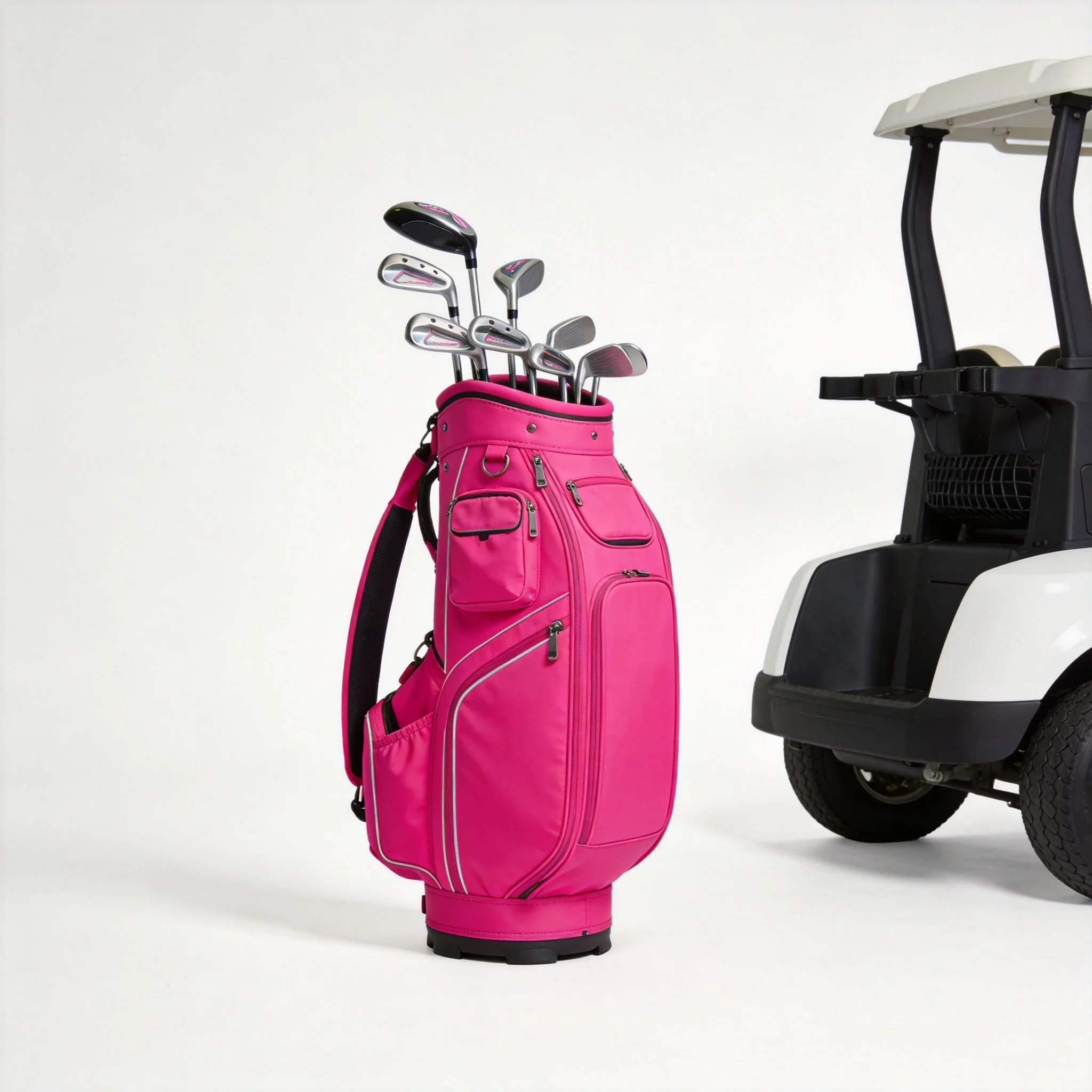
For the cart format the organisation can run deeper — full-length dividers for the full set, a clear valuables pocket, a cooler slot and a dedicated glove or rangefinder pocket — because the bag rides rather than is carried. Either way the principle is the same: organise by how you actually play, not by how many pockets a catalogue lists, and place every pocket within reach of the arms that carry it.
Dividers, Pockets and Organisation That Match a Real Round
| Feature | Value option | Premium option | Why it matters |
|---|---|---|---|
| Divider top | 4/6-way | 14-way full-length | Club protection and order |
| Pockets | 3-5 basic | 5-8 zoned incl. valuables & cooler | Reach, protection, capacity |
| Strap system | Standard padded | Adjustable, women's ergonomic | Carry comfort and fit |
| Base / stand | Basic | Stable stand + cart-capable | Supports both habits |
| Weight (carry) | ~5 lb / 2.3 kg | Under ~4.5 lb / 2 kg | Carried load and fatigue |
The real-round test organises pockets by how often they are used: tees, balls and a rangefinder in fast, easy-reach pockets; valuables in a lined pocket away from drinks; an insulated cooler for hydration; and a large pocket for a mid-round layer. That zoning is worth more than an impressive pocket count, because a women's bag that mirrors a woman's habits is one she never fights. A 14-way full-length divider adds protection for a serious set; a lighter 4/6-way suits a casual kit and saves weight.
Sizing to a Woman's Set and Club Complement
Base the bag on the actual clubs, not on a vanity spec. A younger player, a shorter hitter or a beginner often carries a reduced complement — perhaps a driver, a hybrid and a set of shorter irons — which a bag sized for a full men's 14 clubs would overpower with excess headroom and weight. Women's-specific bags typically scale the mouth, the divider count and the pocket depth to a lighter, shorter set, keeping the whole assembly proportionate to what is actually carried.
Check, in the fitting attitude, that the club tops sit at the height and distance that let you pull and replace without leaning, and that the bag's base is stable on the ground with your set in it. Adjustable leg stands and strapless hip belts on the newest carry models let a woman fine-tune the harness to her exact torso, which is precisely the kind of dial-in a factory's women's-development team can engineer into a private-label range. The women's bag buying checklist captures these fitting questions in a printable form.
Style, Colour and Personal Expression — Done Responsibly
Women's golf bags are where style shows up most clearly, and that is legitimate: colour, pattern and finish are a genuine part of choosing a bag a woman will be happy to carry and be photographed with. The responsible advice is to let style be the tiebreaker, not the driver. Pick the bag that fits, weighs right and organises your round, then choose the colour and finish you love among that shortlist. A bag that fits and pleases the eye is a bag that gets used and maintained — and one that is a pleasure to see in every round and photo.
Design trends for 2025 lean toward broader palettes than the old cliché of pink-only: jewel tones, elegant neutrals, soft pastels and clean minimalist lines give women real choice. Personalisation — embroidery, a name, interchangeable details — turns a well-fitted bag into a one-of-a-kind piece. Choose the colour you love on a bag that fits, and the identity makes itself.
Budget, Value and What to Spend on a Women's Bag
Spend first on the things that affect the round: the harness, the women's geometry, the base and the dividers. Value in women's golf bags follows the same line as the men's — a walking bag near 5 lb with a properly fitted strap is a better £/$ spend than a heavier decorated bag that fights your shoulders for 18 holes. Riders can legally spend marginal budget on deeper pockets, a cooler and a taller insulated option, because those features ride the cart rather than the back.
A sensible Budget-to-feature split in 2025 is to reserve roughly two-thirds of the spend for the fit-and-carry architecture and one-third for organisation and finish — and to resist paying a large premium for vanity leather options that add weight but nothing to the round. The value analysis in the wider guide range uses the same logic to compare price points across formats, so a buyer can see where a premium genuinely buys performance rather than decoration.
Quick Fit and Format Checklist
To stop analysis paralysis, run this short checklist before you buy. Confirm the playing habit (walk, ride or both) and pick the category to match. Check the three hard numbers: empty and loaded weight, collar height relative to you, and a loaded strap test. Verify the geometry, not just the colour, is genuinely women's — narrower, lower, closer to the body. Check the pocket layout against your essentials and confirm full-length dividers if you carry a full set and ride. When the club count and set length are settled, this becomes a five-minute decision rather than a drawn-out one.
Write the three numbers down and keep them with you, because they apply to every bag you might compare later. The same checklist is the brief a retailer hands a factory when specifying a private-label women's line, and it is the backbone of the round-up of the best women's golf bags for 2026.
Care That Keeps a Women's Bag Fitting and Fresh
A well-fitting women's bag holds its geometry only if it is kept in shape. Empty it fully after a wet or muddy round, air the pockets so moisture does not sit against the liner, and store it with the straps loose so the harness padding is not compressed under its own weight. Zip every compartment before lifting so the bag keeps its structure, and treat the fabric with a water-repellent as the coating wears, because a bag that starts to absorb water feels heavier on the back even when it is the same weight.
Check the strap buckles and leg mechanism twice a season for wear, and replace a strap that has lost its padding before it digs into the shoulder. A few minutes of care is what keeps the hard-won fit numbers exactly where they were the day you chose the bag, and the maintenance routine in the wider care guide applies to the women's range with the same discipline.
Personalising a Women's Bag to Make It Yours
Once the fit is right, a women's bag becomes a canvas for personal identity. Embroidery of a name, a club badge, a monogram or a quirky patch turns a good bag into a piece the owner is proud to photograph and protect. Beyond names, manufacturers offer interchangeable details — coloured zipper pulls, trimmed leather panels, custom umbrella holders — that let a woman refresh the look without buying a new bag, which is both a financial and an environmental win.
Retailers find that a small personalisation station — a machine that embroiders a name in the shop — turns the women's purchase from a stock sale into a custom appointment and lifts basket value. For the player the lesson is simple: buy the bag that fits, then personalise the one you love, and you will carry it with pride and keep it longer.
Looking Ahead: The 2026 Women's Bag Landscape
The market for women's golf bags keeps maturing, which is good news for buyers. Lighter materials, better women's-specific ergonomics, hybrid carry/cart designs and more varied styling are all becoming standard. As the category evolves, 2026 will bring refinements in weight and fit more than revolution, so the guidance above — choose by split, fit and weight first, then style — remains the throughline. For a closer look at the coming season's options, the dedicated buyer's guide to the best women's golf bags for 2026 compares the leading models across the walking, hybrid and cart families.
Sourcing the Women's Category for Retailers and Brands
If you are a retailer or brand, the women's bag category is a genuine growth opportunity because women's participation and purchasing are both strong, yet the range is thinner and less often done well than the men's. A sourceable approach is to offer a tiered line — a lightweight walking bag, a hybrid and a cart-capable option — each in a modern colourway. Source the women's fit from a factory that understands geometry, not just decoration: the strap spacing, bag height, base and dividers must be engineered for a smaller frame and a typical women's club complement, with the brand panel and colourway built around that.
Our affiliated 4,950 m² factory, producing golf equipment since 2004 and established as a company in 2014, runs seven production lines, 126 sewing machines and 137 staff, making 200,000 bags a month for 200+ brands across 100+ countries, and passed an SGS audit in March 2026. It can develop women's-specific lasts, with sampling in 10-20 days and production in 45-60 days at a 200-piece MOQ (100 for test orders). The OEM/ODM services overview shows how to brief a women's line that fits before it is branded — the only durable way to win the category.
Conclusion
The best women's golf bag for 2025 marries the three things that actually make a round better: a fit and weight suited to a woman's frame, an architecture matched to whether she walks, rides or splits the time, and organisation that mirrors how she plays — with style and colour as the satisfying finish rather than the starting point. Choose by how you play first, verify the three fit numbers, test the bag loaded for fit, then pick the look you love. As the category matures into 2026 those principles hold steady even as the options widen, so start with the geometry and the right women's bag becomes more a question of taste than of search.
Sources
Frequently Asked Questions
- How much should a women's golf bag weigh?
- For walking rounds, aim under about 5 lb (2.3 kg) empty for daily-carry models, with the lightest carry-focused bags under 4.5 lb (2 kg). Riders can trade weight for pockets and structure.
- Should I choose a stand bag, cart bag or hybrid?
- Choose by your split: walkers want a lightweight stand bag, riders a flat-base cart bag, and golfers who do both a hybrid with a leg and a cart-capable base.
- How many dividers do I need in a women's bag?
- A full-length 14-way divider protects a serious set by keeping each club separate; a lighter 4/6-way suits a casual kit and saves weight.
- How do I know a women's bag actually fits?
- Test it loaded in your stance: straps should sit on the shoulders without digging, the bag should settle against the back, and the club top should sit at a reach that does not make you lean.
- Are pink women's bags the only option in 2025?
- No. 2025 offers broad palettes from jewel tones and elegant neutrals to clean minimalist lines, plus personalisation like embroidery for a one-of-a-kind piece.
- What should I check before sourcing a women's range?
- Verify the strap spacing, bag height, base and dividers are engineered for a smaller frame and a typical women's set, and that the factory can develop women's-specific geometry — not just recolor a men's bag.
- How do I keep a women's bag fitting well?
- Empty it after wet rounds, air the pockets, store it with the straps loose, zip all compartments before lifting, re-treat the water-repellent coating, and check the buckles and leg mechanism twice a season.
- Does a women's bag need a full complement of dividers?
- Not always. Match the divider count to the set you actually carry: a reduced or casual set rides better in a lighter 4/6-way, while a full set that you ride with benefits from a full-length 14-way divider.