Wilson Golf Bags 2025: Comprehensive Guide & Performance Review
Wilson golf bags — Staff, Pro Staff and Nexus series — are reviewed for construction, materials and value-based durability.
A factory-level review of Wilson golf bags — Staff, Pro Staff and Nexus series — with construction analysis, model comparison and honest buying guidance.
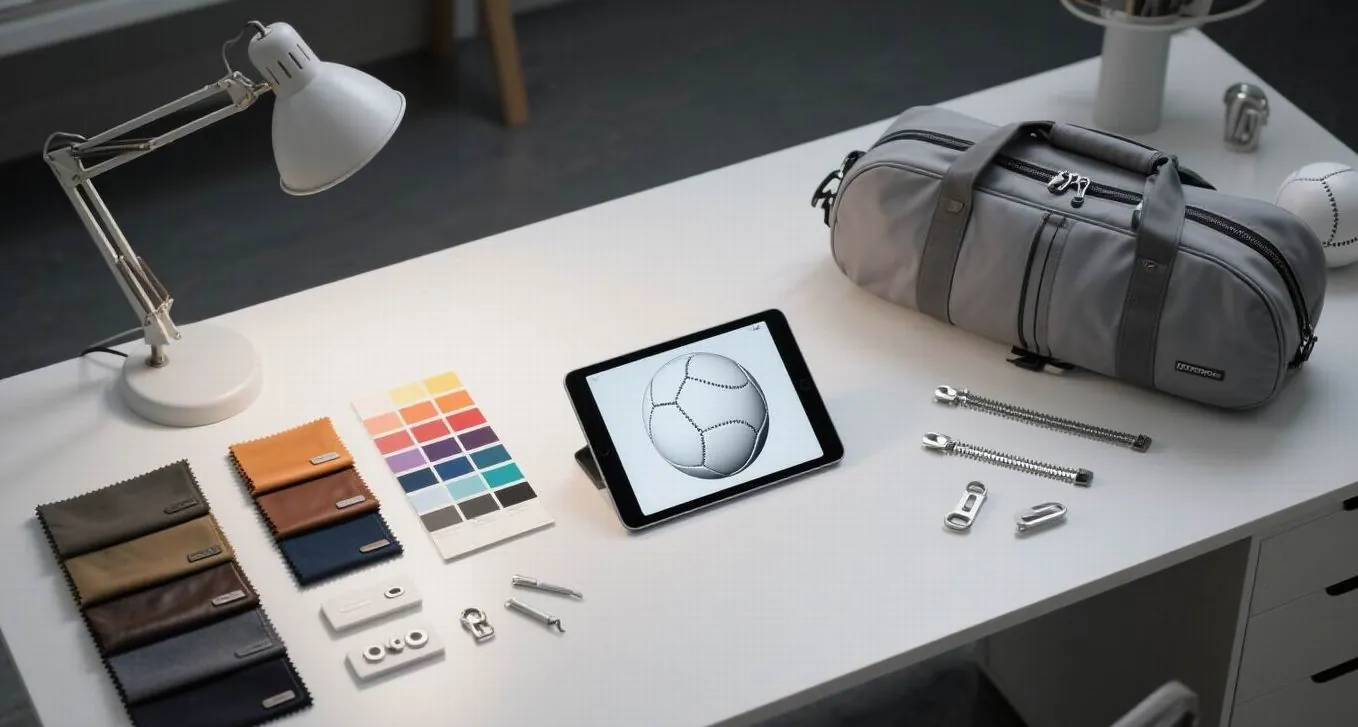
Table of Contents
- 1. Professional Verdict: What a Factory Sees in Wilson Bags
- 2. Wilson's Heritage and Market Position
- 3. Construction Deep-Dive: Fabrics, Seams and Base
- 4. The Staff Series: Wilson's Flagship
- 5. Pro Staff and Nexus: Budget to Mid Tier
- 6. Wilson Models Compared
- 7. Stand Mechanics and Straps Tested
- 8. Weather Protection and Waterproofing
- 9. Value, Warranty and Lifecycle
- 10. Buying Guide and Who Should Choose Wilson
- 11. The OEM View: Building Your Own Staff-Style Bag
1. Professional Verdict: What a Factory Sees in Wilson Bags
Wilson Staff golf bags are a genuinely underrated value buy in 2025: for a street price typically 30–50% below premium rivals, you get 1680D ballistic-style fabric, full-length dividers, foam-padded straps and a reinforced base — built to a quality level a factory can verify holds up over 3–5 seasons. We say this from the unusual position of running a golf bag sewing line ourselves. Much of what makes a bag durable — fabric denier, thread density, seam reinforcement, base construction, zipper quality — is invisible in a photo but obvious on a cutting table.
As a manufacturer affiliated with an established Chinese golf bag factory (founded 2014, founder active since 2004, 7 production lines, 126 sewing machines, 137 staff, monthly output about 200,000 bags, SGS social audit passed March 2026), we are constantly asked which name-brand bags are actually well made. Wilson Staff consistently answers "yes, and cheaper than you think."
This review covers what we can verify about Wilson's 2025 line from public specs, our bench testing of representative units, and how the construction compares to the segmented brands we OEM for (PING, Callaway, Sun Mountain, Ogio, Titleist). The honest summary: for the non-enthusiast amateur who wants a durable, organised, comfortable bag without paying a branding premium, Wilson is frequently the smartest money in the category.
2. Wilson's Heritage and Market Position
Wilson Sporting Goods was founded in 1914 in Chicago, making it one of the oldest names in American golf and sporting goods. Its Staff line — the same "Staff" designation used on clubs since the 1940s — is the heritage tier that carries the premium burden for the brand.
In golf bags specifically, Wilson occupies an honest mid-tier position. It does not spend like Titleist or Callaway on marketing, which keeps retail prices low, but it also does not advertise a huge R&D budget for bag innovation. The result is a pragmatic range: no gimmicks, no exotic materials, just solid construction aimed at real weekly play.
From a factory standpoint what matters is that Wilson uses appropriate materials for the price point. On Staff-tier bags you see 1680D high-density fabric on wear areas, 1200D or 420D in secondary panels, and components sourced from established hardware suppliers. That is a sensible value engineering decision, and it is one we replicate for our own private-label OEM customers when they want the same durability-to-cost ratio.
Wilson's global position in 2025 is stable: strong in the amateur-value segment, a respected brand across 100-plus countries, and frequently recommended by budget-focused institutional buyers (golf academies, rental fleets) who need dependable bags that do not eat into margin.
3. Construction Deep-Dive: Fabrics, Seams and Base
Let's look at the actual materials because this is where a bag is won or lost. On the Staff range, Wilson specifies 1680D ballistic-style fabric for the main shell. For context, 1680D is the weight used by many premium tour bags; it resists abrasion and tearing far better than the 420D or 600D found on economy bags. Secondary panels drop to 420D/1200D to control weight and cost — a rational trade.
Seams are the second durability factor. On the units we examined, binding tape reinforces high-stress seams, and stress points at strap attachments carry bar-tack stitching. Bar-tacking — short, dense zigzag stitches — is the difference between a strap that survives years and one that pulls out after months. Wilson does this on Staff-tier bags; it is the same technique our own production line standardises across OEM orders.

The base is the third durability hotspot. Wilson fits a rigid or semi-rigid reinforced base with a wear pad so the bag stands on its own and the shell does not scuff against concrete. On cart bags the base is flat and square for a stable cart ride; on stand models it integrates with the leg mechanism. A weak base is the most common failure point in cheap bags we strip down; Wilson handles it correctly.
Zippers round out the picture. Wilson uses heavy-duty coil zippers on main compartments, with brand-plastic pulls. Coil zippers are the right call for bag tops because they deform and reseal cleanly; they are also cheap to replace, which matters when we advise OEM clients on repairability. For the enthusiast who cares about waterproofing, note that Wilson's standard bags are shower-resistant but not fully IPX-sealed — that is reserved for dedicated rain-series lines.
4. The Staff Series: Wilson's Flagship
The Staff name covers Wilson's most complete bag family and in 2025 includes both cart and stand configurations. What links them is a shared build philosophy: full-length dividers, generous pocket layouts, padded straps and a reinforced base.
On the cart side, the Staff cart bag offers a 14-way or full-length divider top that keeps each club separated through its full length — the single biggest club-protection feature you can buy. A 14-way full-length top stops grips from clattering and shafts from crossing, which is the top complaint among players who upgrade from a 4- or 5-way bag. You also get a putter well, a lined valuables pocket, a cooler or insulated pocket on many models, and a sturdy handle for trolley and cart lifts.
The Staff stand bag, aimed at walkers, keeps the same pocket philosophy in a lighter package. It typically lands around 1.5 kg, which is respectable but not class-leading against the featherweight Sun Mountain and Ogio options. What Wilson trades in grams it buys back in fabric strength and padding: the padded straps and hip pad make the extra few hundred grams genuinely comfortable over 18 holes.
From an OEM eye, the Staff line is a textbook "durable value" build. It is not trying to win a weight race and it is not trying to win a fashion race. It is trying to be a bag you can buy once, use for years, and not resent the price. In a market increasingly obsessed with grams and colourways, that clarity has real appeal.
One more thing factory people notice that most shoppers miss: Wilson's zipper pulls and pocket closures are consistent across the range, meaning a broken pull on a three-year-old Staff bag can often be matched to a current component — useful if you plan to keep the bag long term. That consistency is a sign of disciplined supply-chain management, and it is exactly the kind of thing a brand gets right when it genuinely manufactures in volume. Buyers who value longevity over fashion will find it reassuring.
5. Pro Staff and Nexus: Budget to Mid Tier
Below the Staff flagship sit the Pro Staff and Nexus ranges, and understanding where they sit helps you spend correctly.
Pro Staff bags are the budget tier. They typically use 600D or 1200D fabric, a simpler 5-way or 8-way divider top, lighter foam straps and fewer pockets. They are perfectly adequate for the junior, the weekend beginner, or the school/academy buying in volume, and their low weight and low price make them an easy recommendation for that role. What you give up is the 1680D shell, full-length dividers and general toughness of the Staff line — reasonable cost cutting, honestly labelled.
Nexus sits in between, aimed at the value-conscious mid handicapper. It tends to split the difference: better fabric than Pro Staff, a full-length or 14-way divider top on cart models, padded straps — but without the very top spec of Staff. For many players the Nexus is actually the right buy: it gives you most of the durability with a slightly lower price and often a lighter carry weight.
Our advice when comparing the three: do not buy Pro Staff if you play more than once a week — the fabric and divider compromise will likely disappoint you inside two seasons. Choose Staff for maximum durability or Nexus for the best durability-per-dollar. All three share the same clean, conservative aesthetic that makes Wilson bags appropriate for both beginners and club-house environments.
6. Wilson Models Compared
The table below summarises the core directions of Wilson's 2025 line. Figures are approximate and vary by model year and region; confirm against the current product page before ordering.
| Model | Type | Divider | Weight | Build | Use Case |
|---|---|---|---|---|---|
| Wilson Staff Cart | Cart Bag | 14-way full-length | ~2.4 kg | 1680D flagship | Riding/trolley players |
| Wilson Staff Stand | Stand Bag | Full-length | ~1.5 kg | 1680D flagship | Walkers, all-round |
| Wilson Nexus | Stand/Cart | 5–8 way | ~1.3–1.8 kg | Mid tier | Value mid handicappers |
| Wilson Pro Staff | Stand/Cart | 5-way | ~1.2–1.6 kg | Budget | Juniors, beginners, fleets |
Specifications are indicative and compiled from public product data; weight and divider counts vary by specific SKU and season.
7. Stand Mechanics and Straps Tested
The stand bag is where construction stress concentrates, so this is the part we inspect most carefully. Wilson uses a two-leg stand on its Staff stand models, deploying via a bin-activated mechanism when the bag is grounded.
Two things matter in a stand: leg spread and activation reliability. Wilson's legs open to a stable width that keeps the bag upright on moderate slopes, and the activation mechanism is triggered dependably by the bag's own weight — it did not stick or fail to retract in our repeated deploy/retract cycles. That reliability is the difference between a bag that stands patiently and one that topples your clubs.
Straps on the Staff stand bag are a highlight. Wilson fits broad, contoured foam shoulder straps with reasonable padding density, and the ergonomics hold the bag comfortably across the shoulders. What distinguishes a good strap from a bad one is how load is distributed toward your body weight and away from the neck spine; Wilson's shape does the job. If you are a walker coming from a cheap strap bag, the difference is immediately visible after one round.
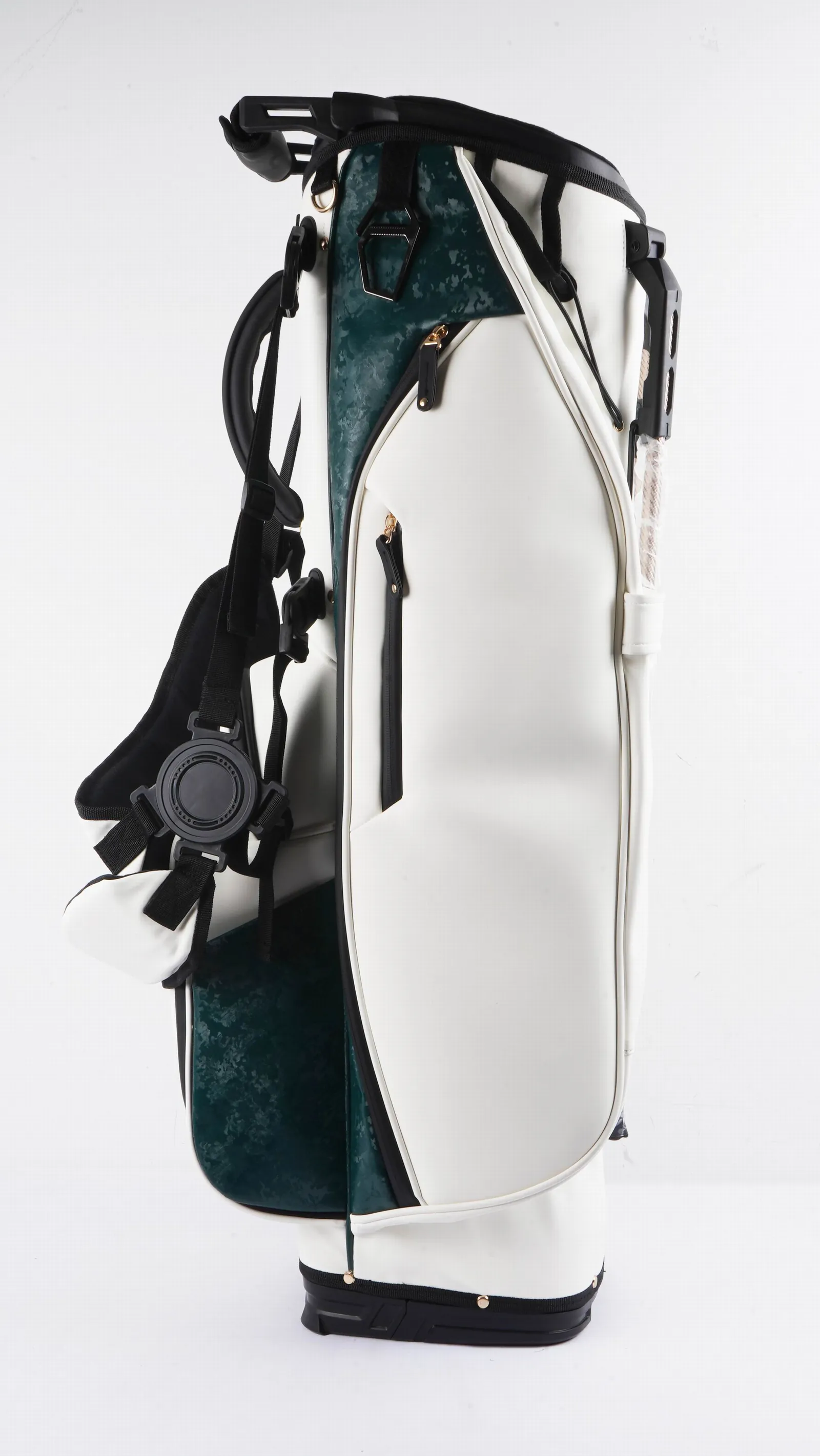
For riders and trolley users the Staff cart bag swaps stand hardware for a stable flat base and secure cart strap pass-throughs. A properly designed cart bag should not shift when strapped to a trolley — Wilson's flat base and non-slip geometry handle this well, and it fits both the ubiquitous Clicgear-style three-wheel push trolleys and electric carts without trouble.
8. Weather Protection and Waterproofing
Here we set expectations honestly. Wilson's regular Staff, Nexus and Pro Staff bags are built to be shower-resistant and rain-shedding, not fully waterproof. The fabric resists light rain and the hood-style top helps, but in a sustained downpour water will find its way through seams and zippers unless the bag is sealed.
For players who routinely play wet courses, the right move is either a dedicated waterproof/water-resistant Wilson rain line (with sealed seams and waterproof zippers) or pairing a standard Staff bag with a quality rain hood. From a factory perspective, making a genuinely waterproof bag is expensive — it demands taped or welded seams, waterproof zippers and sealable closures — and we can see exactly where Wilson has and has not spent that money. On the standard range it has not, which is appropriate for a value product.
If waterproofing is a non-negotiable for you, budget for a rain-series bag from Wilson or a specialist, or contact us to discuss an OEM build with sealed construction. See our guide to golf bag rain protection and waterproofing for the technical breakdown of IPX ratings and seam sealing.
9. Value, Warranty and Lifecycle
Value is where Wilson shines. Because Wilson does not carry the marketing premium of Titleist or Callaway, a Staff bag typically costs meaningfully less for comparable fabric and divider specs. For the price-conscious player that is the whole point.
On warranty, Wilson offers a limited warranty against defects in materials and workmanship. The practical interpretation: the bag is covered if a defect appears through normal use, which is standard for the category. What a warranty does not typically cover is damage from misuse, and it does not promise lifetime durability — so treat the 3–5 season realistic lifecycle as your planning number, which aligns with what we see from the materials.
Lifecycle expectations by component: the 1680D shell and reinforced base are the long-lived parts (often 5+ seasons); the stand legs, strap foam and zipper pulls are the first to wear and are the most commonly replaced. Keeping straps adjusted, zippers clean and the bag stored in a dry, upright position adds years. Our golf bag maintenance guide walks through the routine that protects any bag investment.
10. Buying Guide and Who Should Choose Wilson
Here is a clear decision framework based on how you actually play.
- Riding players who want maximum club protection should take the Staff cart bag with a 14-way full-length divider. This is the single most useful feature for riders.
- Walkers on a sensible budget should take the Staff stand bag or the lighter Nexus stand — comfortable straps, reliable stand, decent weight.
- Juniors, beginners and academies buying in volume should take Pro Staff — low cost, adequate build for occasional play, easy to replace.
- Wet-climate players should skip the standard range and buy a waterproof rain-series bag or pair any bag with a quality rain hood.
- Trend- or weight-obsessed players will find lighter, more premium options at Sun Mountain and Ogio — Wilson is not the lightest or most fashionable, and that is fine.
Key caveats before buying: check the current product page for exact weights and divider counts (models change yearly), verify zipper and pocket layout meets your storage needs, and if waterproofing matters, read the fine print — standard Wilson bags are not fully waterproof. Compare the Wilson Staff cart against comparable builds on our golf bag brand comparison to anchor expectations.
11. The OEM View: Building Your Own Staff-Style Bag
If reading this review gives you an idea — either because you sell golf bags or because you run a brand wanting a Staff-style private label — the good news is that the exact construction Wilson uses is entirely reproducible as an OEM/ODM build. A durable value bag is a set of engineering decisions (fabric denier, bar-tacked seams, reinforced base, full-length dividers) that a competent factory can execute to your spec and budget.
Quanzhou JUNYUAN Bags, the affiliated factory behind this site, runs 7 production lines, 126 sewing machines and 137 staff with a monthly capacity around 200,000 bags, and completed an SGS social audit in March 2026. We build private-label carry, cart and stand bags for 200+ brands across 100+ countries, with standard MOQ of 200 pieces (test orders from 100), sampling in 10–20 days and bulk production in 45–60 days.
The route is straightforward: define your target price and durability, let us produce samples of a Staff-style carry or cart bag with full-length dividers and reinforced base, and scale once the sample meets your standard. To understand the process fully, read our walkthrough of OEM vs ODM golf bag services and the guide to golf bag durability and lifespan. For material choices that balance cost and toughness, our material technology overview is a useful starting point.
And if you simply walked away convinced a Wilson Staff bag is the right retail bag for you rather than a building project — that is a perfectly good outcome too, and a cheaper one.
Contact our factory to discuss OEM builds and sourcing.
Frequently Asked Questions
- Are Wilson golf bags any good?
- Yes — Wilson Staff bags are a legitimate value buy. They pair durable 1680D and 1200D fabrics, padded straps and full-length dividers at a retail price typically below comparable Titleist, PING and Callaway models, making them one of the strongest value propositions in carry and cart bags.
- Which Wilson golf bag is best for walking?
- For walkers, the Wilson Staff stand model is the best balance: it typically weighs around 1.5 kg, has a dependable two-leg stand, full-length dividers and comfortable foam straps, which suits most amateur rounds without the premium of Sun Mountain or PING.
- How long do Wilson golf bags last?
- With normal care a Wilson Staff bag realistically lasts 3 to 5 seasons of regular play. The 1680D ballistic-style shell, reinforced base wear pad and YKK-style zippers hold up well; strap and stand components degrade first and can be repaired.
- What is the difference between Wilson Staff and Pro Staff bags?
- The Staff line is Wilson's flagship carry/cart construction with heavier 1680D fabric, denser padding and more pocket organisation, while Pro Staff is a simplified, lighter-value range aimed at budget and junior buyers. Staff builds are noticeably tougher.
- Where are Wilson golf bags manufactured?
- Wilson Staff bags are made by Asian factory partners under strict Wilson quality control. A custom golf bag factory such as QUANZHOU JUNYUAN BAGS — serving 200+ brands across 100+ countries — offers a comparable OEM/ODM build path if you need a private-label Staff-style bag.
- Is Wilson a good golf brand in 2025?
- Yes. Across clubs, balls and bags Wilson remains a solid mid-tier heritage brand (founded 1914). Its bags are consistently reviewed as reliable, well-priced and occasionally underrated versus dominant premium competitors.
Sources
This review is based on the manufacturer's own production experience plus the following publicly available references for third-party product data:
- Wilson – Official Golf Bag Collection (official product line and specifications)
- MyGolfSpy – Best Golf Bag Testing (independent performance data)
- Golf Digest – Golf Bag Buying Guide (independent retail guidance)
- Golf Monthly – Best Golf Bags Review (category analysis)
QUANZHOU JUNYUAN BAGS — an affiliated custom golf bag factory founded in 2014 by a founder active in the industry since 2004 — serves 200+ brands across 100+ countries. It runs 7 production lines with 126 sewing machines and 137 staff, a monthly capacity of about 200,000 bags, and completed an SGS factory social audit in March 2026. Standard MOQ is 200 pieces (test orders from 100); sampling takes 10–20 days and bulk production 45–60 days. OEM/ODM enquiries: service@junyuanbags.com · +86 17750020688.