Waterproof & Leak-Proof Golf Cooler Bag Features
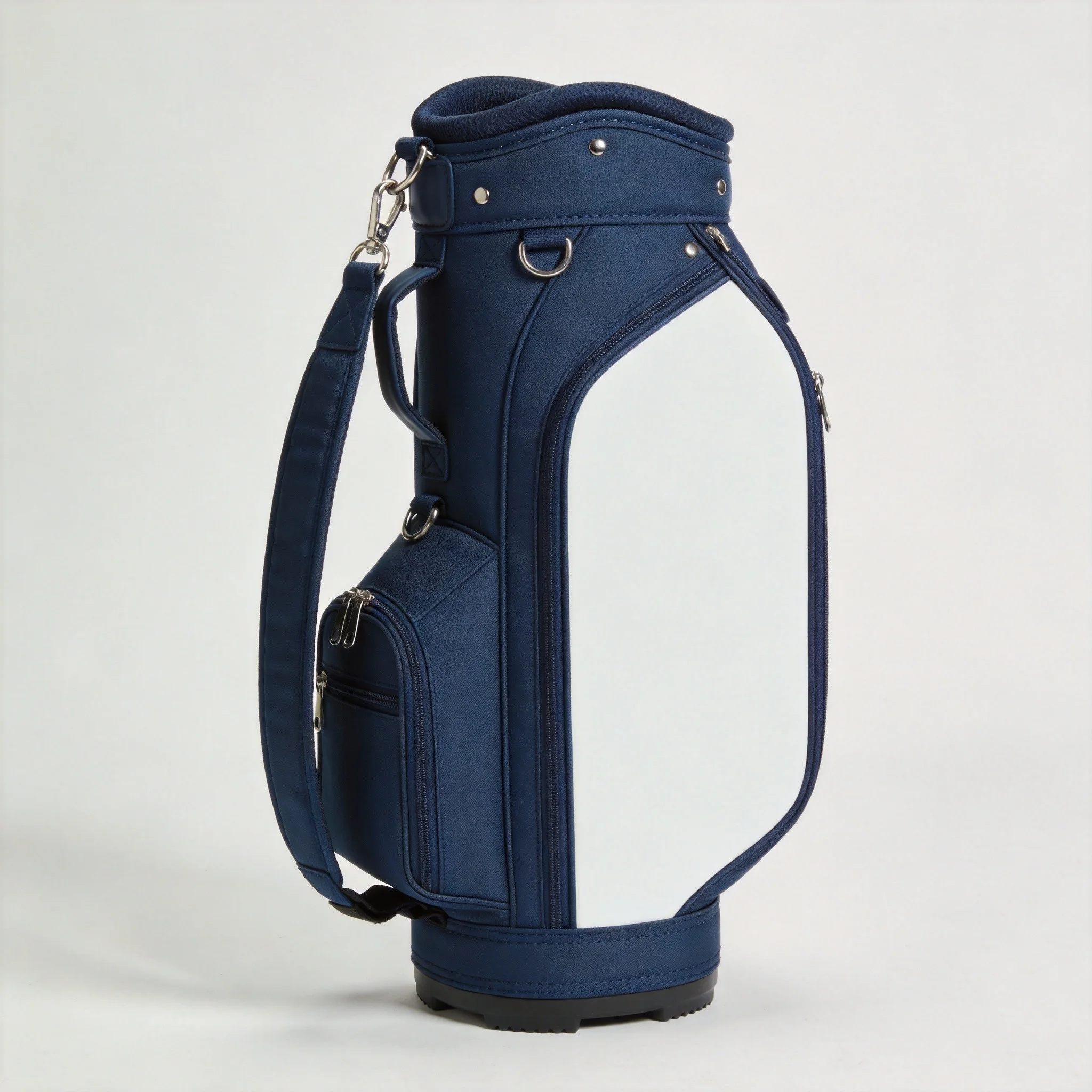
The direct answer: a truly leak-proof golf cooler bag combines six features—a weldable or high-frequency-sealed inner liner with taped seams (thermal-welded, not merely stitched, so meltwater cannot escape through needle holes), leak-proof or waterproof zipper closure on the main opening, sealed and drainable grommets or a dedicated drain port, closed-cell or thick foam insulation that holds cold for hours, a durable coated outer shell, and a capacity matched to how you carry it. The critical distinction is that "water resistant" only deflects light moisture, while "leak-proof" must contain the meltwater that forms inside whenever ice is used—and that requires a fully sealed liner, not just a water-repellent coating. This guide explains exactly which features matter, how to verify them, what capacity and materials to choose, and how golf courses and brands buy reliable cooler bags in volume.
1. Water Resistant vs Leak-Proof: The Key Distinction
The single most important idea in this article is that "water resistant" and "leak-proof" are not the same thing, and most cooler-bag failures happen because buyers treat them as interchangeable.
A water resistant cooler sheds light rain and minor spills from the outside. It uses a coated outer shell and perhaps a basic lining, but if ice melts inside, the water passes through the seams or zipper and pools on the floor of the cart or the trunk of the car. This is adequate for a dry-climate cooler that is mostly a carrying pouch, but it fails the moment you actually use ice in warm weather.
A leak-proof cooler, by contrast, is engineered to contain liquid from the inside. Its essential feature is a sealed inner liner—thermal-welded or high-frequency sealed so that there are no stitch holes for water to escape through—together with a leak-proof closure and controlled drainage. The moment water hits that sealed liner, it is trapped; it can only leave through a designed drain port rather than seeping unpredictably. For any cooler intended to hold ice on a hot course, leak-proof is the only honest specification.
2. The Sealed Liner: The Heart of the Cooler
The inner liner is where leak-proof performance is won or lost. On a conventional stitched bag, every needle hole in the lining admits water. A serious cooler abandons needle-sewn liners in favour of a weldable construction—thermal welding or high-frequency (RF) welding joins the liner panels into one continuous, watertight vessel with no stitch holes at all.
This is the same principle used in inflatable boats, dry bags and water bladders, and it is what lets a cooler genuinely contain a litre or two of meltwater without a single drop escaping. The liner itself is almost always a coated or laminated material—often a TPU or PVC-backed fabric—that is dimensionally stable and weldable while remaining flexible enough to fold when the bag is empty.
When you evaluate a cooler, ask two questions about the liner: is it welded or only stitched, and are the internal seams heat-taped or welded as well? A "leak-proof" claim on a bag with a stitched, untaped liner is marketing, not engineering. The most honest verification is a water-fill test: hold the bag with the opening sealed, fill the interior partially with water, and observe whether any escapes through the liner or seams over several minutes. This is the test that separates a real leak-proof cooler from a merely water-resisting one, and it is the test credible manufacturers can demonstrate.
3. Insulation: How Cold Is Held for Hours
Leak-proof protects your car and cart; insulation protects your drinks. A cooler's cold-retention depends mainly on the insulation layer between the liner and the outer shell, measured in thickness and thermal performance.
Closed-cell foam is a common and effective insulator because it resists water absorption and retains its shape and thermal performance even when damp—an important property for a cooler that will regularly hold ice. Thick, dense closed-cell foam in the walls, base and lid is the backbone of a cooler that stays cold for a full round.
High-density foam and multi-layer constructions push cold retention further, sometimes with reflective layers that reduce radiant heat transfer. The practical effect: a well-built cooler keeps drinks cold for many hours, often well beyond a standard four-to-five-hour round, provided it is pre-chilled and packed reasonably full—filled space insulates better than mostly-empty air.
Meltwater and condensation interact with insulation, which is why the sealed liner matters twice over: it not only stops leakage outwards but also keeps meltwater away from the insulation, preserving its thermal performance. A bag whose liner lets water soak its foam loses both its cold-retention and its structural life. If you are choosing based on cold performance specifically, our guide to how long ice bags retain cold covers the factors in detail, and a full capacity and insulation breakdown is in our cooler capacity and insulation guide.
| Feature | Leak-Proof Standard | What It Prevents | How It's Verified |
|---|---|---|---|
| Inner liner | Welded (thermal / RF) | Meltwater leaking through seams | Water-fill containment test |
| Internal seams | Heat-taped / welded | Seepage at panel joins | Seam inspection + fill test |
| Closure | Leak-proof / waterproof zipper | Spillage at the opening | Tip-over + spray test |
| Drains | Sealed drain port / grommet | Controlled meltwater removal | Drain closure check |
| Outer shell | Coated, water resistant + abrasion | Rain and cart abrasion | Spray test, fabric check |
| Insulation | Closed-cell / thick foam | Heat transfer, cold loss | Cold-retention time test |
It is also worth understanding what drives real-world cold retention beyond the foam thickness. The way you pack a cooler matters as much as the materials. Pre-chilling the coolers and the drinks before adding ice measurably improves how long the temperature stays low, because the insulation does not have to absorb heat from a warm load. Filling the interior relatively full helps too: a near-empty pressurised cooler loses cold faster than a well-packed one, since the air gap carries heat and repeatedly opens to the outside. Melting ice itself acts as a thermal buffer, absorbing heat as it changes phase, so starting with a good ice margin is the simplest way to keep drinks cold through a long afternoon. A cooler that combines a welded liner, closed-cell insulation and sensible packing will outperform an identical-looking bag that relies on a thin stitched liner and a lightly packed interior. The materials define the ceiling, but the packing realises it, and buyers who understand both get the most value per litre of capacity they carry.
4. Zippers, Closures and Drains
The liner seals the containment vessel, but the opening and the drains are the two remaining routes for water, and both need specific design.
The closure. Even with a perfect welded liner, a standard coil zipper can allow water to slosh out at the top, especially when the bag is tipped or jostled on a cart. A leak-proof cooler uses either a waterproof (PU-laminated) zipper or a roll-top, press-and-seal and dry-bag-style closure that can be folded and secured to trap contents. For a cart-mounted cooler that gets knocked around, a sealed closure is essential—the cheapest coolers skip it and leak from the top on the very first bump.
The drains. Meltwater has to go somewhere, and a well-designed cooler gives it a controlled path: a sealed drain port or a bottom grommet that can be opened to empty the water intentionally and closed in between. A sealed, closable drain means you never have to pour water over the edge (which soaked the insulation and the exterior) and you never have a passive hole leaking on the cart. Check that the drain seal actually holds when closed, because a poorly sealed drain becomes a permanent leak point.
5. Capacity: Matching the Cooler to the Round
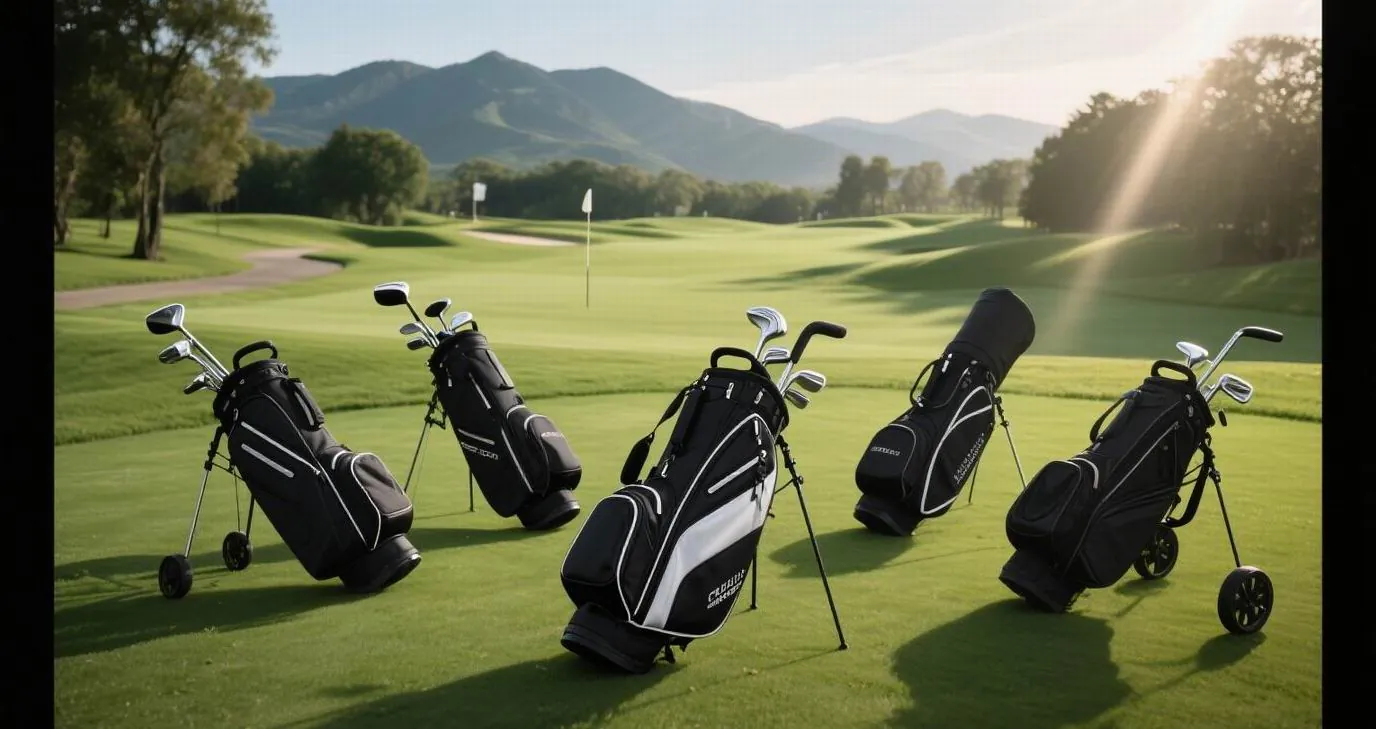
Capacity is measured in cans or litres and should be matched to how you carry the cooler and how many players share it. Getting this right matters because an over-sized cooler is heavy and awkward on a cart, while an undersized one forces you to make a second trip or carry drinks off-course.
Six to twelve cans suits a single golfer or a pair, and this size is the most common for a cart-mounted cooler because it balances capacity against weight and fits neatly beside clubs. A can-and-a-bottle layout (roughly fitting four cans plus a couple of bottles) is a versatile mid-size option widely used for a round.
Twenty to thirty cans in a larger insulated tote suit groups, four-balls, tournaments and course retail stock. These hold enough refreshment for several players without refilling, and they are the natural choice for clubs that rent or sell coolers at the pro shop. Because a full cooler insulates better and a shared large tote is more efficient than several small ones, bigger coolers often hold cold longer in practice as well as carrying more.
Whichever capacity you choose, plan for the total weight of drinks plus ice when the cooler is full—a factor that grows quickly at 20–30 cans. Balance capacity against how you will carry it: a shoulder-tote that works with six cans may be impractical at thirty. If you are buying for a golf course or as branded stock, our golf cooler bags range and the vendor's specification sheets will help you match capacity to your use case.
6. Materials for the Outer Shell and Interior
The outer shell takes the abuse—rain, cart vibration, trunk storage, sun—while the interior must be cleanable, food-safe where it touches drinks, and leak-proof. The two demands are met by different materials working together.
Outer shells are commonly coated nylon or polyester. A coated 420D–600D fabric resists light rain, abrasion and scuffing on a cart, while the coating sheds moisture. Some premium coolers use a more abrasion- and hydrolysis-resistant TPU coating for a longer, harder-working life. Whatever the textile, it should be water resistant because the outside of a golf cooler does get rained on, even if the lining contains the meltwater.
The interior should be a food-safe, weldable, cleanable material for the liner, backed by closed-cell foam insulation. Look for a lining that wipes clean easily and resists mould; because a cooler is repeatedly wet and stored, a mould-resistant, fast-drying interior materially extends the product's life and keeps it hygienic for drinks. A well-designed cooler pairs a welded liner with a robust coated shell, and the two together give both leak-proof containment and long-term durability.
7. Verifying Cooler Performance: Testing What You Buy
Before committing to a cooler—whether a single purchase or a bulk fleet—run three quick checks that verify the claims.
The water-fill test. Close the cooler, fill the interior partially with water, and leave it for several minutes, tipping it gently. Any leakage through the liner, seams or closure fails the leak-proof claim. This is the single most informative test and it needs no equipment.
The closure test. Lay the cooler on its side and on its top with a little water inside, or run a light spray over the main opening, to confirm the closure holds without dripping. A cooler that leaks when tipped is not leak-proof no matter what its proximity to the cart says.
The cold-retention check. Fill with pre-chilled drinks and ice, close it, and monitor the interior temperature over the expected round time. A cooler that warms drinks before the ninth hole has inadequate insulation or was over-designed around ice that melts too fast.
These same checks scale to procurement: a course ordering a fleet should require a finished-sample water-fill test and a stated cold-retention figure as part of the spec, and it should verify them on a pilot batch before the full order. The most honest manufacturers can demonstrate the water-fill test on request and will share the testing basis behind their cold-retention claims.
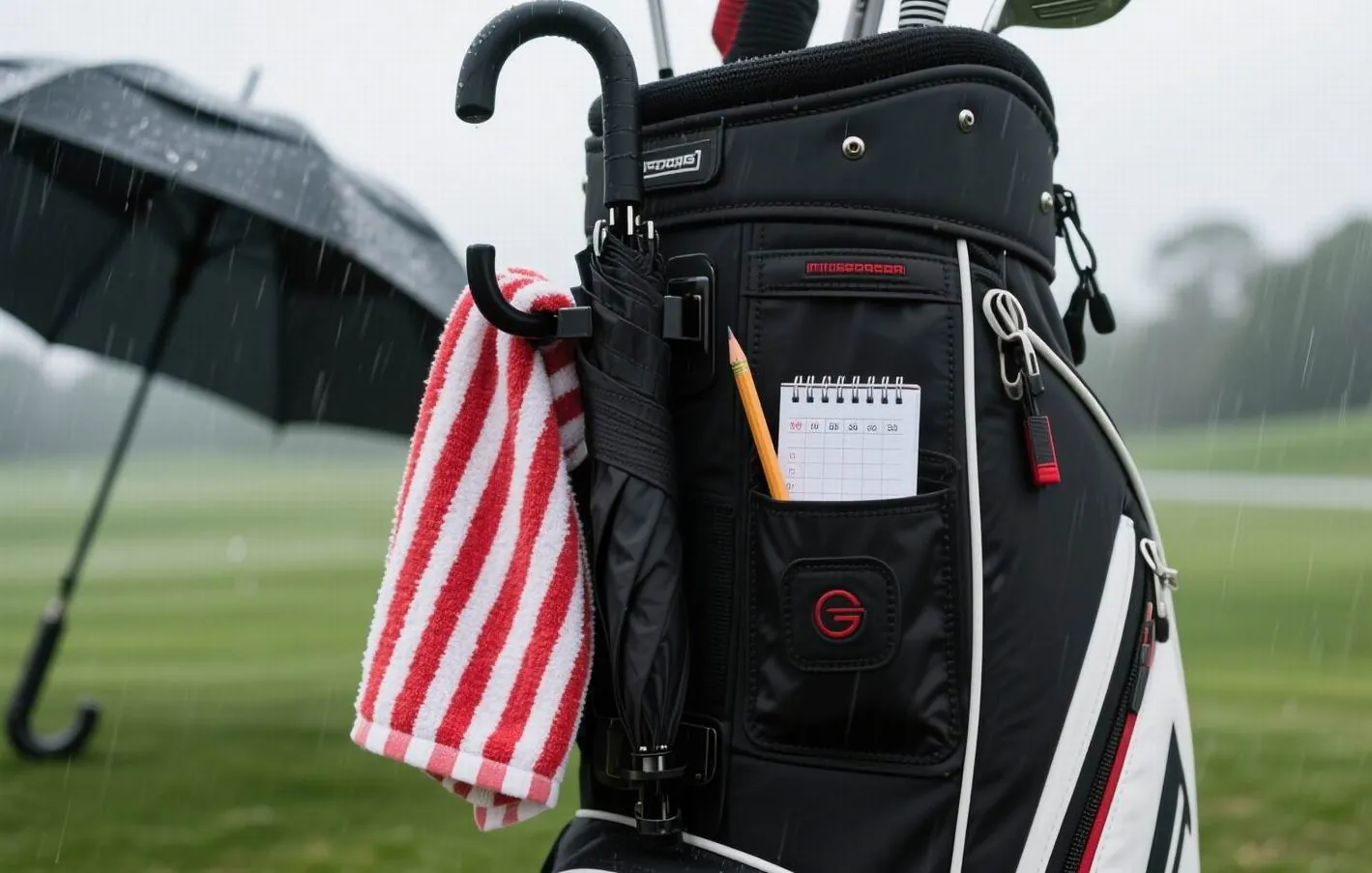
For course rental fleets and corporate-gift programmes, the verification step also protects the brand. A cooler that leaks meltwater on a member's cart or a corporate recipient's car seat reflects poorly on the club or company whose logo sits on the shell, however attractive that logo is. Because a branded cooler is often a promotional investment repeated across a fleet, confirming leak-proof performance on a sample before the run is not an optional quality step; it is a brand-protection decision. Specify the welded liner and sealed closure in the order, require the water-fill and closure test on a finished sample, and you ensure every unit that carries your brand performs to the same standard. This is why reputable suppliers expect these questions and treat a rigorous spec as a sign of a serious buyer rather than an obstacle.
8. Maintenance That Keeps a Cooler Leak-Proof
A sealed liner is durable, but it is not maintenance-free, and a cooler that is stored damp will degrade faster than one that is cared for. The essentials: drain the cooler fully after every use and leave the opening open to dry, because trapped moisture inside a closed cooler accelerates mould, mildew and odours in the insulation. Wipe the interior cleanable liner down, check the zipper track for grit or debris that can compromise the seal, and inspect the drain seal periodically to confirm it still closes watertight.
Never store a cooler sealed and wet: the very construction that makes it leak-proof also traps moisture inside, and a sealed wet cooler becomes a breeding ground. With regular draining, drying and a simple zipper and seal inspection, a quality cooler will contain meltwater and hold cold for years. For a fuller routine—including how to clean and deodorise the interior—see our insulated cooler maintenance guide.
9. Buying Coolers in Volume for Courses and Brands
Golf courses, resorts and pro shops buy cooler bags as branded retail stock, corporate gifts and tournament giveaways, and they demand a waterproof, leak-proof product that survives daily use and presents the brand well. When a course orders through an OEM partner, it should specify the leak-proof construction in writing—welded liner, sealed closure, controlled drainage—and require a finished-sample water-fill test before production, in exactly the way it would for a storm shell.
For branded coolers, the same leak-proof baseline must hold regardless of printing or embroidery complexity, because a logo does not excuse a bag that leaks on a member's cart. Volume ordering is pragmatic: a standard minimum of 200 pieces per design, with a 100-piece test order available to validate the liner, closure and cold-retention before the full run. Sampling typically runs 10–20 days and production 45–60 days at the affiliated facility.
10. Sourcing Context and Who to Work With
For buying teams, the leak-proof spec is one line in a broader sourcing decision that includes factory certifications, production capacity and quality systems. The affiliated QUANZHOU JUNYUAN BAGS facility has been active in the industry since its founder entered the trade in 2004 and the company was established in 2014—roughly two decades of bag-making experience. It passed an SGS factory audit in March 2026, operates seven production lines with 137 full-time staff on about 126 sewing machines, and runs a monthly capacity near 200,000 units. It is an affiliated manufacturing partner rather than an in-house factory, and it works with more than 200 brands selling into 100+ countries.
That context matters because leak-proof and cold-retention claims are only meaningful inside a reliable quality system. A factory that cannot trace a lot, cannot share test results and cannot hold a consistent welding or sealing process will fail your cooler spec even with the same materials on paper. When you compare partners, ask how the liner welding, the closure and the drain are validated and logged. You can begin with our OEM / ODM services page or contact our manufacturing team to start the discussion on a custom waterproof cooler bag.
11. The Bottom Line
For a golf cooler bag, "waterproof and leak-proof" is a claim you should be able to verify, not take on faith. Distinguish water resistance from true leak-proof containment, insist on a welded sealed liner with a leak-proof closure and controlled drainage, match capacity and insulation to how you carry and how many players share the cooler, and run a simple water-fill and closure test before you buy. Choose the partner whose liner welding and cold-retention you can see and verify, maintain the cooler by draining and drying it after every round, and you get a cooler that keeps drinks cold and ice contained round after round.
Frequently Asked Questions
- What makes a golf cooler bag leak-proof?
- A leak-proof lined cooler typically uses a weldable or high-frequency-sealed inner liner with heat-taped or welded seams, a leak-proof zipper or closure, and sealed drain grommets so meltwater is contained or drains cleanly instead of seeping out.
- How long does a golf cooler bag keep drinks cold?
- Cold retention depends on insulation thickness, liner sealing and how full and pre-chilled the bag is. A well-built cooler with closed-cell or thick foam insulation and a sealed liner can keep drinks cold for many hours, often a full round and beyond.
- What capacity should a golf cooler bag have?
- Capacity is usually measured in cans or litres. Six-to-12 can coolers suit singles and pairs and mount on a cart; larger 20-30 can insulated totes suit groups, tournaments and course retail stock. Match capacity to how you carry and how many players share.
- Are golf cooler bags really waterproof?
- Truly waterproof and leak-proof coolers use a sealed, weldable inner liner together with a leak-proof closure and sealed drains, verified by water-fill or spray tests. Cheaper water-resistant coolers repel light moisture but will not contain meltwater.
- How should a golf cooler bag be maintained?
- Drain and dry the interior fully after each use to prevent mould and odours, inspect the liner and zippers for leaks, and store it dry and open. Avoid packing it airtight while damp, which accelerates mildew inside the insulation.
Sources
- ASTM International — Standards for textiles, insulation and coated fabrics
- AATCC — Textile water resistance and spray test methods
- IEC 60529 — Degrees of Protection Provided by Enclosures (IP Code)
- U.S. FDA — Food-contact material guidance for drink liners
- Cooler (insulated container) technology reference